Correction for Patients with Crooked Nostrils and Columella and Severe Nasal Obstruction
We often see patients who say that after nose surgery the tip and columella became crooked and nasal obstruction grew worse.
Looking inside the nose of these patients, the end of the septum can be seen bulging into the nose on one side.
This is caused by harvesting septal cartilage and attaching it to the lower septal cartilage (caudal septum)
to lengthen the nose or raise the tip, a technique known as the septal extension graft (SEG).
In a septal extension graft using septal cartilage, the amount of septal cartilage that can be harvested is limited,
so it cannot be placed on both sides. It is therefore placed against and fixed to the end of the septum on one side,
which puts it slightly off the center of the septum, and the long, extended graft may be pushed back by the
tension of the tip skin and buckle.
When the tip cartilages are fixed to it, the tip tends to tilt to one side.
An extension graft that has buckled and protruded in this way bulges into the nasal cavity and narrows the nasal passage,
making it much harder to breathe through the nose.
In addition, if the tip cartilages are fixed too tightly when they are sutured or brought together, the force is drawn to one side
and the tip tilts. Also, when the tip cartilages are tied tightly in the middle, the cartilage is drawn toward the center
and buckles; when this happens, the tip becomes pinched and breathing becomes uncomfortable.
In such cases, removing the septal extension graft resolves the crooked columella and tip and the nasal obstruction,
and repositioning can return the position and shape of the tip to normal.
Once the length and height are adjusted in this way and the tip cartilages are fixed to it,
the length and height of the tip can be adjusted as well.
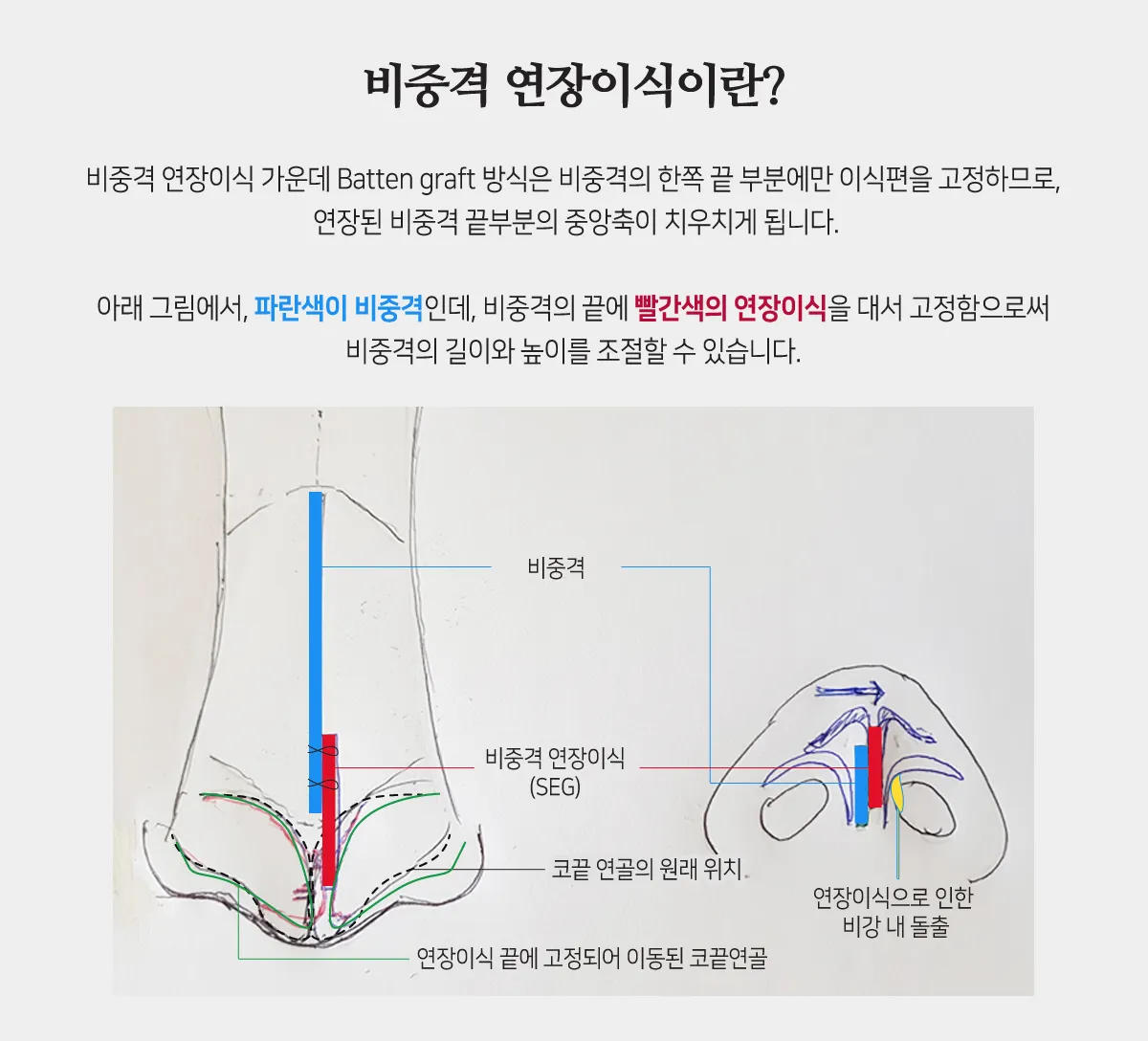
However, as in the illustration, when the tip cartilages are fixed to the end of an extension graft attached on only one side
in order to increase the length and height of the tip, the tip easily ends up drawn to one side.
In such cases, not only do the columella and tip tilt to that side,
but nostril asymmetry and nasal obstruction also appear.
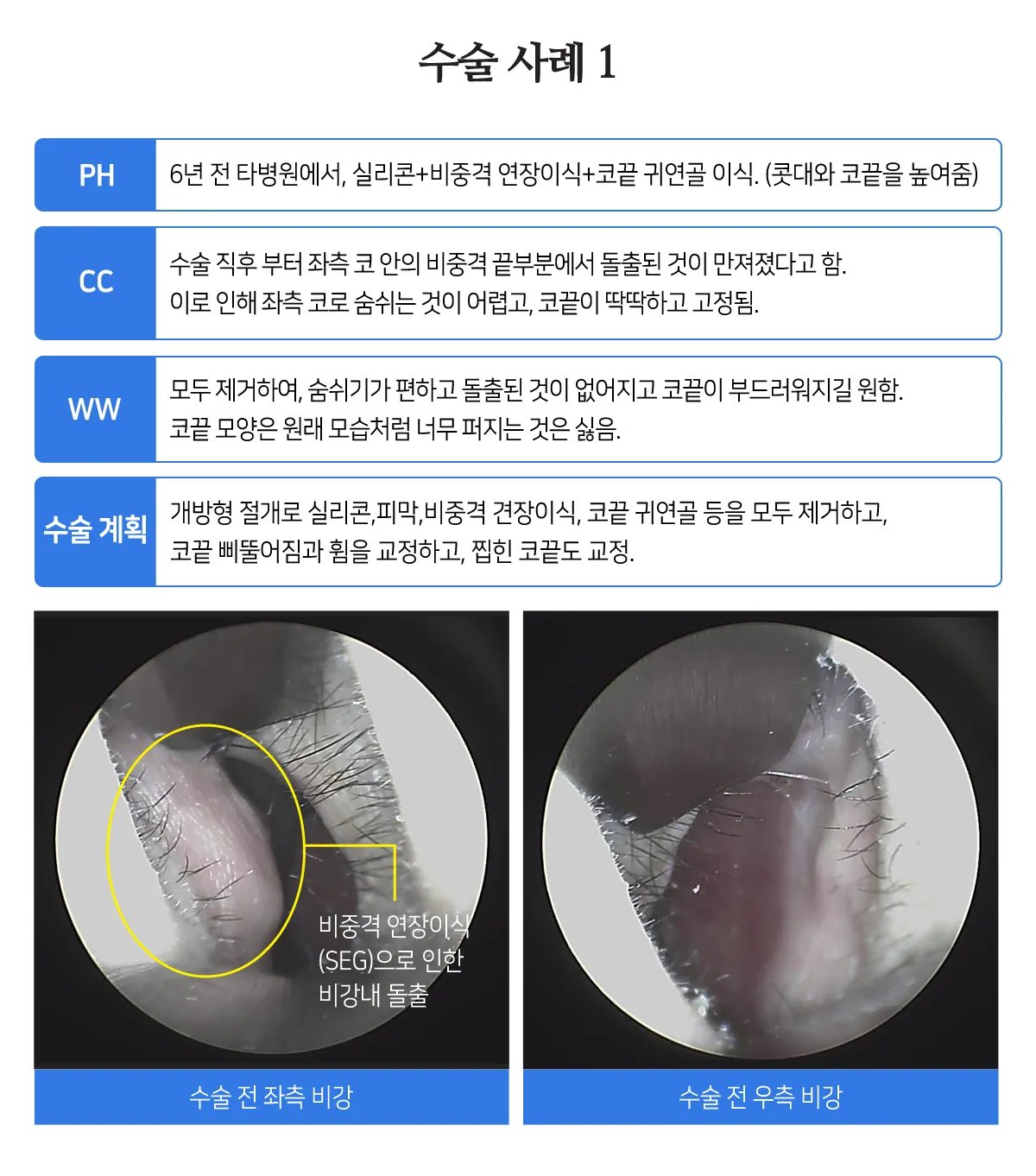
P/H - 6 years ago at another clinic: silicone + septal extension graft + ear cartilage tip graft. (To raise the nasal bridge and tip)
C.C - The patient reports that, from right after surgery, something protruding could be felt at the end of the septum inside the left side of the nose.
As a result, breathing through the left side of the nose is difficult, and the tip is hard and fixed.
WW - The patient wants everything removed so that breathing is easier, the protrusion is gone, and the tip becomes soft.
The patient does not want the tip to spread too wide, as it did originally.
Surgical plan - Through an open approach, remove all of the silicone, capsule, septal extension graft, ear cartilage at the tip, and so on,
correct the crookedness and bending of the tip, and also correct the pinched tip.
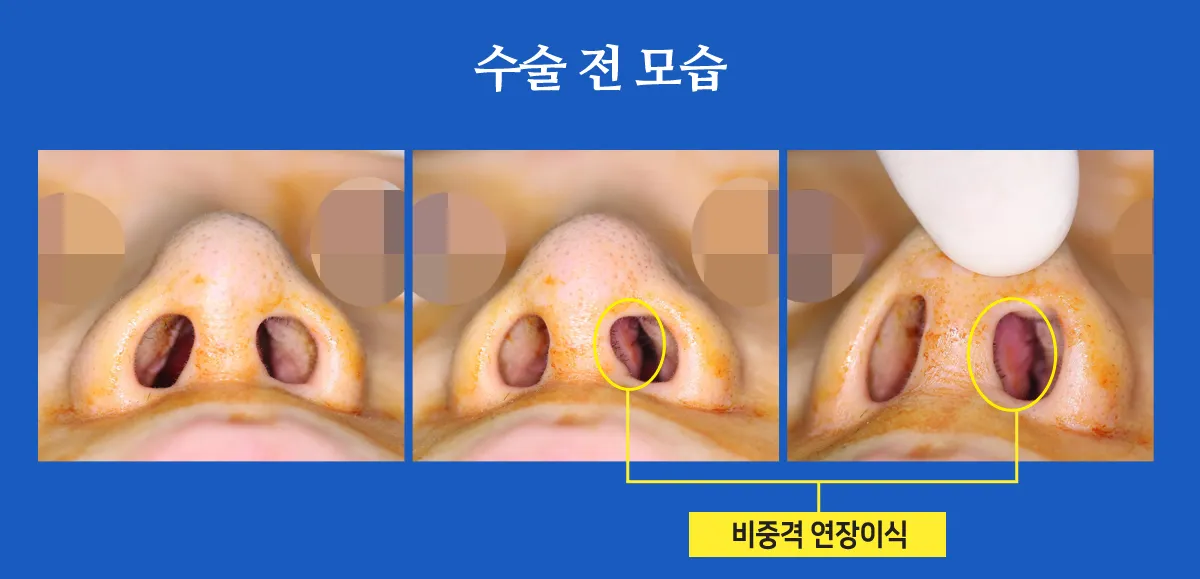
In the left nostril, the protruding septum can be seen even with the naked eye.
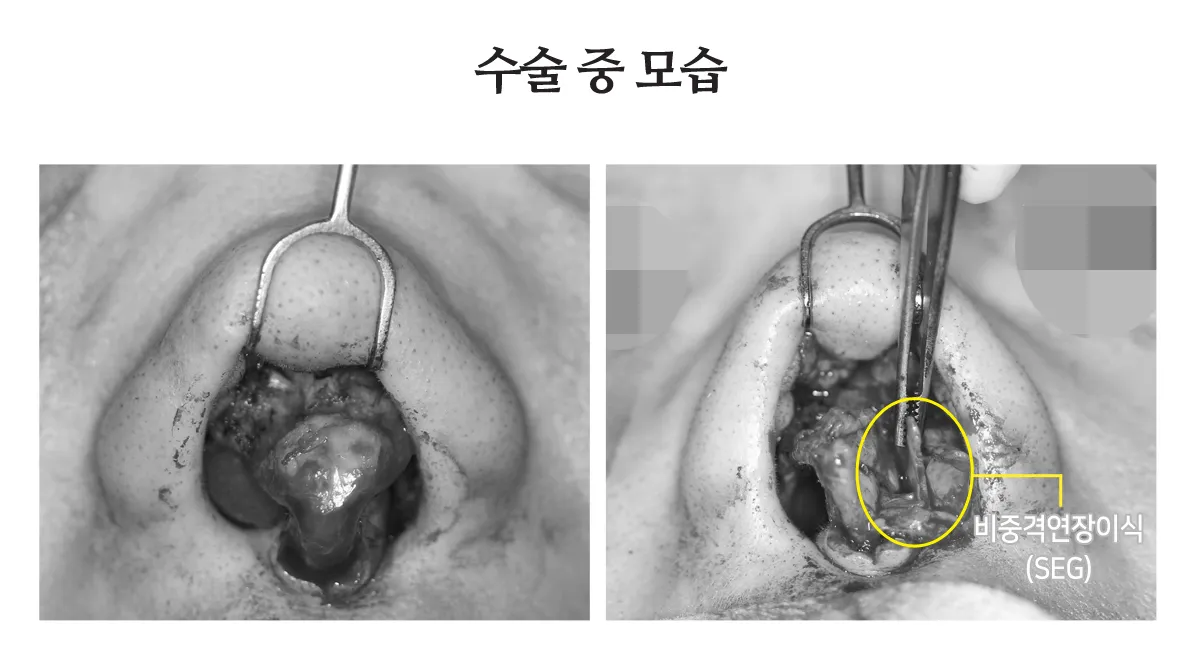
During surgery, the columella and tip were confirmed to be shifted to the left.
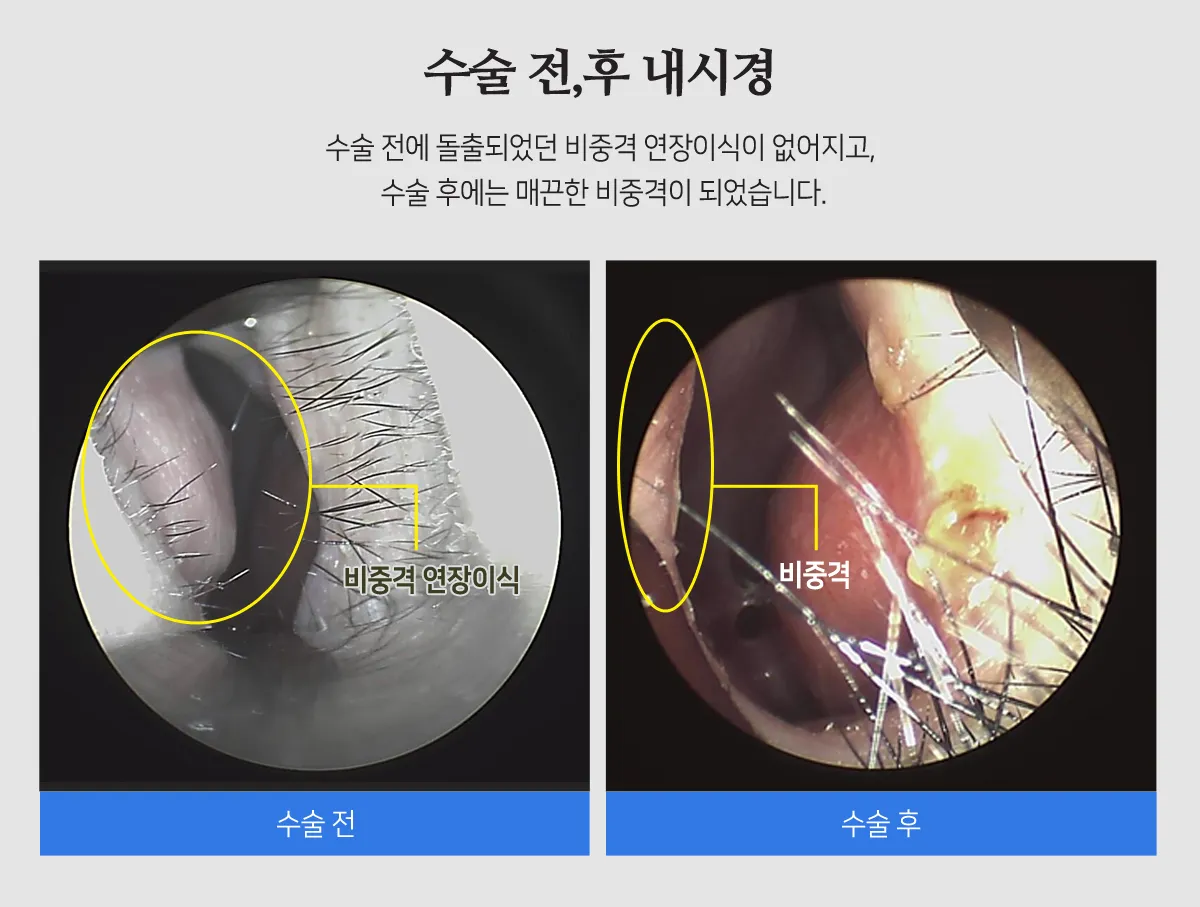
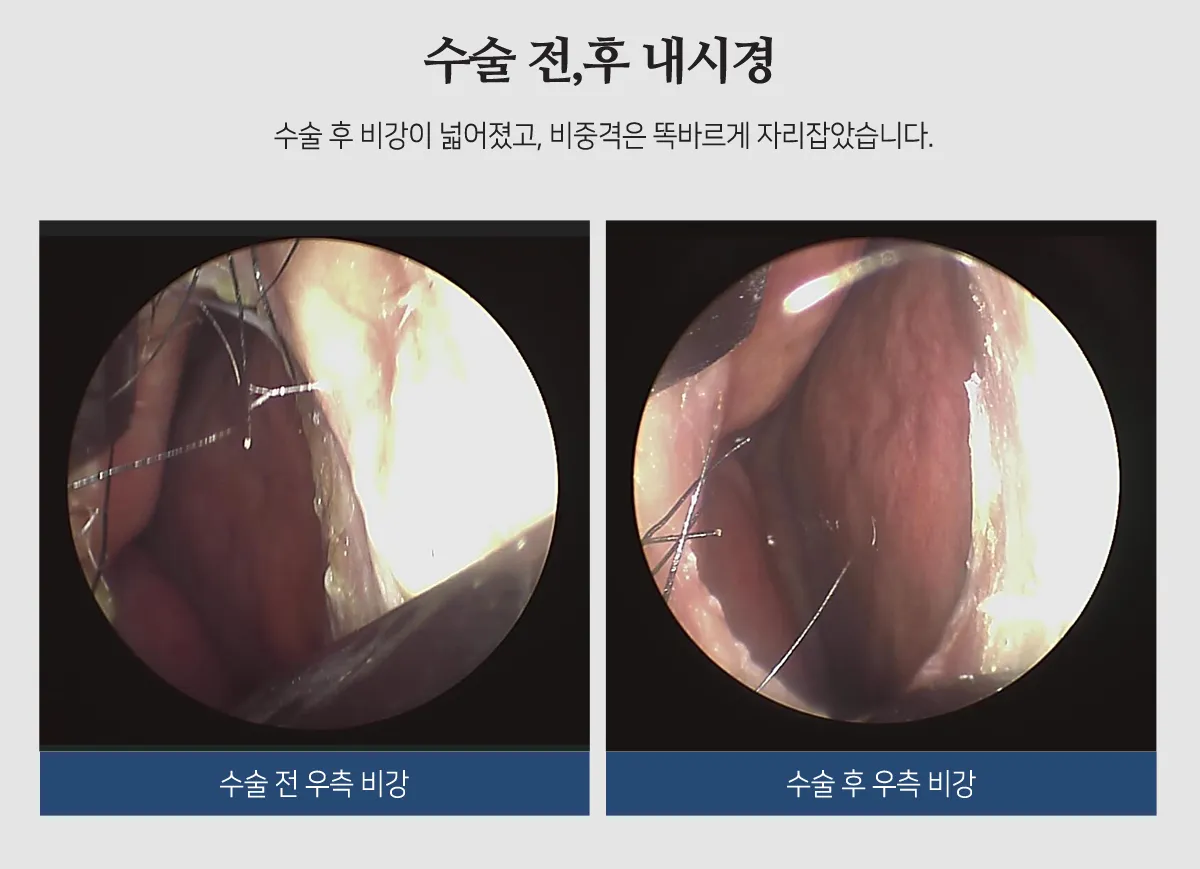
The septal extension graft that protruded before surgery is gone,
and after surgery the septum is smooth.
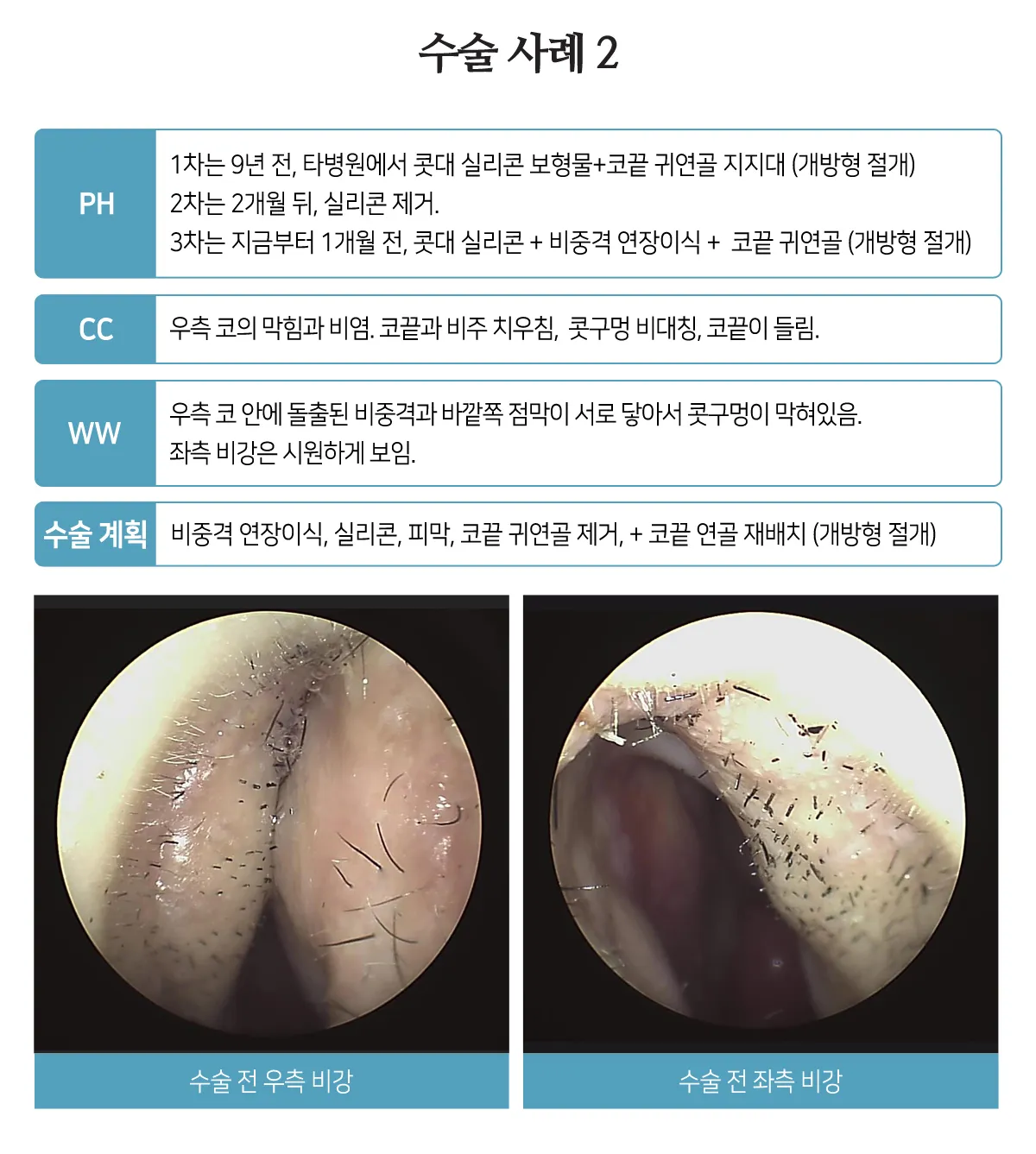
P/H - 1st surgery: 9 years ago at another clinic, silicone implant for the nasal bridge + ear cartilage strut for the tip (open approach)
2nd surgery: 2 months later, silicone removal.
3rd surgery: 1 month ago, silicone for the nasal bridge + septal extension graft + ear cartilage for the tip (open approach)
C.C - Obstruction of the right side of the nose and rhinitis. Shifted tip and columella, nostril asymmetry, and an upturned tip.
WW - Inside the right side of the nose, the protruding septum and the outer mucosa touch each other, blocking the nostril.
The left nasal cavity appears clear.
Surgical plan - Removal of the septal extension graft, silicone, capsule, and ear cartilage at the tip + tip cartilage repositioning (open approach)

The columella, septal extension graft, and tip are shifted to the patient's right, and the nostrils are also asymmetric.
The right nasal cavity was considerably narrowed, and nasal obstruction was judged to be severe.
Because the last surgery, about a month ago, used an open approach, the surgical scar on the columella is still quite visible.
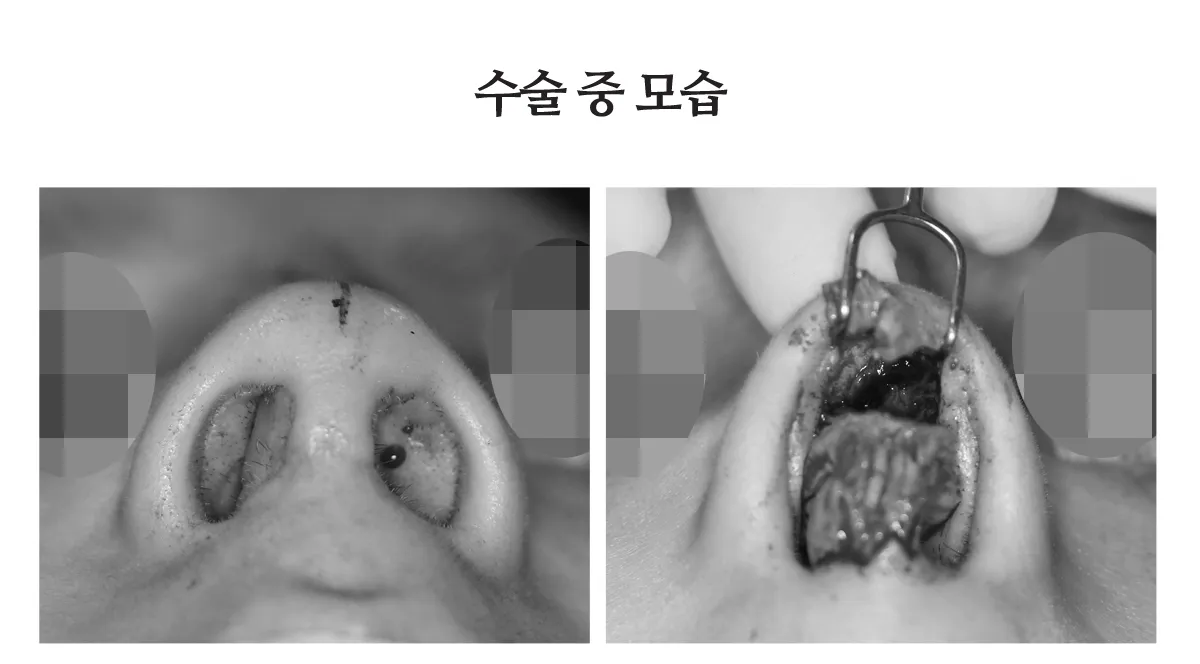
The photo on the left shows the thickened columella and the end of the septum,
and the right lateral crus of the tip cartilage has dropped down and is stuck to the septal extension graft.
As a result, the nasal cavity is very narrow.
The photo on the right shows the nose after an open approach and removal of the silicone implant and capsule;
several layers of struts are visible in the columella.
These were all removed, and a columellar strut was set up with a single layer of septal cartilage.
The septal cartilage that had been used as the septal extension graft was removed and, because the end of the septum
was bent, used to support it.
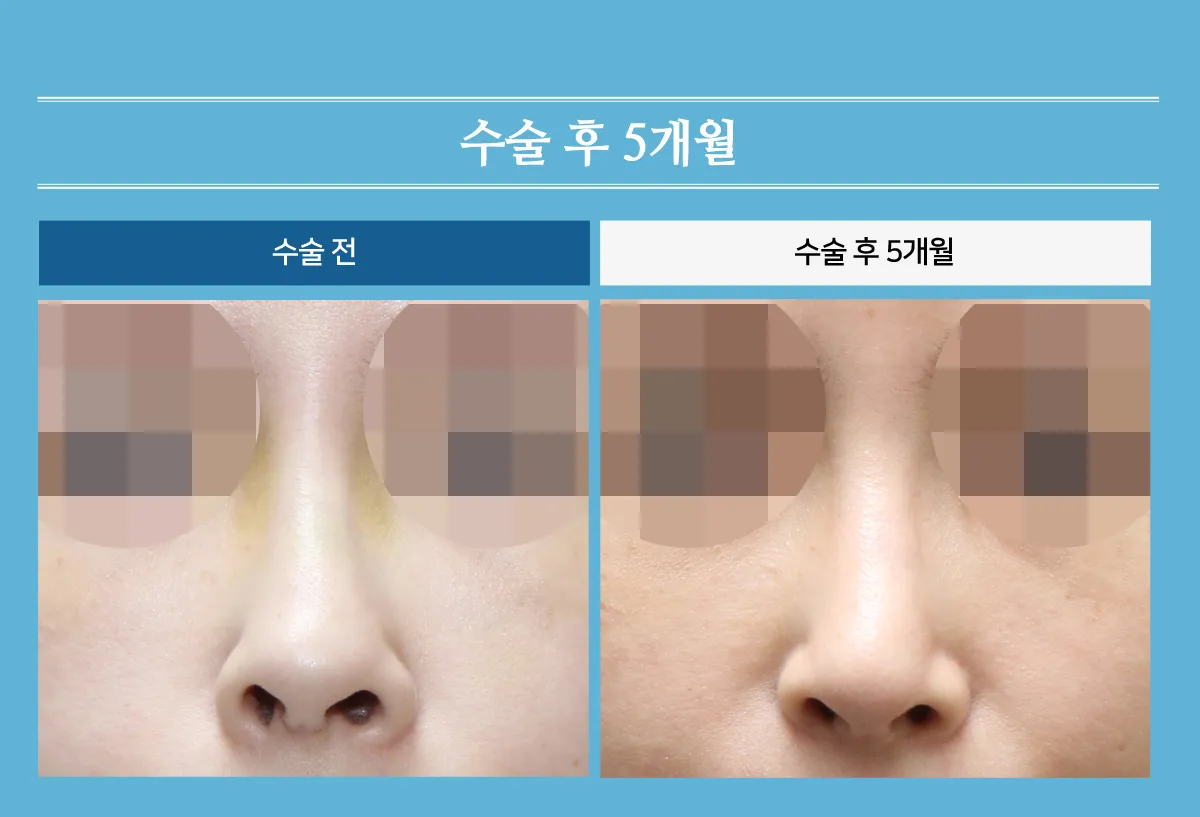
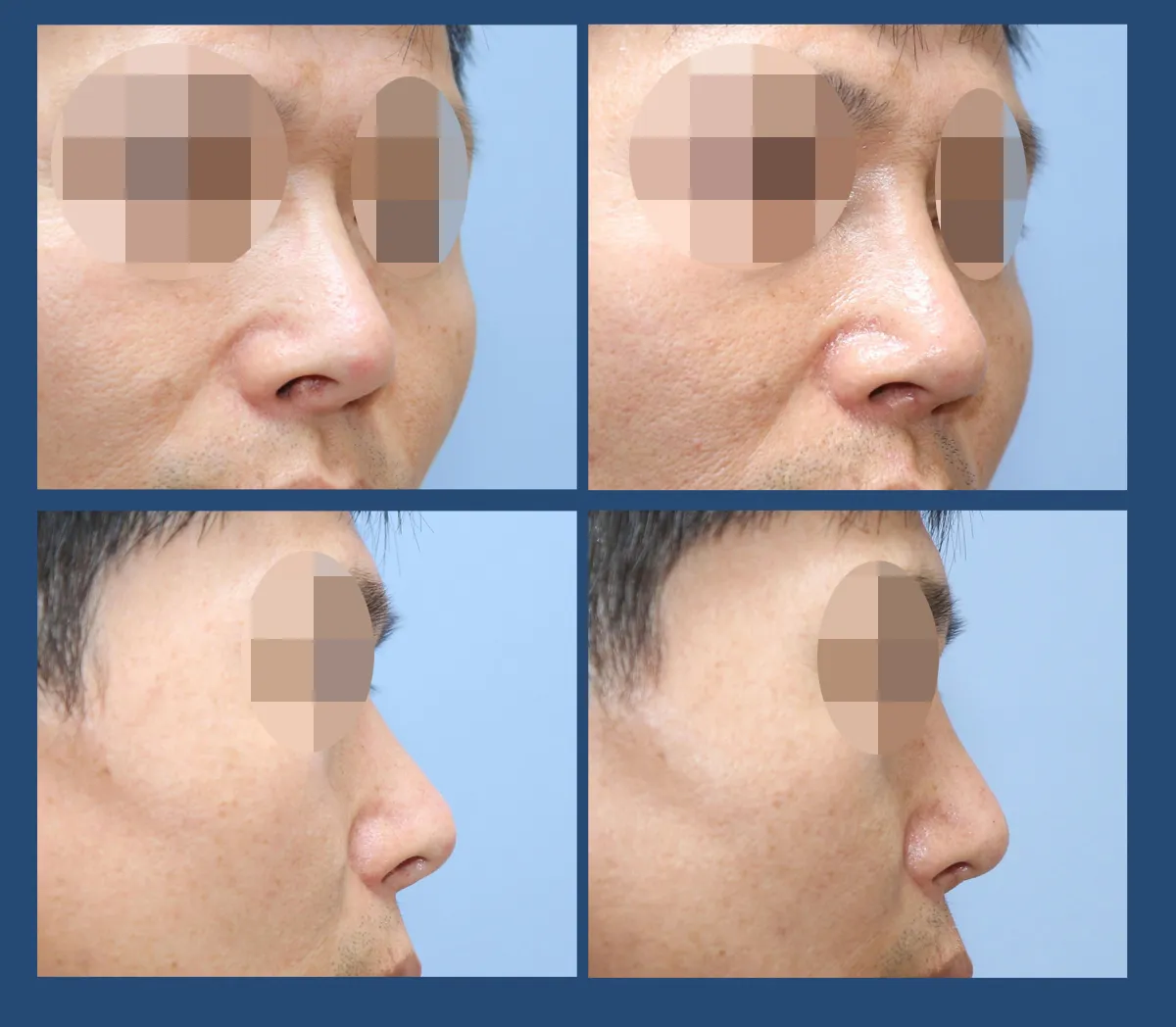
The tip, which was shifted to the right before surgery, can be seen to have returned to the midline.
Before surgery the nose was upturned and the nostrils showed considerably; after surgery they are covered normally.
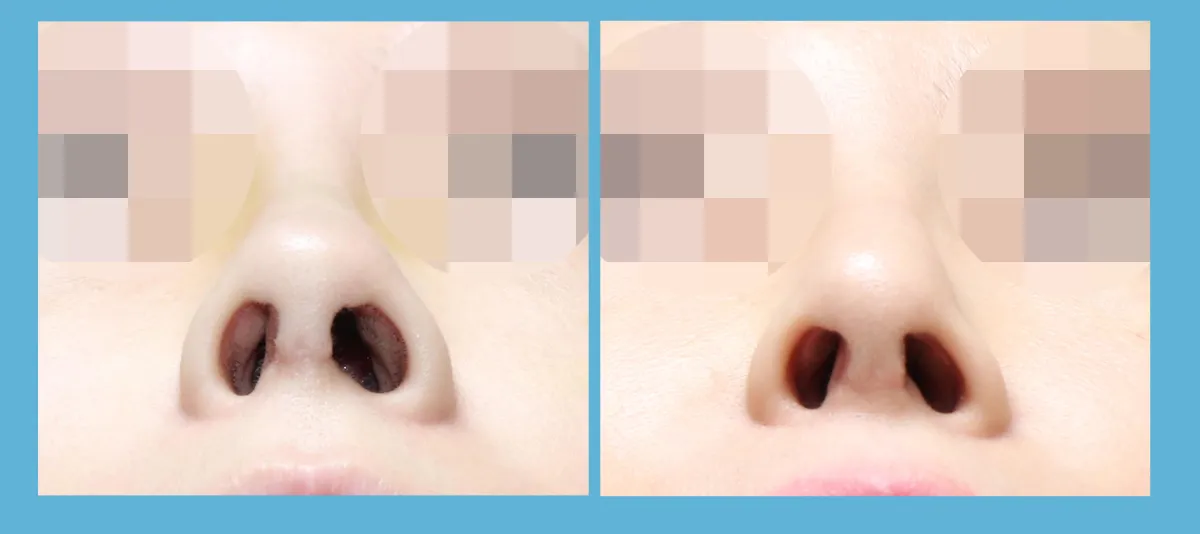
The nostril asymmetry, the shifted columella, and the narrowed right nasal cavity have all been corrected naturally.
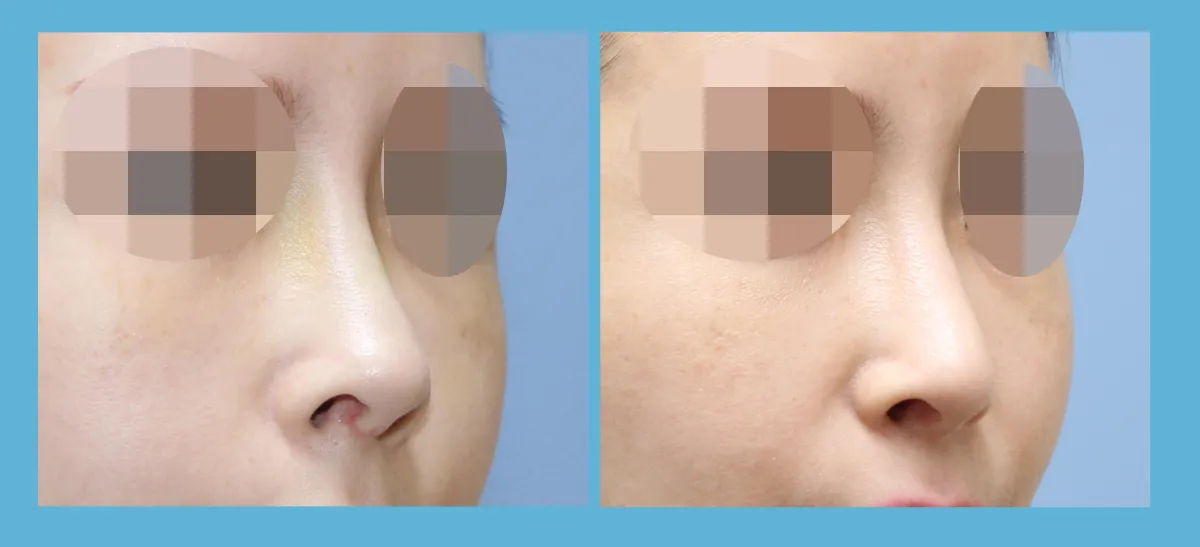
The open-approach scar that was visible before surgery has also faded.
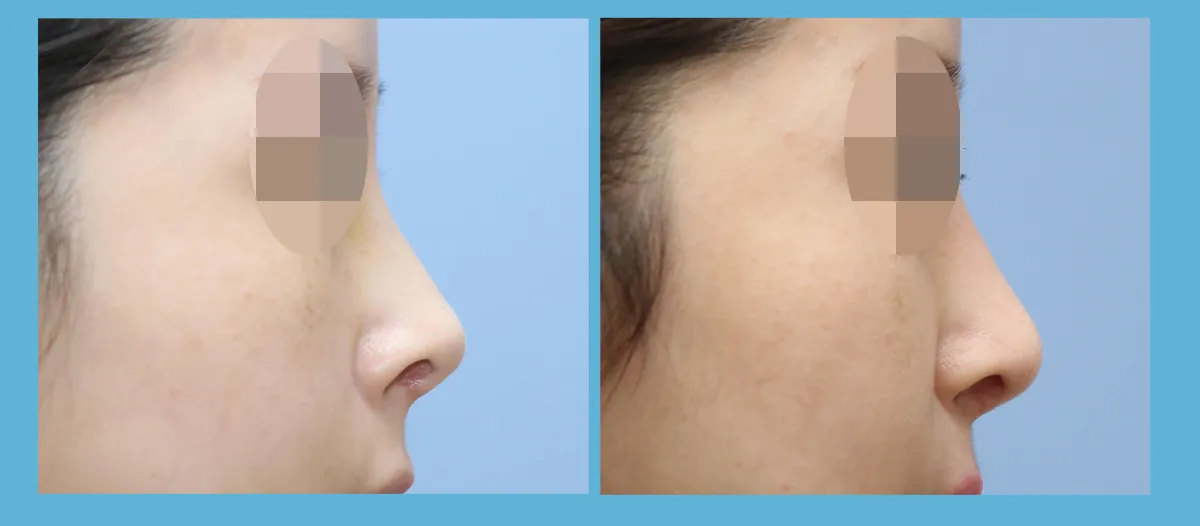
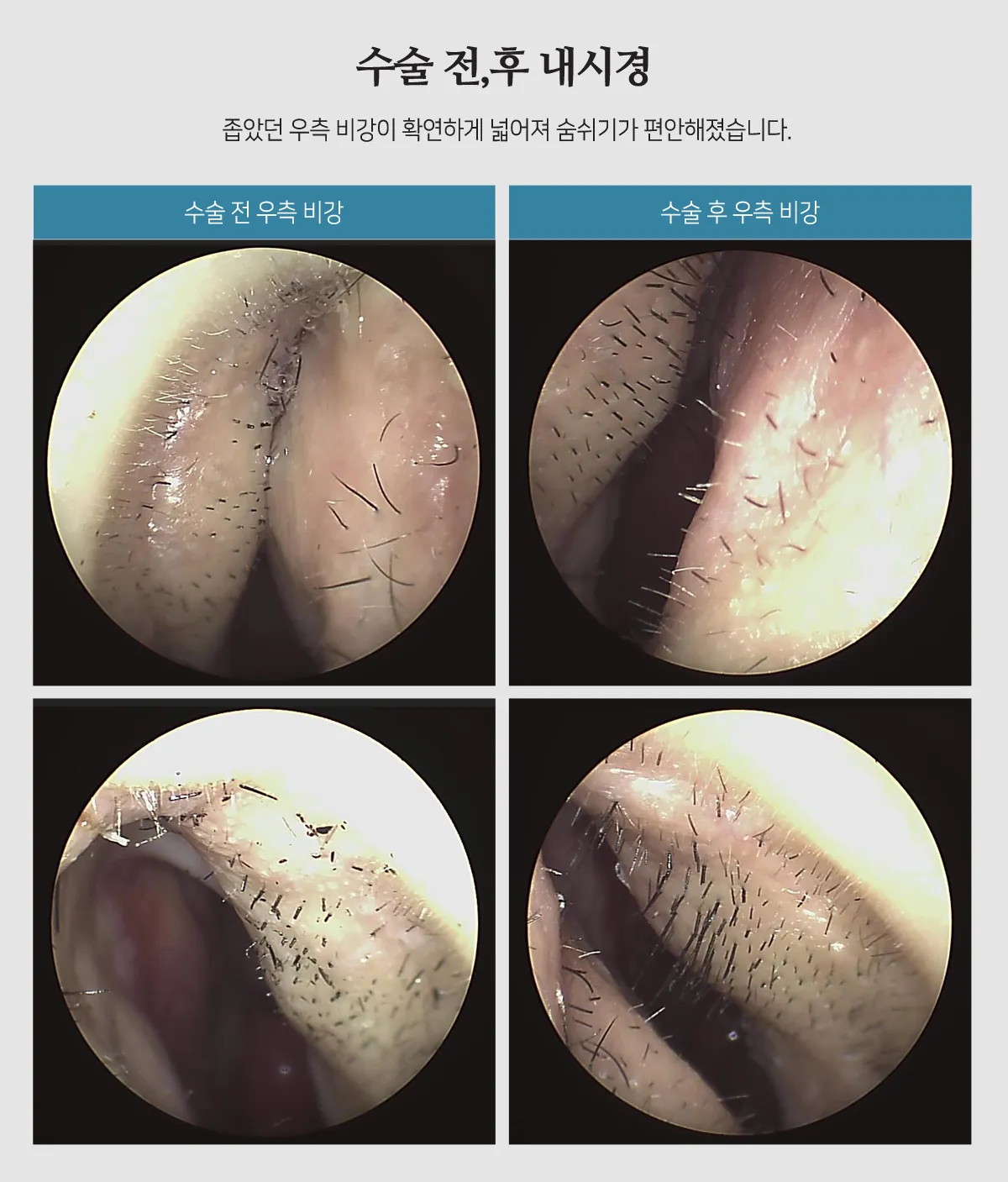
The narrowed right nasal cavity is clearly wider, and breathing has become comfortable.
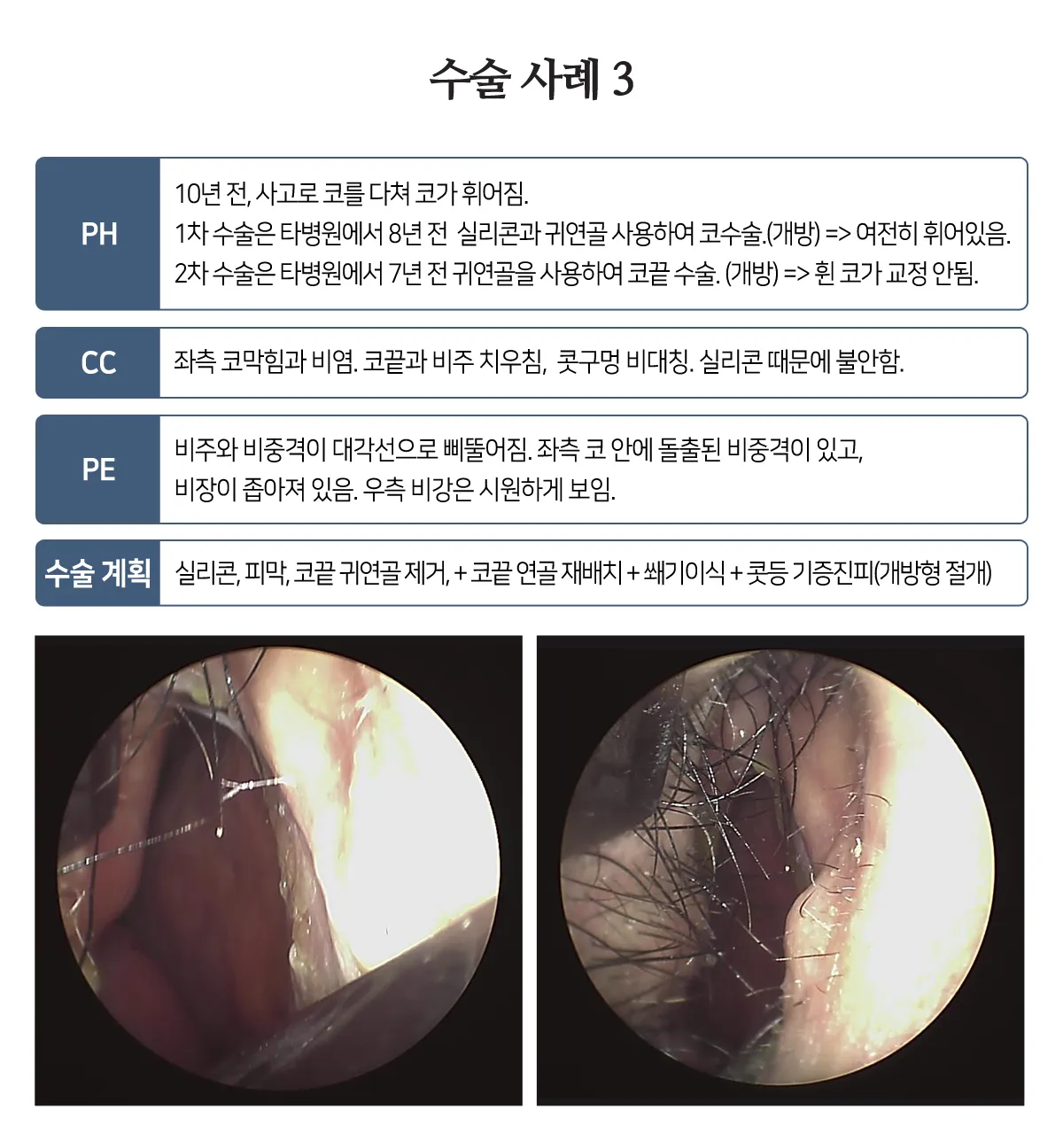
P/H - 10 years ago, the nose was injured in an accident and became crooked.
1st surgery: nose surgery with silicone and ear cartilage at another clinic 8 years ago (open approach) => still crooked.
2nd surgery: tip surgery with ear cartilage at another clinic 7 years ago (open approach) => the deviated nose was not corrected.
C.C - Left-sided nasal obstruction and rhinitis. Shifted tip and columella, nostril asymmetry. Anxiety about the silicone.
PE - The columella and septum are crooked along a diagonal. There is a protruding septum inside the left side of the nose,
and the nasal cavity is narrowed. The right nasal cavity appears clear.
Surgical plan - Removal of the silicone, capsule, and ear cartilage at the tip + tip cartilage repositioning + wedge grafting + acellular dermal matrix for the dorsum (open approach)

Before surgery, the nose tilts to the patient's left from the middle of the nasal bridge to the tip.
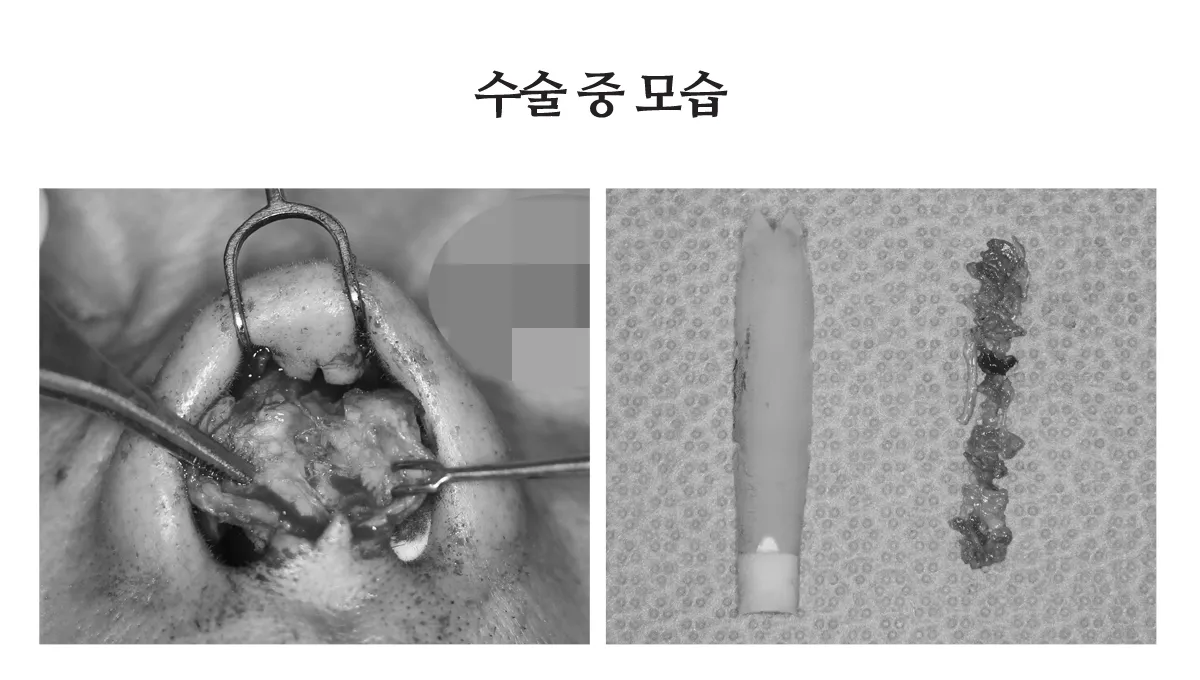
Through an open approach, the silicone, capsule, ear cartilage at the tip, and so on were removed,
the tilted dorsum was straightened with wedge grafting, and a columellar strut was set up.
Augmentation of the dorsum was performed with acellular dermal matrix.
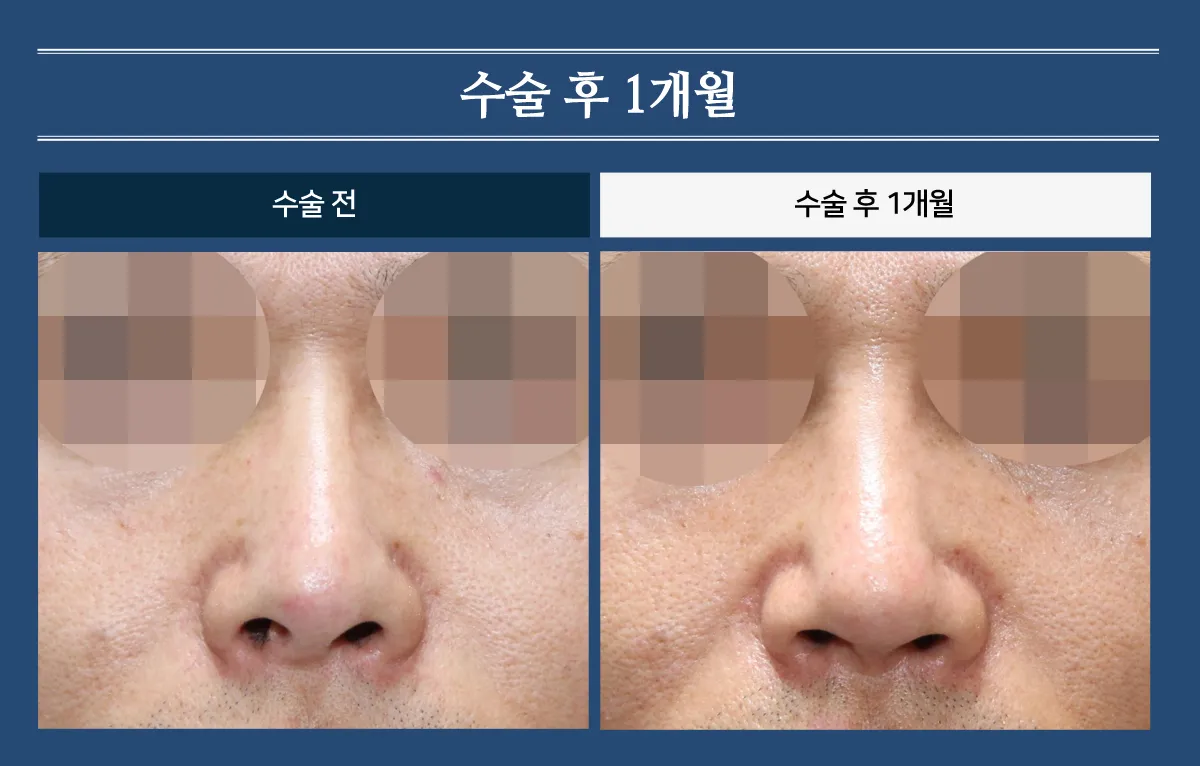
The tilted dorsum has been brought to the midline, and the tilted columella now stands straight.
The acellular dermal matrix in the dorsum can be seen to have settled naturally.
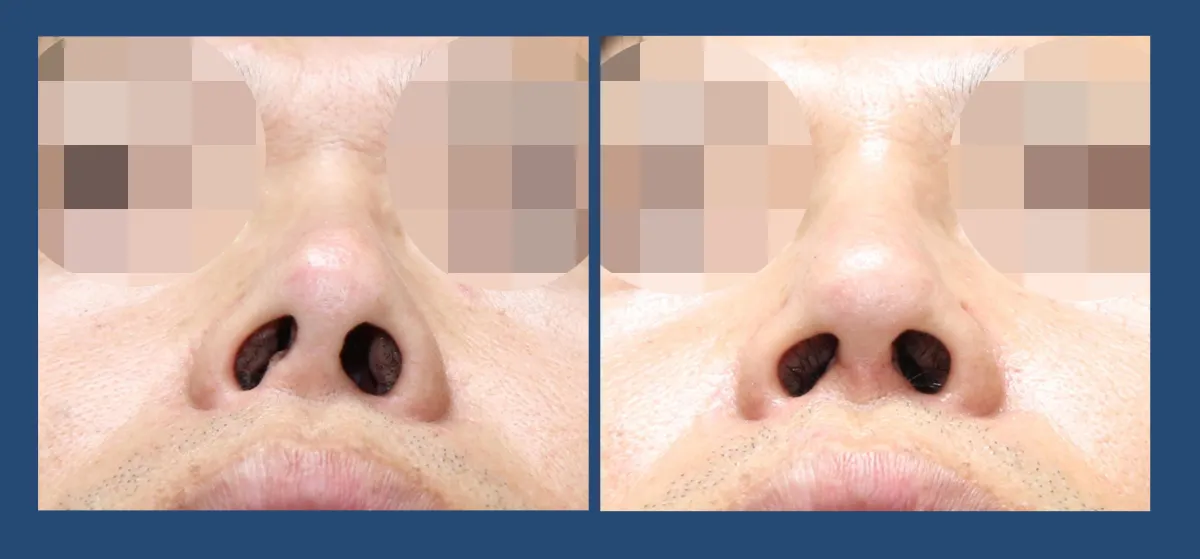
The tilted columella and tip are now both aligned straight on the central axis.