Ultherapy in Gangnam, Seoul | RESUM Plastic Surgery
Skip to main content

service / Ulthera

Ultherapy

Apgujeong Ultherapy

ULTHERAPY

A non-surgical lifting treatment that delivers ultrasound energy to the dermis and SMAS layer
to address sagging and loss of firmness.

Method
About 30 minutes
Anesthesia
Recovery
Numbing cream / IV sedation · Daily activities right away
Summary Ultherapy is a non-surgical lifting treatment that delivers focused ultrasound (HIFU) to the dermis and the SMAS layer, creating thermal coagulation points to improve firmness. It addresses sagging without incisions, and at RESUM Plastic Surgery in Gangnam, Seoul (Apgujeong), it is planned depth by depth. Medical Review Medical Review: Won-Suk Kook,Jin-Young Kim
Last updated: 2026-09-11

Why Lisoom

Overview Non-Surgical Lifting That Precisely Delivers
Ultrasound to the Dermis and SMAS Layer

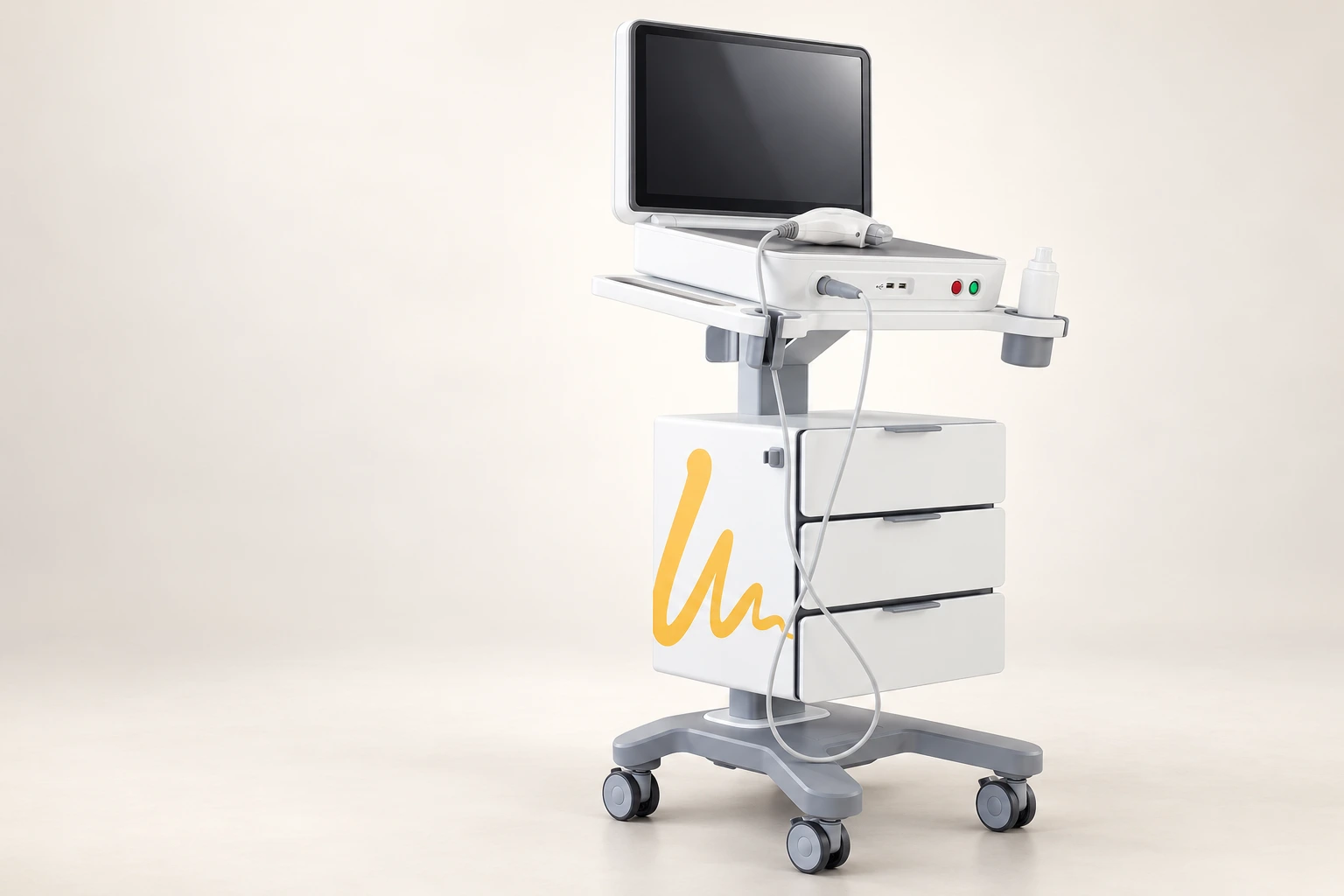
Ultherapy PRIME is a non-surgical lifting device based on MFU-V (Micro-Focused Ultrasound with Visualization), which uses focused ultrasound in the 4-10 MHz range.

An ultrasound lifting treatment cleared by the U.S. FDA, it creates thermal coagulation points (TCPs) of about 60-70°C at three depths (1.5, 3.0 and 4.5 mm), inducing immediate contraction of the dermis and SMAS layer and the synthesis of new collagen.
Because the procedure is performed while viewing the tissue structure with DeepSEE real-time ultrasound imaging, energy is delivered precisely to the layer that needs it, regardless of bone structure or skin thickness.

DESIGN PRINCIPLE

Methods
How Ultherapy (Ultherapy PRIME) Works

Focused Ultrasound Mechanism SUTURE guide image

SutureFocused Ultrasound Mechanism

Ultherapy's MFU-V gathers focused ultrasound into points at a precise depth, creating thermal coagulation points (TCPs) of about 1 mm³ each. Each TCP is heated to about 60-70°C, causing protein denaturation and immediate tissue contraction, while the surrounding normal tissue is left unaffected. Because the treatment depth and tissue structure are checked on screen with DeepSEE real-time imaging during the procedure, the lines can be allocated while directly viewing the location of the facial nerve branches and the depth of the SMAS.

MFU-V TCP DeepSEE
Superficial Dermis 1.5 mm HYBRID guide image

HybridSuperficial Dermis 1.5 mm

The 1.5 mm transducer operates in the 10 MHz range and creates TCPs in the superficial dermis, refining surface texture and fine lines and stimulating overall firmness. It is used when facial skin texture has become dull, when fine lines on the décolleté have become noticeable, or when superficial lines around the eyes or mouth need refining. It is not a transducer for treating deep sagging itself; combined with the 4.5 mm transducer, its role is to refine the surface texture as well.

Superficial Dermis Skin Texture Fine Lines
Deep Dermis 3.0 mm PARTIAL guide image

PartialDeep Dermis 3.0 mm

The 3.0 mm transducer operates in the 7 MHz range and creates TCPs in the deep dermis, establishing an environment that stimulates collagen. As the intermediate depth between 1.5 mm and 4.5 mm, it contributes to refining the thickness and firmness of the dermis as a whole, and is often used to refine the cheekbone and cheek contours and to improve pores and texture. Of the three depths, this is the one given greater weight when a patient's dermis is thin or when the sagging originates at the dermal level.

Deep Dermis Collagen Stimulation Intermediate Depth
SMAS Layer 4.5 mm INCISION guide image

IncisionSMAS Layer 4.5 mm

The 4.5 mm transducer operates in the 4 MHz range and creates TCPs at the level of the SMAS (Superficial Musculo-Aponeurotic System) fascia to tighten sagging contours. It is the key depth for non-surgically approaching the plane that a surgical facelift directly dissects and fixates. It is used most often to refine the area below the cheekbones, the jawline and the contour under the chin, and it is the central depth of Ultherapy's lifting effect; the proportion of lines is determined by the degree of the patient's SMAS laxity.

SMAS Fascia Core of Lifting Surgical Depth

OUR PRINCIPLE

Core Values
The Principles RESUM Keeps

Ultherapy is not a procedure of simply filling a shot count. Results are stable only when the patient's distribution of sagging, skin thickness and fat distribution are assessed first, and it is then decided how many lines to allocate, at which depth and to which area. As a principle, at RESUM this allocation plan is decided personally by Dr. Jin-Young Kim, Director, during the 1:1 consultation.

Depth Match

Depth Match

Depth Matching

The three transducers (1.5, 3.0 and 4.5 mm) are combined to match each patient's pattern of sagging. For those with marked SMAS laxity, the proportion of 4.5 mm is increased; for those whose dermis has thinned overall, the proportion of 1.5 and 3.0 mm is increased. The transducers are operated while checking the tissue structure with DeepSEE real-time imaging to secure a safety margin.

Smart Distribution

Smart Distribution

Customized Line Allocation

Within the standard range of about 600-800 lines for the full face and neck, how many lines are allocated to which area determines the result. More lines are placed where sagging is pronounced, and fewer, conservatively, in areas that are thin or lack fat. The allocation of lines by area follows academically validated principles for each depth.

Honest Combine

Honest Combine

Honest Advice on Combinations

Very deep sagging, or sagging that requires SMAS dissection and fixation, cannot be addressed by Ultherapy alone. RESUM explains the limits of non-surgical treatment honestly and, during the consultation, recommends suitable options such as a thread lift, a mini facelift or facelift surgery. We do not tell patients that a single treatment can resolve all sagging.

POINT 03 Features

Ultherapy Features

Ultrasound Energy and How It Works

Ultrasound Energy and How It Works

Ultherapy gathers high-intensity focused ultrasound (HIFU/MFU-V) into points at depths of 1.5, 3.0 and 4.5 mm within the skin, creating thermal coagulation points (TCPs) of about 60-70°C. It selectively delivers thermal stimulation to the dermis and SMAS layer, inducing immediate tissue contraction along with the regeneration of new collagen and elastin, while surrounding tissue such as the epidermis is protected. Acts selectively on the dermis and SMAS layer · Forms TCPs of about 60-70°C · Induces collagen and elastin regeneration · No incisions, quick return to daily activities

DeepSEE Real-Time Ultrasound Imaging

DeepSEE Real-Time Ultrasound Imaging

What sets Ultherapy apart is DeepSEE real-time ultrasound imaging. Because energy is delivered while directly viewing the skin layers and tissue structure during the treatment, a refined treatment plan is possible that takes into account each person's skin thickness, SMAS location and facial nerve distribution. Real-time confirmation of tissue structure · Depth and line planning tailored to the individual · Accurate energy delivery to the layer that needs it · Contributes to securing a safety margin

POINT 04 Benefits

Do More Shots Mean a Better Lifting Effect?

First, the cause of sagging must be analyzed accurately.

When skin elasticity declines, the fat layer and soft tissue shift downward and the facial contour changes. Rather than looking at the skin alone, analyzing the cause from which the sagging began together with the pattern of tissue descent is what shapes the result.

Second, accurate targeting matters more than the number of shots.

It is important to accurately target areas where tissue has concentrated and sagged, such as jowls, deep cheek fat and a double chin. Rather than simply delivering as many shots as possible, delivering appropriate energy to the layer that needs it can lead to a more efficient result.

Third, a plan suited to each individual's condition is important.

The treatment area and number of shots are set after an overall review of skin thickness, degree of sagging, fat distribution and face shape. Rather than applying the same number of shots to everyone, planning around each person's anatomy and pattern of aging helps achieve a natural result.

NOTICE

Precautions
Aftercare & Precautions

N · 01 Slight swelling, tightness and irritation may occur right after the treatment.
N · 02 For 1 week after the treatment, avoid saunas and strong stimulation.
N · 03 Part of the result appears right away, and the rest develops gradually over 2-3 months.
N · 04 It is not applied to areas with an active skin infection or severe inflammation.
N · 05 The extent of the result varies with the condition of each patient's tissue.
N · 06 Results may vary depending on individual constitution and treatment condition. Please be sure to consult a board-certified specialist before treatment.

PROCEDURE DATA

Summary
Treatment Overview

Procedure

Treatment Overview

Treatment time
Around 30 minutes
Anesthesia
Numbing cream / IV sedation
Daily activities
Immediately
Duration
About 12 months

FOR WHOM

Candidates

Consider a Consultation If

05 Recommended Cases

01 Suitable for those who want to address mild to moderate SMAS laxity non-surgically but find an incisional facelift too much of a commitment. The fact that the 4.5 mm depth acts at the level of the SMAS is meaningful in that it treats the same layer as a surgical facelift.
02 When the contours below the cheekbones, along the jawline and under the chin have become prominent and an approach at the SMAS level is needed, the 4.5 mm depth is the key option. The allocation of lines is set according to the distribution of sagging.
03 For those who want the combined Ultherapy + Thermage treatment, in which Thermage also addresses fine lines and firmness across the dermis, the depths at which the two treatments act complement each other.
04 For those who want to build up change step by step by combining it with thread lifts, fillers or Botox, the order and intervals of the treatments are planned together during the consultation.
05 For those who find it hard to decide on incisional surgery all at once and want to evaluate gradual change with a non-surgical option first, we also explain the limits of non-surgical treatment.
Jin-Young Kim · M.D. - RESUM Plastic Surgery Clinic

Doctor's Note

Even with the same device, Ultherapy results differ depending on who operates it and how. The key is where and how much 4.5 mm is placed according to the patient's distribution of sagging, and how 1.5 and 3.0 mm are combined. Following academically validated principles for each depth, I decide the allocation plan personally in the 1:1 consultation, and I explain honestly which range can be treated safely without surgery and which cannot.

Jin-Young Kim · M.D.

Dr. Jin-Young Kim, Director

PROCEDURE FLOW

Process
Treatment Process

01

PHASE I

Diagnosis

We assess the distribution of sagging, skin thickness and the number of shots that can be used.

CONSULT

02

PHASE II

Planning

We decide the combination of transducers by depth and the number of shots for each area.

DESIGN

03

PHASE III

Treatment

Performed after topical anesthesia.

PROCEDURE

04

PHASE IV

Guidance

We explain the return to daily activities and how to manage swelling and tightness.

STEP

FREQUENTLY ASKED

FAQ
Frequently Asked Questions

We have compiled the questions patients ask most often before a consultation.

Ultherapy is a non-surgical lifting treatment that uses MFU-V (Micro-Focused Ultrasound with Visualization) to concentrate focused ultrasound in points at three depths (1.5, 3.0, and 4.5 mm), creating thermal coagulation points (TCPs) of about 60-70°C. Each TCP causes protein denaturation and immediate tissue contraction, after which new collagen synthesis builds up over 2-6 months. The treatment is performed while confirming the position of the SMAS on screen with DeepSEE real-time ultrasound imaging.
For the full face and neck, treatment takes about 60-90 minutes, plus a separate 30-40 minutes for applying topical anesthesia. For those highly sensitive to pain, pain relievers or inhaled analgesia can be used in combination. Given the nature of HIFU, the pain level of the treatment itself is rated as moderate, with the 4.5 mm depth tending to be the most stimulating.
Right after treatment, some change is visible from the immediate contraction of the dermis and SMAS; new collagen synthesis then builds up gradually over 2-6 months and the results stabilize. The maximum effect tends to be felt most noticeably around 2-3 months after treatment. It is a treatment in which immediate and gradual changes appear together.
Because there are no incisions, you can return to daily activities right after treatment. Slight swelling, tightness, and tenderness may last from a few days to about 1 week, and in rare cases mild bruising may persist for 1-2 weeks. No separate downtime is needed, and going to work the next day is generally not a problem.
Right after treatment, temporary swelling, tightness, slight bruising, and tenderness may occur, settling within 1-2 weeks. Because rare cases of nerve irritation or temporary numbness have been reported, areas close to facial nerve branches are treated at conservative depths. DeepSEE real-time imaging contributes to securing a safety margin.
It varies depending on the combination of transducers (cartridges) used, the number of lines, and the treatment area (face, neck, décolleté). Rather than a single fixed price, the cost is calculated from a plan designed for the patient's condition. We explain the precise details during your consultation.

RESUM Plastic Surgery Clinic Location

#601, 6F, 842 Nonhyeon-ro, Gangnam-gu, Seoul

6F #601, 599-4 Sinsa-dong, Gangnam-gu, Seoul

HOURS

Weekdays
10:00 ~ 20:00
Saturday
10:00 ~ 17:00
Lunch Break
1:00 PM - 2:00 PM

(No lunch break on weekends and public holidays) *Dr. Won-Suk Kook is not available on the 1st and 3rd Saturdays of each month.

Parking Information Parking is available in the building. 1 hour of free parking

Subway 5-minute walk from Exit 3 of Apgujeong Station on Line 3 (right next to the 14-story CGV building at Exit 3)

RESUM Plastic Surgery Clinic CEO Won-Suk Kook Business No. 733-11-02929 Phone 02-3445-7770