Thermage for Special Areas in Gangnam, Seoul | RESUM Plastic Surgery
Skip to main content

service / Thermage

Special Area Thermage

Thermage for Special Areas

SPECIAL AREA THERMAGE

We carefully address skin firmness in areas that are exposed but hard to care for, such as the eye area, backs of the hands, and knees.

Method
20-60 min
Anesthesia
Recovery
Topical anesthesia · Daily activities right after
Summary Thermage for Special Areas is a treatment that delivers radiofrequency (RF) energy to areas that are often exposed but cared for late, such as the décolleté, backs of the hands, and knees, to address dermal firmness. It is performed at RESUM Plastic Surgery in Gangnam, Seoul (Apgujeong) with intensity adjusted for each area. Medical Review Medical Review: Won-Suk Kook,Jin-Young Kim
Last updated: 2026-08-10

Why Lisoom

Overview Non-Surgical RF Lifting for Exposed Areas That Are Hard to Care For

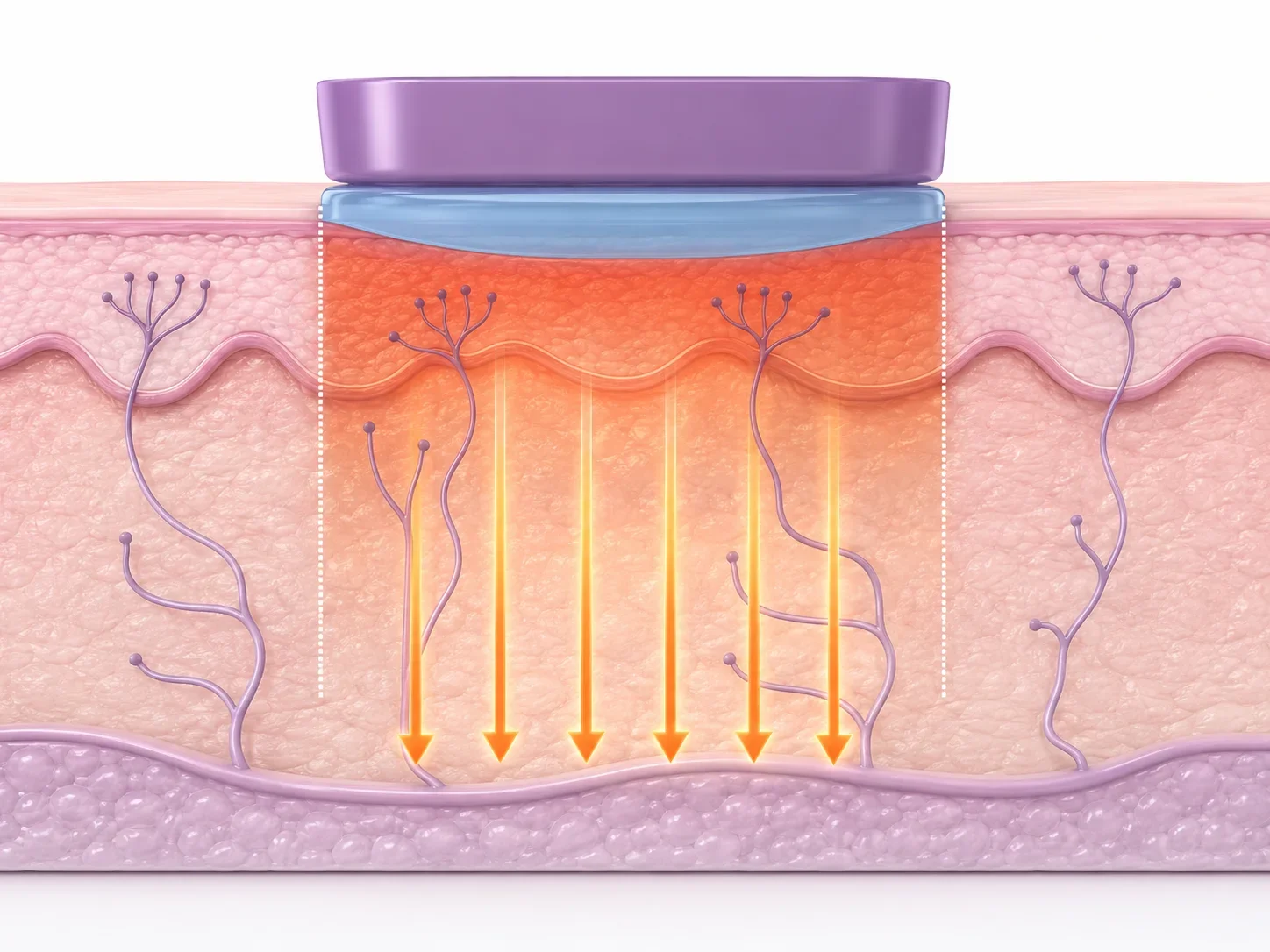
Thermage for Special Areas is a non-surgical lifting treatment that applies Thermage FLX, a monopolar radiofrequency (RF) device operating at about 6.78MHz, to areas that are often exposed but cared for late, such as the décolleté, backs of the hands, knees, and elbows.
It heats the entire dermis over broad areas to induce immediate collagen contraction and new collagen synthesis, playing a supporting role in gradually refining the surface texture and fine lines of areas affected by both aging and UV damage.
Because dermal thickness differs greatly between areas, we plan a more conservative intensity than for the face; results vary between individuals, and UV care is also explained during your consultation.

Non-Surgical RF Lifting for Exposed Areas That Are Hard to Care For

DESIGN PRINCIPLE

Methods
How Thermage for Special Areas Works

Décolleté SUTURE guide image

SutureDécolleté

The décolleté over the sternum has a thin dermis and lies close to the boundary of the chest muscles and ribs, so it calls for conservative intensity. 6.78MHz monopolar RF heats the entire dermis to gradually refine horizontal fine lines (necklace lines) and the surface texture of areas with accumulated pigmentation. Very deep wrinkles require a combination with fillers or skin boosters.

Thin Dermis Muscle Boundary Combination Advised
Back of the Hand HYBRID guide image

HybridBack of the Hand

On the backs of the hands, the dermis is even thinner than on the face and the nerves and blood vessels lie close to the surface, so the intensity is set very conservatively. Gradual changes in superficial fine lines and texture are possible, but prominent veins themselves are not addressed with Thermage; a combination with fillers is more suitable. Because the backs of the hands are among the areas most frequently exposed to UV light, results last a relatively short time.

Very Thin Dermis Superficial Nerves Vessel Awareness
Knees PARTIAL guide image

PartialKnees

It is applied to dermal sagging and fine lines along the line above the knee. Because this is a joint that bends frequently, results tend to last a shorter time than on the face, and repeat treatments are often needed. When sagging is pronounced, a combination with other treatments or a surgical (incisional) option should be considered.

Joint Area Bending Motion Step-by-Step Care
Elbows INCISION guide image

IncisionElbows

It is applied to sagging on the inner side of the elbow and to fine lines. Because the area bends frequently and the skin tends to be thick, the intensity is decided after directly assessing the dermal thickness of each area. In areas where hyperpigmentation has developed, sun protection after treatment is directly tied to the stability of the result.

Bending Motion Inner Sagging UV Care

OUR PRINCIPLE

Core Values
The Principles RESUM Keeps

We do not simply carry facial intensity settings over to exposed areas. The décolleté and backs of the hands have a thin dermis and need a very conservative plan, while the knees and elbows bend frequently, so the conditions for repeated care shape the result. At RESUM, the principle is that Dr. Jin-Young Kim, who performs the treatment, reassesses each area in a consultation and then plans the treatment schedule as well.

Thin Skin First

Thin Skin First

Thin Skin First

In areas with a thin dermis, such as the backs of the hands and the décolleté, we operate at least one level below the standard facial intensity. Drawing on clinical experience accumulated in anti-aging dermatology, we assess the risk of burns and depressions in thin areas before adjusting the intensity. After directly checking the patient's dermal thickness, we reset the intensity for each area.

UV Safe

UV Safe

UV Safety

Special areas are frequently exposed to UV light, so the risk of hyperpigmentation after treatment is higher than for the face. RESUM schedules treatment for a time when UV exposure is low and explains follow-up care and sun protection guidelines together at the consultation stage. A one-off treatment without UV care is not recommended.

Realistic Scope

Realistic Scope

Honest Scope

For concerns that Thermage does not address, such as prominent veins, hyperpigmentation, and very deep wrinkles, we honestly recommend a combination with fillers, laser toning, or skin boosters. We do not tell patients that a single treatment can change every exposed area. After assessing each concern separately in the consultation, we decide on a suitable combination together.

POINT 03 Features

Features of Thermage for Special Areas

How Monopolar Radiofrequency Works

How Monopolar Radiofrequency Works

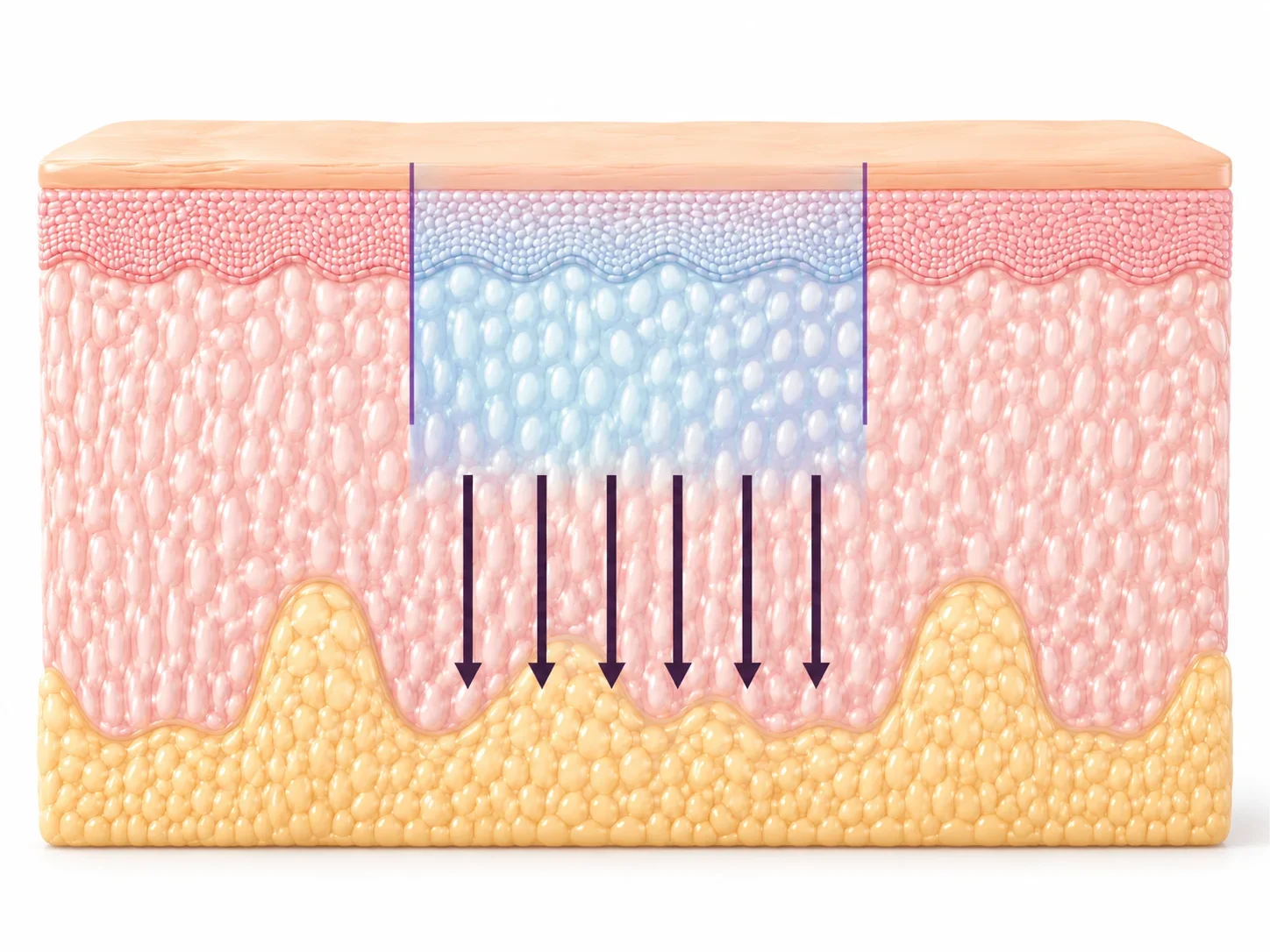
Thermage delivers monopolar radiofrequency at about 6.78MHz throughout the dermis, heating it uniformly over broad areas. The heat generated causes immediate collagen contraction and then induces new collagen synthesis, while the surface is protected by cooling. In areas with a thin dermis, such as the décolleté and backs of the hands, we operate at a lower intensity. Broad-area heating of the entire dermis · Immediate collagen contraction + new collagen synthesis · Epidermal protection through surface cooling · Conservative intensity matched to the dermal thickness of each area

AccuREP and CPT Technology

AccuREP and CPT Technology

The AccuREP algorithm measures tissue impedance in real time with every pulse and automatically adjusts the energy output for each area. CPT (Comfort Pulse Technology) adds vibration and cooling to reduce discomfort during treatment. In areas where nerves and blood vessels lie close to the surface, such as the backs of the hands, the intensity is set very conservatively. Real-time impedance measurement and automatic energy adjustment · Treatment comfort through vibration and cooling · Lower intensity in thin areas · Sun protection alongside treatment for exposed areas

POINT 04 Q&A

Can Exposed Areas Be Treated at Facial Intensity?

First, dermal thickness differs by area, so the intensity is reset.

First, dermal thickness differs by area, so the intensity is reset.

The décolleté and backs of the hands have a thin dermis, with nerves and blood vessels close to the surface, so applying facial intensity as is may cause irritation first. After directly checking the thickness of each area in the consultation, we plan at least one level more conservatively than the facial standard.

Second, UV care directly affects how long results last.

Second, UV care directly affects how long results last.

The backs of the hands and the décolleté are frequently exposed to UV light, so insufficient sun protection after treatment can raise the possibility of temporary hyperpigmentation and affect how long results last. We adjust the timing of treatment and explain follow-up sun protection guidelines as well.

Third, for concerns Thermage cannot easily address, we recommend a combination.

Third, for concerns Thermage cannot easily address, we recommend a combination.

Prominent veins, hyperpigmentation, and very deep wrinkles are difficult to address with Thermage alone, so a combination with fillers, laser toning, or skin boosters may be more suitable. After assessing each concern separately in the consultation, we explain a suitable approach; results vary between individuals.

NOTICE

Precautions
Aftercare & Precautions

N · 01 The décolleté, backs of the hands, knees, and elbows differ greatly in dermal thickness, so intensity and shot distribution are replanned for each area.
N · 02 In areas where nerves and blood vessels lie close to the surface, such as the backs of the hands, the intensity is set very conservatively to manage irritation.
N · 03 Due to the nature of monopolar radiofrequency, treatment may be restricted for patients with implanted electrical devices or with a metal implant near the treatment area.
N · 04 In frequently exposed areas, insufficient sun protection after treatment can raise the possibility of temporary hyperpigmentation and affect how long results last.
N · 05 Prominent veins, hyperpigmentation, and very deep wrinkles are difficult to address with Thermage alone, so a combination with laser toning, skin boosters, or similar options may be suitable.
N · 06 For about 1 week after treatment, avoid strong friction on the treated area, saunas, and hot compresses, and keep up moisturizing and sun protection.
N · 07 Results vary with the tissue condition of each area, and the treatment area is decided in a consultation with Dr. Jin-Young Kim.


PROCEDURE DATA

Summary
Treatment Overview

Procedure

Treatment Overview

Treatment time
20-60 min
Anesthesia
Numbing cream
Daily activities
Right after
Duration
About 12 months

FOR WHOM

Candidates

Consider a Consultation If

05 Recommended Cases

01 Those who want to refine firmness in areas that are often exposed but have been cared for late, such as the décolleté or backs of the hands
02 Those who have focused mainly on facial care and now want to address the surface texture and fine lines of exposed areas as well
03 Those who want to care for exposed areas step by step without surgery and receive UV care as well
04 Those who want a conservative intensity plan that takes differences in dermal thickness between areas into account
05 Those who want to discuss prominent veins or hyperpigmentation together as part of a combination treatment
Jin-Young Kim · M.D. - RESUM Plastic Surgery Clinic

Doctor's Note

In areas such as the décolleté and the backs of the hands, the skin is in places even thinner than on the face. If the intensity that works well on the face is carried over as is, irritation comes before results. The step of replanning for each area within an academically validated range matters most, and guiding UV care alongside it is the essence of the result.

Jin-Young Kim · M.D.

Dr. Jin-Young Kim, Director

PROCEDURE FLOW

Process
Treatment Process

01

PHASE I

Diagnosis

For each treatment area, such as the décolleté and backs of the hands, we assess dermal thickness and the degree of aging and UV damage to define the range suitable for treatment.

CONSULT

02

PHASE II

Area-Specific Planning

We lower the intensity further in thin areas, and distribute shots and intensity very conservatively in areas where nerves and blood vessels lie close to the surface.

DESIGN

03

PHASE III

Treatment

After topical anesthesia, the entire dermis of the area is heated over broad areas, and the pulses and intensity are adjusted to the characteristics of the area.

PROCEDURE

04

PHASE IV

Guidance

We explain sun protection guidelines, combination options such as lasers and skin boosters if needed, and the timing of the next treatment.

STEP

FREQUENTLY ASKED

FAQ
Frequently Asked Questions

We have compiled the questions patients ask most often before a consultation.

It is a non-surgical RF lifting treatment for areas that are often exposed but tend to be cared for late, such as the décolleté, backs of the hands, knees, and elbows. It uses the same 6.78MHz monopolar radiofrequency, but the intensity is planned more conservatively than for the face, according to the dermal thickness of each area. The fact that these areas receive frequent UV exposure is also reflected in the treatment schedule and follow-up care.
A single area takes 20-30 minutes, and several areas take around 60 minutes. Time for applying topical anesthesia (30-40 minutes) is added separately. Because the areas are small, treatment time tends to be shorter than for the face or body.
Some change is visible right after treatment from the immediate contraction of dermal collagen, and the result then settles as new collagen synthesis builds up gradually over 4-6 months. Because the areas are small, the change is sometimes noticed sooner than on the face.
Because there are no incisions, you can return to daily activities right after treatment. Slight swelling and redness may be present for about 1-3 days and, in rare cases, continue mildly for up to 1-2 weeks, but no separate rest period is needed. We recommend reducing UV exposure for about 1-2 weeks.
Temporary swelling and redness may occur right after treatment and settle within 1-2 weeks. Thin areas are treated at a more conservative intensity to reduce the risk of burns. If UV care is insufficient, temporary hyperpigmentation is possible, so sun protection after treatment is important.
The cost varies with the area, the extent of treatment, and the number of shots. There is no single fixed price; the cost is calculated from the treatment plan designed for each patient's condition. Exact details are explained during your consultation.

RESUM Plastic Surgery Clinic Location

#601, 6F, 842 Nonhyeon-ro, Gangnam-gu, Seoul

6F #601, 599-4 Sinsa-dong, Gangnam-gu, Seoul

HOURS

Weekdays
10:00 ~ 20:00
Saturday
10:00 ~ 17:00
Lunch Break
1:00 PM - 2:00 PM

(No lunch break on weekends and public holidays) *Dr. Won-Suk Kook is not available on the 1st and 3rd Saturdays of each month.

Parking Information Parking is available in the building. 1 hour of free parking

Subway 5-minute walk from Exit 3 of Apgujeong Station on Line 3 (right next to the 14-story CGV building at Exit 3)

RESUM Plastic Surgery Clinic CEO Won-Suk Kook Business No. 733-11-02929 Phone 02-3445-7770