01. Witch’s Chin
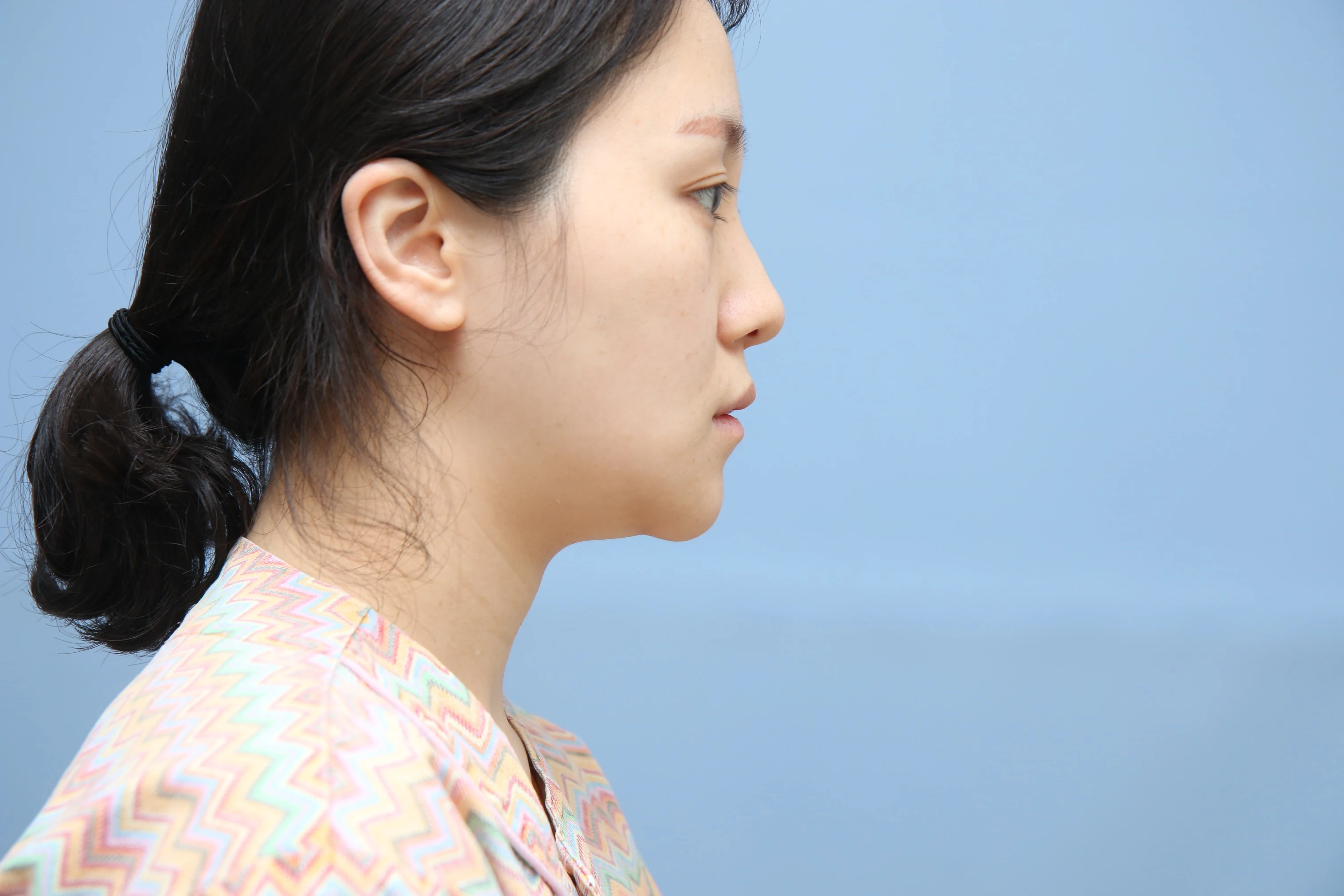
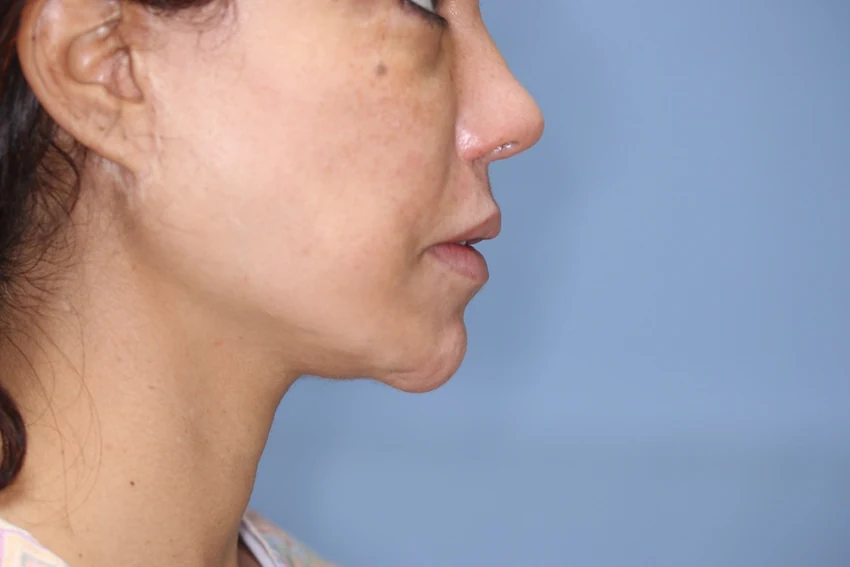
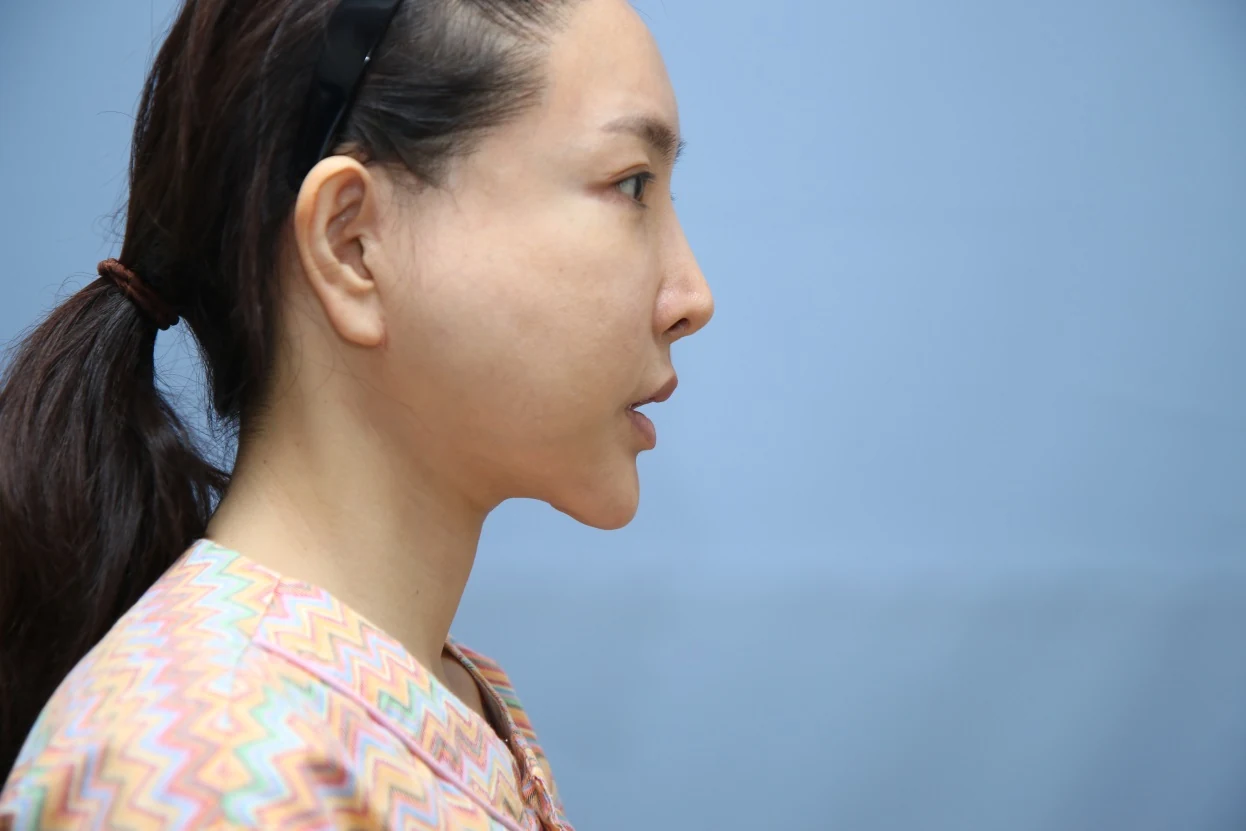
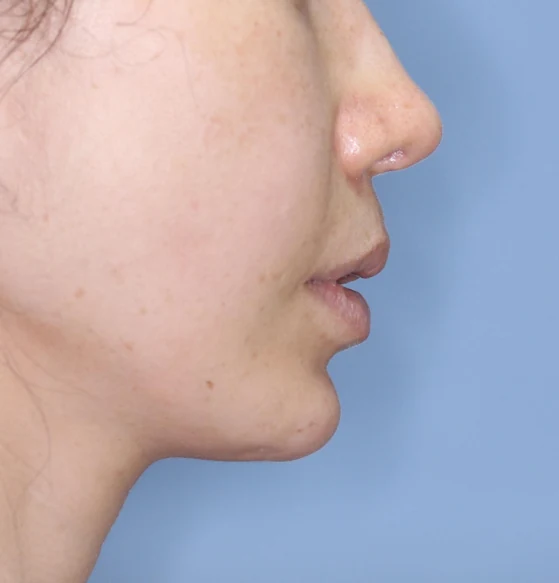
The tip of the chin droops, and the submental crease becomes more pronounced.


service / Signature
A condition in which the chin droops after bony genioplasty because the soft tissue of the chin, especially the origin of the muscle, has detached
Mentum Correction
Chin ptosis, the so-called “witch’s chin,” is a side effect that appears after genioplasty. It is a deformity that occurs when the mentalis muscle, separated from the bone during the contouring surgery, then droops downward.
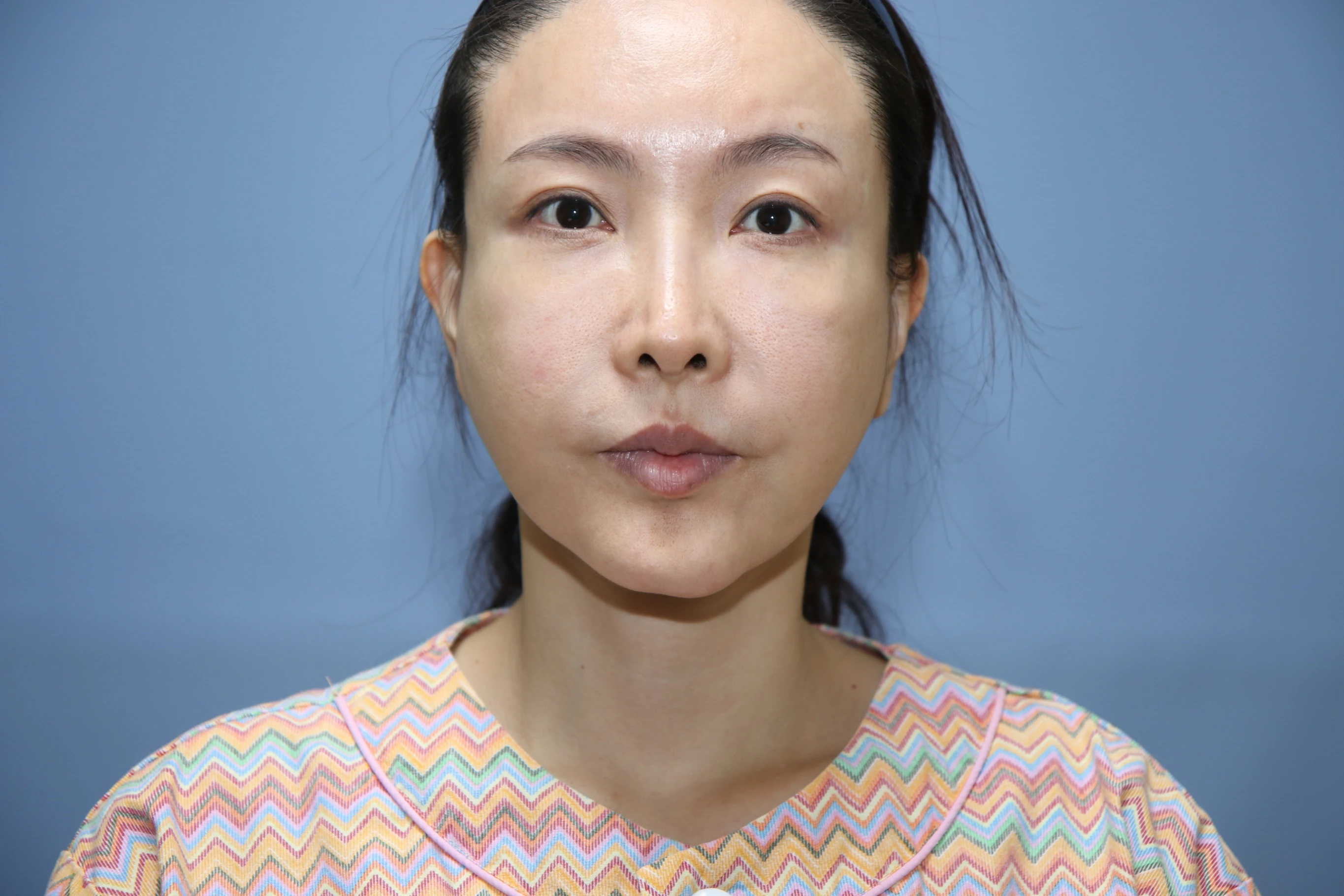
Typical features include a longer chin and, because the mentalis muscle has detached, a lower lip that also droops, making it hard to close the mouth. Closing the mouth therefore takes effort, which produces cobblestone wrinkles on the chin. Some patients also feel tightness and pressure in the mentalis muscle, or a sensation that the lips and chin are being pulled downward.
In profile, as the chin droops, a “submental crease” also appears where the line running from the chin to the neck folds.
The tip of the chin droops, and the submental crease becomes more pronounced.
The chin droops and looks longer, especially when the mouth is relaxed.
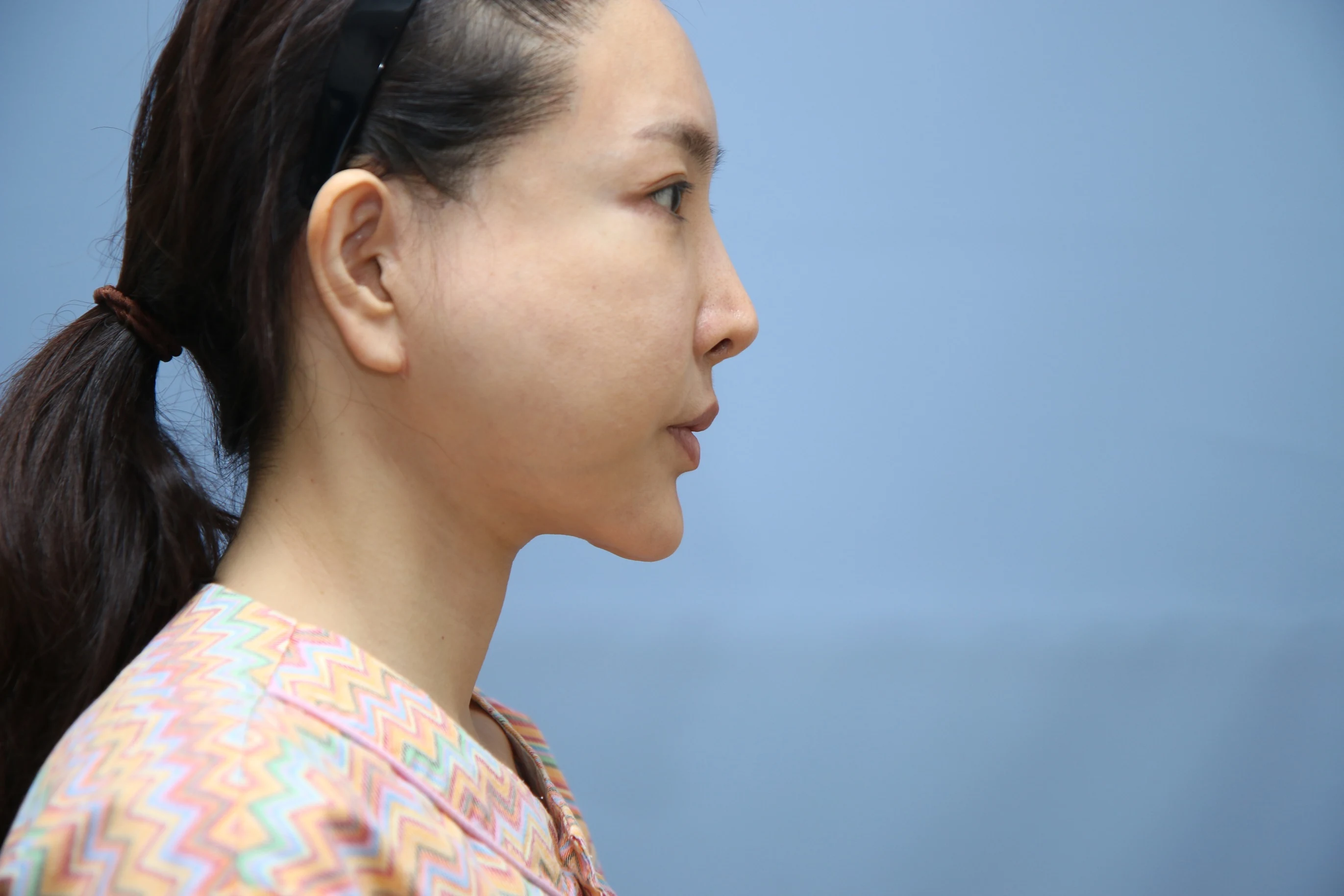
As the lower lip droops, the lower teeth become exposed.

The mouth can be closed only by straining the lips and chin considerably.
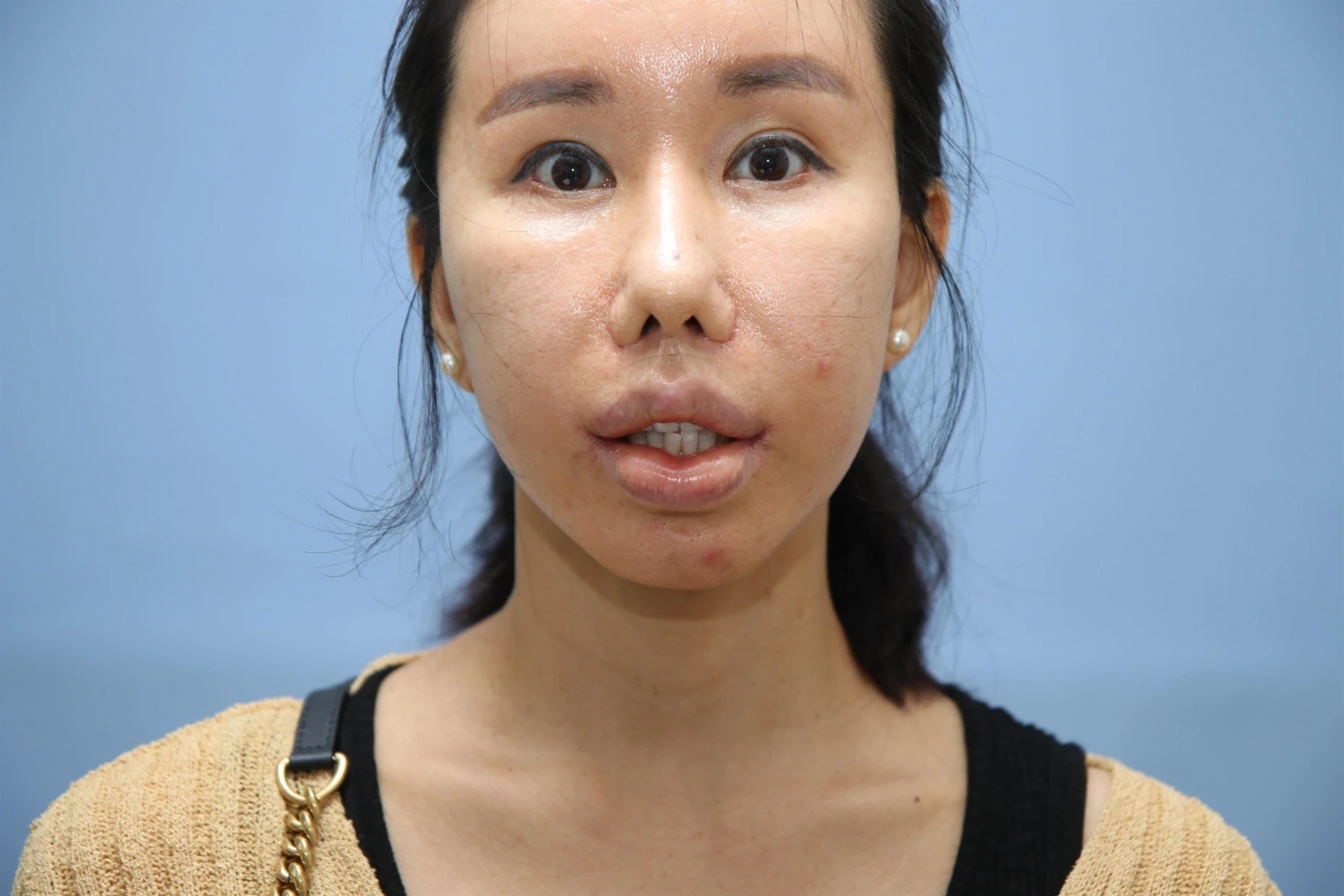
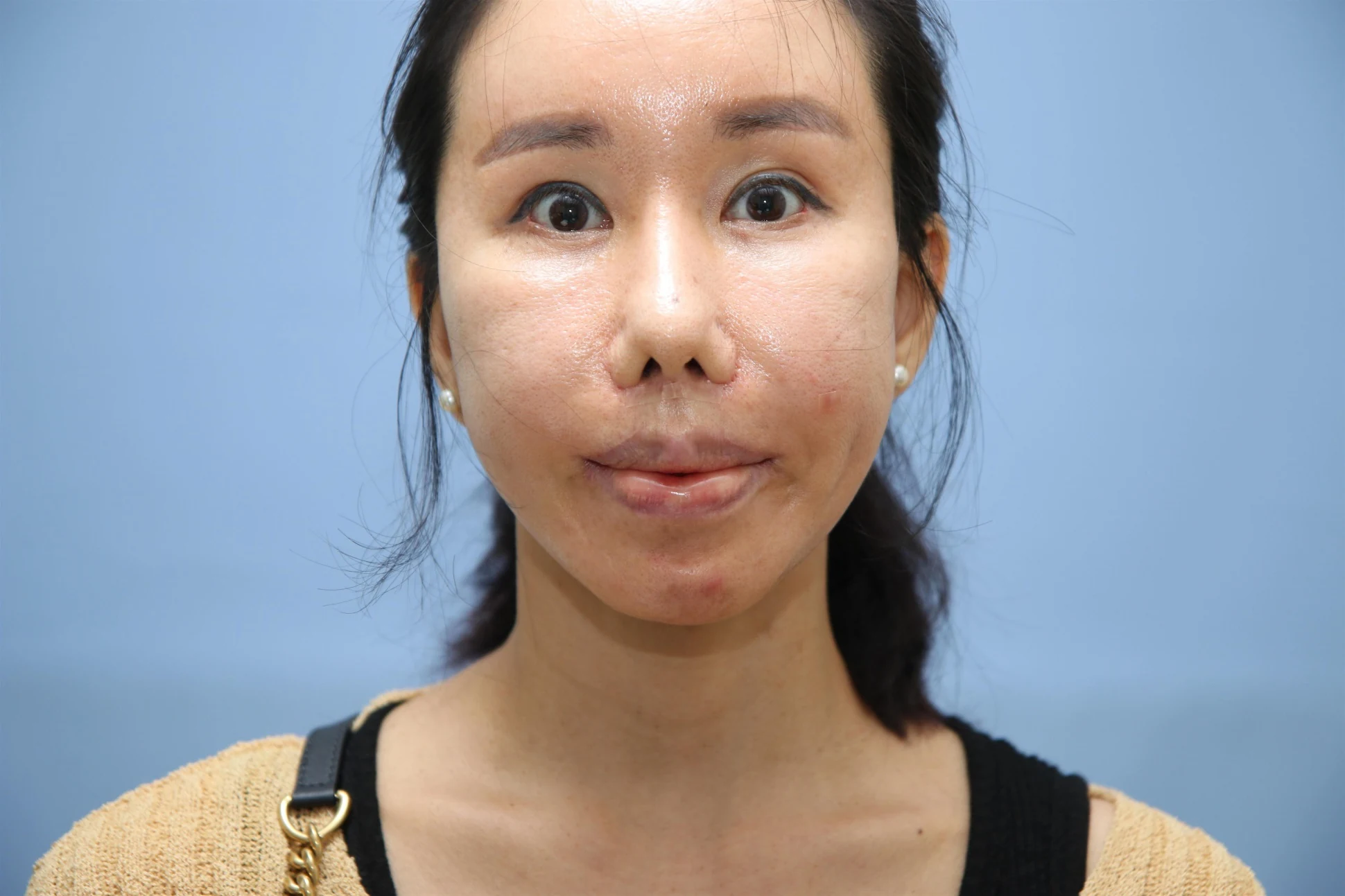
Cobblestone-like wrinkles appear on the chin when the mouth is closed.


Mentalis muscle bunching (clump) and cobblestone wrinkles (dimpling) are observed.

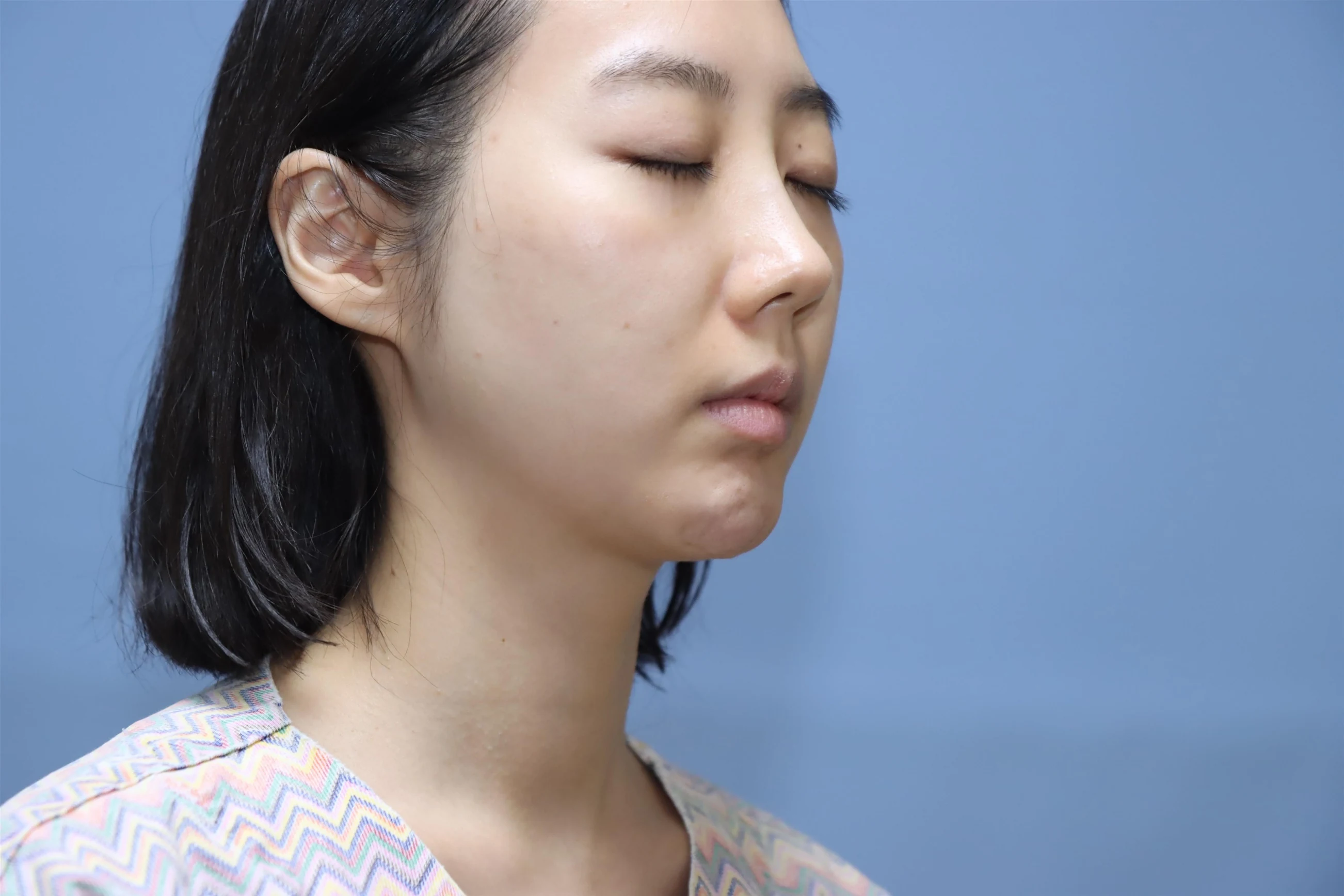
Chin ptosis (witch’s chin) refers to a condition in which, after bony chin contouring surgery, the soft tissue of the chin, especially the origin of the mentalis muscle, becomes displaced
and the chin droops as a result.
- Causes: chin bone reduction (Reduction Osseous Genioplasty, Intraoral Osseous Burring), chin implant removal
- Anatomical mechanism: displacement and ptosis of the mentalis muscle, atrophy of chin fat tissue, capsular contracture
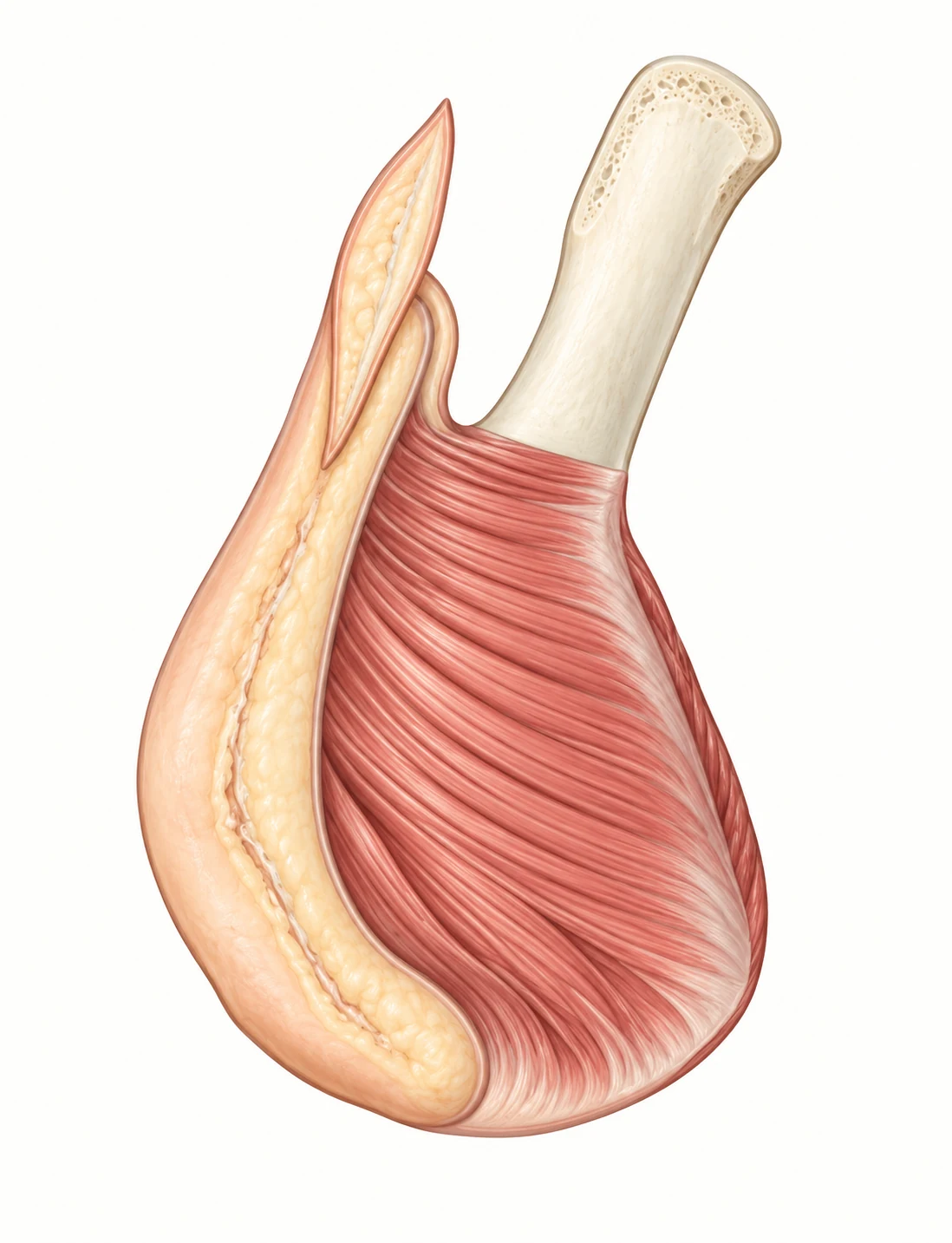
Anatomical Mechanism of Chin Ptosis(Witch’s chin)
When an intraoral incision is made for chin surgery, the mucosa and mentalis muscle are incised about 1 cm above the gingivolabial sulcus,
and the mentalis muscle is then dissected off the bone.
After this dissection, once the bone work is finished, the incision is sutured; however,
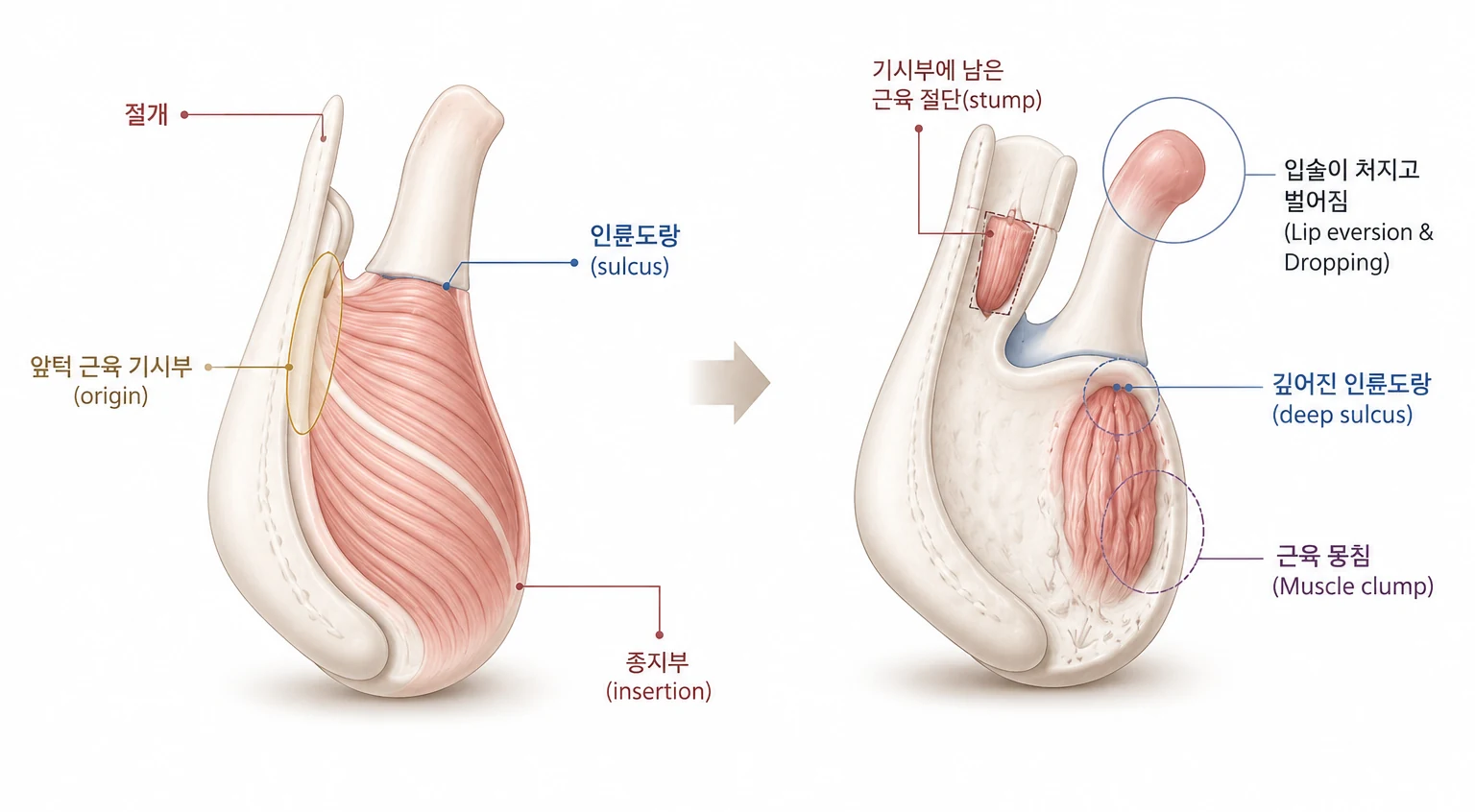
i if too little muscle is left on the origin (bone) when the muscle is incised, or
ii if a gap forms between the bone and the muscle because the chin bone has been reduced in size and moved backward after wide dissection, as in a “T” osteotomy, a setback, or a bone resection,
the origin of the mentalis muscle that was attached to the bone cannot be reapproximated to its original position, and the mentalis muscle droops like a snapped rubber band.
Let us look at the technique and effect of each of the 5 methods above in turn.
This technique was first described by Dr. Zide in 1989 and has since been refined in several ways to reach its present form.
The basic concept is to raise the fallen mentalis muscle back up to its original position. Because the earlier dissection has left no tissue to serve as an anchor point for fixing the muscle, holes are drilled in the alveolar bone so that the muscle attaches firmly to bone; sutures passed through the muscle are threaded through these holes and anchored to the bone so that the muscle does not droop again.
A point of caution in this surgery is that the holes must be drilled and the fixation placed clear of the roots of the front teeth in order to prevent nerve damage.

Barry M. Zide, M.D., D.M.D., and Joseph McCarthy, M.D.
Plastic and Reconstructive Surgery, March 1989
A method for patients whose chin is drooping, long, and set back, in which the contour is shaped attractively and naturally while chin ptosis is prevented:
Cutting the bone and moving it forward (advancement or jumping osteotomy) + Mentalis Resuspension

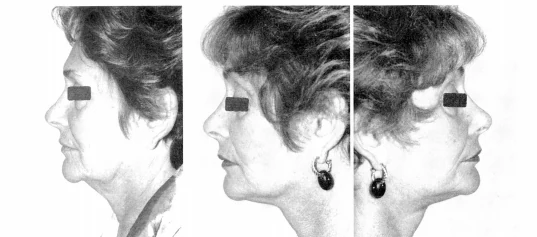
In this method, an incision is made under the chin, and the skin and facial expression muscles are pulled backward and closed with an overlap suture, as shown in the figure.
However, chin ptosis is a condition in which the mentalis muscle, a deep-layer motor muscle, has dropped downward, so this technique of pulling the skin and facial expression muscles backward cannot lift the drooping mentalis muscle.
Therefore, surgery through a submental incision has no effect at all on chin ptosis; it is a technique applied to a double chin caused by aging.
The submental crease is removed by the flap technique.

Most patients who develop chin ptosis after previous chin surgery through an intraoral incision have had at least 2 surgeries, and the muscle remaining on the mucosal layer inside the mouth is very scant or weak, so it can hardly support the bulky, heavy mentalis muscle.
In addition, because the periosteum was already dissected during the chin bone surgery, almost no trace of periosteum remains on the alveolar bone either, so fixing the heavy mentalis muscle to it is not possible.
Suturing the drooping mentalis muscle to the muscle or periosteum at the incision site is therefore neither feasible nor effective.
These methods lift sagging in shallow layers such as the skin, the subcutaneous layer, and the facial expression muscles, and it can be stated clearly that they do not lift the deep muscle layer.
* Muscle Tying
The figure below shows a method in which a simple incision of about 1 cm is made inside the mouth and the tissue is pulled up with thread; this, too, may have a slight effect on skin sagging caused by aging.
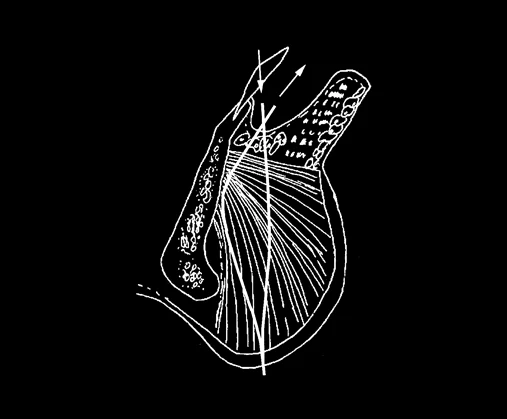
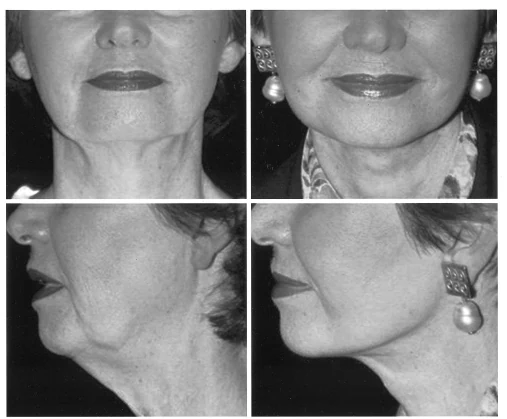
Jorge L. de la Torre, M.D., Scot A. Martin, M.D., Mazin S. Al-Hakeem, M.D., Benoit C. De Cordier, M.D., and Luis Vasconez, M.D.
Birmingham, Alabama
As described above, the most effective method known to date for correcting chin ptosis (witch’s chin) after genioplasty is mentalis resuspension.
However, just as it is better to build a sturdy barn than to mend it after the cow is lost, knowing the preventive measures that minimize chin ptosis during genioplasty will be of great help.
Clinical Cases
Let us look at cases in which the symptoms and side effects of chin ptosis after genioplasty were corrected.
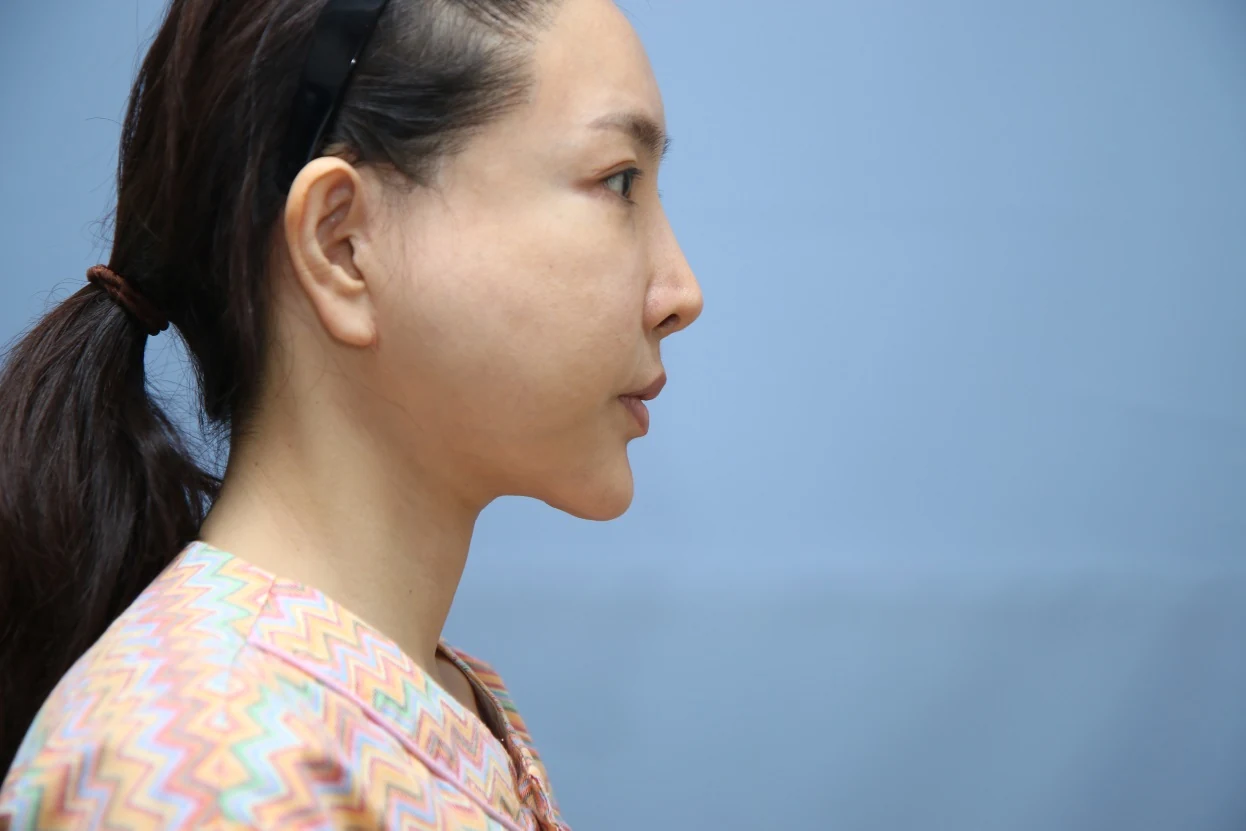

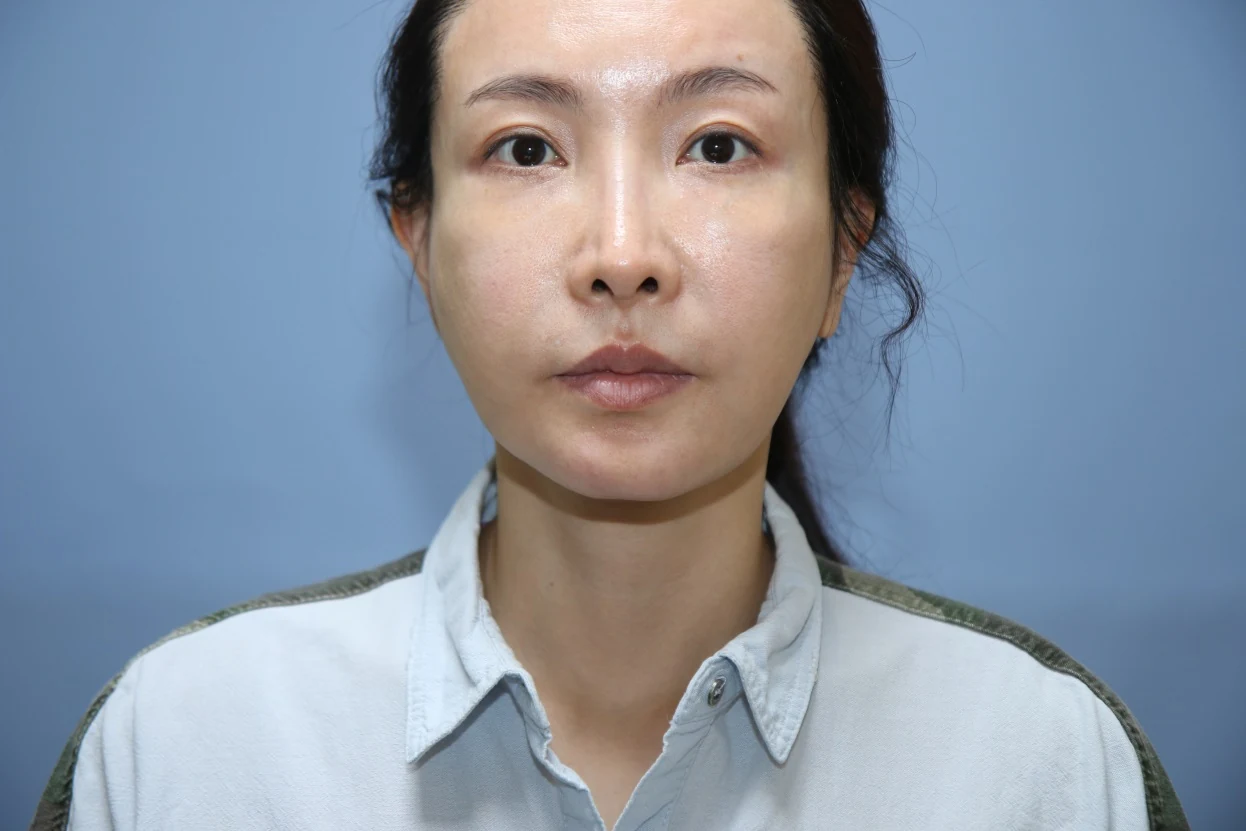
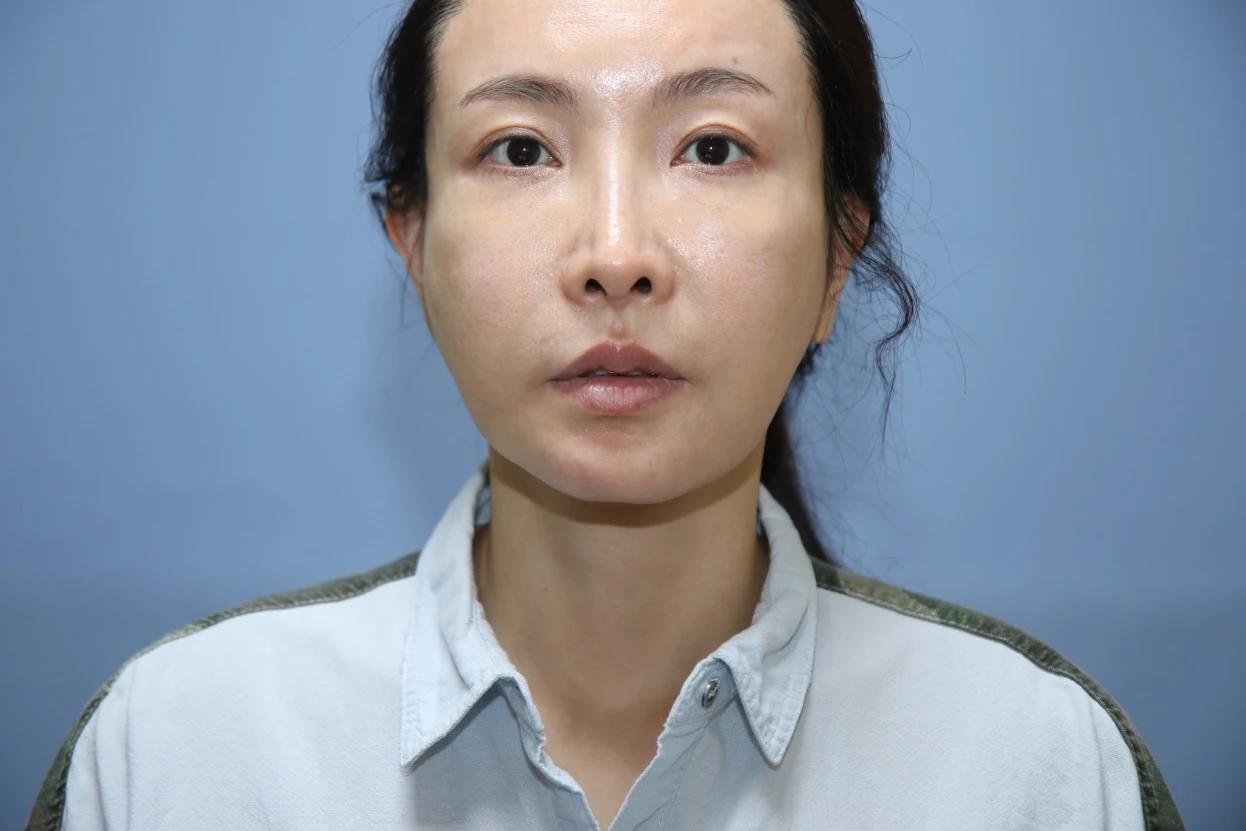


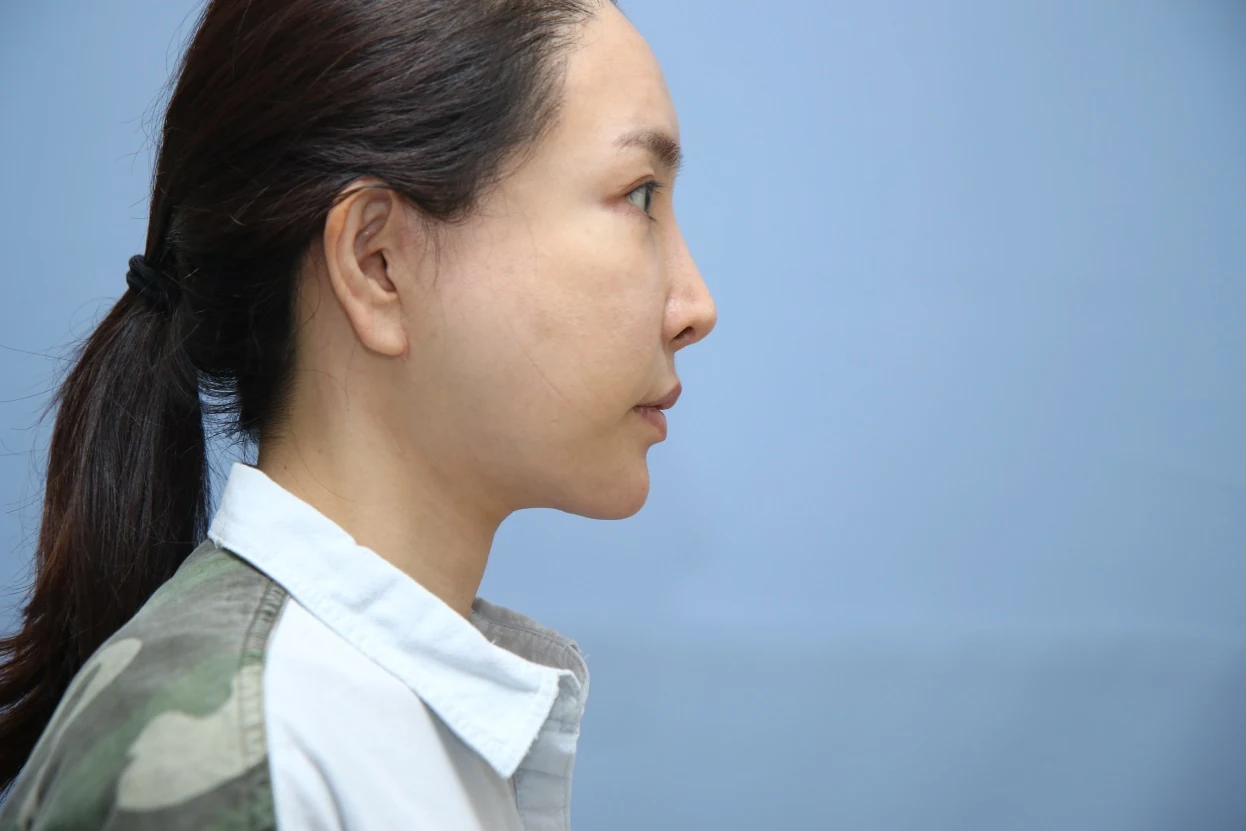



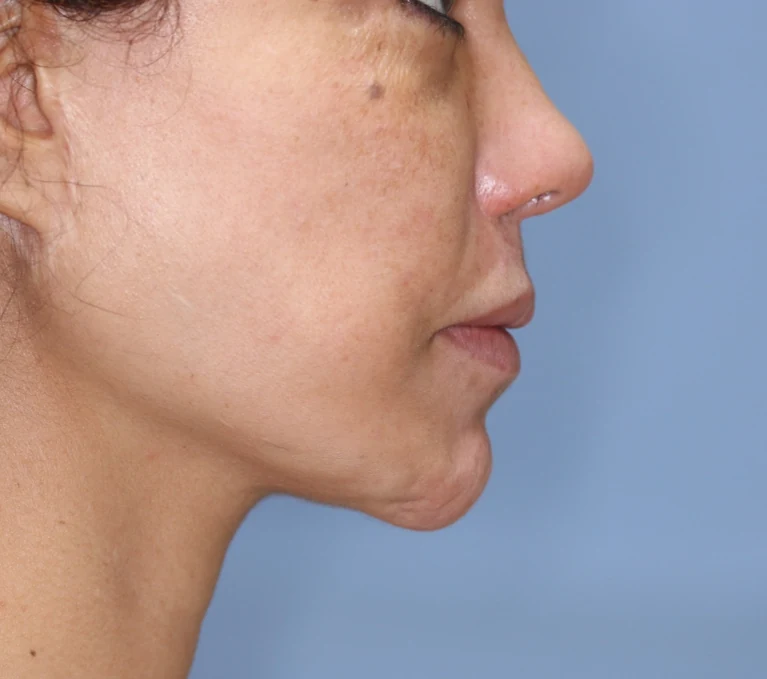
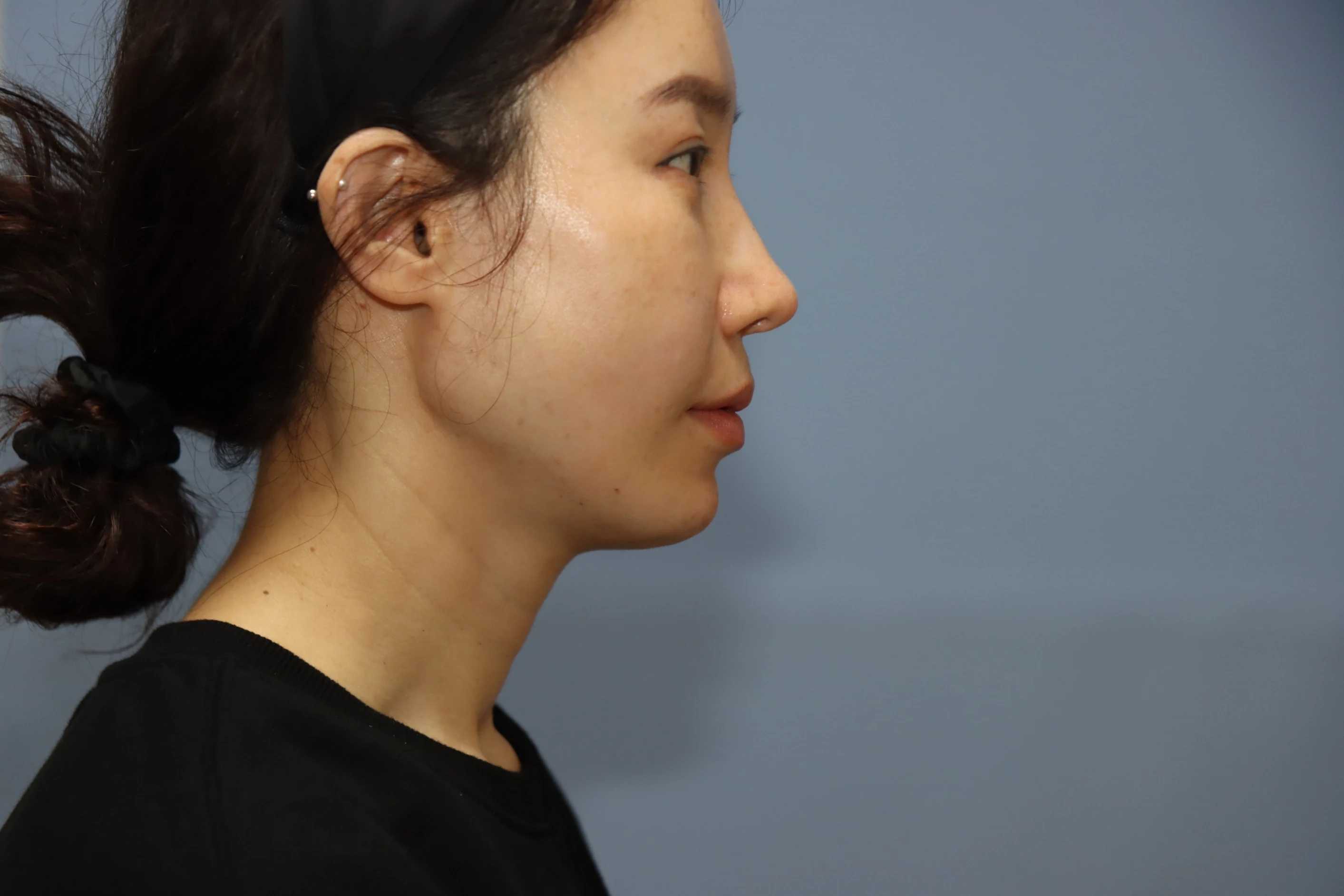
After surgery: the lip has lifted and fully covers the lower teeth.

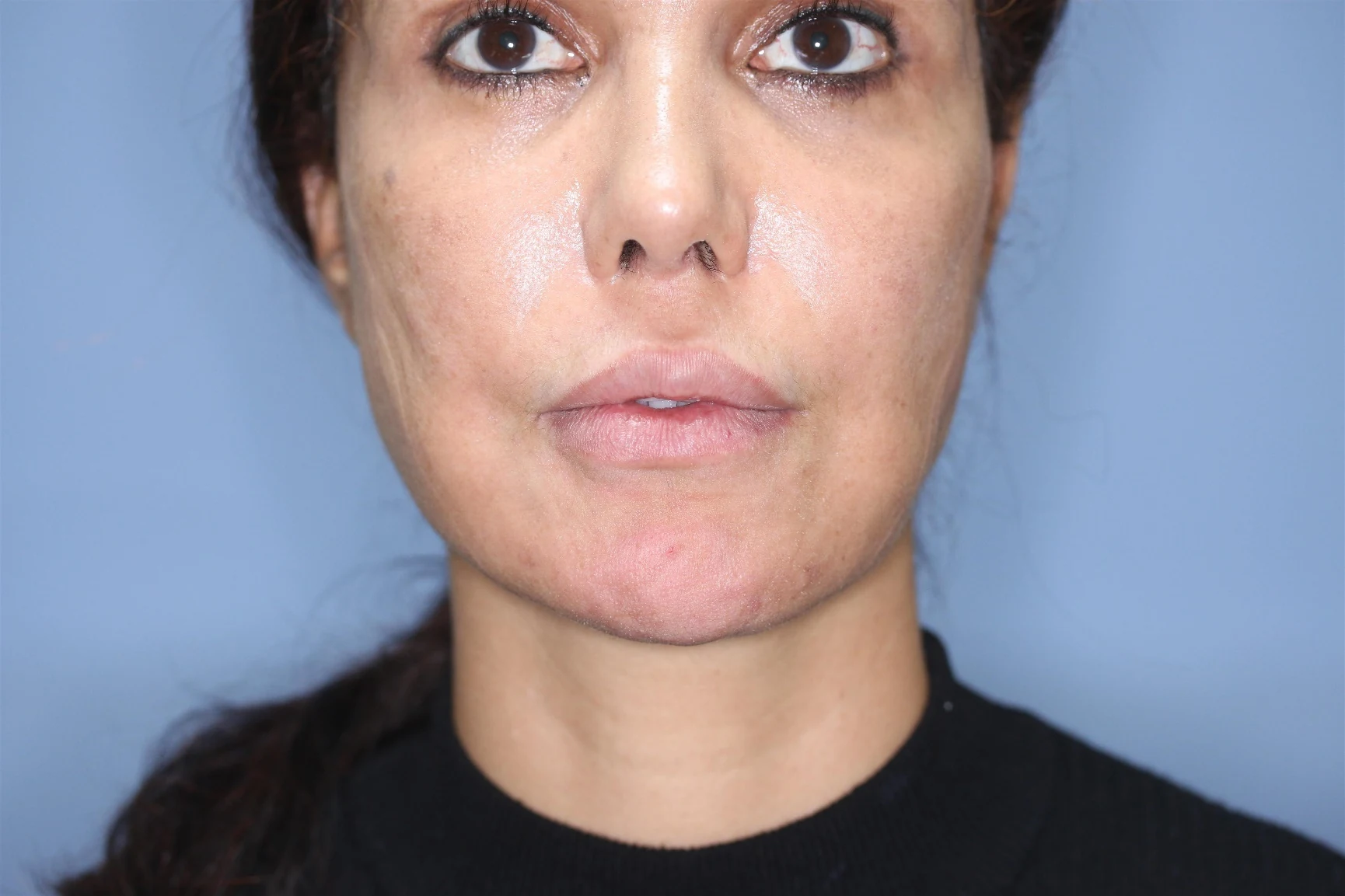
After surgery, the lips close comfortably, and the mentalis muscle no longer bunches or forms cobblestone wrinkles.

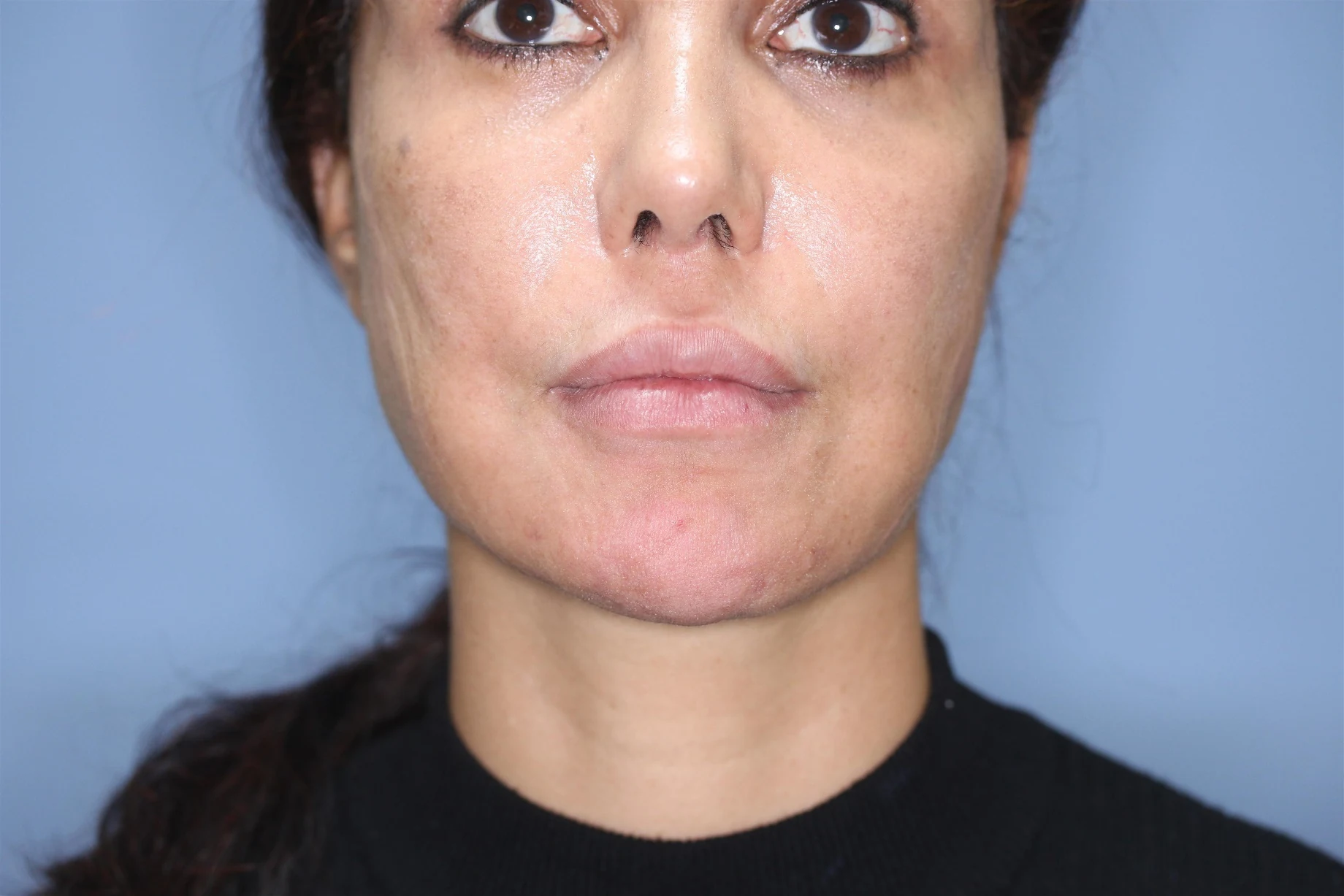
The lower lip has moved upward.
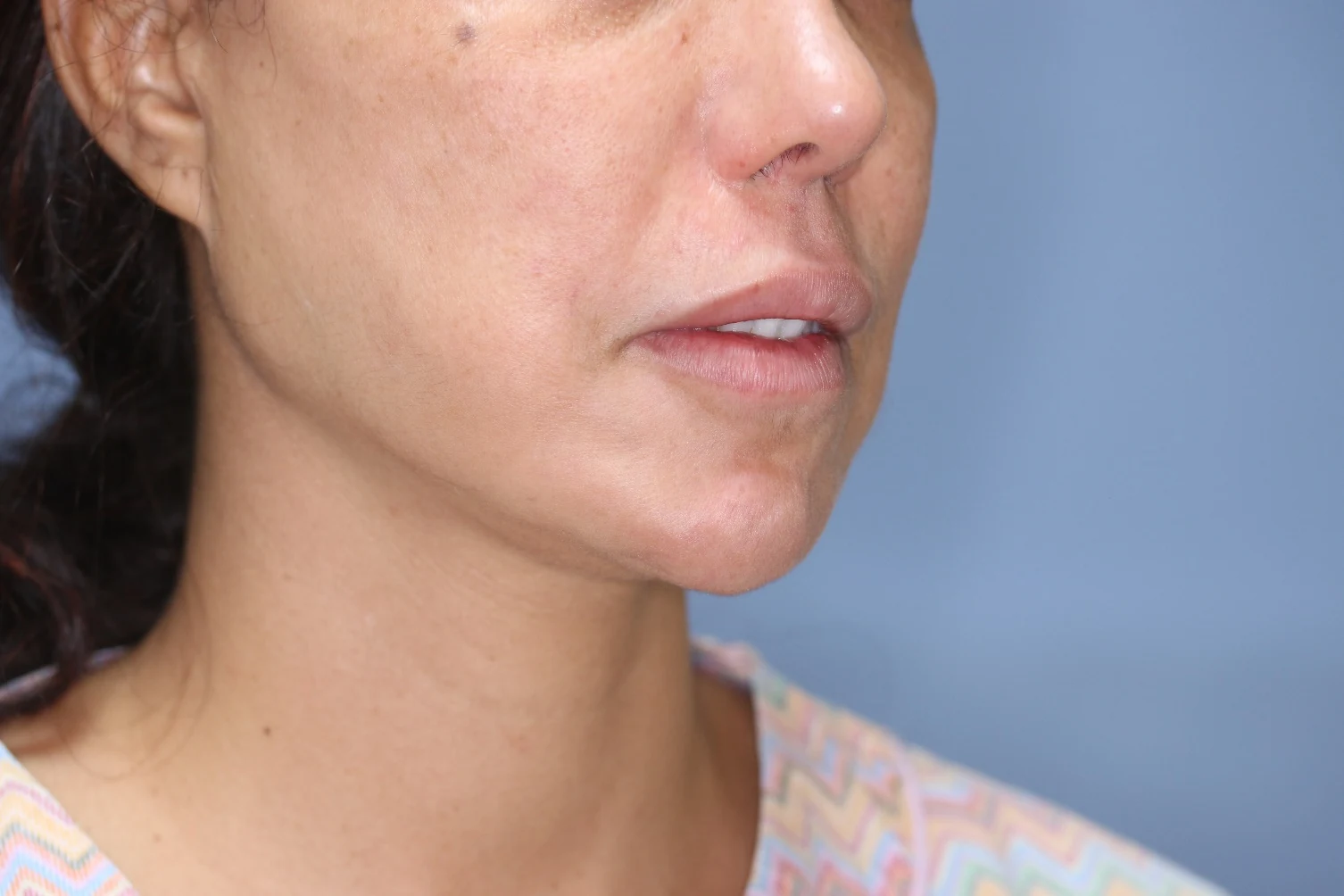

Muscle contraction at the chin tip is gone when the mouth is closed.


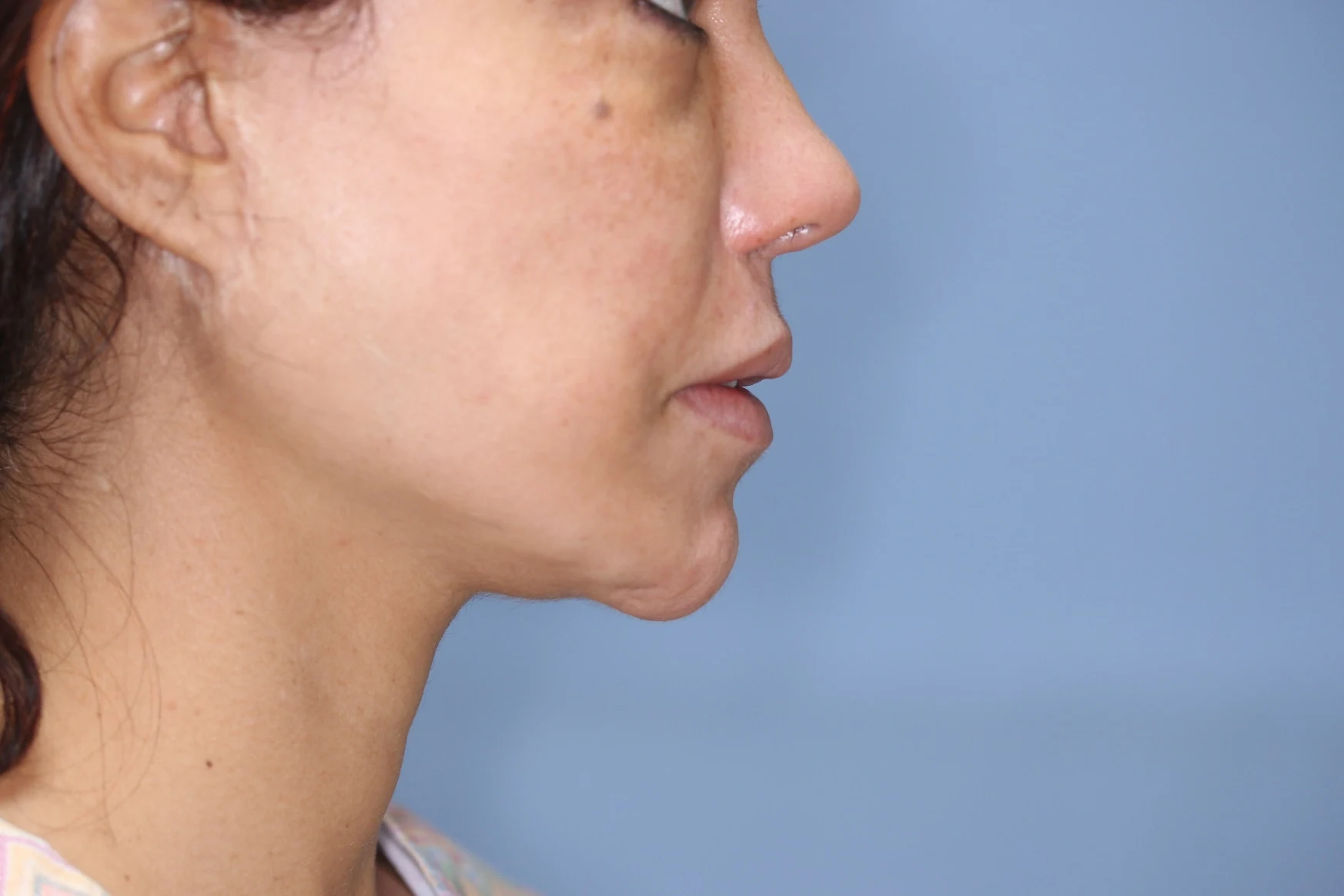
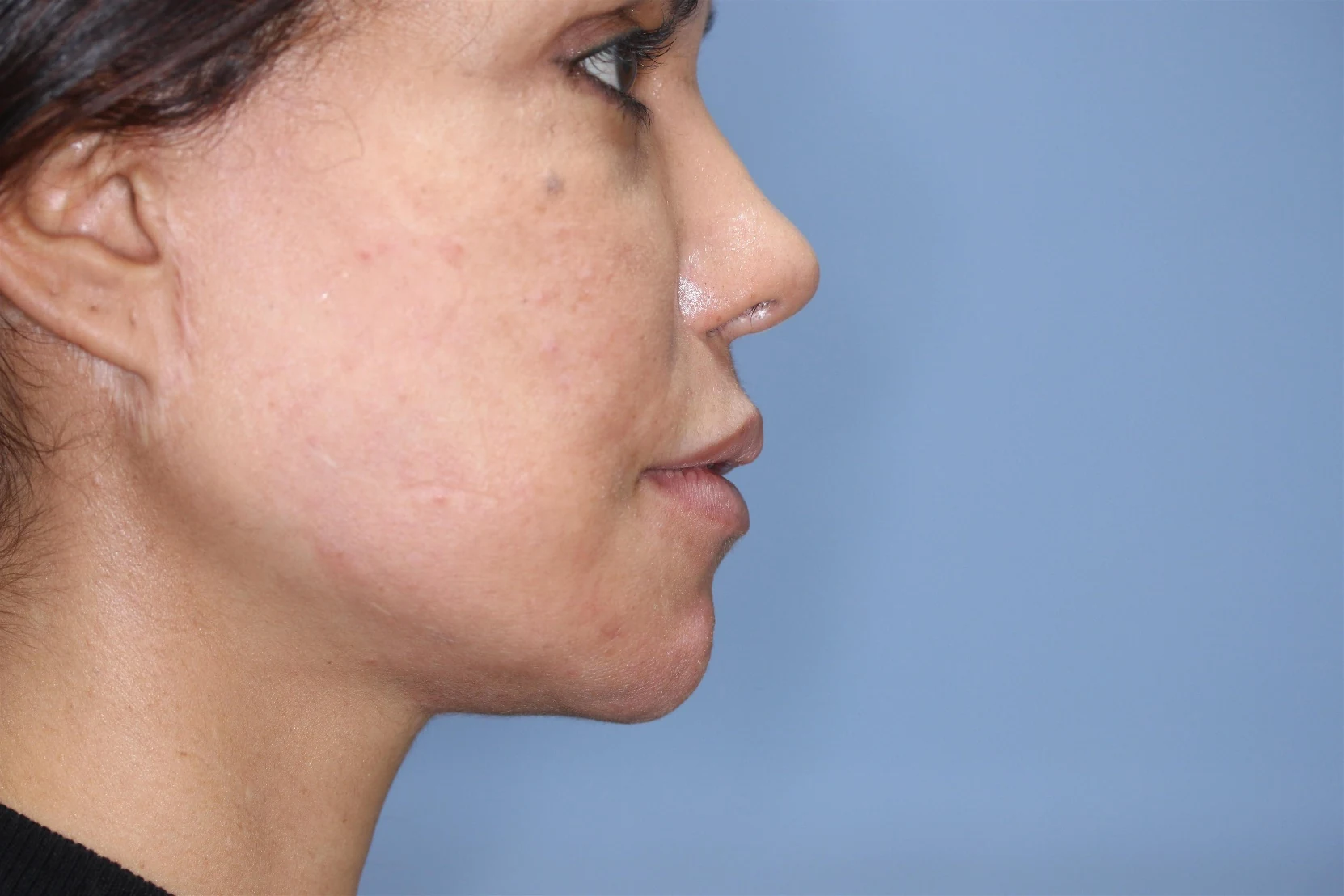
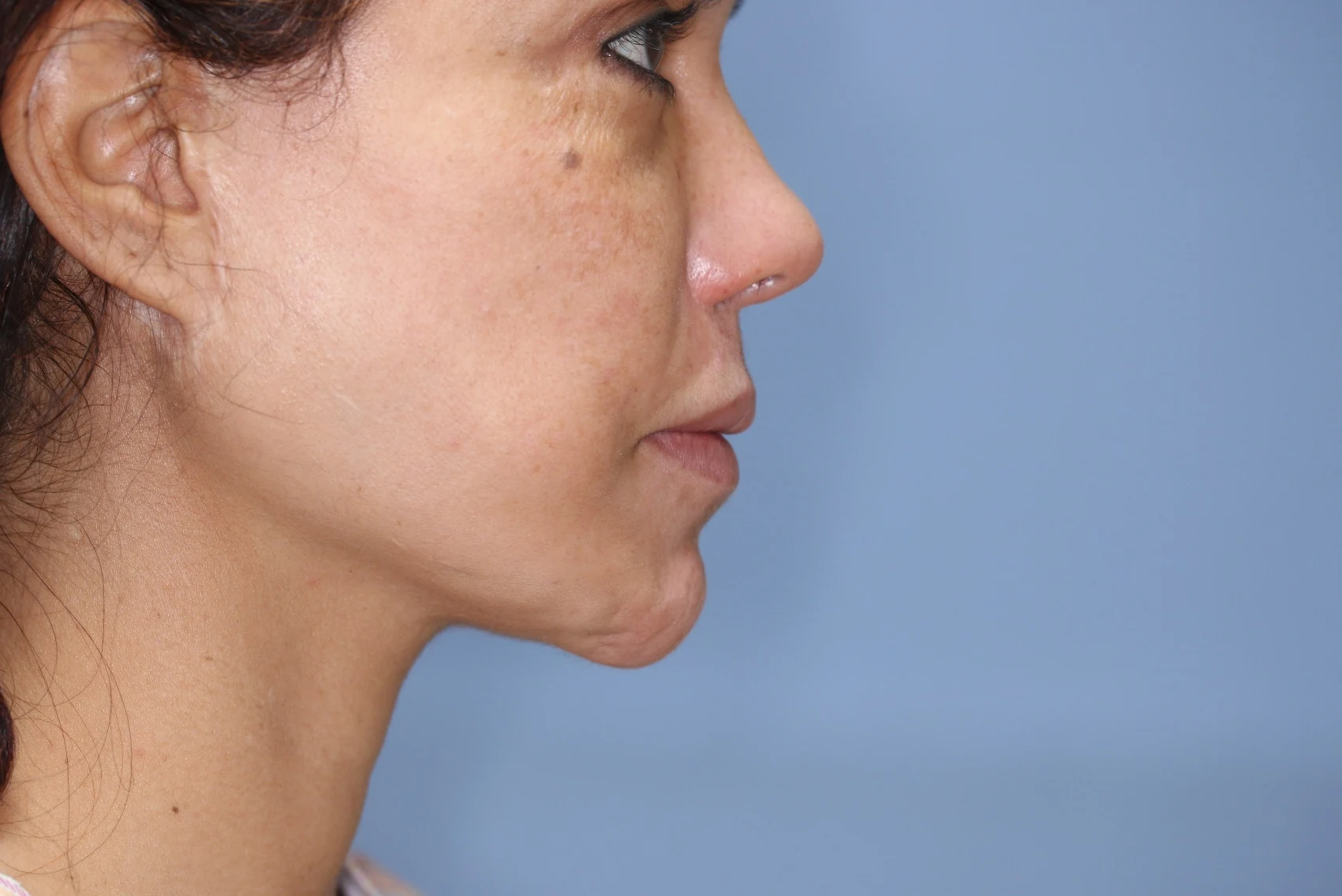



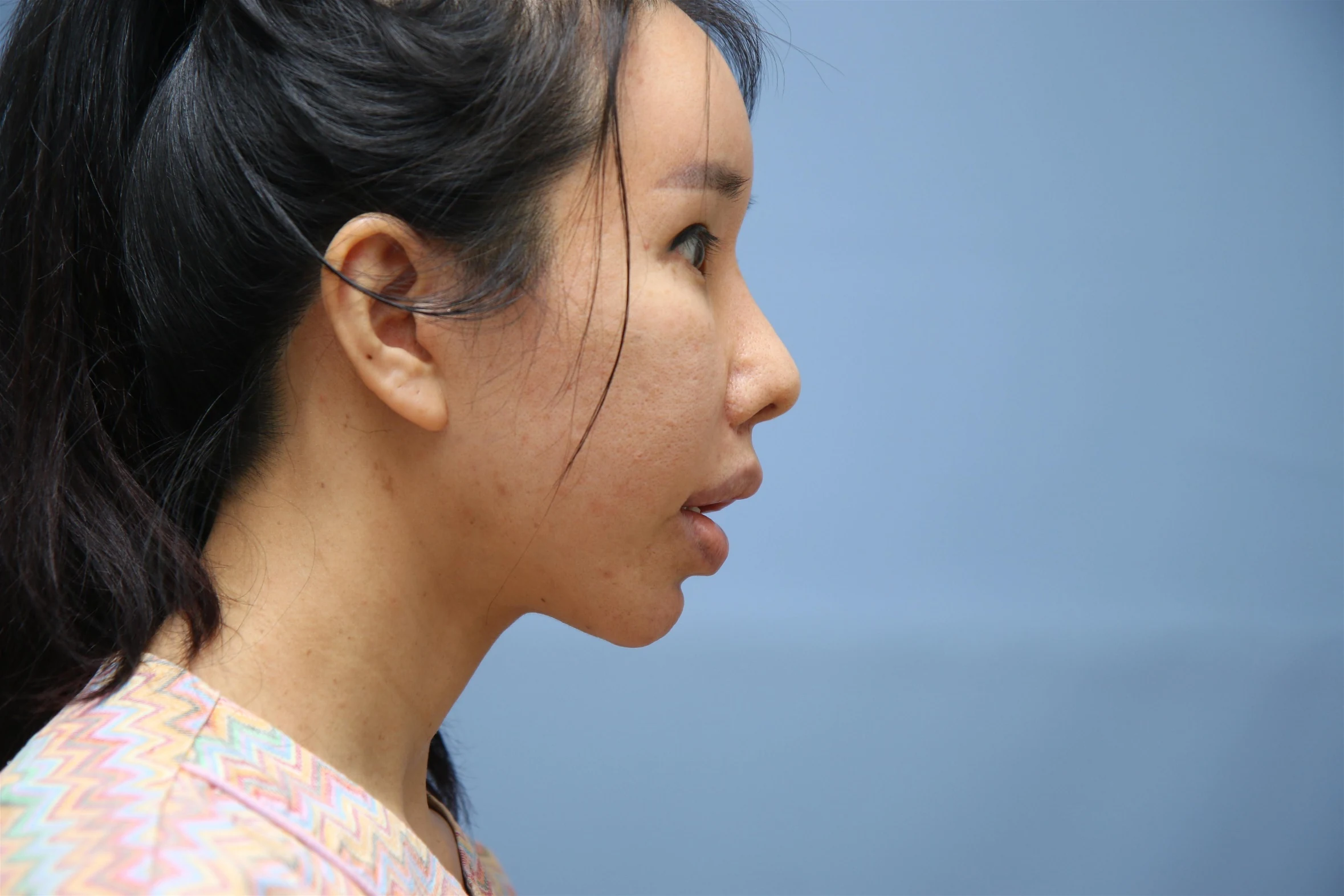
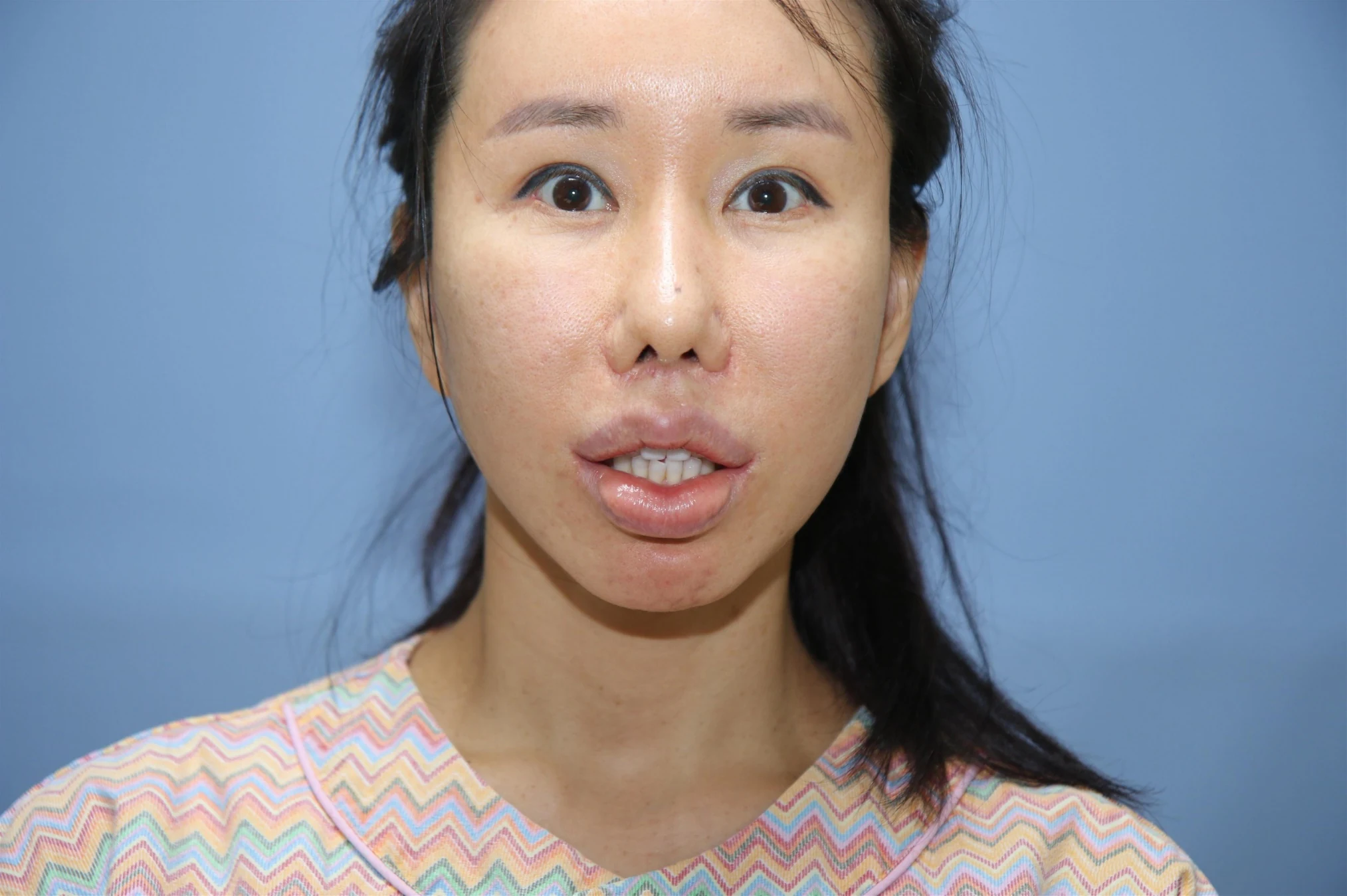

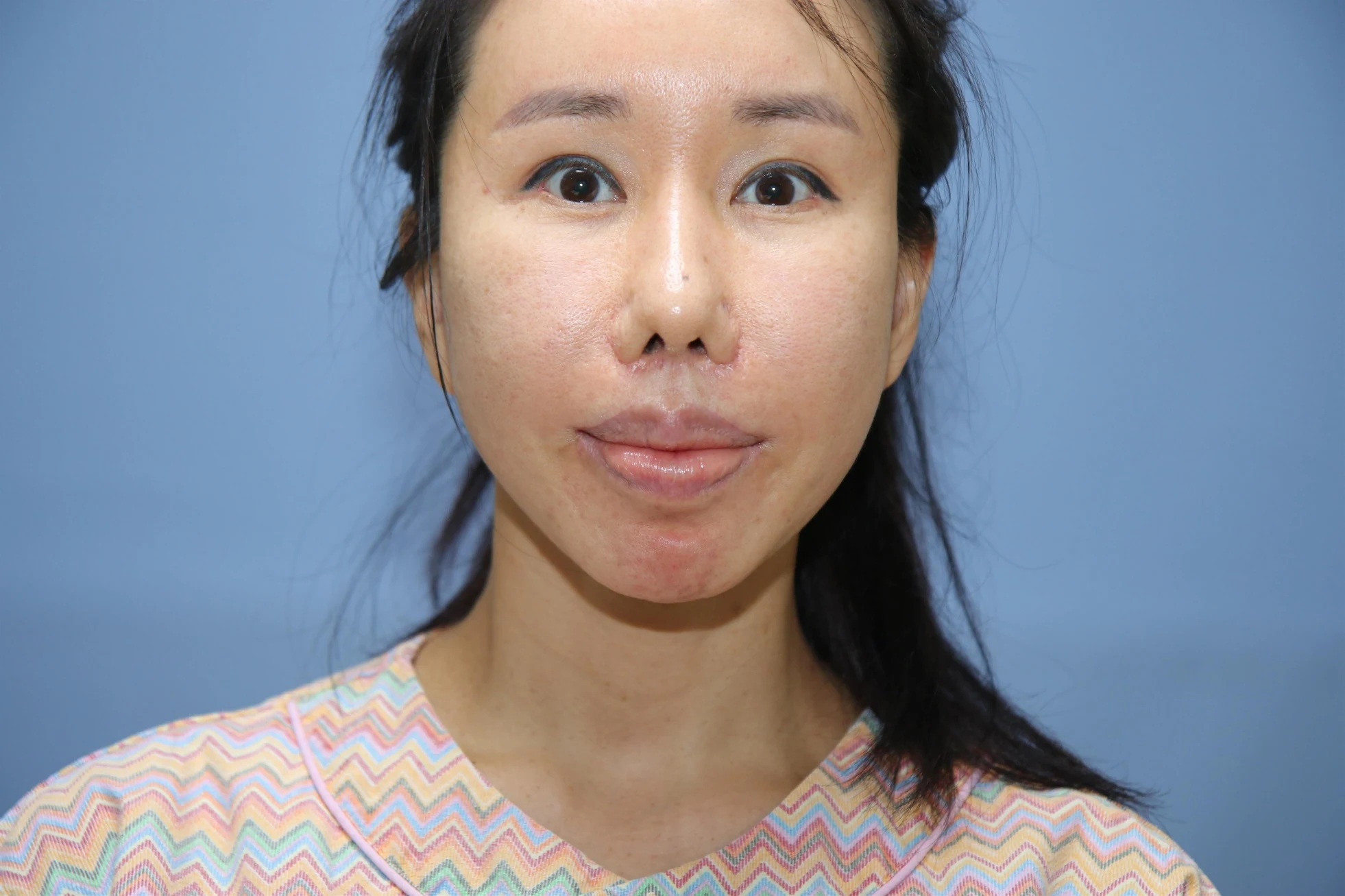
After surgery, no walnut-like wrinkles form on the chin because the mouth closes without strain.
(It has been a month since the mentalis resuspension. The length of the chin has decreased, and she can close her mouth comfortably without straining her lips.
The walnut wrinkles on the chin have disappeared after the operation and she can close her mouth comfortably)
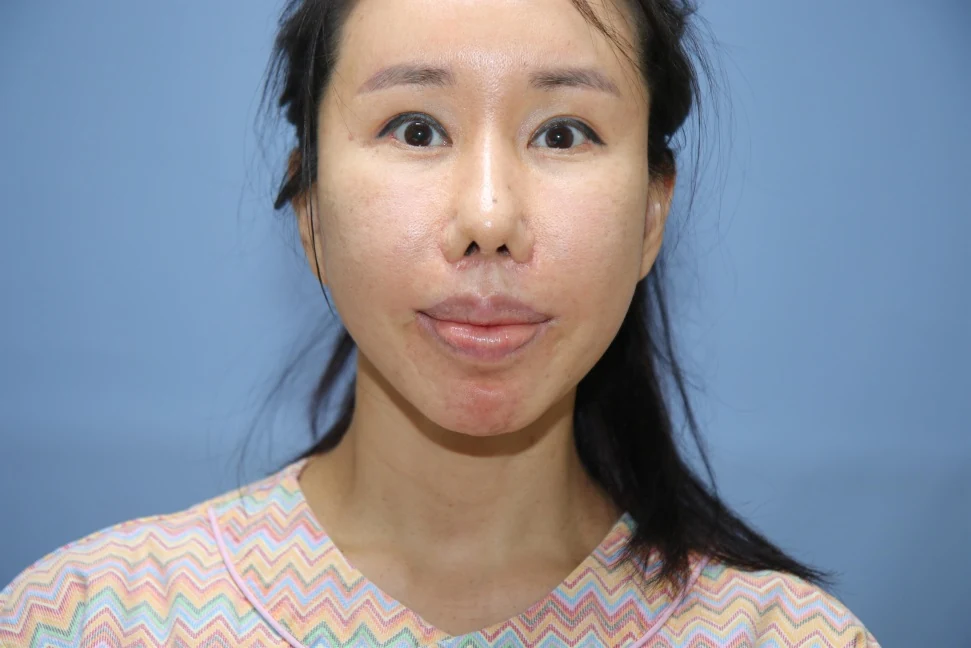

(The lower teeth are exposed on relaxed position before the operation, but they are not exposed anymore after the operation)


The chin can be seen to be considerably shorter.
(The oblique view shows lip straining to close her mouth before the operation. But no more straining of her lips on closing the mouth after mentalis resuspension)

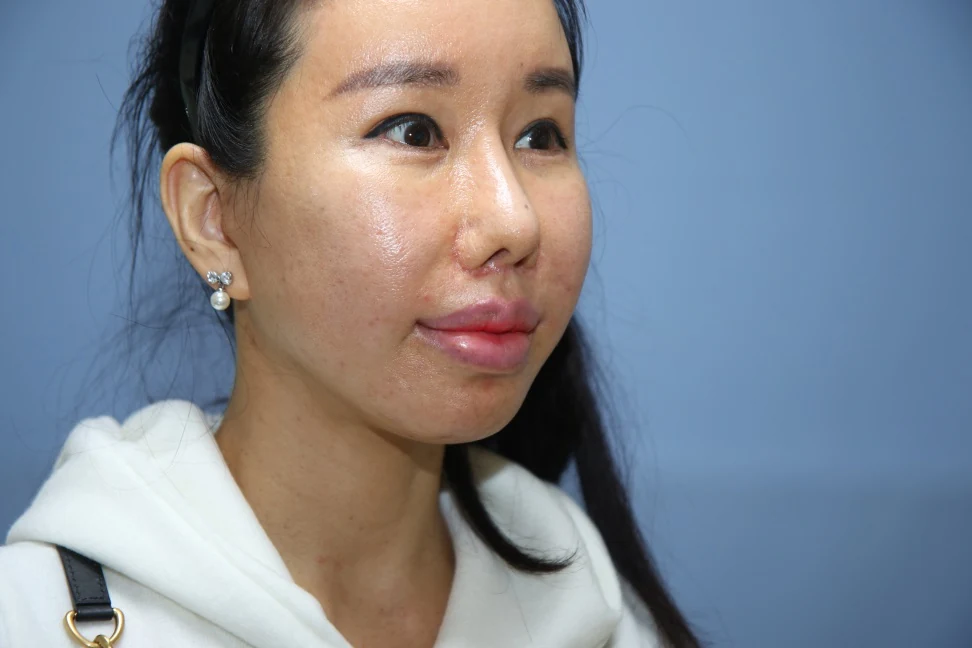
(There are clear difference of lower teeth exposure between the before and after the operation on rest position.)

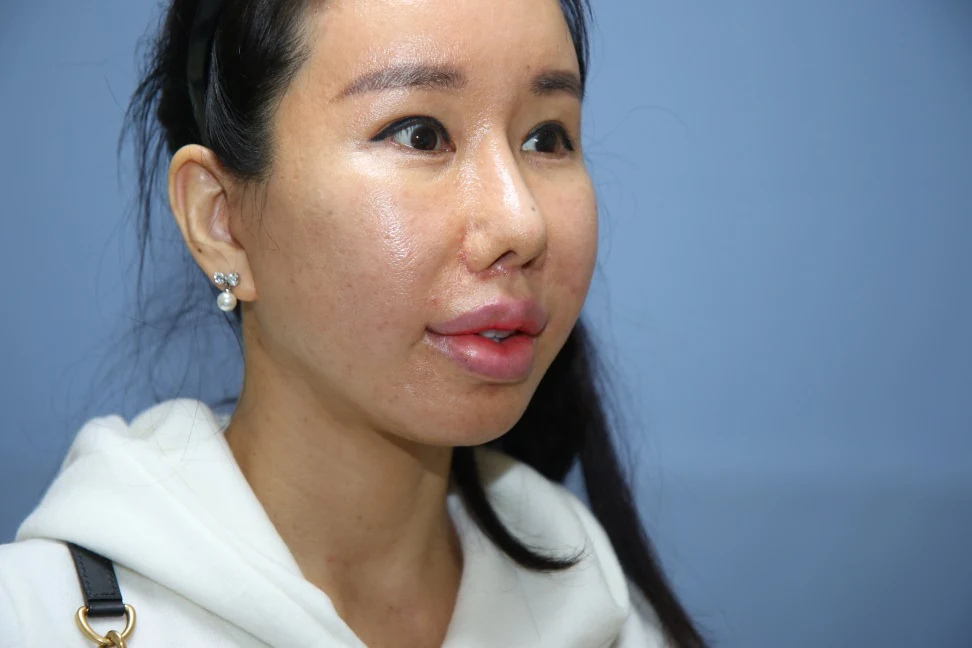
(The lower lip and chin was elevated, and the length of the chin was decreased.
The lower lip was everted and downward slant, but it changed to pouted position. It looks more comfortable and natural.)
Extent of exposure in the lateral view
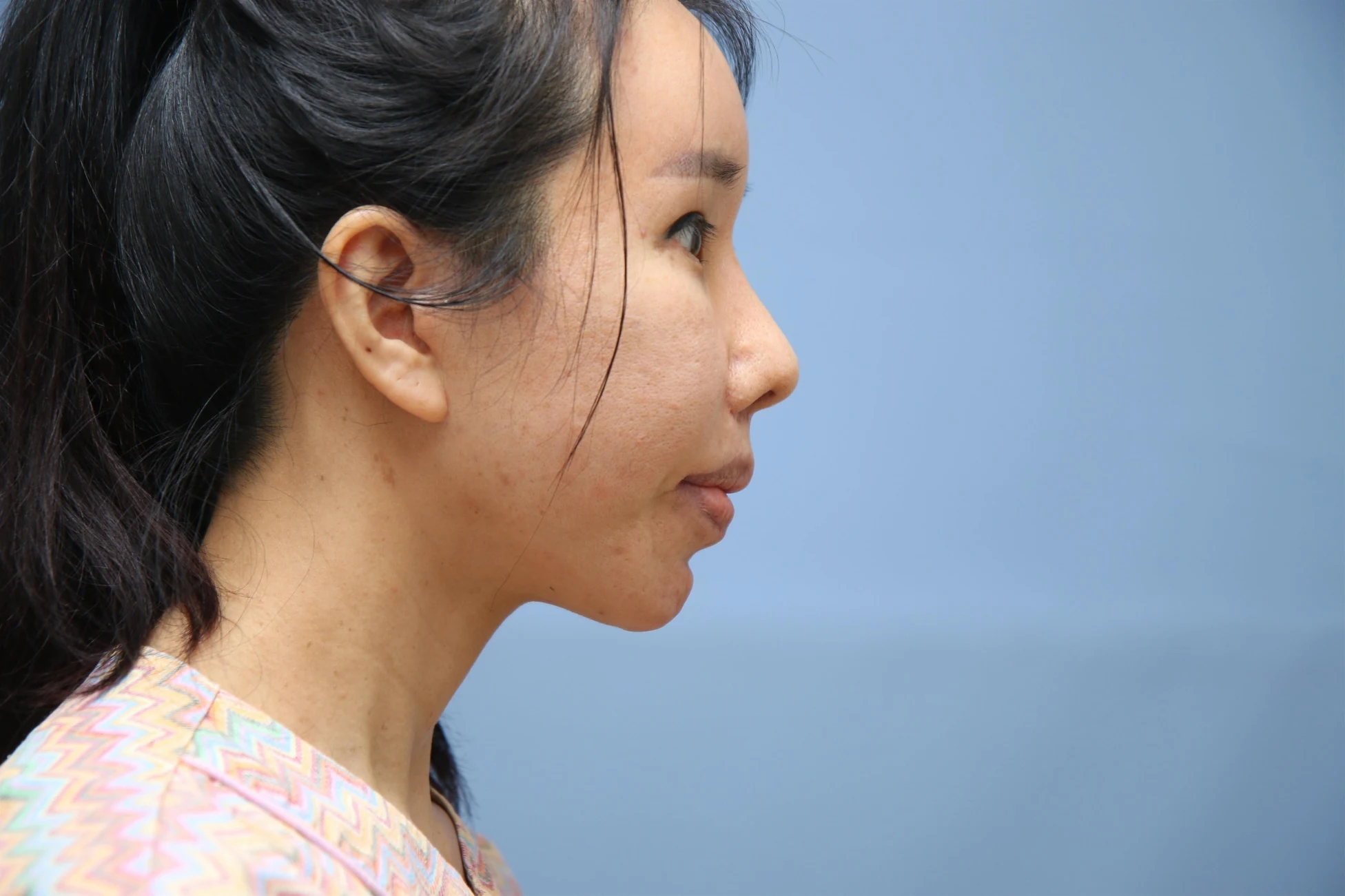
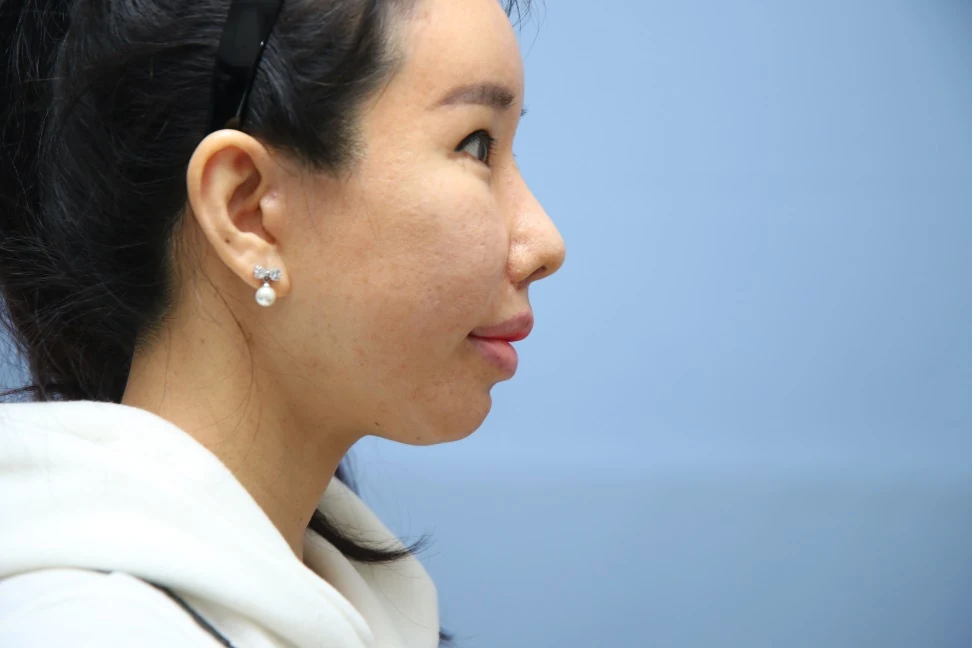
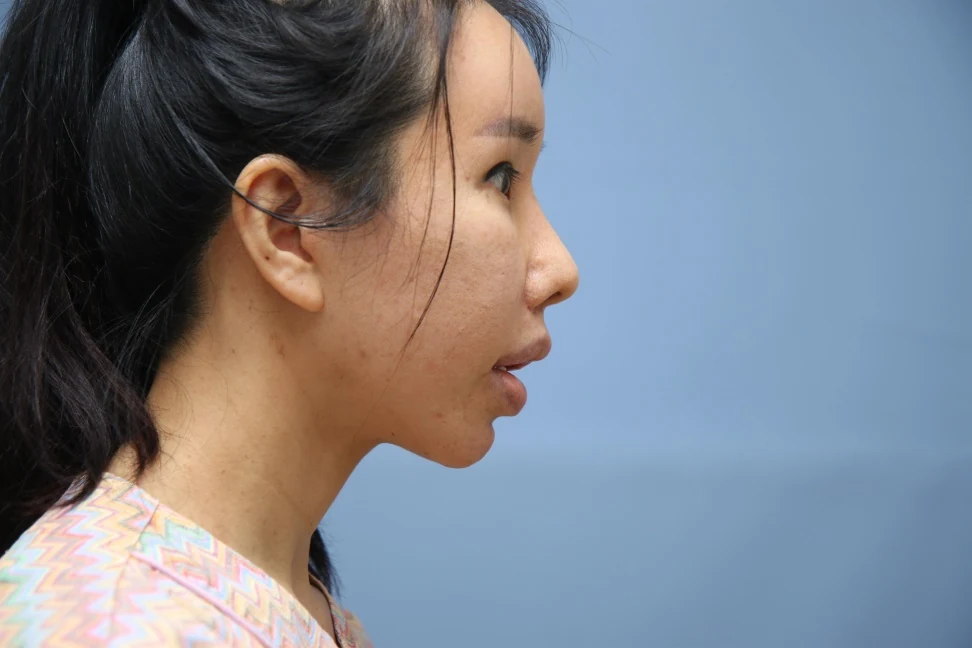
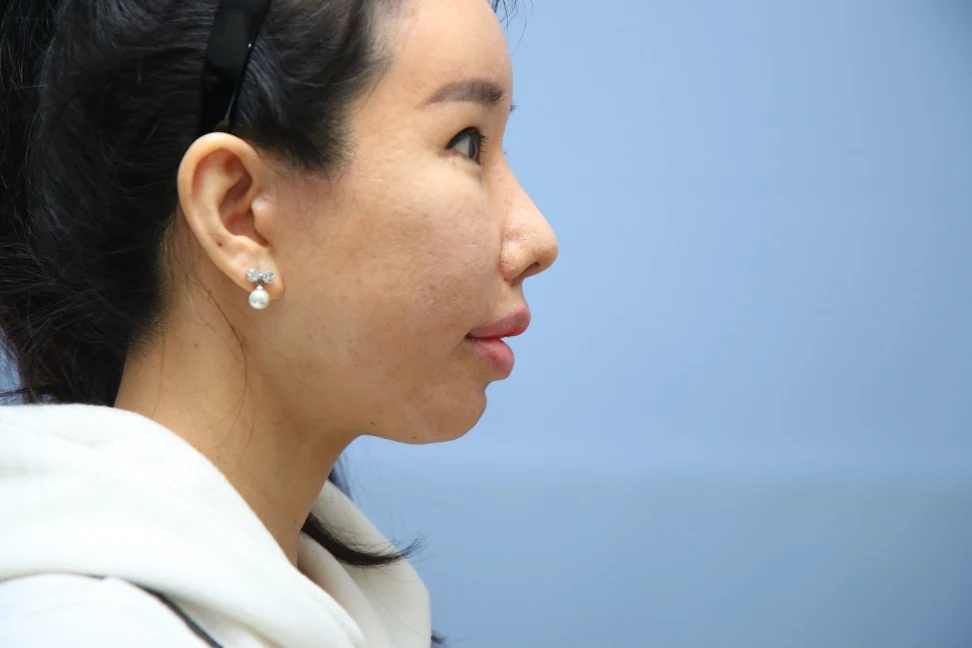
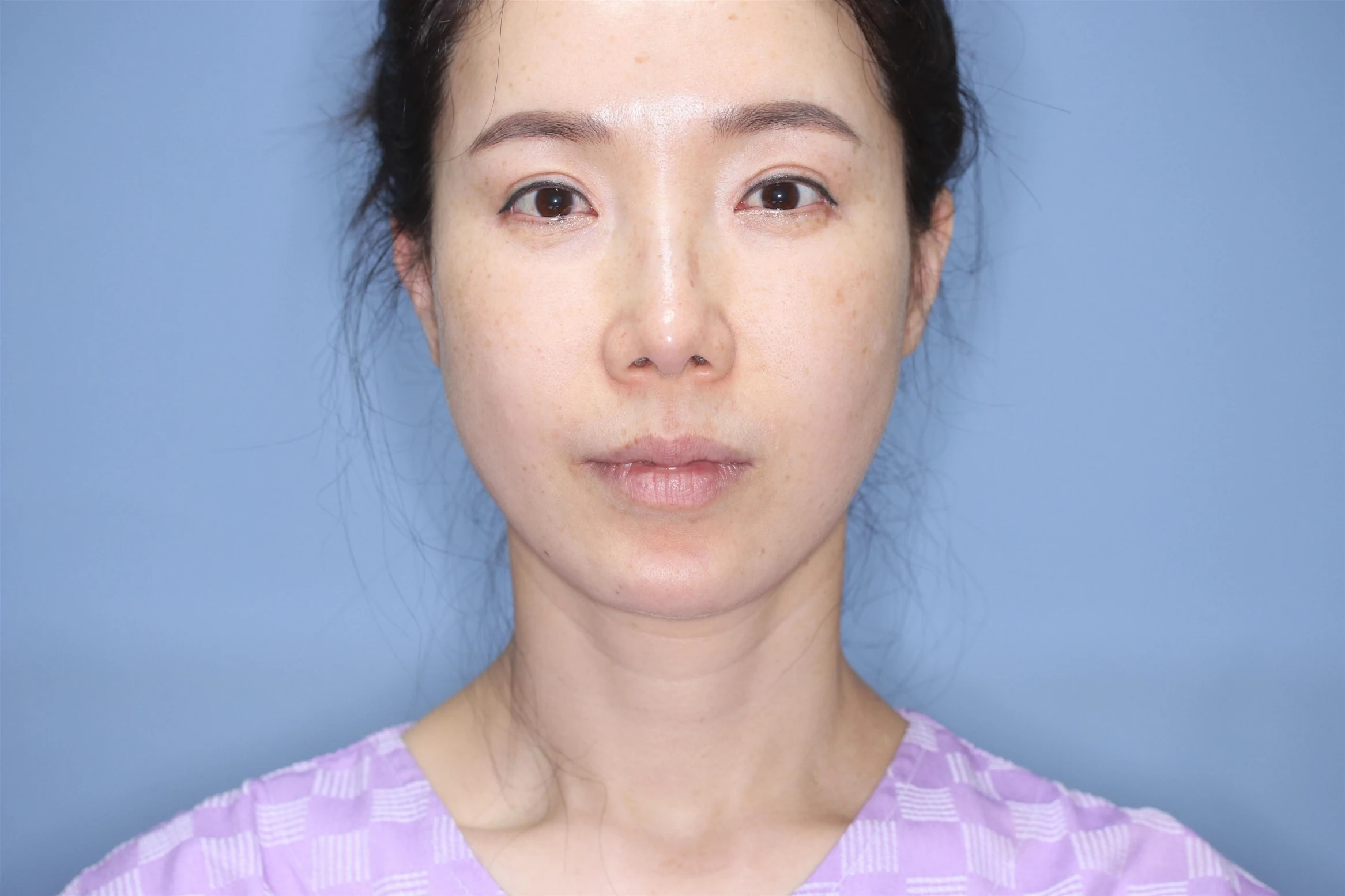


Walnut-like wrinkles appear with strain.
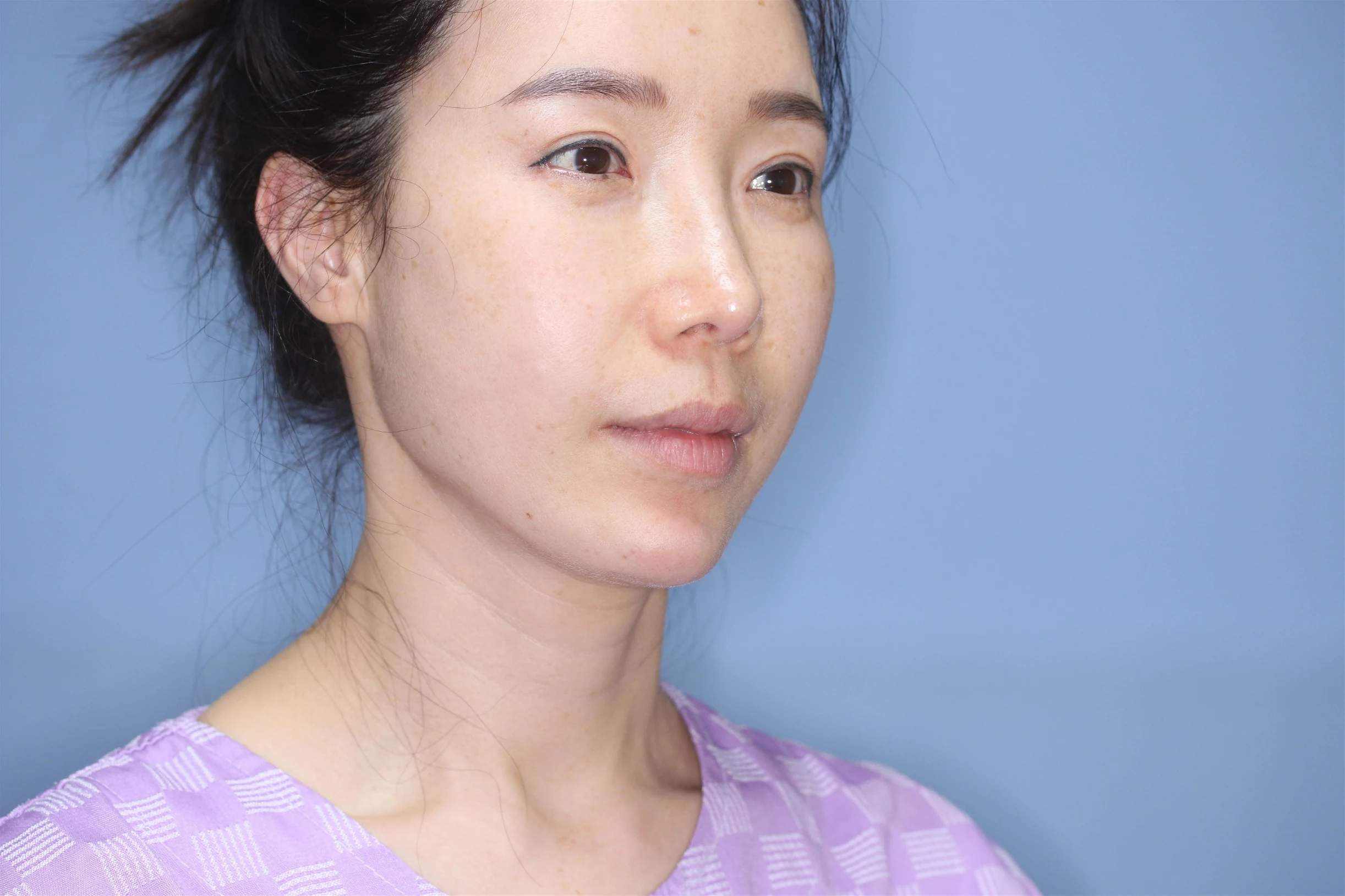

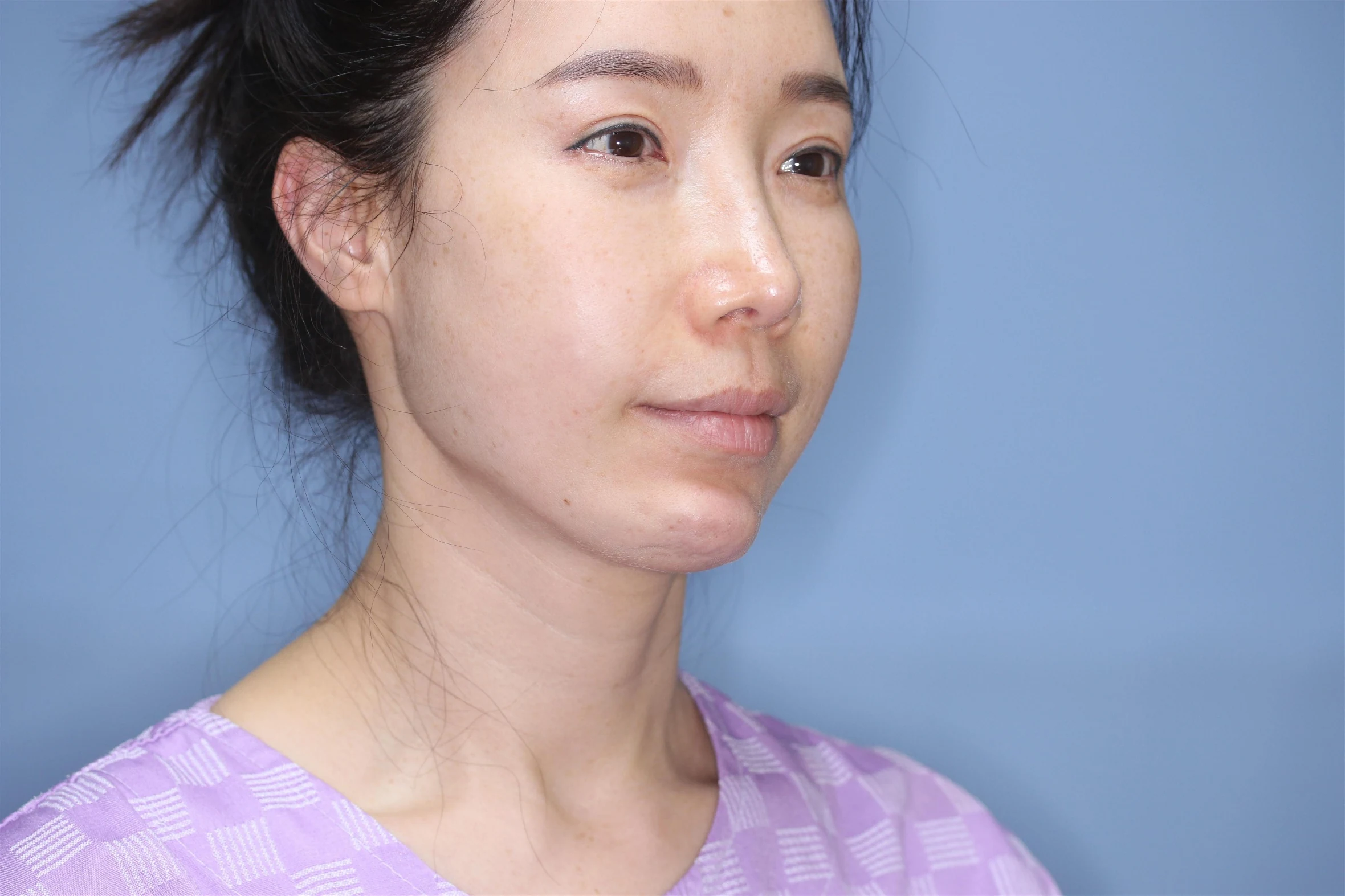

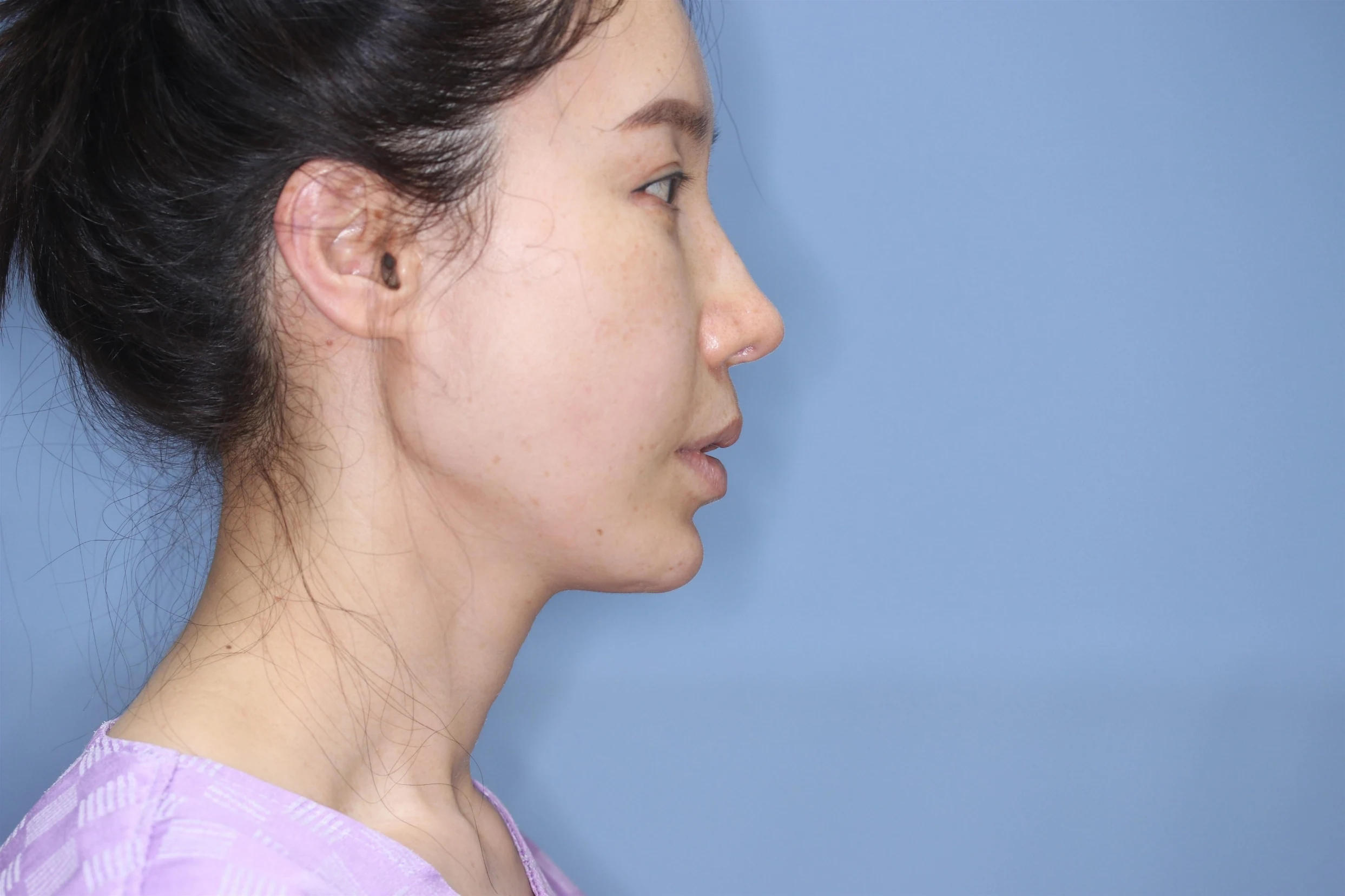
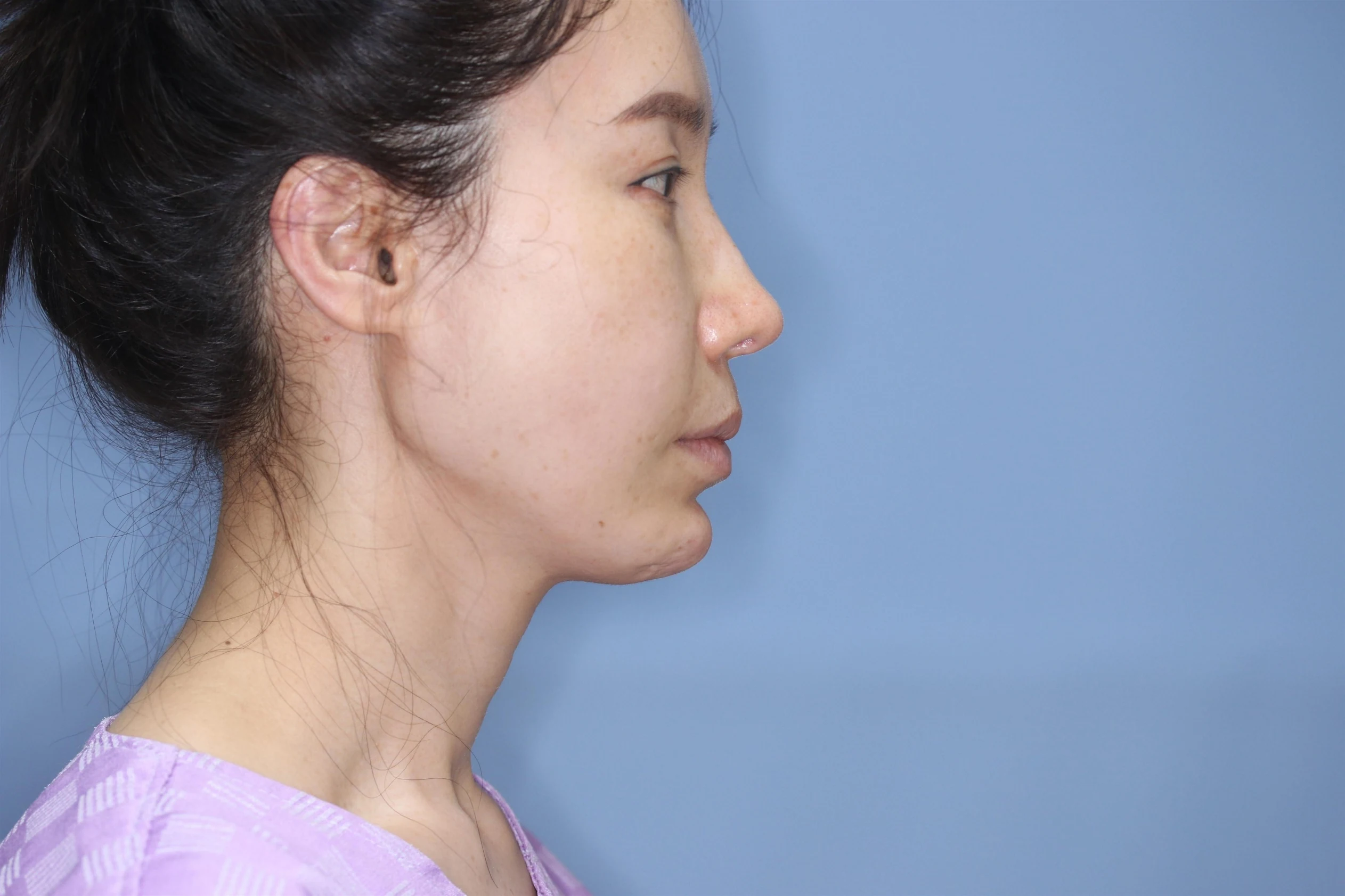
After surgery, the lip can be seen to have lifted and to stay horizontal.
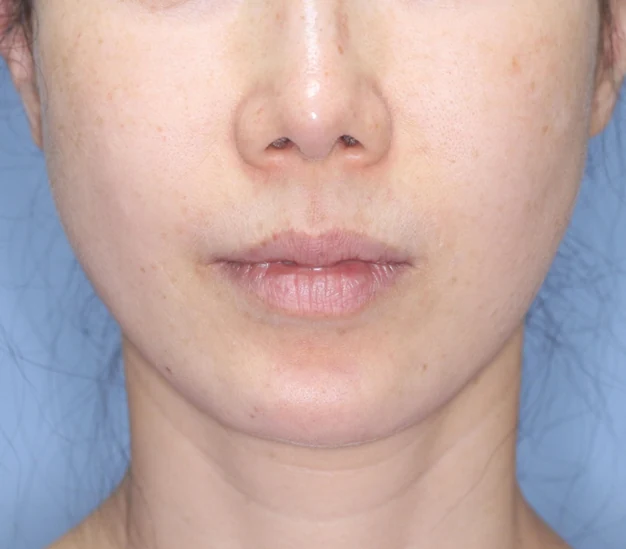
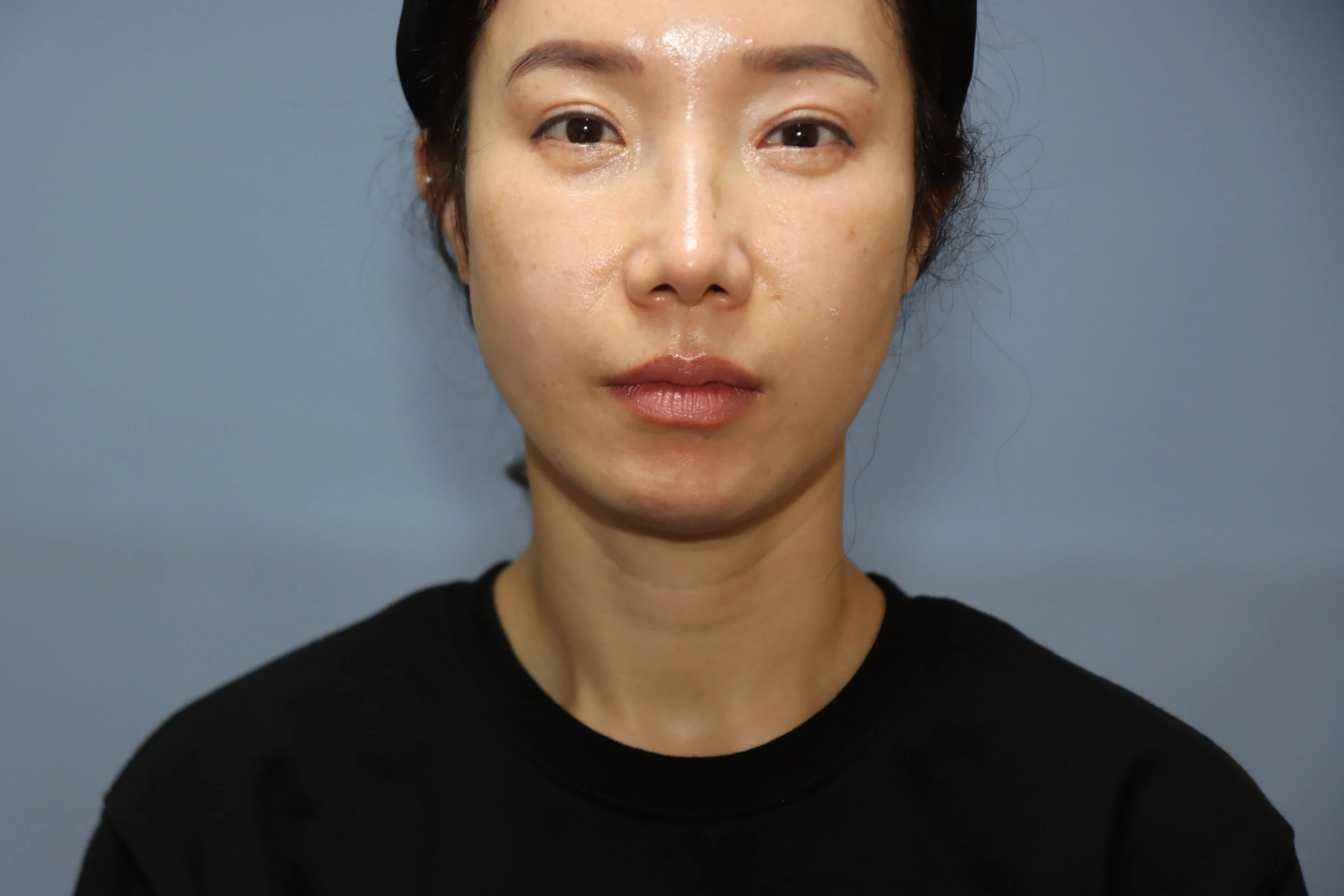
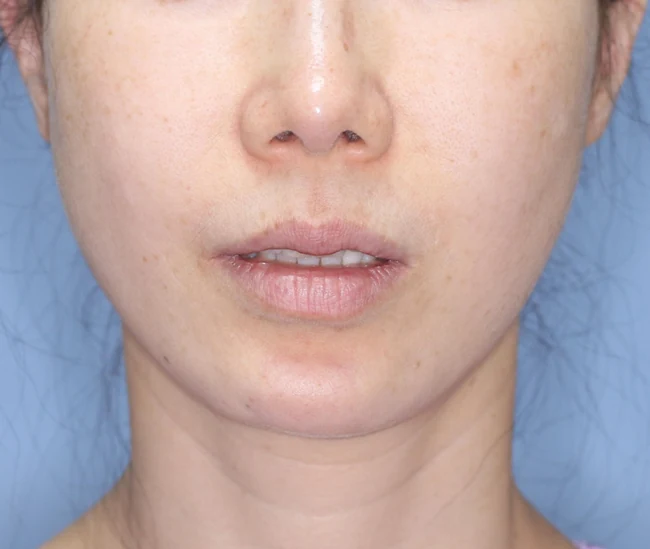
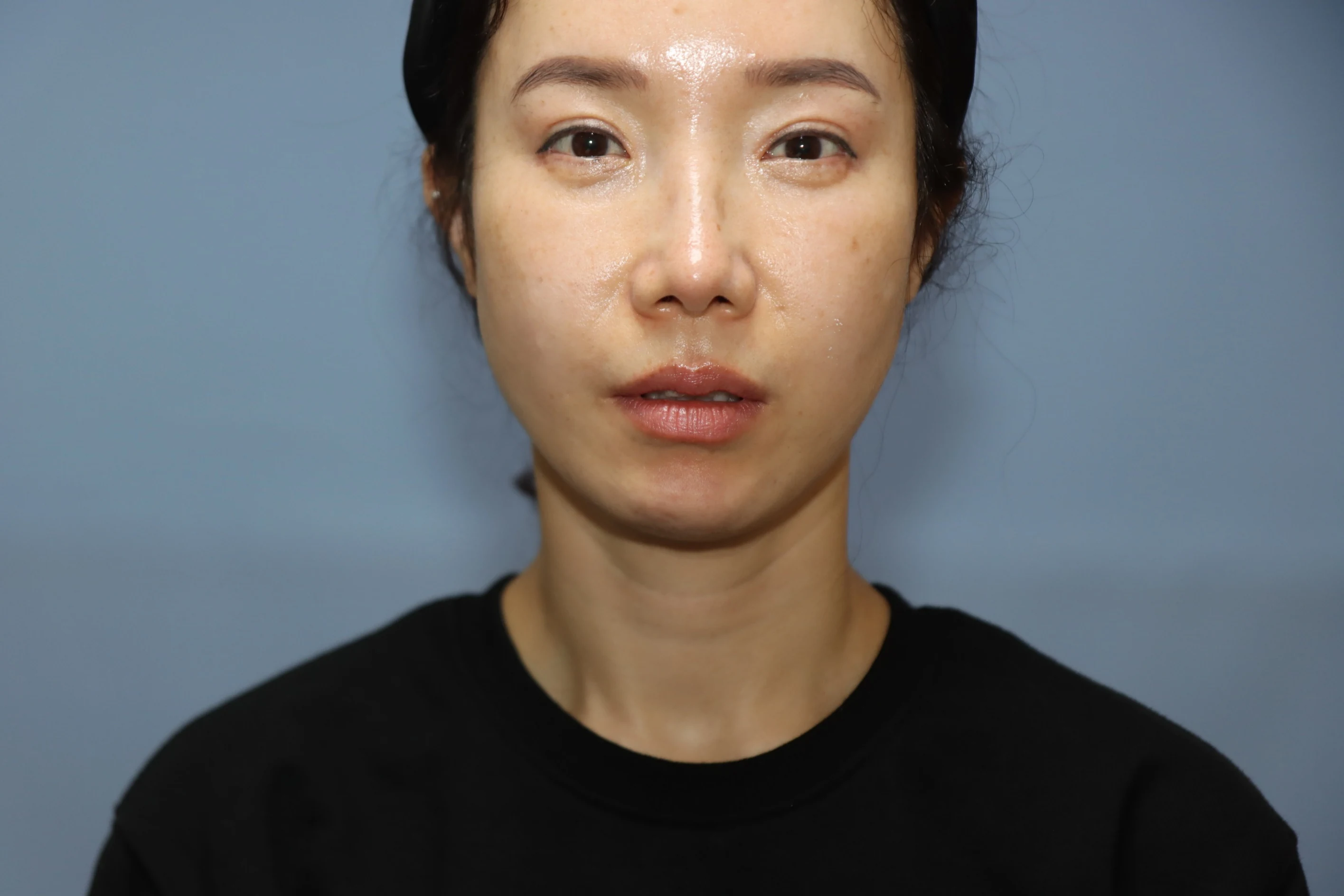
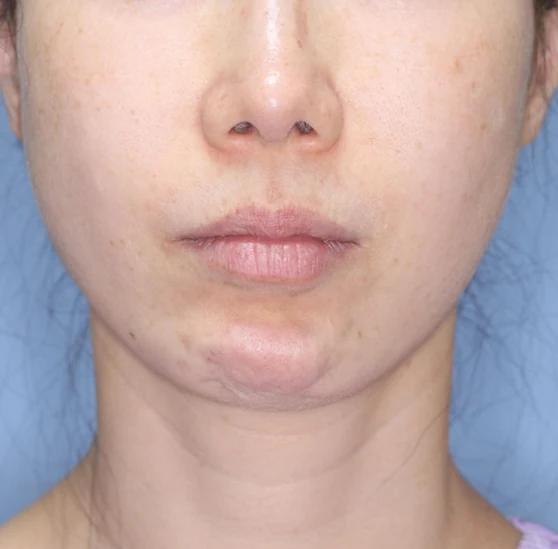
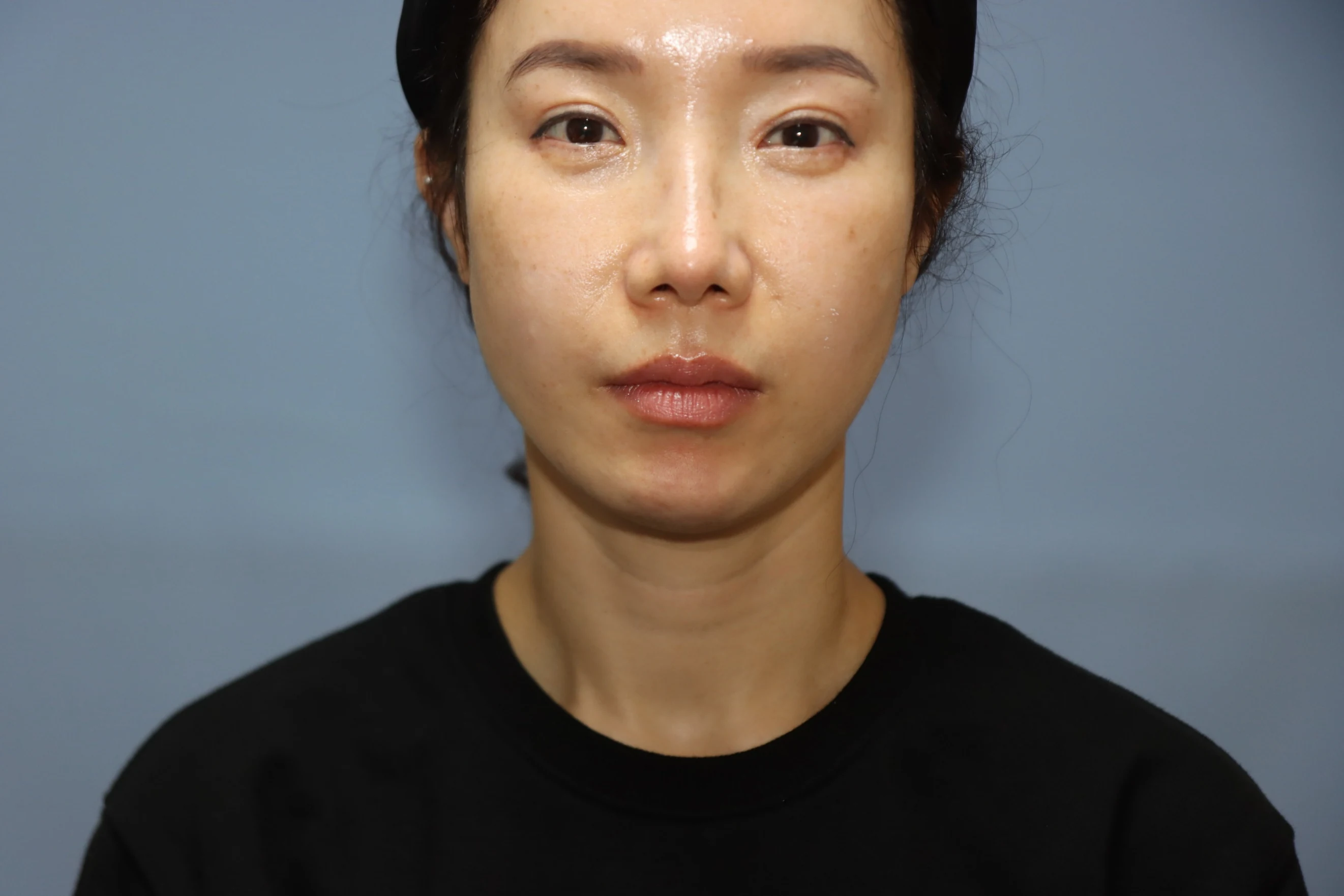
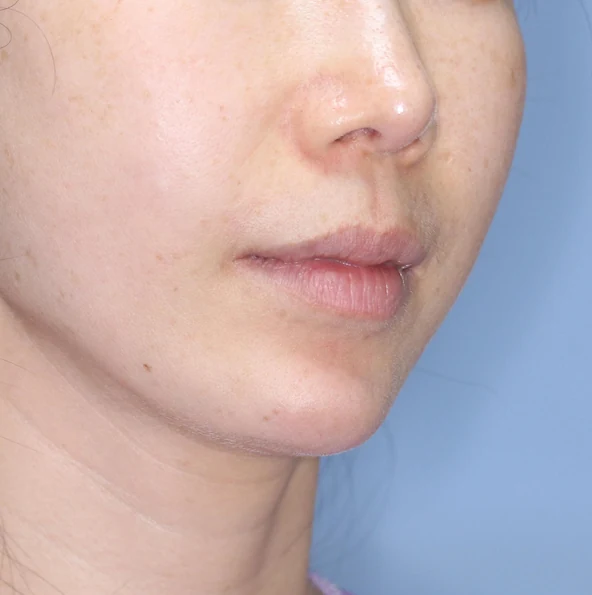

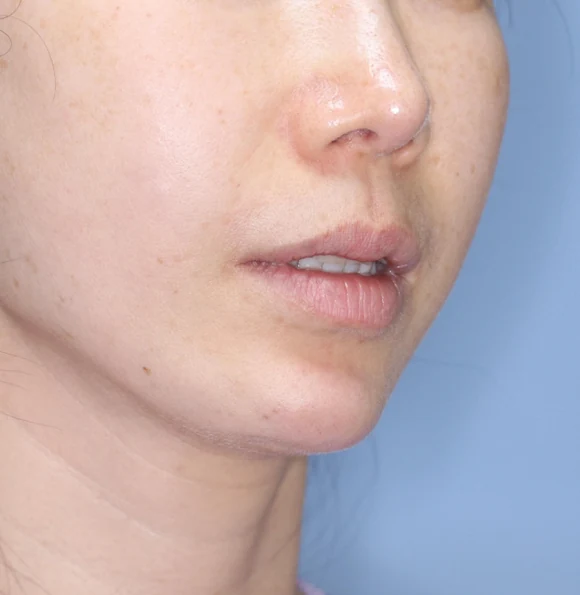

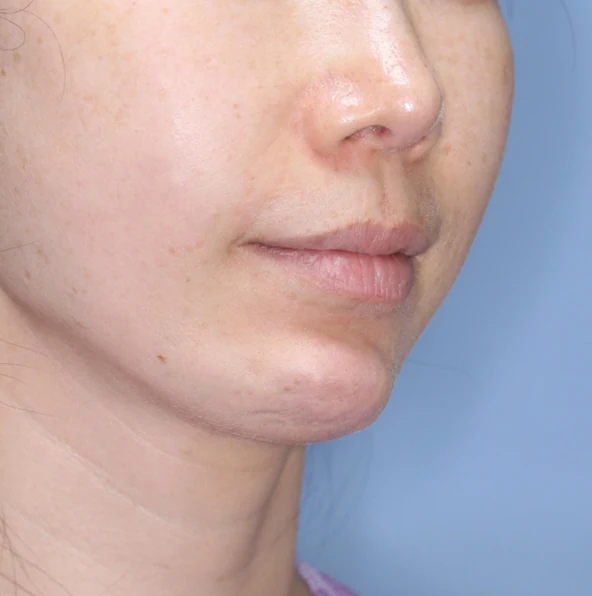
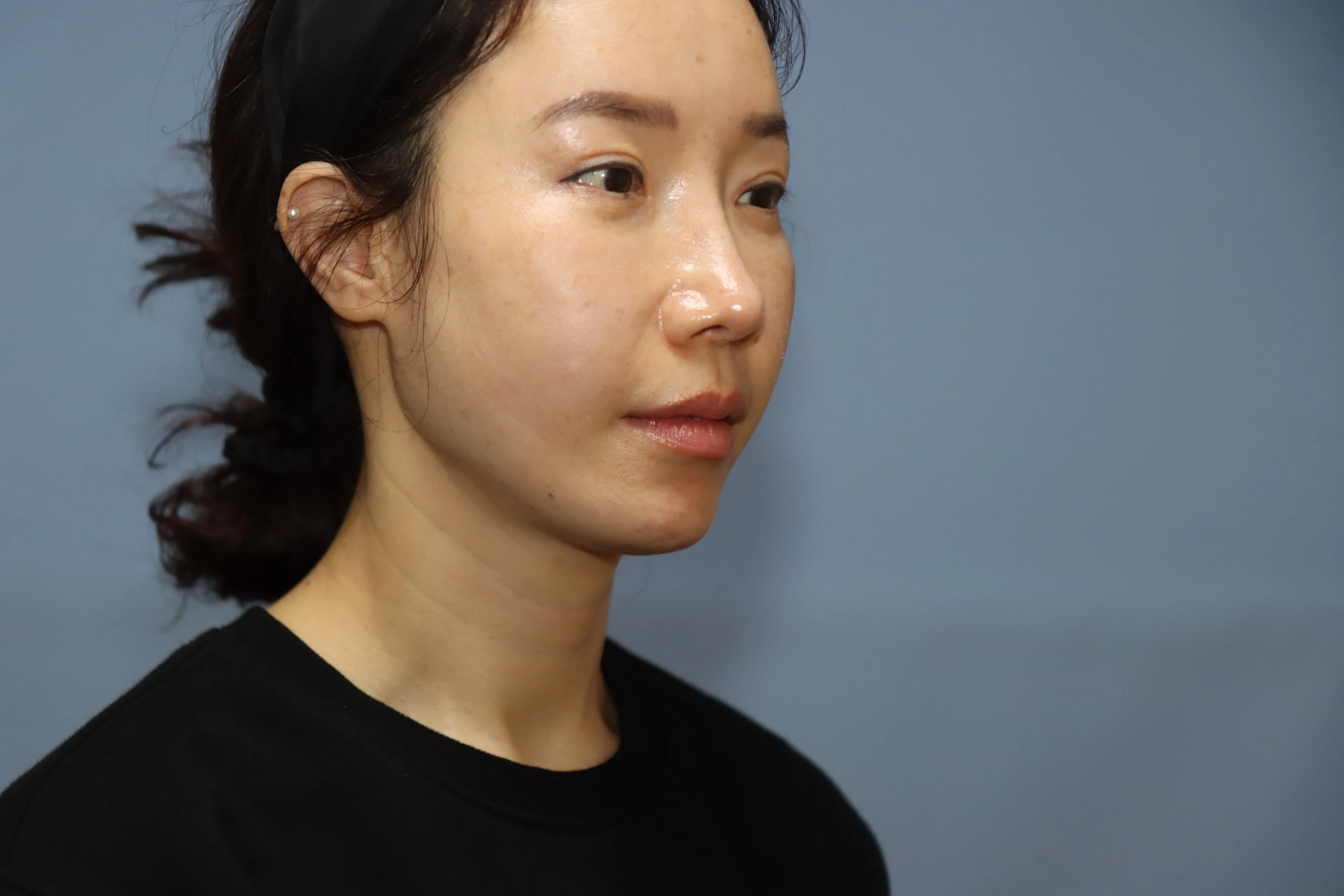
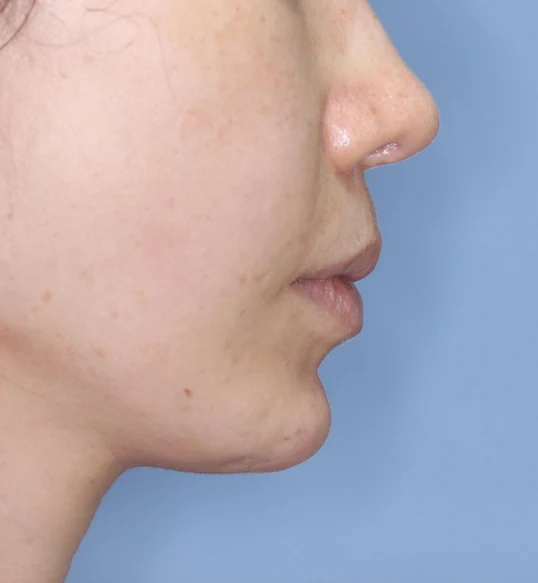
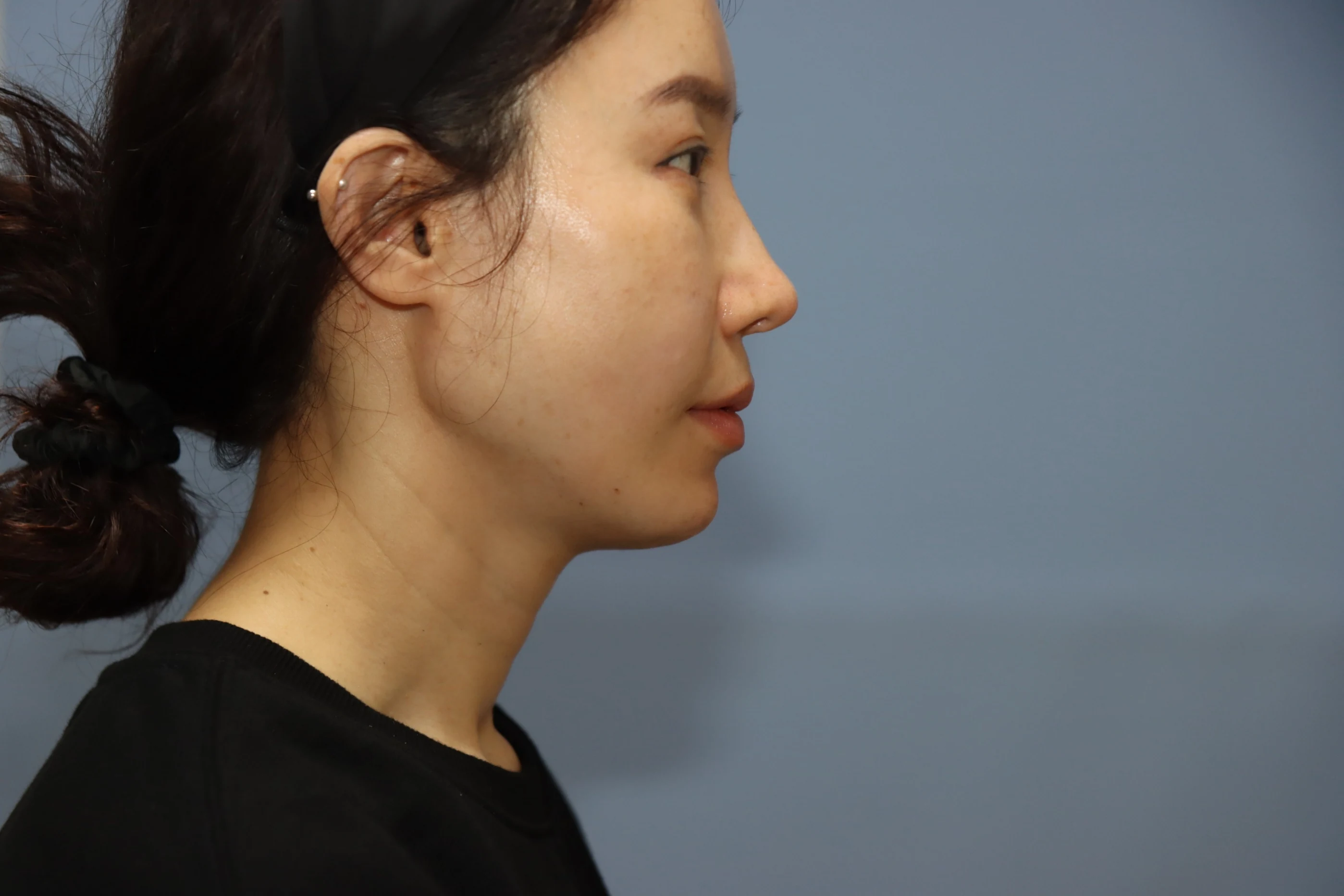
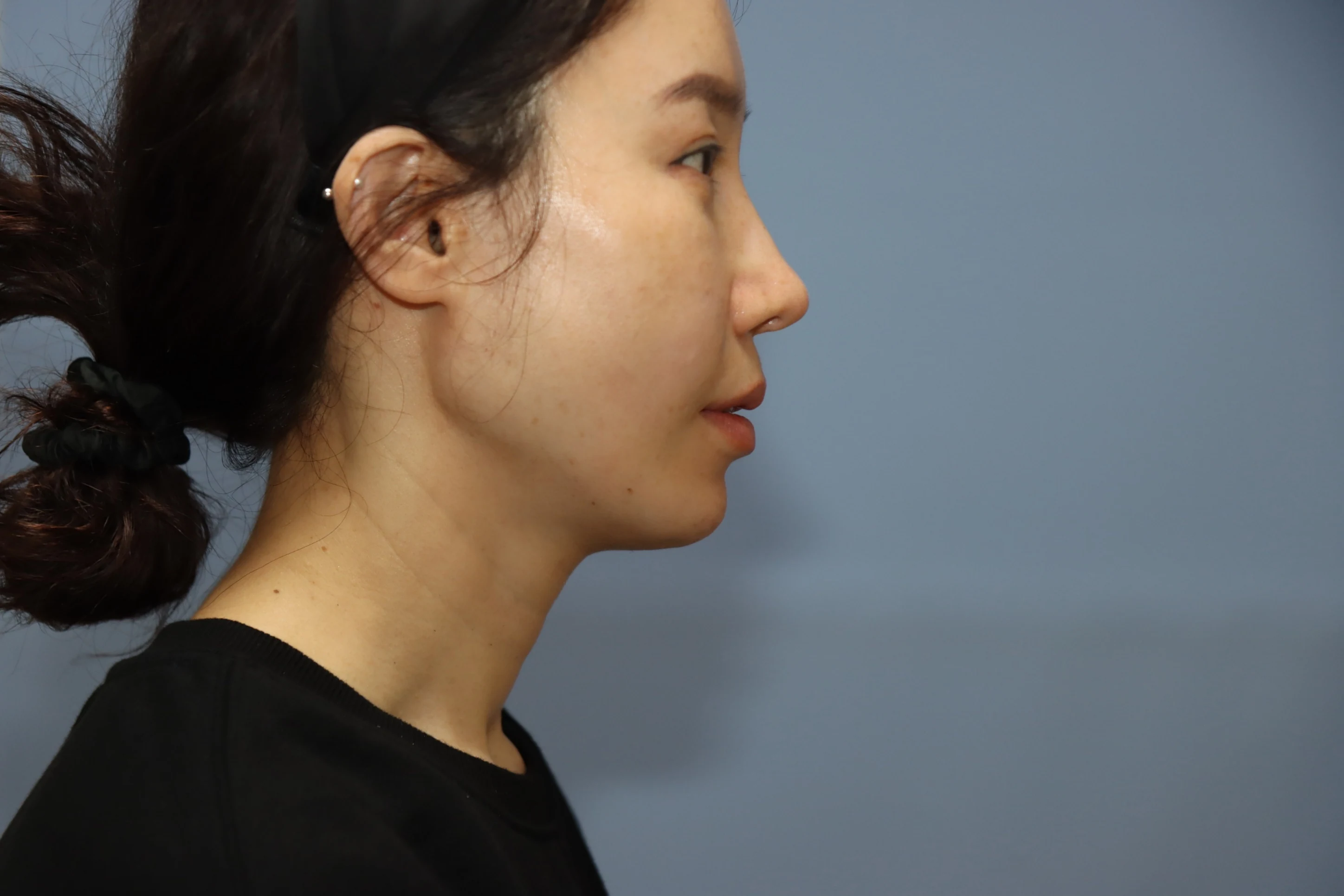
In this case the walnut-like wrinkles disappeared as shown, but they do not disappear in every case after mentalis resuspension.
The degree of damage to the mentalis muscle from previous surgery greatly influences the result, and surgical technique also has a major effect on the result.


Doctor's Note
Chin ptosis, the so-called “witch’s chin,” is a side effect that appears after genioplasty. It is a deformity that occurs when the mentalis muscle, separated from the bone during the contouring surgery, then droops downward.
6F #601, 599-4 Sinsa-dong, Gangnam-gu, Seoul
(No lunch break on weekends and public holidays) *Dr. Won-Suk Kook is not available on the 1st and 3rd Saturdays of each month.
Parking Information Parking is available in the building. 1 hour of free parking
Subway 5-minute walk from Exit 3 of Apgujeong Station on Line 3 (right next to the 14-story CGV building at Exit 3)