
Point 01
Accurate Diagnosis by Type
We accurately diagnose the cause that makes implant removal necessary, such as inflammation, extrusion, or contracture.
service / Nose
Nasal implant removal is the starting point of revision rhinoplasty; with an accurate diagnosis, we plan it safely according to the condition of the implant and capsule.
Why Lisoom
After implant rhinoplasty, implant removal may become necessary for a variety of reasons, including inflammation, extrusion, foreign body sensation, skin and soft tissue damage, contracture, deviation, and anxiety. RESUM Plastic Surgery accurately diagnoses the cause, removes the implant according to type, and performs secondary rhinoplasty with autologous tissue or human donor tissue when needed.
The key to nasal implant removal lies in accurately diagnosing the cause, treating the capsule as well, and, when needed, reconstructing safely with autologous tissue.
Nasal Implant Removal Before & After
Complications such as bleeding, infection and inflammation may occur depending on the individual, so caution is needed.
Results may vary by individual. Please confirm the method and expected results that suit you through a consultation.
No before & after photos match these criteria.
OUR PRINCIPLE
Diagnosing the cause, treating the capsule, and reconstructing with autologous tissue are the key points.
Accurate Diagnosis by Type
We accurately diagnose the cause that makes implant removal necessary, such as inflammation, extrusion, or contracture.

Complete Removal, Capsule Included
Careful treatment of the capsule and granulation tissue along with the implant reduces recurrence and deformity.

Autologous Reconstruction
We reconstruct safely with autologous tissue or acellular dermal matrix instead of an implant.
However, in my many years of practice as a board-certified plastic surgeon, I have never seen a patient regret having an implant removed.
That is because, when we identify exactly what the patient is worried about and remove the inserted silicone implant while also preventing problems that could arise later,
the feared outcomes can be prevented and the nose can return to its natural state.
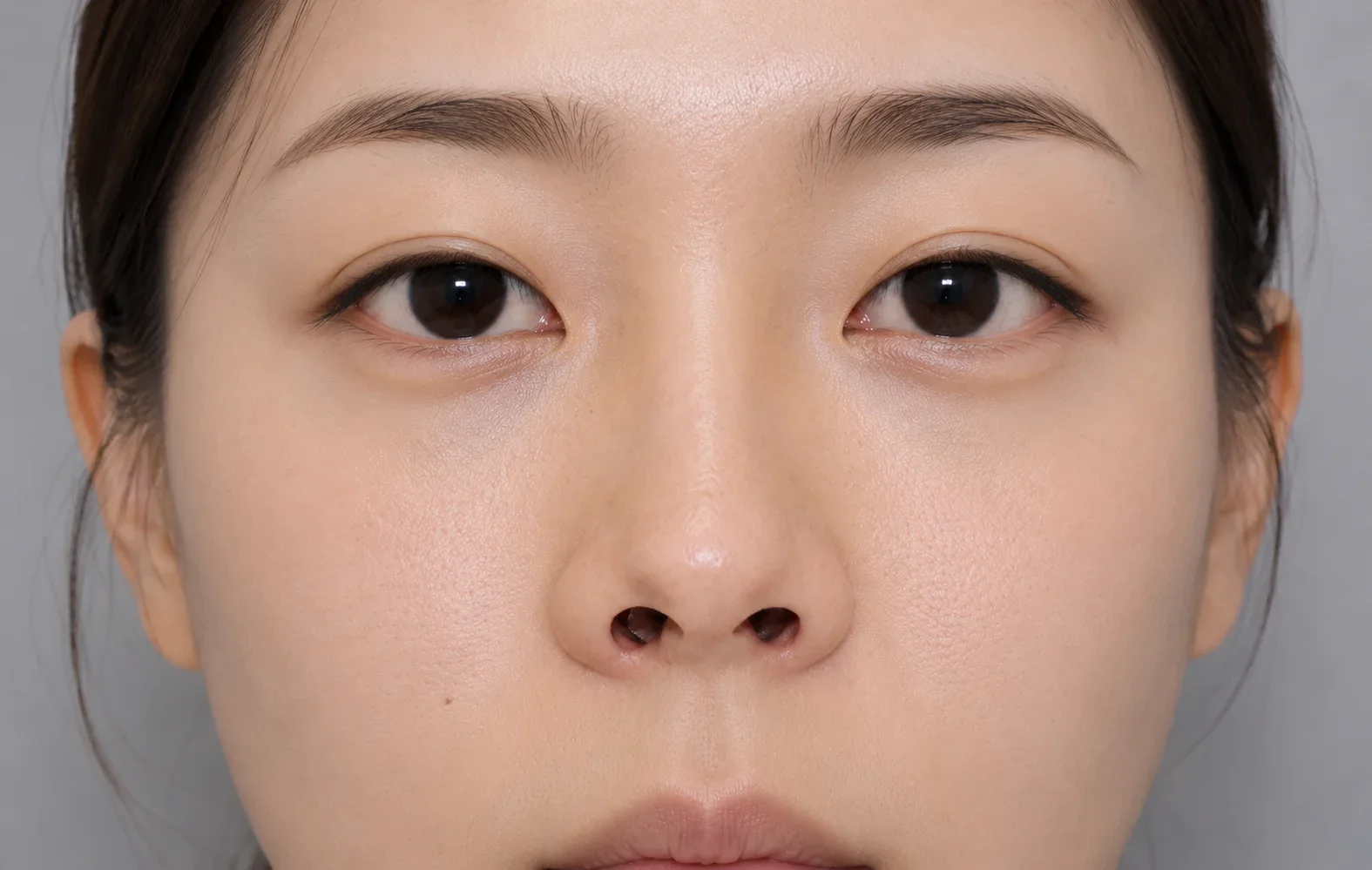
In fact, there are many cases in which revision surgery or implant removal within 1 week is the better choice. Of course, depending on the condition, revision surgery may need to wait until 6-12 months later. Which direction is better must be weighed rationally and carefully according to the condition.

In general, the inflammatory response seen after surgery is an immune response, a kind of defense system against external stimuli or bacteria. So when an external stimulus such as surgery, an implant, or bacterial invasion occurs, a contest begins between the body's immune system and the bacteria. In most cases the immune system wins, the inflammatory response stops, and the body returns to its normal state. This inflammatory response must be clearly distinguished from inflammation itself. Inflammation is a state in which the bacteria overcome the immune system or remain in a continuing balance of strength with it; this state lingers around the implant and causes contracture and deformation of the soft tissue. As for contracture, when an implant enters the body, a capsule forms around it, and contracture develops as the capsule gradually thickens. A capsule forms more readily and progresses faster when there is inflammation or fluid accumulation. Once contracture appears, it keeps progressing and the nose becomes shorter and shorter over time. Therefore, if inflammation or contracture is suspected, the implant should be removed. In particular, if early warning signs of inflammation appear, you should visit the clinic and consult a board-certified specialist in detail. When inflammation has developed, it is important to remove the implant as soon as possible, because the likelihood of contracture rises and its severity increases as time passes.

When an implant is inserted into the nose, the body forms a capsule that creates a boundary between the implant and the body. When inflammation develops or fluid collects, this capsule becomes thicker and smaller in volume, and contracture, in which the capsule shrinks, appears. If such a capsule is left in place, it can become the cause of further contracture, so removing it helps prevent contracture. However, because removing the capsule carries a risk of tissue damage, removal is not recommended in some cases. Removing the capsule safely without damaging tissue is that important and that difficult. It is also an area where the operating surgeon's technique matters.

When a silicone implant remains in the body for a certain period, a capsule forms around the silicone. The silicone sits enclosed within this capsule; when the capsule thickens, it cuts off blood circulation from the surrounding tissue, and if inflammation or fluid accumulation occurs, recovery is slowed and the problem recurs. As inflammation recurs, the capsule thickens, shrinks, and bunches up, and the skin tissue contracts along with it; outwardly, the nose turns upward, shortens, and hardens. This is called contracture. Therefore, when the silicone and capsule that cause it are thoroughly removed, contracture does not occur; rather, a soft nasal shape can be maintained and contracture prevented.

If your first rhinoplasty involved shaving down the dorsum and placing an implant, you may worry whether the nose will become lower after the silicone is removed, or whether the silicone has pressed the dorsum flat. Even when the dorsum was shaved to remove a dorsal hump, no more than 1.5 mm can be shaved unless it was a corrective rhinoplasty combined with wedge grafting and osteotomy, so the amount by which the nose becomes lower than its original shape is minimal. Even after the silicone is removed, skin tissue fills in the area and maintains a certain height, and in many cases the dorsum keeps a gently curved shape.

Once the space where the silicone sat becomes empty, won't the skin of the nose naturally sag or droop? It may sound plausible, but this worry comes from not fully understanding the characteristics of nasal skin. Skin is elastic like rubber, so after the implant is removed it contracts and settles into place, and the tissues naturally adhere to each other, so sagging and looseness do not occur.

At the same time, many people ask whether the implant, cartilage, capsule, and so on can all be removed through a closed approach. This depends on the operating surgeon's technique, but the implant, cartilage, and capsule can be adequately removed through a closed approach as well. However, when an open approach is likely to give a better result for a patient's particular nasal condition, it is wise to proceed with an open approach, so it is advisable to decide on the removal method after thorough consultation with a board-certified specialist.

Inflammation is a common reason for nasal implant removal. It occurs in about 5-7% of patients who undergo nasal surgery, with swelling, a pulling or tight feeling, warmth, and tenderness at the surgical site. If the nasal cavity area suddenly swells and feels hot and tight, inflammation should be suspected. When inflammation occurs, the implant must be removed, and if contracture is present, secondary rhinoplasty can be performed as early as 2 weeks to 1 month later. For secondary rhinoplasty, it is advisable to use autologous tissue or human donor tissue rather than an implant.

When the implant has extruded, it must also be removed. As a rule, secondary rhinoplasty is performed 6-12 months later, depending on the condition of the soft tissue; if earlier surgery is needed for cosmetic reasons or social activities, secondary rhinoplasty can be performed 2-3 months after stem cell treatment.

A foreign body sensation often presents as headaches, a heavy, tight feeling at the surgical site, or discomfort from hardness to the touch. Nothing unusual may be visible from the outside, yet the patient reports considerable pain and discomfort. Usually the implant, the capsule, and cartilage at the nasal tip place pressure and tension on the skin and soft tissue, so removing them can relieve the foreign body sensation and pressure and bring comfort.

When the skin and soft tissue are damaged, it may not be an emergency, but the implant shows through and the skin turns red, which is a constant source of concern. In this case too, removing the implant resolves the problem, and if you wish to maintain the height of the bridge, secondary rhinoplasty is performed using autologous tissue or acellular dermal matrix in place of the implant.

Contracture is a phenomenon in which a capsule forms around a silicone implant and shrinks, causing the nose to shorten and bunch up. Once contracture has progressed, simply removing the implant will not restore the shortened nose to its original state; the capsule must be completely removed together with the silicone, then the nose lengthened with autologous cartilage and the dorsum raised with autologous tissue.

A deviated implant is a relatively simple situation that can be handled with revision surgery to center the implant properly. However, it can deviate again, so the capsule surrounding the implant must be treated well, which makes it important to entrust the surgery to an experienced surgeon.

Anxiety about the implant accounts for the largest share of patients who have implants removed. Living with an implant for many years is a lasting burden, and a specific problem can arise at any time, so the choice of implant in nasal surgery calls for great care.
Lisoom Channel
NOTICE
PROCEDURE DATA
Surgery Overview
Recommended For
Consider a Consultation If
03 Recommended Cases

Doctor's Note
The key to nasal implant removal is not simply taking the implant out,
but accurately diagnosing the cause, such as inflammation, extrusion, or contracture, treating the capsule as well,
and, when needed, reconstructing safely with autologous tissue.
PROCEDURE FLOW
01
PHASE I
We precisely diagnose the cause that makes implant removal necessary.
02
PHASE II
The implant is removed together with the capsule and granulation tissue.
03
PHASE III
When needed, secondary rhinoplasty is performed with autologous tissue or human donor tissue.
04
PHASE IV
Swelling and recovery are managed systematically according to your progress.
FREQUENTLY ASKED
We have compiled the questions patients ask most often before a consultation.
6F #601, 599-4 Sinsa-dong, Gangnam-gu, Seoul
(No lunch break on weekends and public holidays) *Dr. Won-Suk Kook is not available on the 1st and 3rd Saturdays of each month.
Parking Information Parking is available in the building. 1 hour of free parking
Subway 5-minute walk from Exit 3 of Apgujeong Station on Line 3 (right next to the 14-story CGV building at Exit 3)


