Eye-Widening Thread Lift in Gangnam, Seoul | RESUM Plastic Surgery
Skip to main content

service / Thread-lifting

Wide Eye Lifting

Eye-Widening Thread Lift

WIDE EYE LIFTING

Precisely addresses the line and sagging beside the eyes to help achieve a more defined, open eye shape.

Method
20-30 minutes
Anesthesia
Recovery
Local anesthesia · Daily life, swelling settles in 2-3 days
Summary The Eye-Widening Thread Lift is a treatment that uses absorbable threads to lift sagging beside the eyes, improving a heavy, tired-looking impression and naturally refining the line beside the eyes. It is performed at RESUM Plastic Surgery in Gangnam, Seoul (Apgujeong) after the structure around the eyes has been examined. Medical Review Medical Review: Won-Suk Kook,Jin-Young Kim
Last updated: 2026-08-10

Why Lisoom

Overview A Precise Non-Surgical Lift That Refines
the Line Beside the Eyes

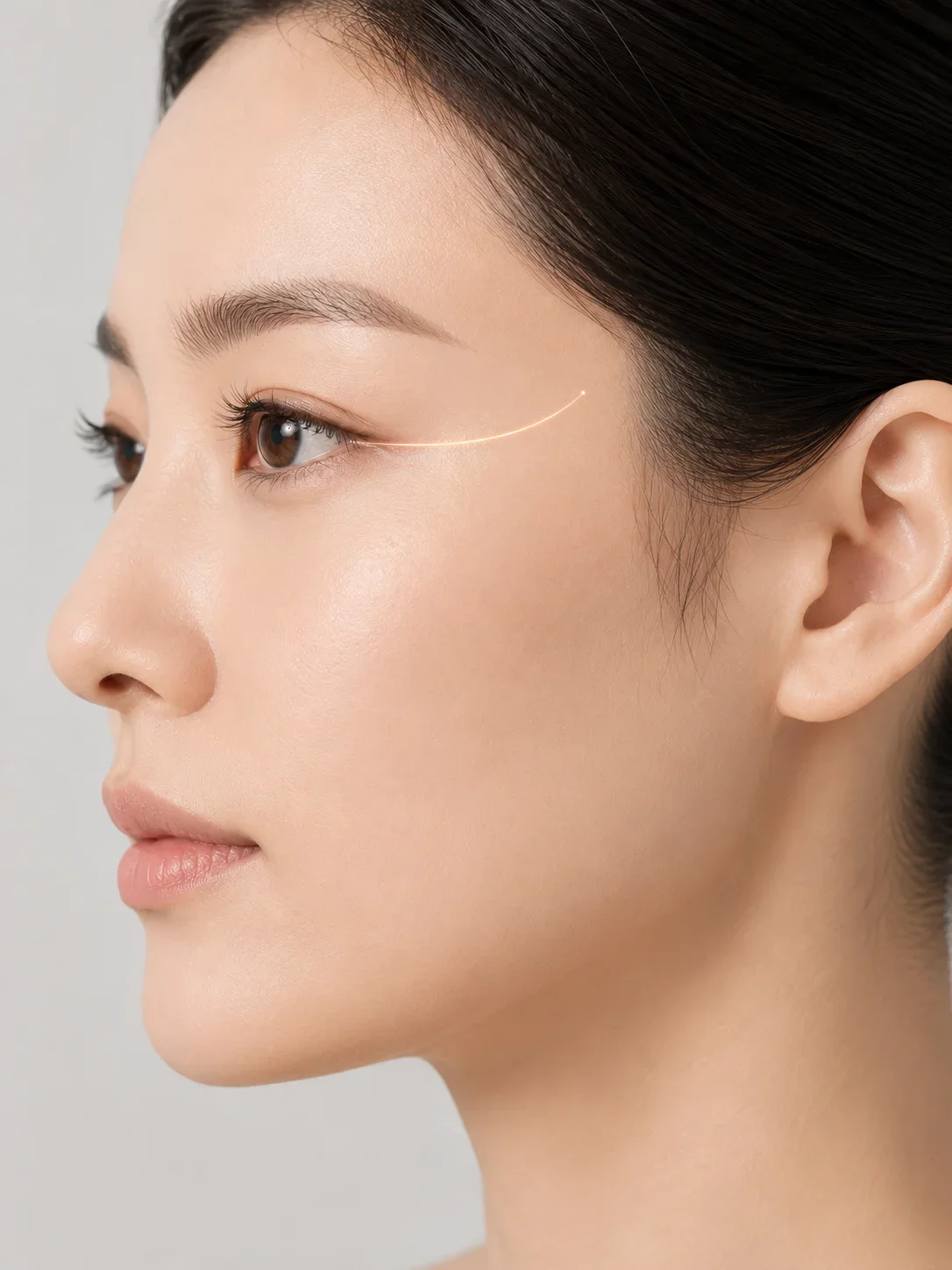
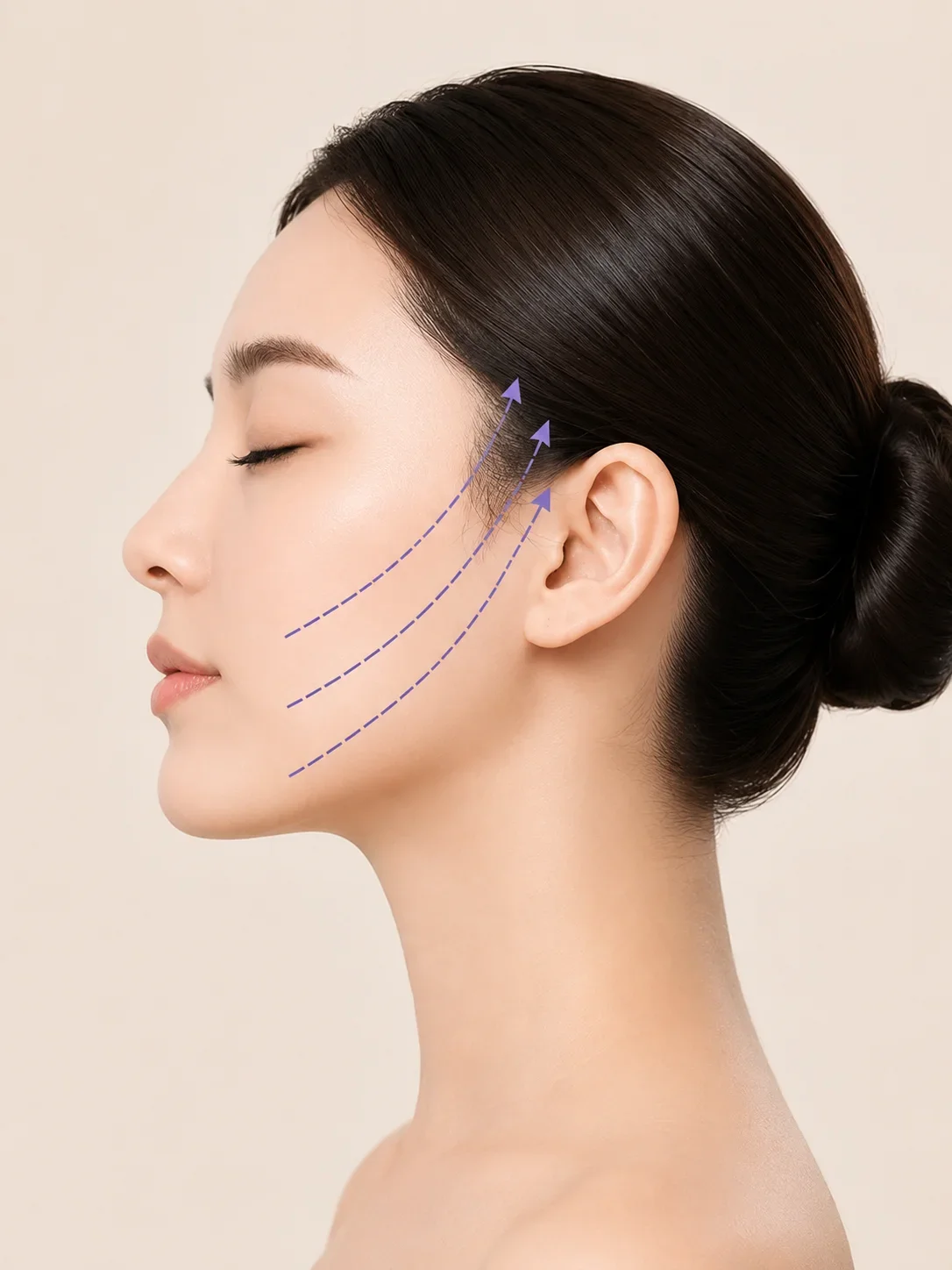
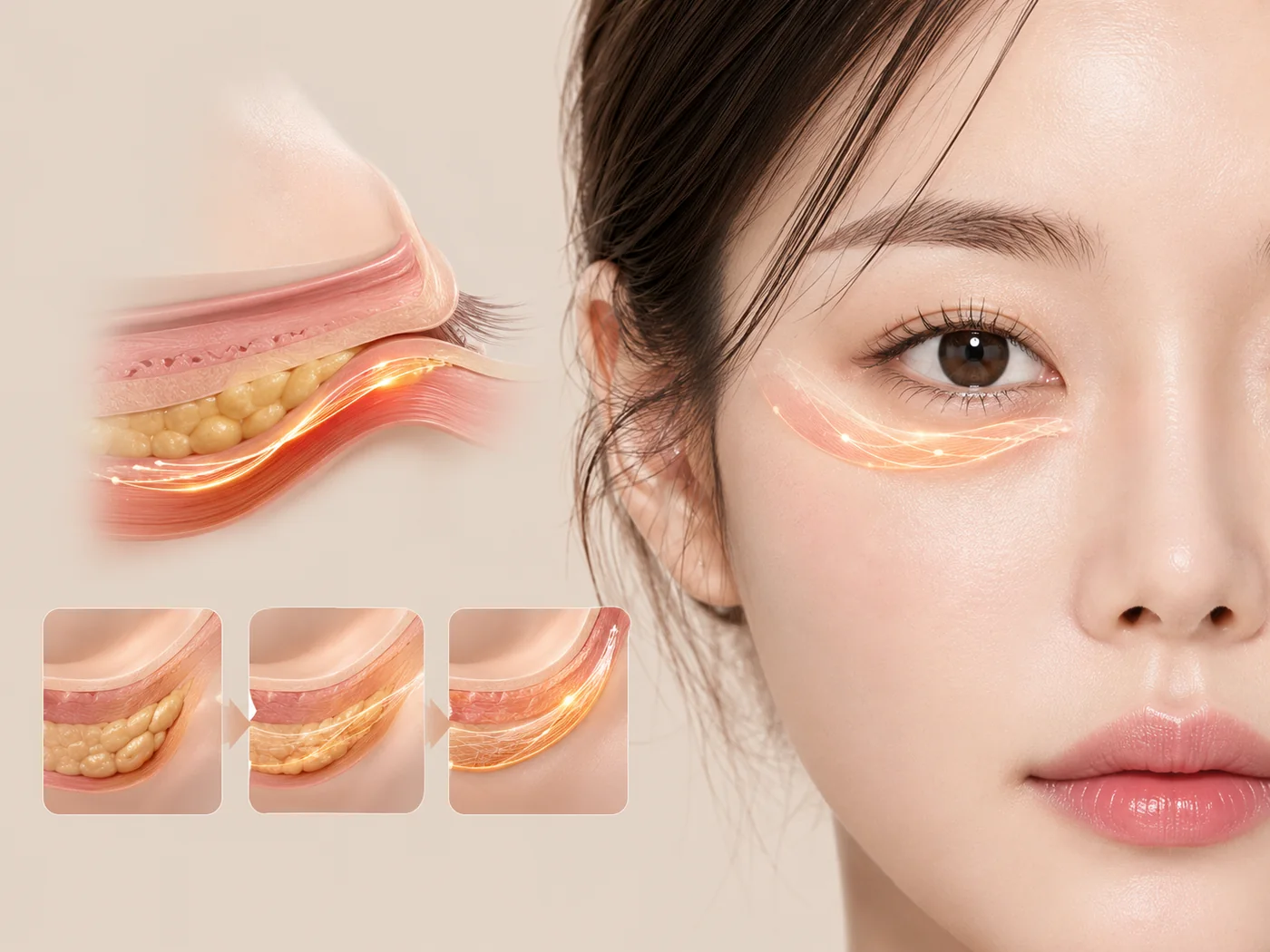
The Eye-Widening Thread Lift is a non-surgical lift in which absorbable threads are inserted with a horizontal vector, from beside the lateral canthus toward the temporal region, into the safe plane between the deep dermis and the upper SMAS to gently refine sagging beside the eyes.
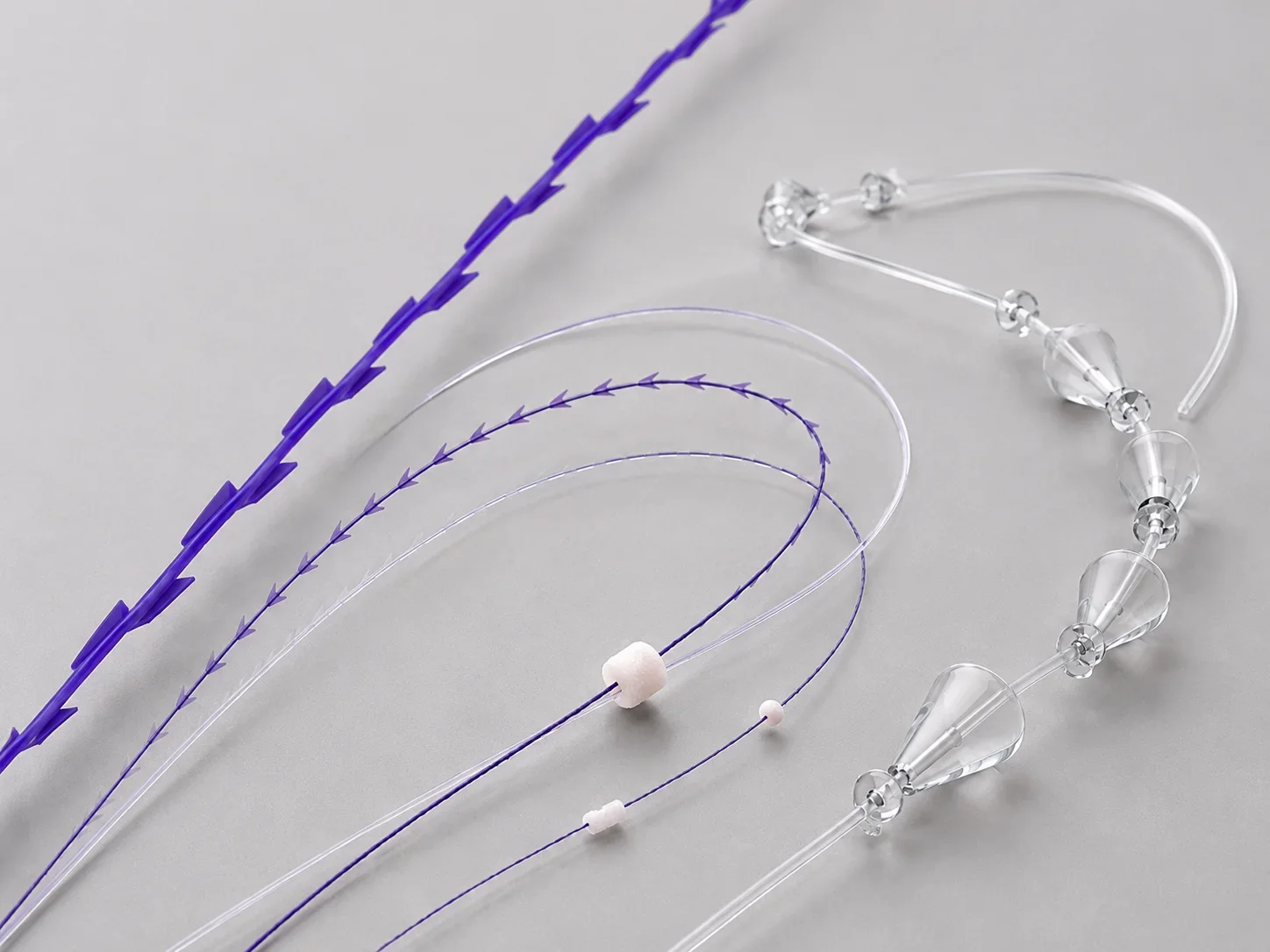
PDO (Polydioxanone) and PCL (Polycaprolactone) threads are mainly used, and in addition to the physical traction of the thread itself, collagen production is induced over time as collagen fibers align around the thread.

The change is small, measured in mm, so the treatment is closer to correcting the slant of the overall look, and depth and the number of threads are planned conservatively with regard to the distribution of nerves and blood vessels around the eyes.

Before & After

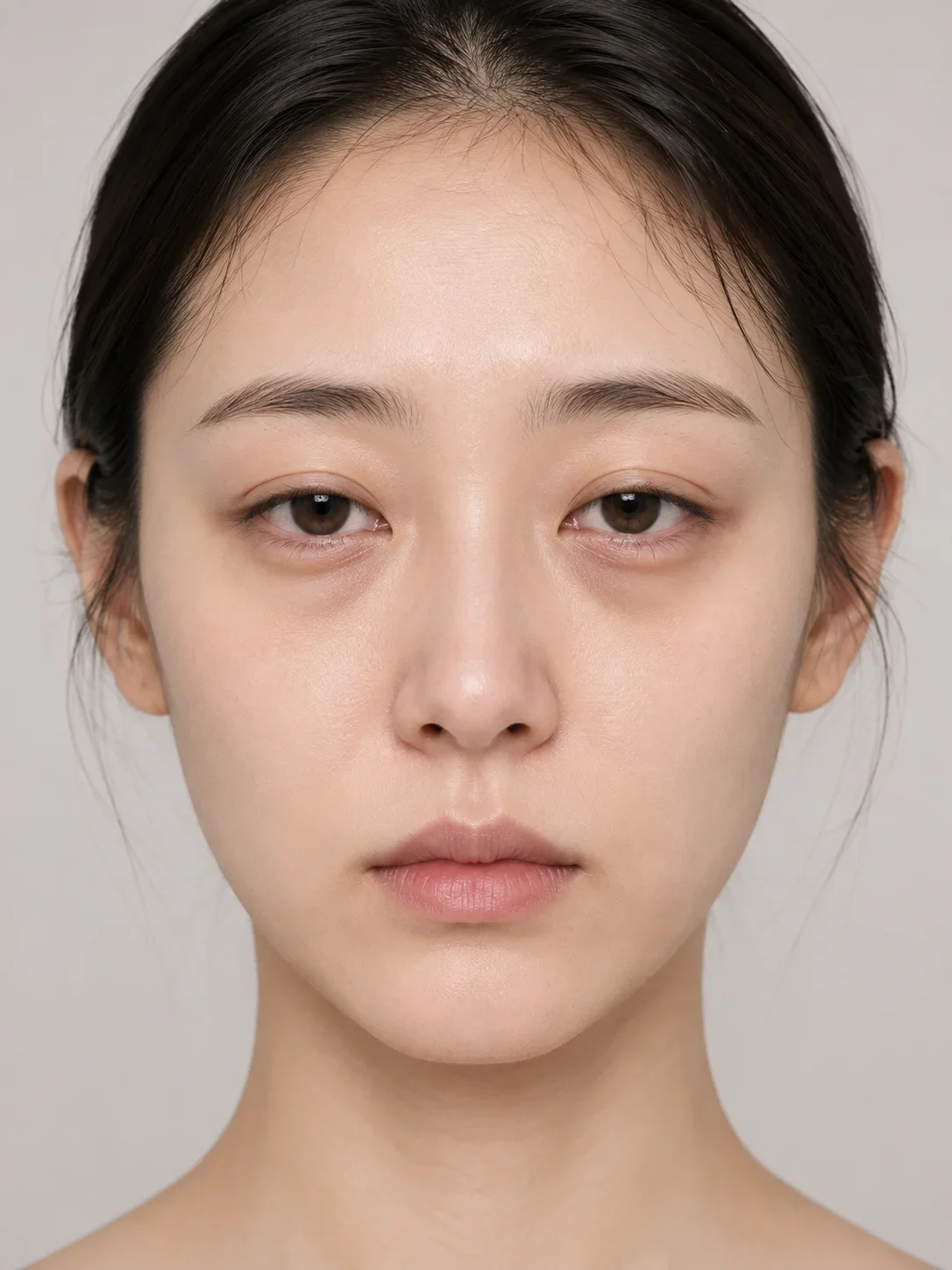
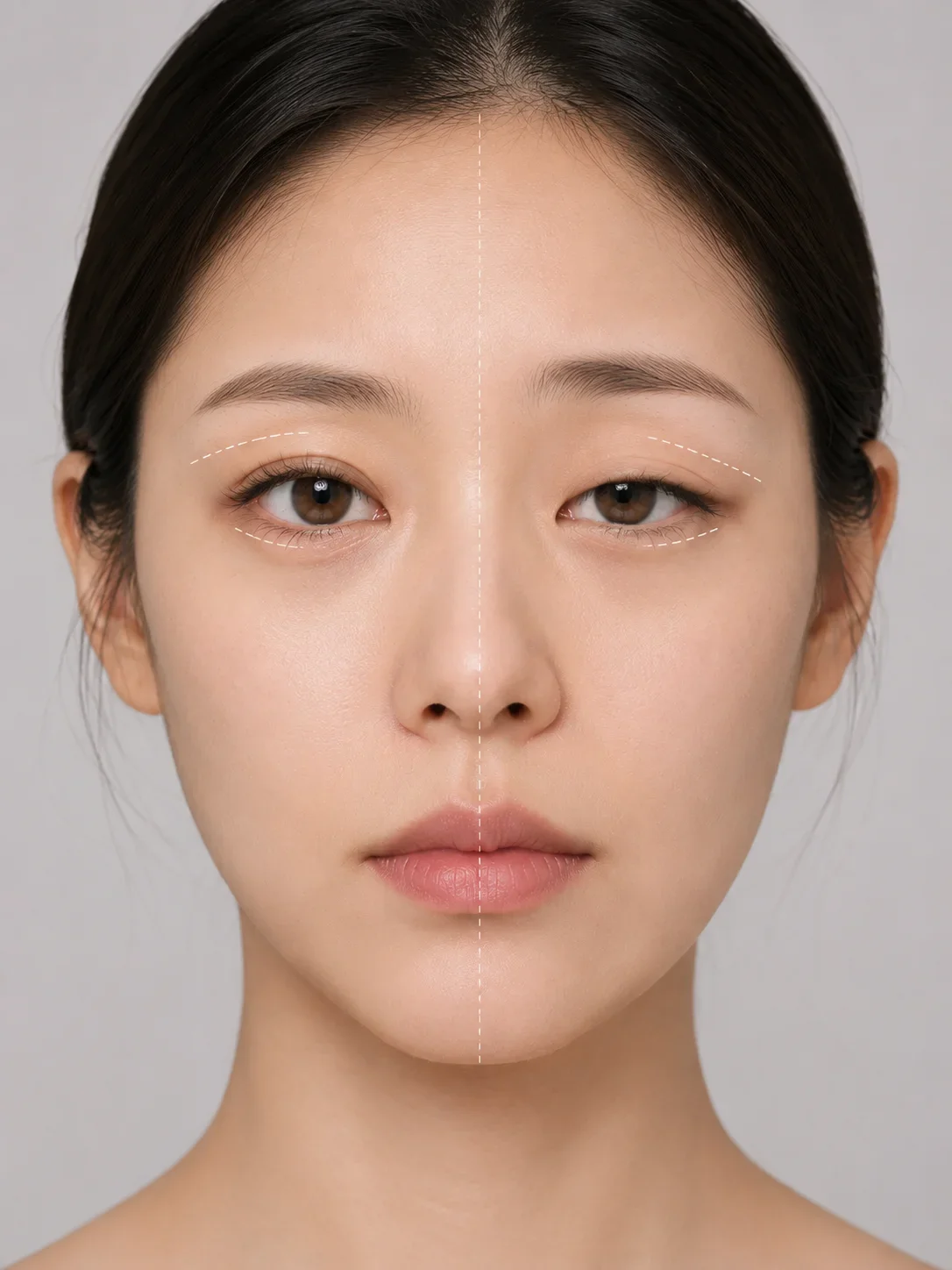
Eye-Widening Thread Lift Before & After

DESIGN PRINCIPLE

Methods
How the Eye-Widening Thread Lift Works

Lateral Canthal Sagging SUTURE guide image

SutureLateral Canthal Sagging

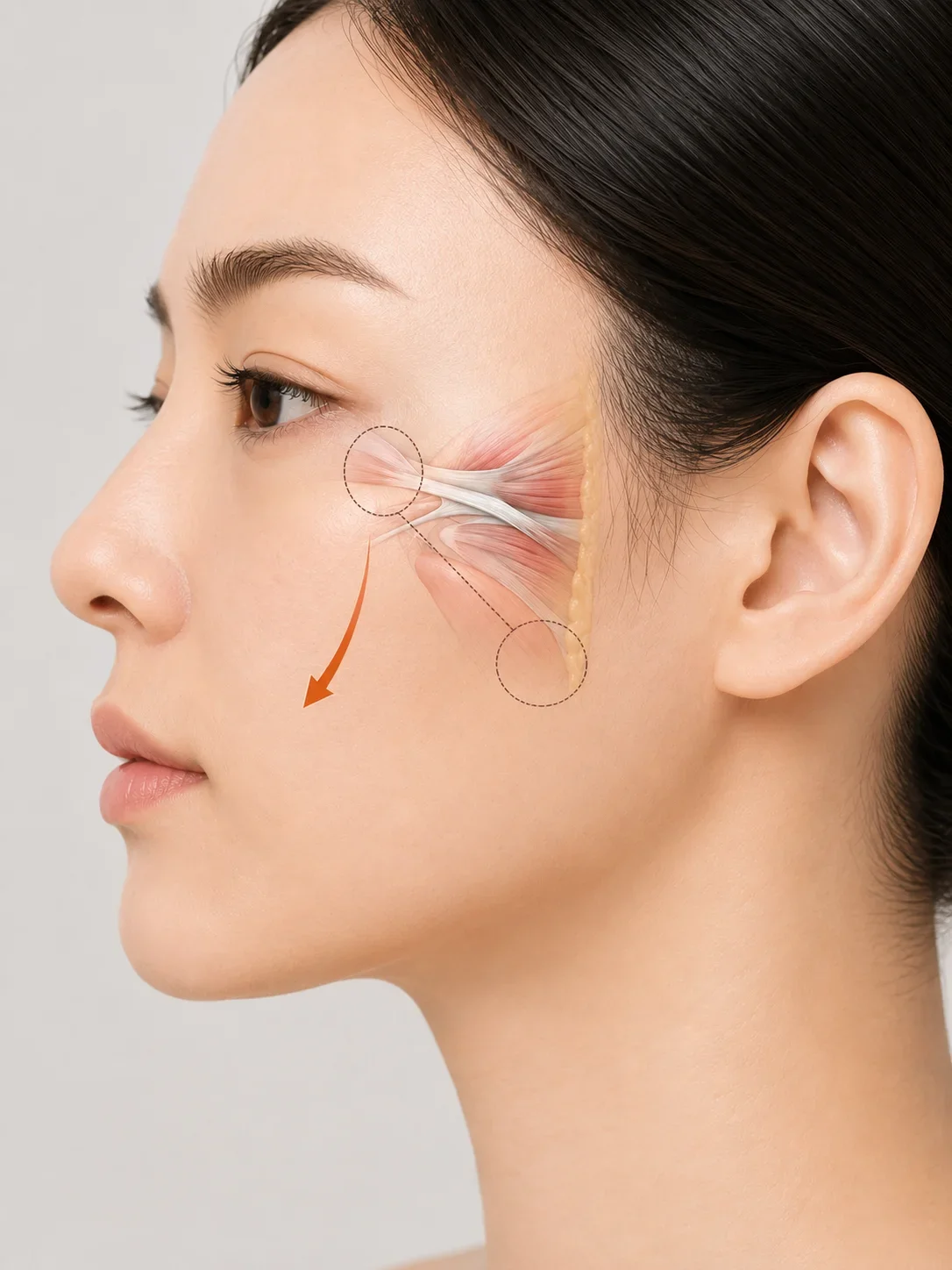
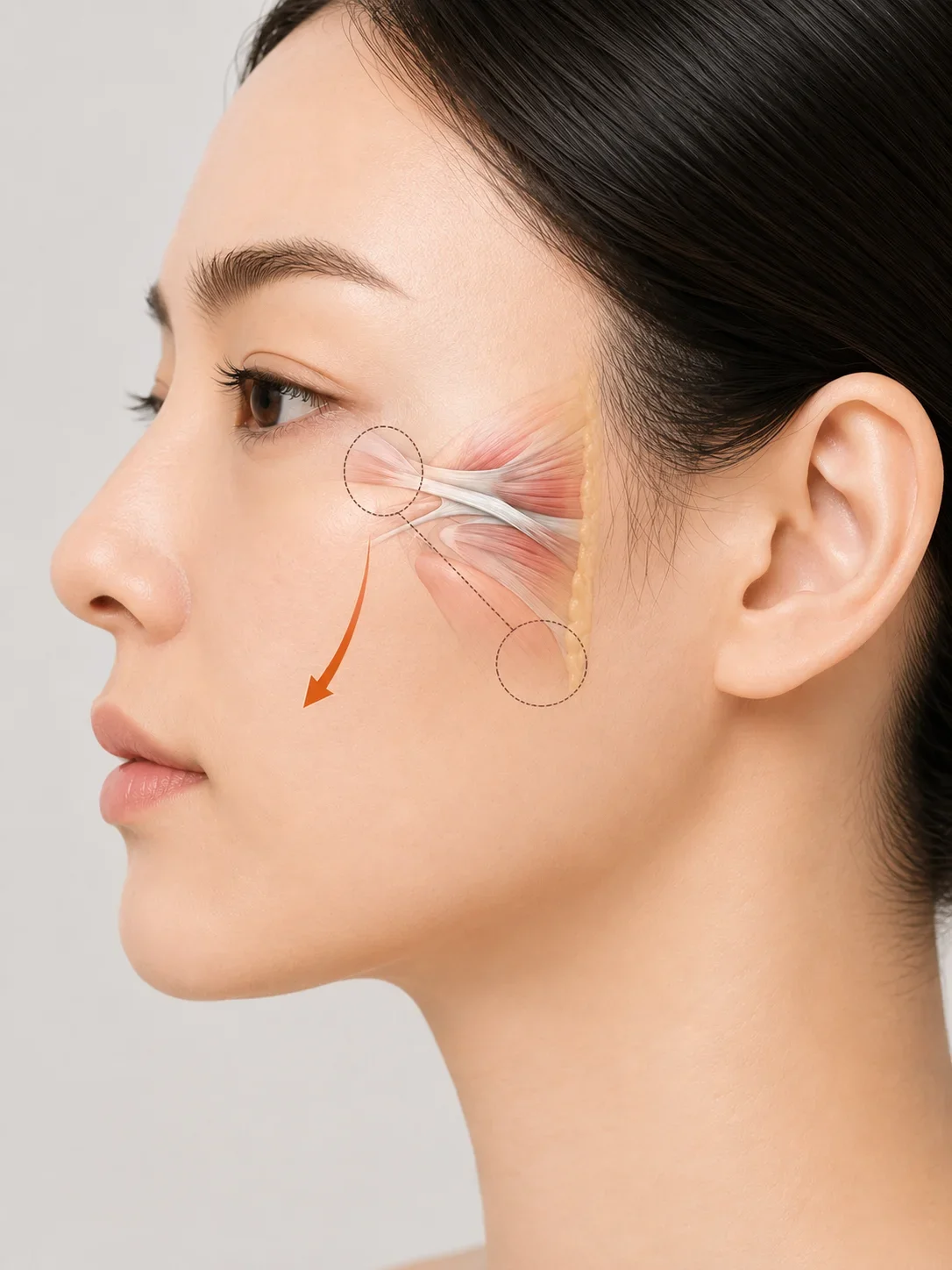
With age or the accumulated effect of expression habits, the lateral canthal tendon and the orbicularis oculi fibers above it become lax, and the outer side of the eye area descends. A thread with a horizontal vector is placed here to draw the dermis-fascia junction slightly upward and outward. The change is small, measured in mm, but the heavy feeling of the look is lightened. If the skin itself is very thin or the sagging is pronounced, a thread lift alone has its limits and we will guide you to another approach.

Lateral Canthus lateral canthus Vector Traction
Outer Eye Corner Line HYBRID guide image

HybridOuter Eye Corner Line

This extends the line outside the outer corner of the eye horizontally. Threads are placed along a vector running from the lateral canthus toward the temporal region to gently support the lax lateral orbicularis oculi. Because the superficial temporal artery and the temporal branch of the facial nerve in the temporal area must be avoided, the entry angle and depth of the thread are important. This is an area where left-right differences easily arise unless the number of threads and the direction are planned accurately at the consultation.

Outer Eye Corner horizontal vector Temporal Safe Zone
Refining a Tired Look PARTIAL guide image

PartialRefining a Tired Look

This refines the tired look that arises where a drooping lateral canthus meets excess skin on the outer upper eyelid. The thread is placed in the safe plane between the upper SMAS and the dermis; if too shallow it may show through the skin, and if too deep there is a possibility of nerve irritation, so a set range is kept. If blepharoptosis is the underlying cause, it cannot be resolved by threads alone, so this is distinguished at the consultation stage.

Tired Look Safe Plane Dermis-SMAS Boundary
Conservative Change INCISION guide image

IncisionConservative Change

The number of threads and the result are not proportional. Around the lateral canthus, the position of a single thread can change the whole look, so the idea that more is better makes the result heavy. At RESUM, we keep the degree of change conservative and, if it is not enough, decide on a staged touch-up after 1-2 months. Asymmetry is fine-tuned through the number of threads on each side and the vector angle.

Conservative Thread Count Staged Touch-Up Left-Right Fine-Tuning

OUR PRINCIPLE

Core Values
The Principles RESUM Keeps

The eye area is the part of the face that must be treated most conservatively. Increasing the number of threads is not the way to a greater result; rather, placing an appropriate amount at the right position, depth, and vector is what determines the stability of the result. At RESUM, we first determine suitability at the consultation and do not recommend an excessive number of threads.

Diagnosis First

Diagnosis First

Suitability First

We first distinguish whether the issue is laxity of the lateral canthal tendon, accompanying blepharoptosis, or excess skin on the upper eyelid. Honestly separating what a thread lift can address from what requires surgery is the starting point of a consultation at RESUM. If you are not a suitable candidate, we do not recommend the treatment and guide you in another direction. This is because recommending an excessive number of threads leads to side effects rather than results.

Safe Layer

Safe Layer

Depth That Avoids Nerves & Vessels

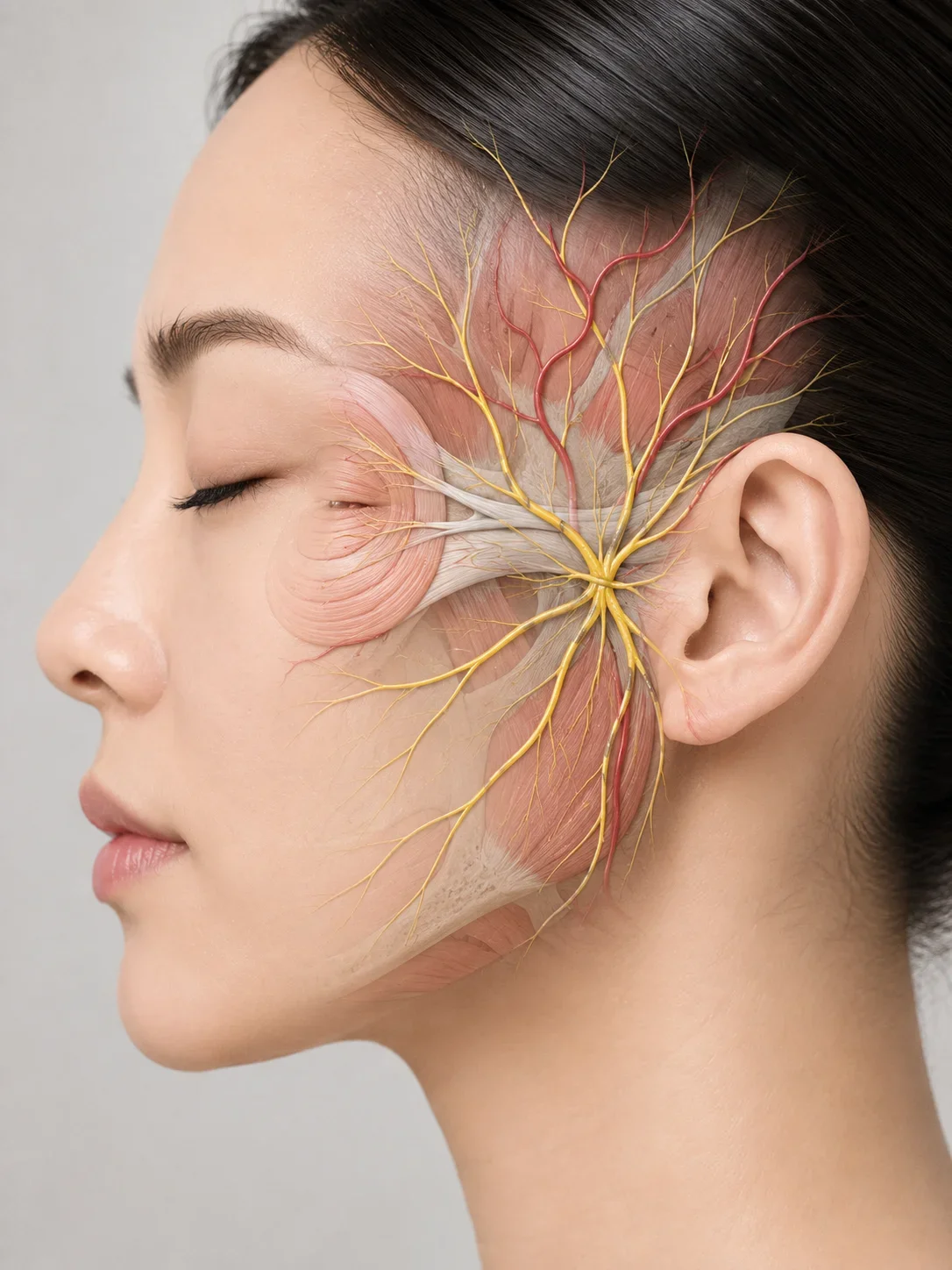
The temporo-orbital branches, the temporal branch of the facial nerve, and branches of the superficial temporal artery are distributed beside the lateral canthus. Threads are handled only in a consistent plane between the deep dermis and the upper SMAS, avoiding these structures. With the anatomical sense of an anti-aging skin practice, depth and entry angle are kept consistent. If the depth wavers, it can lead to visible or palpable threads or temporary nerve irritation, so this is the part handled with the greatest care.

Subtle Change

Subtle Change

Restrained Design

RESUM judges a result not by how much was lifted but by how naturally it stopped. The number of threads and the vector are set conservatively, with staged touch-ups if needed. Keeping the degree of change small also means less awkwardness in facial expressions. If a major change is needed, we honestly consider surgery with you as well.

POINT 03 Features

Features of the Eye-Widening Thread Lift

Thread Types and How They Work

Thread Types and How They Work

Because the eye area must be treated most conservatively, PDO and PCL are the types mainly used among absorbable threads, which are absorbed through hydrolysis. The thread pulls the lax dermis-fascia junction beside the lateral canthus horizontally, and as it breaks down a secondary effect is added in which collagen fibers align around the thread. PDO is absorbed relatively quickly, while PCL takes longer to break down and tends to provide support for longer. PDO (Polydioxanone): relatively fast absorption · PCL (Polycaprolactone): slower breakdown, support tends to last longer · Physical horizontal traction + induced alignment of collagen fibers · Lasts about 6-12 months, with individual variation

Horizontal Vector Design and the Safe Plane

Horizontal Vector Design and the Safe Plane

When the lateral canthal tendon and the lateral fibers of the orbicularis oculi become lax, the outer side of the eye area descends. Threads are placed here along a horizontal vector running from the lateral canthus toward the temporal region to pull slightly upward and outward. Avoiding the temporo-orbital branches, the temporal branch of the facial nerve, and branches of the superficial temporal artery, threads are handled only in a consistent plane between the deep dermis and the upper SMAS, and the number of threads is kept conservative. Horizontal vector design from the lateral canthus toward the temporal region · Entry only in the safe plane from the deep dermis to the upper SMAS · A consistent depth that avoids nerves and blood vessels · Fine-tuning of asymmetry through the number of threads on each side and the vector angle

NOTICE

Precautions
Aftercare & Precautions

N · 01 The Eye-Widening Thread Lift is a treatment that corrects a slight slant at the outer side of the eye area, and is planned on the premise of a conservative degree of change measured in mm.
N · 02 We first distinguish whether the issue is laxity of the lateral canthal tendon or accompanying blepharoptosis; if blepharoptosis is the underlying cause, it cannot be resolved by threads alone.
N · 03 Around the eyes, the temporo-orbital branches, the temporal branch of the facial nerve, and branches of the superficial temporal artery lie close by, so depth and the number of threads are planned very conservatively.
N · 04 Around the lateral canthus, the position of a single thread can change the whole look, so an approach that uses many threads actually makes the look heavier.
N · 05 The skin around the eyes is thin, and threads may show through if inserted too shallowly, so we keep to a consistent plane between the deep dermis and the upper SMAS.
N · 06 For 1 week after treatment, avoid strong facial expressions and strong massage; if the result is not enough, a staged touch-up is decided after 1-2 months.
N · 07 This treatment is not performed during pregnancy or if there is an active skin infection. Results vary from person to person, so a consultation with a board-certified specialist is required.


PROCEDURE DATA

Summary
Treatment Overview

Procedure

Treatment Overview

Treatment time
20-30 minutes
Anesthesia
Local anesthesia
Daily activities
Swelling settles in 2-3 days
Duration
About 12 months

FOR WHOM

Candidates

Consider a Consultation If

05 Recommended Cases

01 Those whose line beside the lateral canthus has sagged slightly, giving a heavy or tired look, and who want to address just where it begins without surgery.
02 Those who are satisfied with their double eyelid crease but whose eye shape looks narrower as the outer end becomes less defined.
03 Those in whom only the outer side has descended slightly over time after ptosis correction or double eyelid surgery, and who want to tidy up the look without the burden of revision surgery.
04 Staged care for those who want to correct only the slant of their look with a small rather than a major change, and who find it difficult to set aside a long recovery period.
05 Those assessed as having suitable expression lines and mild sagging that can be addressed with a conservative number of threads.
Jin-Young Kim · M.D. - RESUM Plastic Surgery Clinic

Doctor's Note

We do not recommend an eye-area thread lift to everyone. We often recommend it to those with mild sagging and suitable expression lines. In our anti-aging skin practice, we use only thread types that have been academically validated and keep the number of threads conservative. If a major change is needed, we tell you honestly that ptosis correction is more suitable.

Jin-Young Kim · M.D.

Dr. Jin-Young Kim, Director

PROCEDURE FLOW

Process
Treatment Process

01

PHASE I

Determining Suitability

We first distinguish whether the issue is laxity of the lateral canthal tendon, accompanying blepharoptosis, or excess skin on the upper eyelid, and separate what a thread lift can address from what requires surgery.

STEP

02

PHASE II

Conservative Vector Design

We set a horizontal vector running from the lateral canthus toward the temporal region and, checking for left-right differences, plan the number of threads and the entry angle conservatively.

DESIGN

03

PHASE III

Insertion in the Safe Plane

After local anesthesia, threads are placed with a horizontal vector in the safe plane between the deep dermis and the upper SMAS, avoiding nerves and blood vessels, to refine the eye shape.

STEP

04

PHASE IV

Staged Touch-Up Guidance

We explain swelling care and the left-right fine-tuning process, and if the change is not enough, plan with you the timing of a staged touch-up after 1-2 months.

STEP

FREQUENTLY ASKED

FAQ
Frequently Asked Questions

We have compiled the questions patients ask most often before a consultation.

From beside the lateral canthus toward the temporal region, absorbable threads (PDO or PCL) are precisely inserted with a horizontal vector into the safe plane between the deep dermis and the upper SMAS. In addition to the immediate lifting effect of the thread itself, a secondary change is added over time as collagen fibers align around the thread. At your consultation, the location of sagging, expression lines, and skin thickness are assessed before the number of threads, the vector, and the entry point are decided.
Right after treatment the line beside the lateral canthus feels more refined, and once the swelling subsides over 1-2 weeks it settles into a natural result. The secondary change from collagen alignment appears gradually over 1-2 months.
Most of the swelling subsides within 2-3 days, and residual swelling settles over 1-2 weeks. Because it is non-surgical, the return to daily life tends to be quick, and in many cases light outings are possible from the day after treatment.
Temporary swelling, mild bruising at the entry point, and tenderness are the most common and settle within a few days. In rare cases the thread may be felt or seen through the skin, or left-right asymmetry may occur, and very rarely temporary irritation symptoms of the temporal branch have been reported. These possibilities are explained in advance at your consultation.
This depends on the thread type (PDO or PCL), the number of threads, and whether other treatments are combined. The exact cost is explained at your consultation after your condition has been assessed, in line with your individual condition.
Ptosis correction surgically adjusts the strength of the eye-opening muscles themselves, such as the levator and Müller's muscle. The Eye-Widening Thread Lift places threads in the lax superficial structures beside the lateral canthus to provide a light lift. If blepharoptosis is the underlying cause, a thread lift has its limits; a thread lift is considered when sagging is mild and the expression lines are suitable.

RESUM Plastic Surgery Clinic Location

#601, 6F, 842 Nonhyeon-ro, Gangnam-gu, Seoul

6F #601, 599-4 Sinsa-dong, Gangnam-gu, Seoul

HOURS

Weekdays
10:00 ~ 20:00
Saturday
10:00 ~ 17:00
Lunch Break
1:00 PM - 2:00 PM

(No lunch break on weekends and public holidays) *Dr. Won-Suk Kook is not available on the 1st and 3rd Saturdays of each month.

Parking Information Parking is available in the building. 1 hour of free parking

Subway 5-minute walk from Exit 3 of Apgujeong Station on Line 3 (right next to the 14-story CGV building at Exit 3)

RESUM Plastic Surgery Clinic CEO Won-Suk Kook Business No. 733-11-02929 Phone 02-3445-7770