Cheekbone Thread Lift in Gangnam, Seoul | RESUM Plastic Surgery
Skip to main content

service / Thread-lifting

Cheekbone Thread

Cheekbone Thread Lift

CHEEKBONE THREAD

We analyze sagging beside the cheekbones and the side contour of the face
to help refine a balanced facial contour.

Method
30-50 minutes
Anesthesia
Recovery
Local anesthesia · Daily life, swelling settles in 3-5 days
Summary A cheekbone thread lift is not surgery that shaves the cheekbones but a treatment that pulls sagging tissue at the sides of the cheekbones with absorbable threads to refine the curve of the side profile and the width of the face. It addresses the impression of the facial contour without bone surgery and is performed at RESUM Plastic Surgery in Gangnam, Seoul (Apgujeong). Medical Review Medical Review: Won-Suk Kook,Jin-Young Kim
Last updated: 2026-07-01

Why Lisoom

Overview Refining Sagging Beside the Cheekbones
for a Balanced Side Profile

A cheekbone thread lift is not a treatment that reduces the cheekbones; it is a non-surgical lift that pulls downward-sagging soft tissue at the sides of the cheekbones upward toward the temple to refine an interrupted side-profile curve.
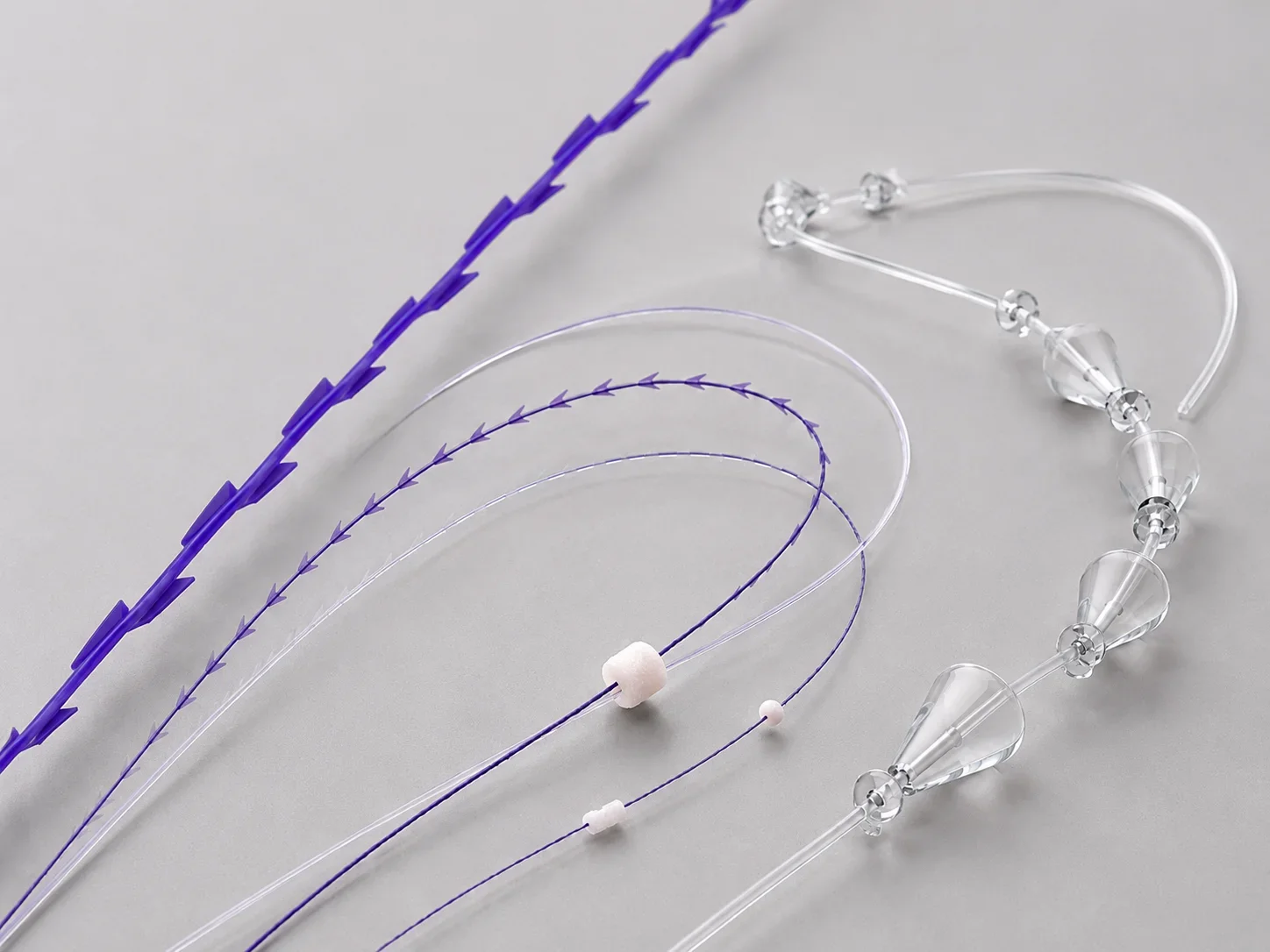
Absorbable threads of the PDO (Polydioxanone), PLLA (Poly-L-Lactic Acid), and PCL (Polycaprolactone) types (mainly in cog form) are inserted from an entry point at the temple to the line of sagging beside the cheekbone to provide traction, and collagen production is also induced as the threads break down.

It is suited to cases where sagging beside the cheekbones makes them look more prominent or makes the face look wider, and a safe-depth design that takes into account the course of the temporal branch of the facial nerve and the superficial temporal vessels is important.

Before & After

Cheekbone Thread Lift Before & After

DESIGN PRINCIPLE

Methods
How a Cheekbone Thread Lift Works

Lateral Cheekbone Sagging SUTURE guide image

SutureLateral Cheekbone Sagging

It is applied when the soft tissue at the sides of the cheekbones has sagged downward and the curve of the side profile is interrupted. The side contour is refined by lifting with cog threads along the line of the temporal fascia and the zygomatic ligament. The direction of traction must be accurate for a natural result.

Beside the Cheekbone Temporal Fascia Cog Traction
Profile Curve HYBRID guide image

HybridProfile Curve

We refine the curve of the side profile so that it looks naturally smooth. The traction line is decided by looking not at the cheekbone alone but at the whole side-profile line running from the cheekbone through the cheek to the chin. If the line is awkward, the result looks unnatural.

Profile Curved Line Balance
Line Continuity PARTIAL guide image

PartialLine Continuity

Continuity with the lateral cheek and deep cheek lines is refined at the same time. If only the cheekbone area is lifted, it can become disconnected from the line below and the result may look awkward, so we also assess whether lateral or deep cheek sagging is present and design a combination.

Lateral Cheek Link Deep Cheek Combination Design
Safe Depth INCISION guide image

IncisionSafe Depth

At the sides of the cheekbones, the temporal branch of the facial nerve and the superficial temporal artery and vein run close by, making entry depth important in this area. We enter only at a safe depth that avoids the nerves and blood vessels, reducing the risk of irritation or bleeding. Depth control is the core of the technique.

Temporal Branch Safe Entry Depth Control

OUR PRINCIPLE

Core Values
The Principles RESUM Keeps

At the consultation we first make clear that a cheekbone thread lift does not reduce the cheekbones and refines only sagging of the side contour.

Honest Limit

Honest Limit

Honest Limitations

When the cheekbones themselves are large, we tell you plainly at the consultation that a thread lift will not make them smaller. If bone surgery would be more suitable, we say so honestly, and we recommend a thread lift only when sagging of the side contour is the main cause.

Connected Design

Connected Design

Connected Design

We decide the number of threads and the direction of traction by looking not at the cheekbone alone but at the lateral cheek and deep cheek lines as well. If it does not connect with the line below, the result can easily look awkward, so we recommend a combination design.

Safe Depth

Safe Depth

Safe Depth

The sides of the cheekbones are an area where the temporal branch of the facial nerve and the superficial temporal artery and vein run close by. We check the course of the nerves and blood vessels, enter only at a safe depth, and control the entry position and angle accurately. Depth control is the core of the technique.

POINT 03 Features

Features of a Cheekbone Thread Lift

Thread Types and How They Work

Thread Types and How They Work

Traction is important at the sides of the cheekbones, so cog threads, which have fine barbs on their surface, are mainly chosen. The thread physically pulls and lifts the sagging tissue along the line of the temporal fascia and the zygomatic ligament, and as it breaks down a secondary effect is added: it induces collagen production. The breakdown rate and strength of collagen stimulation differ by type, so the thread is chosen according to skin thickness and the degree of sagging. PDO (Polydioxanone): breaks down in 6-8 months, lasts 9-12 months · PLLA (Poly-L-Lactic Acid): breaks down in 12-18 months, relatively strong collagen stimulation · PCL (Polycaprolactone): breaks down in 18-24 months, relatively long-lasting · Physical pull + induced collagen production act at different times

Vector Design and Safe Depth

Vector Design and Safe Depth

Sagging beside the cheekbones often appears as the line running from the temporal fascia through the zygomatic ligament to the SMAS of the lateral cheek weakens. The traction vector is set toward the temple to match the direction of sagging, while continuity with the lateral cheek and deep cheek lines is also considered. At the sides of the cheekbones, the temporal branch of the facial nerve and the superficial temporal artery and vein are close by, so control of a safe depth is the core of the technique. Traction vector designed along the line from the temporal fascia to the zygomatic ligament · Continuity with the lateral cheek and deep cheek lines also assessed · Entry only at a safe depth that avoids nerves and blood vessels · Direction and depth matter more to the result than the number of threads

NOTICE

Precautions
Aftercare & Precautions

N · 01 A cheekbone thread lift is not a treatment that reduces the cheekbones but one that lifts sagging soft tissue at the sides of the cheekbones, so the size of the bone itself does not change.
N · 02 When the cheekbone structure itself is large, the degree of lift is limited, so we judge clearly at the consultation whether bone surgery would be more suitable.
N · 03 At the sides of the cheekbones, the temporal branch of the facial nerve and the superficial temporal artery and vein run close by, so we enter only at a safe depth that avoids the nerves and blood vessels.
N · 04 The skin over the cheekbone and temple area is thin, so if the insertion depth is shallow the thread may be felt temporarily; this settles with time.
N · 05 Lifting the cheekbone area alone can leave it disconnected from the lateral cheek and deep cheek lines and make the side profile look awkward, so continuity with the line below is assessed as well.
N · 06 For 1-2 weeks after treatment, avoid opening your mouth wide, strong facial expressions, and strong massage of the cheekbone area so that the traction line is not disturbed.
N · 07 This treatment is not performed during pregnancy or if there is an active skin infection. Results vary from person to person, so a consultation with a board-certified specialist is required.


PROCEDURE DATA

Summary
Treatment Overview

Procedure

Treatment Overview

Treatment time
30-50 minutes
Anesthesia
Local anesthesia
Daily activities
Swelling settles in 3-5 days
Duration
About 12 months

FOR WHOM

Candidates

Consider a Consultation If

05 Recommended Cases

01 Cases in the 30s-40s in which sagging of the soft tissue at the sides of the cheekbones makes the curve of the side profile look interrupted.
02 Those who are more bothered in the side profile by sagging of the side contour than by the size of the cheekbones themselves.
03 Schedules that call for refining only the side contour without the burden of surgery and with less burden in returning to daily life.
04 Combination treatment cases in which you want to balance the side profile by refining it together with the lateral cheek and deep cheek lines.
05 Those whose previous cheekbone treatment result faded quickly and who want the thread type and plan reassessed.
Jin-Young Kim · M.D. - RESUM Plastic Surgery Clinic

Doctor's Note

A cheekbone thread lift is not a treatment that reduces the cheekbones. It refines only the line of sagging at the side, so when the cheekbones themselves are large, bone surgery is more suitable. In our anti-aging skin practice, we use only thread types that have been academically validated and give honest guidance according to the patient's condition. In a 1:1 consultation with the director, continuity with the lateral cheek and deep cheek lines is assessed as well.

Jin-Young Kim · M.D.

Dr. Jin-Young Kim, Director

PROCEDURE FLOW

Process
Treatment Process

01

PHASE I

Sagging & Bone Assessment

We assess the degree of soft tissue sagging at the sides of the cheekbones together with the cheekbone structure to first determine whether sagging of the side contour or the bone structure is the main cause.

STEP

02

PHASE II

Connected Design

We set the traction vector from the entry point at the temple to the line of sagging beside the cheekbone, and decide the number of threads and the direction while also considering continuity with the lateral cheek and deep cheek lines.

DESIGN

03

PHASE III

Safe-Depth Insertion

After local anesthesia, cog threads are inserted at a safe depth that avoids the temporal branch of the facial nerve and the superficial temporal artery and vein, pulling the side contour toward the temple.

STEP

04

PHASE IV

Side Profile Care Guidance

We explain swelling care and how left-right differences settle, and plan with you the timing of the next touch-up to maintain the curve of the side profile.

STEP

FREQUENTLY ASKED

FAQ
Frequently Asked Questions

We have compiled the questions patients ask most often before a consultation.

A cheekbone thread lift is a thread lift in which soft tissue that has sagged at the sides of the cheekbones is pulled upward toward the temple with absorbable threads to restore the curve of the side profile. Cog threads of the PDO, PLA, or PCL type are mainly used, inserted from an entry point at the temple down to the contour beside the cheekbone. Because access is made with a fine needle and without an incision, the recovery burden is light.
The types used are PDO (breaks down in 6-8 months, lasts 9-12 months), PLA (breaks down in 12-18 months, lasts 12-24 months), and PCL (breaks down in 18-24 months, lasts 24-36 months). Traction is important at the sides of the cheekbones, so cog threads are mainly chosen. The thread is selected at your consultation according to the patient's skin thickness and degree of sagging.
Depending on the thread type used, results last about 9-12 months with PDO, 12-24 months with PLA, and 24-36 months with PCL. This varies between individuals depending on the rate of skin aging and changes in weight. The expected duration is explained according to the thread type selected at your consultation.
Most of the swelling lasts about 3-5 days and largely settles within 1-2 weeks. Because of the nature of the cheekbone area, a temporary difference between the left and right sides may be visible, but this settles with time.
Besides the usual swelling, bruising, and tightness, temporary asymmetry, dimpling, or knot irritation may occur, and most of these settle with time. In rare cases, infection, thread exposure, or irritation of the temporal branch of the facial nerve have been reported, and these are explained in advance at your consultation.
The cost depends on the type of thread used (PDO/PLA/PCL), the number of threads, and whether other treatments are combined. The exact cost is provided after your visit, based on the distribution of sagging and the suitable thread type.

RESUM Plastic Surgery Clinic Location

#601, 6F, 842 Nonhyeon-ro, Gangnam-gu, Seoul

6F #601, 599-4 Sinsa-dong, Gangnam-gu, Seoul

HOURS

Weekdays
10:00 ~ 20:00
Saturday
10:00 ~ 17:00
Lunch Break
1:00 PM - 2:00 PM

(No lunch break on weekends and public holidays) *Dr. Won-Suk Kook is not available on the 1st and 3rd Saturdays of each month.

Parking Information Parking is available in the building. 1 hour of free parking

Subway 5-minute walk from Exit 3 of Apgujeong Station on Line 3 (right next to the 14-story CGV building at Exit 3)

RESUM Plastic Surgery Clinic CEO Won-Suk Kook Business No. 733-11-02929 Phone 02-3445-7770