Finish Primary Rhinoplasty in Gangnam, Seoul | RESUM Plastic Surgery
Skip to main content

SERVICE 04 / NOSE

First-Time
Rhinoplasty

Finish Primary Rhinoplasty

FINISH FIRST RHINOPLASTY

We plan your first rhinoplasty as carefully as if it were your last surgery, considering facial proportions and safety together.

Method
Precise planning centered on autologous tissue
Anesthesia
IV sedation or general anesthesia
Recovery
Swelling about 2 weeks · Stabilization 6-12 months
Summary Finish Primary Rhinoplasty is an approach to first-time nose surgery that is planned in detail around autologous tissue to lower the likelihood of revision surgery. The method is chosen after analyzing the nasal skin and cartilage, and surgery is performed at RESUM Plastic Surgery in Gangnam (Apgujeong), Seoul. Medical Review Medical Review: Won-Suk Kook,Jin-Young Kim
Last updated: 2026-07-21

Why Lisoom

Overview Experience with many revision cases:
"If only the first surgery had gone well..."

As a medical institution focused on rhinoplasty, when we see cases of nasal implant removal and revision surgery caused by side effects or dissatisfaction, we often think,
"Had the first rhinoplasty been chosen well, these side effects would not have appeared..."
and feel great regret.

In most cases, the causes are artificial implants, excessive ambition, surgery that is both inexperienced and overly complex,
and one-size-fits-all surgical methods.

Before & After

Finish Primary Rhinoplasty Before & After

Subcategory
Time Since Procedure

Complications such as bleeding, infection and inflammation may occur depending on the individual, so caution is needed.
Results may vary by individual. Please confirm the method and expected results that suit you through a consultation.

Rhinoplasty Case Studies

DESIGN PRINCIPLE

Methods

A primary rhinoplasty must be beautiful and safe
to be a satisfying rhinoplasty.

We do not use any artificial implants. AUTOLOGOUS guide image

Autologous FocusWe do not use any artificial implants.

Silicone implants were an artificial implant favored by both surgeons and patients because they are easy for the operating surgeon to handle and make it easy to design the desired height.

However, they can cause side effects such as inflammation and contracture, as well as dissatisfaction from an artificial look, implant extrusion, or the implant showing through the skin. RESUM Plastic Surgery does not use any artificial implants such as silicone, Medpor, or Gore-Tex in rhinoplasty, and uses only autologous tissue and human donor tissue for a safe, natural-looking nose.

Autologous Cartilage First Implant Reliance ↓ Long-Term Stability
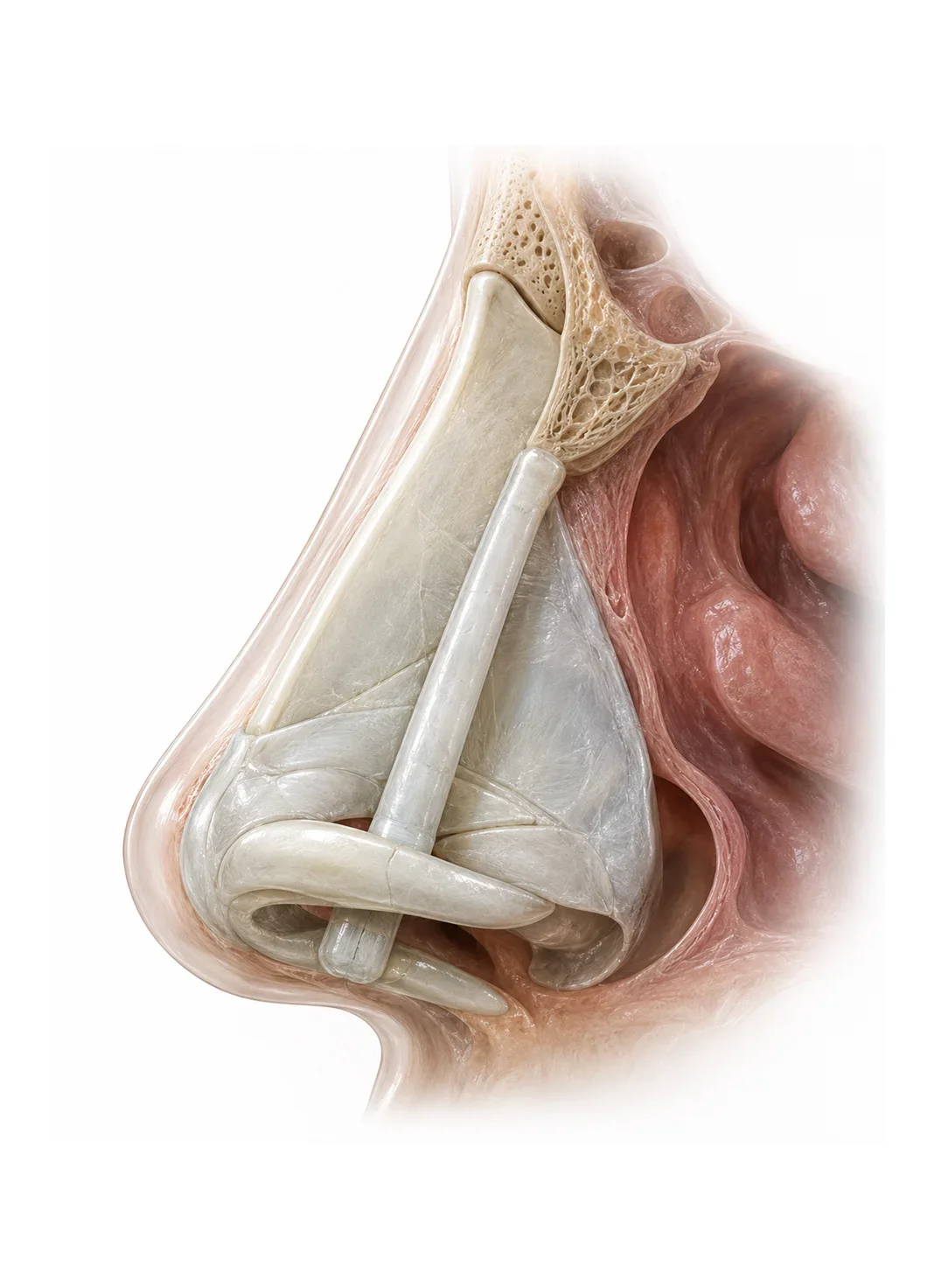
We consider nasal function as well. TIP SUPPORT guide image

Tip SupportWe consider nasal function as well.

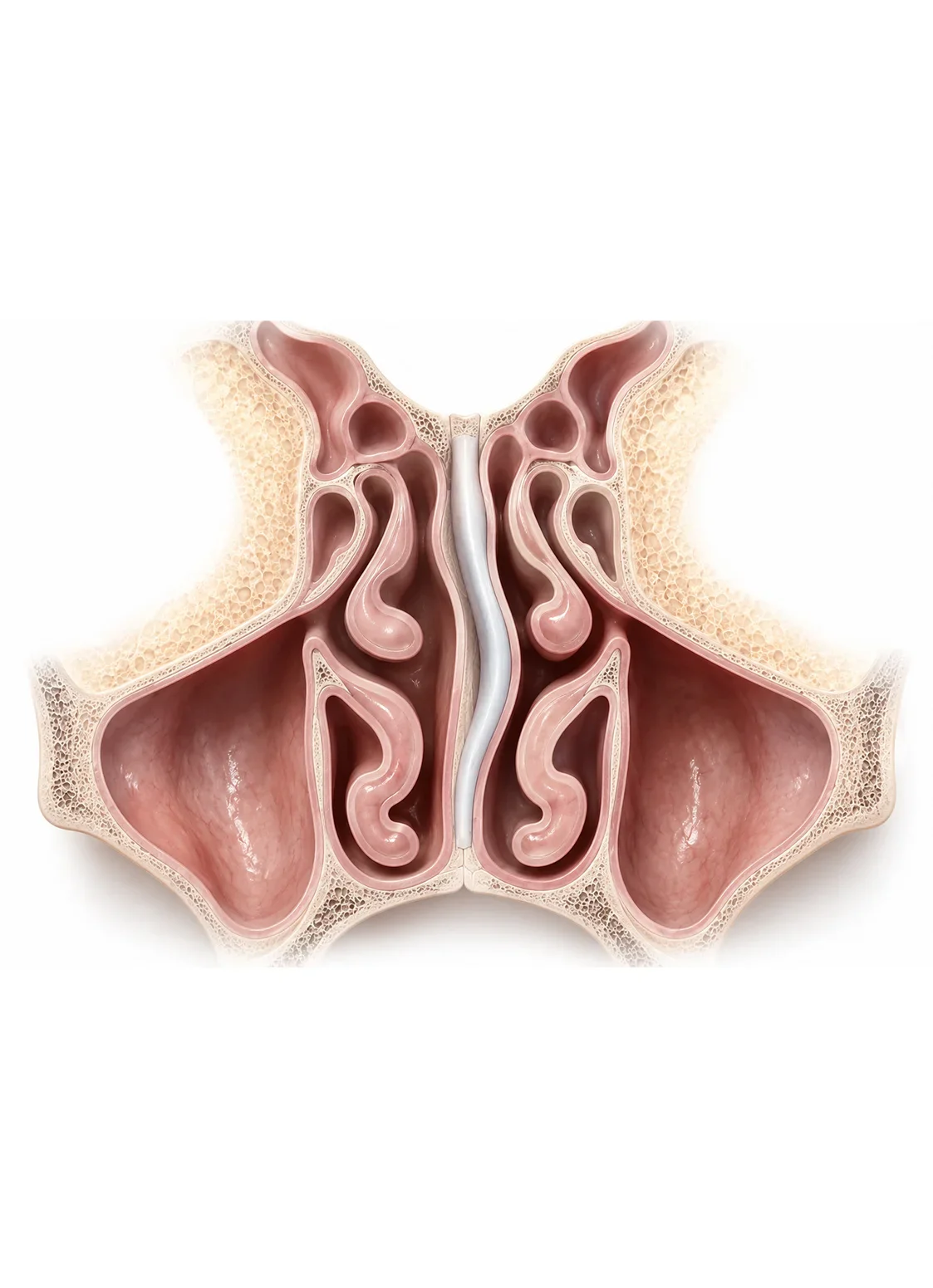
The nose has 6 important functions.
To properly maintain nasal breathing, the most important of these,
the space (shape) inside the nose, the shape of the septum, the nasal valve, and the turbinates must be examined carefully,
and customized surgery performed based on an accurate diagnosis.

Breathing, Smell, Air Temperature Control Humidity Control, Dust Filtering Internal Space (Shape), Septum, Valve, Turbinates
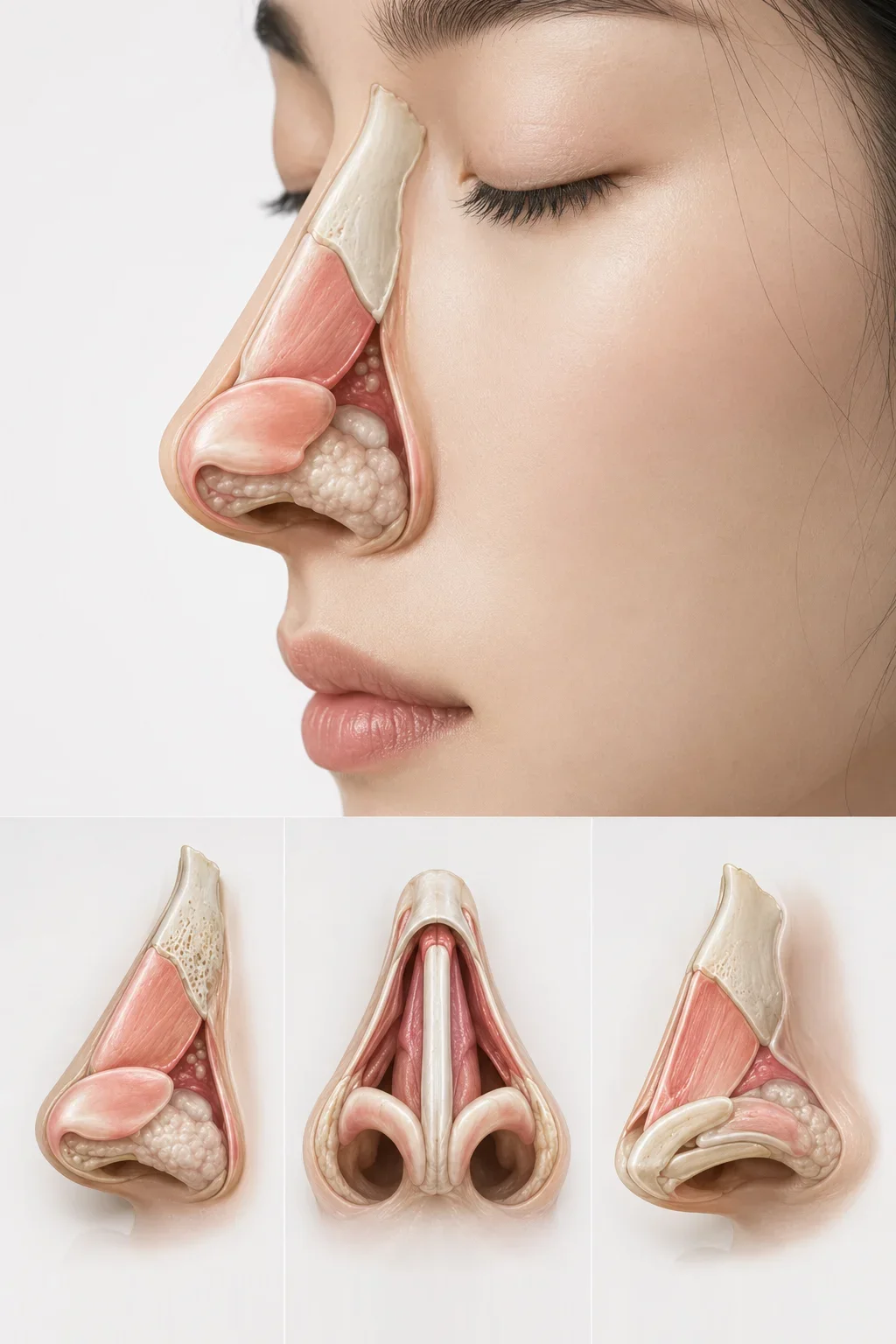
We design a nose that is in harmony PROPORTION guide image

ProportionWe design a nose that is in harmony

The features of the face and nose differ from person to person.
A primary rhinoplasty that focuses only on the height and angle of the nose leads to an awkward look and dissatisfaction.
RESUM Plastic Surgery designs rhinoplasty in harmony with the whole face and accurately identifies the range and limits of what surgery can achieve.

Front, Profile, Bridge, Tip Forehead, Eyes, Mouth, Cheeks, Contour Appropriate Range
Both surgeon and patient need realistic, reasonable expectations and sound motives for surgery. BREATHING guide image

BreathingBoth surgeon and patient need realistic, reasonable expectations and sound motives for surgery.

If a patient's expectations and motives for surgery are unrealistic, the patient will not be satisfied even when the surgical result is good. To meet those expectations, the patient asks for a better result, and unnecessary surgery may be added. In other words, the risk gradually increases.

The surgeon, too, must expect a realistic surgical outcome, accurately diagnose the patient's condition, and plan an appropriate method suited to his or her own ability and experience, then operate precisely in order to obtain a reasonable result.

Patient Assessment Appropriate Method Realistic Direction

OUR PRINCIPLE

Core Values
Skill in revision rhinoplasty
also raises the quality of primary rhinoplasty

In any surgery, revision is more demanding and more difficult. For that reason,
a surgeon skilled in revision rhinoplasty comes to have deep anatomical knowledge of the nose,
along with technique and expertise.

Autologous Foundation

Autologous
Foundation

OWN TISSUE Aesthetics / Function / Safety

If you are thinking about the aesthetics / function / safety of the nose all together, you need to see a surgeon who has both skill and experience.

Professionalism

Professionalism

FUTURE-PROOF Expertise, Experience

RESUM Plastic Surgery is a rhinoplasty-focused medical institution with expertise and experience in nasal surgery, pursuing patient satisfaction through in-depth consultation and meticulous
surgery.

Clinical expertise

Clinical expertise

EXPERIENCE Solid Rhinoplasty Know-How

A surgeon who has handled a wide range of revision rhinoplasty cases knows precisely what causes side effects and dissatisfaction after primary rhinoplasty, and can take steps in advance so that the same problems do not arise in a primary rhinoplasty.

Lisoom Channel

YouTube

NOTICE

Precautions
Pre- & Post-Op Guide

N · 01 Swelling subsides in 2 weeks, and residual swelling stabilizes slowly over 6-12 months.
N · 02 Avoid strenuous exercise, saunas, and alcohol for 1 week after surgery.
N · 03 For 1-2 weeks after surgery, take care to avoid physical impact to the nose.
N · 04 In cases of active infection, autoimmune disease, or pregnancy, eligibility for surgery is evaluated separately.
N · 05 The extent of the result varies with the patient's bone structure and cartilage condition.
N · 06 Results may vary depending on individual constitution and surgical conditions, so please be sure to consult a board-certified specialist before surgery.

PROCEDURE DATA

Summary
Surgery Information

Swelling subsides in about 2 weeks, but residual swelling stabilizes slowly over 6-12 months, and the natural result settles in the later phase of stabilization. Recovery of the autologous cartilage harvest site should also be considered separately, at about 1-3 weeks.

Procedure

Surgery Information

Surgical Method
Precision Planning Centered on Autologous Tissue
Anesthesia
IV sedation
Swelling
About 2 weeks
Stabilization
6-12 months

Even in a first surgery, additional recovery should be expected when costal (rib) cartilage is used

FOR WHOM

Candidates

Consider a Consultation If

05 Recommended Cases

01 You have decided on your first rhinoplasty and want careful planning so that it can be completed in a single surgery
02 You prefer an approach centered on autologous tissue over artificial implants and prioritize long-term stability
03 You want to reduce the burden of future revision surgery and place importance on precise planning of the first surgery
04 You suspect a septal deviation or often feel your breathing is stuffy, and want shape and function addressed together
05 You want a result that settles naturally with your own look, within your facial proportions
Won-Suk Kook · M.D. - RESUM Plastic Surgery Clinic

Doctor's Note

In primary rhinoplasty, planning that lowers the likelihood of revision surgery is the most important step. Instead of excessive height or rotation, we set an appropriate range suited to your bone structure and skin thickness, and prioritize long-term stability through reconstruction centered on autologous tissue. A result completed in a single surgery is, in the end, the most natural result.

Won-Suk Kook · M.D.

Dr. Won-Suk Kook, Chief Director, RESUM Plastic Surgery

PROCEDURE FLOW

Process
Surgical Steps

01

PHASE I

Precise Diagnosis

We evaluate facial proportions, the condition of the nasal bones and cartilage, skin thickness, and nasal airflow.

CONSULT

02

PHASE II

Planning

We decide on the combination of implant and autologous tissue, the extent of dissection, and the fixation method.

DESIGN

03

PHASE III

Surgery

Precise dissection and shaping, autologous tissue grafting, septal correction, and related steps are performed.

PROCEDURE

04

PHASE IV

Aftercare

Swelling and the stabilization stages are evaluated at set time points.

CARE

FREQUENTLY ASKED

FAQ
Frequently Asked Questions

We have compiled the questions patients ask most often before a consultation.

It is a planning approach that, at the time of your first rhinoplasty, also takes the possibility of future revision surgery into account. Surgery centers on autologous tissue, builds firm nasal tip support, and evaluates facial proportions and nasal airflow together. Rather than a simple change in shape, the plan is made by anticipating how the nose will settle 5-10 years later.
Surgery takes about 2-3 hours, depending on the autologous tissue harvest site and whether septal correction is performed at the same time. It is performed under IV sedation or general anesthesia; when costal (rib) cartilage is harvested, general anesthesia is typical.
Depending on your condition, the plan can be built mainly around autologous tissue, and we first consider whether an implant-free approach is possible. In cases where the dorsum needs to be raised substantially or there is not enough autologous tissue, combining autologous tissue with an implant can be a reasonable choice, and this is decided during your consultation.
Yes. If a septal deviation is found during the airflow evaluation, septoplasty is performed together so that breathing and shape are addressed in a single surgery. Cartilage harvested from the septum is also used for nasal tip support, so the two steps connect naturally. When a dorsal hump or deviated nose is also present, it is planned as part of the same surgery.
Standard rhinoplasty focuses on the change in shape achieved by the first surgery. Finish Primary Rhinoplasty is an approach that, from the first surgery, plans with the later tissue environment and the possibility of revision surgery in mind, and addresses nasal tip support, the proportion of autologous tissue, and septal and breathing evaluation in greater detail.
It has been reported that a first surgery performed without nasal tip support may lead, over time, to the tip drooping or turning upward. When the rotation, height, and projection of the tip are firmly secured with a septal extension graft or a columellar strut, long-term stability tends to be relatively high.
A change in the nasal line is visible right after surgery, and the natural result emerges gradually over the 6-12 months during which swelling subsides. The profile line settles relatively early, while the fine definition of the tip is refined in the later phase of stabilization.
External swelling subsides in about 2 weeks, and residual swelling stabilizes slowly over 6-12 months. Recovery of the autologous cartilage harvest site should be considered separately, at about 1-3 weeks, and your recovery schedule is explained during consultation to fit your daily life.
Swelling and bruising right after surgery are a normal part of recovery and settle within 1-2 weeks. Because the plan centers on autologous tissue, the risk of foreign body reaction is relatively low. Other known possibilities include infection, asymmetry, partial resorption of autologous cartilage, and temporarily reduced sensation in the nasal tip, all of which are explained in advance during consultation.
Cost varies with the materials used, the autologous tissue harvest site, the extent of surgery, and whether additional procedures (septal correction, combined cell therapy) are included. The exact cost is provided after a consultation, based on your condition.

RESUM Plastic Surgery Clinic Location

#601, 6F, 842 Nonhyeon-ro, Gangnam-gu, Seoul

6F #601, 599-4 Sinsa-dong, Gangnam-gu, Seoul

HOURS

Weekdays
10:00 ~ 20:00
Saturday
10:00 ~ 17:00
Lunch Break
1:00 PM - 2:00 PM

(No lunch break on weekends and public holidays) *Dr. Won-Suk Kook is not available on the 1st and 3rd Saturdays of each month.

Parking Information Parking is available in the building. 1 hour of free parking

Subway 5-minute walk from Exit 3 of Apgujeong Station on Line 3 (right next to the 14-story CGV building at Exit 3)

RESUM Plastic Surgery Clinic CEO Won-Suk Kook Business No. 733-11-02929 Phone 02-3445-7770