Canthoplasty in Gangnam, Seoul | RESUM Plastic Surgery
Skip to main content

service / Eye

Epicanthoplasty

Canthoplasty

EPICANTHOPLASTY

We look at the horizontal length and proportions of the eye
and plan epicanthoplasty, lateral canthoplasty, and lower canthoplasty in harmony.

Method
30 minutes to 1 hour
Anesthesia
Local anesthesia / IV sedation
Recovery
7-10 days · Same-day discharge · Suture removal after 5-7 days
Summary Canthoplasty is a procedure that widens the eye horizontally through epicanthoplasty, lateral canthoplasty, and related techniques to relieve a closed-in impression; the method is chosen according to the degree of the epicanthal fold and the distance between the eyes. At RESUM Plastic Surgery in Gangnam (Apgujeong), Seoul, it is planned around your eye proportions, and patients also visit from nearby areas such as Sinsa. Medical Review Medical Review: Won-Suk Kook,Jin-Young Kim
Last updated: 2026-06-27

Why Lisoom

Overview Creating an open, natural impression
while preserving the structure of the eye.

Canthoplasty is surgery that lengthens the eye horizontally to give it a more open look; it is divided into epicanthoplasty, which opens the inner corner, and lateral canthoplasty, which opens the outer corner.

The key to canthoplasty is not to lengthen the eye excessively but to create an open, natural impression while preserving the structure of the eye.

Before & After

Canthoplasty Before & After

Subcategory
Time Since Procedure

Complications such as bleeding, infection and inflammation may occur depending on the individual, so caution is needed.
Results may vary by individual. Please confirm the method and expected results that suit you through a consultation.

DESIGN PRINCIPLE

Methods
Canthoplasty

Epicanthoplasty SUTURE guide image

Epicanthoplasty

The epicanthal fold (epicanthus) is a term for the flesh and skin of the upper eyelid that run from the inner corner of the eye down to below the medial canthus,
covering part of the front of the eye like "a curtain drawn over a window."

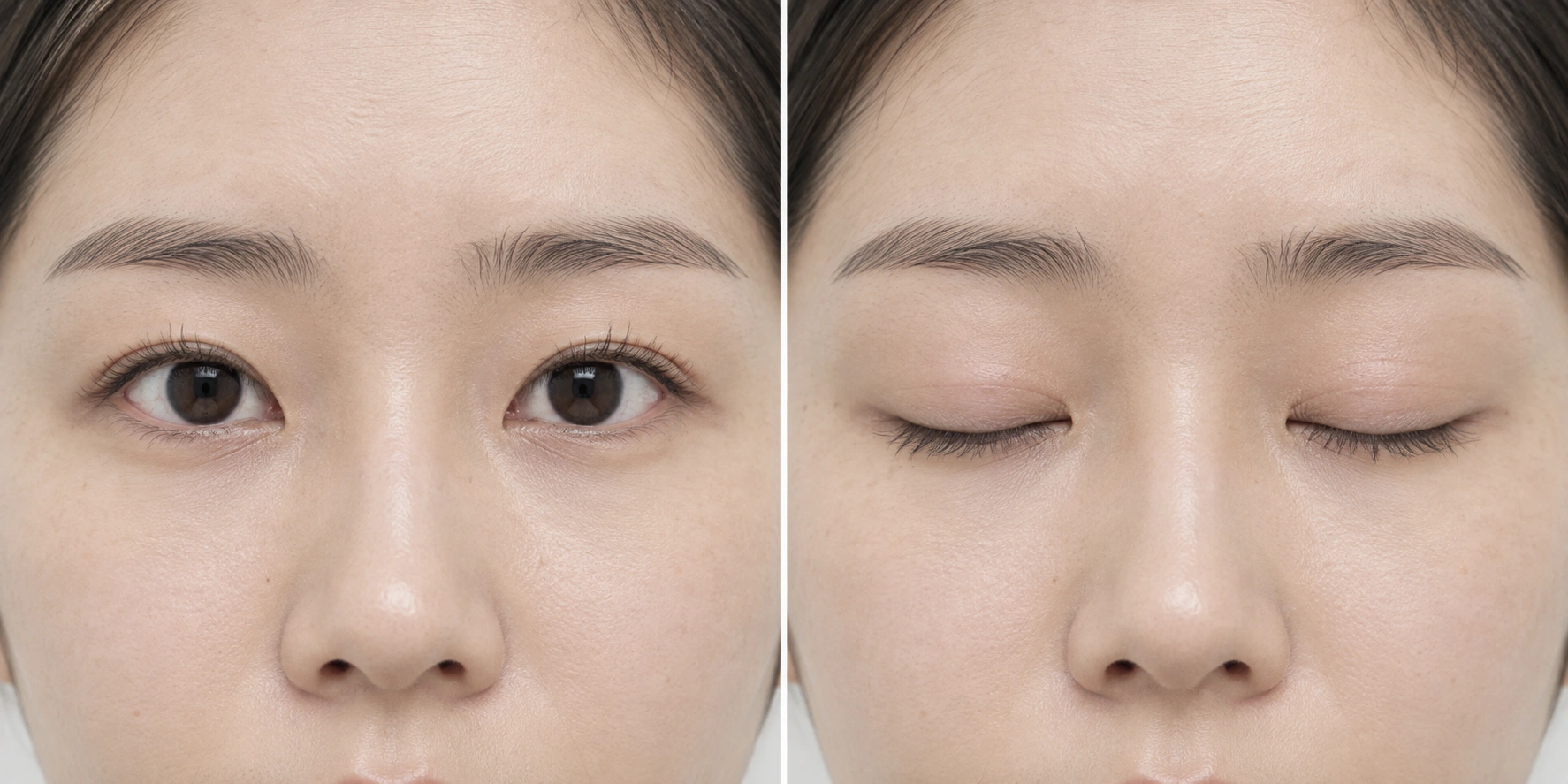
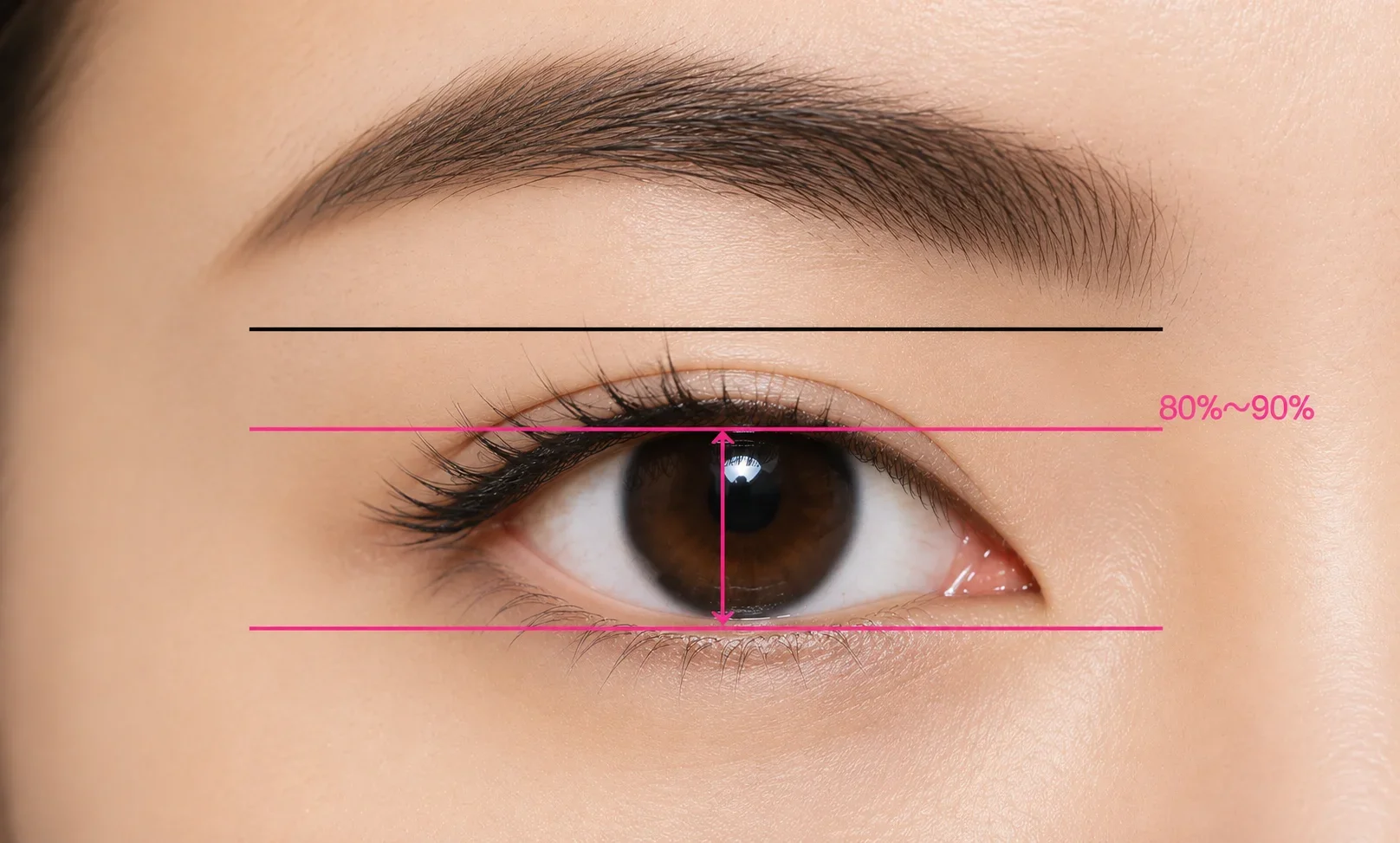
In a normal eye, the white areas in front of and behind the iris should be in balance around it. When the front of the eye is covered by the epicanthal fold, however, the white is hidden and the irises appear drawn inward; this is called pseudostrabismus.
When pseudostrabismus is resolved with epicanthoplasty, the eyes take on a softer look.

However, the epicanthal fold is not made up of skin tissue alone, so skin excision alone cannot produce a satisfactory result.
The fold is in fact caused by altered orbicularis oculi muscle tissue in the upper eyelid, fibrous tissue, skin under tension, and other factors,
and these must be resolved at the root for the eyes to look natural.

Epicanthal Fold Improvement Pseudostrabismus Correction Root-Cause Resolution
Lateral Canthoplasty HYBRID guide image

Lateral Canthoplasty

Lateral canthoplasty enlarges the outer corner of the eye. It is an additional method
used to gain length when the horizontal eye length is short, or when double eyelid surgery
and Magic Epicanthoplasty alone cannot enlarge the eye enough.

It is also performed to correct the eye shape
when the outer part of the eye is particularly short, or when the outer corners
slant upward and make the impression look sharp.

Wider Outer Corner Horizontal Lengthening Softer Impression
Magic Epicanthoplasty PARTIAL guide image

Magic Epicanthoplasty

Dr. Won-Suk Kook's Magic Epicanthoplasty addresses the causes beneath the skin that form the epicanthal fold
(the displaced orbicularis oculi muscle of the upper eyelid, fibrous tissue, skin under tension, and so on)
safely and at the root, returning the distorted frame at the front of the eye
to an open, natural eye line.

Because skin excision is kept to a minimum in this process, there is no recurrence after surgery,
no skin tension, and the surgical marks are not exposed.

Above all, when it is combined with double eyelid surgery, the crease looks natural
and the eyes take on an open look.

Minimal Excision Recurrence ↓ Visible Marks ↓

Column

Column
Doctor's Column

This is general medical information and does not replace an individual diagnosis or surgical plan. The surgical method, timing, and expected changes are determined through an in-person examination, and there are risks such as scarring, asymmetry, recurrence, and changes in eyelid position, as well as individual differences in recovery. The images in this article are AI-generated educational models, equipment, and fictional people; they do not represent actual patients, before-and-after treatment results, or equipment actually owned by RESUM. Sources checked: October 7, 2026.

Learn More
A Rounded Outer Corner After Lateral Canthoplasty: Looking at Scarring and Support Structures Separately

This is general medical information and does not replace an individual diagnosis or surgical plan. Suitability for surgery, methods, recovery, and results vary from person to person. The images in this article are AI-generated illustrative models, fictional people, and examination scenes; they are not actual patients, surgical results, or RESUM's actual equipment or clinical scenes. Sources checked: September 28, 2026.

Learn More
Why We Check for Dryness and Eyelid Support Before Under-Eye Surgery

This article is general medical information. Whether surgery is needed and which method is appropriate for each person are determined after an in-person examination.

Learn More
Double Eyelid Scars Visible When the Eyes Are Closed: Before Excising Again

OUR PRINCIPLE

Core Values
Canthoplasty: What Sets RESUM Plastic Surgery Apart

Lateral canthoplasty is surgery that calls for careful judgment.

Point 01

Point 01

Root-Cause Improvement

By returning the causes beneath the skin that create the epicanthal fold to their proper position, we reduce recurrence and minimize marks.

Point 02

Point 02

Natural-Looking Canthoplasty

Natural-looking surgery that takes each person's eye shape and size into account
brings out their own strengths and beauty.

Point 03

Point 03

We Examine the Proportions

We examine the balance and harmony of the proportions
of the areas in front of and behind the iris.

POINT 06 Methods

Epicanthoplasty: Surgical Method

The surgery addresses the causes that form the epicanthal fold (muscle fibers and skin tension), exposes the covered front part of the eye, and then closes with sutures. When skin excision is minimized, the surgical marks tend not to be noticeable.

Customized Design

Customized Design

Customized design matched to the degree of the epicanthal fold through a pre-operative consultation with a board-certified specialist

The Eye's Actual Medial Canthus

The Eye's Actual Medial Canthus

The skin near the inner conjunctiva at the inner corner of the eye is incised.

Inner Corner Exposed by Surgery

Inner Corner Exposed by Surgery

The epicanthal fold and the surrounding excess skin tissue
are removed, and the incision is sutured toward the inside of the eye.

Suture Line Right After Surgery

Suture Line Right After Surgery

Large, open eyes achieved

POINT 05 Methods

Lateral Canthoplasty: Surgical Method

Lateral canthoplasty enlarges the outer corner of the eye. It is an additional method used to gain length when the horizontal eye length is short, or when double eyelid surgery
and Magic Epicanthoplasty alone cannot enlarge the eye enough.

Customized Design

Customized Design

Customized design of the outer part of the eye corner through a pre-operative consultation with a board-certified specialist

Angle Adjustment

Angle Adjustment

Adjustment of the outer corner angle through an incision

Fixation

Fixation

After lengthening, the lower eyelid is fixed to the inner conjunctiva with absorbable sutures

Suturing

Suturing

Suturing after surgery

POINT 04 Comparison

Lateral Canthoplasty: Eye Shape Comparison

Eyes That May Look Closed-In

Eyes That May Look Closed-In

Eyes that are narrow on the outer side and closed at the back, which may look somewhat closed-in

RESUM Lateral Canthoplasty

RESUM Lateral Canthoplasty

RESUM Plastic Surgery's lateral canthoplasty creates an eye shape that suits clear, vivid irises and preserves the eyelash tissue to keep a natural gaze.

Eyes That May Look Harsh

Eyes That May Look Harsh

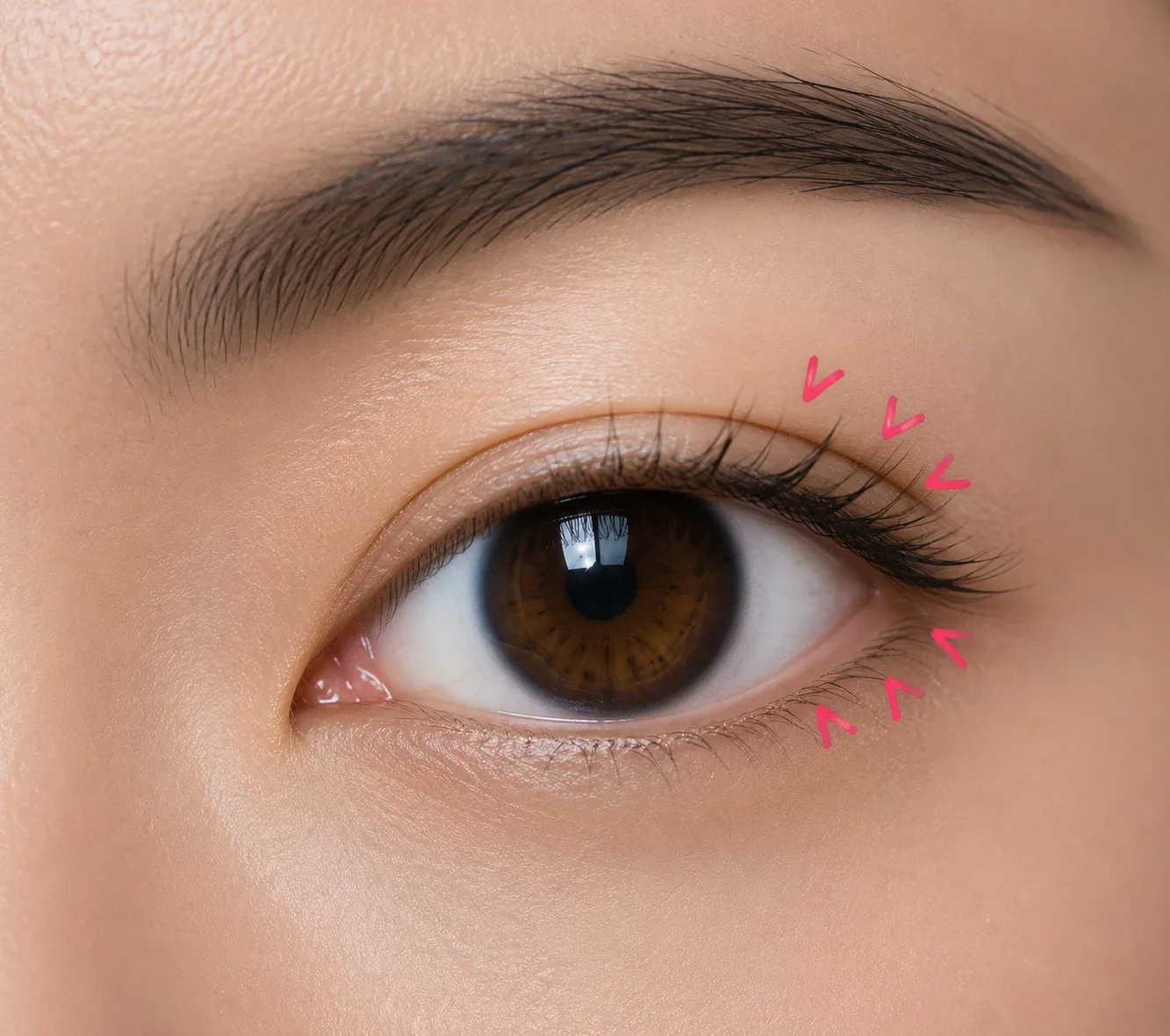
Eyes in which too much red tissue shows and the outer corners slant upward, which may look somewhat harsh

POINT 03 Side Effects

Side Effects of Lateral Canthoplasty

Because lateral canthoplasty alters the frame of the eye itself, it must be approached carefully; if it is performed inappropriately, the following problems can occur.

TYPE 01

"C"-Shaped Deformity

The outer corner of the eye is the point where the upper and lower eyelids meet at the back, and it should form a sharp apex. After lateral canthoplasty, however, this apex becomes rounded and blunt and opens into a "C" shape. In addition, the lower eyelid margin should slope upward toward the back, but after lateral or lower canthoplasty the tarsal plate may run horizontally or appear to sag downward.

TYPE 02

Lower Eyelid Entropion

The lower eyelid can turn inward and damage the conjunctiva and cornea. There are cases in which the outer corner gapes open, red mucosa is exposed, and the lower eyelid turns inward so that the eye is constantly bloodshot with a foreign-body sensation, while the eye may not actually have become any longer.

TYPE 03

Eye Redness & Stinging

The eyes may become bloodshot and sting, and the exposed mucosa can be accompanied by stinging, dry, gritty eyes.

Lisoom Channel

YouTube

View More Videos

NOTICE

Precautions
Post-Operative Treatment & Care

N · 01 It is important to keep the surgical site clean. Do not rub it with unwashed hands, and apply antibiotic ointment after disinfecting as instructed.
N · 02 After surgery, it is best to avoid lowering your head or lying face down, and to avoid lifting heavy objects or straining. Keep your head elevated on a higher pillow when sleeping.
N · 03 Apply cold compresses with the cool pack provided by the clinic, following the instructed duration and frequency according to how the swelling progresses.
N · 04 Reading or watching TV is best resumed after 1-2 days, and prescribed antibiotics, anti-inflammatory medication, and pain relievers should be taken as instructed.
N · 05 Sutures are removed according to your progress, and your recovery is checked at scheduled follow-up visits after surgery. Your visit schedule will be explained during your consultation.
N · 06 Swelling after surgery varies from person to person, and the time it takes to settle completely also varies.
N · 07 Please ask during your visit when you may resume wearing contact lenses, exercising, and drinking alcohol, as this depends on your recovery.
N · 08 If you take aspirin, anticoagulants, or other medications that may increase bleeding, please let us know in advance during your visit.
N · 09 Please let us know in advance about any underlying conditions such as high blood pressure, diabetes, or thyroid disease, any allergies, and whether you are pregnant or breastfeeding.
N · 10 Avoiding alcohol, smoking, and strenuous exercise for a period after surgery helps recovery.
N · 11 Recovery varies from person to person, and it may take time for the results to settle.
N · 12 If you experience any abnormal symptoms (such as excessive swelling, bleeding, or pain), please visit the clinic immediately.
N · 13 Please be sure to consult a board-certified specialist before and after surgery.

PROCEDURE DATA

Summary
Surgery Overview

Procedure

Surgery Overview

Surgery time
30 minutes to 1 hour
Anesthesia
Local anesthesia / IV sedation
Recovery
7-10 days
Hospital stay
Same-day discharge
Suture removal
After 5-7 days

Recommended For

Candidates

Consider a Consultation If

04 Recommended Cases

01 When the distance between the eyes is wide and the proportions need adjusting
02 When the epicanthal fold covers the inner corner and makes the eyes look closed-in
03 When you want to soften a fierce-looking impression caused by outer corners that slant sharply upward
04 When the horizontal eye length is short and you want to extend the eye outward
Won-Suk Kook · M.D. - RESUM Plastic Surgery Clinic

Doctor's Note

The key to canthoplasty is not to lengthen the eye excessively but to create an open, natural impression while preserving the structure of the eye. With lateral canthoplasty in particular, the benefits and drawbacks must be weighed carefully.

Won-Suk Kook · M.D.

Dr. Won-Suk Kook, Chief Director

PROCEDURE FLOW

Process
How Canthoplasty Is Performed

01

PHASE I

Consultation & Design

We analyze the shape and length of the eye and the condition of the epicanthal fold and outer corner to create a customized design.

CONSULT

02

PHASE II

Epicanthoplasty

The epicanthal fold is released to open the inner corner naturally.

STEP

03

PHASE III

Lateral Canthoplasty

If needed, the outer corner is enlarged to extend the horizontal length.

STEP

04

PHASE IV

Recovery & Care

Sutures are removed according to your progress, and swelling and recovery are managed systematically.

CARE

FREQUENTLY ASKED

FAQ
Frequently Asked Questions

We have compiled the questions patients ask most often before a consultation.

It is surgery that releases the epicanthal fold, a feature found only in East Asians, to lengthen the eye and give it a more open look.
Unlike standard epicanthoplasty, which cuts away skin, Magic Epicanthoplasty returns the muscle fibers and muscle to their proper position, so the result looks natural without skin tension and the surgical marks are barely visible.
It is used to enlarge the outer corner and add length when the horizontal eye length is short, or when double eyelid surgery and Magic Epicanthoplasty alone cannot enlarge the eye enough.
When it is considered together with double eyelid surgery and ptosis correction, a more natural result can be expected; whether it is suitable for you is determined during your consultation.
Because lateral canthoplasty alters the frame of the eye itself, problems such as a "C"-shaped deformity, lower eyelid entropion, and mucosal exposure can occur, so it must be approached carefully.
RESUM Plastic Surgery minimizes scarring by making a minimal incision on the inner side of the eyelid. Recovery varies from person to person.

RESUM Plastic Surgery Clinic Location

#601, 6F, 842 Nonhyeon-ro, Gangnam-gu, Seoul

6F #601, 599-4 Sinsa-dong, Gangnam-gu, Seoul

HOURS

Weekdays
10:00 ~ 20:00
Saturday
10:00 ~ 17:00
Lunch Break
1:00 PM - 2:00 PM

(No lunch break on weekends and public holidays) *Dr. Won-Suk Kook is not available on the 1st and 3rd Saturdays of each month.

Parking Information Parking is available in the building. 1 hour of free parking

Subway 5-minute walk from Exit 3 of Apgujeong Station on Line 3 (right next to the 14-story CGV building at Exit 3)

RESUM Plastic Surgery Clinic CEO Won-Suk Kook Business No. 733-11-02929 Phone 02-3445-7770