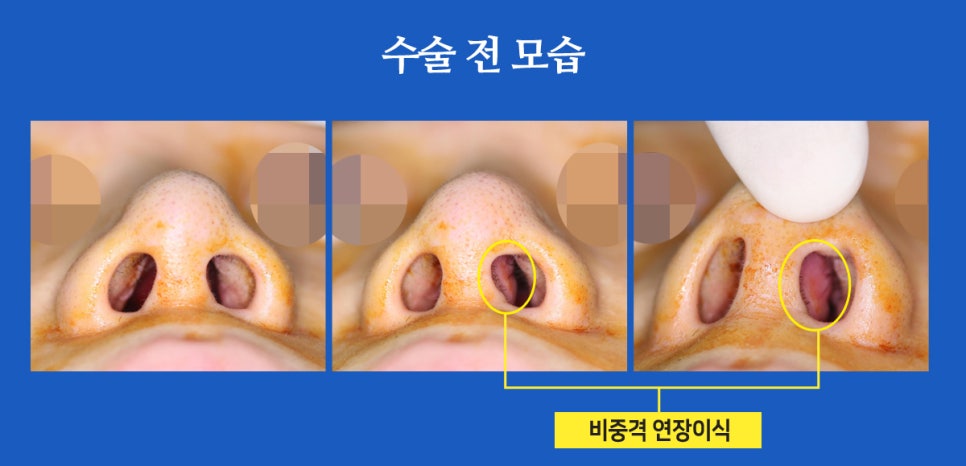
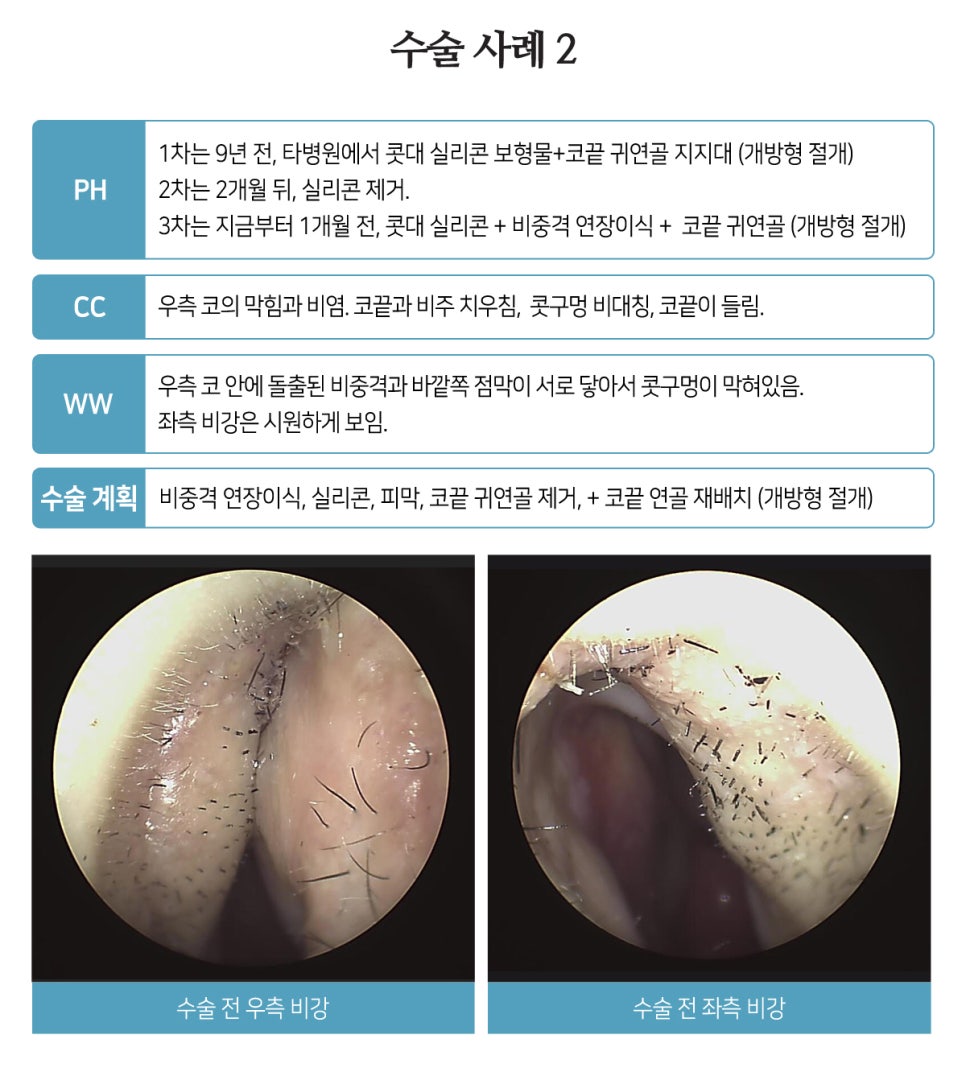
We often see patients who say that after rhinoplasty the nasal tip and columella became crooked and nasal obstruction worsened.
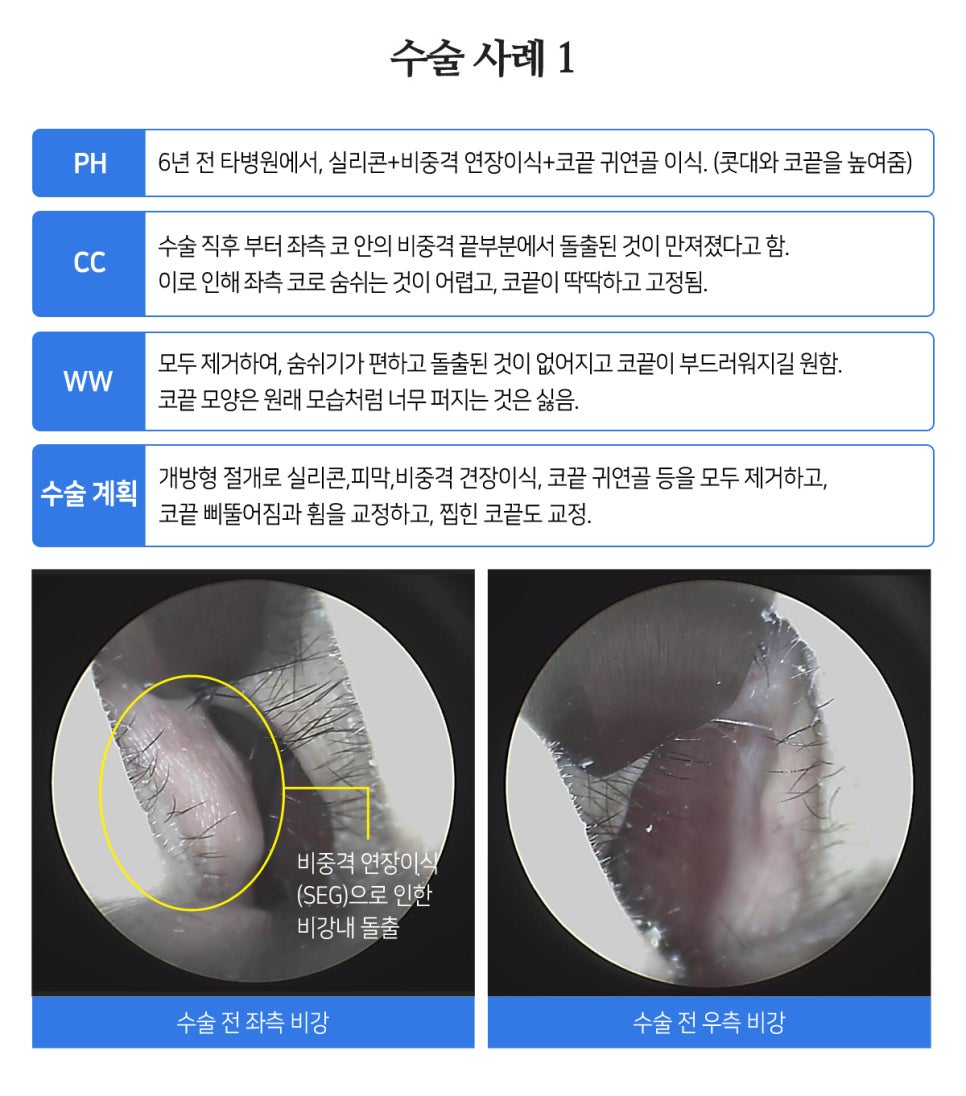
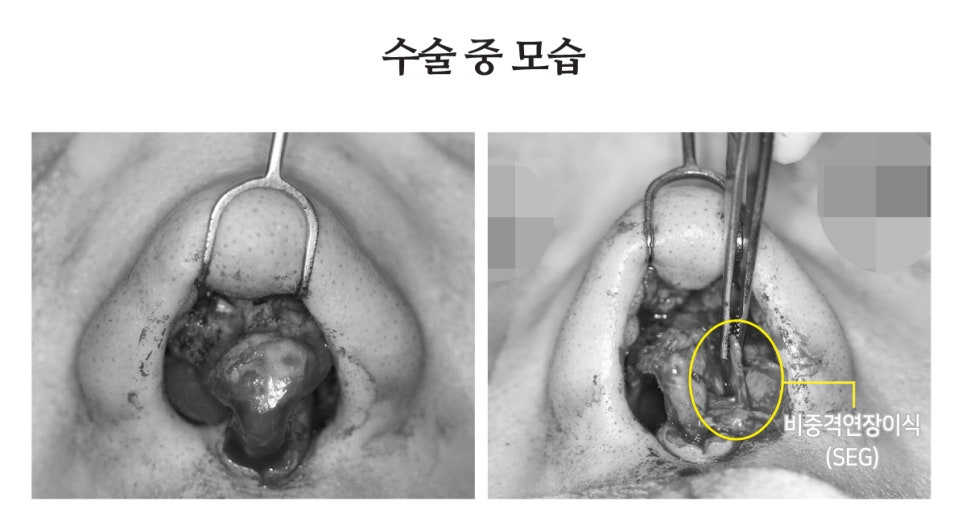
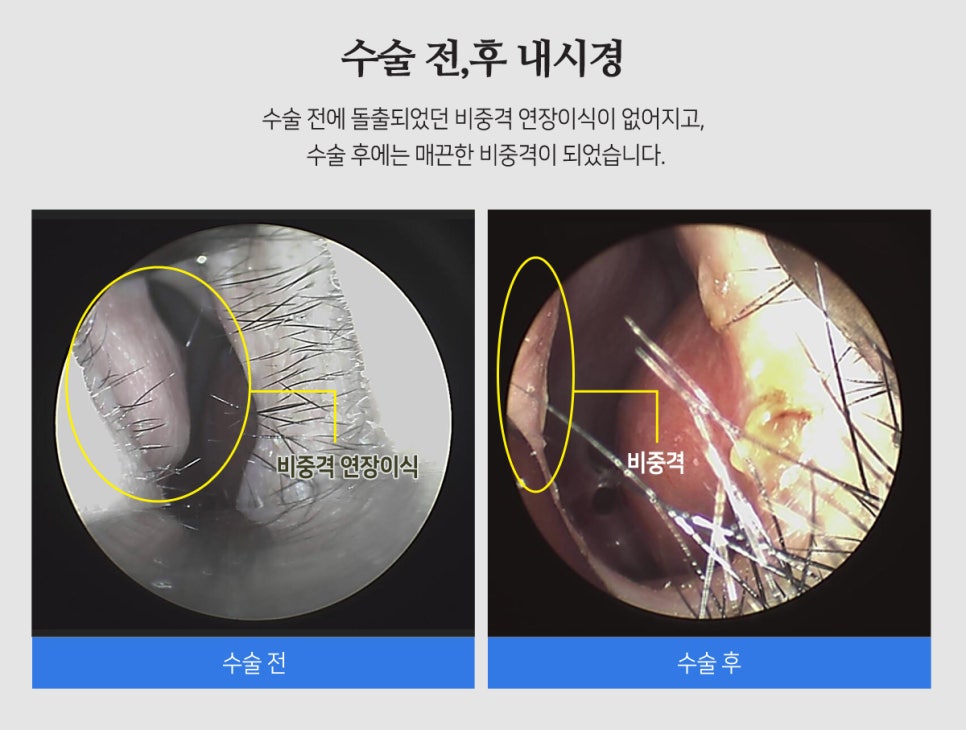
Looking inside the noses of these patients, the end of the septum on one side can be seen bulging into the nasal cavity.
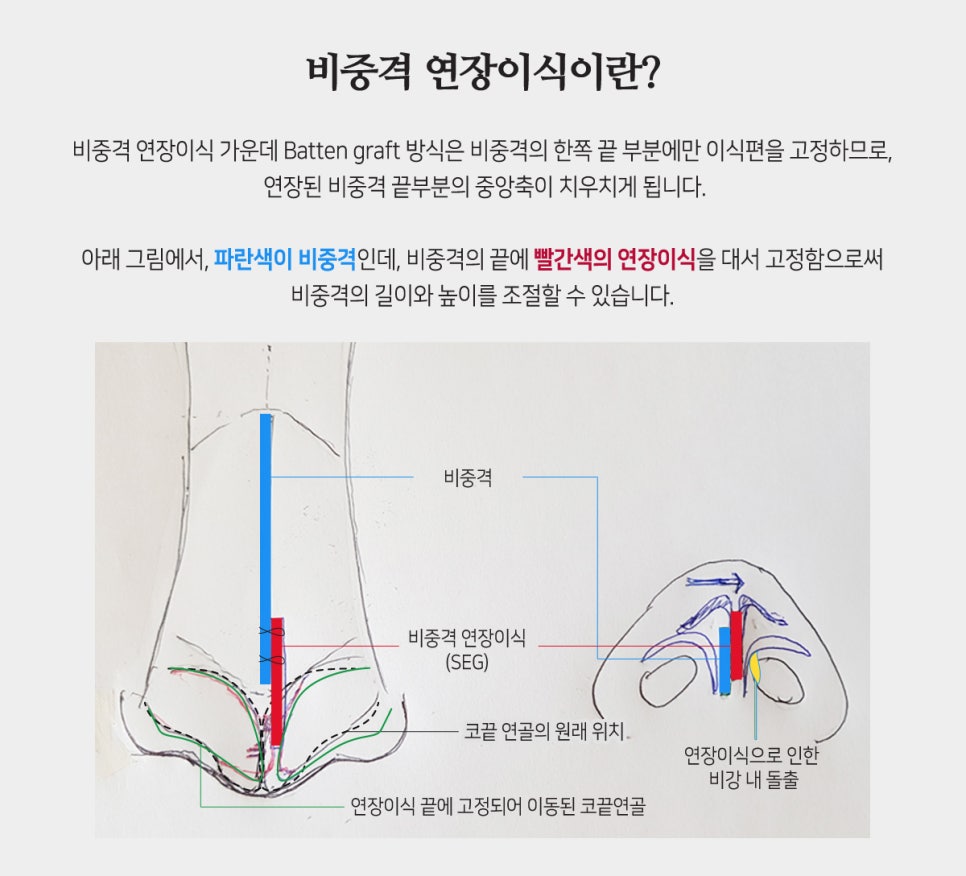
Harvesting septal cartilage and attaching it to the lower septal cartilage (caudal septum)
to lengthen the nose or raise the tip, that is, the septal extension graft (SEG), is precisely the cause.
In a septal extension graft using septal cartilage, the amount of septal cartilage that can be harvested is limited,
so it cannot be placed on both sides. Because it is therefore placed and fixed against the end of the septum on one side only,
it sits slightly off the center of the septum, and the long extension graft, under the
tension of the tip skin, may be pushed backward and bend.
When the tip cartilages are fixed to it, the tip tends to tilt to one side.
An extension graft that is bent and protruding in this way bulges into the nasal cavity and narrows the nasal passage,
making breathing through the nose much more uncomfortable.
In addition, if the tip cartilages are fixed too tightly when they are sutured or brought together, the force shifts to one side
and the tip tilts. Also, when the tip cartilages are tied tightly in the middle, they are drawn toward the center
and buckle, which pinches the tip and makes breathing uncomfortable.
In such cases, removing the septal extension graft resolves the crooked columella and tip and the nasal obstruction,
and repositioning can return the position and shape of the tip to normal.