Lateral Cheek Filler in Gangnam, Seoul | RESUM Plastic Surgery
Skip to main content

service / Filler

Side Cheek Filler

Lateral Cheek Filler

SIDE CHEEK FILLER

We assess hollowing beside the cheekbone and the facial contour
to refine the lateral cheek line naturally.

Method
20-30 minutes
Anesthesia
Recovery
Topical or local anesthesia · Daily activities right after
Summary Lateral cheek filler is a treatment that supports the areas beside and below the cheekbone to tidy sagging of the lateral cheek and create a lifting effect; injection sites are planned by distinguishing volume from lifting. It is performed at RESUM Plastic Surgery in Gangnam (Apgujeong), Seoul. Medical Review Medical Review: Won-Suk Kook,Jin-Young Kim
Last updated: 2026-06-30

Why Lisoom

Overview Filler That Refines the Contour Beside the Cheekbone

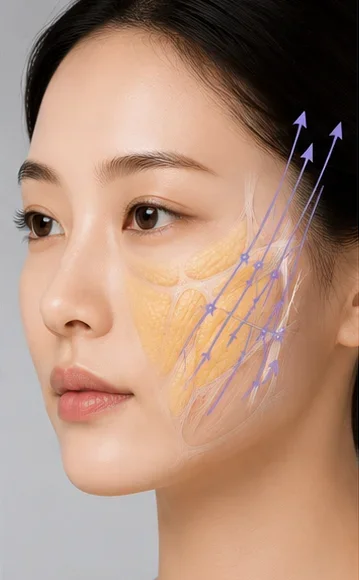
Lateral cheek filler is a treatment in which cross-linked hyaluronic acid (HA) is injected along the lateral aspect of the zygomatic arch and into the submalar area below the cheekbone to support sagging of the lateral cheek.
Injection medial to the ligament line tends mainly to add volume, while distribution lateral to it tends to produce a lifting effect that raises sagging tissue, so the result varies with where the filler is distributed.
Structure is built with a high-G' product in the deep supraperiosteal layer on the lateral aspect of the zygomatic arch; when sagging is the main concern, another approach such as a thread lift may be more suitable, so we assess this together at the consultation.

Filler That Refines the Contour Beside the Cheekbone

Before & After

Lateral Cheek Filler Before & After

Subcategory
Time Since Procedure

Complications such as bleeding, infection and inflammation may occur depending on the individual, so caution is needed.
Results may vary by individual. Please confirm the method and expected results that suit you through a consultation.

DESIGN PRINCIPLE

Methods
How Lateral Cheek Filler Works

Zygomatic Arch SUTURE guide image

SutureZygomatic Arch

A highly cohesive product is distributed in the deep supraperiosteal layer on the lateral aspect of the zygomatic arch to refine the outer contour of the face. When volume is lost over the zygomatic arch, the face gives a sagging impression, so supporting this area is important for the balance of the profile.
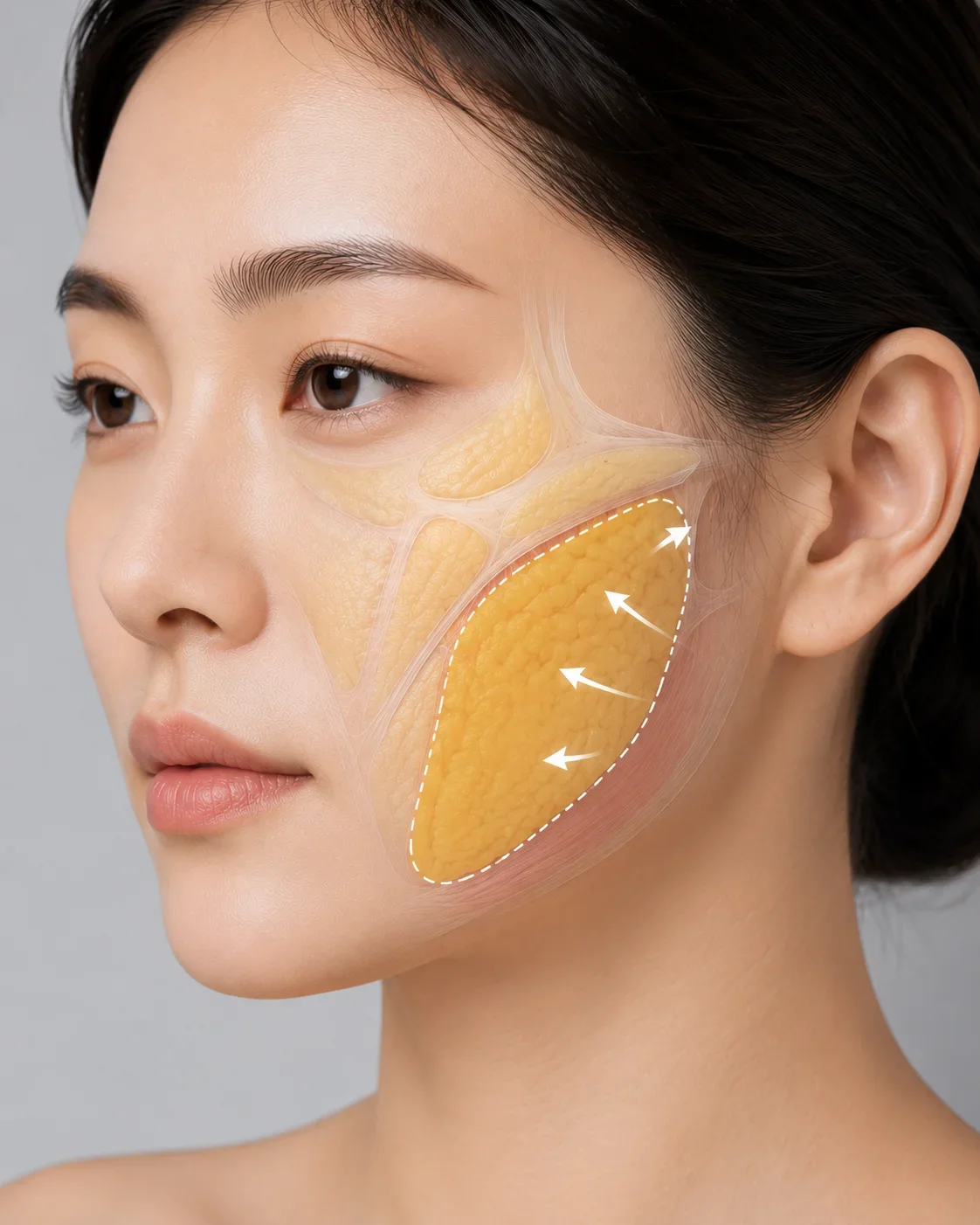
zygomatic arch Supraperiosteal Outer Contour
Below the Cheekbones HYBRID guide image

HybridBelow the Cheekbones

The submalar area (below the cheekbone, the lateral cheek) is a broad area that supports the entire midface. When its volume is lost, the face looks longer or gives a sagging impression, so filling this area refines the contour. Distribution in the deep layer looks natural.

submalar Midface Support Large Area
Ligament Line Assessment PARTIAL guide image

PartialLigament Line Assessment

Relative to the ligament line, injection on the medial side tends mainly to add volume while injection on the lateral side tends to produce a lifting effect, so even in the same area the result differs with where the filler is distributed. The direction of distribution is decided at the consultation according to the patient's degree of sagging and the change desired.

Medial Side, Volume Lateral Side, Lifting Distribution Direction
Combined Treatments INCISION guide image

IncisionCombined Treatments

When sagging is the main concern, combining filler with a thread lift or a facelift looks more natural than filler alone. The suitable procedure differs depending on whether lateral cheek hollowing is caused by structural change in the cheekbone itself or by sagging of fat and ligaments, so the decision is made after assessment at the consultation.

Compared with Thread Lift Compared with Facelift Combination Decision

OUR PRINCIPLE

Core Values
The Principles RESUM Keeps

The lateral cheek is an area where the result varies with the ligament line and where the filler is distributed. After assessing the cause of sagging, we decide on a combination of treatments rather than a single treatment.

Right Placement

Right Placement

Distribution Position

Injection medial to the ligament line tends to add volume and injection lateral to it tends to produce a lifting effect, so where the filler is distributed determines the result. The direction of distribution is decided according to the patient's degree of sagging and the change desired.

Right Depth

Right Depth

Deep Supraperiosteal Layer

Injection into the deep supraperiosteal layer on the lateral aspect of the zygomatic arch is the basic approach. We build structure with a highly cohesive product and control the safe depth by checking the distribution of the facial artery and the transverse facial artery. Using a cannula lowers the risk of vascular injury.

Honest Cause

Honest Cause

Cause First

When sagging is the main concern, combining filler with a thread lift or a facelift looks more natural than filler alone. After assessing the cause of lateral cheek hollowing at the consultation, we tell you candidly which combination of treatments is suitable.

POINT 03 Features

Lateral Cheek Filler Features

How HA Fillers Work

How HA Fillers Work

Lateral cheek filler works by injecting a gel made by cross-linking hyaluronic acid, a component naturally present in the skin, with BDDE or a similar agent. The cross-linked structure makes the gel more stable so that it does not break down easily, helping volume to be maintained for a certain period. The injected HA attracts water and supports the hollowed, sagging lateral cheek area. Cross-linked HA gel injected into the deep layer of the lateral cheek · BDDE cross-linking slows breakdown, supporting longevity · Water affinity supports lateral cheek volume · Partly adjustable with hyaluronidase if needed

Planning Tailored to Each Area (Viscoelasticity and Injection Layer)

Planning Tailored to Each Area (Viscoelasticity and Injection Layer)

The lateral cheek is an area that needs structure, so structure is built with a volumizer-type product with a high storage modulus (G'). The basic injection layer is the deep supraperiosteal layer on the lateral aspect of the zygomatic arch, and the direction of distribution is divided relative to the ligament line, aiming for volume on the medial side and a lifting effect on the lateral side. Rather than the lateral cheek alone, we also assess the anterior cheeks, the nasolabial folds, and the lines around the mouth and plan within the balance of the whole face. High-G' volumizer-type product used · Injection into the deep supraperiosteal layer on the lateral aspect of the zygomatic arch · Volume medial to the ligament line, lifting lateral to it · Overall balance assessed together with the anterior cheeks and nasolabial folds

POINT 04 Q&A

Can Lateral Cheek Filler Lift Sagging Cheeks?

First, the effect varies with where the filler is distributed.

First, the effect varies with where the filler is distributed.

Injection medial to the ligament line tends mainly to add volume, while distribution lateral to it tends to produce a lifting effect that raises sagging tissue. Even within the same lateral cheek, the result depends on where the filler is distributed.

Second, when sagging is the main concern, another approach may be more suitable.

Second, when sagging is the main concern, another approach may be more suitable.

The suitable procedure differs depending on whether hollowing is caused by structural change in the cheekbone or by sagging of fat and ligaments. When sagging is the main concern, a thread lift or a facelift may be more suitable than filler alone.

Third, we look at it within the balance of the whole face.

Third, we look at it within the balance of the whole face.

The lateral cheek is an area where the anterior cheeks, the nasolabial folds, and the lines around the mouth are assessed together and areas and treatments are combined. Rather than addressing every change with a single treatment, we plan in stages.

NOTICE

Precautions
Aftercare & Precautions

N · 01 Lateral cheek enhancement is not a treatment to enlarge the cheekbones but one that refines the outer contour and sagging.
N · 02 The volume and lifting results differ depending on whether the filler is distributed medial or lateral to the ligament line.
N · 03 We check the distribution of the facial artery and the transverse facial artery, control the depth to the supraperiosteal level on the lateral aspect of the zygomatic arch, and give priority to a cannula.
N · 04 Temporary swelling and bruising may occur after injection and settle within a few days.
N · 05 When sagging is the main cause, a combination with a thread lift or a facelift may look more natural than filler alone.
N · 06 This treatment is not performed during pregnancy, or on areas with active skin infection or severe inflammation. Avoid strong pressure on the area for 1 week after treatment.
N · 07 Results may vary depending on individual constitution and treatment condition, and a consultation with a board-certified specialist is required before treatment.

PROCEDURE DATA

Summary
Treatment Overview

Procedure

Treatment Overview

Treatment time
20-30 minutes
Anesthesia
Topical Anesthesia
Daily activities
Right after
Duration
About 6-12 months

FOR WHOM

Candidates

Consider a Consultation If

05 Recommended Cases

01 When lateral cheek hollowing makes the face look as if it is sagging
02 When volume loss over the zygomatic arch has weakened the outer contour
03 When you want support for sagging without the burden of surgery
04 When you want to refine the overall balance of the midface together with the anterior cheeks
05 When the face looks long or you want to tidy its outer contour
Jin-Young Kim · M.D. - RESUM Plastic Surgery Clinic

Doctor's Note

The lateral cheek is an area where the result varies with the ligament line and where the filler is distributed. Depending on whether sagging is caused by structural change in the cheekbone or by sagging of fat and ligaments, we decide at the consultation between filler alone and a combination with a thread lift. We do not address every change with a single treatment; we plan in stages.

Jin-Young Kim · M.D.

Dr. Jin-Young Kim, Director

PROCEDURE FLOW

Process
Treatment Process

01

PHASE I

Diagnosis

We assess the degree of hollowing in the lateral cheek and over the zygomatic arch, the cause of sagging, and the balance between the two sides.

CONSULT

02

PHASE II

Planning

Using the ligament line as a reference, we decide the distribution position, the amount, and the supraperiosteal depth.

DESIGN

03

PHASE III

Injection

After topical anesthesia, we distribute the filler precisely at a safe depth with a cannula.

STEP

04

PHASE IV

Guidance

We check the outer contour and the balance between the two sides and explain the timing of any additional treatment.

STEP

FREQUENTLY ASKED

FAQ
Frequently Asked Questions

We have compiled the questions patients ask most often before a consultation.

It is a treatment in which cross-linked hyaluronic acid is injected along the lateral aspect of the zygomatic arch and into the submalar area to support sagging of the lateral cheek, and distributed lateral to the ligament line to create a lifting effect. Simple volume restoration and the lifting effect are planned separately.
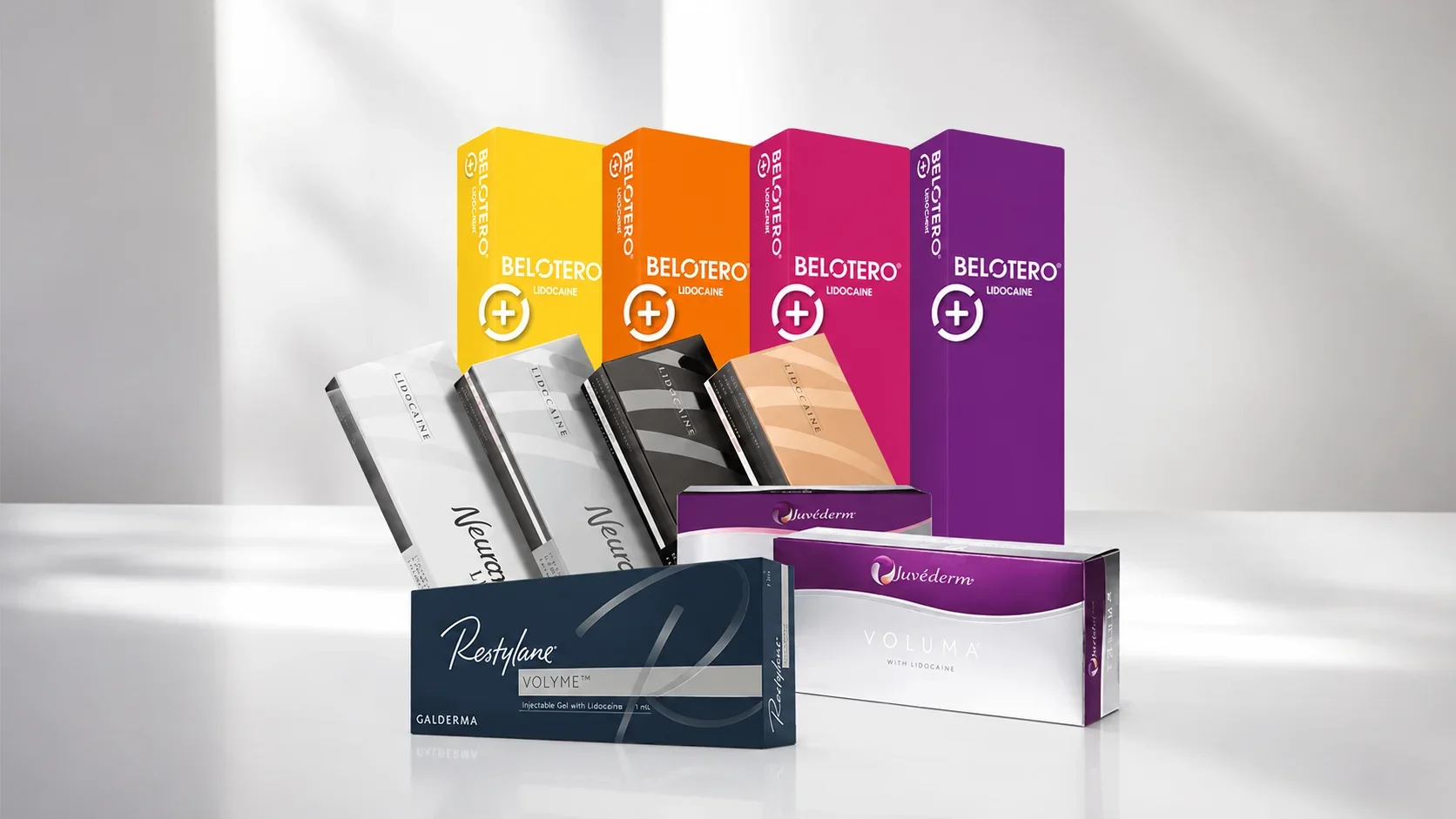
We use highly cohesive volumizer-type products. Because structure has to be built in the deep supraperiosteal layer on the lateral aspect of the zygomatic arch, products with a high G' value are suitable. The choice is made at the consultation according to the depth of the patient's hollowing and the degree of sagging.
Hyaluronic acid settles in place immediately, so a change in volume is visible right after treatment. Swelling may occur for the first 1-2 days, so the contour stabilizes after 1-2 weeks. We recommend assessing the final contour after the swelling has subsided.
You can return to daily activities the same day. Swelling and tenderness settle within a few days, and the final, stable contour settles after 1-2 weeks. It is a good idea to keep your schedule light for the first 2-3 days.
Temporary swelling, bruising, and tenderness may occur and settle within a few days. Nodules, asymmetry, and hypersensitivity reactions are reported in rare cases, and vascular complications have been reported very rarely. To lower the risk, safe injection depth, use of a cannula, and having a dissolving enzyme on hand are important.
Pricing depends on the product used and the amount injected. At the consultation we assess the degree of your sagging, decide on the product and amount, and then provide a quote. On average, the amount used is in the range of 1-3cc.

RESUM Plastic Surgery Clinic Location

#601, 6F, 842 Nonhyeon-ro, Gangnam-gu, Seoul

6F #601, 599-4 Sinsa-dong, Gangnam-gu, Seoul

HOURS

Weekdays
10:00 ~ 20:00
Saturday
10:00 ~ 17:00
Lunch Break
1:00 PM - 2:00 PM

(No lunch break on weekends and public holidays) *Dr. Won-Suk Kook is not available on the 1st and 3rd Saturdays of each month.

Parking Information Parking is available in the building. 1 hour of free parking

Subway 5-minute walk from Exit 3 of Apgujeong Station on Line 3 (right next to the 14-story CGV building at Exit 3)

RESUM Plastic Surgery Clinic CEO Won-Suk Kook Business No. 733-11-02929 Phone 02-3445-7770