Nasal Tip Diced Rib Cartilage Removal Case
As the view that autologous tissue rhinoplasty is safer and more natural has spread,
the number of rhinoplasty cases using autologous cartilage is increasing.
Autologous tissue is certainly a good material for plastic surgery,
but good results depend on choosing the right type and site of autologous tissue.
For example, the material used to raise or lengthen the nasal tip should preferably be soft
and elastic cartilage, so ear cartilage or septal cartilage is commonly used.
The dorsum requires a large volume of tissue, so among autologous tissues, dermis or diced cartilage is used.
When ear cartilage, septal cartilage, dermis, and the like have all been used and none remains, costal cartilage is generally the option to consider.
Recently, however, we have been seeing nasal surgery performed with diced costal cartilage, in which rib cartilage is finely crushed into tiny fragments.
Diced costal cartilage is soft at first, but over time it gradually hardens into a solid mass.
The nose becomes hard and, in some cases, a severe foreign body sensation develops, causing great discomfort.
When a large amount of diced costal cartilage is placed in the columella or nasal tip to raise the tip,
the tip becomes hard, leading to a severe sense of pressure and foreign body sensation, which causes discomfort and strains the skin.
Diced costal cartilage should therefore not be used indiscriminately,
and in our view it is advisable to use a moderate amount only for raising the dorsum.
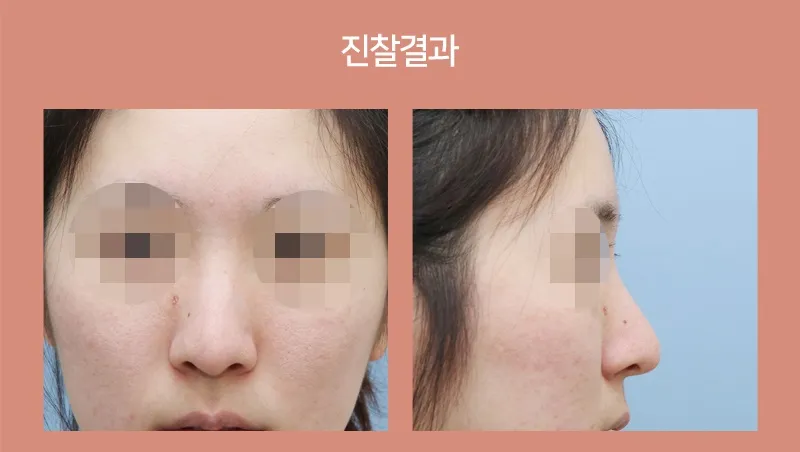
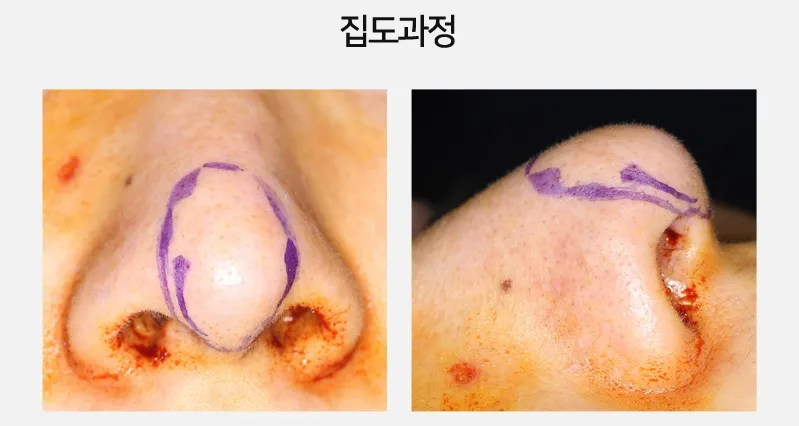
We marked the extent of the cartilage palpable
in the nasal tip and planned the dissection.
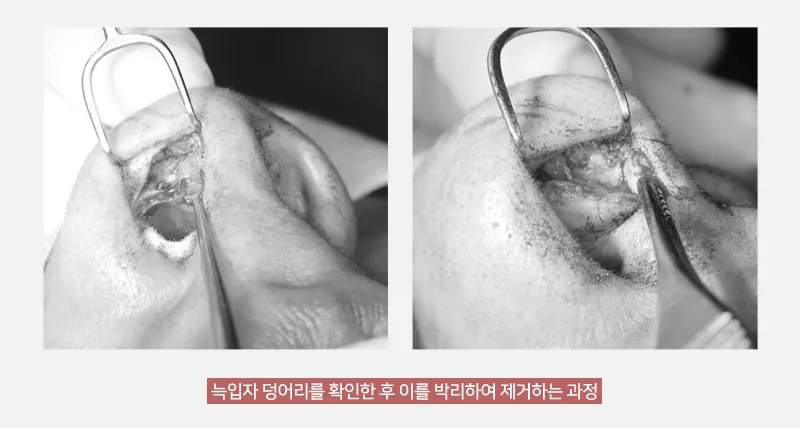
Surgery was performed through a closed approach for faster recovery and a smaller area of scarring.
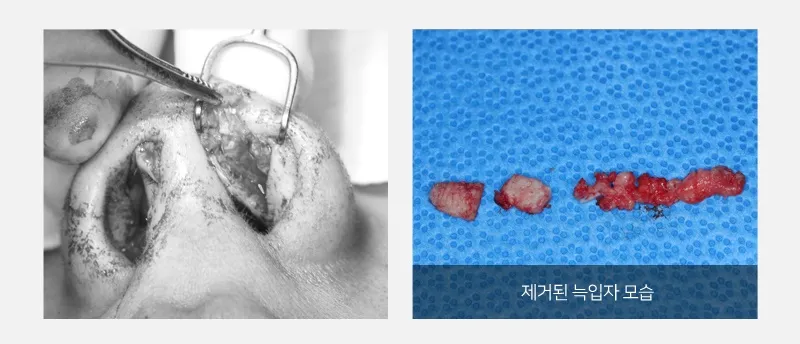
Because the diced cartilage had hardened into a mass, we dissected all around the mass, separated it cleanly, and removed it.
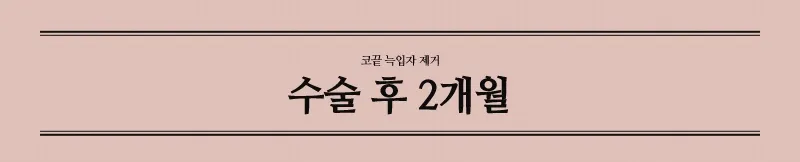

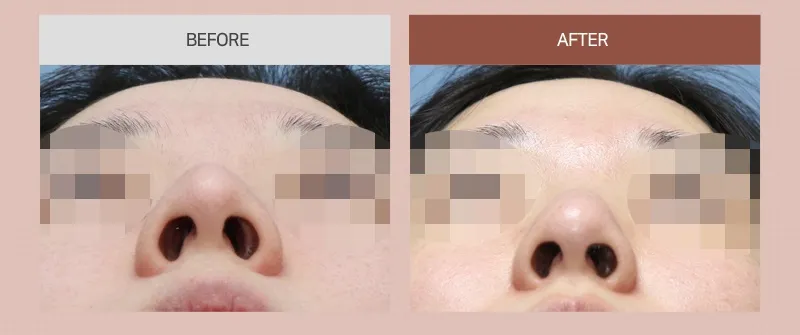
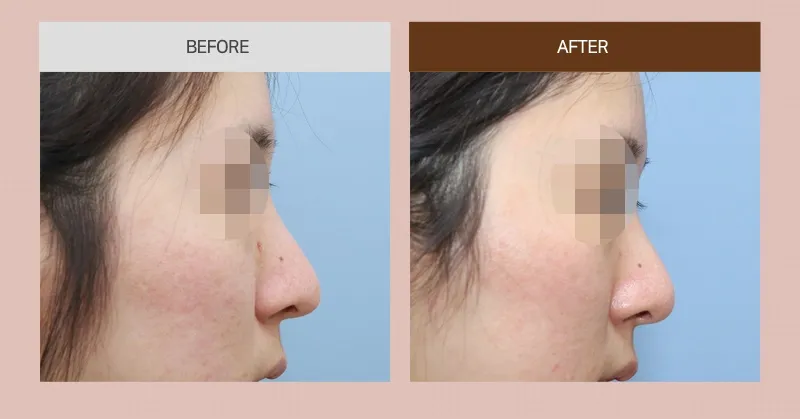
The fragments of diced cartilage that had shown through at the tip are gone, and the tip, which had looked pointed and sharp because the diced cartilage had sagged, has returned to a round, natural shape.
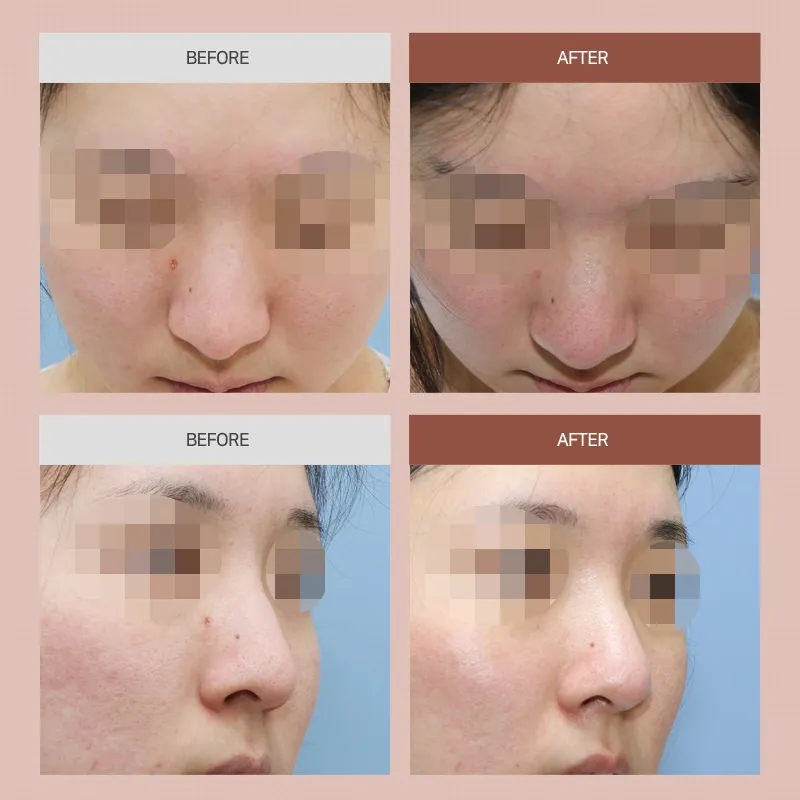
The tip, which had pointed sharply downward, now looks soft, and the arrow-shaped drooping has also improved naturally.
Above all, the patient shared that the pressure and severe foreign body sensation in the nasal tip were completely gone and that it felt liberating.