

Dorsal Hump Correction with Autologous Tissue

Among patients who visit the clinic for a consultation on revision rhinoplasty (secondary rhinoplasty),
we see quite a few who had the hump rasped down and then silicone placed on the dorsum.
In most of these cases, the hump was not properly reduced and the dorsum was covered with silicone
so that the irregularity of the dorsal line would not show.
However, this can leave the nose looking unintentionally too high or too long,
and many experience side effects from the silicone, which leads them to seek a revision consultation.
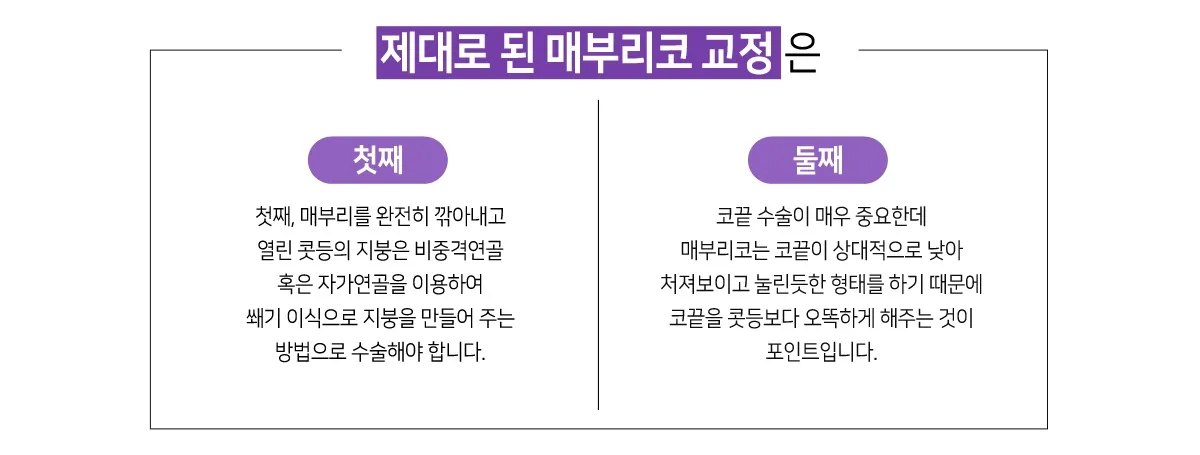
For this reason, the cause of the dorsal hump should be accurately identified through a detailed examination,
and dorsal hump correction should be performed at a clinic with extensive experience in such cases.
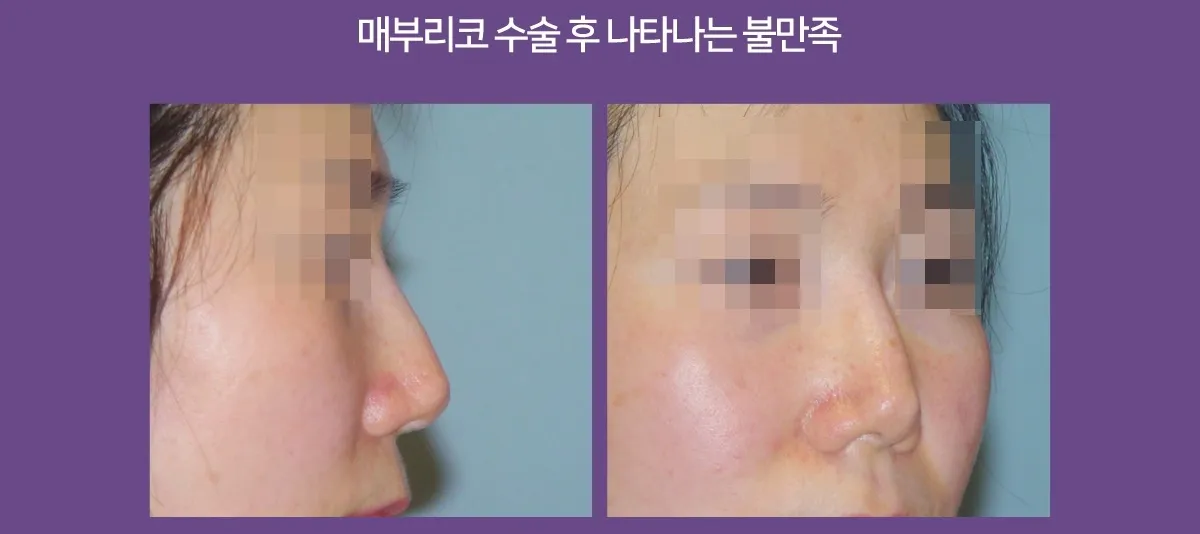

This patient had undergone dorsal hump surgery but
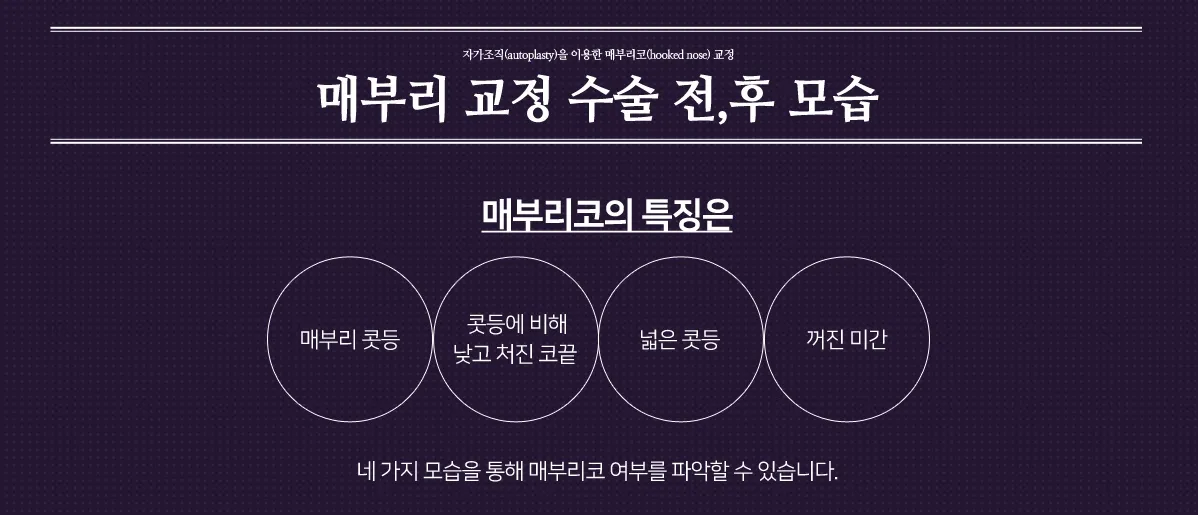
was dissatisfied because the dorsum bulged, the nose looked long, and the tip looked as if pinched with a clothespin.
When this appearance develops after dorsal hump surgery, people often mistakenly wonder, "Is the hump growing back?"
However, this unsatisfactory appearance occurs because the hump was shaved and then covered with silicone.
Sufficient hump reduction requires a step in which the roof of the nose, which opens as a result, is rebuilt with wedge grafting.
If this step is not done properly and the hump is only lightly rasped and then covered with silicone, problems like these arise.
This patient had a hump and a low nasal tip, and several months earlier had the glabella raised with filler to straighten the dorsal line.
Because filler should always be dissolved before surgery to eliminate the possibility of inflammation, the filler was removed.
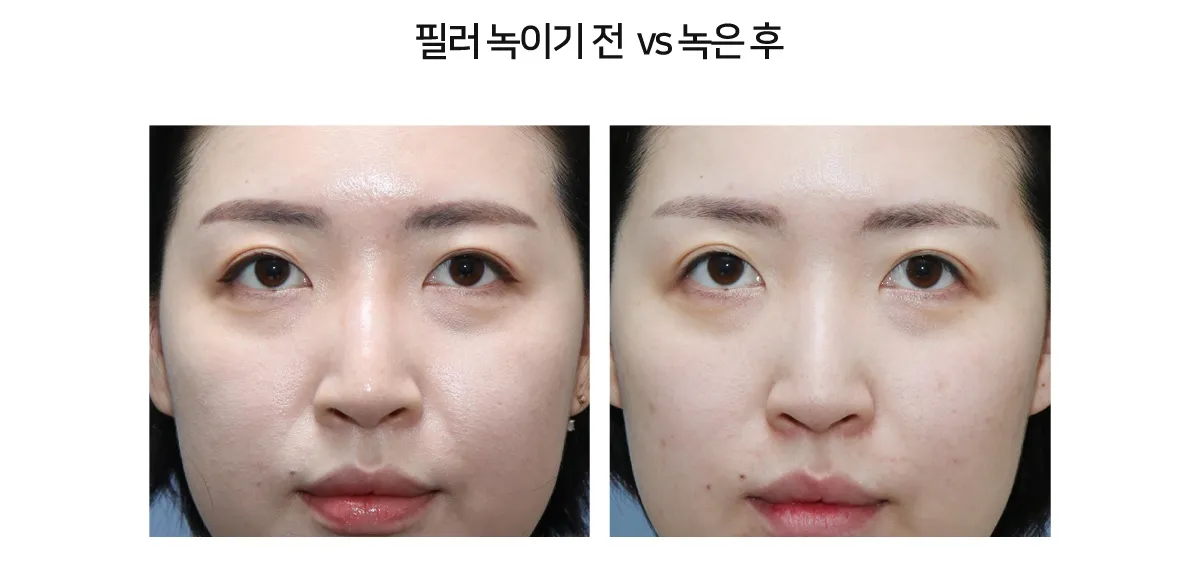
1 week after the filler was dissolved, before proceeding with the dorsal hump correction, a comparison showed that the thick dorsum and the high glabella had become lower and slimmer.
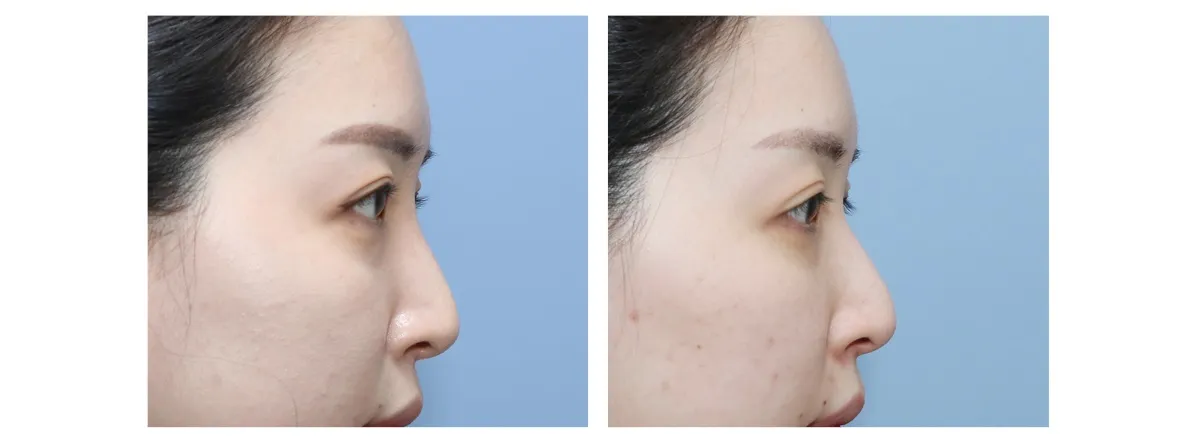
The side view shows that the nasal tip and glabella have become lower.
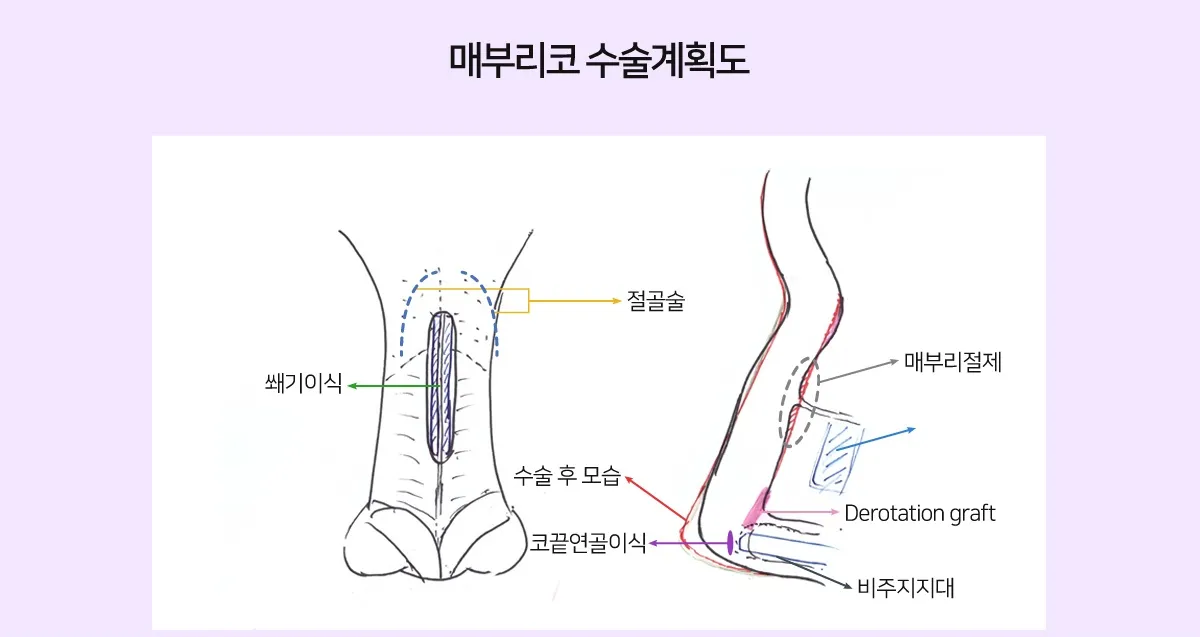
The dorsal hump is definitively resected so that the dorsal line becomes a straight line, and the open roof is rebuilt by wedge grafting with septal cartilage.In addition, osteotomy narrows the wide dorsum and also helps close the open roof.
For the nasal tip, we planned to raise its height with a columellar strut and a tip cartilage graft,and to extend its length with a derotation graft.
Nothing was placed on the dorsum, so in the end the surgery was performed with autologous tissue alone.
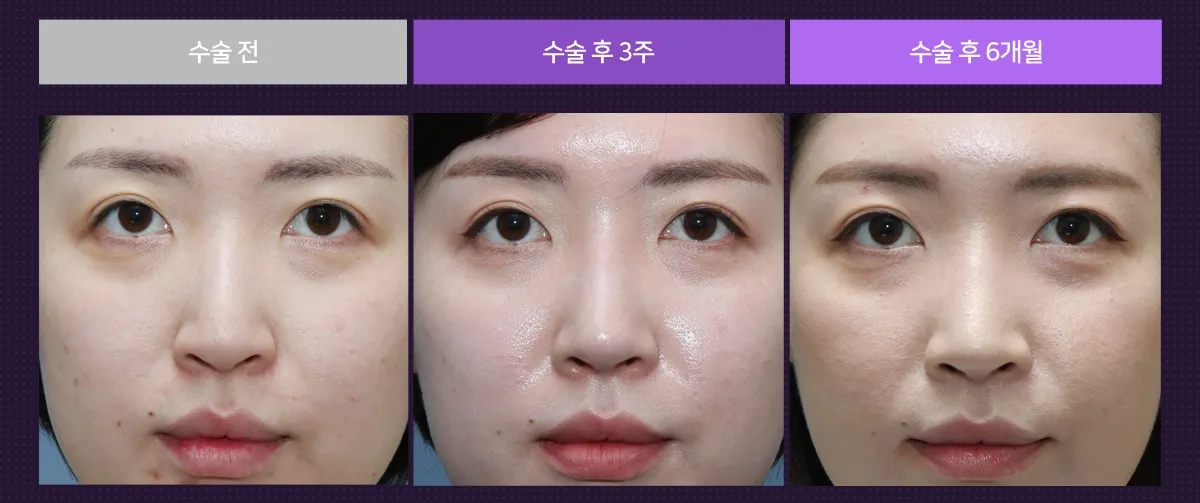
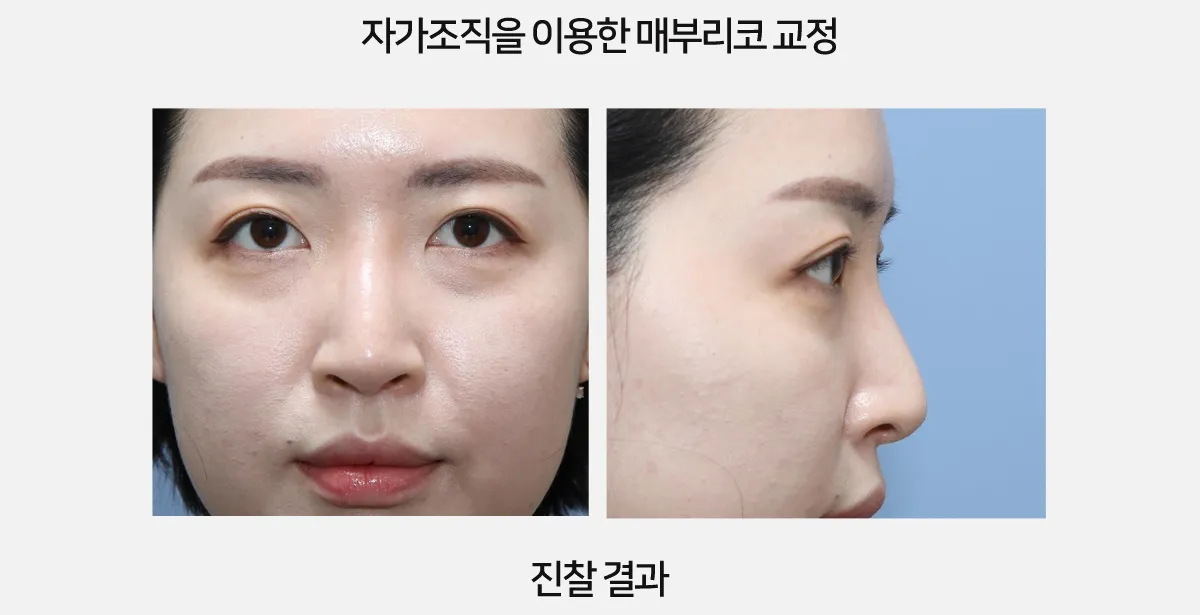
From the front after surgery, the narrowed dorsum can be seen.
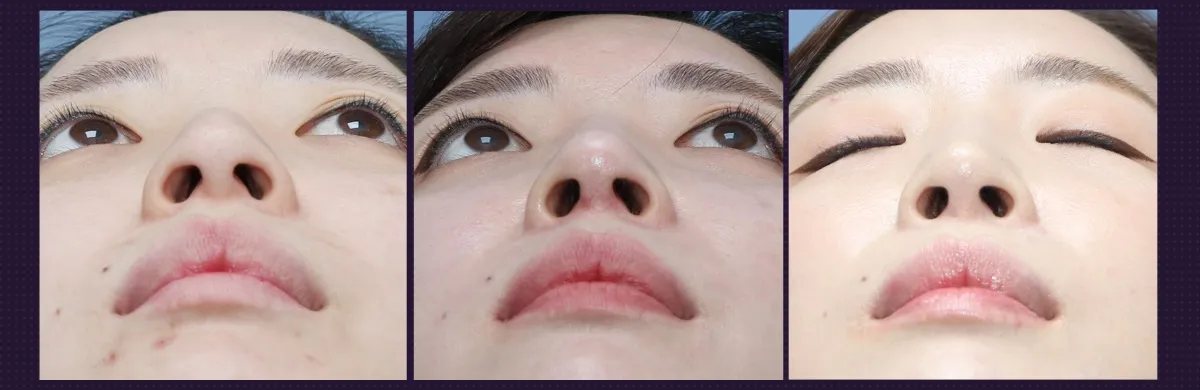
The nasal tip is narrower and more projected, and the nostrils have become slimmer and more vertical.
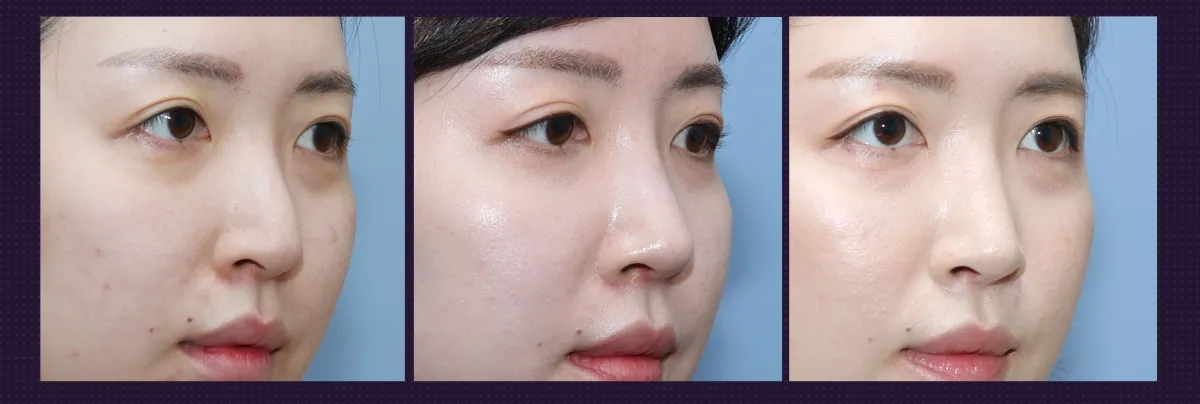
The dorsum, which had bulged, is now straight, and the nasal tip stands well projected.
Because the entire process used only autologous cartilage (septal cartilage and ear cartilage) with no artificial implant,we were able to achieve a natural-looking and permanently safe result.
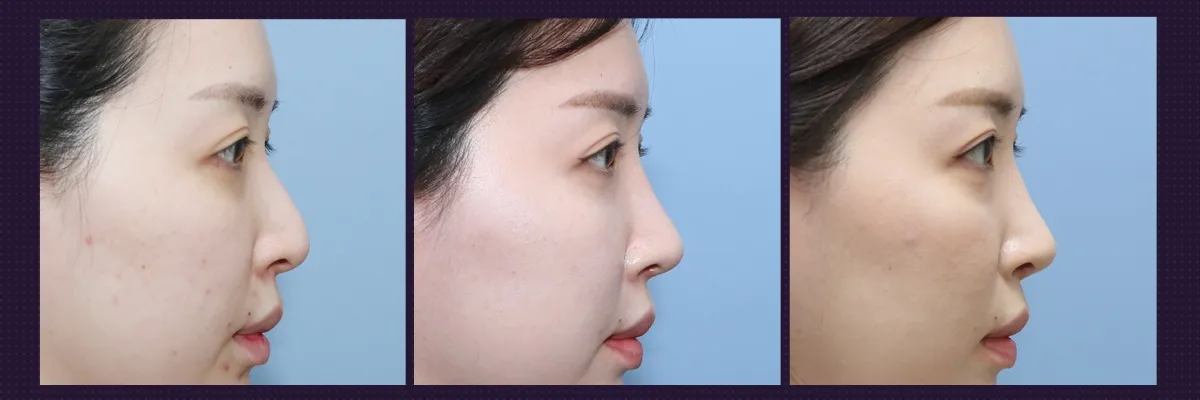
From an unnatural look with a convex dorsum and a low tip, the nose after surgery is straight, with a well-projected tip and a natural appearance.