

Pinched Nasal Tip and Nostril Retraction (Pinching & Notching) 03
Quite a few people want to have a silicone nasal implant removed but hesitate after hearing that, once it is removed, the tip may look pinched
or the nostrils may become retracted.
If this kind of pinched-tip deformity (Pinching, Notching) actually appears after surgery,
what are the causes and solutions? Let us look at them closely through cases.
1. To prevent the capsule remaining inside the nose (silicone capsule) from causing contracture
and lifting the tip, and to release, even slightly, any contracture that has already occurred.
2. Through tip cartilage repositioning, to release tip cartilages that were pinched when they were sutured together or
fixed to a strut during the previous surgery, so that the tip becomes natural.
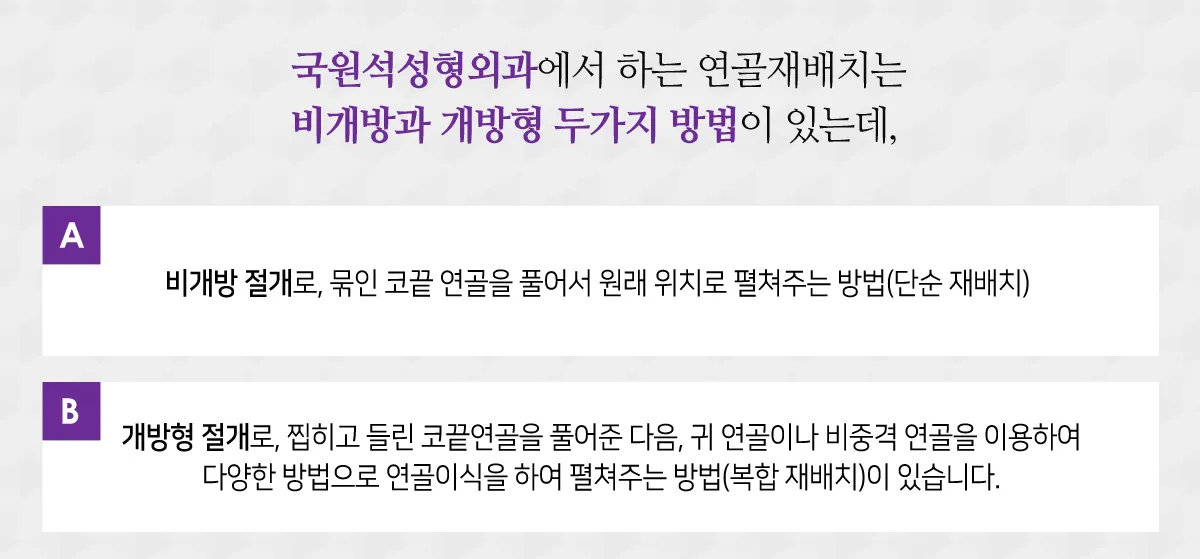
Compared with method B, method A is naturally less effective at correcting pinching and retraction.
In other words, A can be expected to keep the condition from worsening and bring slight improvement,
while method B can clearly release the pinched tip (Pinched tip, Nostril notching).
However, with closed-approach simple repositioning, because the tip cartilages were damaged and
deformed by the earlier surgery and are therefore weak, during the 3-6 month contraction period after removal and repositioning,
the tip may become more pinched or turn up slightly.
In such cases, when nasal tip rehabilitation (massage, stretching, and tip mobility exercises) is combined with a nostril support device (nasal retainer),
the pinched and retracted shape mostly recovers once the contraction period has passed.
To help explain this, case photos are used as examples below.
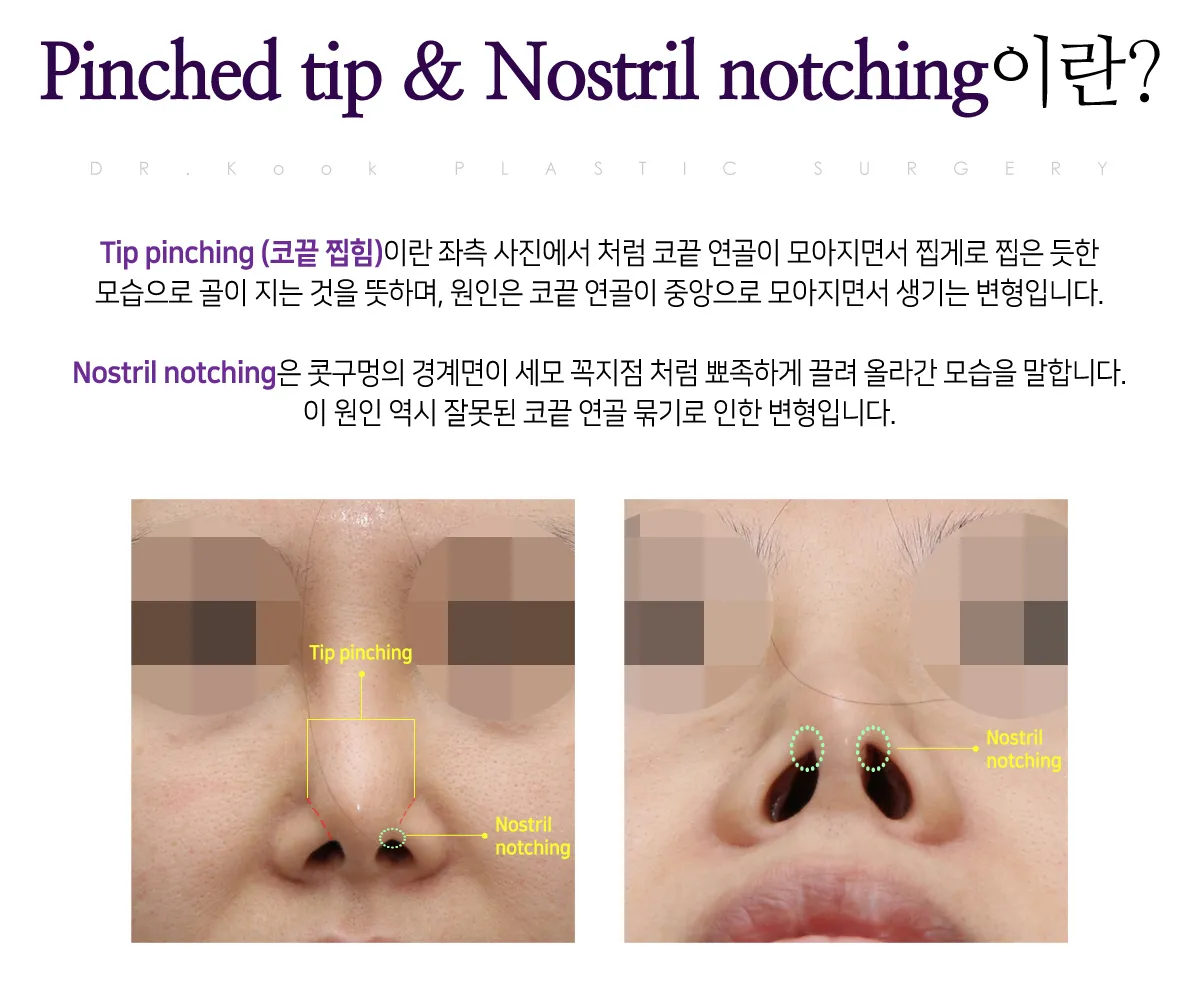
7-8 years ago at another clinic, through an open approach, this patient
had tip plasty with ear cartilage and silicone placed in the dorsum; contracture has now led to
a pinched tip, nostril notching, and an upturned nose, among other changes.
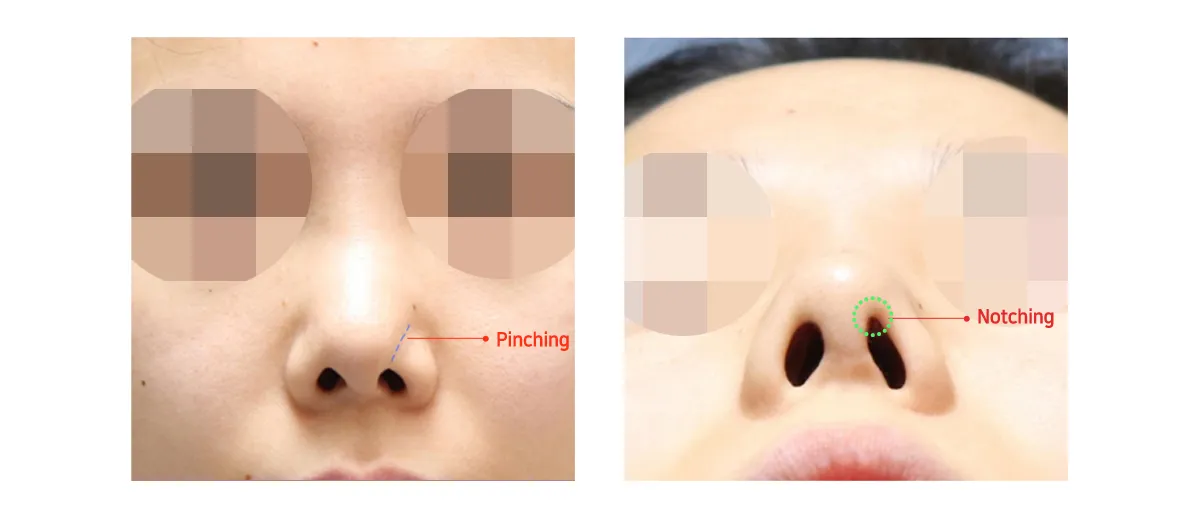
This patient had tip plasty with ear cartilage and augmentation of the nasal bridge with silicone at another clinic 5 years ago,
and developed a tilted columella (Shifted Columella), nostril notching, and, due to contracture,
an upturned tip. The pinching is relatively mild.
We have now seen what tip pinching, alar rim retraction (Nostril Notching),
and an upturned nose are.
Now let us look at Won-Suk Kook Plastic Surgery's
cases of resolving the pinched tip and nostril retraction that occur after implant removal.
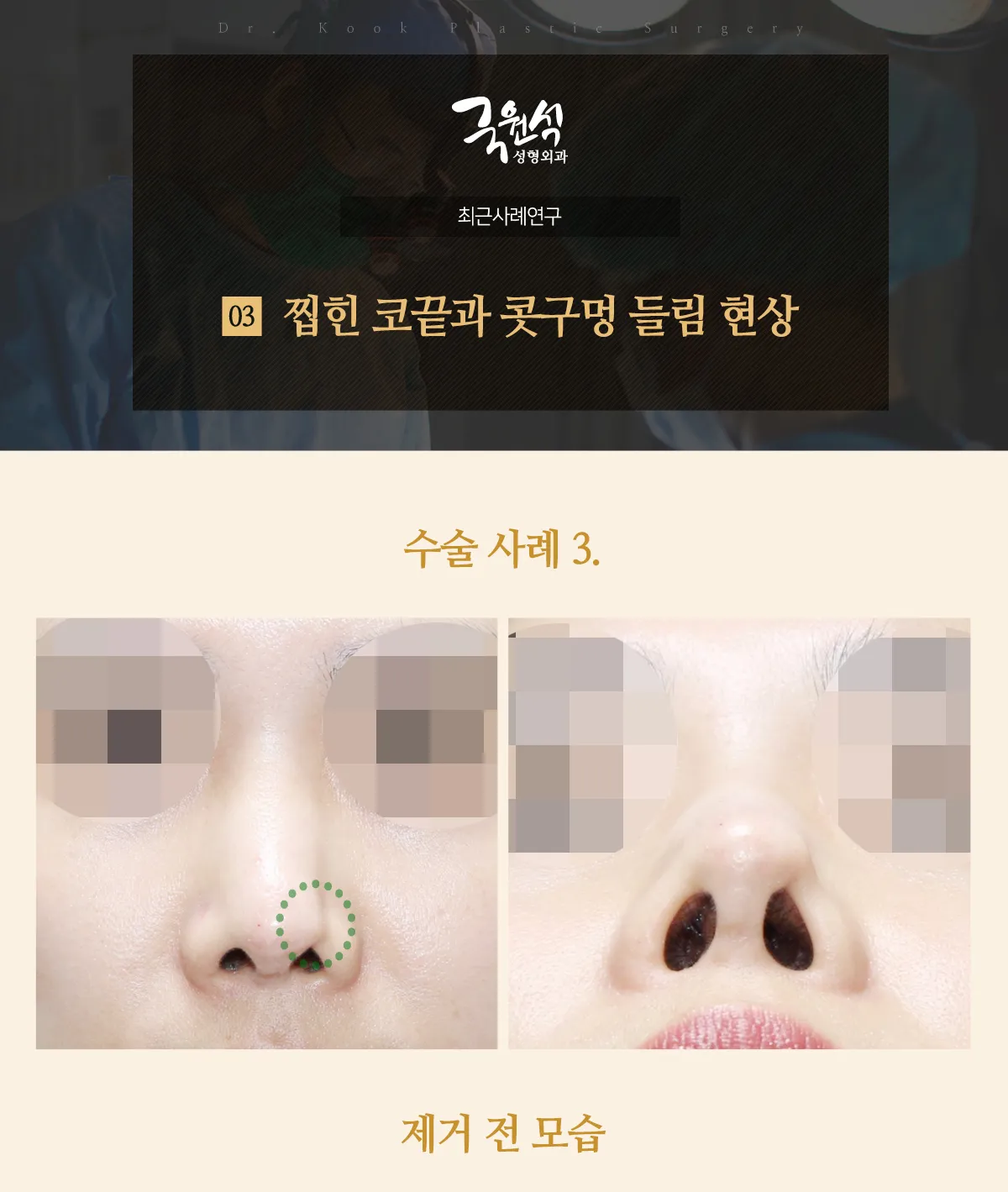
P/H - 1st surgery: 5 years ago in the United States, Gore-Tex + ear cartilage (open approach)
2nd surgery: 2 years ago at another clinic in Korea, silicone + ear cartilage (closed approach) -> inflammation developed 3 months later
3rd surgery: 1 year ago in the United States, removal of the nasal silicone implant
C.C - The patient reported that the tip turns red and feels cold in cold weather. The tip cartilages are shifted to one side.
Septal deviation, a pinched tip (Pinching), notching, and nostril retraction due to contracture were present.
*Point: When pinching and notching are severe from the outset, as in this case, a closed approach
with implant and cartilage removal and tip repositioning alone cannot correct them. Therefore, to
correct them, an open approach is needed, along with a combined repositioning of the tip using a lateral crural strut graft.
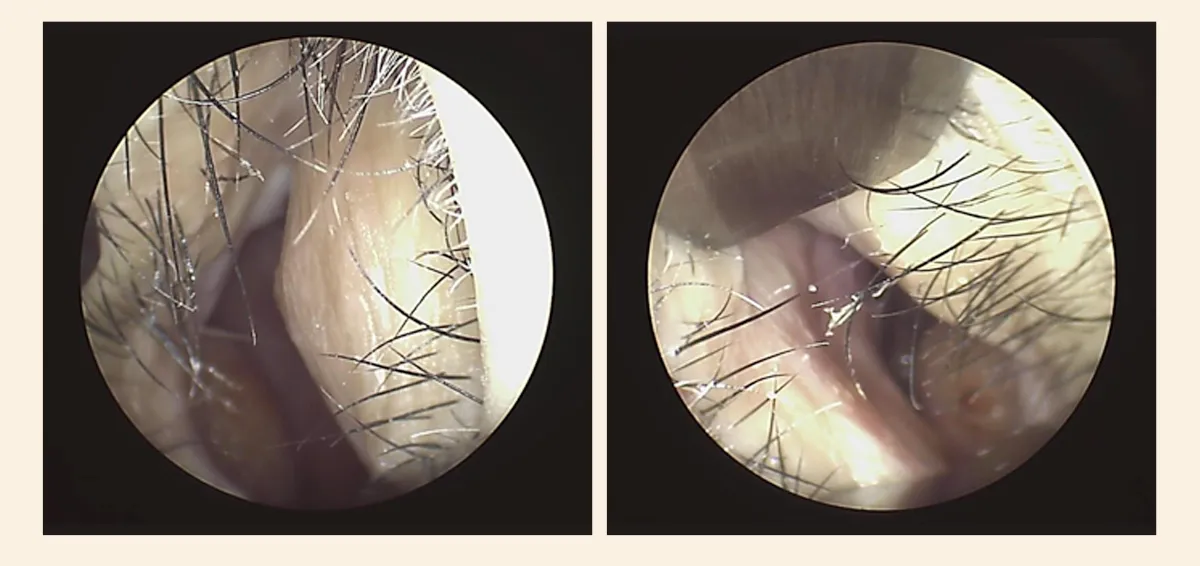
This is an endoscopic view of the inside of the nasal cavity. In the right nasal cavity, the lower septum
is deviated to the right, and the septal extension graft can be seen protruding.
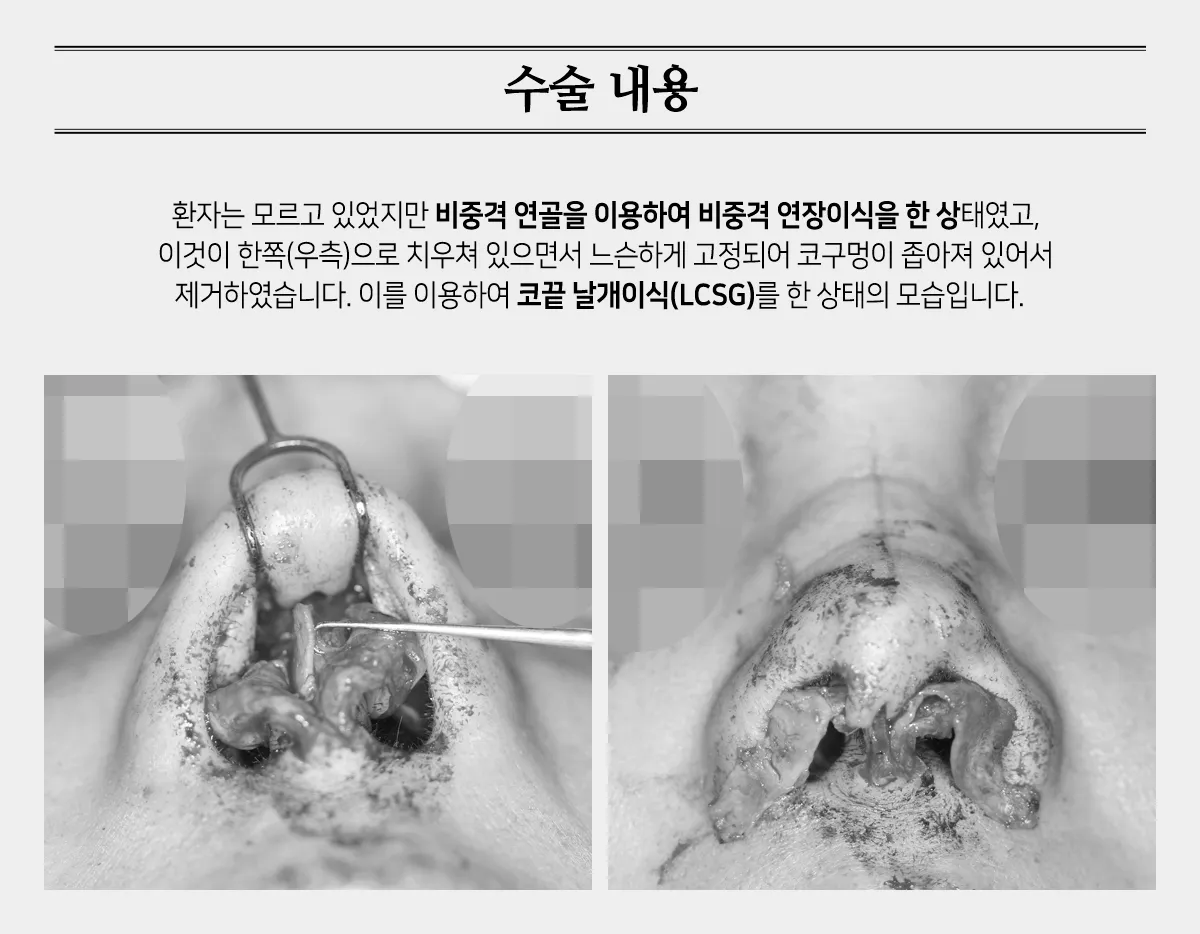
Although the patient was unaware of it, a septal extension graft had been made with septal cartilage;
because it was shifted to one side (the right) and loosely fixed, narrowing the nostril,
it was removed. This shows the tip after a lateral crural strut graft (LCSG) was made with that cartilage.
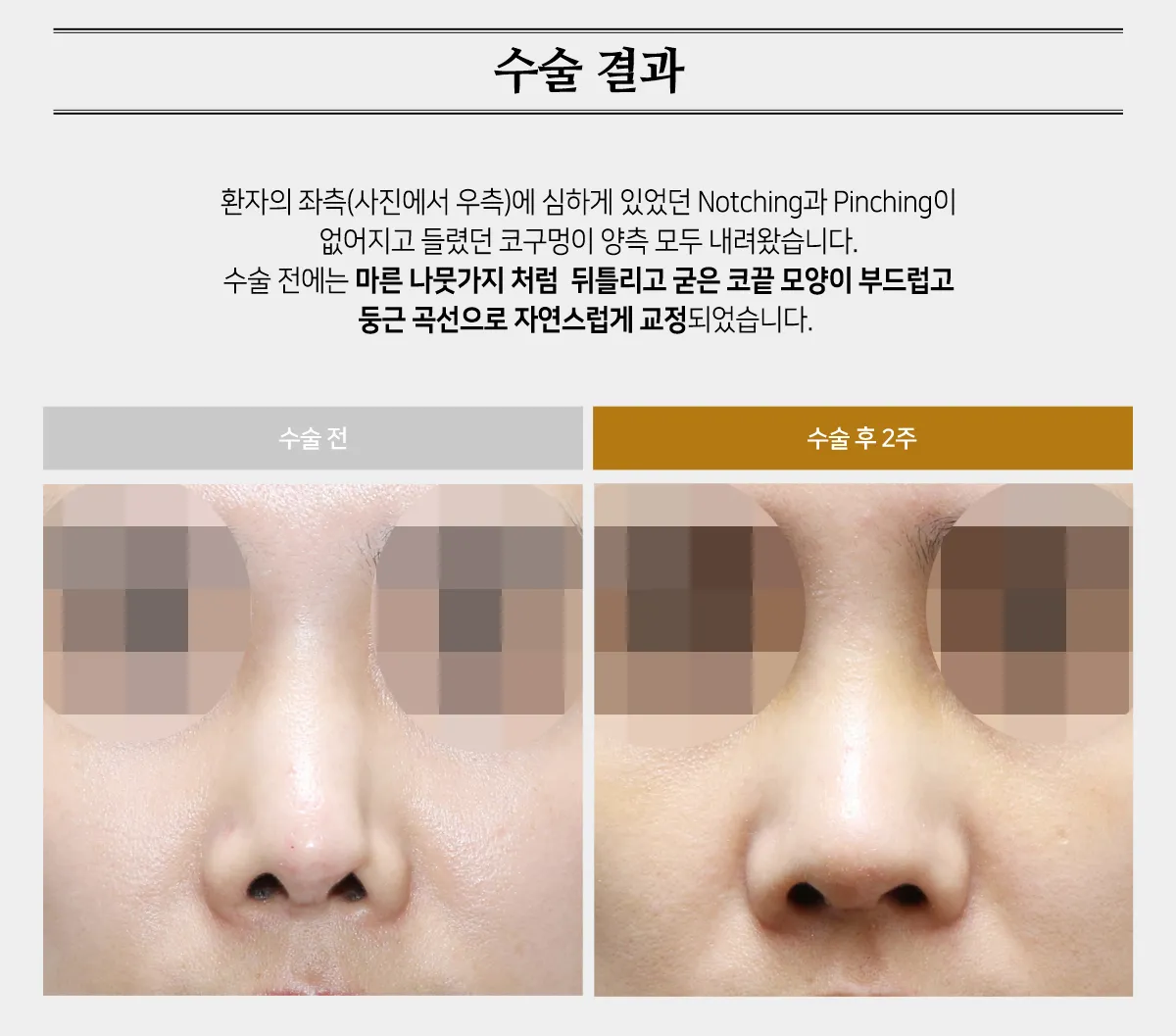
The notching and pinching that were severe on the patient's left (the right in the photo)
are gone, and the retracted nostrils have come down on both sides.
Before surgery, the tip was twisted and stiff like a dry twig; it has been corrected naturally
into a soft, rounded curve.
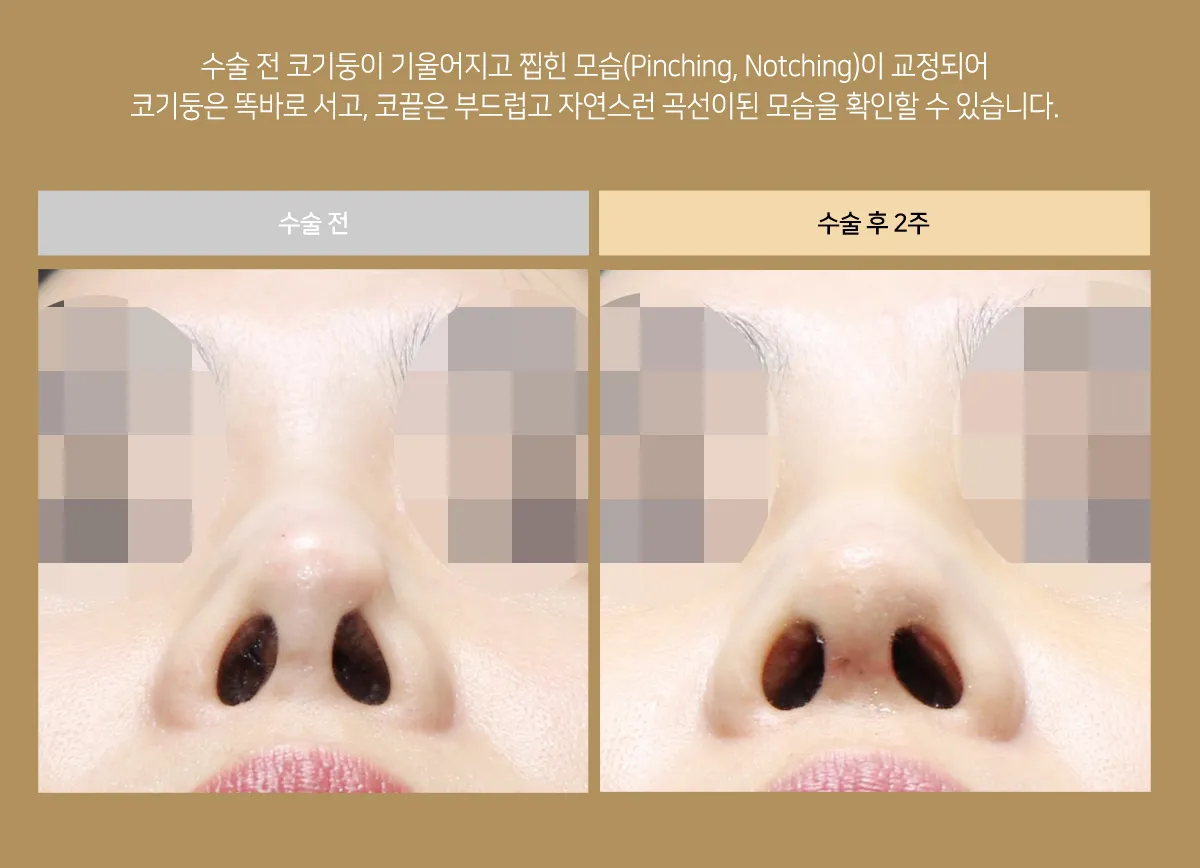
The tilted columella and pinched appearance (Pinching, Notching) seen before surgery have been corrected:
the columella now stands straight, and the tip has a soft, natural curve.