Why I Dislike Using Silicone Nasal Implants #3 (Nasal Implant Removal, Nasal Silicone Removal, Contracted Nose Surgery)
Silicone implants remain, in Asia and
worldwide, the most widely used material for raising the dorsum.
The association is so direct that "rhinoplasty" brings "silicone" to mind.
In Asia in particular, when it comes to "rhinoplasty," both doctors and patients
are often seen to take the use of silicone for granted.
This is a very inappropriate and even dangerous notion in rhinoplasty.
For example, even in rhinoplasty whose goal is not to raise the bridge, such as dorsal hump correction or deviated nose surgery,
we see many patients in whom silicone was used.
When such patients come for a revision consultation and are examined, we often find that the silicone
did nothing for the shape or function of the nose and instead caused side effects.
In fact, having seen many side effects from silicone and artificial materials over years of revision rhinoplasty,
I have long wanted to organize and present them systematically.
So today, under the title "Reasons I Dislike Using Nasal Silicone (in Rhinoplasty),"
I have prepared case studies on each side effect.
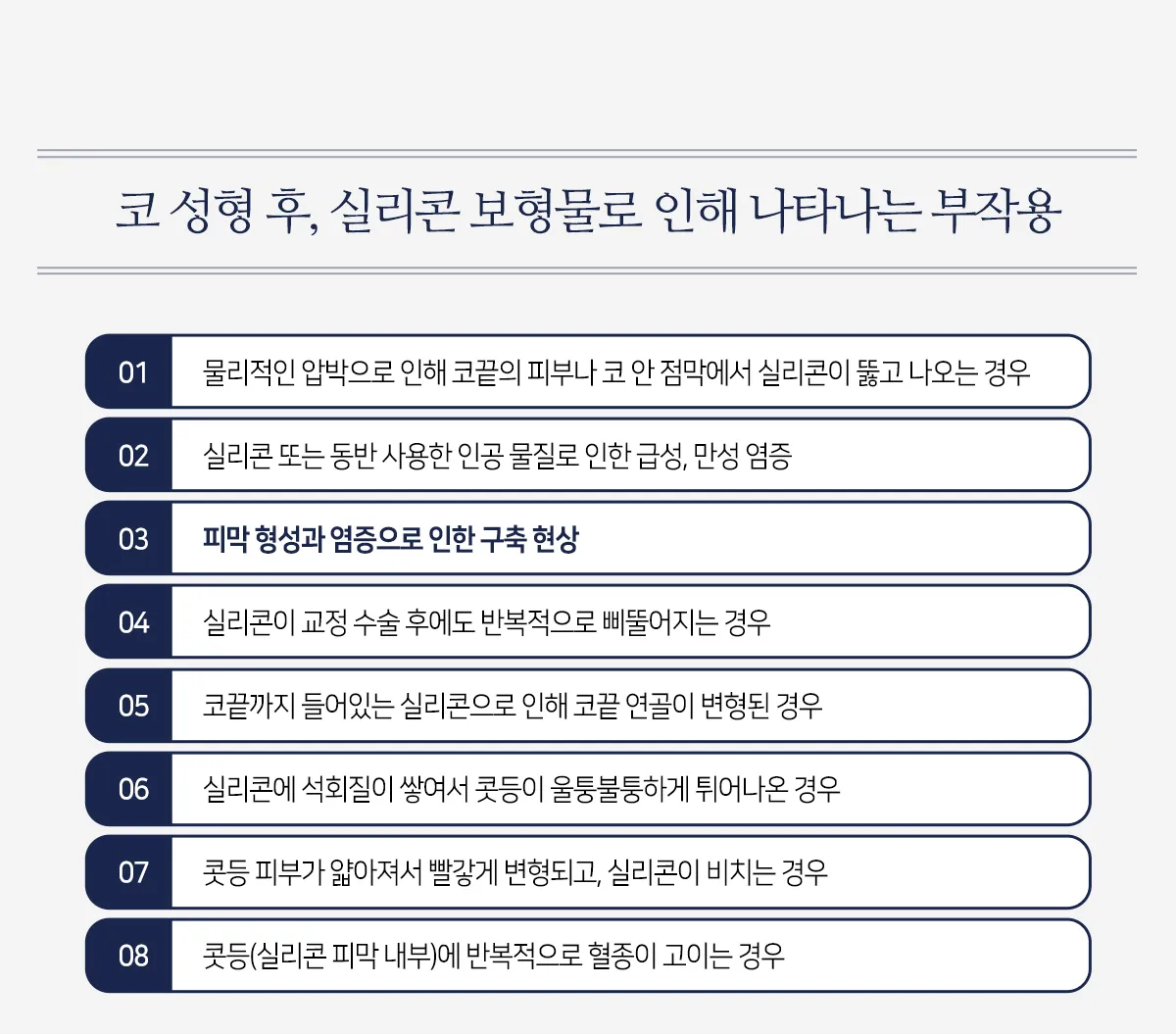
Side Effects Caused by Silicone Implants After Rhinoplasty
- 1. Silicone breaking through the skin of the nasal tip or the mucosa inside the nose due to physical pressure
- 2. Acute or chronic infection caused by silicone or artificial materials used with it
- 3. Contracture caused by capsule formation and inflammation
- 4. Silicone repeatedly becoming crooked even after corrective surgery
- 5. Tip cartilages deformed by silicone that extends to the nasal tip
- 6. Calcium deposits on the silicone making the dorsum protrude unevenly
- 7. Dorsal skin thinning and turning red, with the silicone showing through
- 8. Recurrent hematoma in the dorsum (inside the silicone capsule)
The probability of side effects after rhinoplasty with a silicone implant differs somewhat
among the published papers, ranging fairly widely from 4-36%.
The difference arises from when the side effects were diagnosed.
The most common side effects are contracture (34.8%), implant deviation (30.1%),
inflammation (10.1%), skin thinning (19.9%), and extrusion through a perforation (5%).
This case study will continue as a series of 8 parts, and we hope you will follow it.
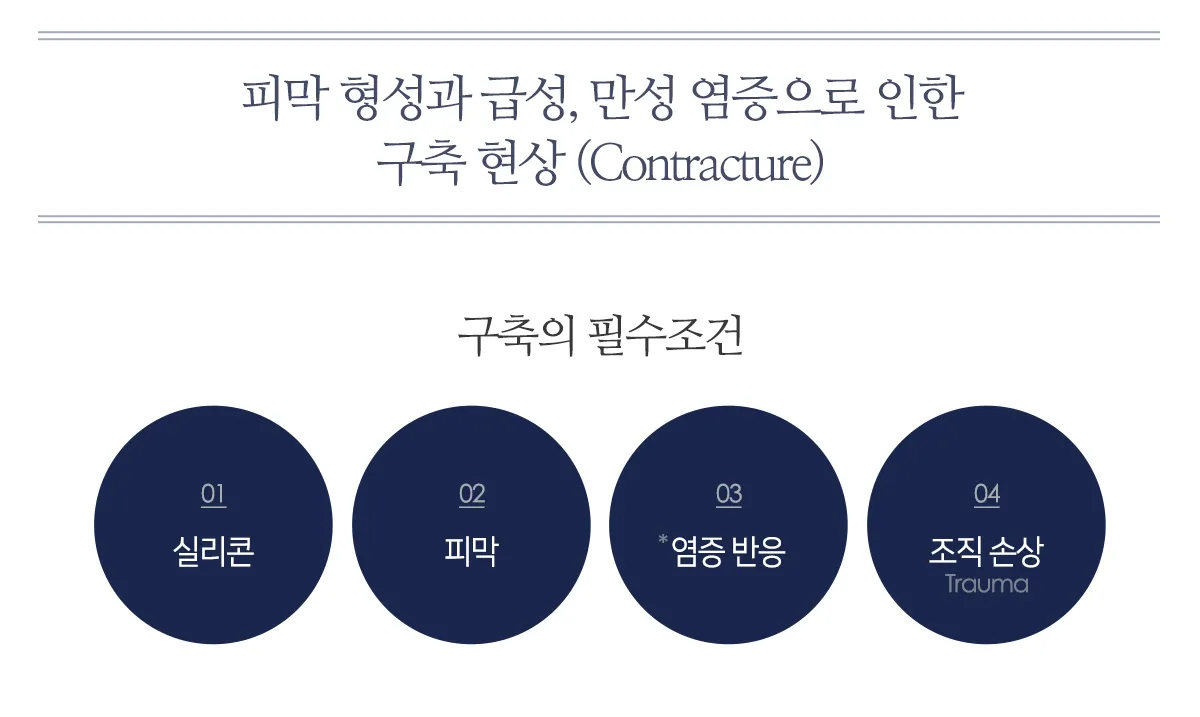
From Capsule Formation and Acute or Chronic Infection:
Contracture
01 Silicone
02 Capsule
03 Inflammatory response*
04 Tissue injury (trauma)
After rhinoplasty with silicone, the most common reason for
revision surgery is contracture, which is far more frequent than infection or perforation.
When silicone enters the body, the immune defense mechanism forms a capsule around it;
when a large amount of collagen fiber accumulates in the capsule, the capsule thickens and causes the surrounding skin to shrink,
and the resulting shortening of the nose and deformation of the tip is called "contracture."
The longer a silicone implant remains in the nose, the higher the likelihood of contracture.
The incidence of nasal contracture caused by silicone ranges widely, at 1.3-30%.
This, too, varies depending on when and by what criteria it is diagnosed.
*Inflammatory response: subclinical infection of the foreign material, especially with Staphylococcus epidermidis and Propionibacterium acnes
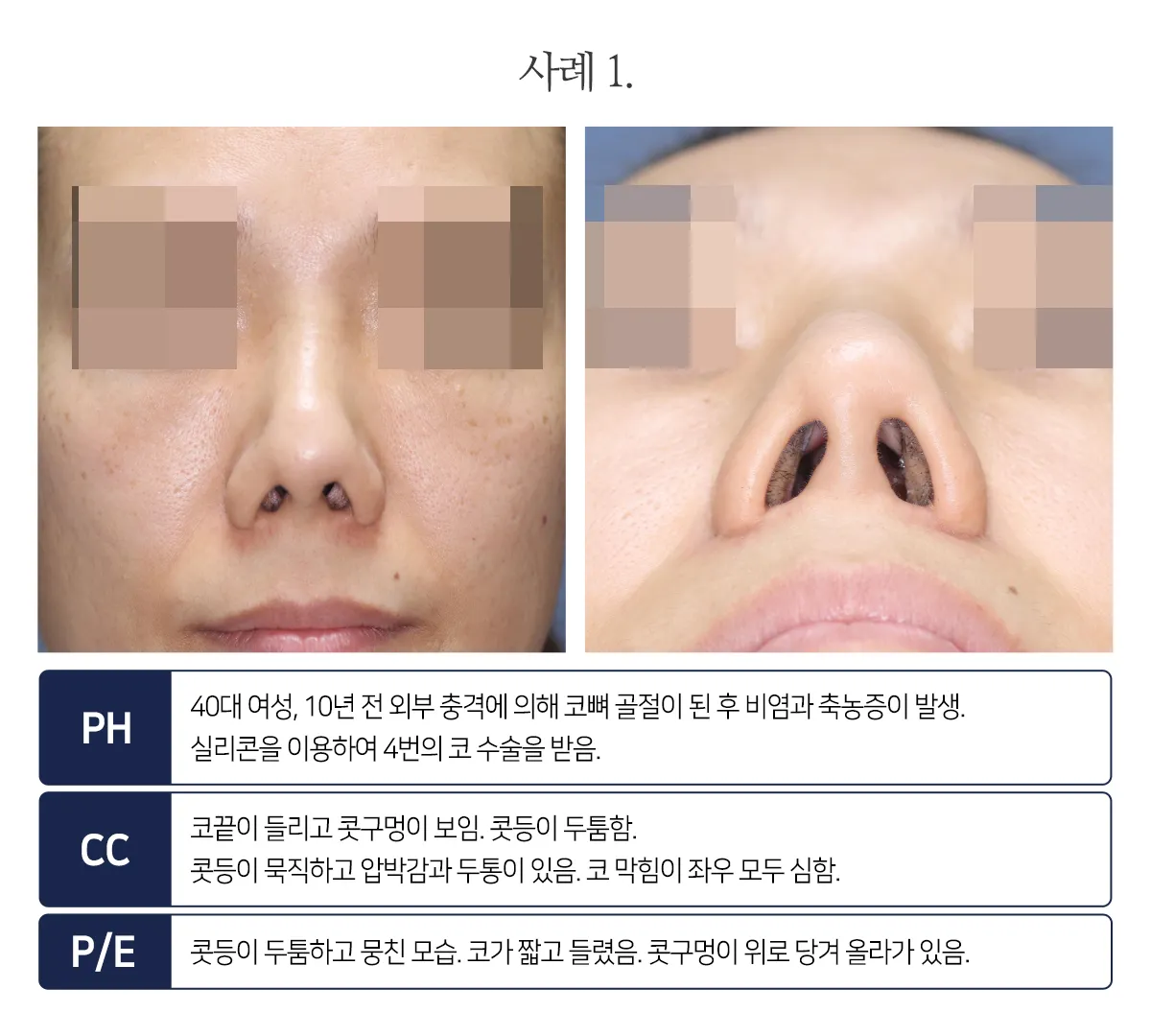
PH
Woman in her 40s. A nasal bone fracture from external trauma 10 years earlier was followed by rhinitis and sinusitis.
She had undergone 4 nasal surgeries using silicone.
CC
The tip was upturned and the nostrils were visible. The dorsum was thick.
The dorsum felt heavy, with pressure and headaches. Nasal obstruction was severe on both sides.
P/E
The dorsum looked thick and bunched. The nose was short and upturned. The nostrils were pulled upward.
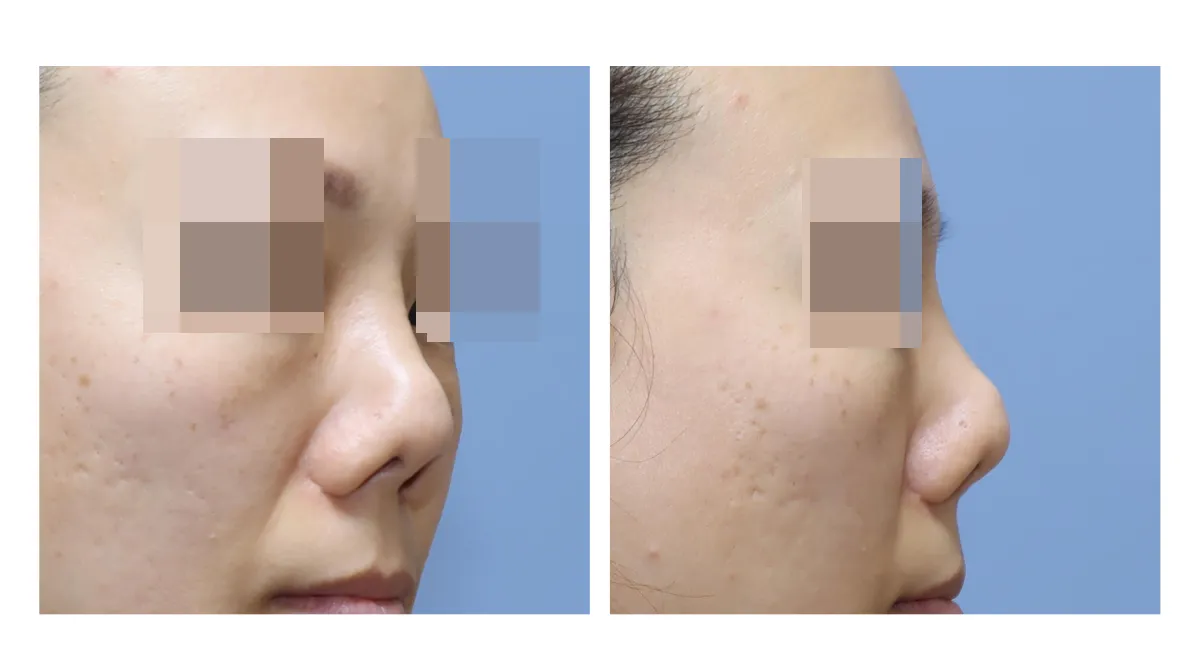
The silicone had migrated up to where the eyebrows begin, the tip was very severely deformed, and as the tip was pulled upward,
the nostrils had become elongated in an "11" shape.
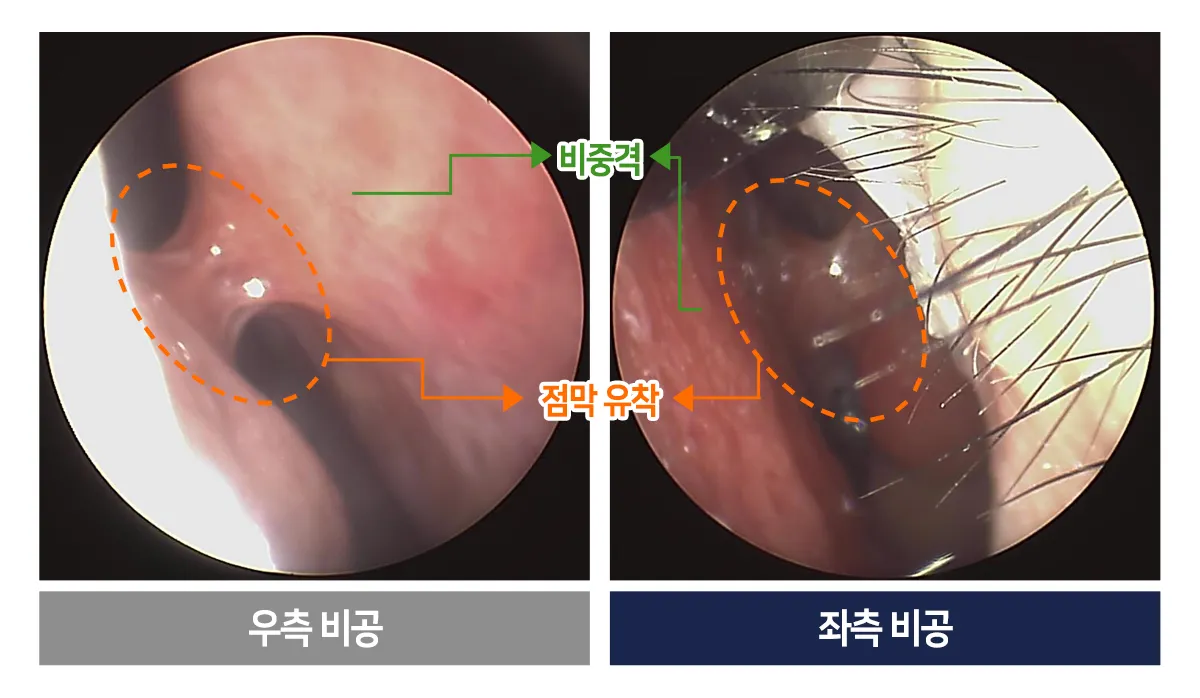
On both the left and right, there were mucosal adhesions between the septum and the turbinates.
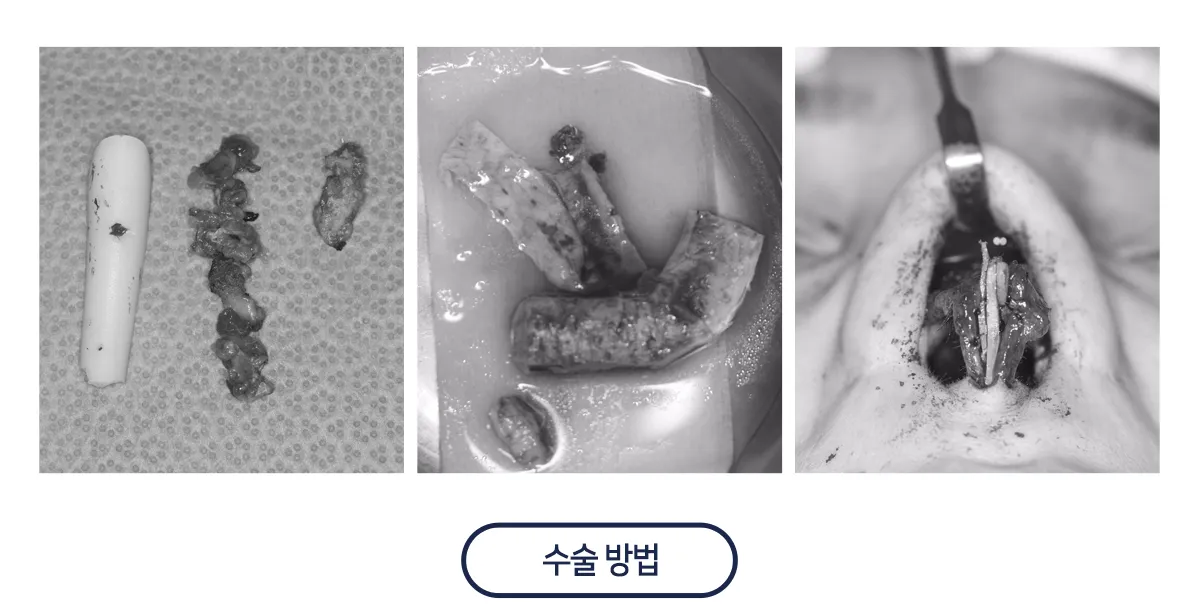
(Surgical Method)
The silicone, capsule, and scar tissue were removed. The 7th costal cartilage and its perichondrium were harvested from below the right chest.
An "L"-shaped frame was fashioned from autologous costal cartilage to build the framework and secure the desired length,
and the tip cartilages were hung on the end of the "L" framework.
and the mucosal adhesions between the septum and turbinates were released using radiofrequency, with packing placed to prevent re-adhesion.
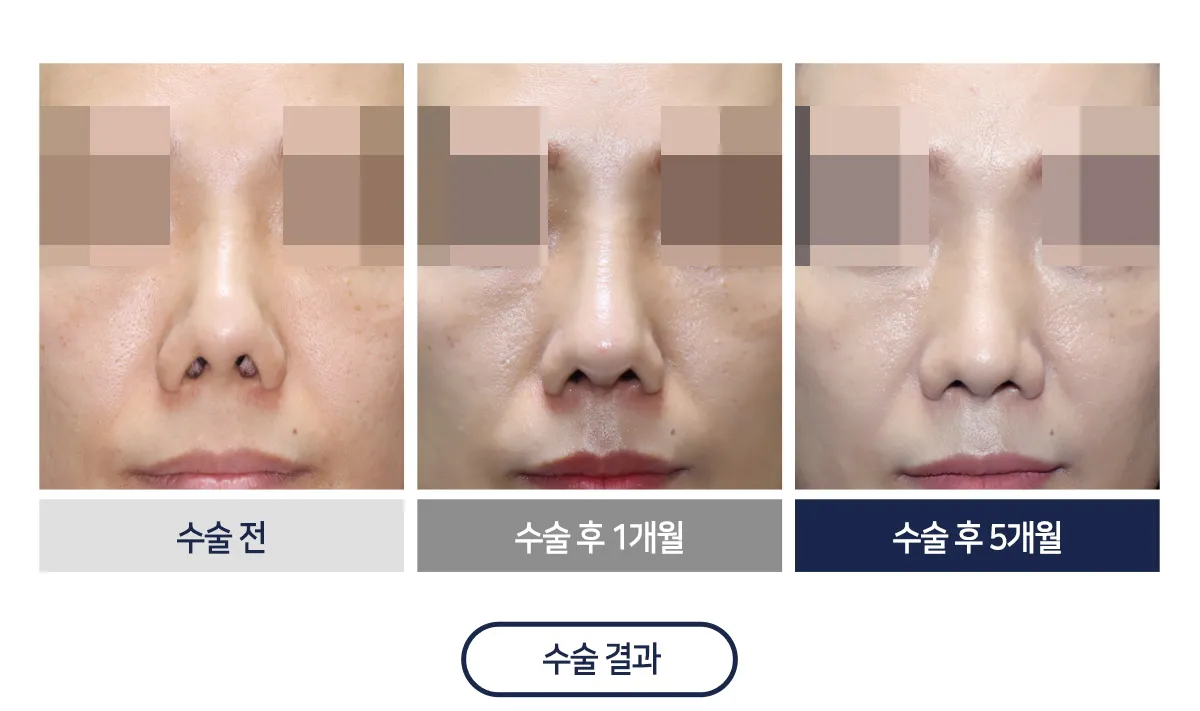
(Surgical Result)
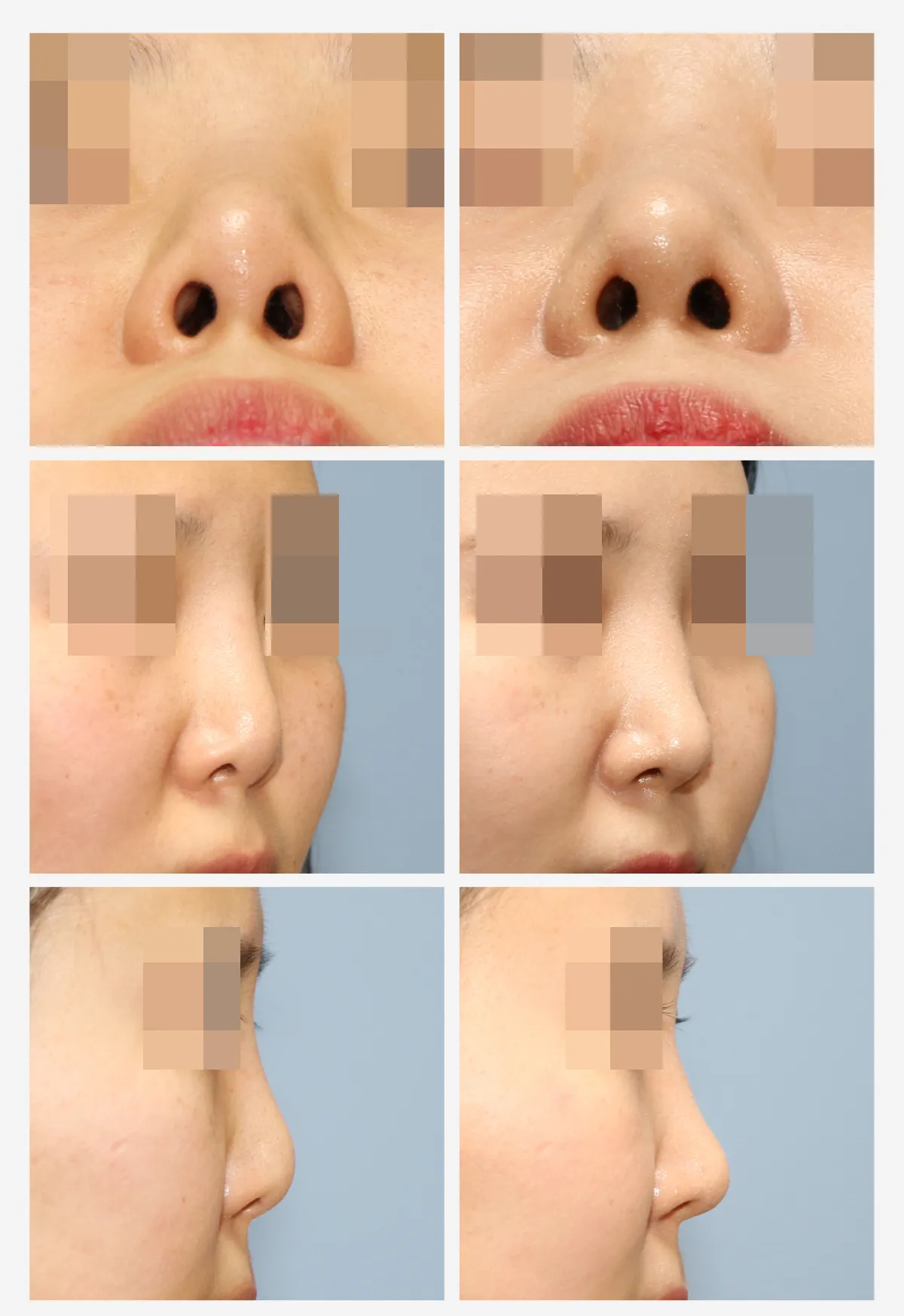
In the photo taken one month after surgery, the nose had lengthened enough to cover the nostrils.
However, the dorsum was wide and thick, still appearing swollen and unnatural.
In the photo 5 months after surgery, the dorsum has slimmed considerably and the bridge has become narrower,
and the nose can be seen to have lengthened further.
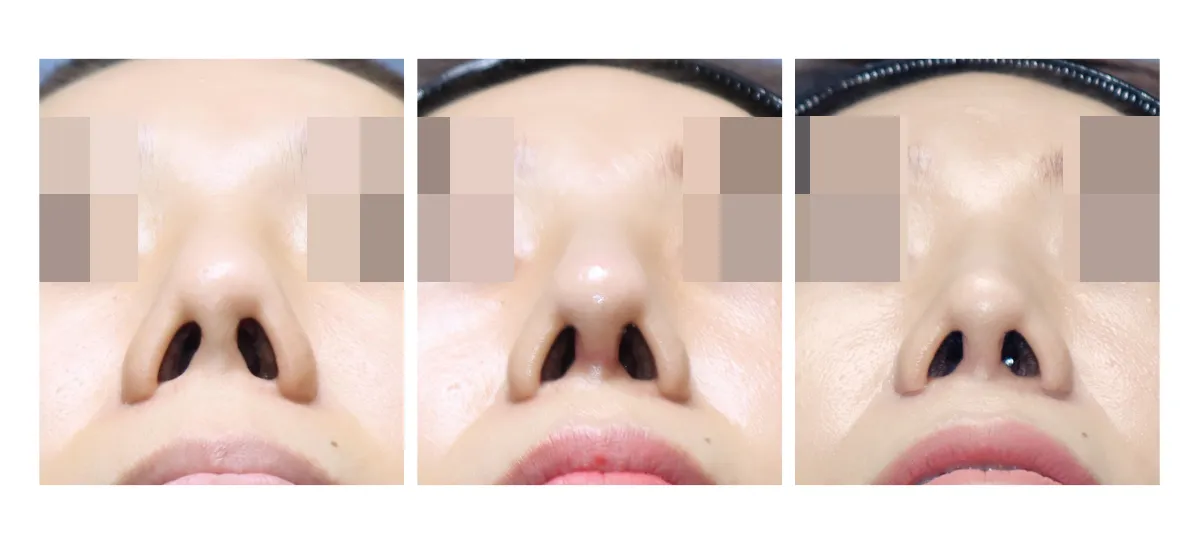
At 5 months after surgery, the nasal tip and dorsum have slimmed, and the surgical mark on the columella is barely visible.
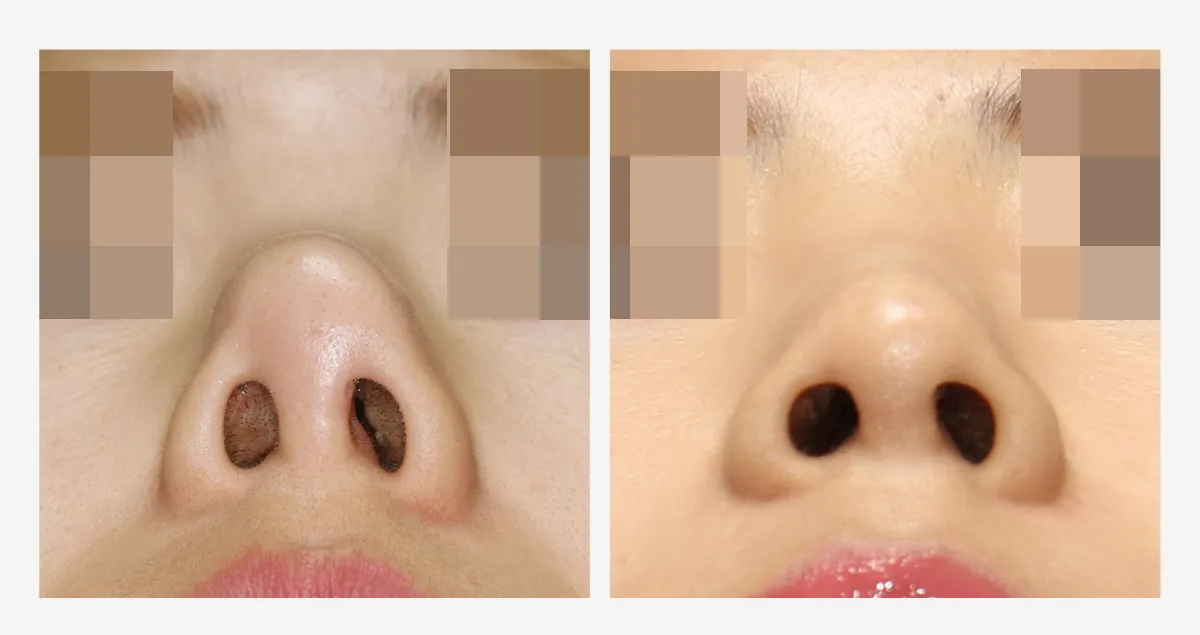
Before surgery, the tip was drawn upward and the nostrils were stretched long in an "11" shape,
but by 5 months after surgery they looked natural.
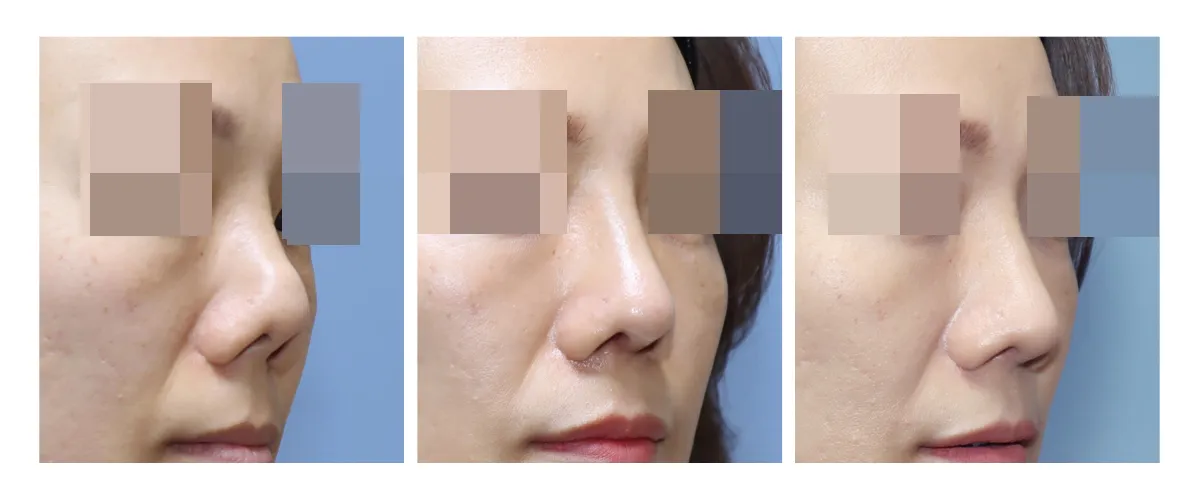
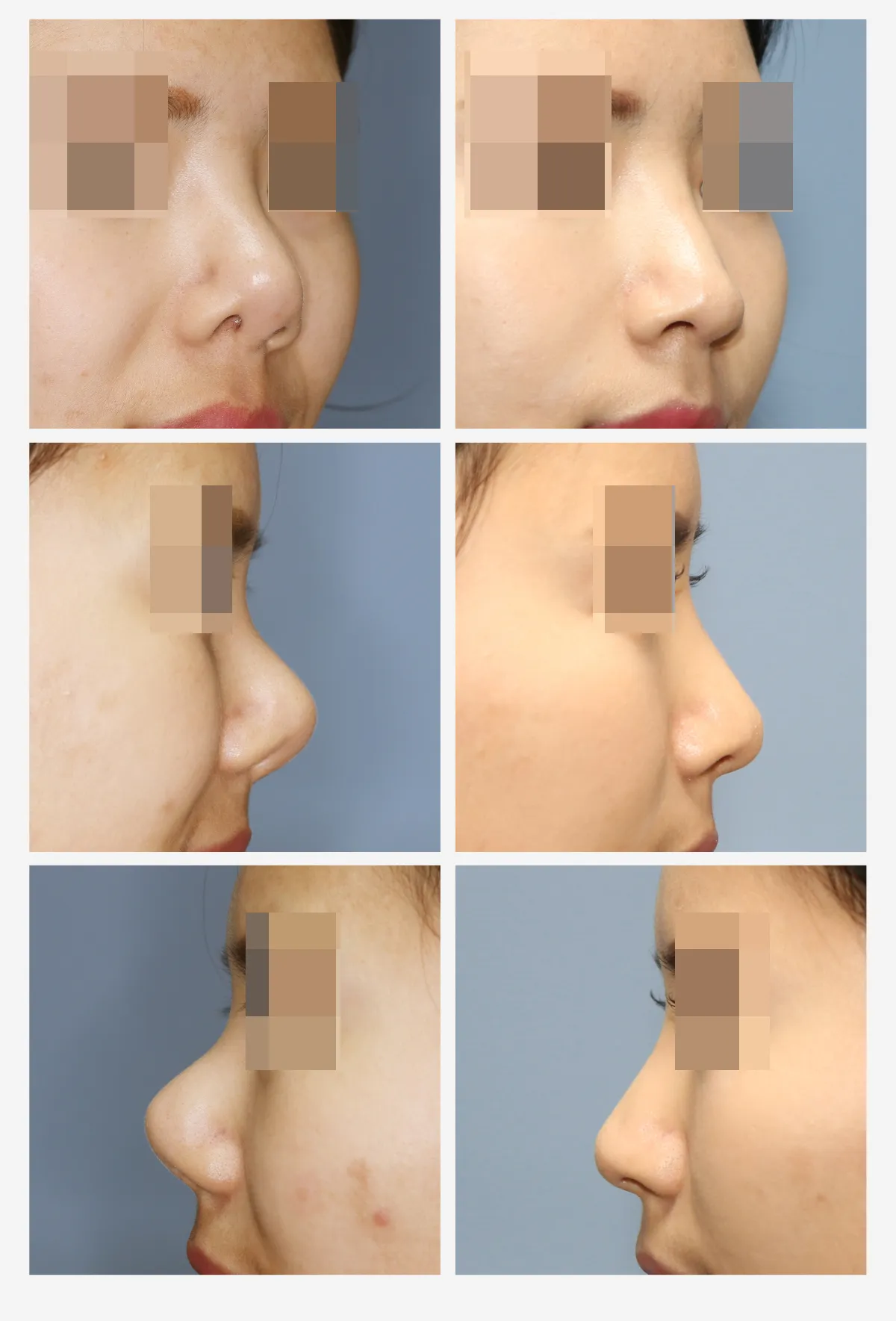
The nose has lengthened sufficiently and extends straight.
The bridge line has also grown slimmer over time since surgery,
and the height of the dorsum raised with acellular dermal matrix has not decreased much in the photo at 5 months after surgery.
Supplementing dorsal height with acellular dermal matrix after removing the silicone and capsule in this way
has the advantage of restoring both height and skin thickness in patients whose skin has thinned.
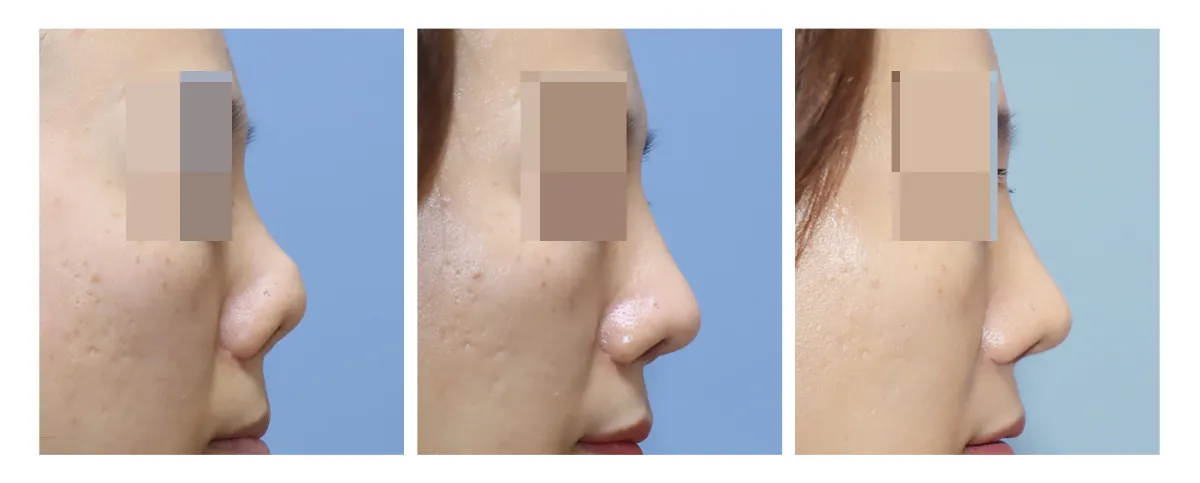
The nose lengthened a little more as time passed after surgery.
This is thought to be because the swelling and scar tissue decreased, leaving extra nasal skin that allowed the nose to lengthen.
The length, height, and angles of the nose have become natural.
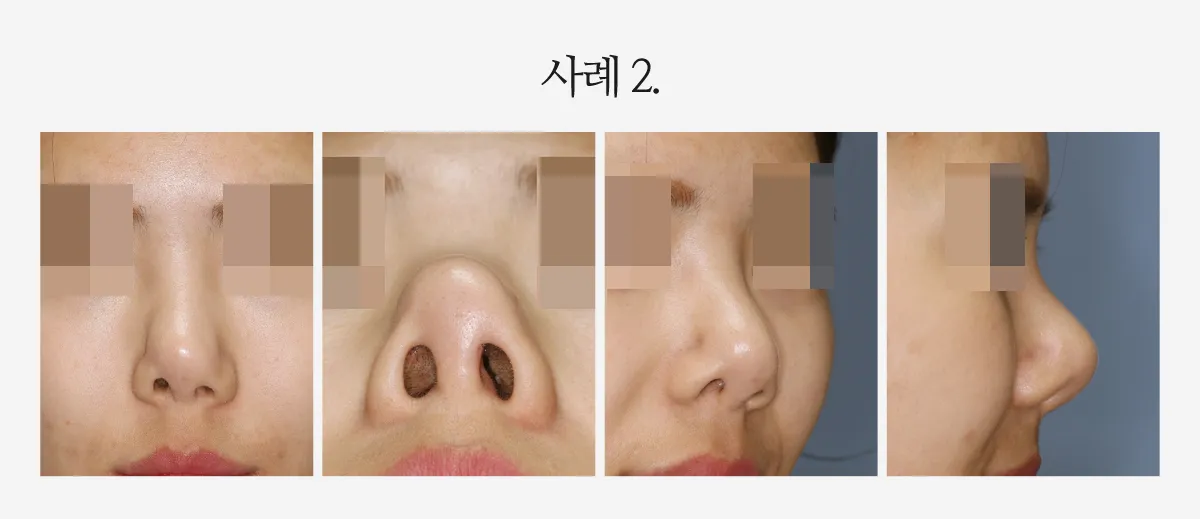
After augmentation rhinoplasty with silicone 2 years earlier, the tip turned red and
a severe inflammatory reaction with swelling developed, and the nose reportedly turned upward rapidly.
The tip and dorsum were thick and bunched, with a red inflammatory reaction. The tip was severely upturned, with a twisted deformity.
=>As stage 1, removal surgery was performed, and one month later, contracted nose correction using autologous costal cartilage was carried out.
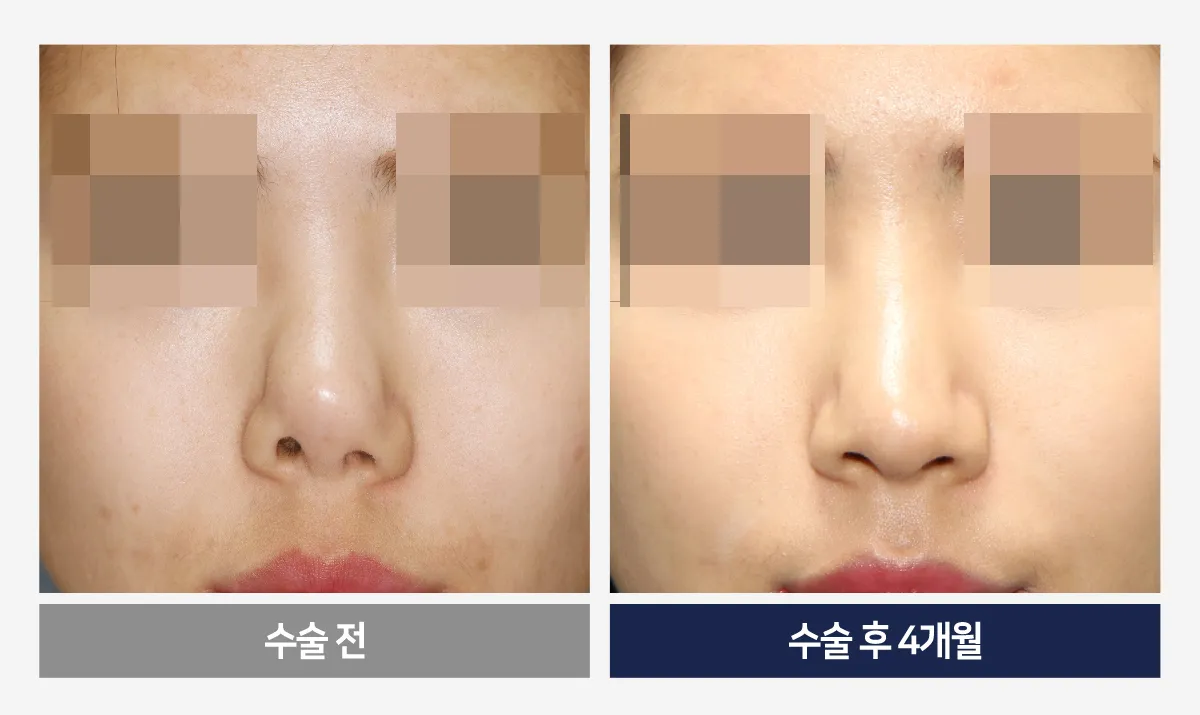
Although only 4 months had passed since surgery, the length of the nose was fully restored and its shape had become very natural.
The tip that had been pulled upward by contracture relaxed naturally and came down.
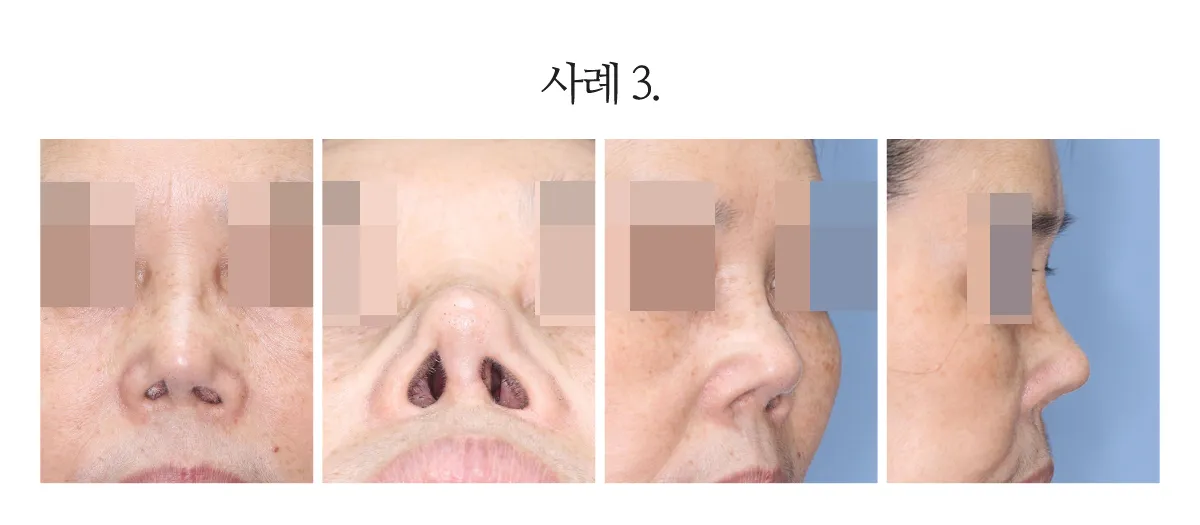
After facial injuries in a traffic accident 15 years earlier, the patient had rhinoplasty with silicone, but only the silicone was removed 1 year later.
Current findings: nostril asymmetry and a severely upturned nose (contracture).
=> During removal, the nose was lengthened using autologous costal cartilage, and the dorsum was raised with acellular dermal matrix.
During removal, Medpor that the patient had been unaware of was found in the columella, with a severe inflammatory reaction around it.
The severe inflammation caused by the Medpor appears to have triggered the contracture.
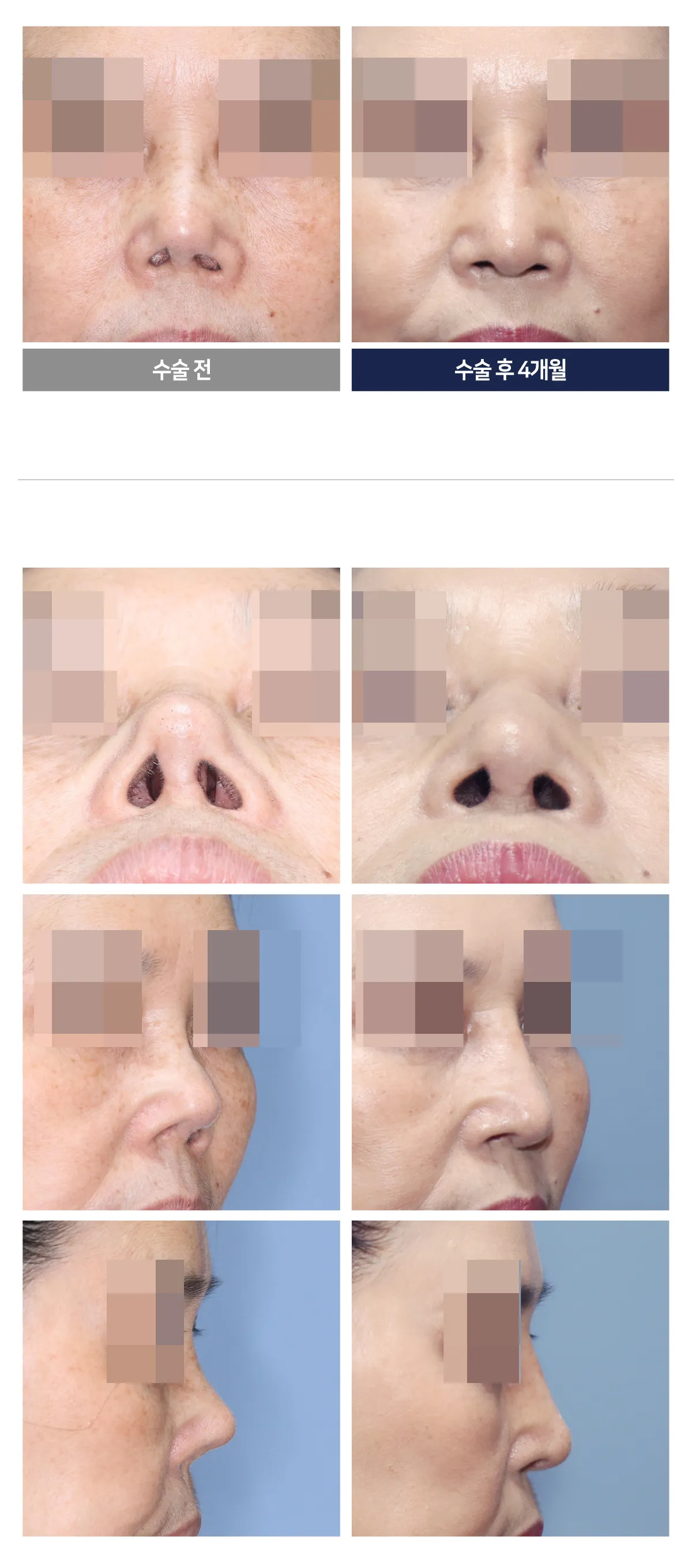
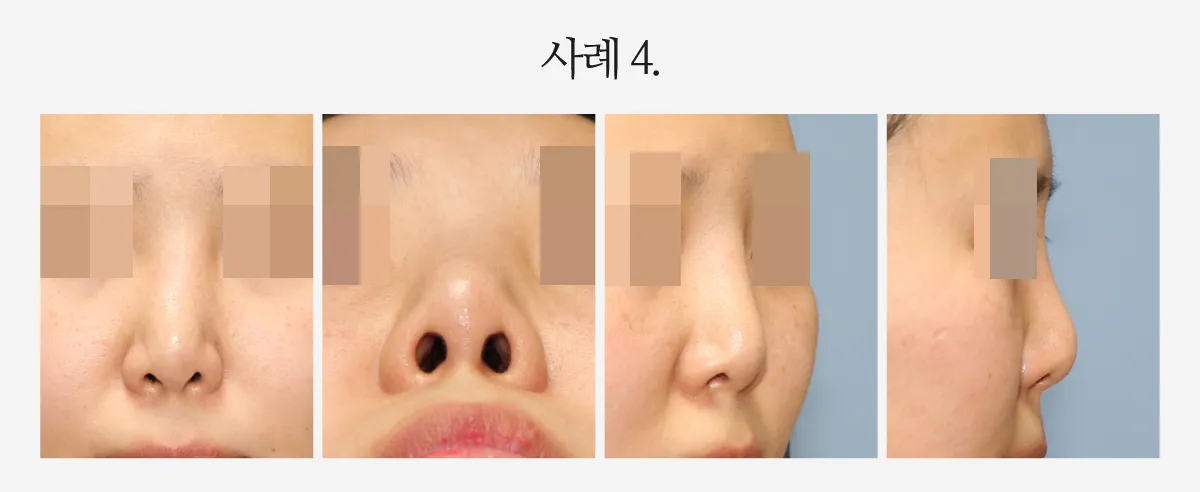
The patient had rhinoplasty 3 years earlier with hump reduction, silicone, and septal cartilage.
Currently the tip was upturned and had become bulbous, and the glabella and dorsum had thickened.
=> The silicone, capsule, cartilage grafts, and other material were removed through a closed approach, and simple repositioning was performed.
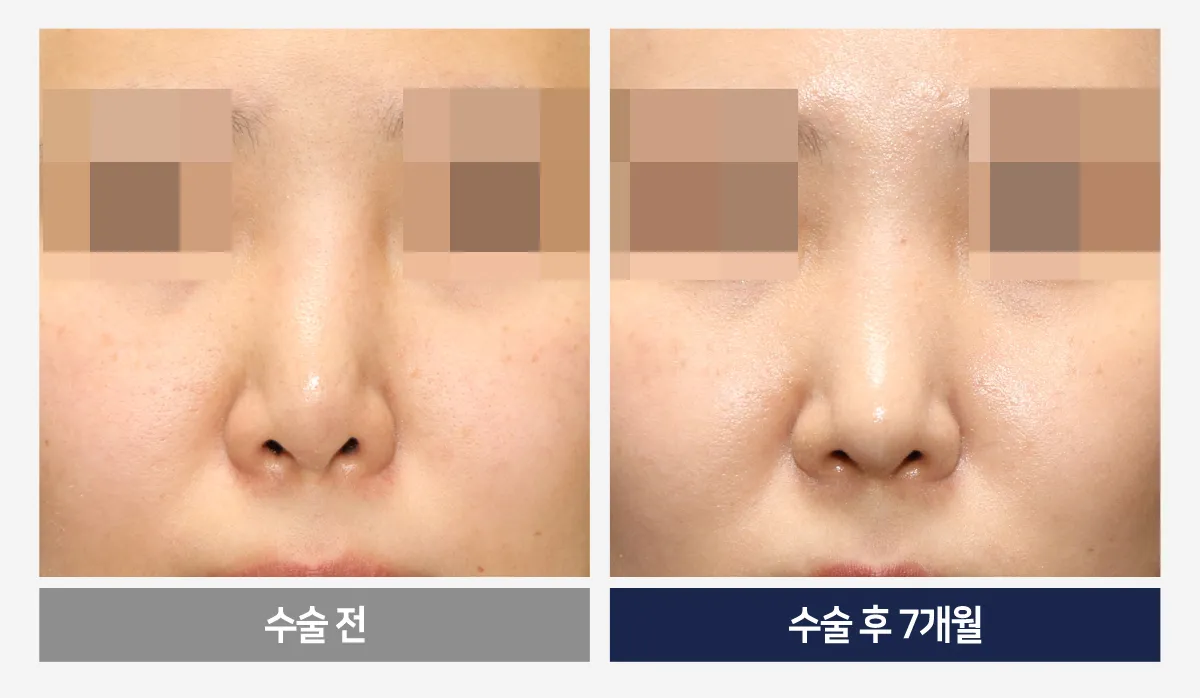
The displaced silicone was removed, the capsule and septal cartilage graft were removed entirely, and simple repositioning of the tip was performed.
As these cases show, removing the silicone, capsule, and scar tissue is the important starting point of contracted nose correction.