

Crooked Tip and Columella & Nostril Asymmetry Case Study 4
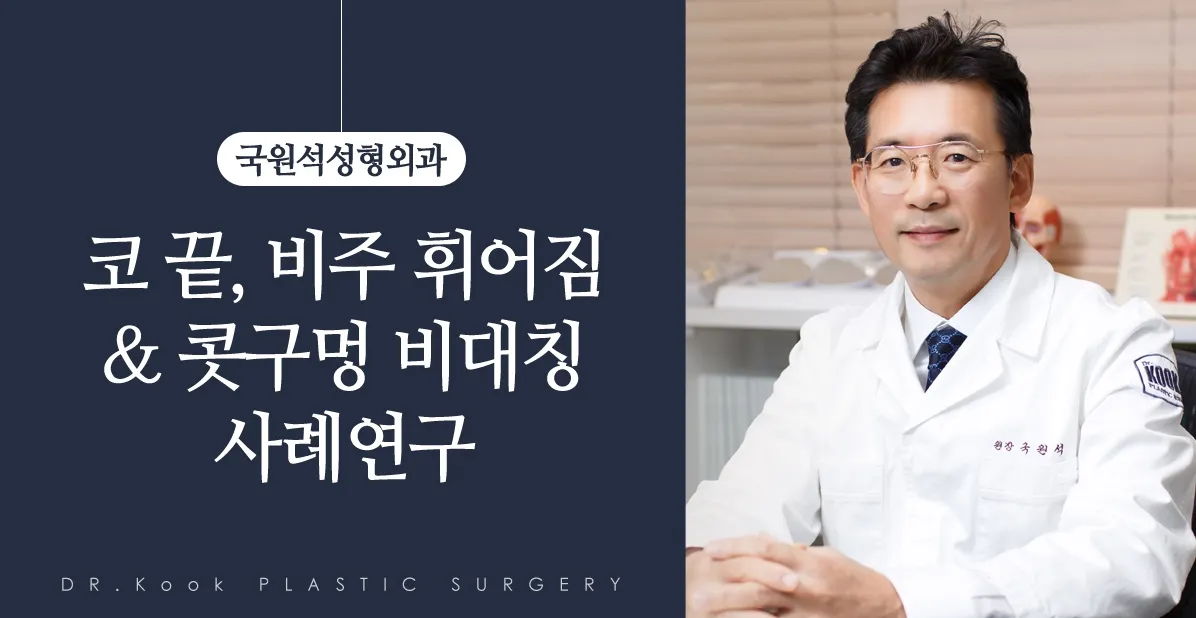
After rhinoplasty, it is surprisingly common for the tip and columella to become crooked and the nostrils asymmetric, accompanied by nasal obstruction.
Unhappy with how it looks and stressed every time they see it, patients go back to the clinic that performed the surgery,
only to be told, "The swelling has not fully gone down and things have not settled yet, so let's wait a little longer."
Quite a few of them wait 2-3 months, see no improvement, and then come to my clinic.
A crooked columella and tip and asymmetric nostrils after rhinoplasty are stressful enough,
and patients are anxious and worried, unsure whether it will improve on its own with time or needs to be corrected.
However, this never improves on its own simply by waiting.
Corrective surgery is necessary to regain the original appearance.

To correct this, the cause must first be identified with an endoscope and careful examination,
and then the twisted tip cartilages and septum must be returned to the exact midline.
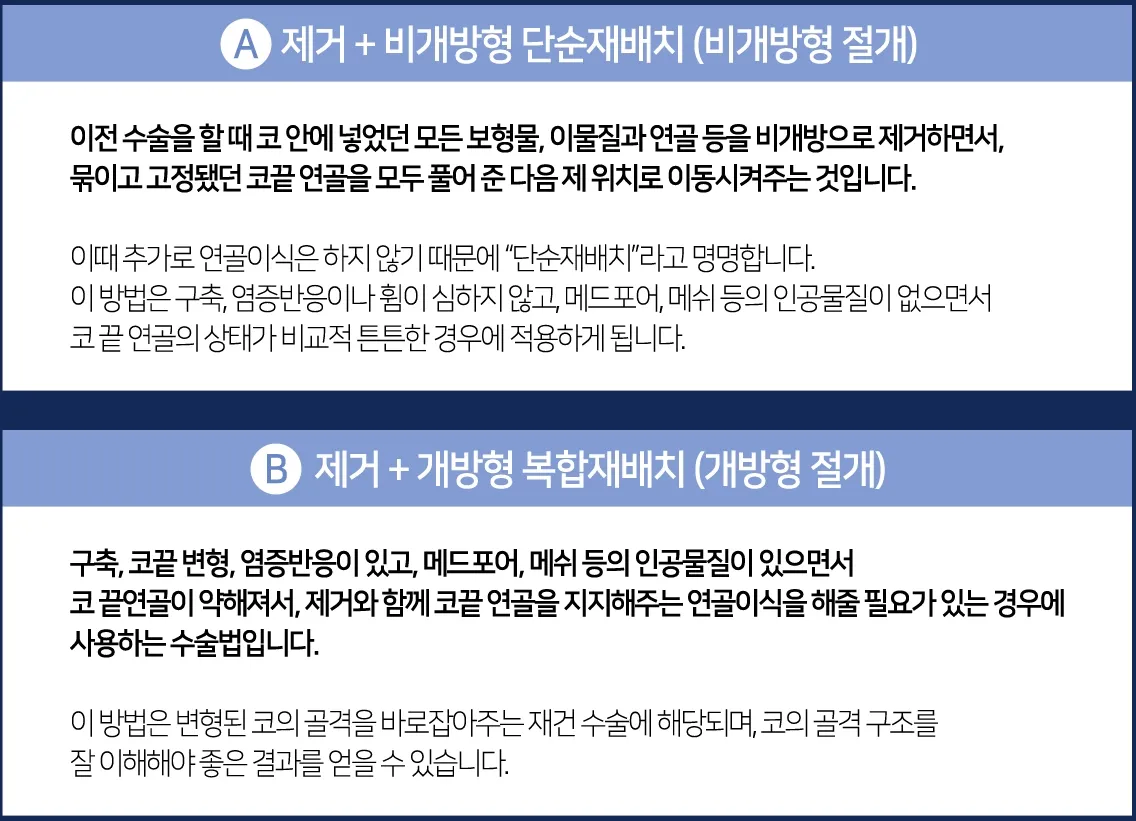
Technically, there are two methods.
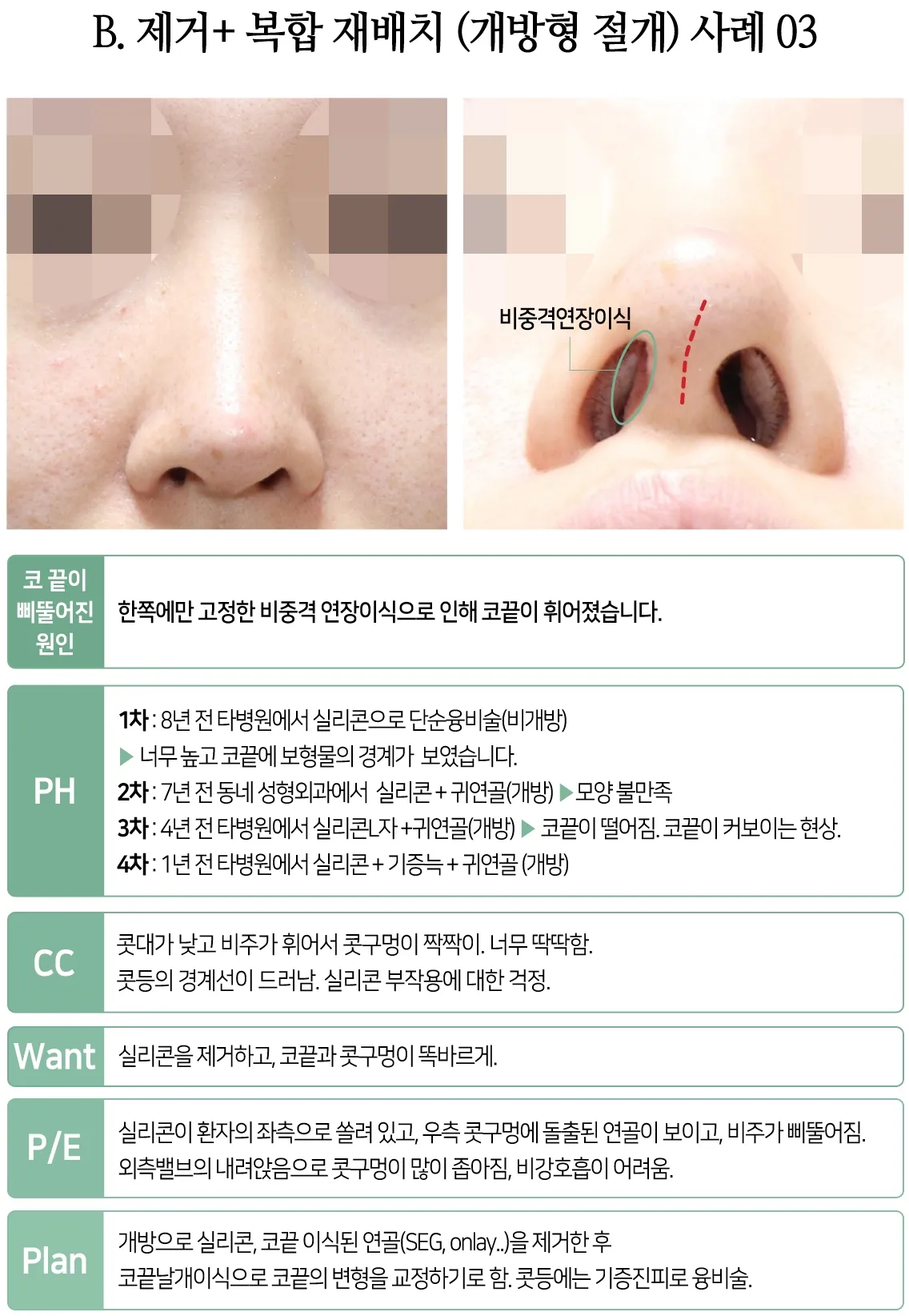
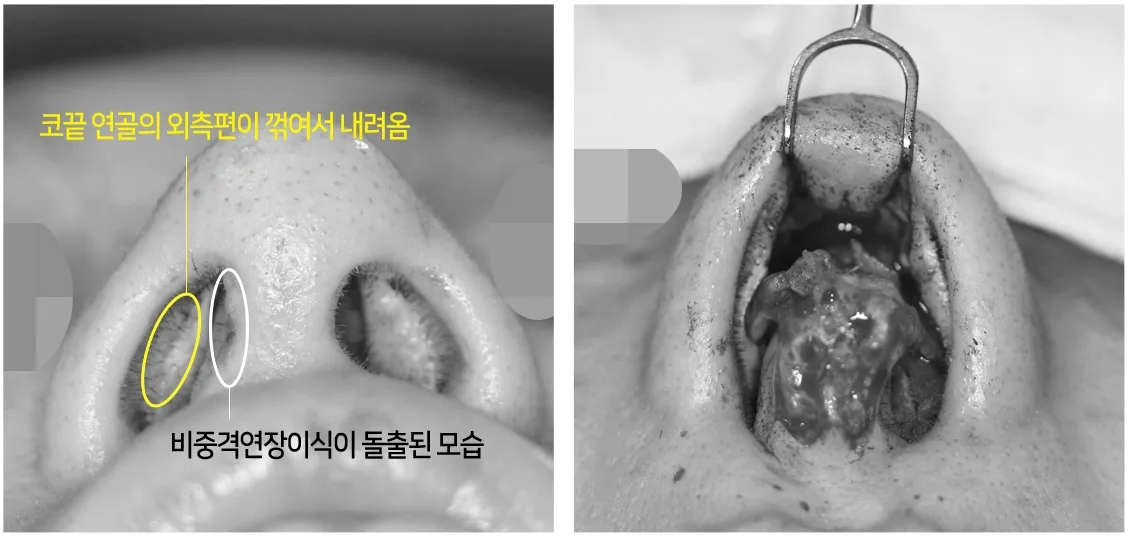
In the photo on the left, the patient's right nostril is almost completely blocked.
The septal extension graft cartilage was protruding, and the lateral crus of the tip cartilage was bent and drooping downward.
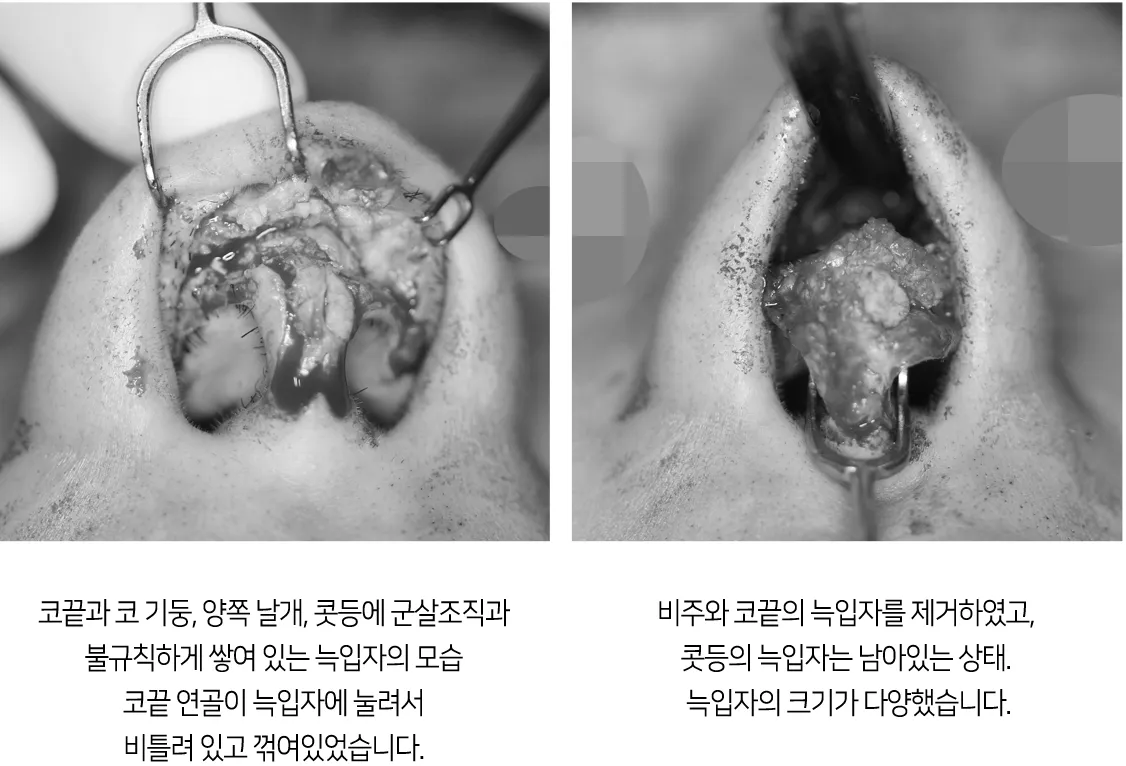
The photo on the right shows the state after removal of the silicone and the ear cartilage that had been placed over the tip;
the tip cartilages were uneven, crumpled, and severely deformed.
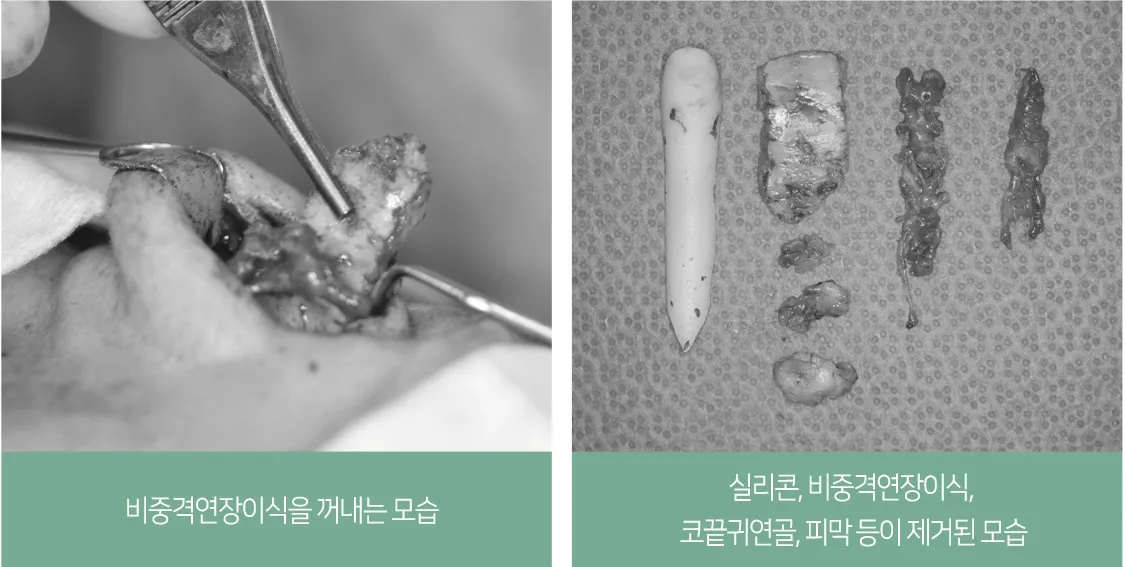
The photo on the left shows the septal extension graft being taken out. Donor costal cartilage had been used.
The photo on the right shows the removed silicone, septal extension graft, ear cartilage from the tip, capsule, and other tissue.

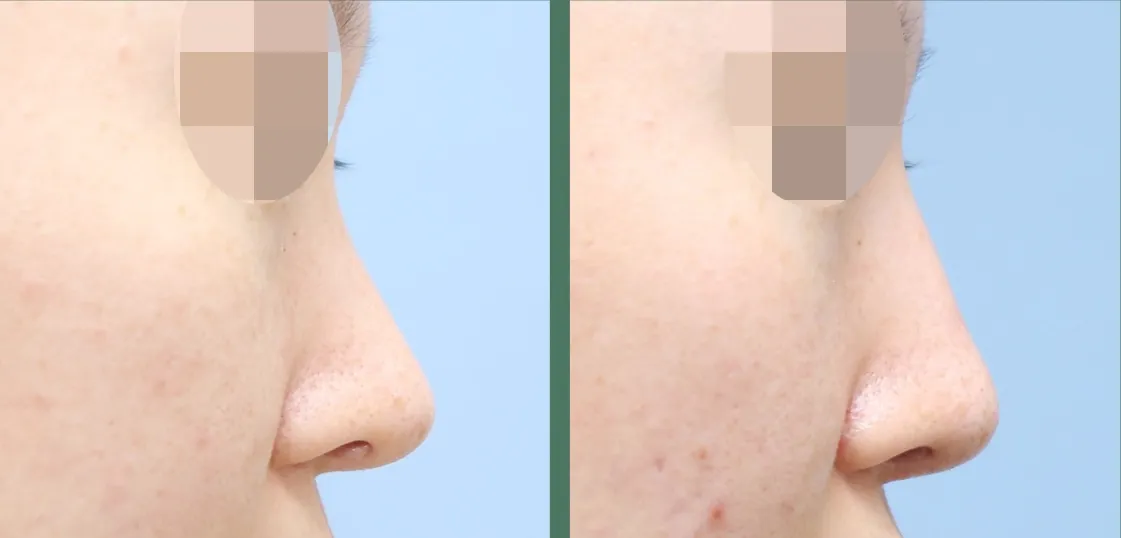
Before surgery, the tip and columella were tilted and the nostrils were asymmetric,
but after the removal surgery they have settled completely straight.

The columella and nostrils, which were crooked and asymmetric before the removal surgery,
are completely symmetric after surgery.

After removing the septal extension graft, the dorsal silicone, and all other material,
the dorsum was augmented with acellular dermal matrix, and the dorsal line has settled very naturally.
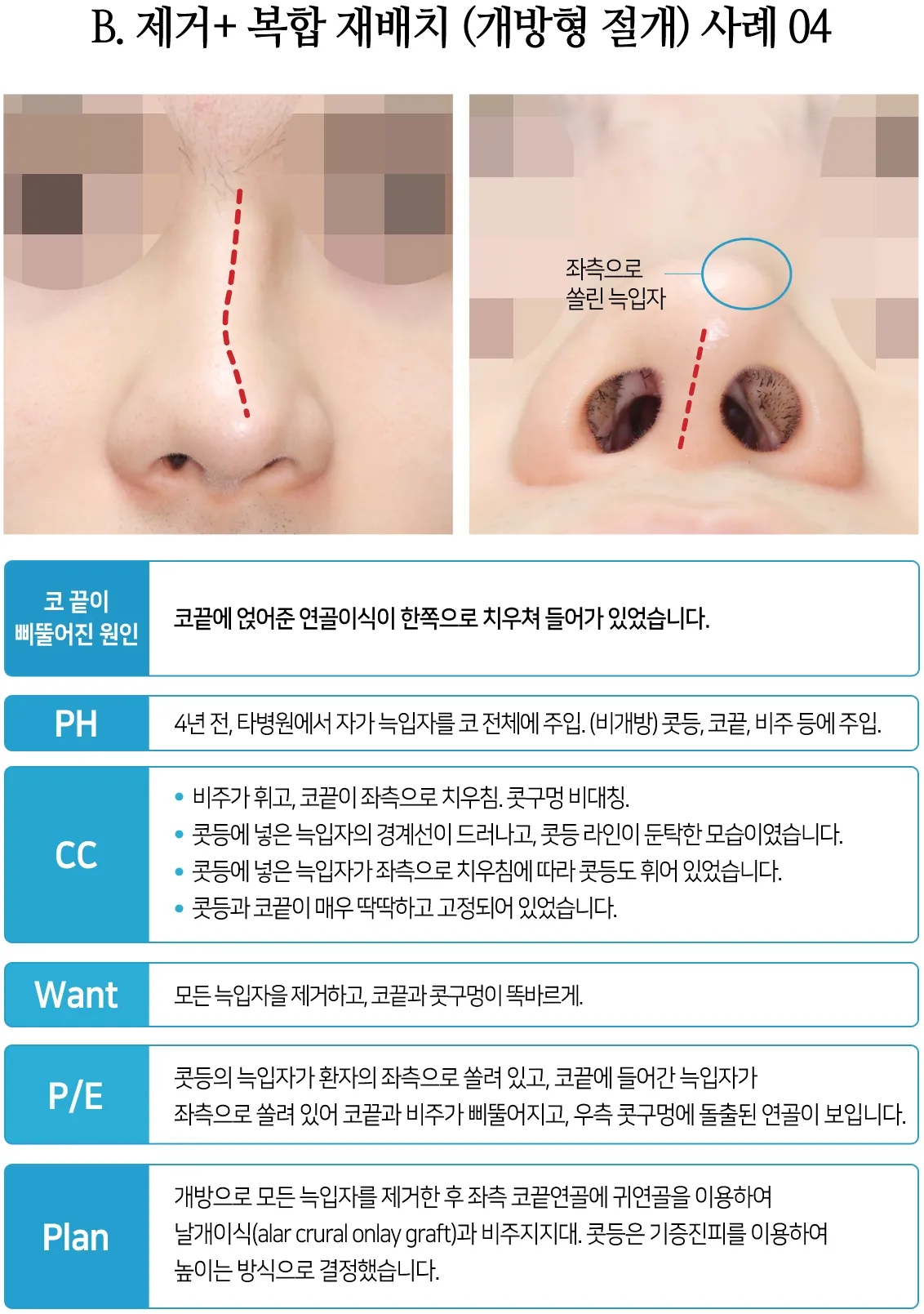

Using ear cartilage, the deformity of the tip cartilages was corrected with a columellar strut, a right alar cartilage strut, and other grafts.
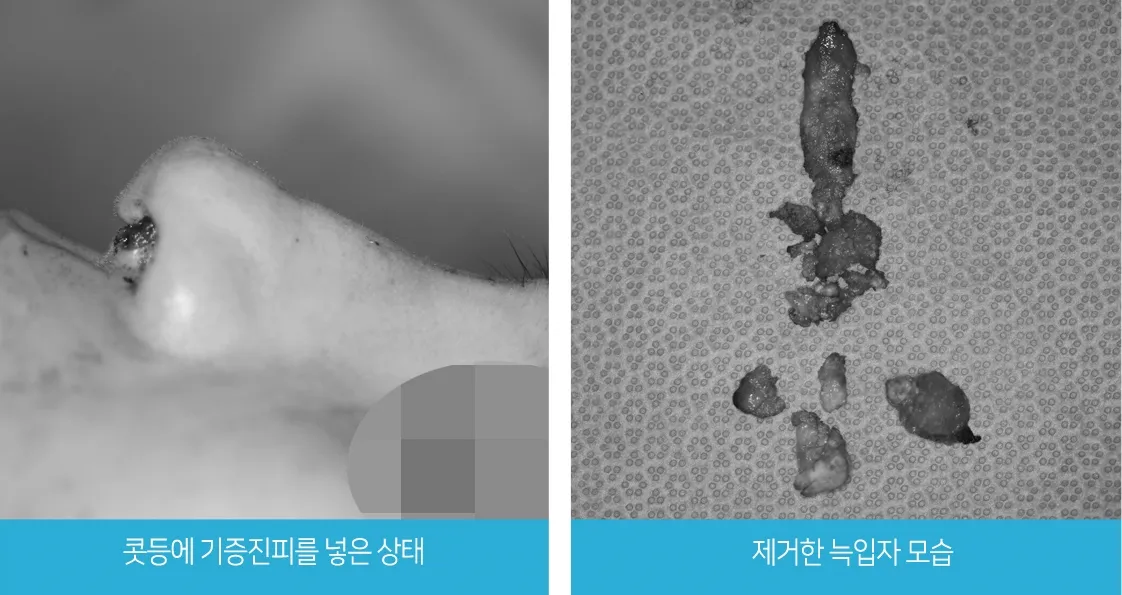
The material removed from the dorsum, both alae, and the columella is arranged according to its original position.
Diced costal cartilage tends to fuse into a solid mass after about 3 months, which makes it difficult to remove.
It should therefore be removed by a medical team with specialized skill and experience.
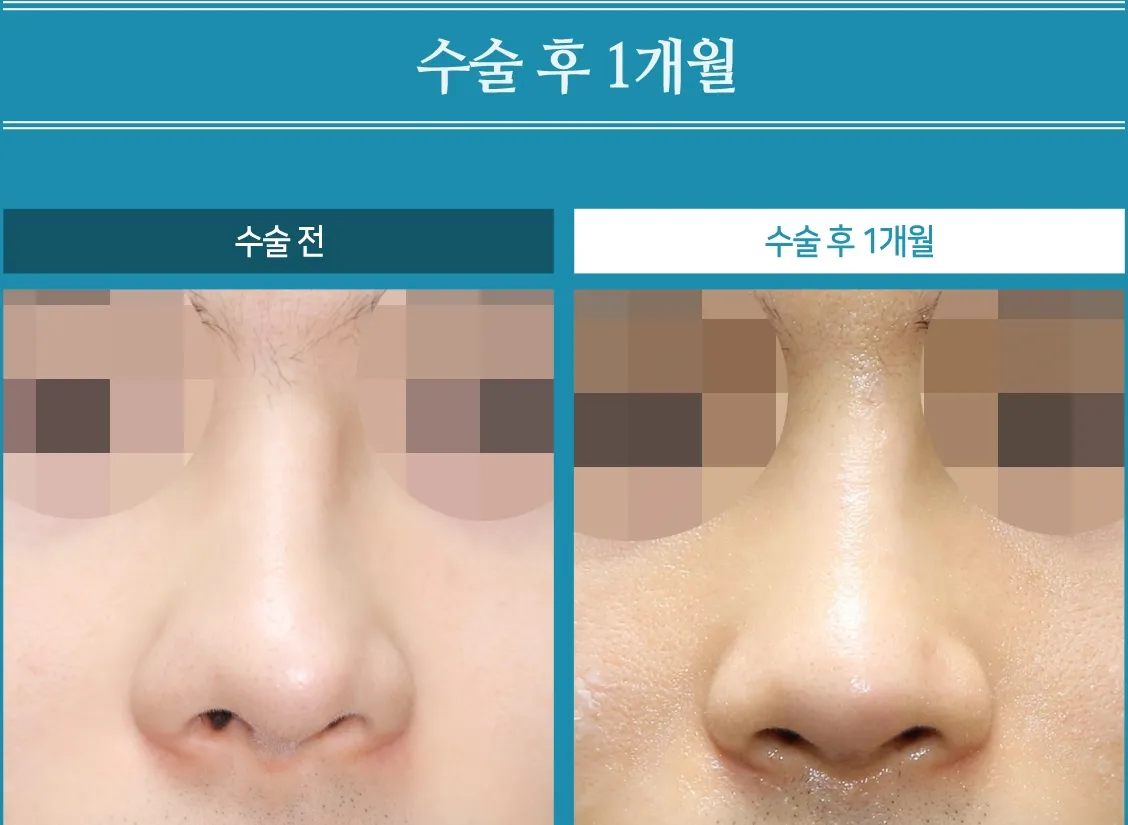
The crooked, deviated dorsum and columella have been straightened.
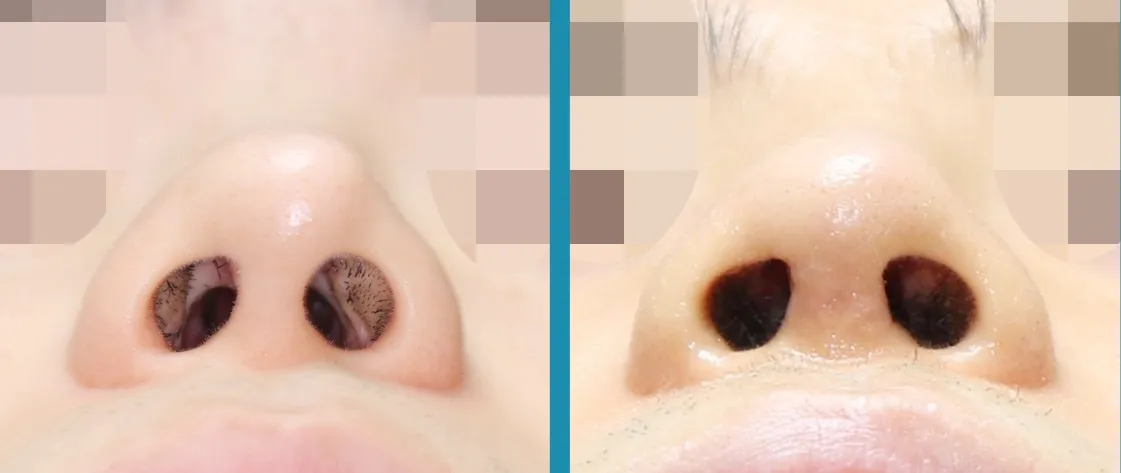
The deviated columella and asymmetric nostrils have been nicely straightened.
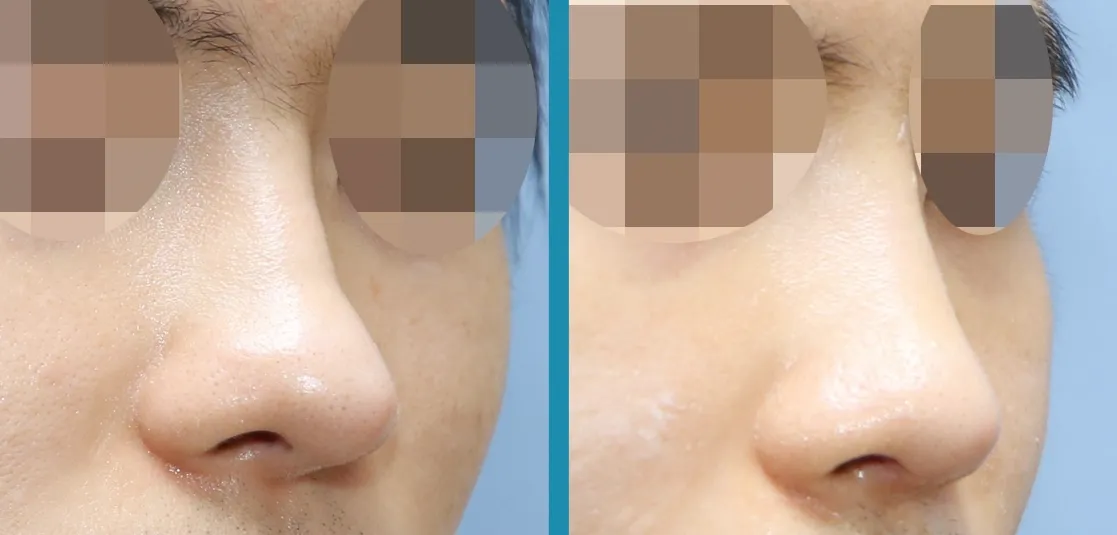
Too much diced costal cartilage had been placed in the tip, creating a Pinocchio nose,
but it can be seen that the nose now looks straight and natural.
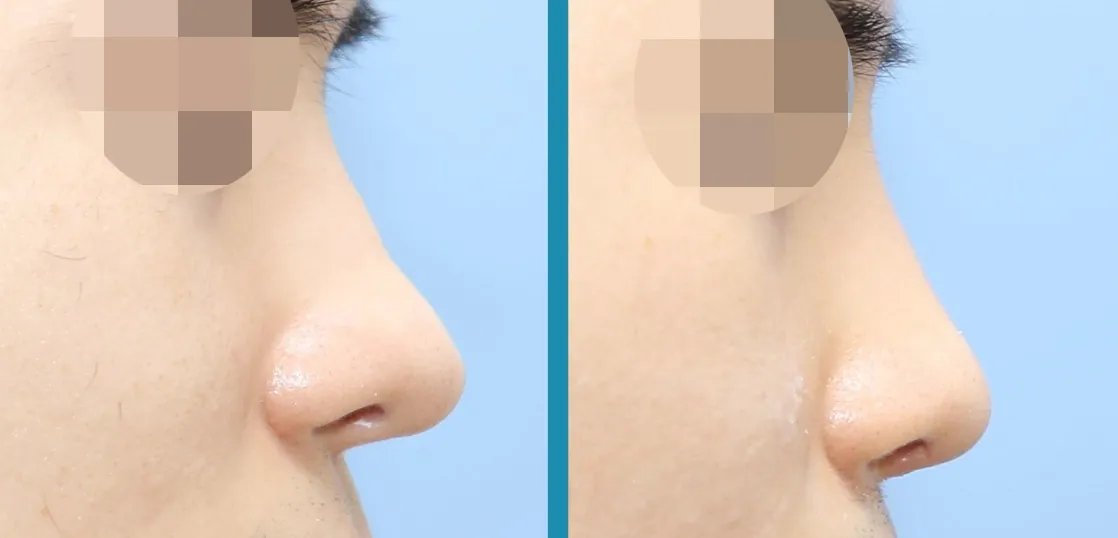
In profile as well, the once-pointed tip and angular dorsum now look smooth and natural.