

Crooked Tip and Columella & Nostril Asymmetry Case Study (Removal + Closed Simple Repositioning) 1

After rhinoplasty, it is surprisingly common for the tip and columella to become crooked and the nostrils asymmetric, accompanied by nasal obstruction.
Unhappy with how it looks and stressed every time they see it, patients go back to the clinic that performed the surgery,
only to be told, "The swelling has not fully gone down and things have not settled yet, so let's wait a little longer."
Quite a few of them wait 2-3 months, see no improvement, and then come to my clinic.
A crooked columella and tip and asymmetric nostrils after rhinoplasty are stressful enough,
and patients are anxious and worried, unsure whether it will improve on its own with time or needs to be corrected.
However, this never improves on its own simply by waiting.
Corrective surgery must be performed to regain the original appearance.

To correct this, the cause must first be identified with an endoscope and careful examination,
and then the twisted tip cartilages and septum must be returned to the exact midline.
Technically, there are two methods.
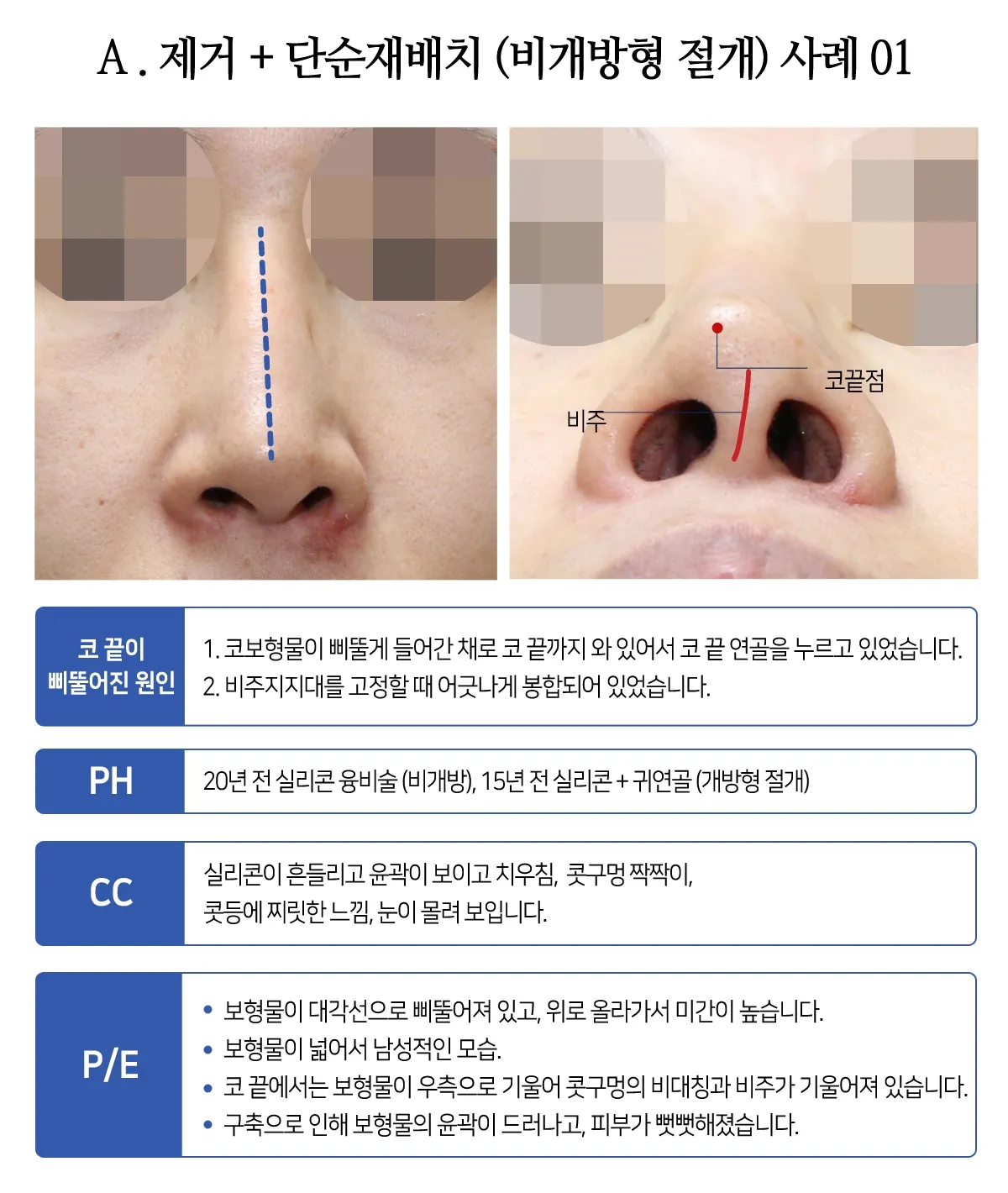
According to the history, the 1st surgery was a simple augmentation rhinoplasty through a closed approach,
which left the dorsum and tip crooked, so at the 2nd surgery an open approach was used for a columellar strut,
a tip onlay graft, dorsal augmentation, and other procedures.

Because the asymmetry was not very severe, the surgical method was "removal + closed simple repositioning."
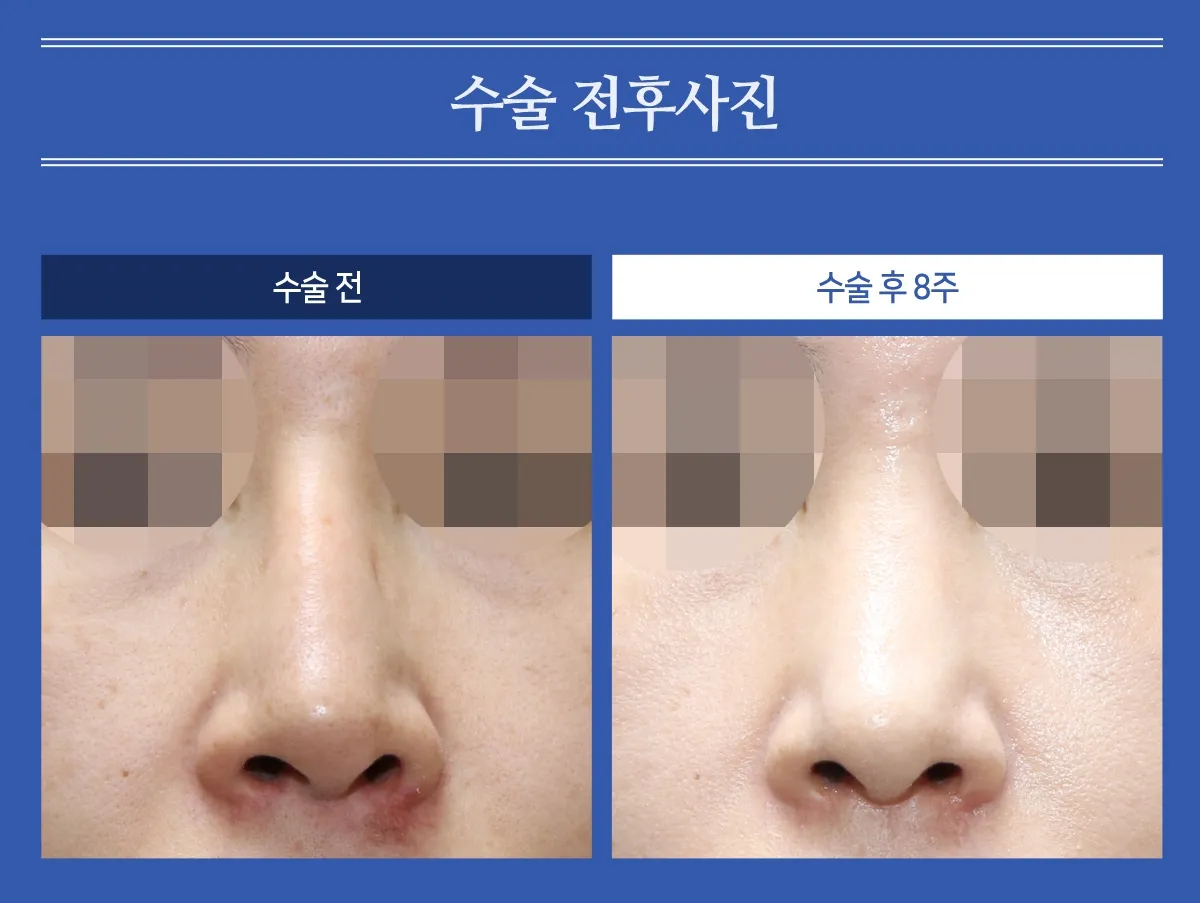
Frontal view after surgery : there is no dorsal irregularity, skin damage or irregularity, upturning of the tip, or collapse of the dorsum and tip at all.
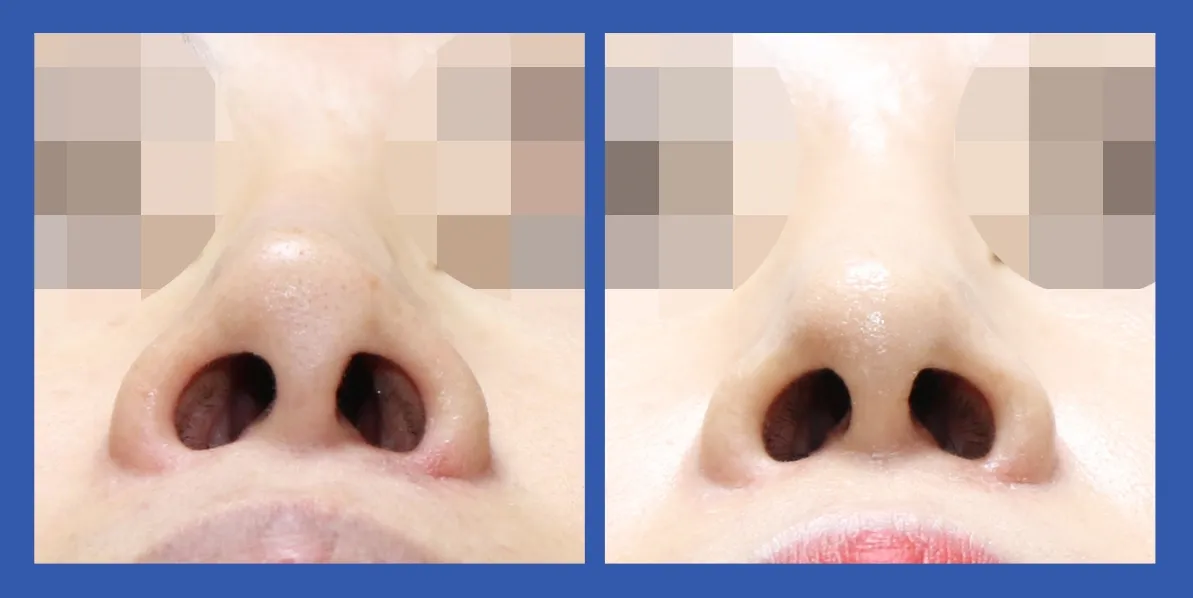
The nostril asymmetry and the tilted columella
were also completely corrected with removal + closed simple repositioning alone.
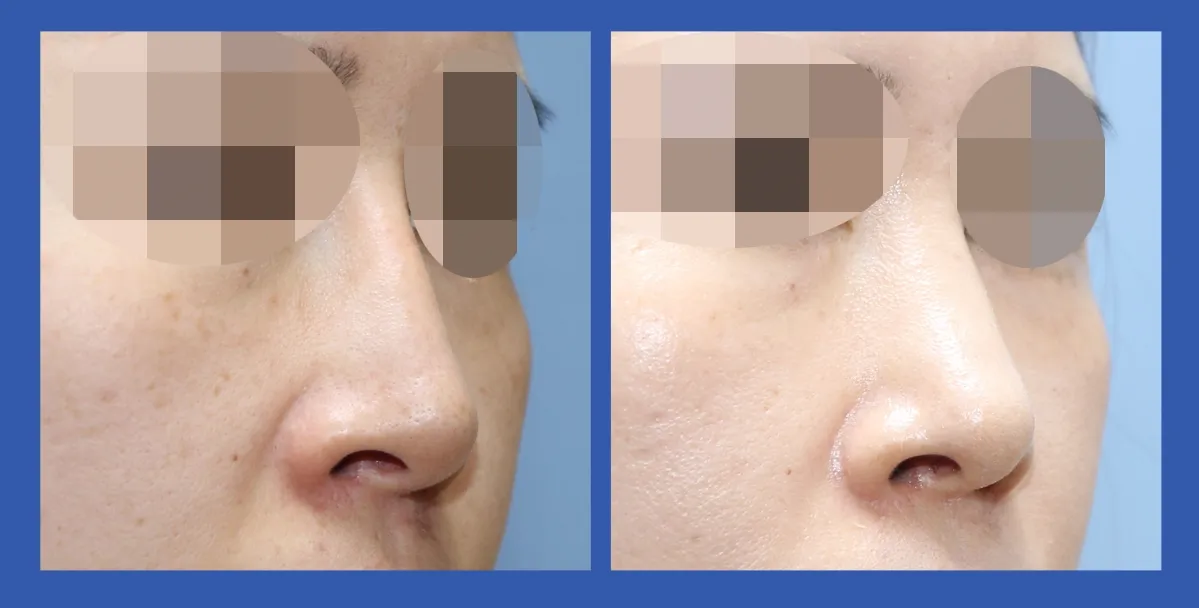
The height of the bridge, which the patient had worried about, did not drop as much as expected
and settled naturally, and the patient was also pleased, saying the nose looked prettier after removal.
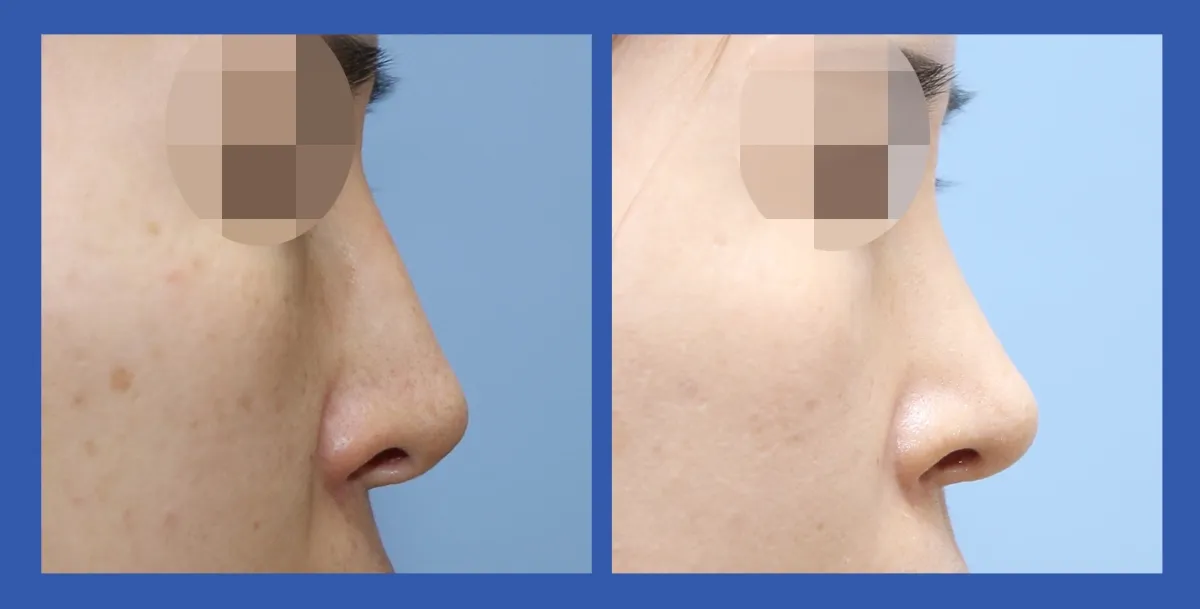
Before removal, the dorsum looked as if it had a bulging hump,
but the dorsal line is now natural and attractive.
Before surgery, the silicone was pressing on the tip cartilages and the columella was bent,
but after surgery it straightened and the tip became more projected.
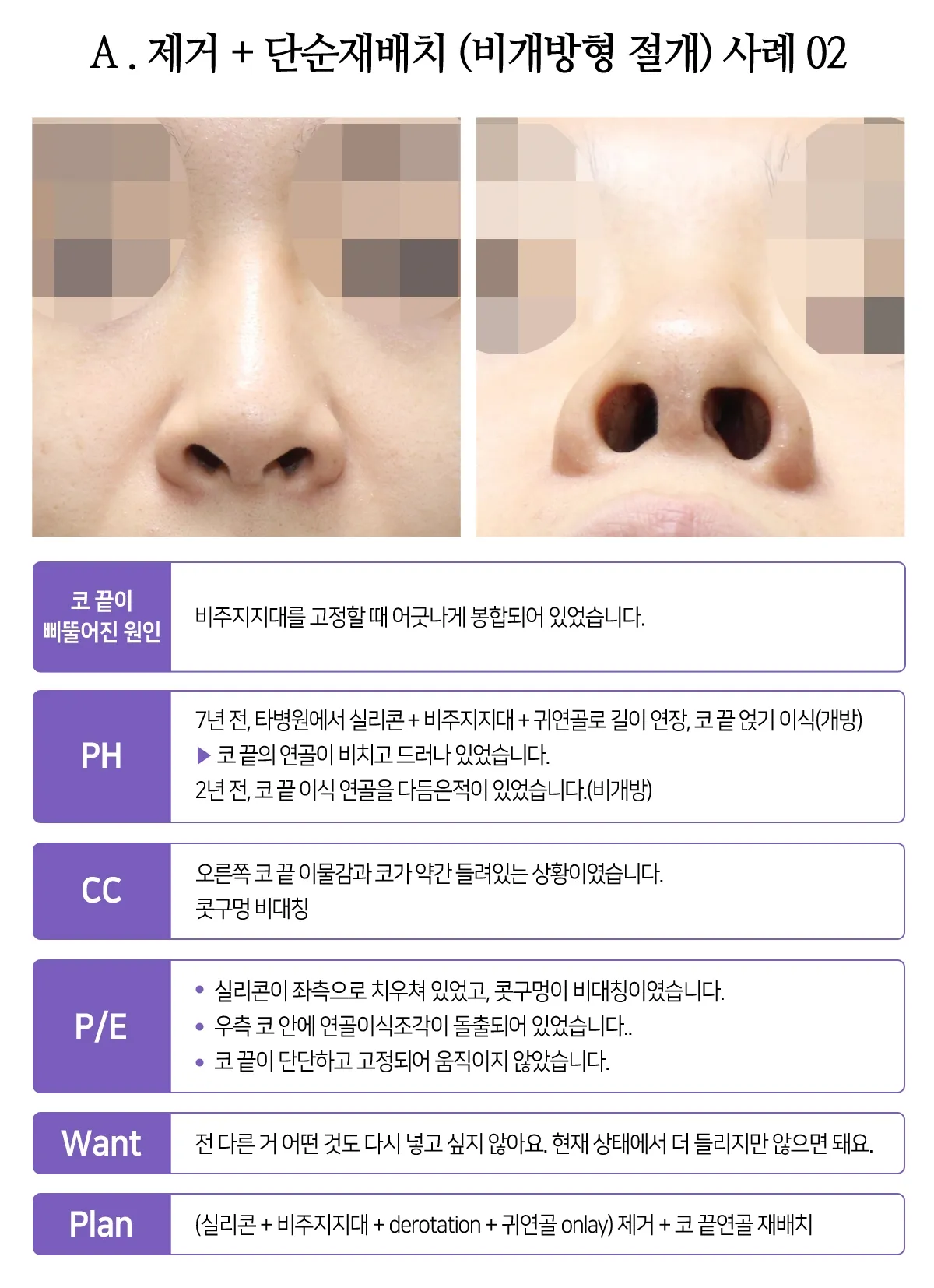
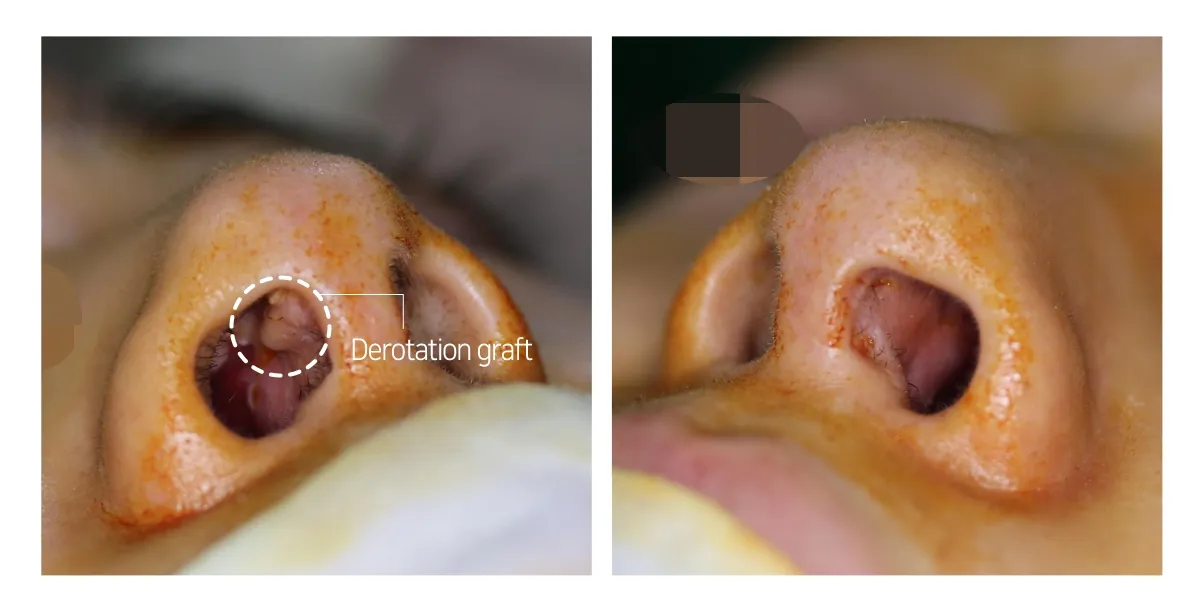
According to the history, 7 years ago at another clinic the patient had silicone + a columellar strut + lengthening and a tip onlay graft with ear cartilage (open approach).
2 years ago, the patient said, the tip cartilage had become prominent and was trimmed (closed approach).
The tilted columella and asymmetric nostrils were diagnosed as resulting from misaligned suturing of the columellar strut
and from the graft being fixed tilted to one side when the nose was lengthened with a derotation graft.
The cartilage protruding inside the right side of the nose was judged to be a piece of the derotation graft
placed to lengthen the tip, and nothing was visible inside the left side.
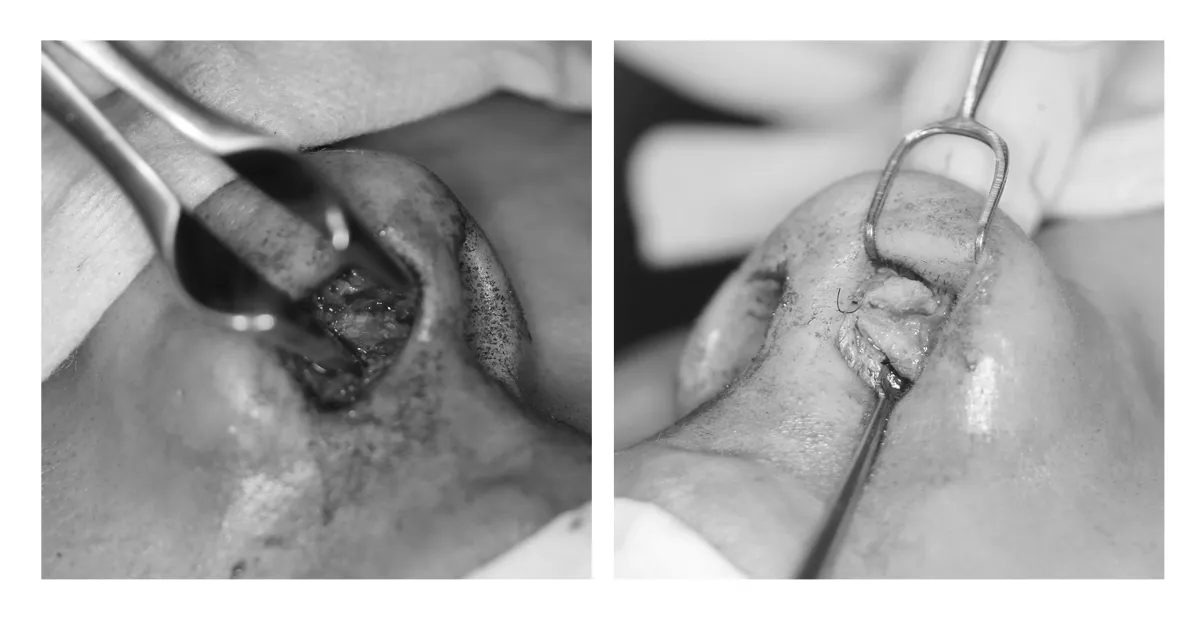
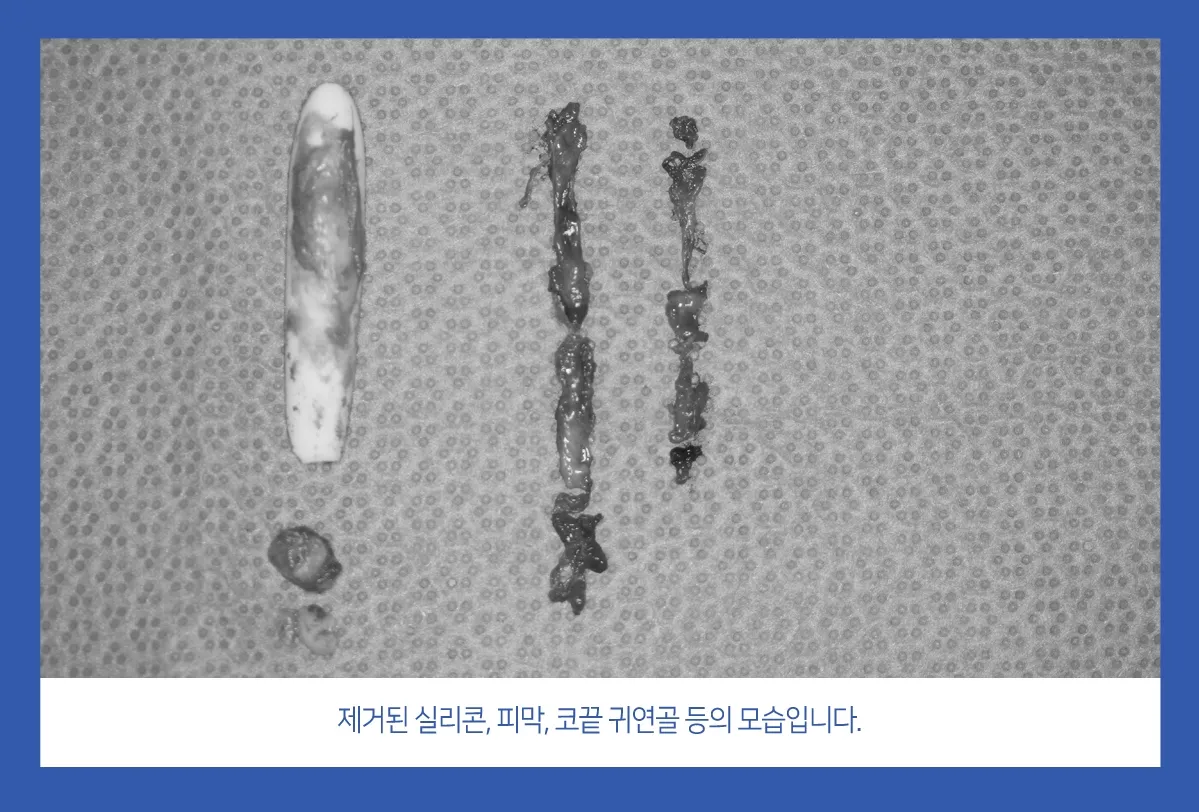
During surgery, it was confirmed that a columellar strut had been made with septal cartilage, and that a derotation graft
and a tip onlay graft had been made with ear cartilage.
All of the implant and grafted cartilage were removed through an incision inside the nose alone (closed approach).

Appearance after removal and simple repositioning.
The columella is straight and the nostrils are symmetric.
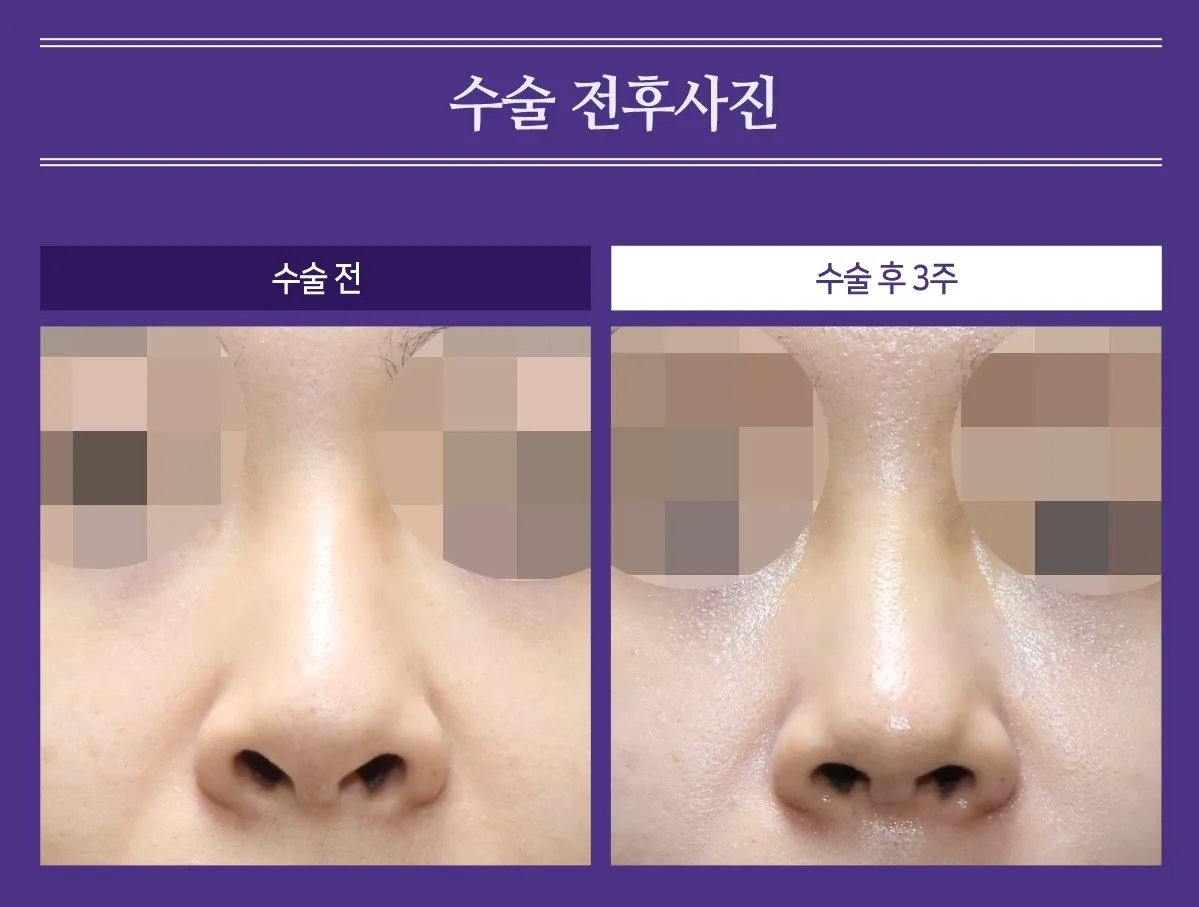
After surgery, the bridge was brought back to the midline, and the symmetry of the tip was restored.
The tip is well projected and has settled naturally.
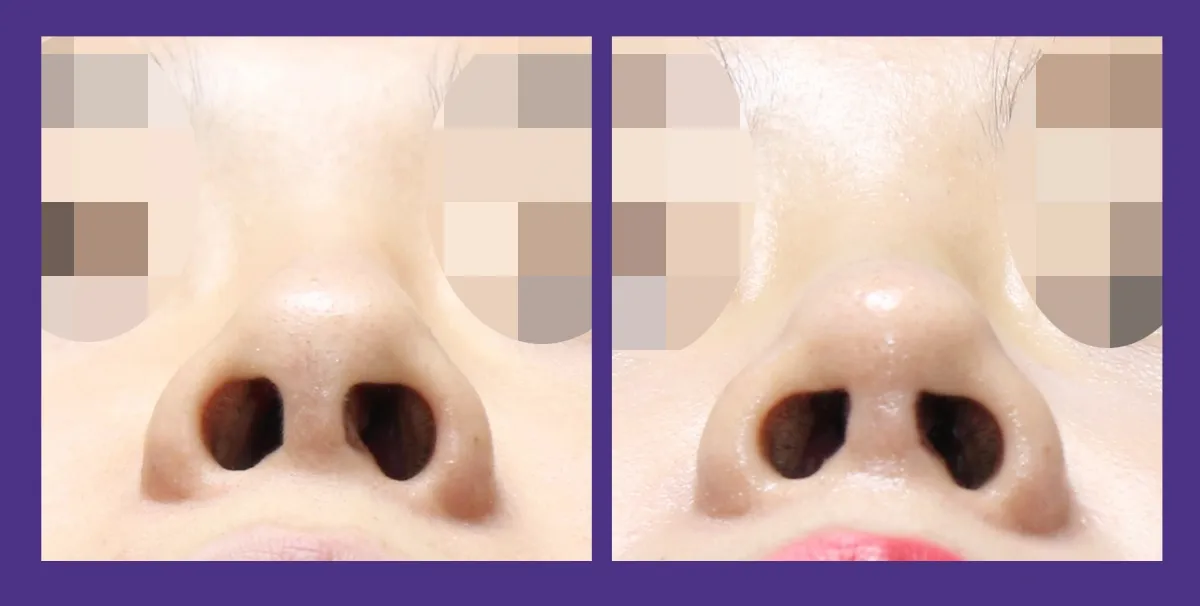
With removal + closed simple repositioning alone, nostril symmetry improved,
and the crooked tip returned to the midline.
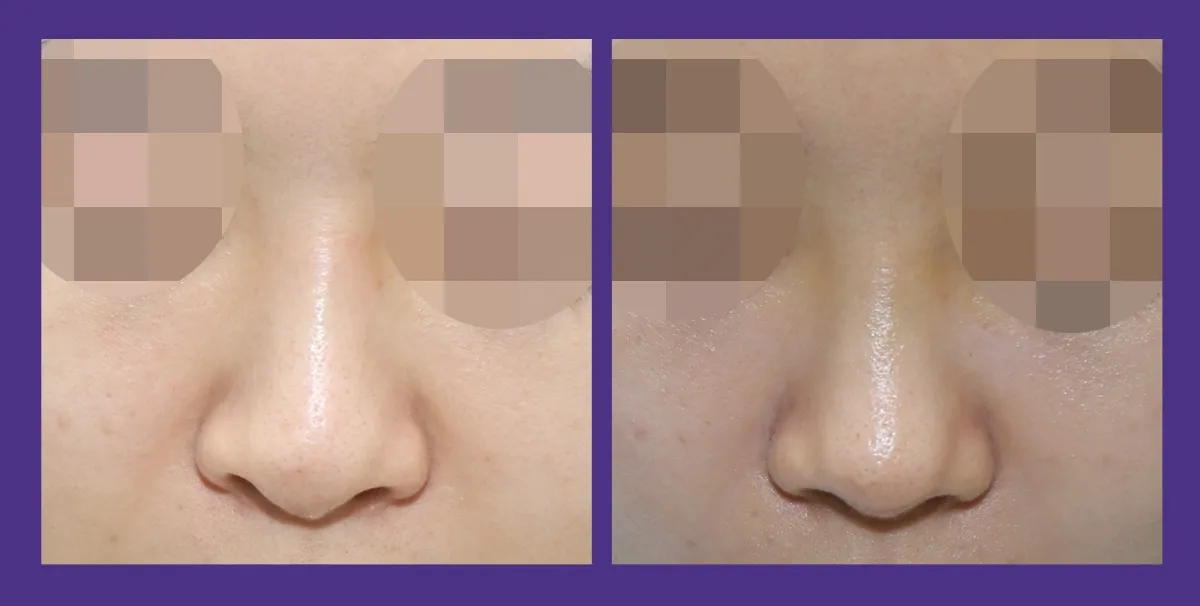
With removal + closed simple repositioning alone, the axis of the nose returned to the midline,
and the tip took on a more refined shape.
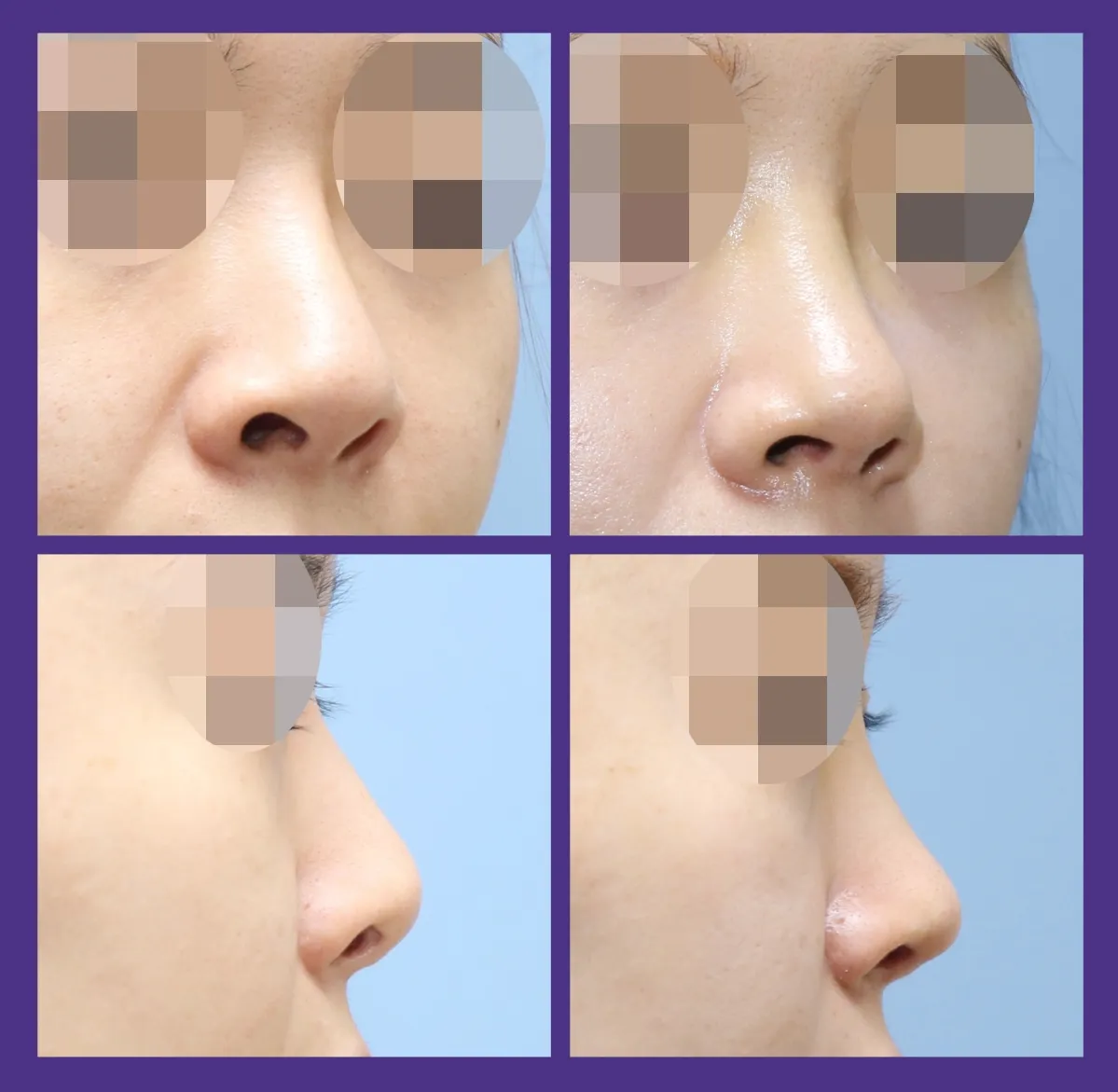
After the removal surgery, the tip is more projected and longer.
The dorsal line is natural, and the bridge did not become as low as the patient had feared.