

Revision Rhinoplasty Cases by Type 4 (Silicone Extruding Through the Skin or Mucosa)
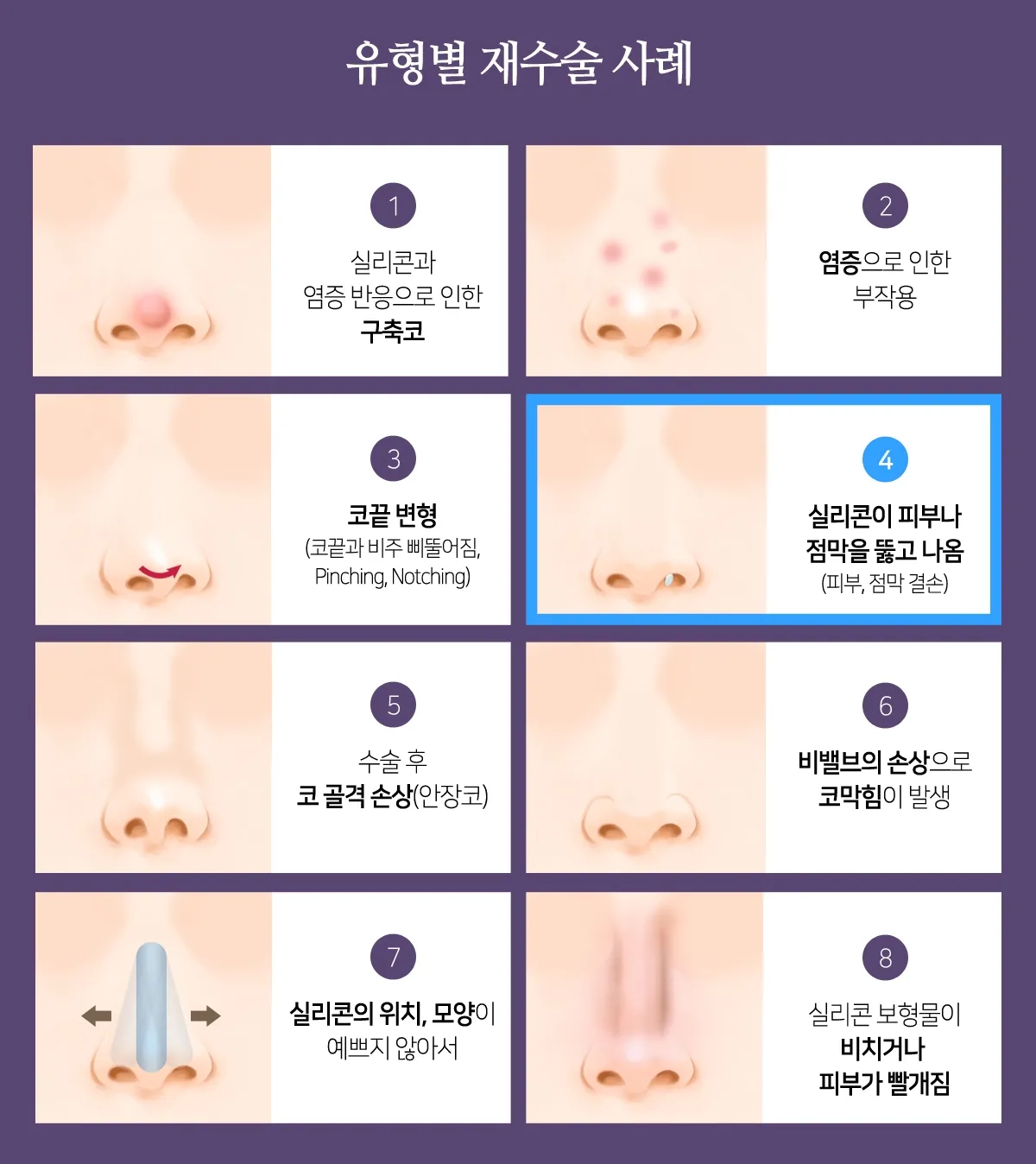
Revision rhinoplasty refers to corrective surgery performed when, after one or more nasal surgeries,
aesthetic or functional side effects have developed.
The deformities that result from problems after rhinoplasty are so varied
that it is difficult to show every case one by one.
The reason is that the nose is a three-dimensional structure and a complex organ in which various tissues are organically connected.
We will therefore focus on representative cases and explain how, after revision surgery, side effects can be kept from recurring
and a good result can be achieved.
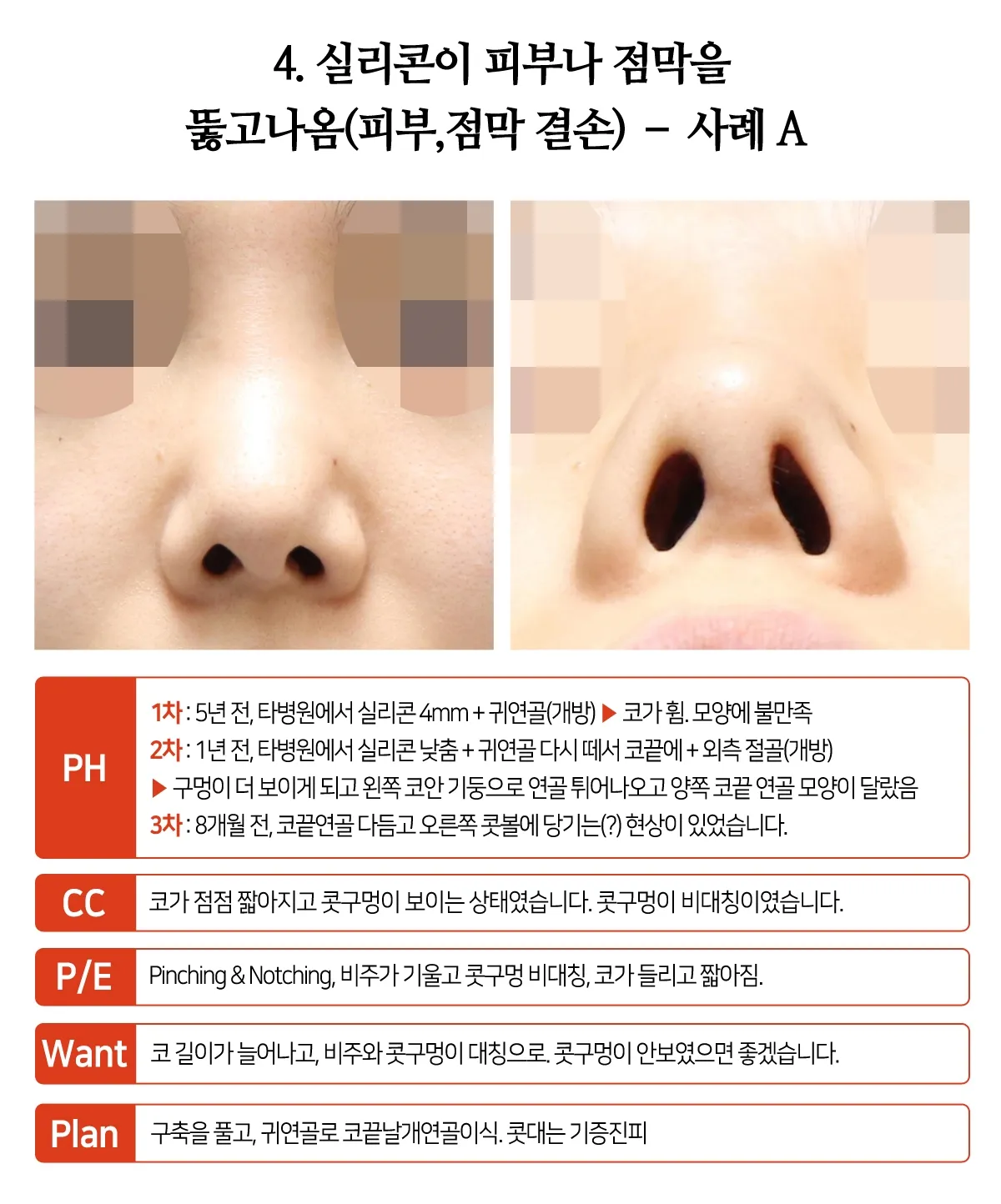
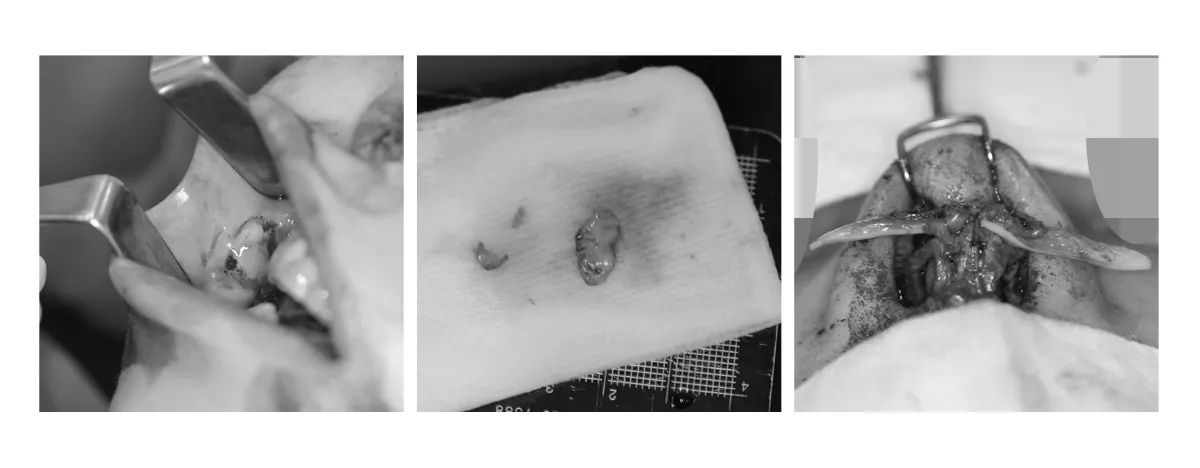
To close the perforated mucosa, mucosa was harvested from inside the mouth and used to fill the defect.
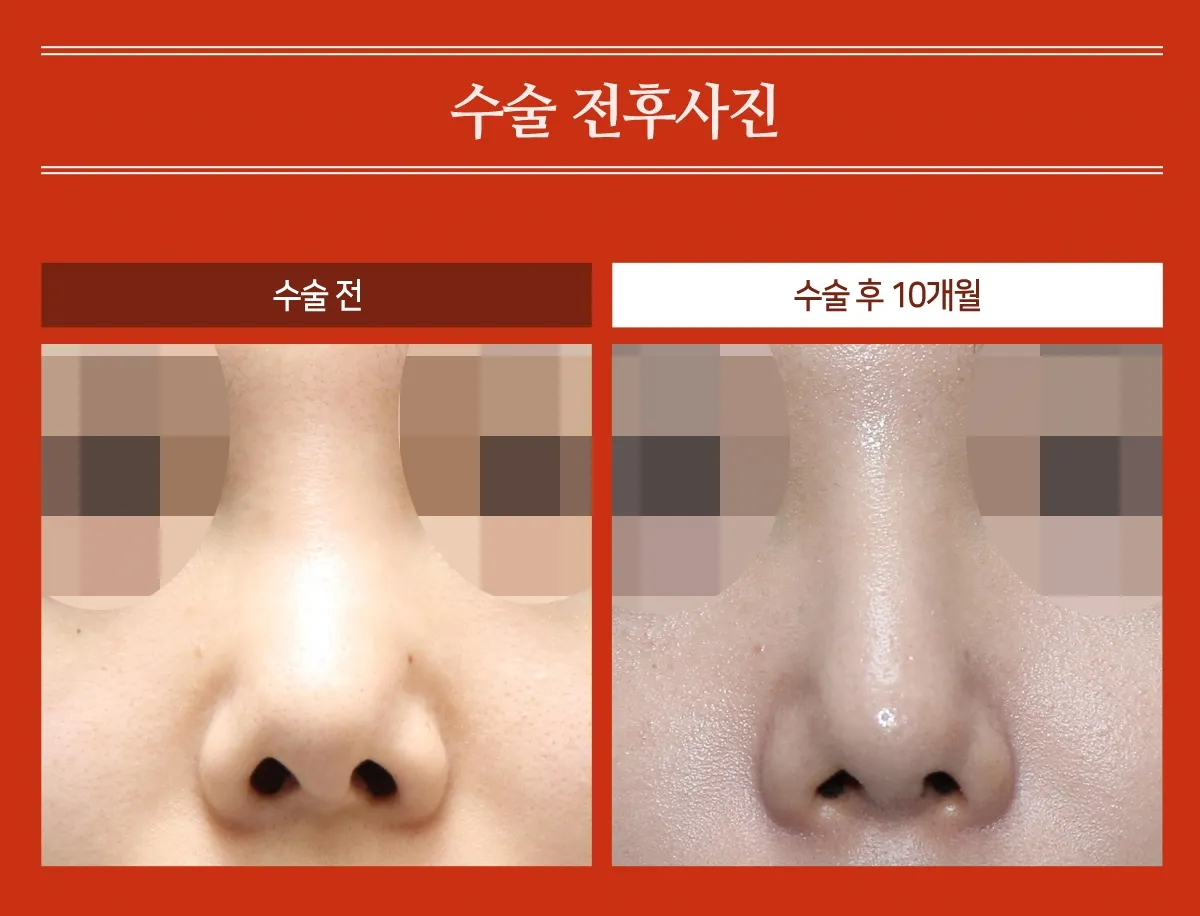
All asymmetry of the tip has been corrected, and the nose is longer, so the nostrils no longer show.
The nasal bridge, once blunt, is now slim and straight.

After surgery, the columella is straight and nostril symmetry has improved greatly.
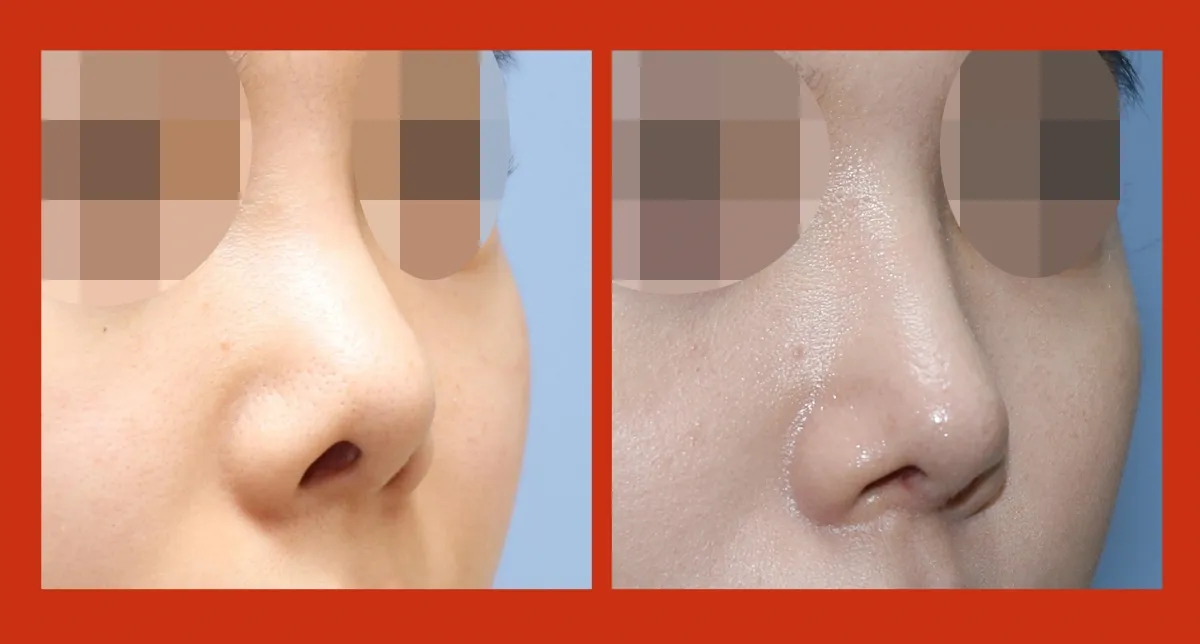
The nose is longer, the acellular dermal matrix placed in the dorsum has settled naturally,
and no inflammatory response has occurred even once since the mucosal graft.
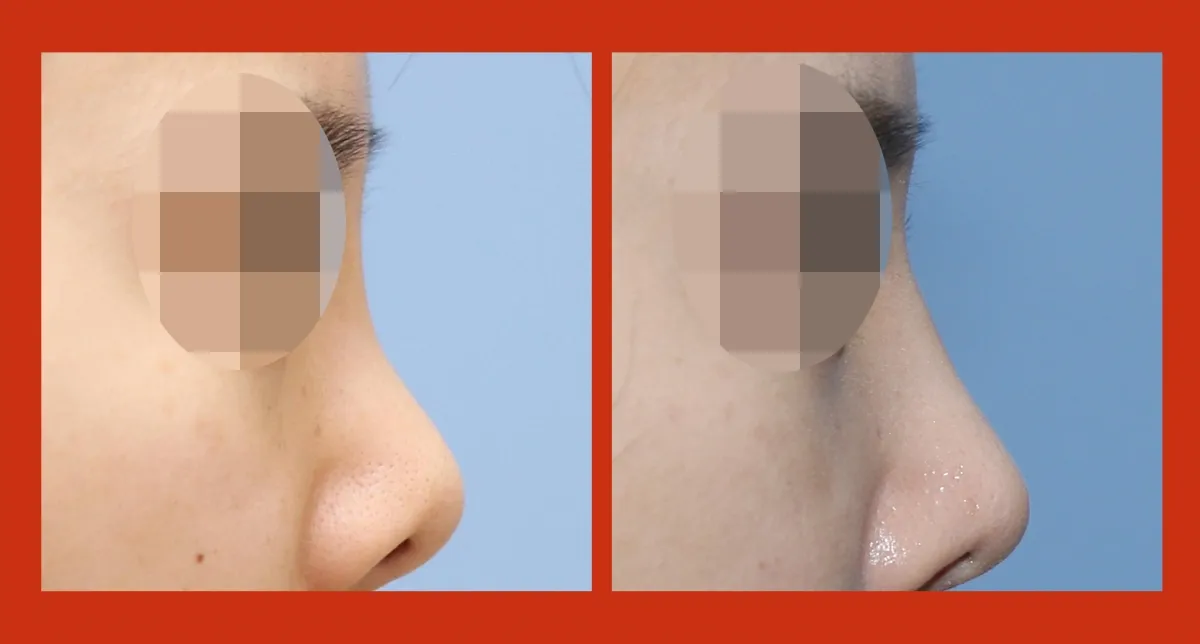
The nose is sufficiently longer, and the dorsal line has settled naturally.
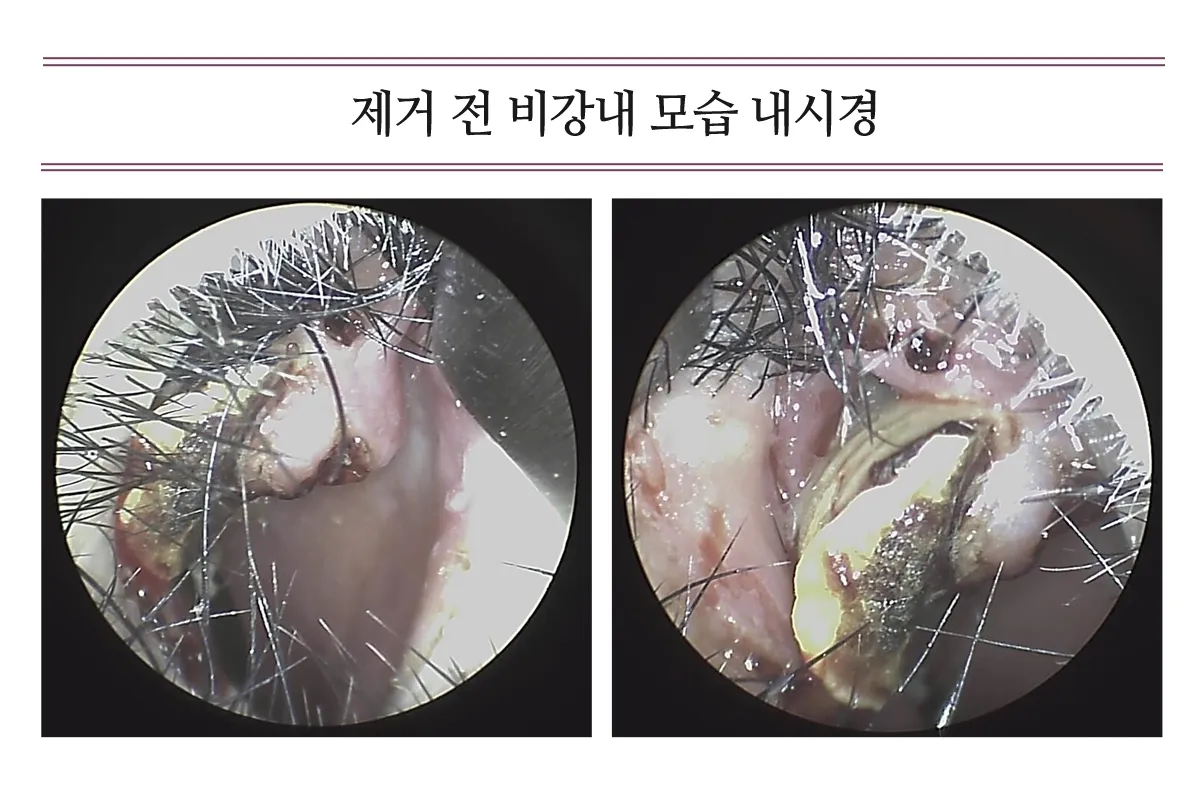
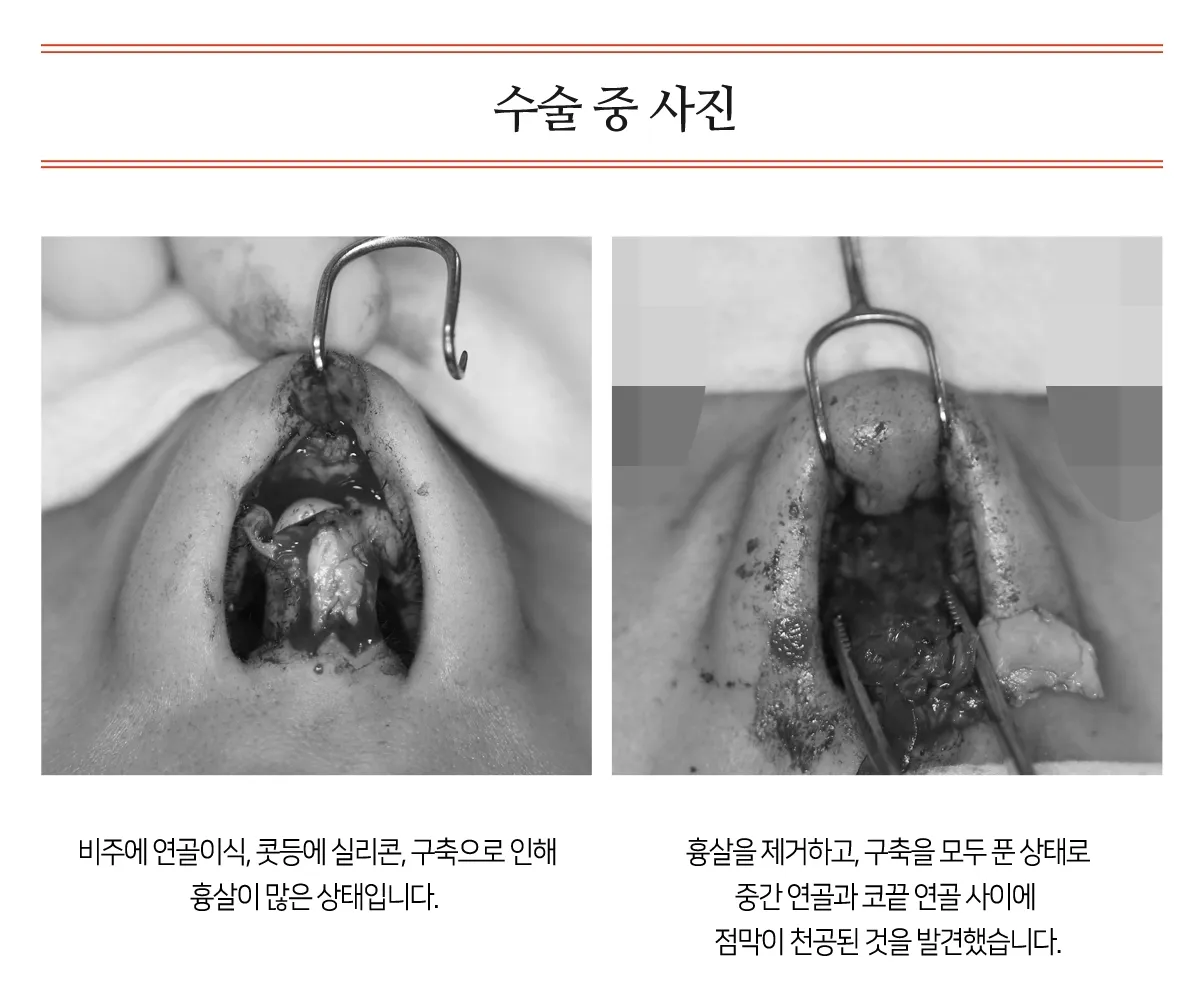
Viewed from the right nasal cavity, the implant has broken through the mucosa on the roof side.
It measured about 8x13 mm, and there was a great deal of inflamed tissue around it.
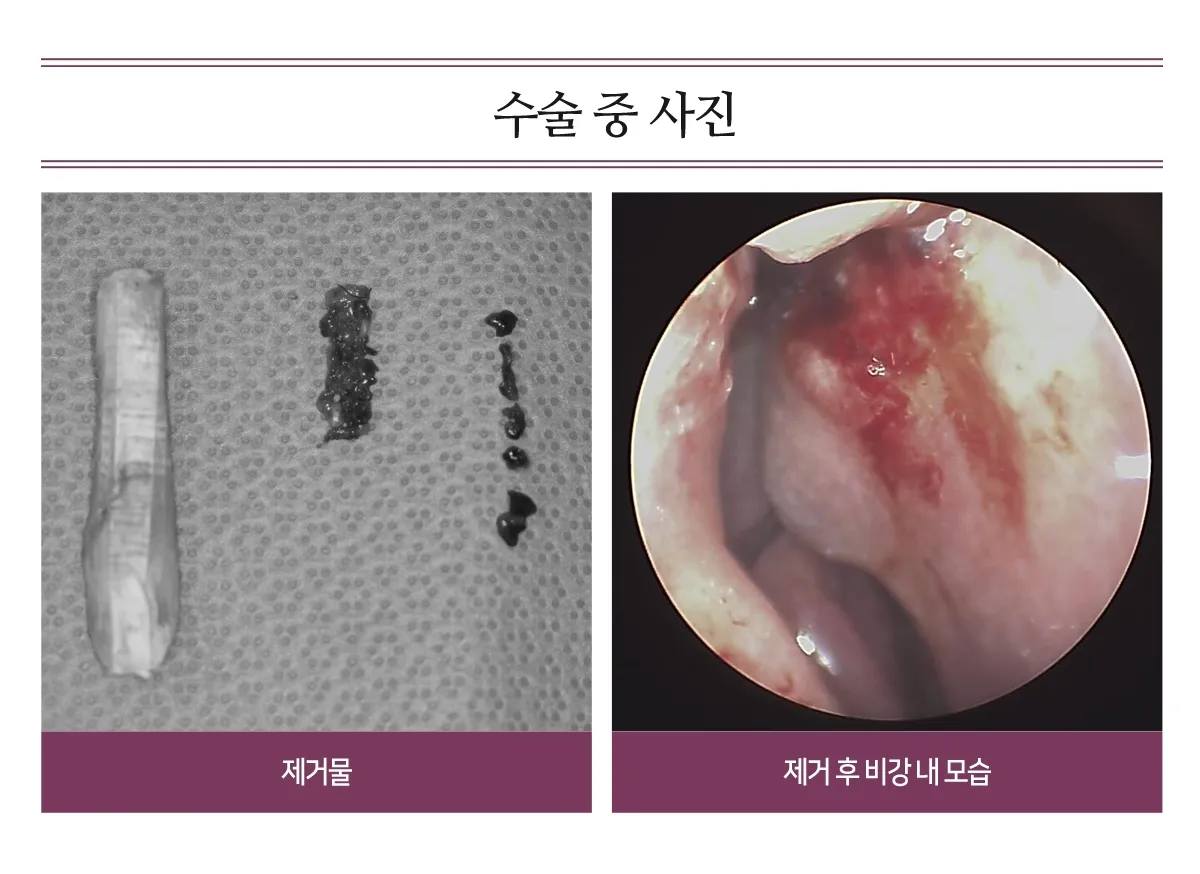
The patient believed it was silicone, but what came out was actually Gore-Tex.
This view inside the right nasal cavity, immediately after the implant came out, shows a mucosal defect about 4-5 mm in diameter.
The implant and inflamed tissue were removed through a closed approach, and the mucosal defect was not sutured.
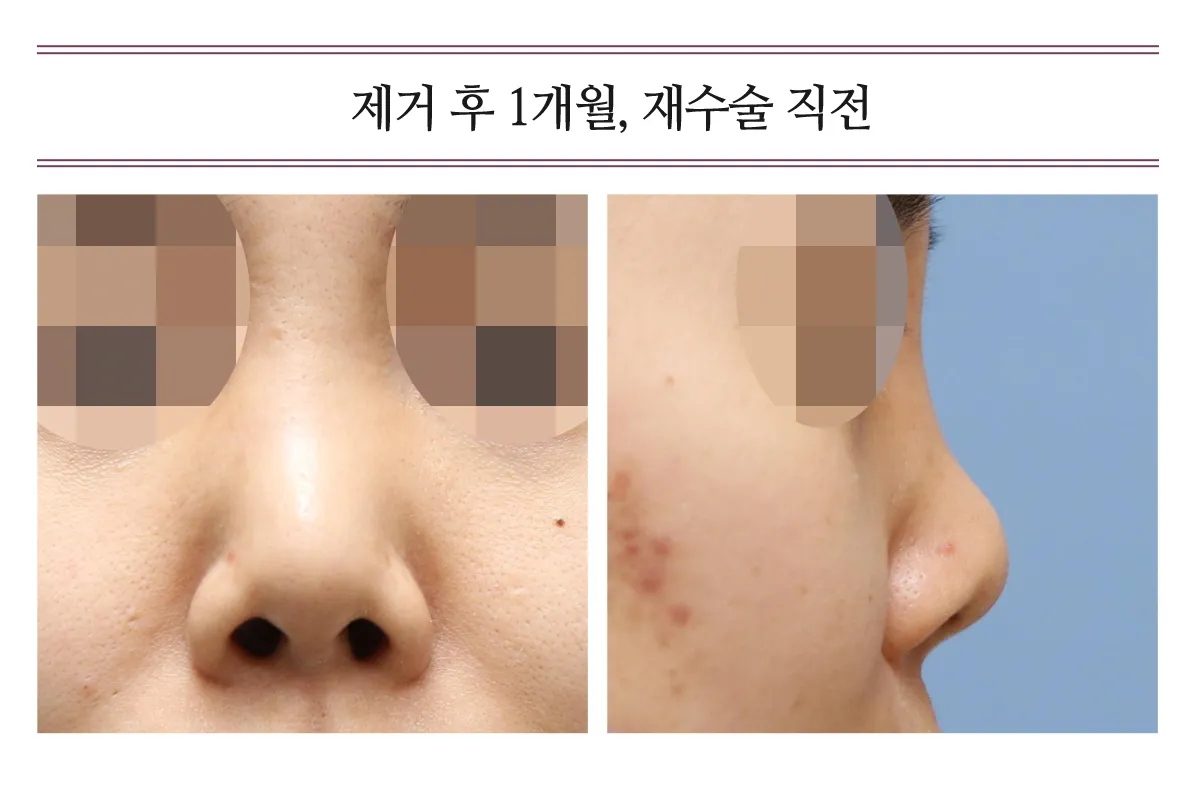
After the implant, inflamed tissue, scar tissue, and other material were removed, the dorsum curved in a concave line,
and the nose became slightly longer than before the removal.

Revision surgery was performed 1 month after removal of the implant and inflamed tissue.
The goals of the revision were to lengthen the nose and to refine the tip into a slim, natural shape;
because the patient did not want anything placed in the dorsum, it was decided not to perform augmentation.
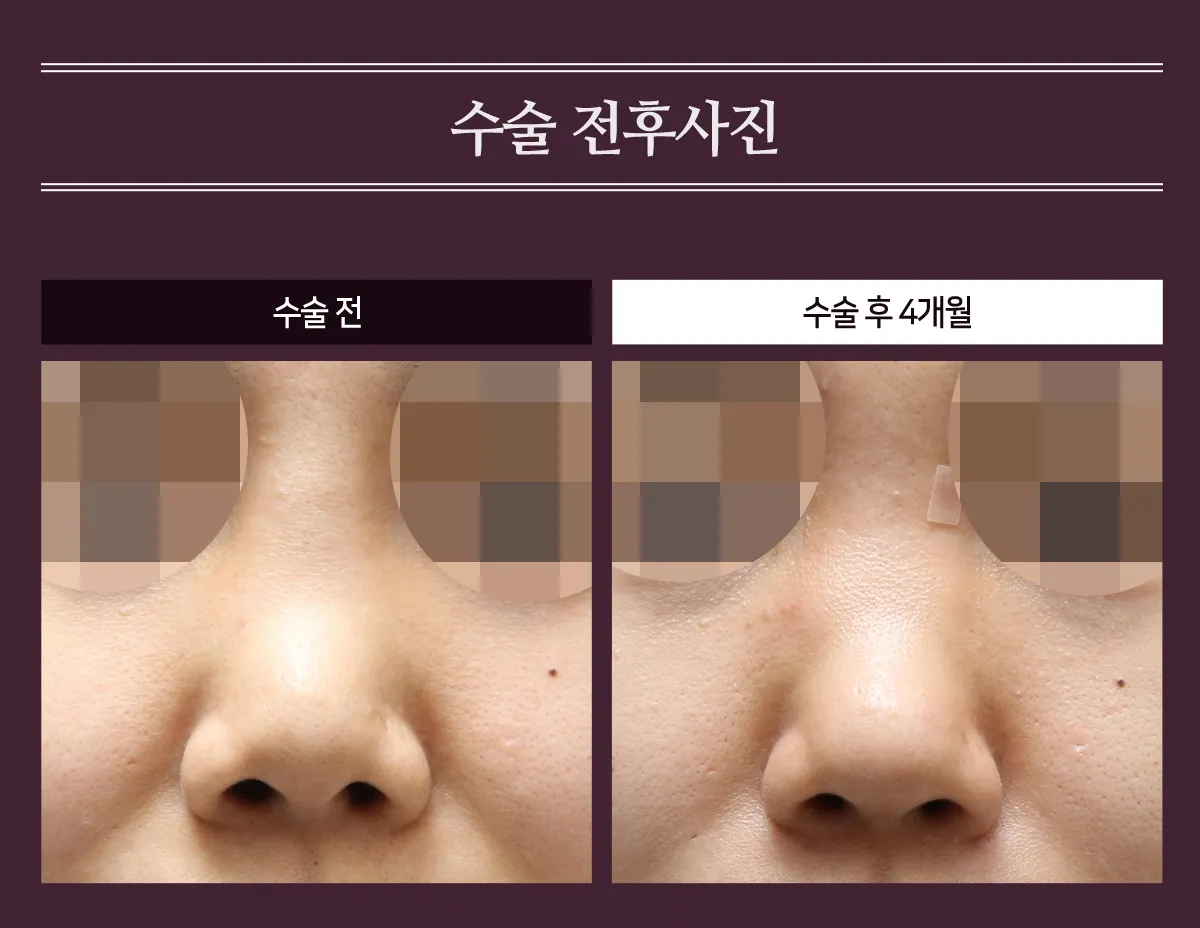
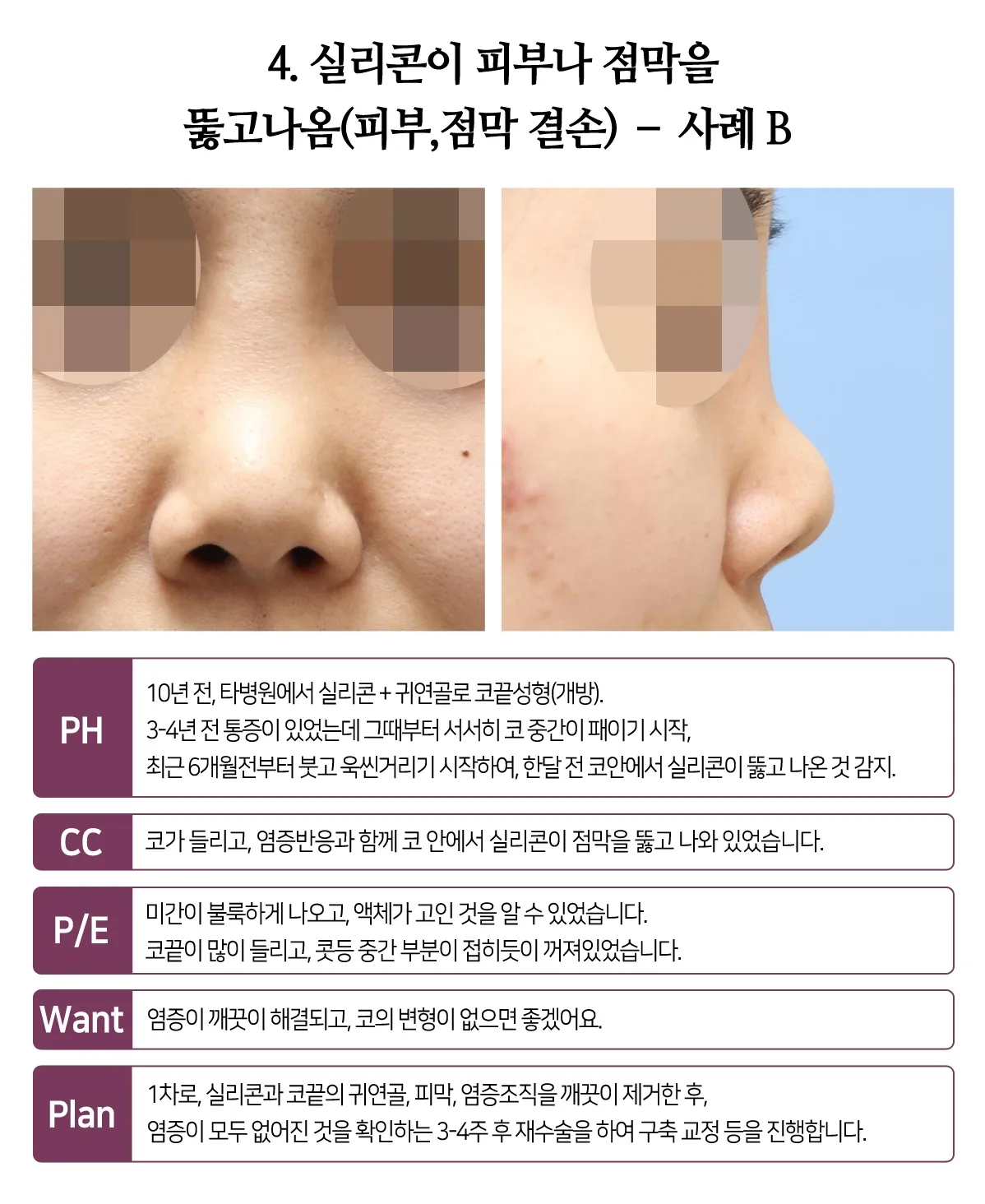
The nose, upturned before surgery, has come down considerably, and the nostrils no longer show from the front.
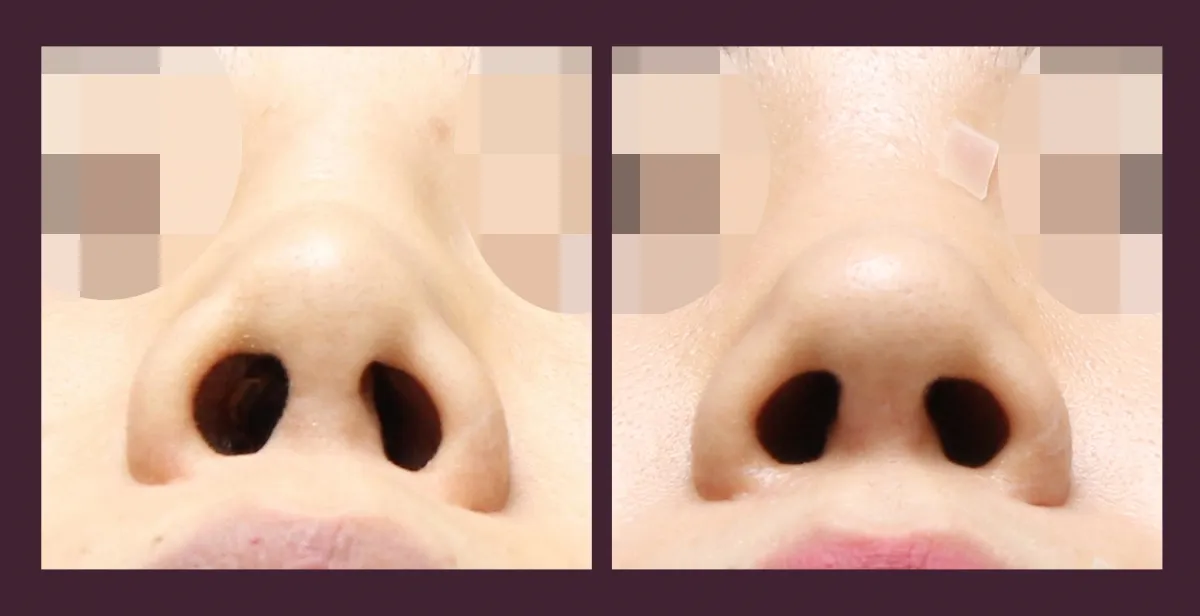
Contracture had tilted the columella, made the nostrils asymmetric, and twisted the tip,
but these have returned to normal after surgery.
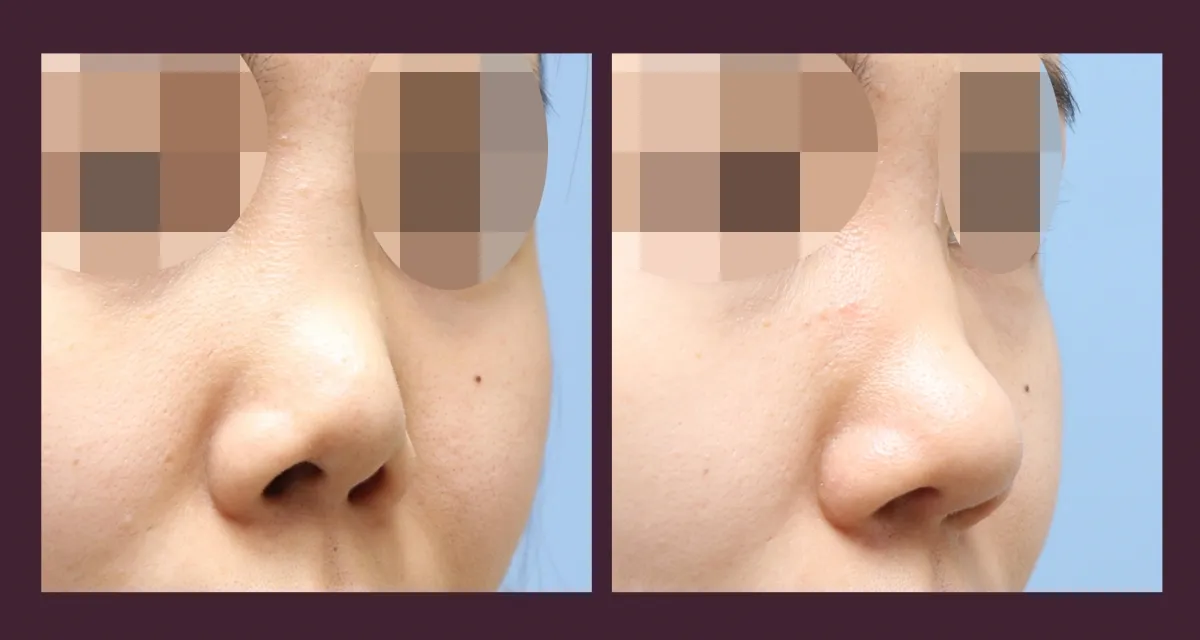
The tip, bunched and upturned by contracture before surgery, has relaxed and come down, and the dorsal line extends naturally.
The tip is still thick because the scar tissue has not yet softened, but this is the recovery stage in which it is gradually loosened with massage.
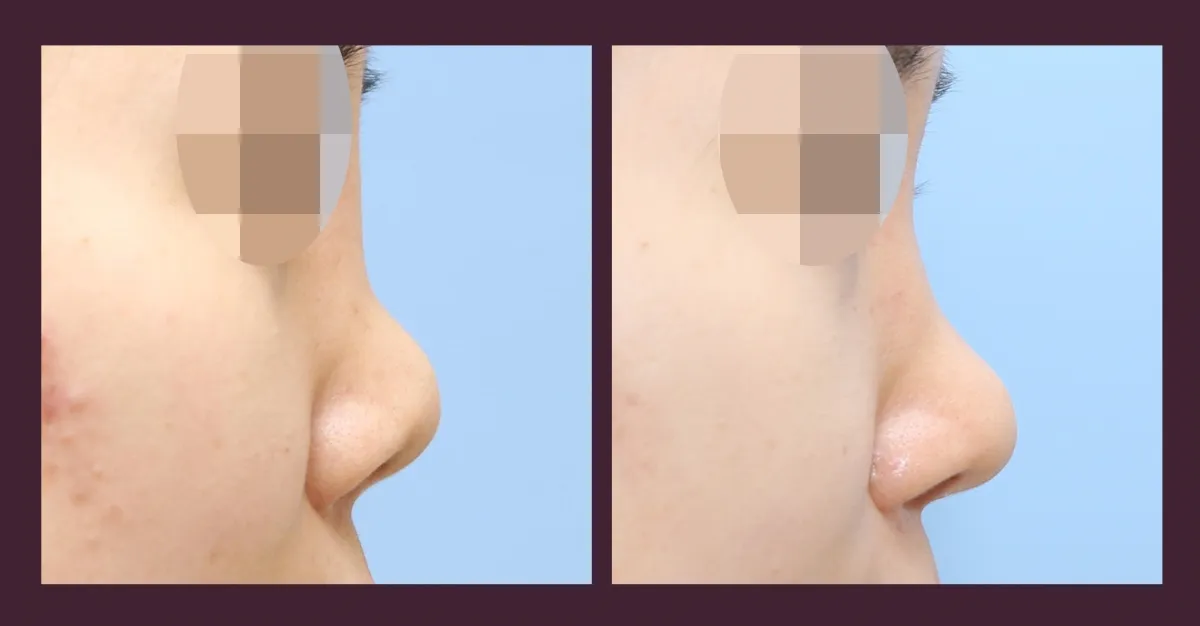
The tip, upturned by contracture, has relaxed and come down.