

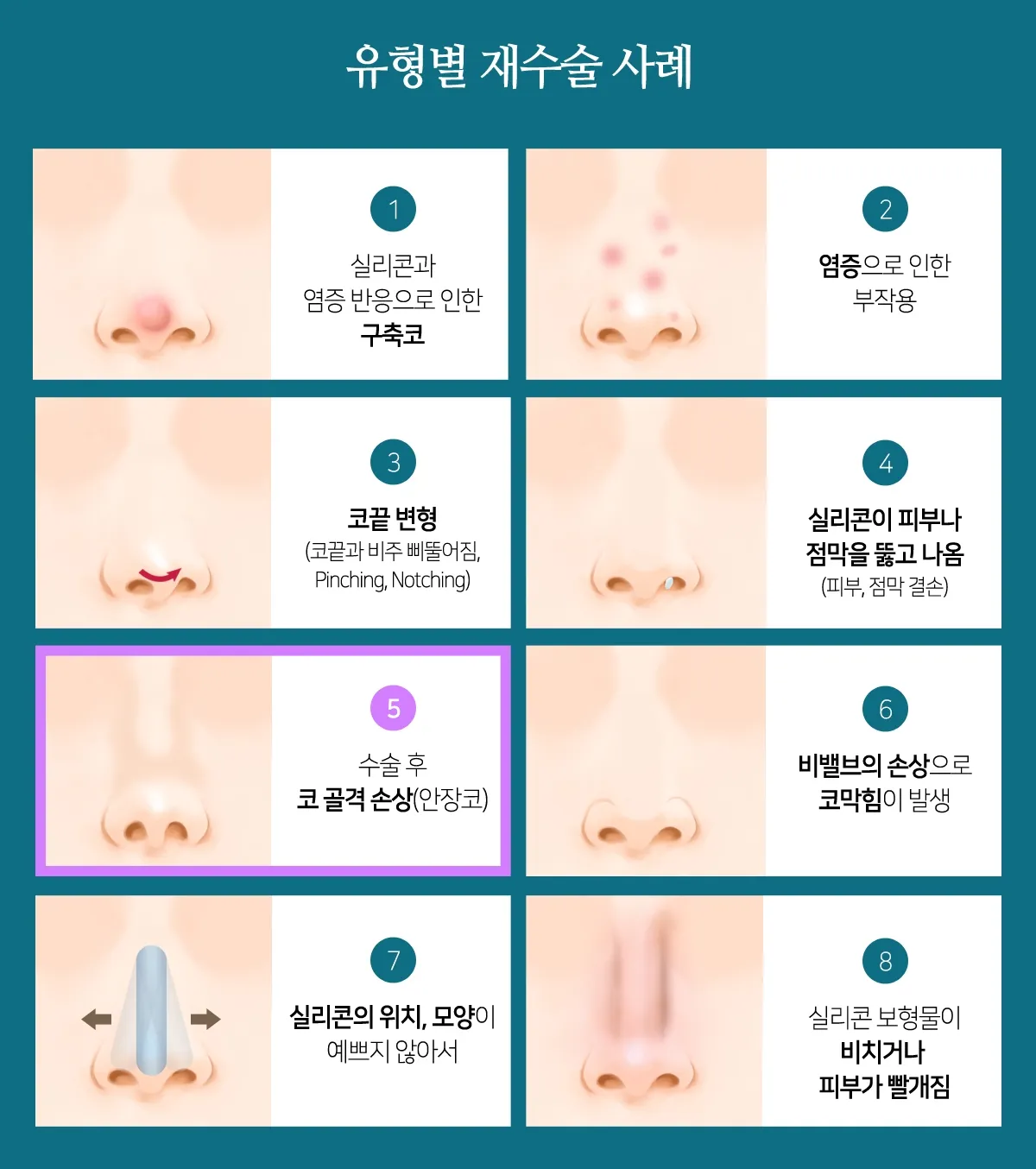
Revision Rhinoplasty Cases by Type 5 (Postoperative Damage to the Nasal Framework (Saddle Nose))
Revision rhinoplasty refers to corrective surgery performed when, after one or more nasal surgeries,
aesthetic or functional side effects have developed.
The deformities that result from problems after rhinoplasty are so varied
that it is difficult to show every case one by one.
The reason is that the nose is a three-dimensional structure and a complex organ in which various tissues are organically connected.
We will therefore focus on representative cases and explain how, after revision surgery, side effects can be kept from recurring
and a good result can be achieved.
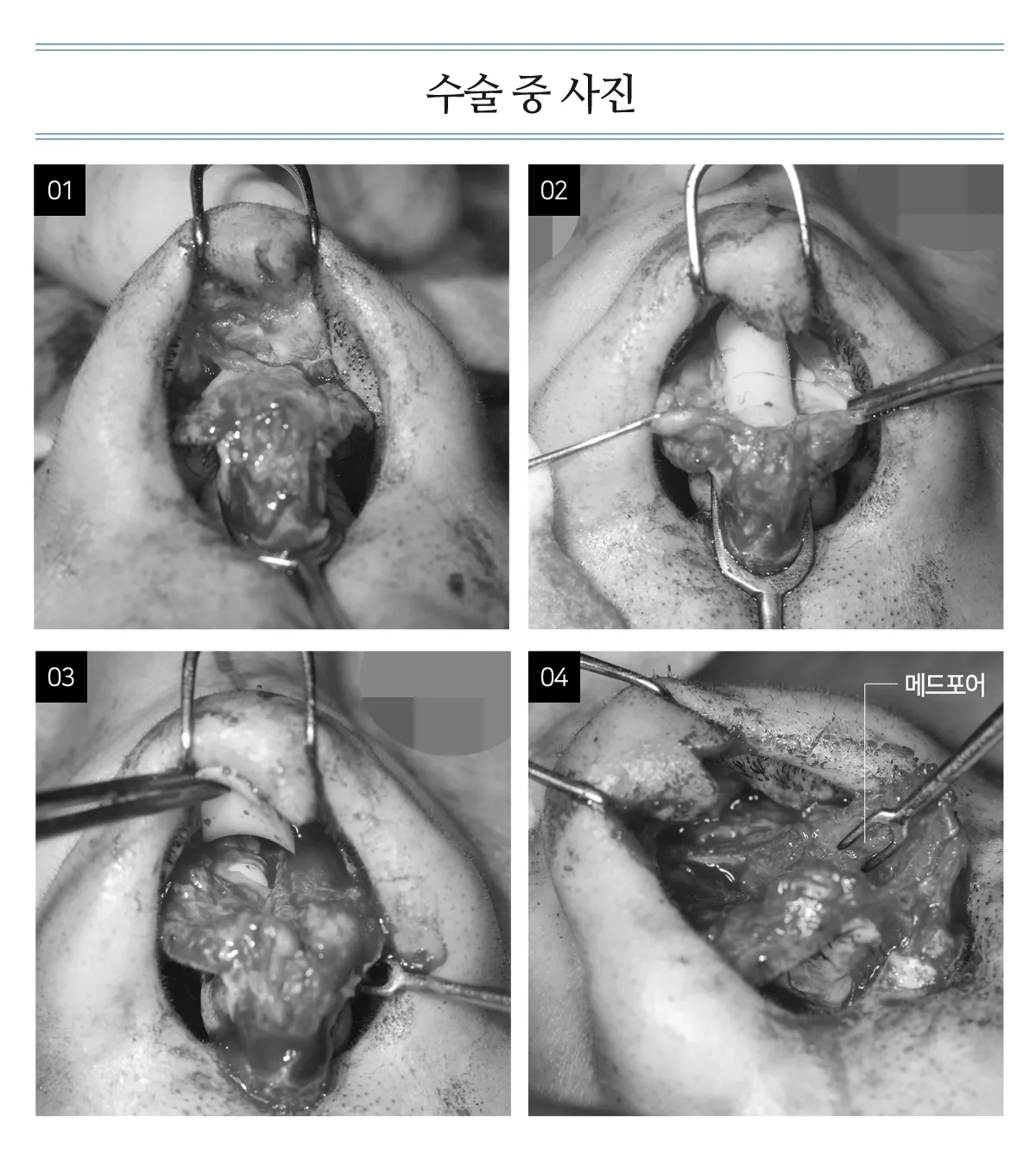
The scar tissue and silicone implants were removed one by one.
The dorsal silicone was found to have been placed in two layers, which means the dorsum had collapsed.
On inspecting the septum beneath the middle of the dorsum, 1/2 of the septum was missing and Medpor was in its place.
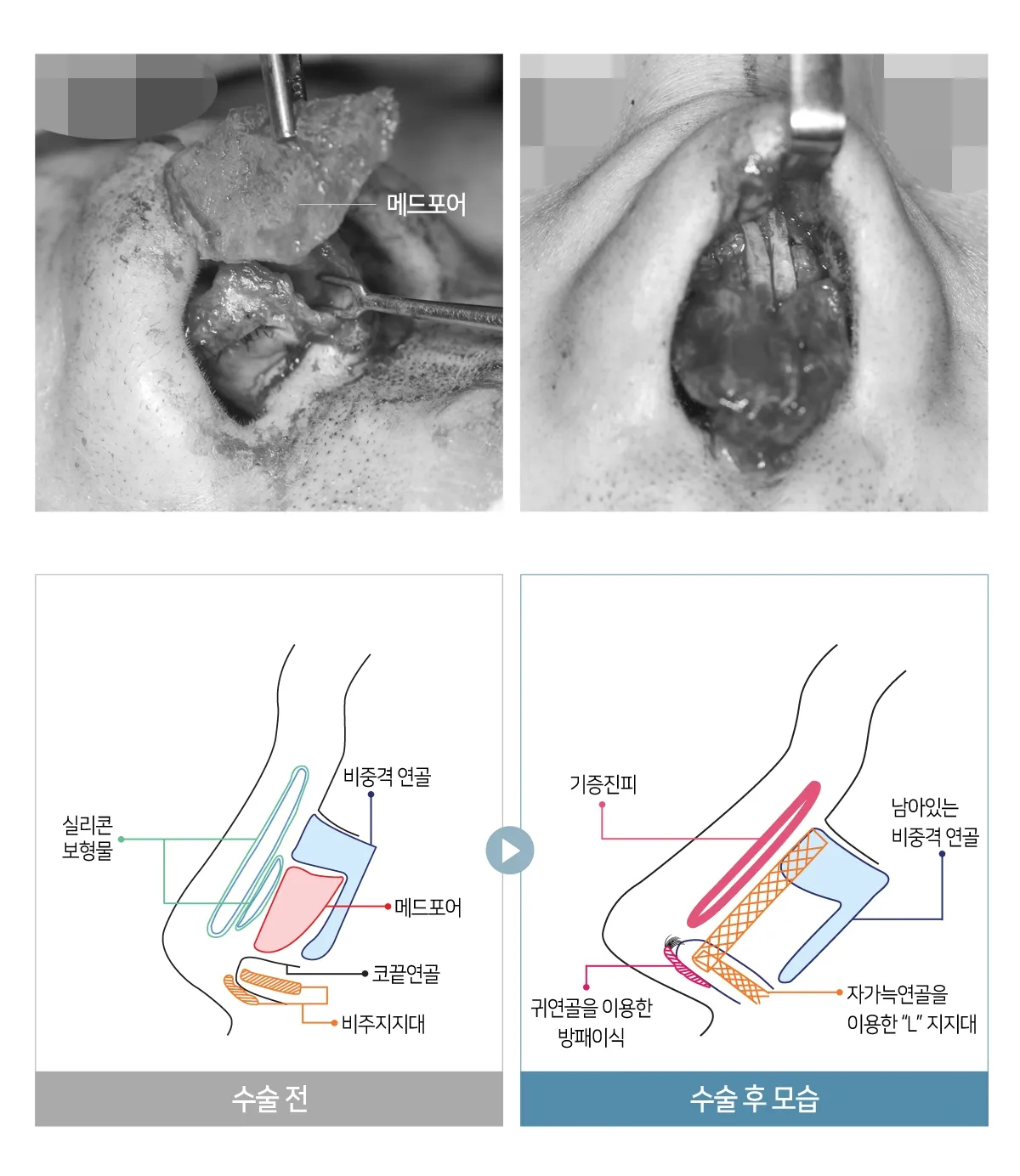
The Medpor was removed, an "L"-shaped strut was fashioned from autologous costal cartilage to fill the gap, and the dorsal framework was reconstructed.
Because the surgery was performed under IV sedation, the patient's nasal breathing could be checked, and the patient said breathing felt very clear and comfortable.
Acellular dermal matrix was placed over the "L" strut to maintain dorsal height.
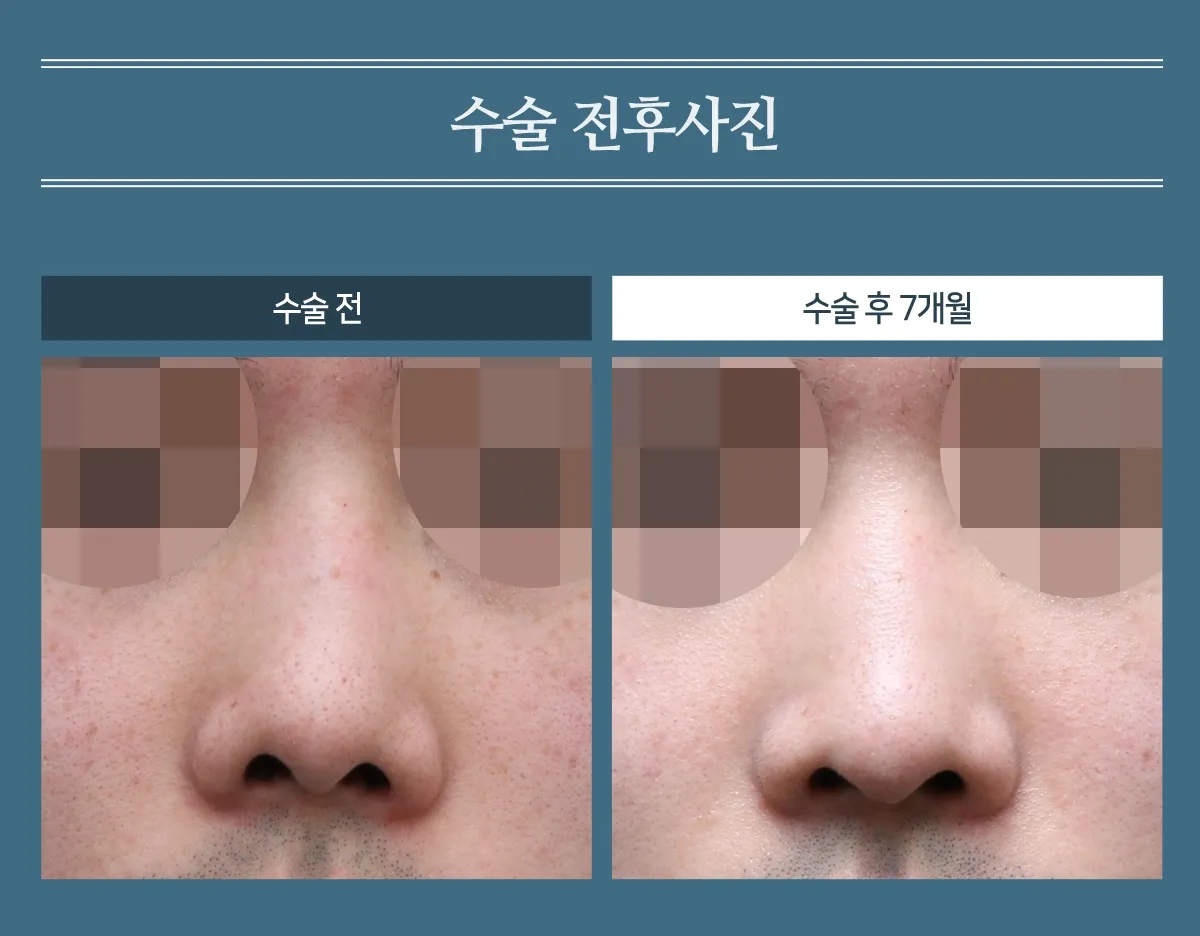
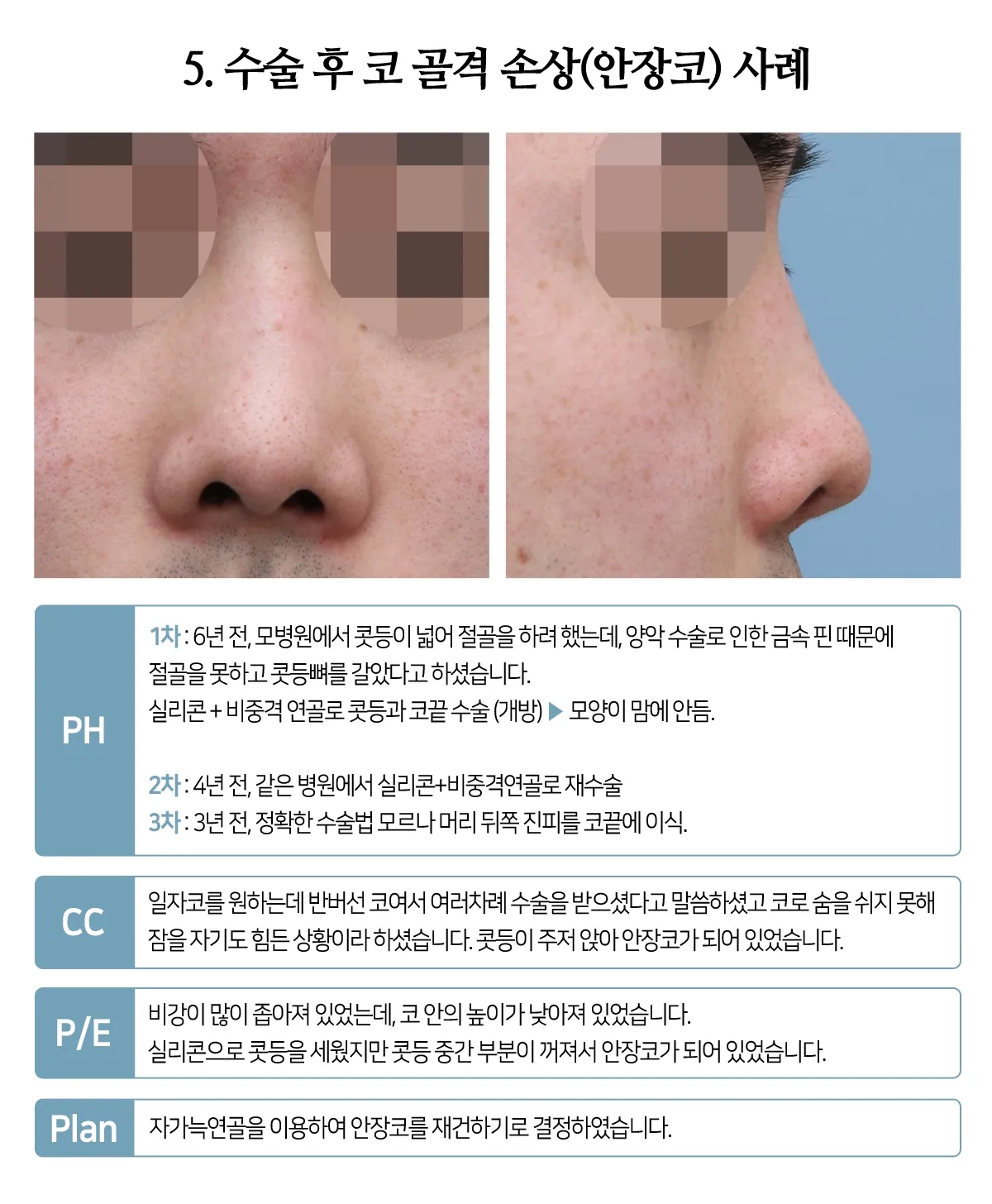
The dorsum, once small and weak, now looks natural and masculine after surgery, and the nose is longer, so the nostrils are covered.
After surgery, the patient expressed satisfaction and gratitude at being able to sleep so well.
The severe nasal obstruction had been caused by the saddle nose and the Medpor.
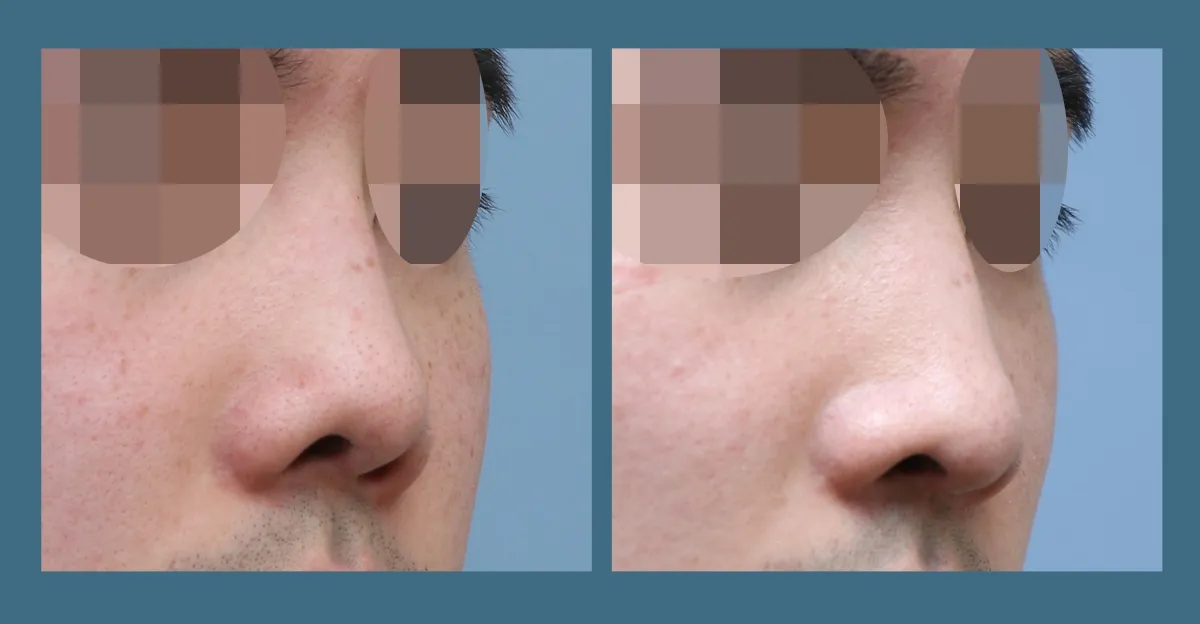
After surgery, the straight dorsum looks natural and masculine.
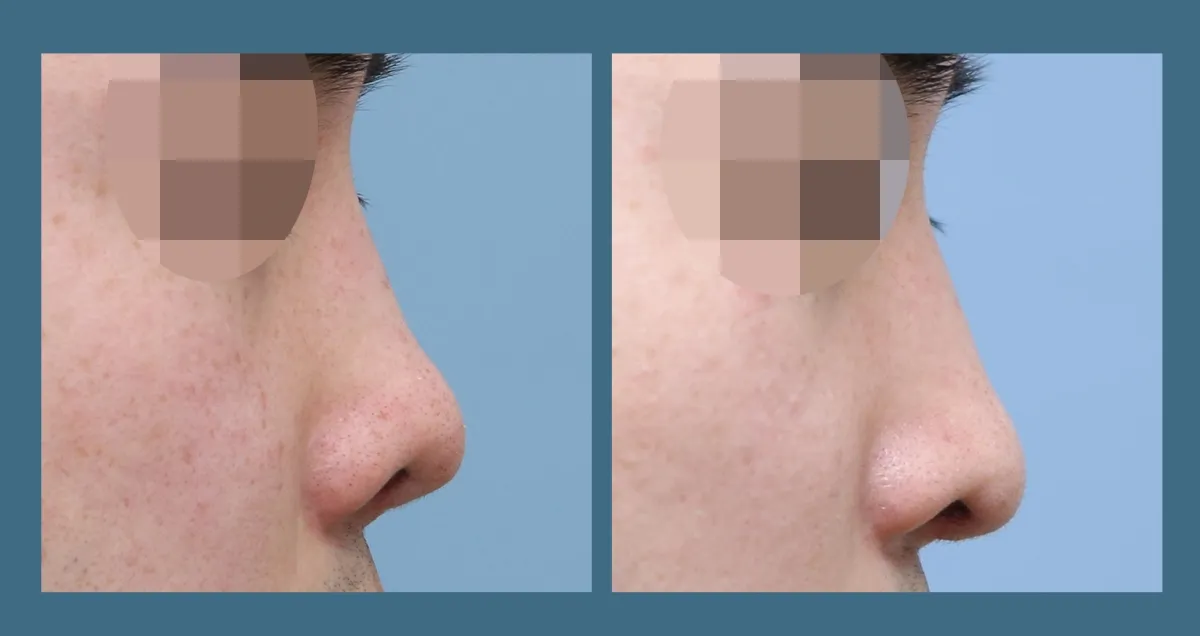
The dorsum, which had collapsed into a saddle nose before surgery, is straight after surgery.