

Intranasal Mucosal Adhesions (CHECK If You Have Had a Contracted Nose, Revision Rhinoplasty, or a Septal Extension Graft)

In patients who have had multiple revision surgeries, or who have a contracted nose or have had a septal extension graft,
the inside of the nose must be examined with a nasal speculum to check for “intranasal mucosal adhesions.”
When intranasal mucosal adhesions are present, nasal breathing is not clear and patients often complain of nasal obstruction.
“Intranasal mucosal adhesions” can be corrected well with a simple operation, so diagnosis is important.
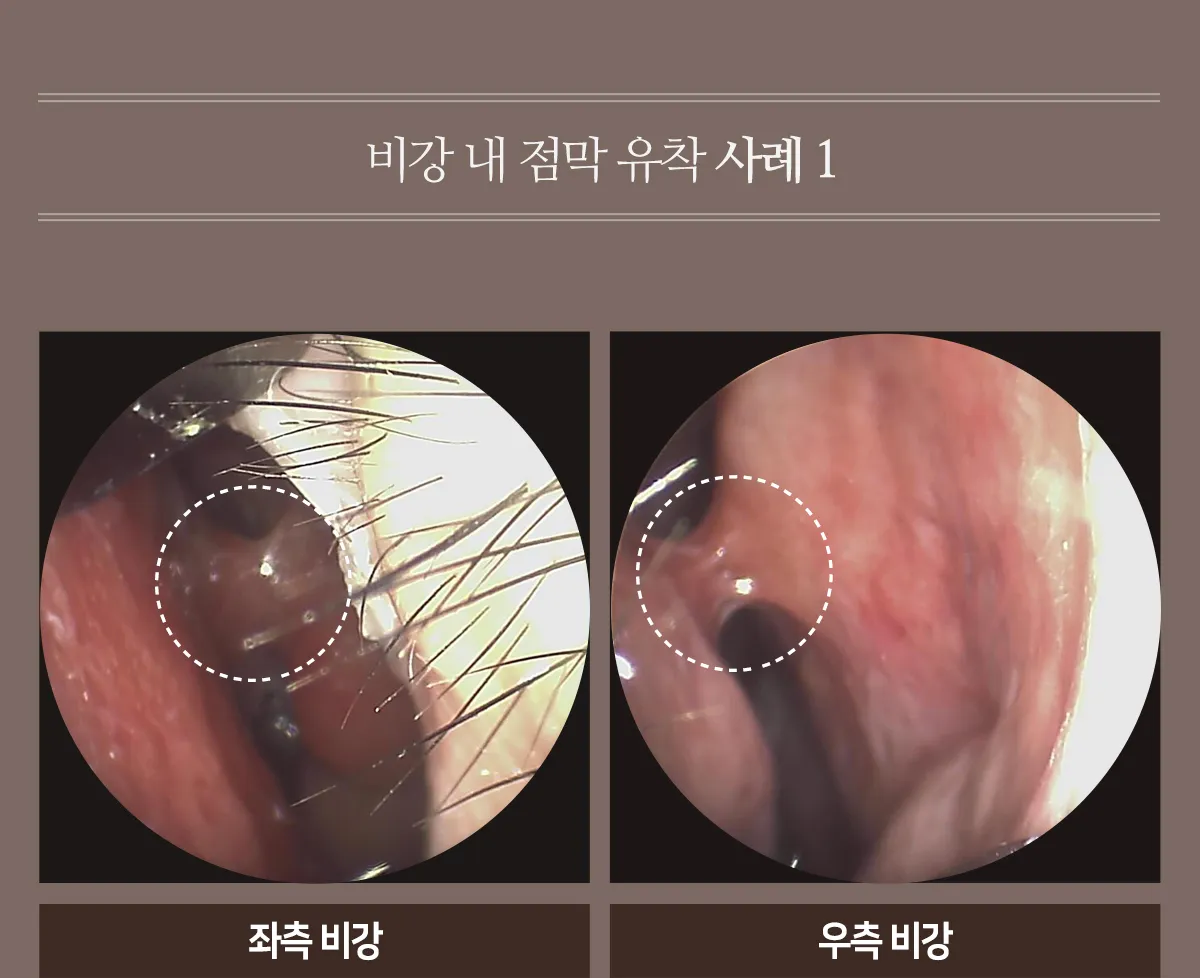
Cases of Intranasal Mucosal Adhesions
This patient shows “intranasal mucosal adhesions” on both the left and right sides.
According to the history, after augmentation rhinoplasty and tip plasty with silicone, the silicone extruded,
and the patient underwent several operations because of side effects and eventually developed contracture.
In this patient, the mucosal adhesions were corrected together with the contracted nose correction.
The surgical method for eliminating the mucosal adhesions was to divide the adhesion stalk joining the mucosa,
place a silicone sheet against the mucosa, and then pack the nose.
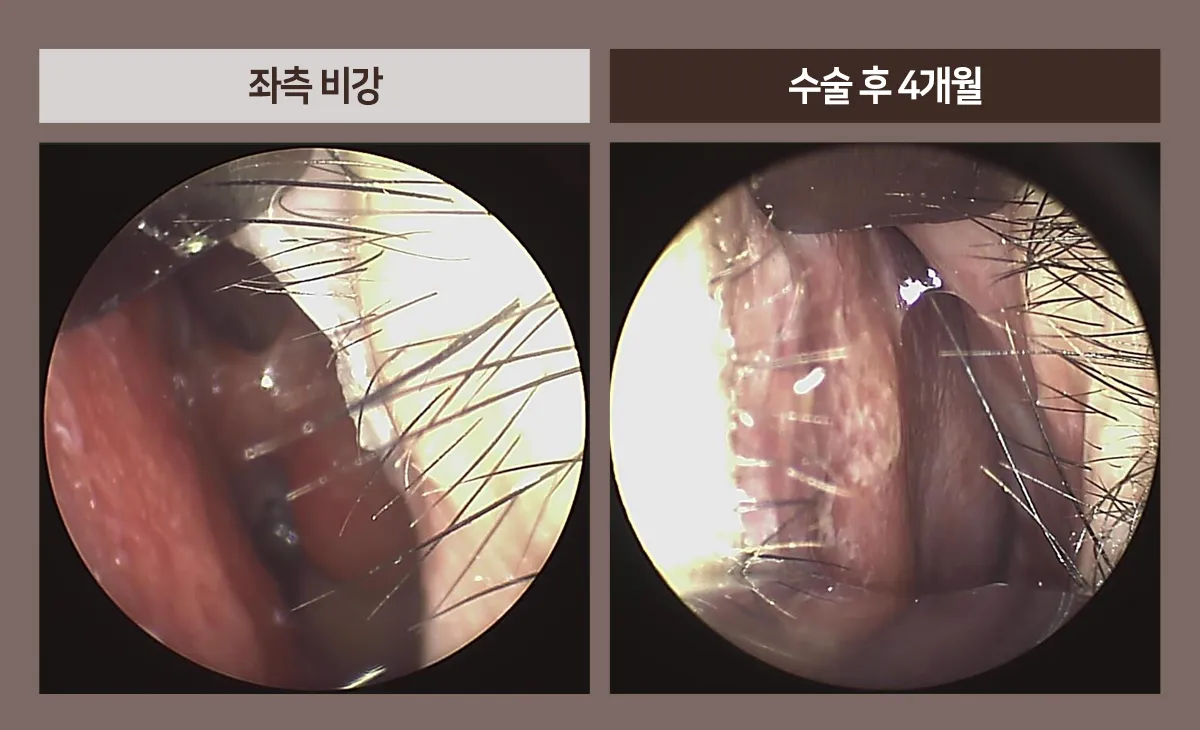
View inside the left nasal cavity.
The adhesions are gone, and the appearance is natural.

View inside the right nasal cavity.
The adhesions are all gone, and the surface is smooth.
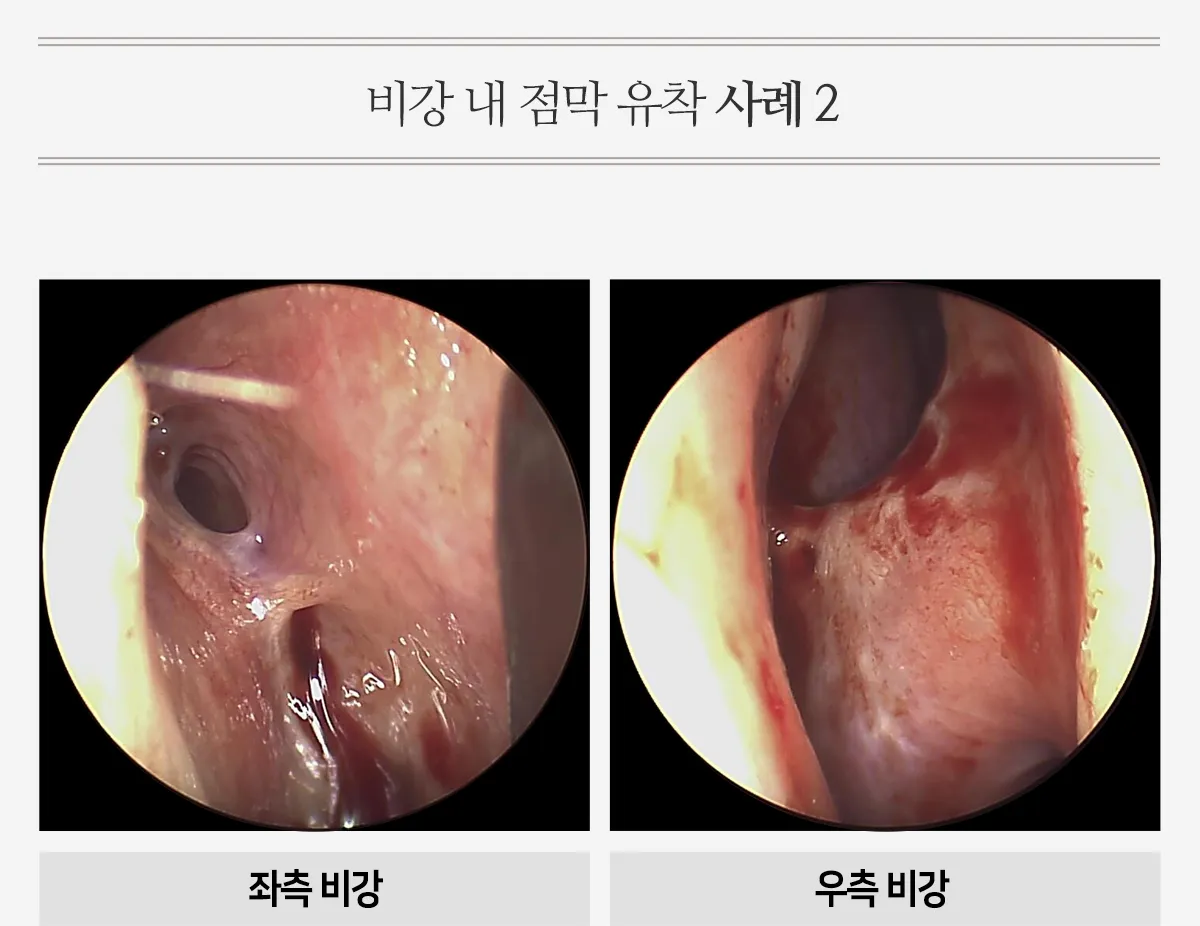
PH
1 year ago: septal extension graft (SEG) with ear cartilage + nasolabial angle correction with ear cartilage (open)
CC
The tip is hard and cannot be pushed up into a “pig nose.”
The nose looks long.
=> Remove the septal extension graft and the tip graft so that the tip can move freely.
Nasal obstruction was also present.
P/E
“Intranasal mucosal adhesions” were confirmed on both sides.
Plan
The adhesion stalk was divided,
a silicone sheet was placed against the mucosa, and the nose was packed.
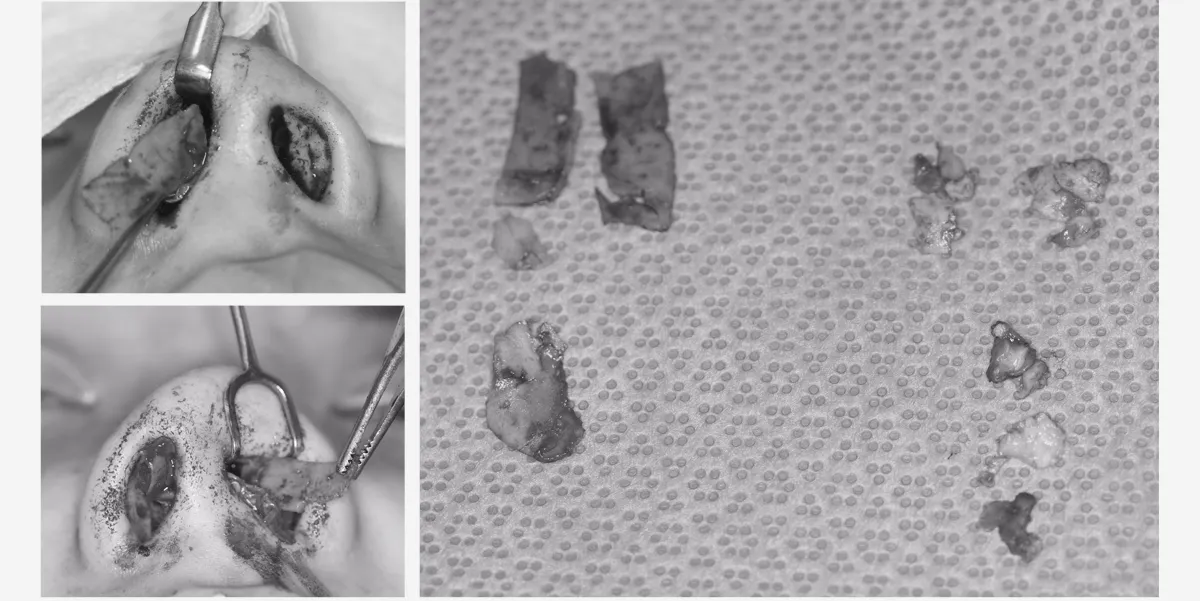
While the septal extension graft and the onlay graft on the tip were being removed through a closed approach,
it was confirmed that septal cartilage had been harvested and used for the extension graft.
An onlay graft of ear cartilage had been placed on the tip.
As in this case, the nasal mucosa is sometimes torn while septal cartilage is being harvested, and as it heals,
the mucosal surfaces adhere to each other,
so if there is a history of septal cartilage harvest, the presence of “intranasal mucosal adhesions” must be checked.

Left nasal cavity before and after surgery
The mucosal adhesions are completely gone, and the wound has healed well.
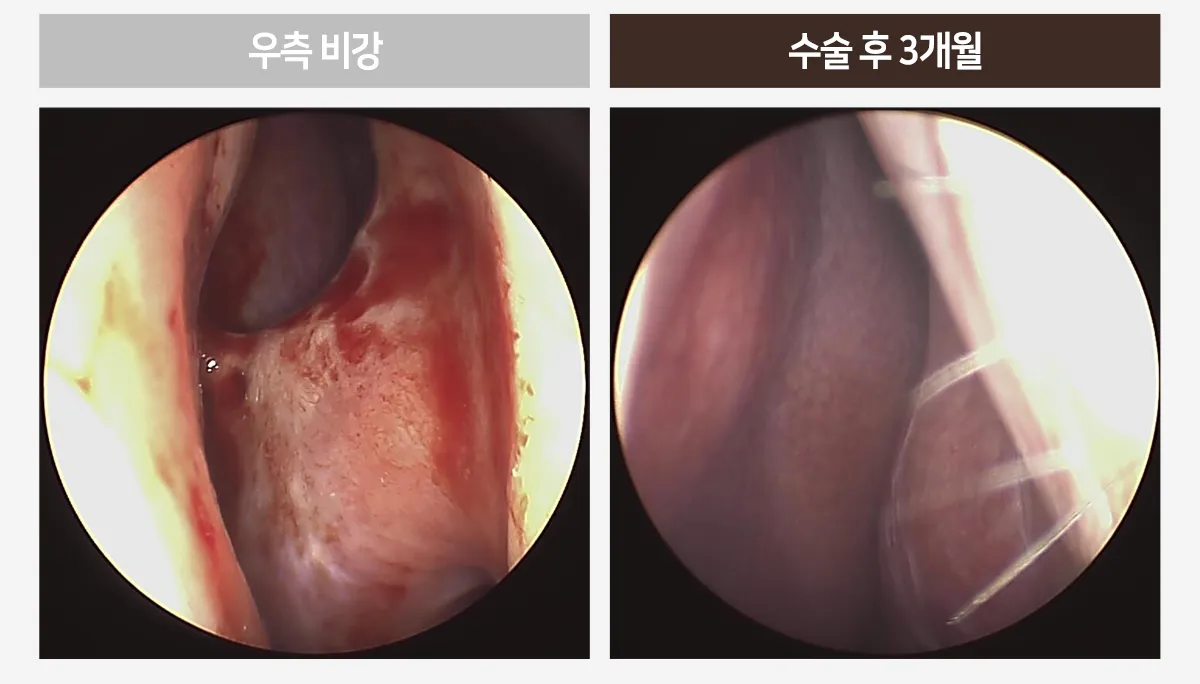
The mucosal adhesions in the right nasal cavity were also completely resolved,
and nasal breathing improved completely after surgery.