

Silicone Implant Removal for a Contracted Nose
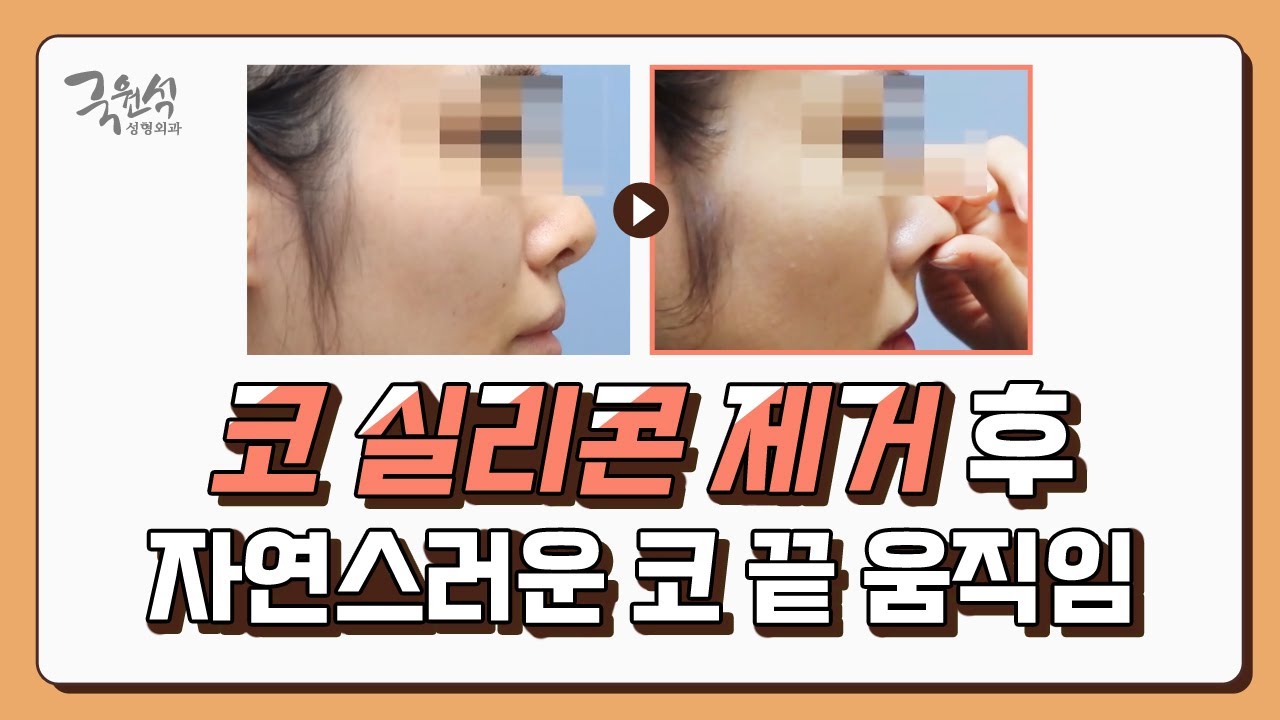 YouTube


After rhinoplasty with a silicone implant, the nose may gradually turn upward over time and harden, a condition known as contracture. Such cases are
quite common, reported at about 30%.
The causes and process by which contracture develops after augmentation rhinoplasty with a silicone implant are as follows:
1) Bacteria (Staphylococcus aureus) are introduced along with the silicone implant
2) The bacteria cause a persistent inflammatory response
3) The capsule surrounding the silicone gradually thickens
4) Scar tissue builds up together with the capsule
Through this process, the surrounding skin eventually shrinks and contracture develops, lifting the nasal tip upward.

This patient had undergone augmentation rhinoplasty with silicone at another clinic 12 years earlier,
with an open rhinoplasty in which a strut of septal cartilage was placed to support the nasal tip.
The dorsum was off balance, with the silicone implant shifted to the left.
The columella and nasal tip were likewise tilted.
The nasal tip was also upturned, the problem of a contracted nose.
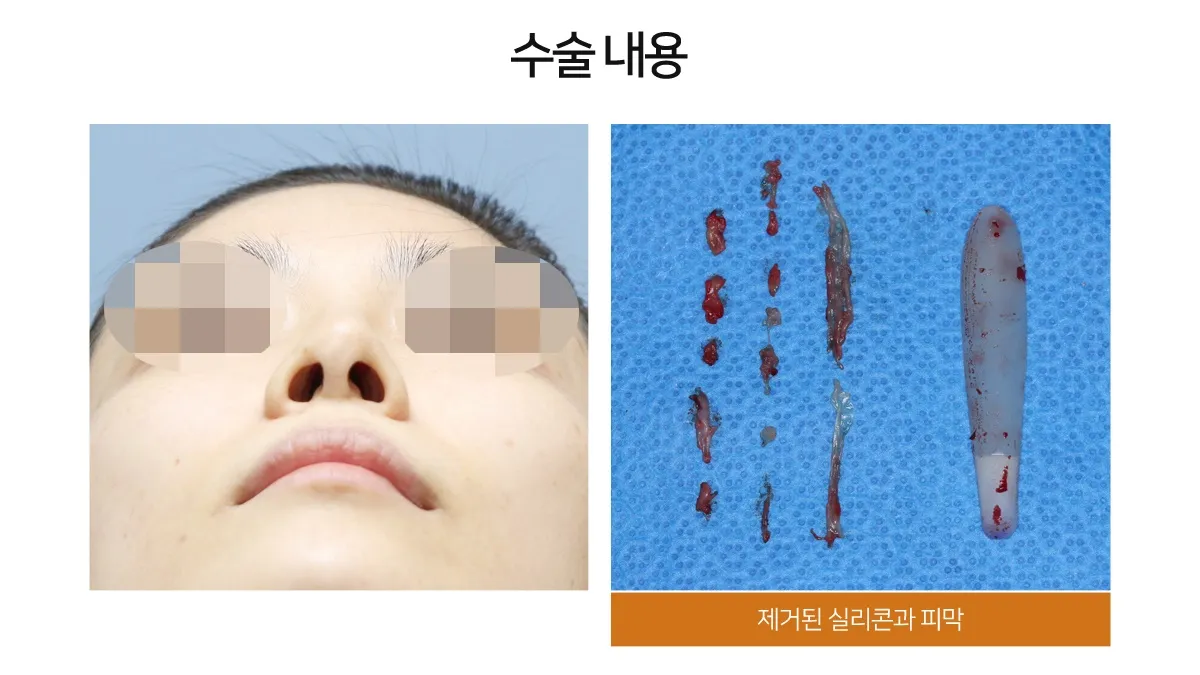
The silicone, the capsule, and the columellar strut of septal cartilage were cleanly removed,
and tip cartilage repositioning was performed through a closed approach (intranasal incision).
The capsule was quite thick, and the tip cartilage had been pulled upward,
leaving the nose upturned, so the cartilage was dissected free and placed in its proper position.

Before surgery, the dorsum and nasal tip were tilted and the silicone was visible through the skin.
After silicone removal and cartilage repositioning, both the dorsum and the nasal tip have settled in a straight position.
The nostrils, which had been exposed from the front because of the contracture, are now much better covered.


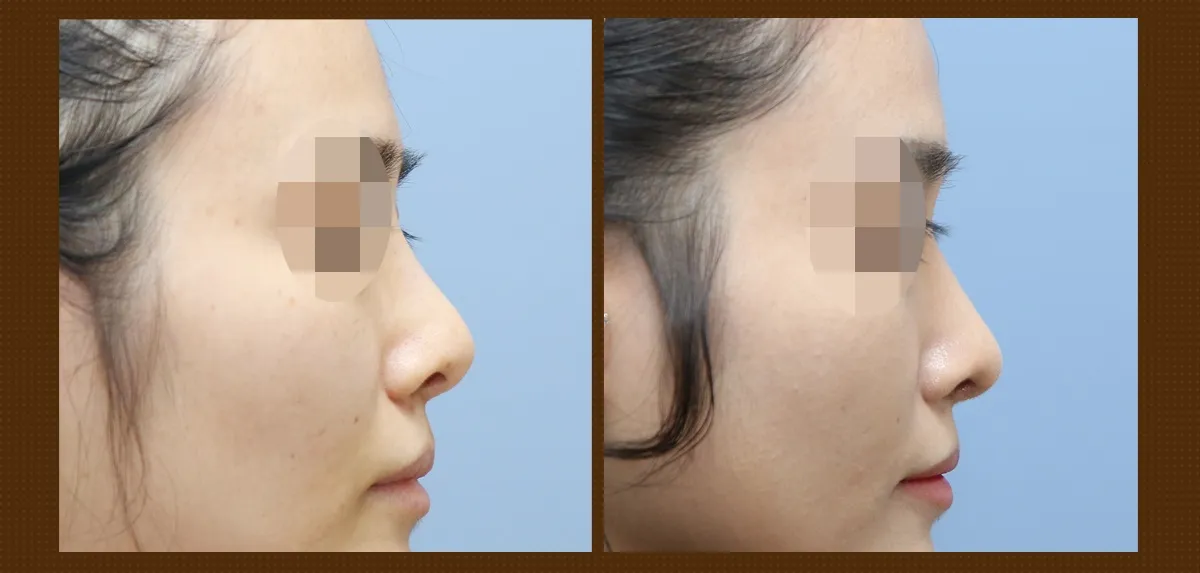
Before silicone implant removal, the nasal tip was markedly upturned because of the contracture.
After implant removal, the nasal tip has come down considerably, lengthening the nose,
and the nasal bridge runs straight as well.
The nasolabial angle also decreased by more than 10 degrees and the nasal tip became more defined;
this shows that dissecting the tip cartilage that had been pulled upward
and restoring it to its original position through cartilage repositioning was effective.