

Revision Surgery for Saddle Nose and Contracted Nose
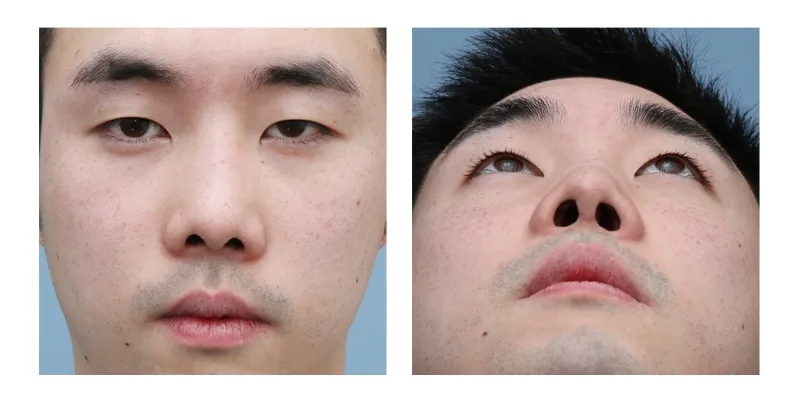
The patient had undergone 3 nasal surgeries at a clinic in Gangnam,
but the dorsum collapsed, resulting in a saddle nose and scooped nose,
and contracture then set in, turning the tip up into an upturned nose.
Along with the damage to the outward shape of the nose,
there were functional symptoms such as nasal obstruction, headache, pressure, and warmth, which brought the patient to our clinic.
History
-
-6 years ago: rhinoplasty with septal cartilage and silicone (open approach) => dissatisfied with the shape of the nose
-5 years ago: revision surgery with septal cartilage and silicone (open approach) => collapsed dorsum with a partially scooped nose; hard tip showing through the skin
-4 years ago: revision surgery placing temporalis fascia over the tip (open approach) => partially scooped nose not improved; saddle nose shape; contracture
Problems
-
-Cosmetic problems: saddle nose with a collapsed dorsum, partially scooped nose, upturned nose (contracted nose)
-Functional problems: nasal obstruction, pressure, headache, warmth
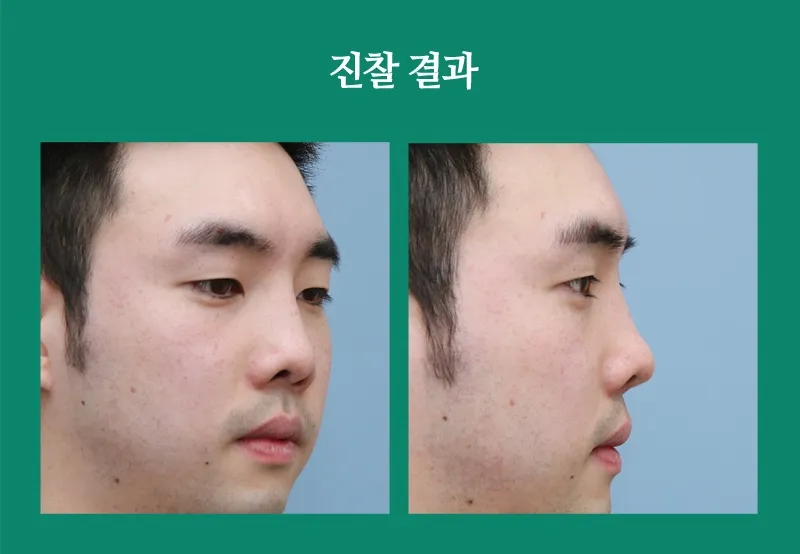
In this patient, the septum is weakened and the dorsum has collapsed into a saddle nose.
Inflammation (inflammatory response) and contracture are present together, so prompt correction is needed.
The surgical plan was to remove the silicone, capsule, inflamed tissue, and scar tissue,
then perform dorsal reconstruction with costal cartilage (“L” strut midvault reconstruction), nasal lengthening, and augmentation rhinoplasty,
so as to improve the aesthetic and functional problems of the nose together.
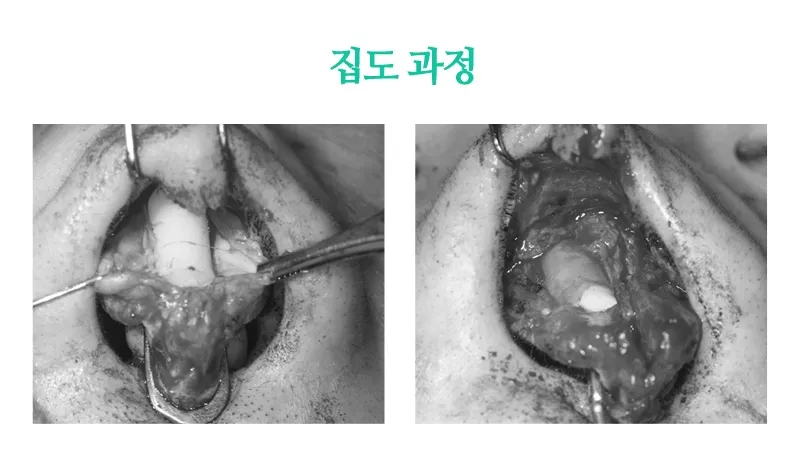
When the inside was examined through an open approach,
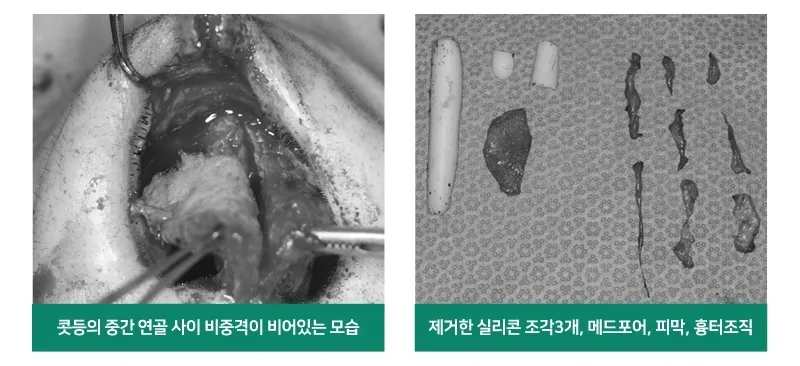
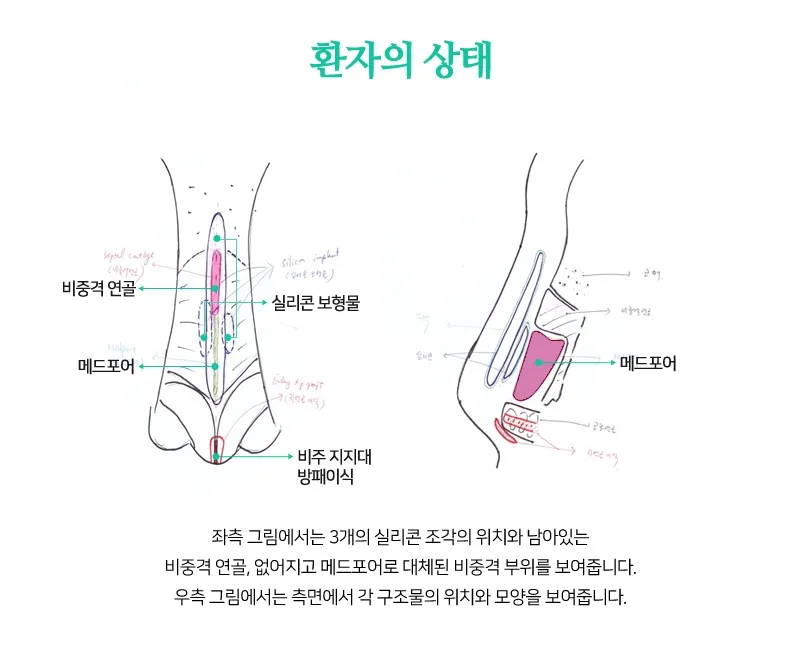
a long silicone implant was found in the center of the dorsum, with an additional silicone implant on each side.
These appear to have been laid over the collapsed dorsum to compensate for the saddle nose.
To relieve the contracture and inflammation, the silicone, capsule, and stiff scar tissue were removed, releasing the contracted skin.
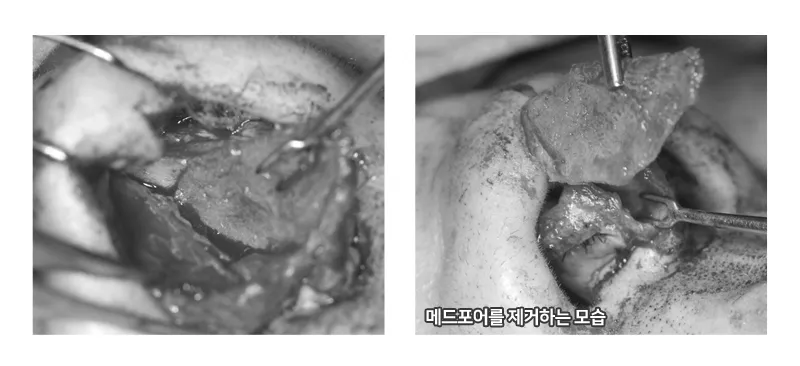
Inspection of the dorsal framework showed that the roof of the dorsum (ULC) was open.
On the septal side, about the lower 2/3 of the septal cartilage was missing
and had been replaced with Medpor.
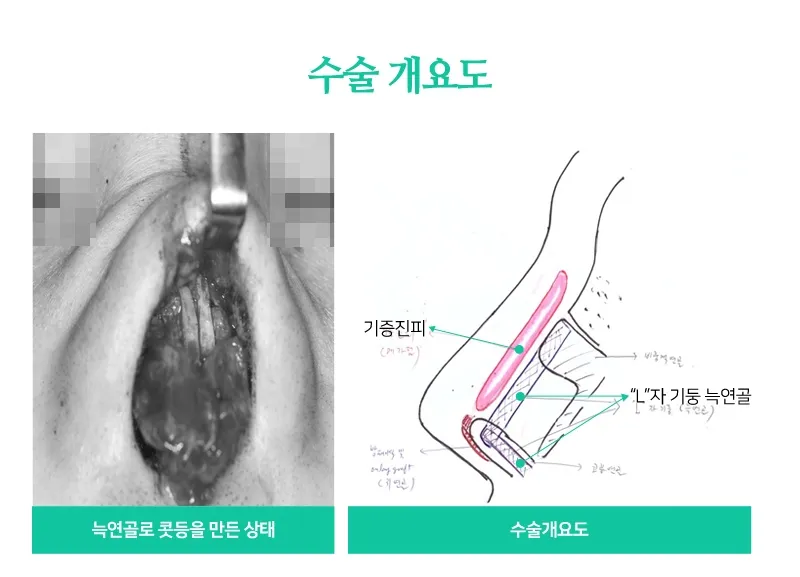
The missing 2/3 of the dorsum was reconstructed in an “L” shape using costal cartilage.
The tip was raised with ear cartilage,
and the dorsum was given added height and skin reinforcement with acellular dermal matrix (MegaDerm).
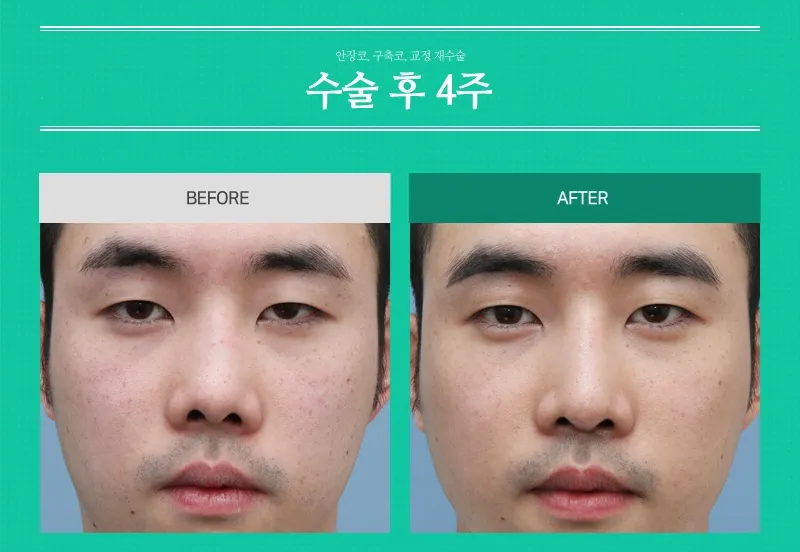
This is the appearance 1 month after surgery; the skin has healed stably.
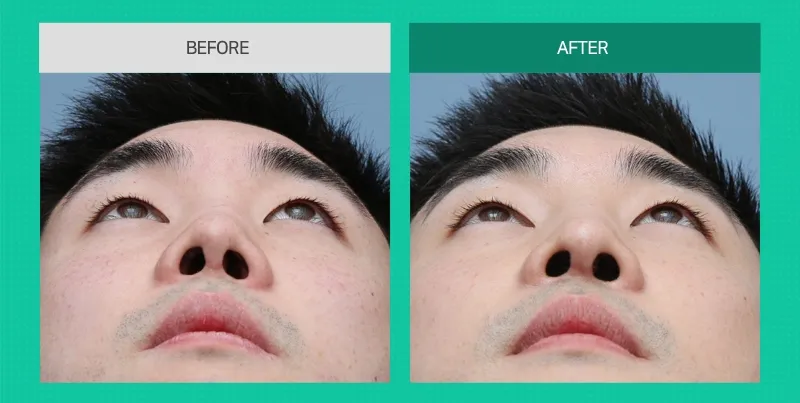
The upturned tip has been lengthened sufficiently, and the sunken saddle nose is now straight.
The silicone that had shown through and stood out under the weakened dorsal skin is no longer as apparent,
and the dorsum, once uneven because of scar tissue, is now fuller and straight.
Functionally as well, the patient's nasal obstruction, warmth, and pressure have resolved,
and the patient reported that nasal breathing has improved sufficiently and sleep quality is better.
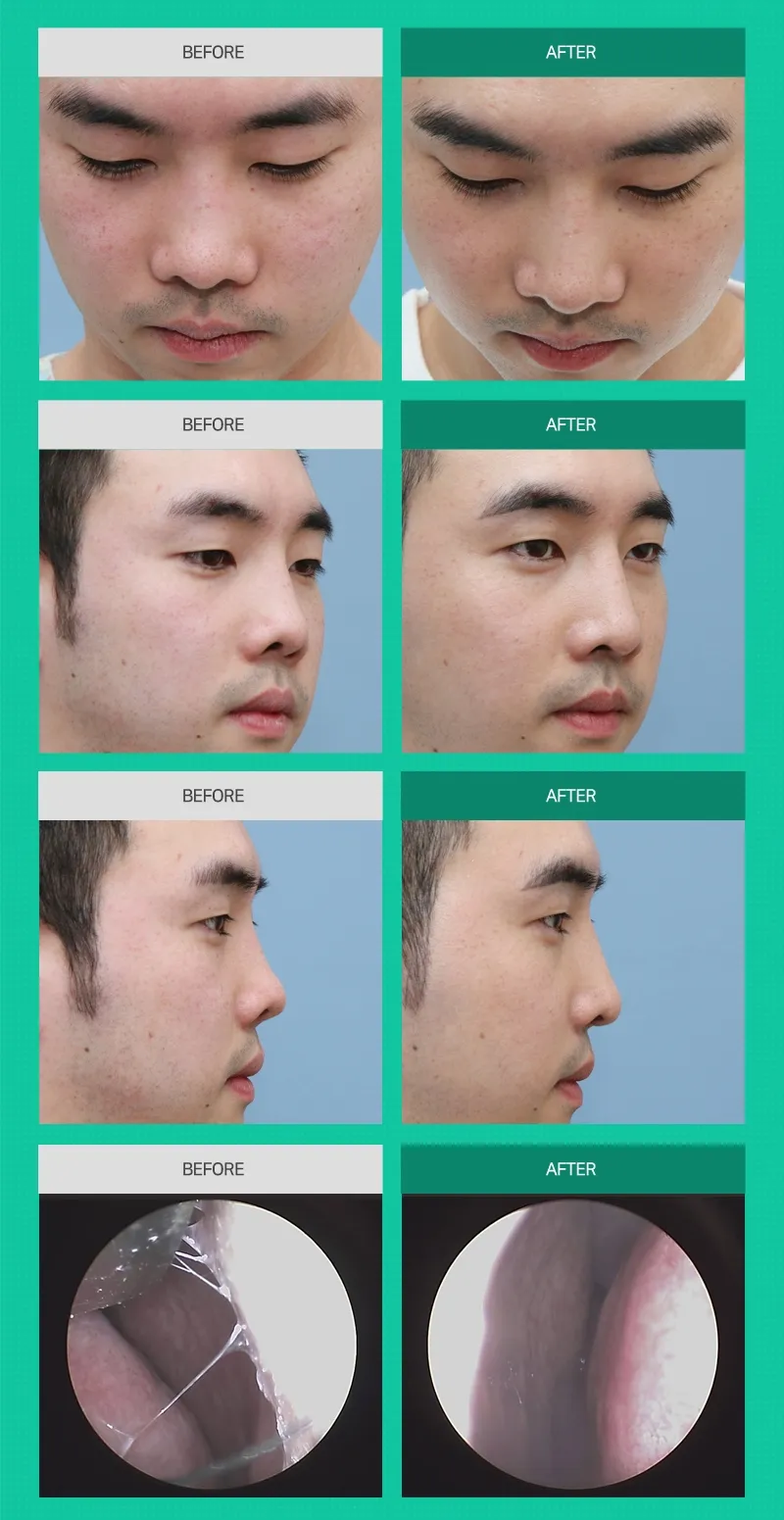
Functionally as well, the patient's nasal obstruction, warmth, and pressure have resolved,
and the patient reported that nasal breathing has improved sufficiently and sleep quality is better.