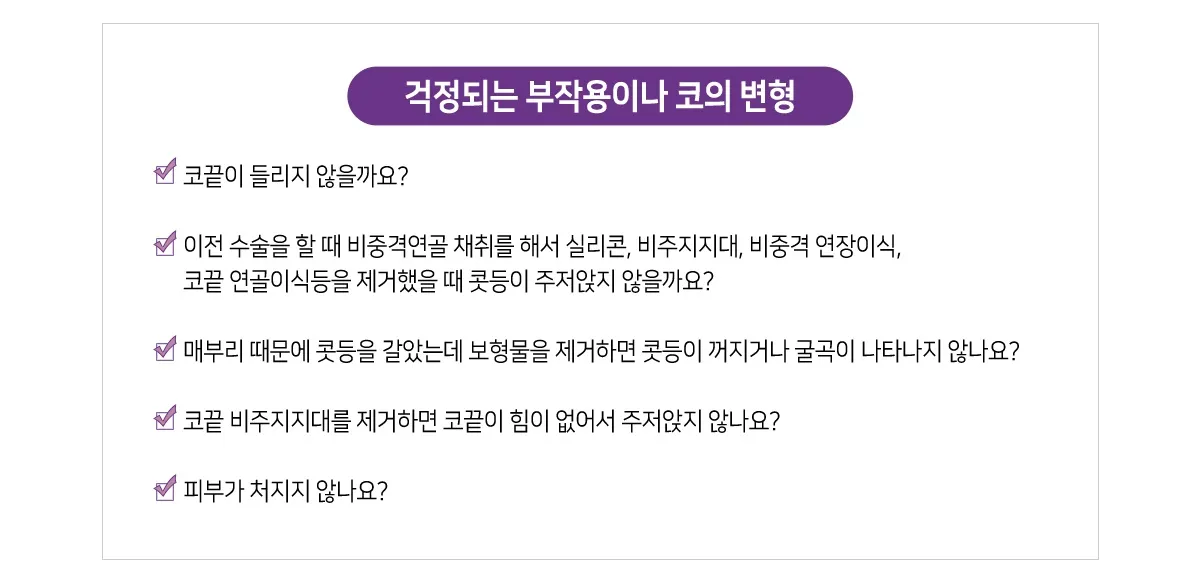

During consultations about tip cartilage repositioning performed together with nasal implant removal,
patients often ask, “What is cartilage repositioning, and is it really necessary?”
Once we explain the need for and importance of cartilage repositioning,
we are then asked, “Doesn't cartilage repositioning require an open approach?”
This can vary with the surgeon's proficiency, but
at our clinic, cartilage repositioning and nasal implant removal are performed through a closed approach in more than 90% of cases.
Beyond this, many patients want the implant, grafted cartilage, foreign material, and so on
all removed, yet hesitate over surgery for fear that side effects or deformity may follow removal.
Such worries circulating on the internet
are needless fears about things that can never happen when surgery is performed by the book, and most of them are unfounded, so patients can rest assured.
Let us look at this in detail through a case of closed-approach nasal silicone removal & tip cartilage repositioning.
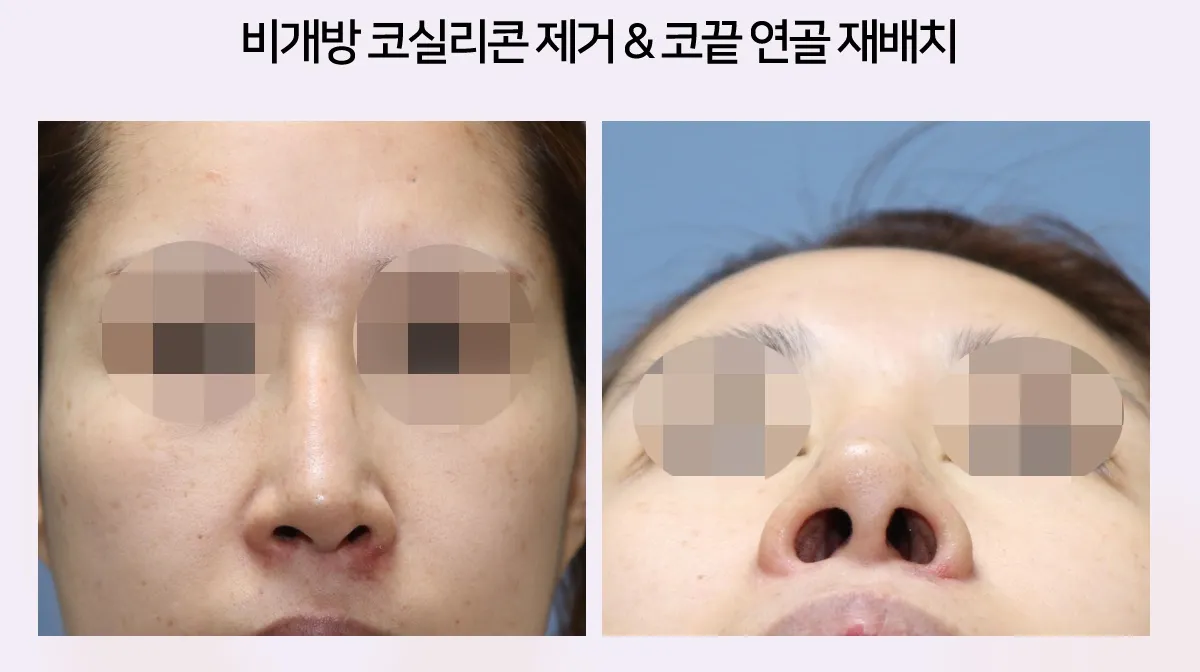
20 years ago at another clinic, this patient had augmentation rhinoplasty with silicone (closed approach),
and then, 15 years ago, surgery with silicone + ear cartilage (open approach).
However, the silicone was mobile and shifted to one side, and the nostrils had become asymmetrical.
The patient complained of a tingling pain in the dorsum and visited our clinic hoping to improve the way the eyes looked close-set.
Examination findings
The implant was deviated diagonally and had ridden up, raising the glabella.
The wide implant was giving the nose a masculine look,
and at the tip, the implant was tilted to the right, with nostril asymmetry and a twisted columella.
Because of the side effect of contracture, the outline of the silicone implant was visible and the skin was stiff.
The surgery was performed through a closed approach,
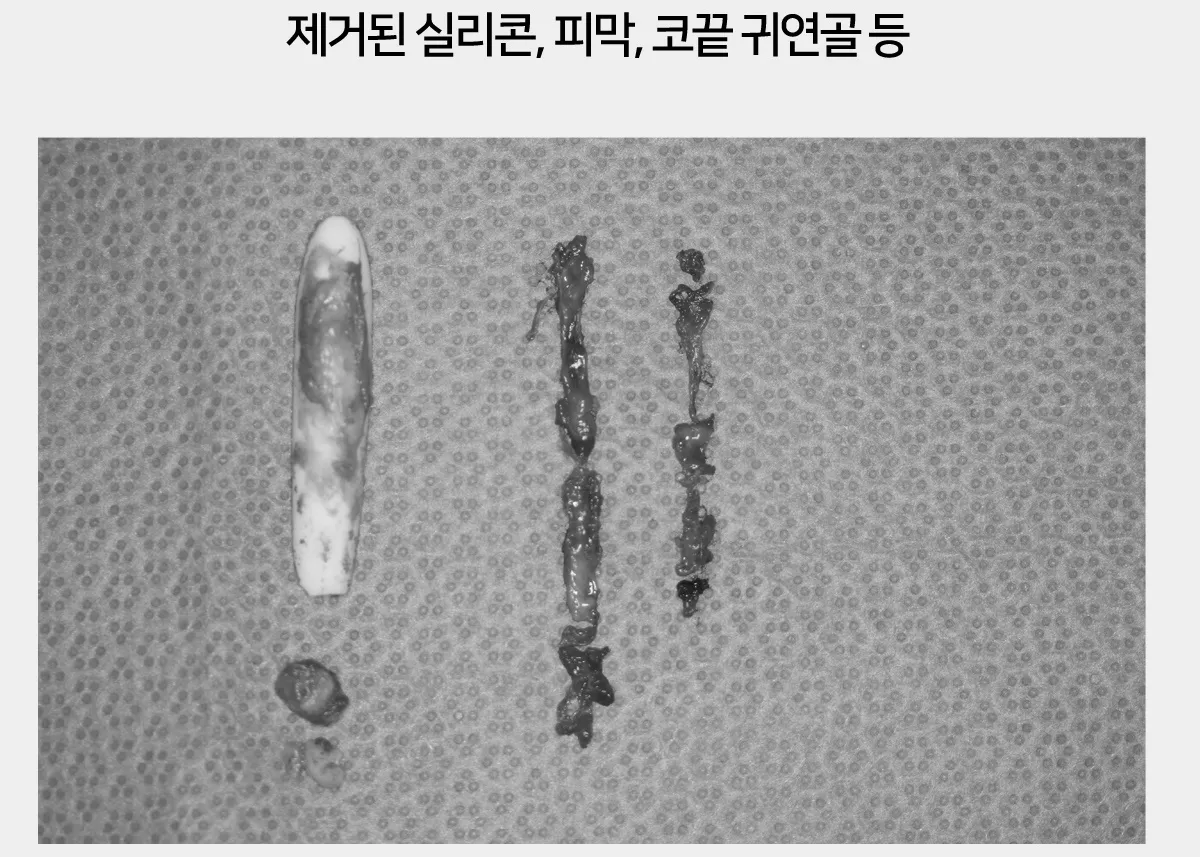
and after the silicone, capsule, tip cartilage graft, and other materials were all removed, tip cartilage repositioning was performed.
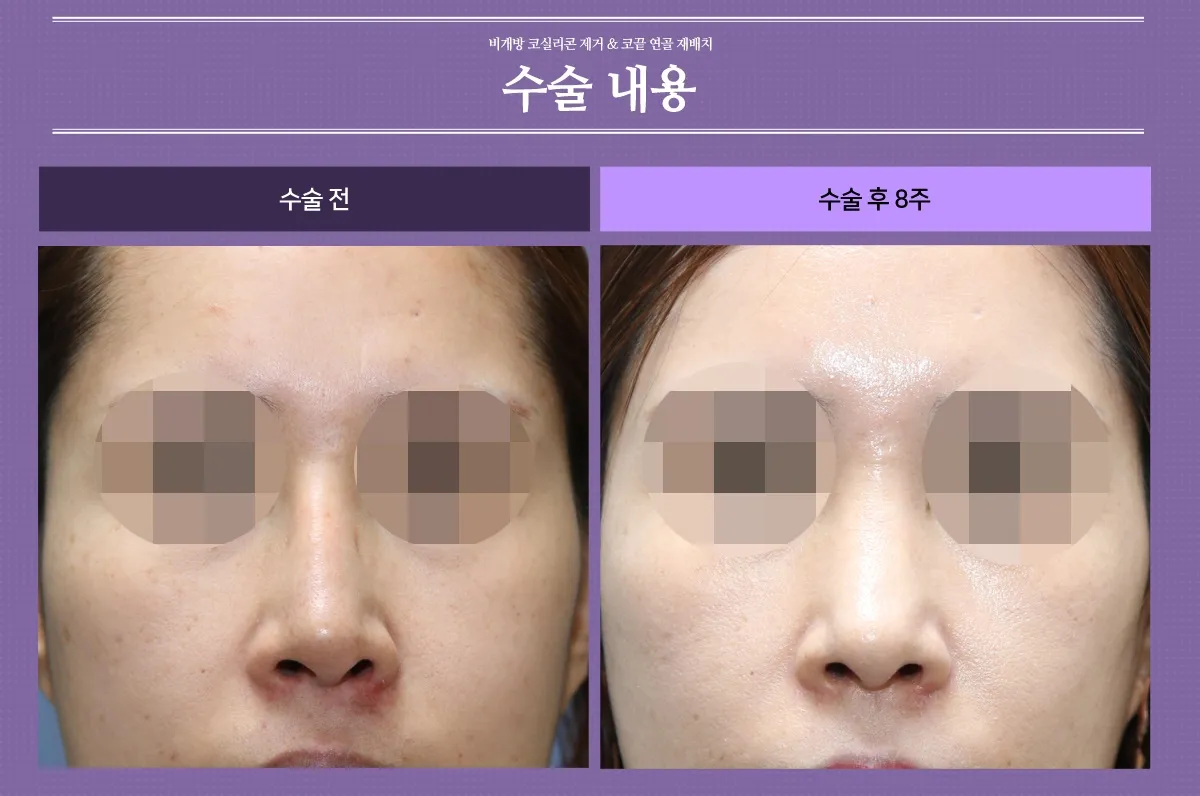
The postoperative front view confirms that there is no dorsal irregularity, skin damage, upturned tip,
or collapse of the dorsum or tip whatsoever.
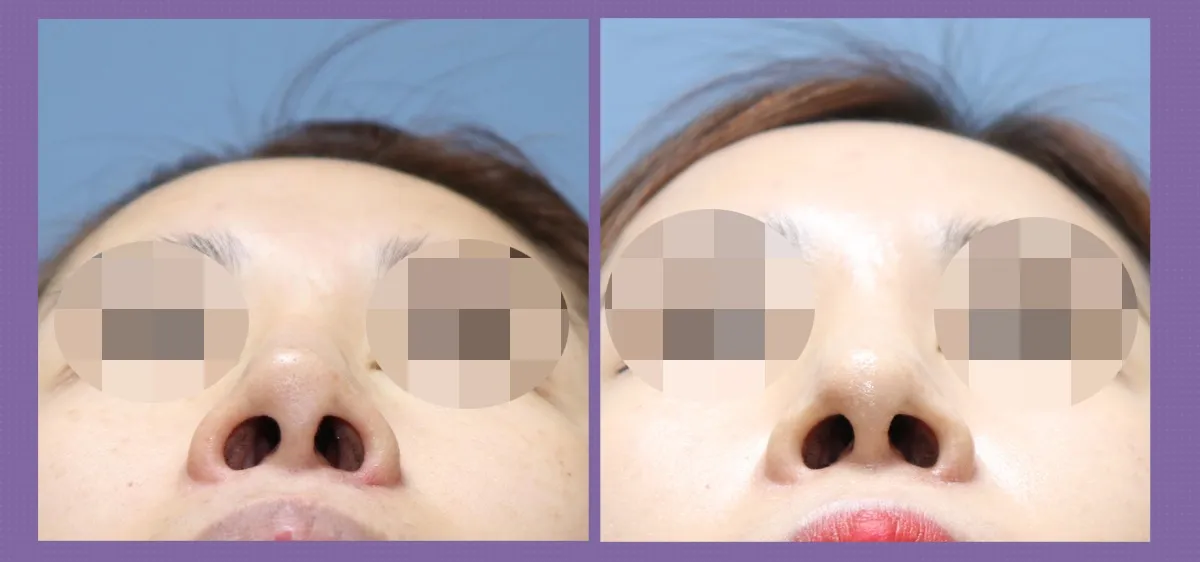
After nasal silicone removal and tip cartilage repositioning,
the nostril asymmetry and tilted columella have been corrected to complete symmetry.
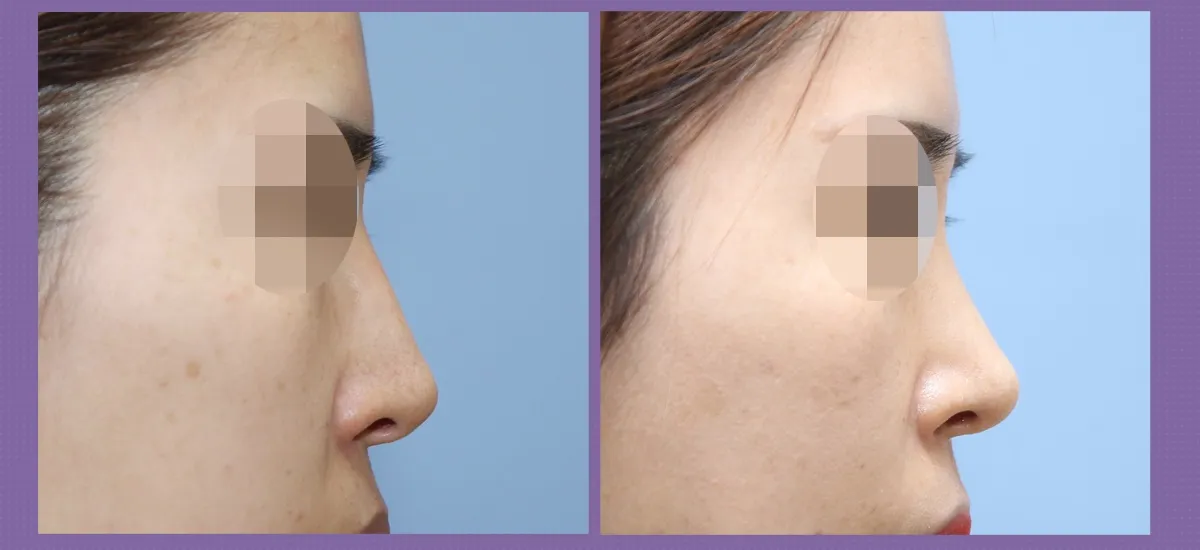
In the side view before removal, there appeared to be a convex hump,
but in the side view after removal the dorsal line is straight and attractive.
The tip has not collapsed; rather, it is more projected.
The columella, which had been kinked, now connects smoothly after removal.
These are the silicone, capsule, and ear cartilage from the tip, removed through a closed approach.
Even with a closed approach, implant removal and tip cartilage repositioning
can sufficiently improve the problems affecting the nose.
Because the problems and condition of the nose differ from person to person,
rather than relying on information circulating on the internet, it is wise to consult
a surgeon with extensive experience to find a solution.