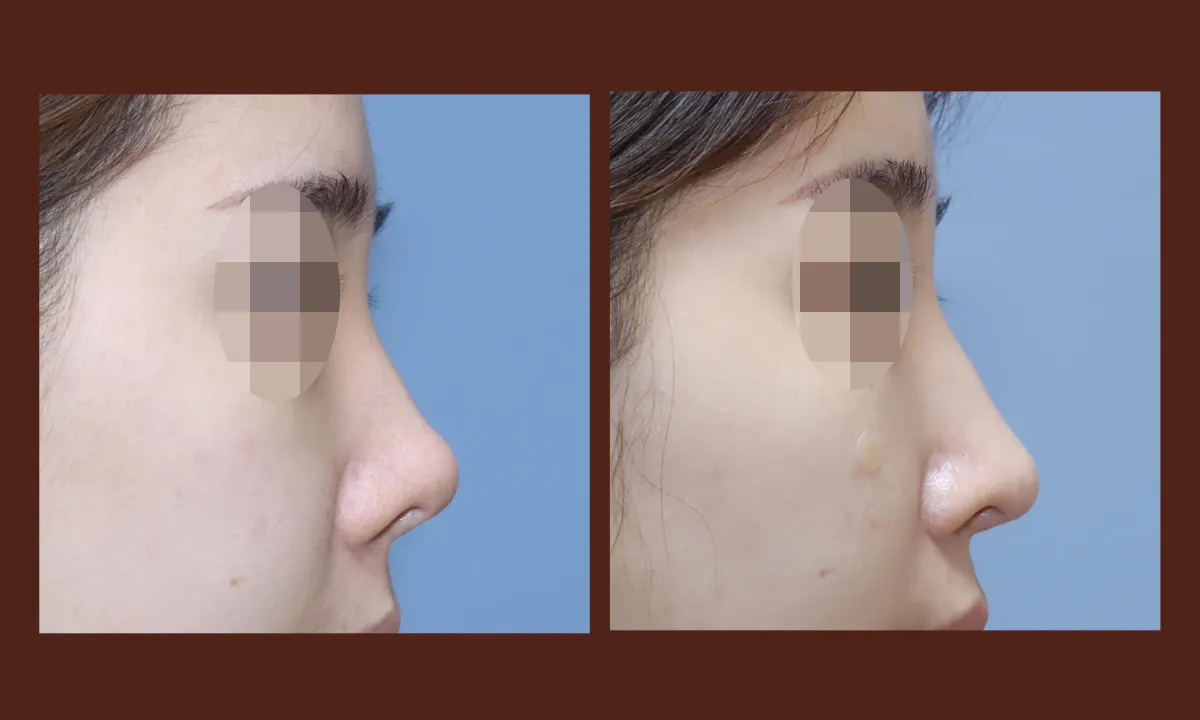
Contracted Nose Correction Case A (Caused by Removing Only the Silicone and Leaving the Capsule)
Even among patients who had silicone removed for cosmetic reasons or because of side effects after silicone augmentation rhinoplasty,
it is not unusual to see contracture develop gradually over time.
On closer questioning, many of them had only the silicone removed while the capsule was left in place;
as I reported in a paper published in PRS in 2019,
the remaining capsule causes scar tissue to form around it, leading to contracture.
The patient below had only the silicone removed and then, because the nasal bridge was low, underwent fat grafting 2 times,
and came to us because the nose gradually turned upward over time.
When fat enters the capsular pocket, it receives no blood supply, so it dies and liquefies.
This is thought to have triggered an inflammatory response, leading to gradual contracture.
Therefore, when silicone is removed, the capsule must always be removed with it,
and if any capsule remains, fillers or fat grafting
should not be performed, because the likelihood of inflammation is high.
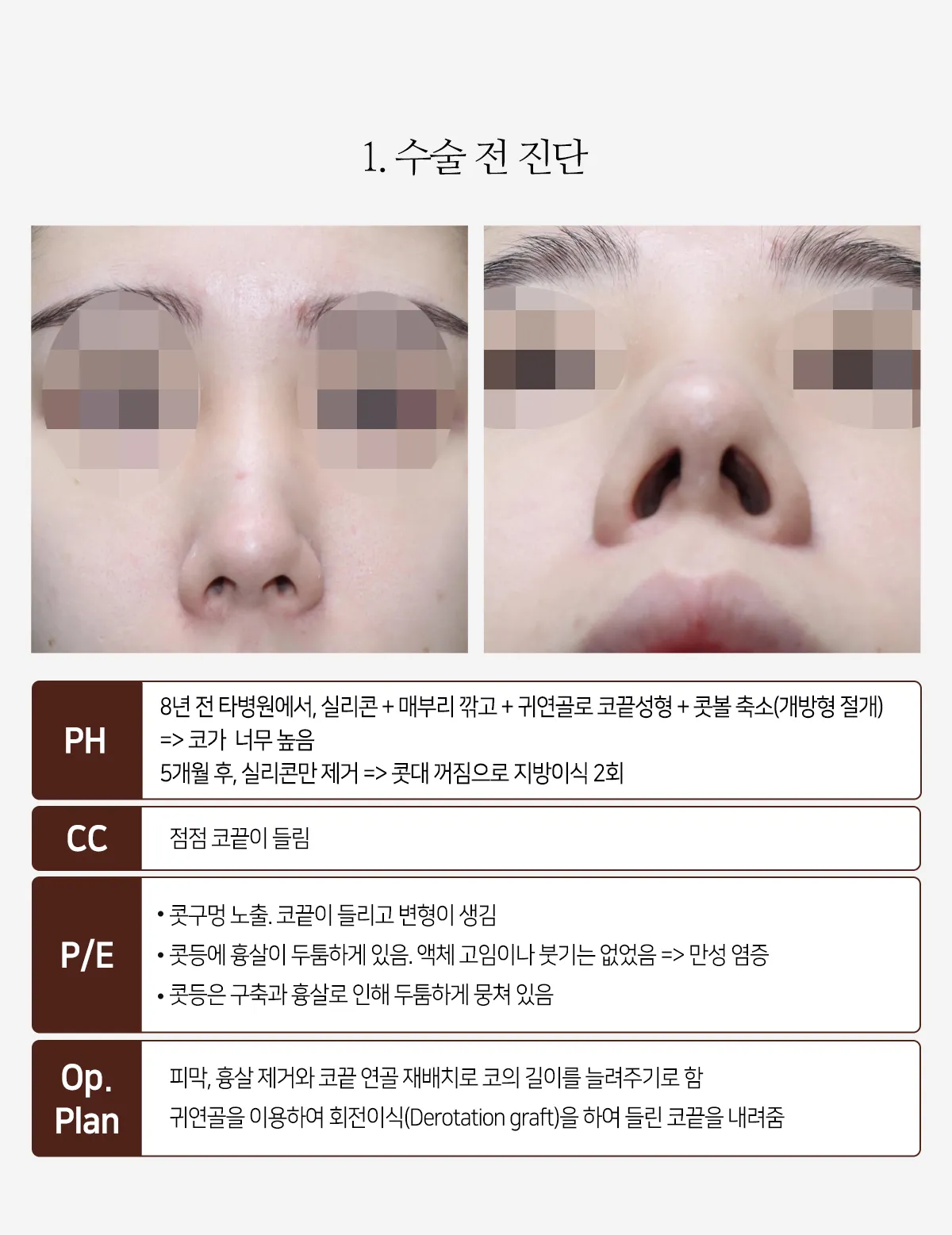
PH
8 years ago, at another clinic: silicone + hump reduction + tip plasty with ear cartilage + alar reduction (open approach)
=> The nose was too high
5 months later, only the silicone was removed => fat grafting 2 times because the nasal bridge had sunk
CC
The nasal tip gradually turned upward
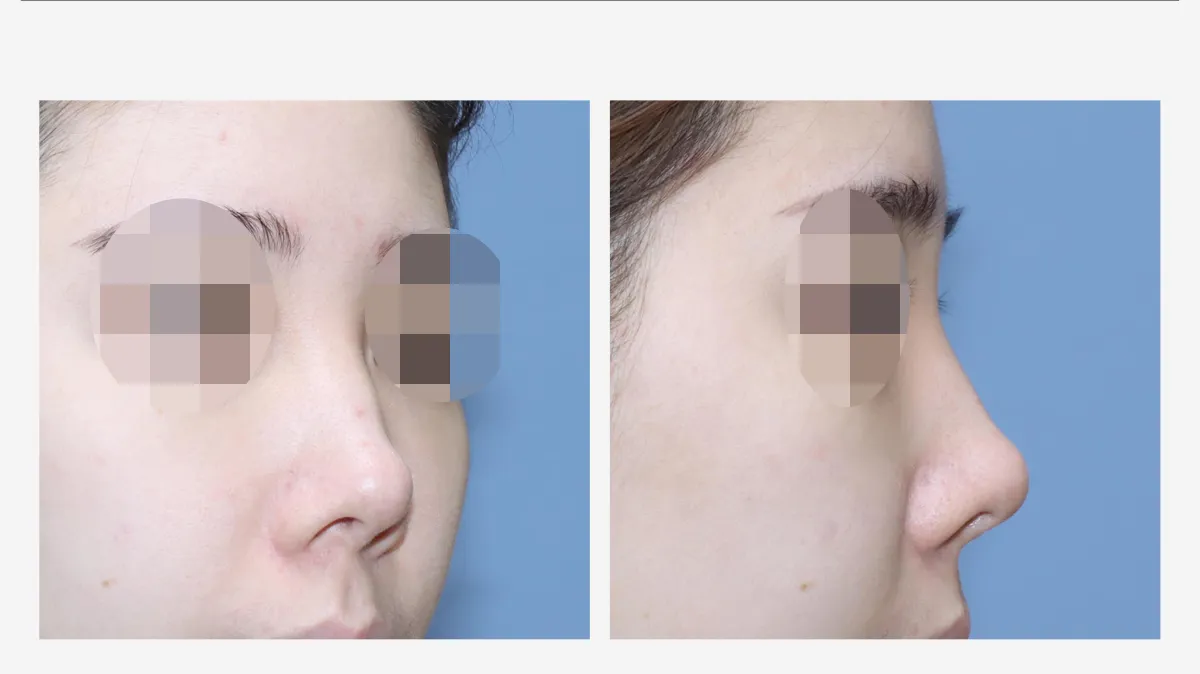
The nose is markedly upturned, and the ear cartilage grafted at the tip shows through.
Along with an irregular dorsal line, the tip is much higher than the dorsum, forming a Pinocchio line.
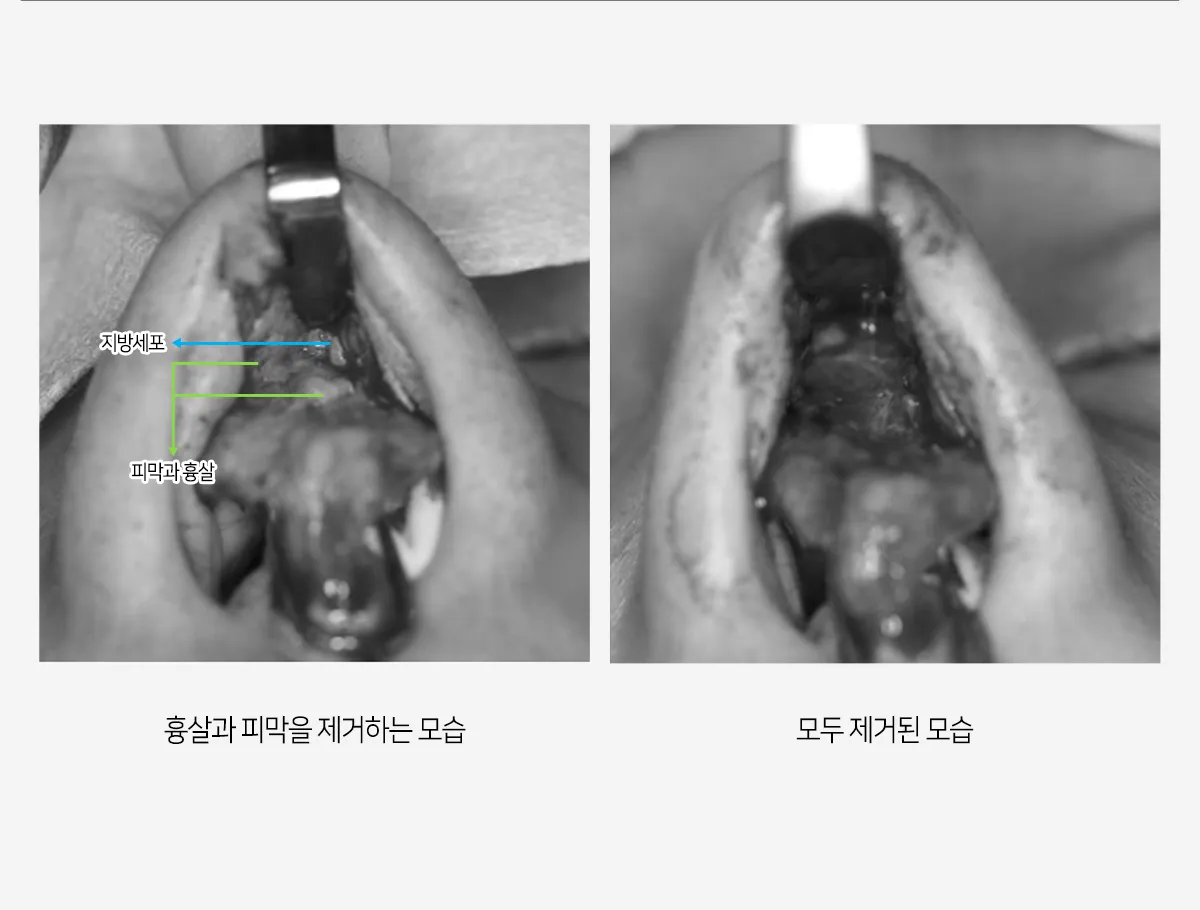
Removal of the scar tissue and capsule that had been left behind when the silicone nasal implant was removed, and the appearance after everything was removed.
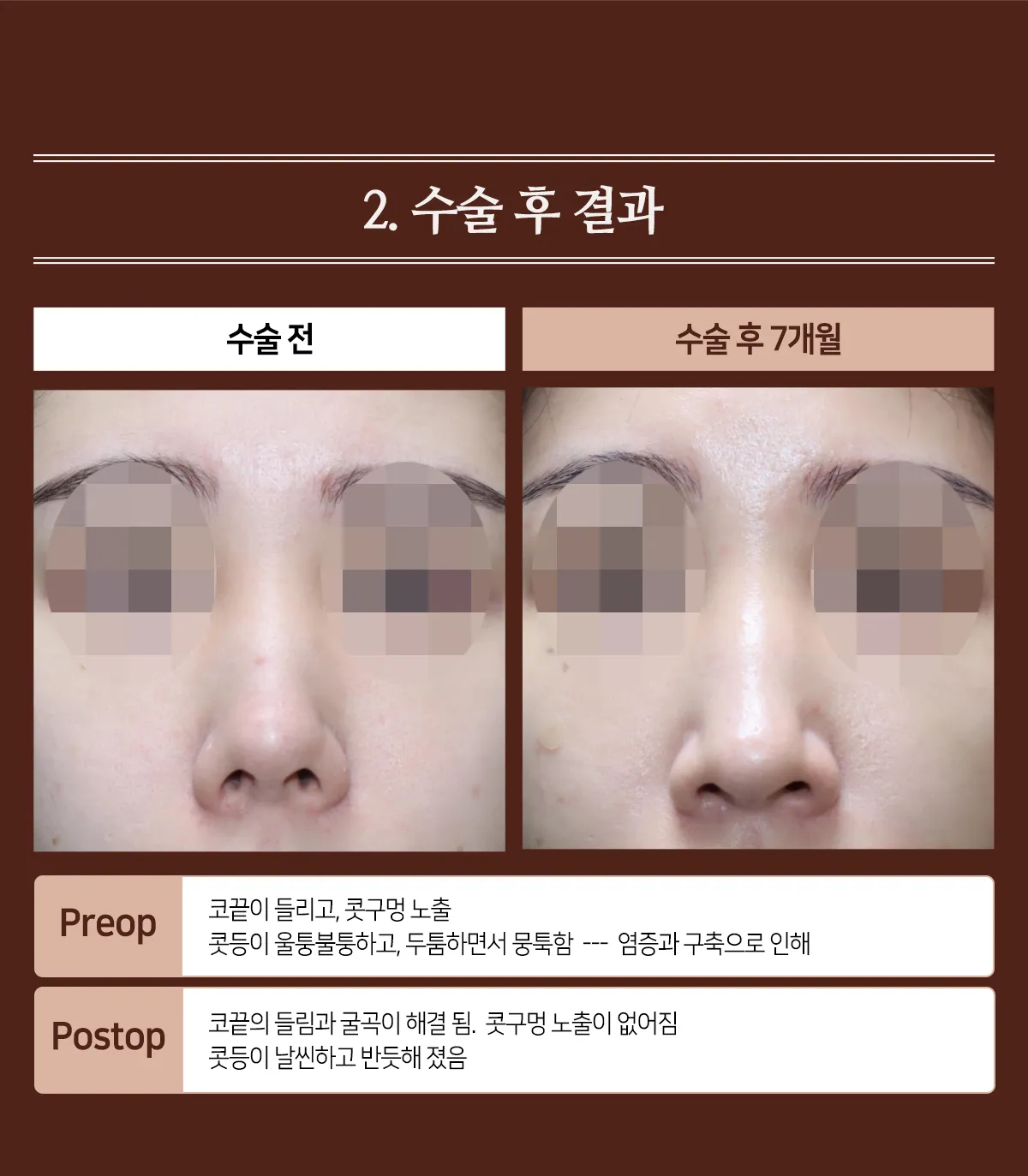
Preop
The nasal tip was upturned, with nostril show
The dorsum was uneven, thick, and blunt --- due to inflammation and contracture
Postop
The upturned tip and the irregularities were resolved. The nostril show is gone.
The dorsum became slim and straight.
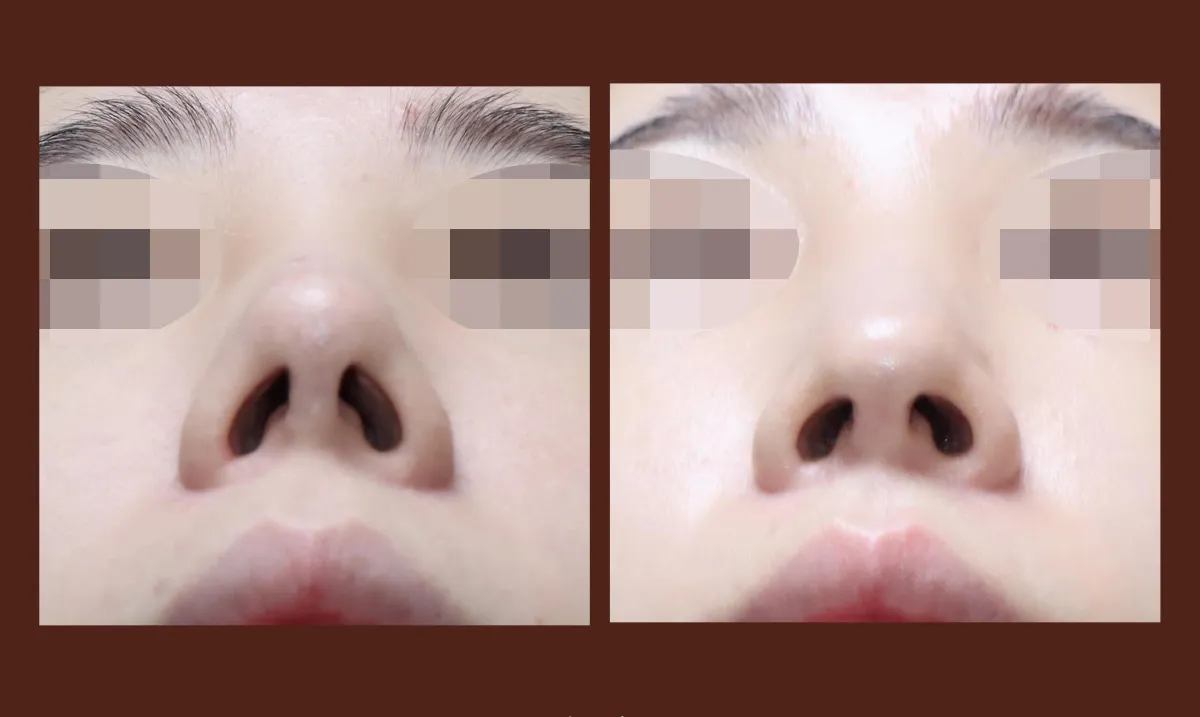
The asymmetry of the columella and nostrils improved markedly.
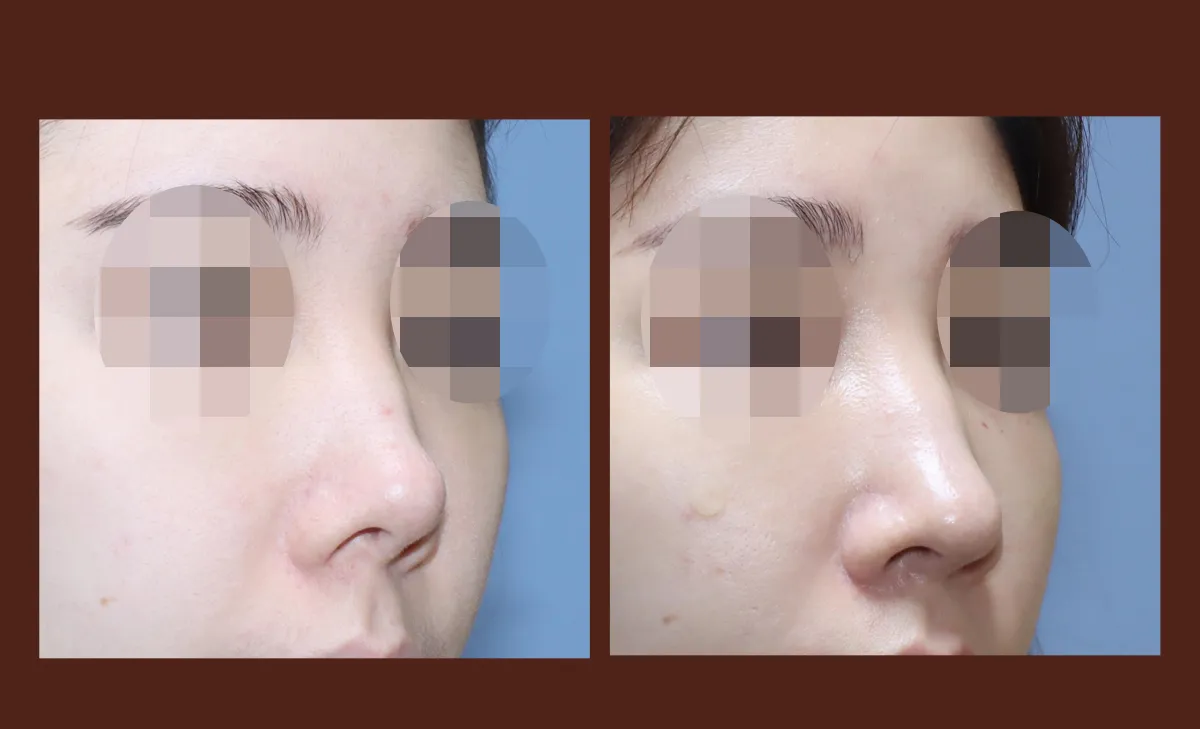
The dorsal line became smooth and natural, and the nasal length and tip deformity were completely corrected.