Nasal Tip Mobility After Nasal Implant Removal
After rhinoplasty with an implant,
the nasal tip often becomes fixed and immobile, causing discomfort,
and in some cases the skin of the tip becomes thin and flushes red.
Even a light bump to the nose can be startlingly painful, and the skin becomes sensitive,
so it weighs on the mind in everything and becomes a source of stress.
For these reasons, patients attach great importance to whether, after nasal implant removal,
the nasal tip will move freely enough to make a “pig nose”
and whether the nose will regain its soft feel.
However, with nasal implant removal alone,
there are often limits to how fully tip mobility can return to normal.
So how does Won-Suk Kook Plastic Surgery approach this problem?
Let us look at tip mobility after implant removal through a nasal implant removal case study.
5 years ago, this patient had surgery at a plastic surgery clinic in Gangnam through an open approach,
using a 4 mm silicone implant + ear cartilage.
However, the alae were pinched (pinched nose),
a clicking sound occurred when the tip was moved,
the tip was fixed and immobile, with a hard feel,
and there was a persistent foreign body sensation and a nose that looked deviated: a combination of problems.
We decided to resolve these problems through silicone implant removal and tip cartilage repositioning.
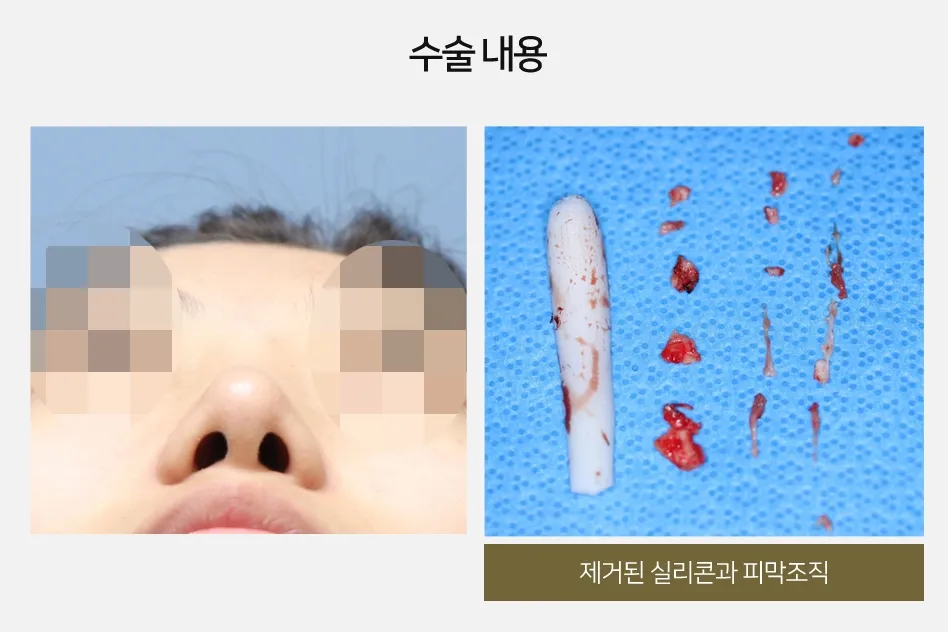
In the photo at lower left, the pinched tip
and its tilt can be seen.
The photo on the right shows the removed silicone implant and capsule.
Although it cannot be seen in the photos, the most important step, tip cartilage repositioning, was also performed.
There are concerns patients commonly have about what follows nasal implant removal surgery.
Will the bridge become too low after nasal implant removal? Will it look flat and awkward?
Will the tip droop or turn up? Will the overall shape of the nose look odd?
Can the tip's immobility and hardness be resolved so that it feels soft?
This patient had all of these concerns together.
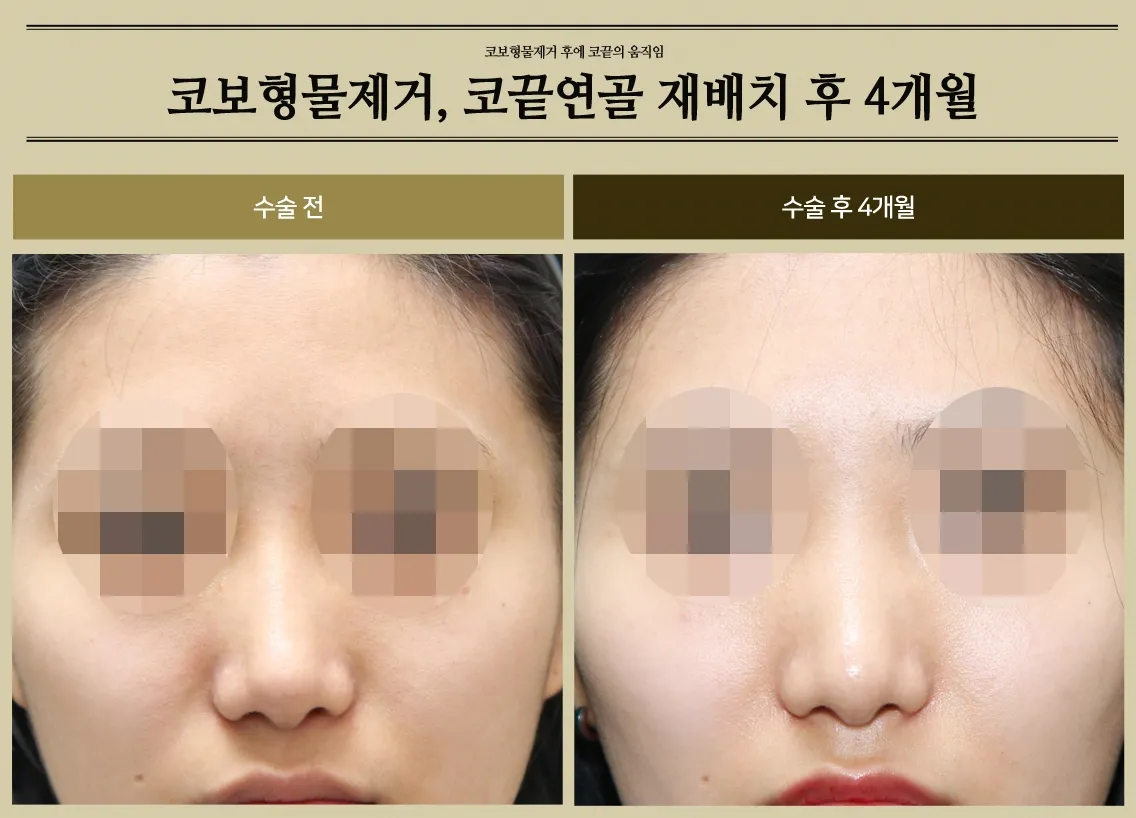
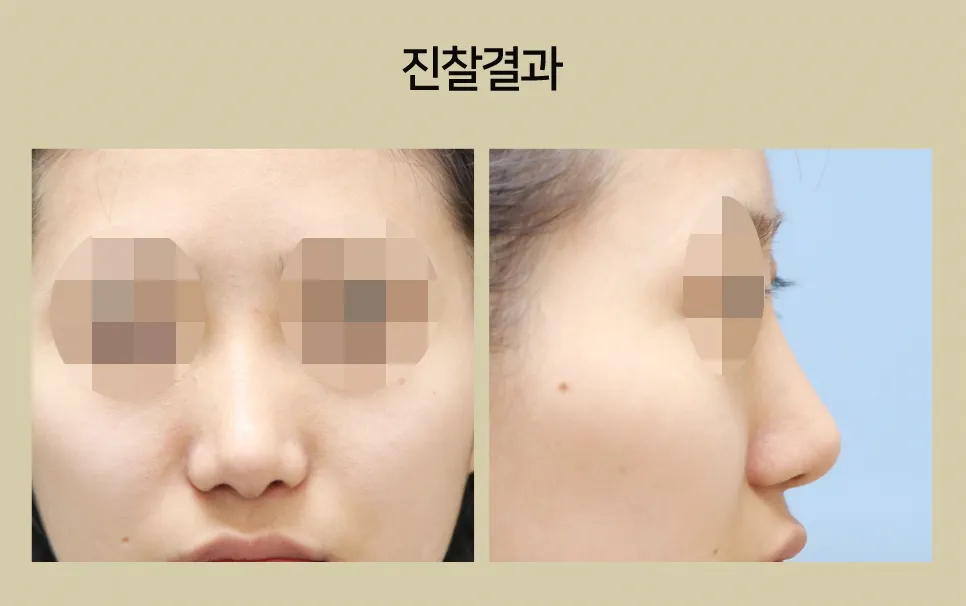
However, after nasal implant removal and tip cartilage repositioning, the patient was pleased that the nose looked more natural than before removal.
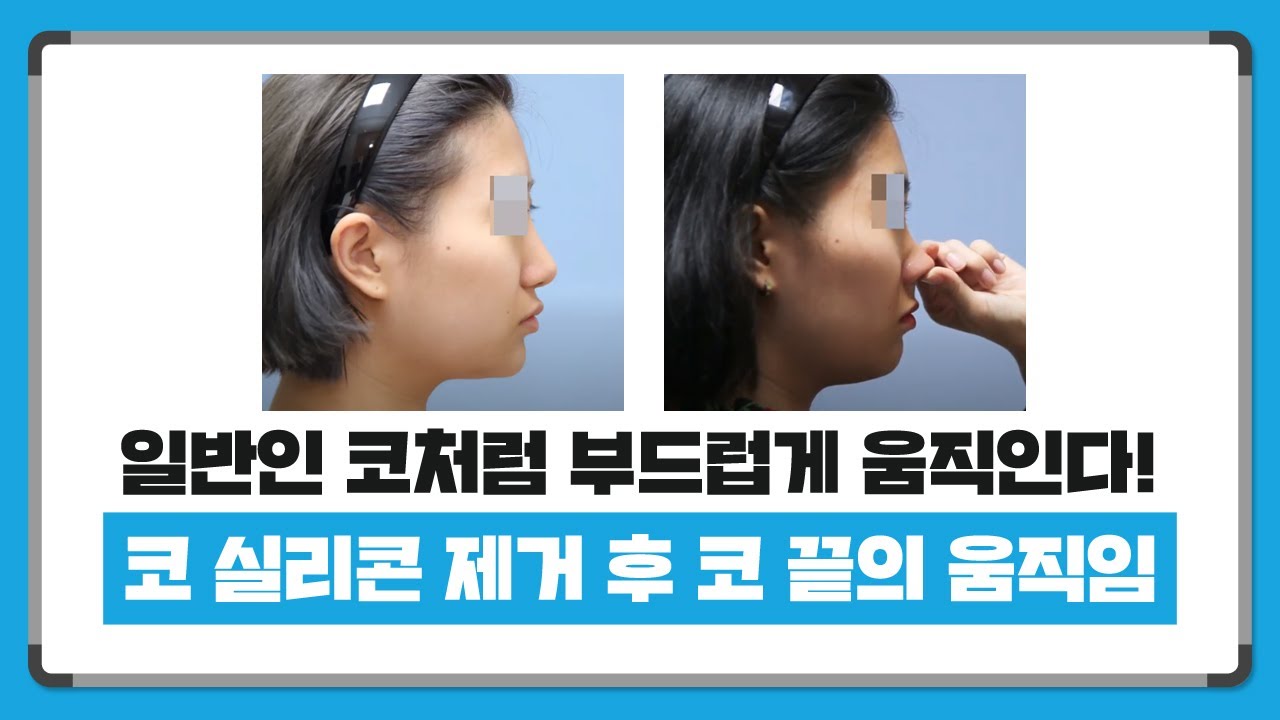
From the side as well, the tip moves very freely and looks no different at all from an ordinary nose.
As the silicone, capsule, tip strut, tip graft, and other materials were removed
and tip cartilage repositioning was performed as well, the previously fixed tip was released,
and its movement became natural.


 YouTube