

Crooked Tip and Columella & Nostril Asymmetry Case Study (Removal + Closed Simple Repositioning) 2
After rhinoplasty, it is surprisingly common for the tip and columella to become crooked and the nostrils asymmetric, accompanied by nasal obstruction.
Unhappy with how it looks and stressed every time they see it, patients go back to the clinic that performed the surgery,
only to be told, "The swelling has not fully gone down and things have not settled yet, so let's wait a little longer."
Quite a few of them wait 2-3 months, see no improvement, and then come to my clinic.
A crooked columella and tip and asymmetric nostrils after rhinoplasty are stressful enough,
and patients are anxious and worried, unsure whether it will improve on its own with time or needs to be corrected.
However, this never improves on its own simply by waiting.Corrective surgery must be performed to regain the original appearance.
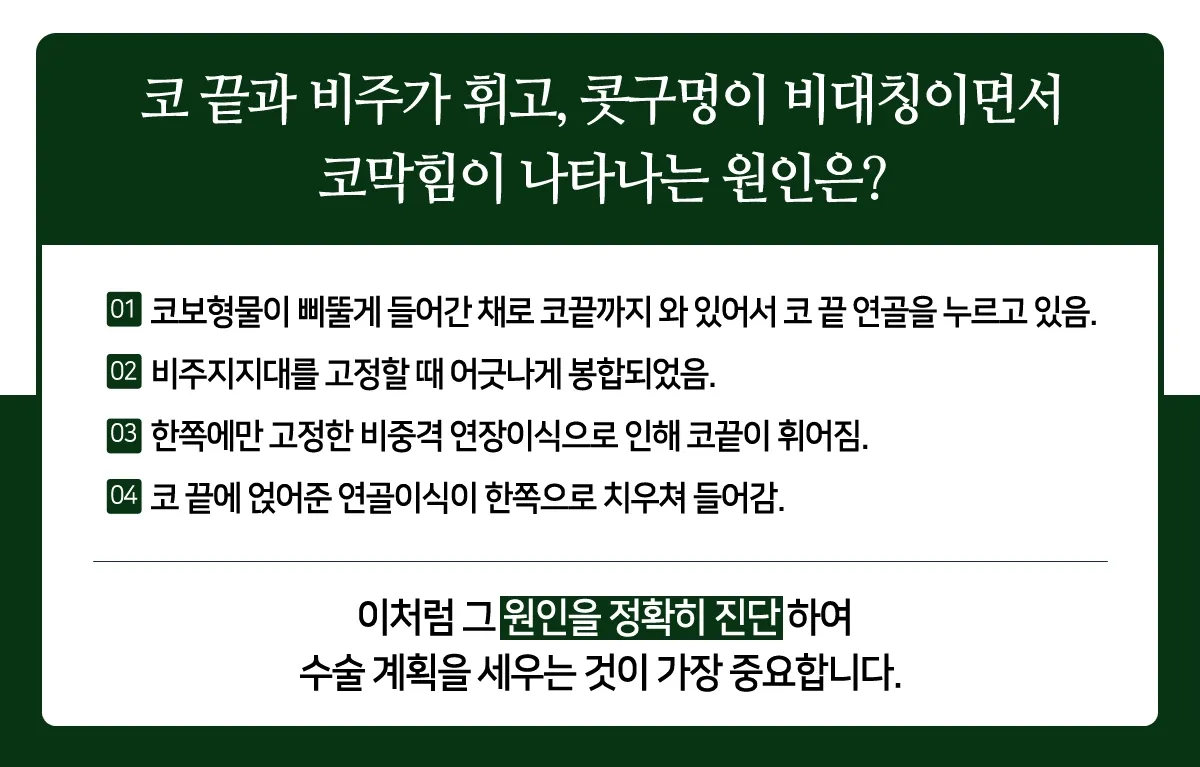
To correct this, the cause must first be identified with an endoscope and careful examination,
and then the twisted tip cartilages and septum must be returned to the exact midline.
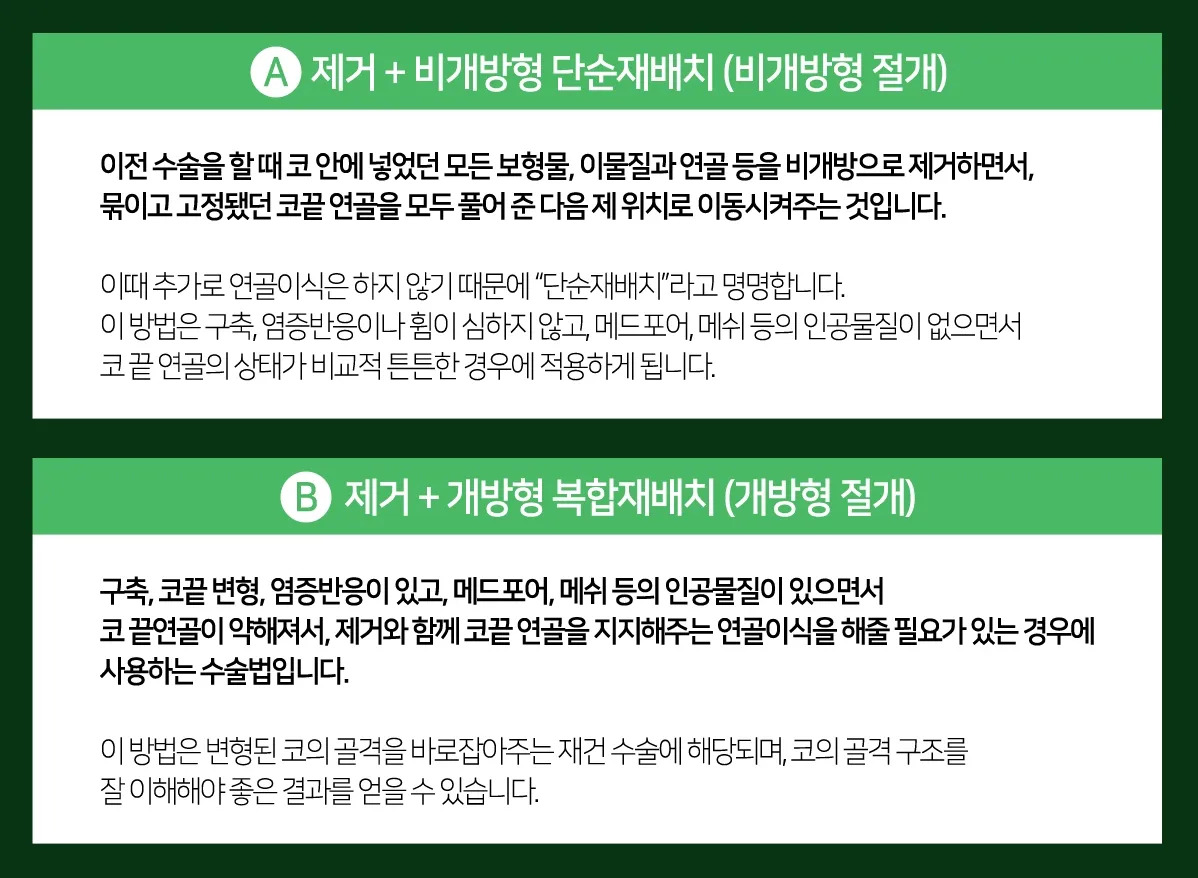
Technically, there are two methods.
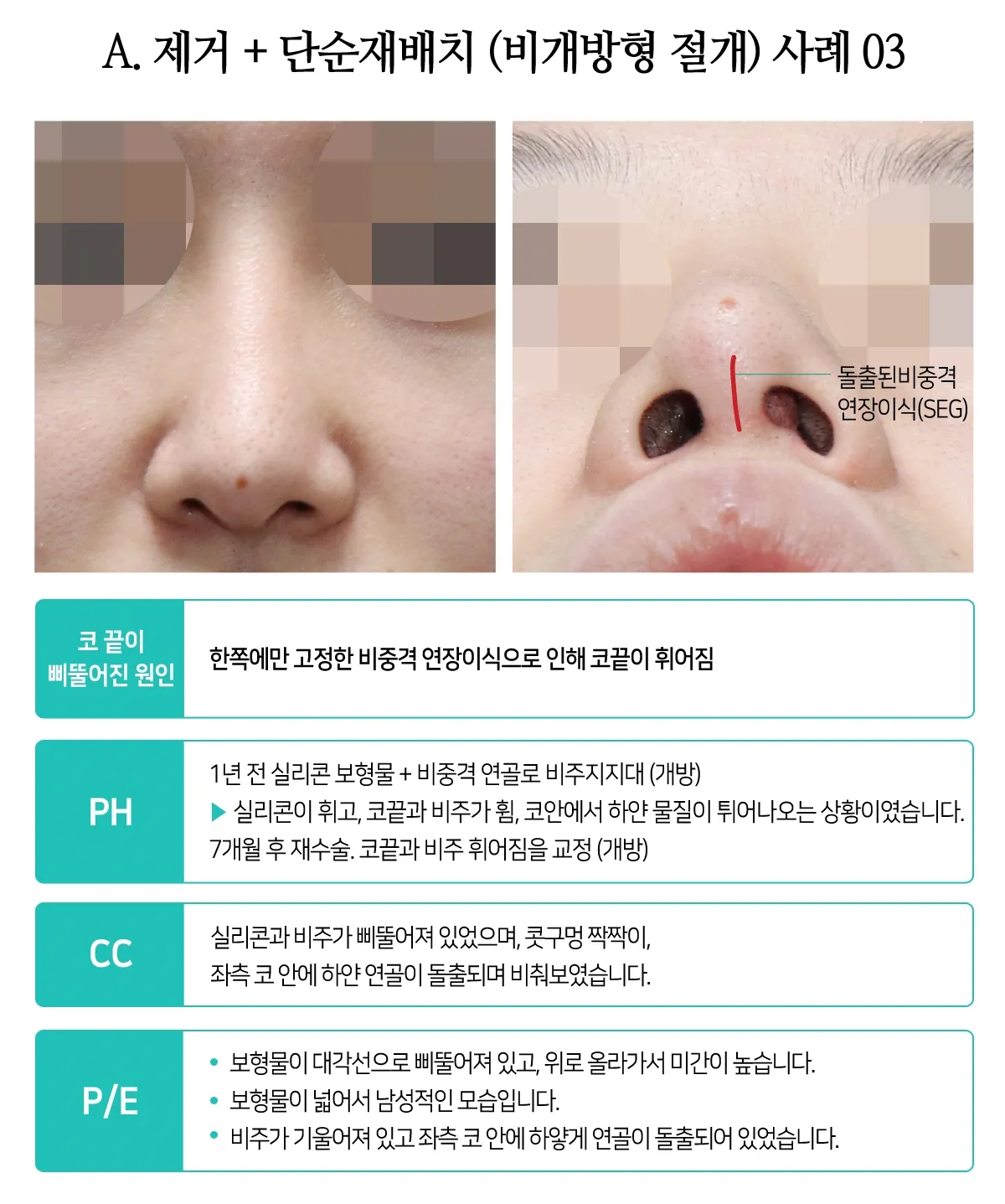
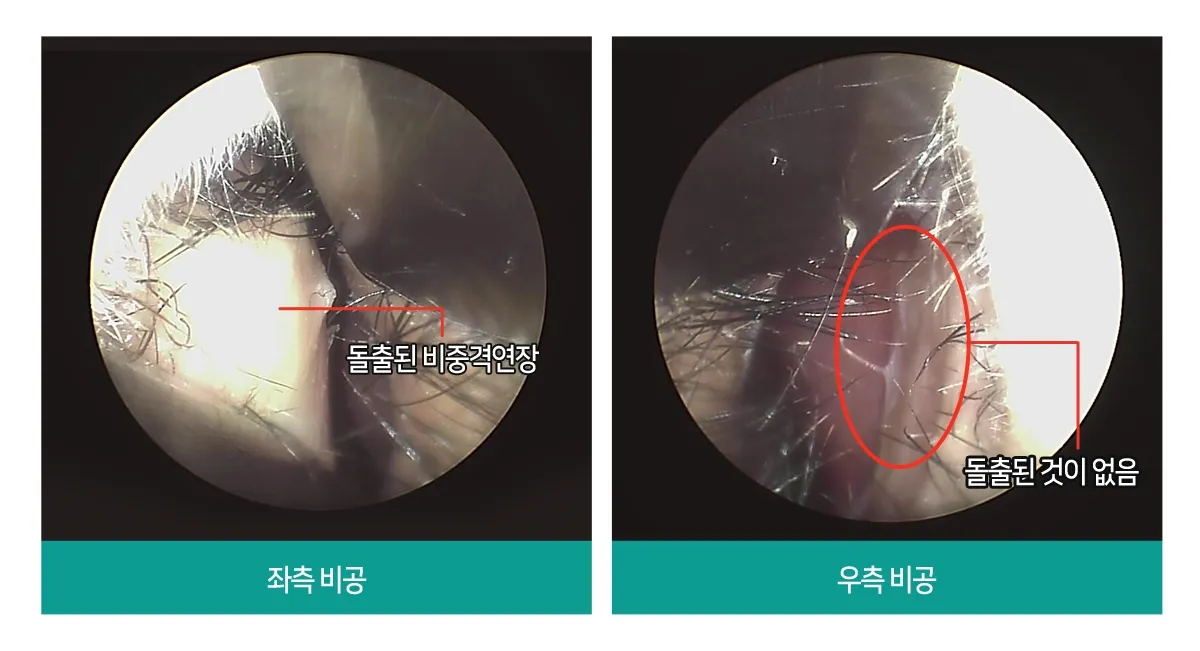
As the endoscopic photo shows, the protrusion in the left nostril was a septal extension graft,
which was found during surgery to be mesh.
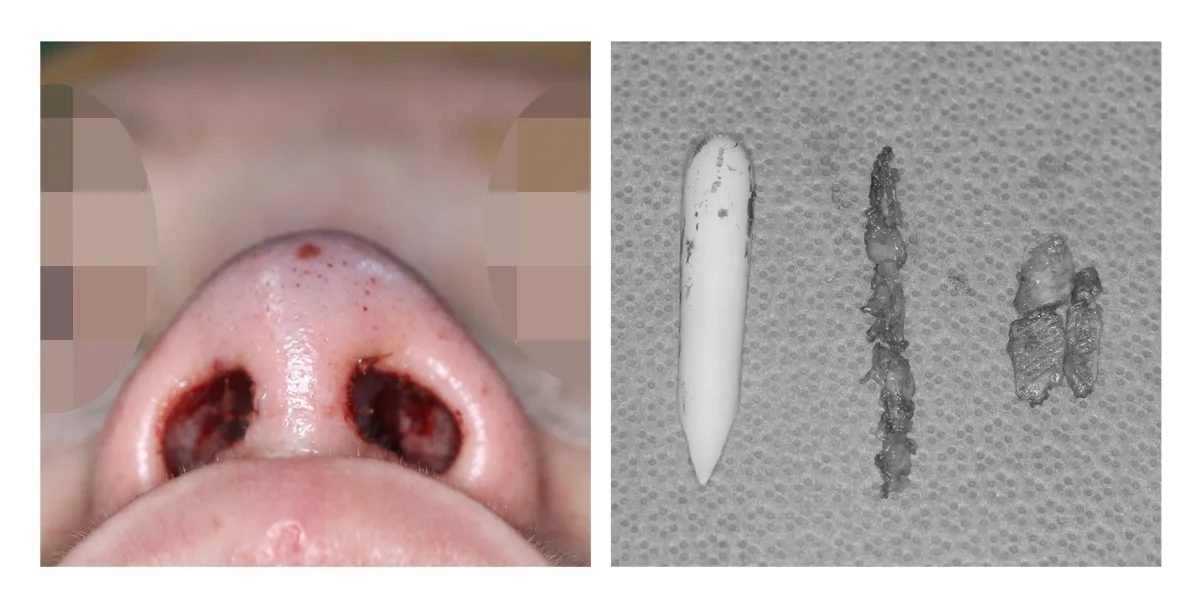
In the photo taken immediately after surgery, the protrusion inside the left side of the patient's nose is gone,
and the columella and nostrils are straight and symmetric.
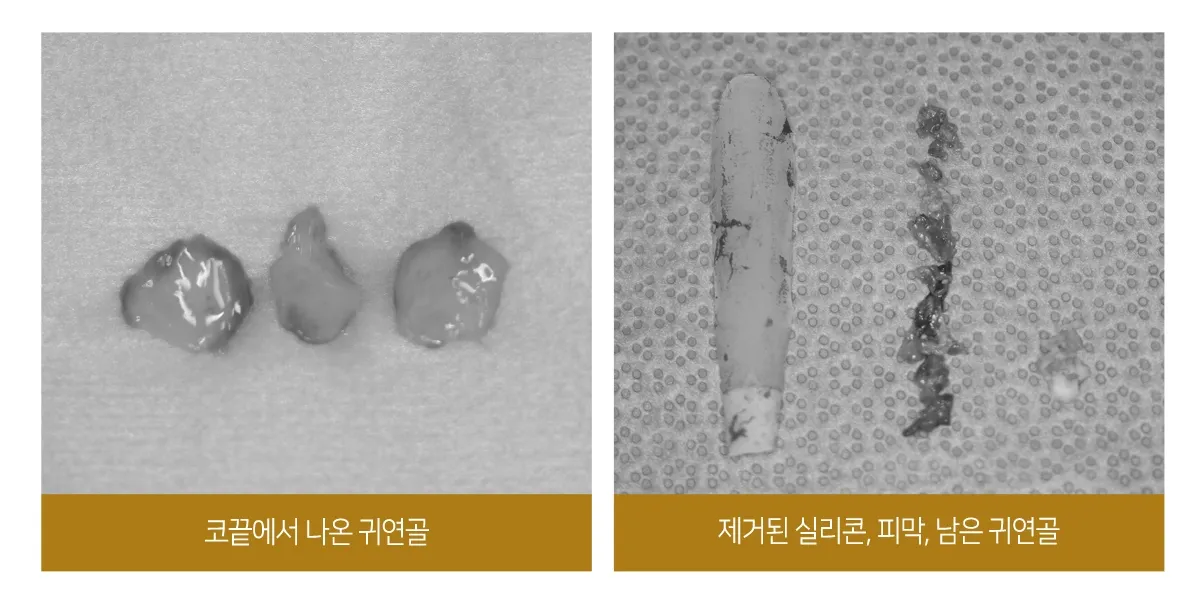
The materials removed were silicone, capsule, and mesh (the septal extension material). (Right photo)
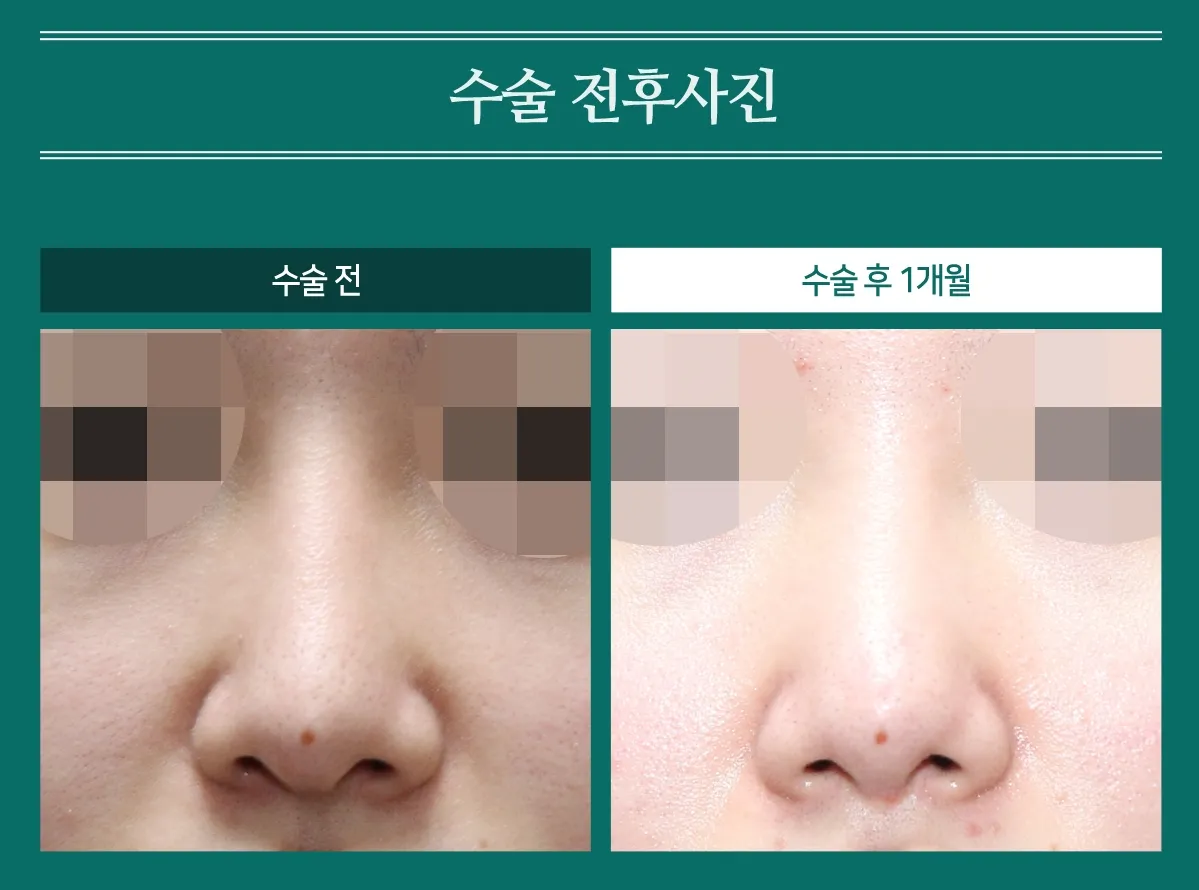
The crooked tip is now straight.
This is 4 weeks after surgery, so contraction has begun
and the tip looks slightly pinched, but this gradually relaxes and is no cause for concern.

With removal + closed simple repositioning, the septal extension graft protruding into the left nostril is gone,
and the columella, which had bent to the right, has straightened.
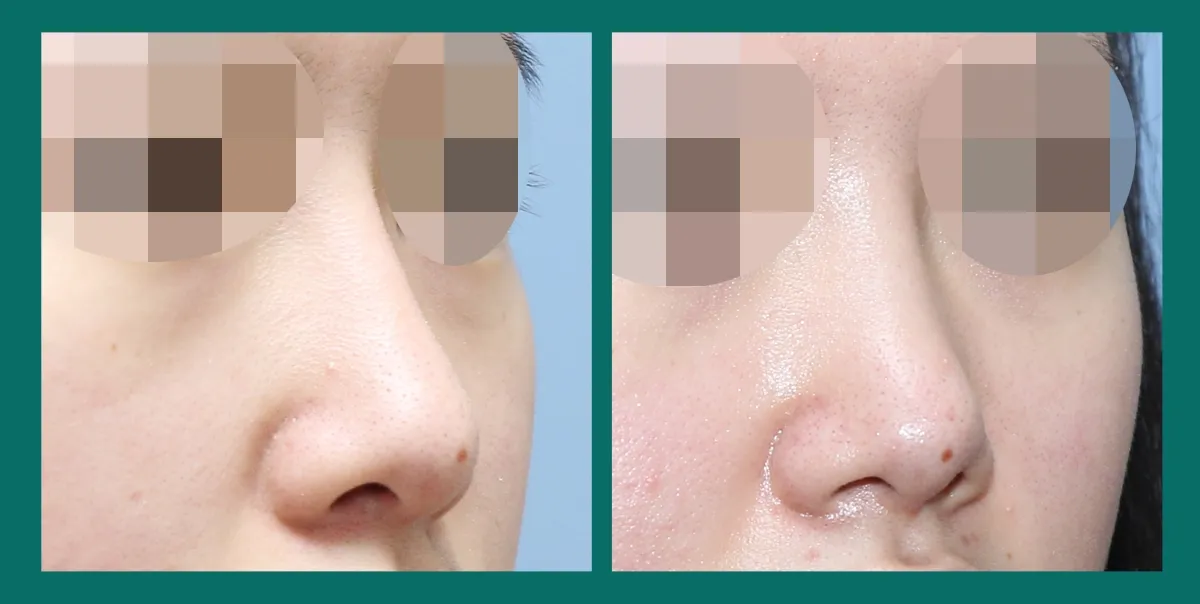
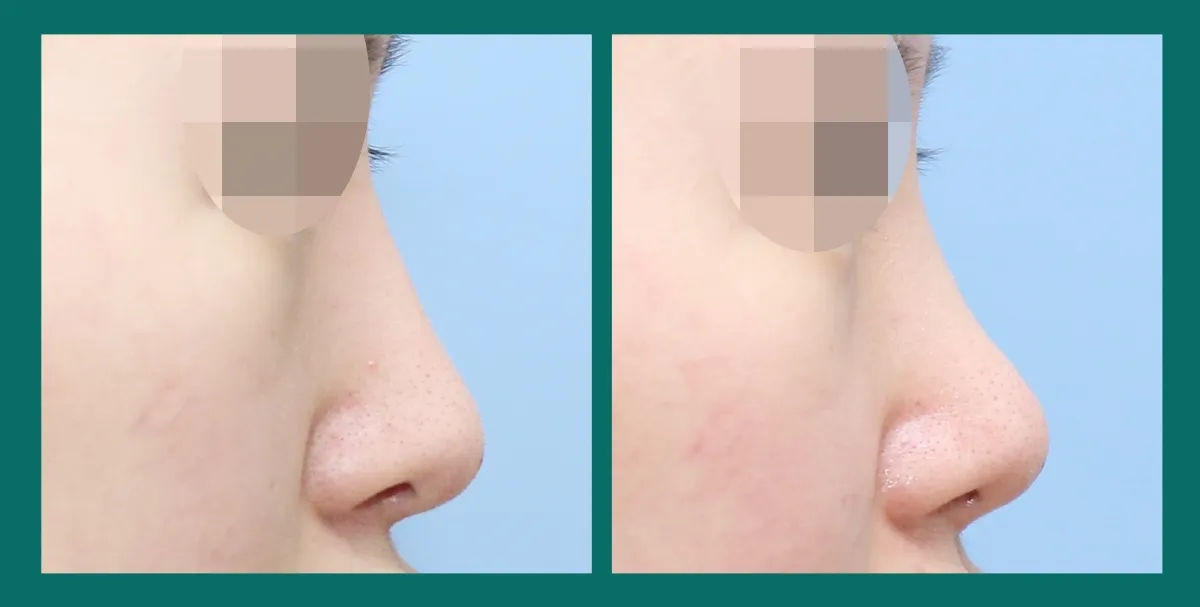
After surgery, the tip is slimmer and more natural.
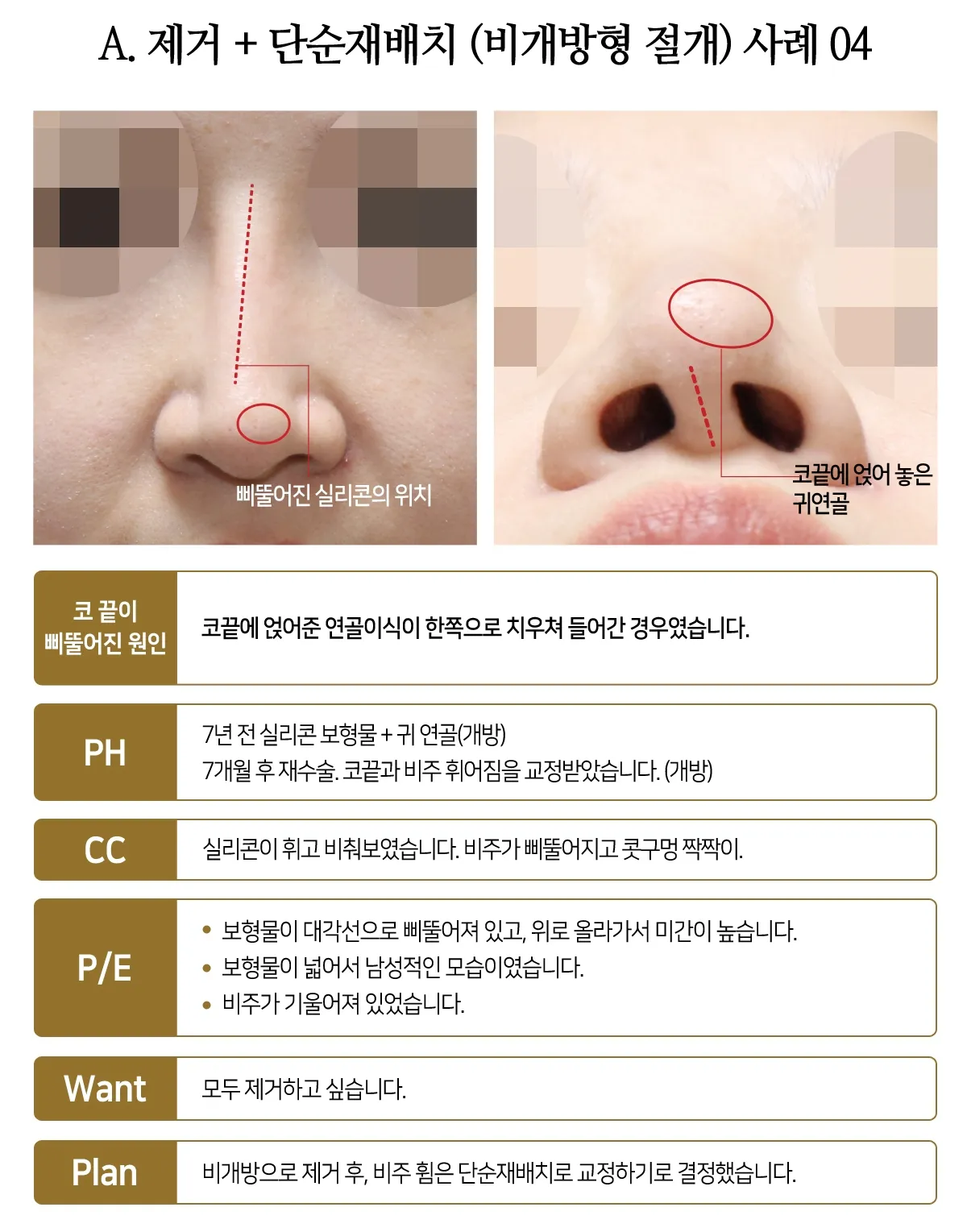
This was pressing on the alar cartilage of the tip and pushing it crooked toward the opposite side.
After the silicone was removed, it was used to fill the sunken area at the glabella.
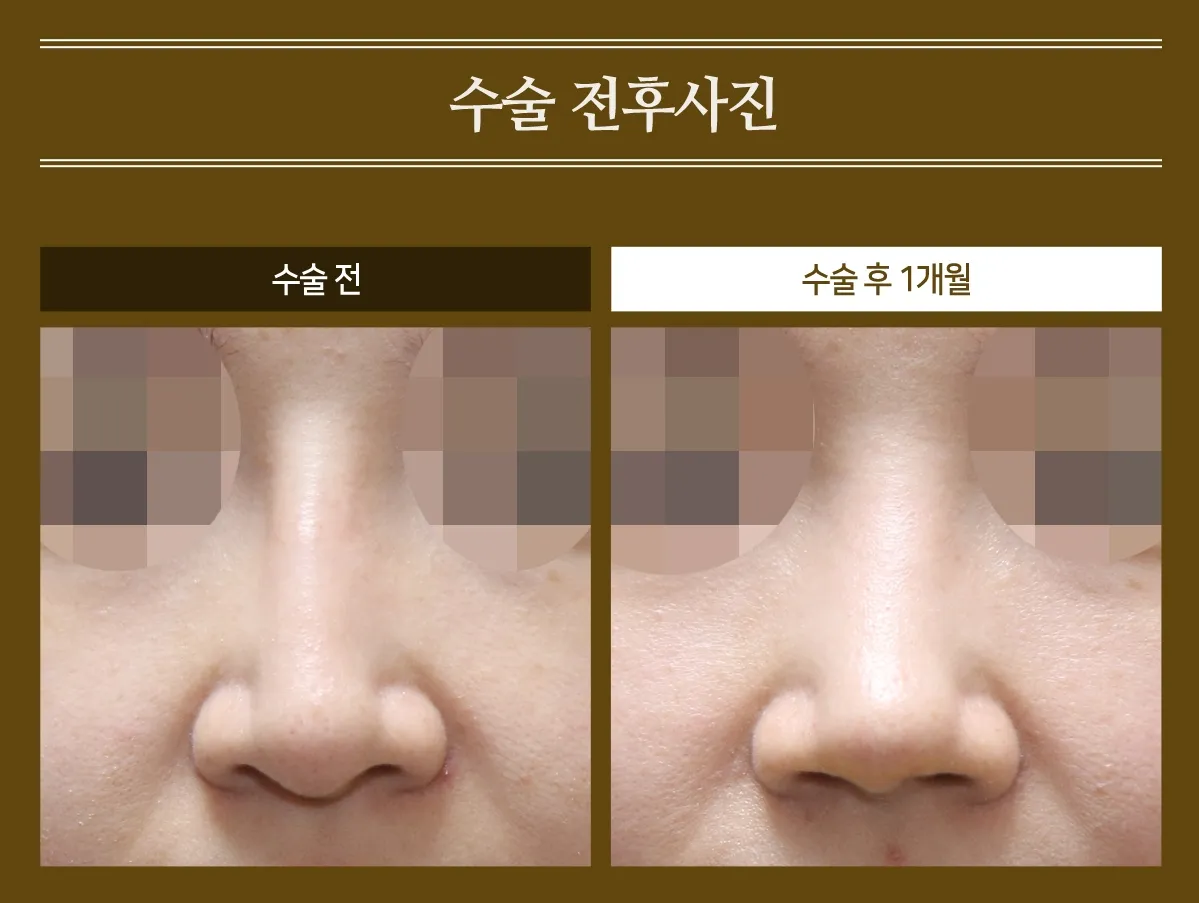
After the crooked silicone and the tip cartilage graft were all removed and simple tip cartilage repositioning was performed,
the dorsum and tip settled into a straight, well-formed shape.
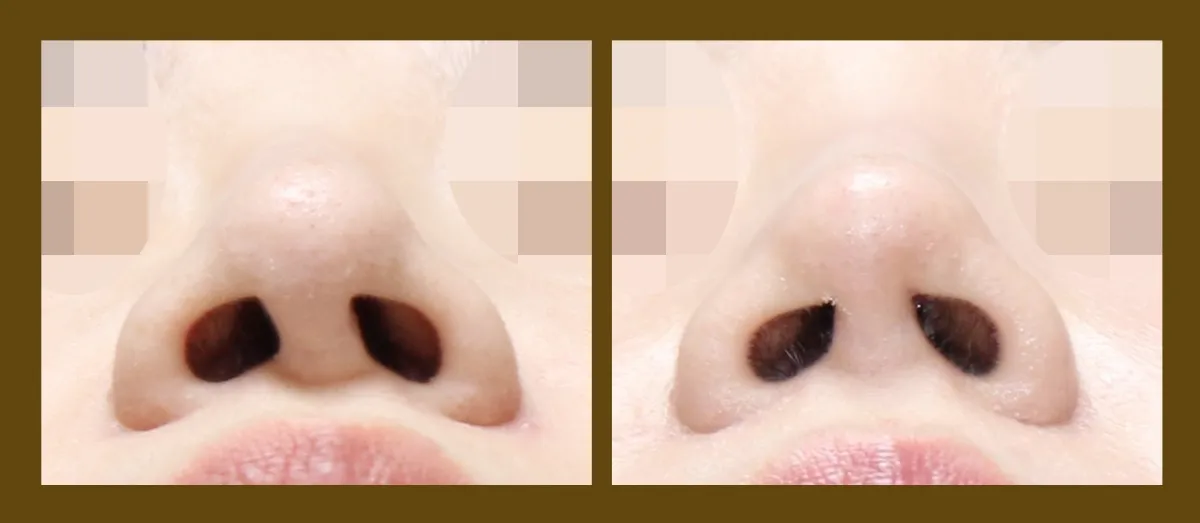
These show how the columella changed before and after surgery.
Even with removal + simple repositioning through a closed approach alone, the crooked columella and nostril asymmetry were corrected.
The contraction period lasts up to 3-6 months, and at 1 month after surgery it is at its strongest.
If the contraction is released early with active massage and rehabilitation starting 1 month after removal,
the tip softens sooner and can move freely.
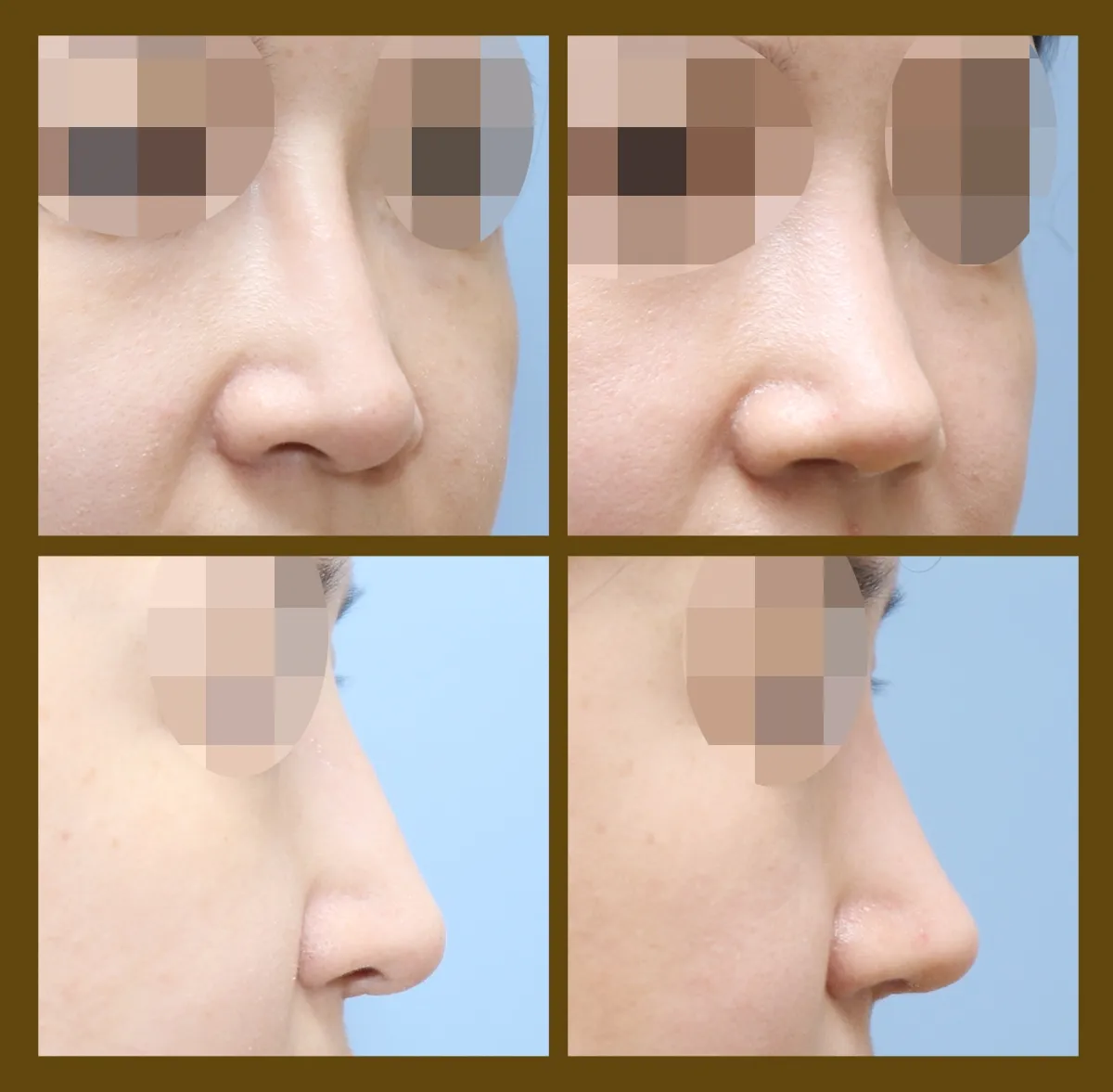
With removal and closed simple repositioning alone, the profile of the nose became natural and attractive.
After removal, the artificial look caused by a high glabella and long nose became natural.

People often worry that problems like those above will appear once the implant and cartilage grafts are removed.
However, even with a closed approach like this, it is possible to return to one's own natural nose.