

Revision Rhinoplasty Cases by Type 2 (Severe Infection and Resulting Side Effects)
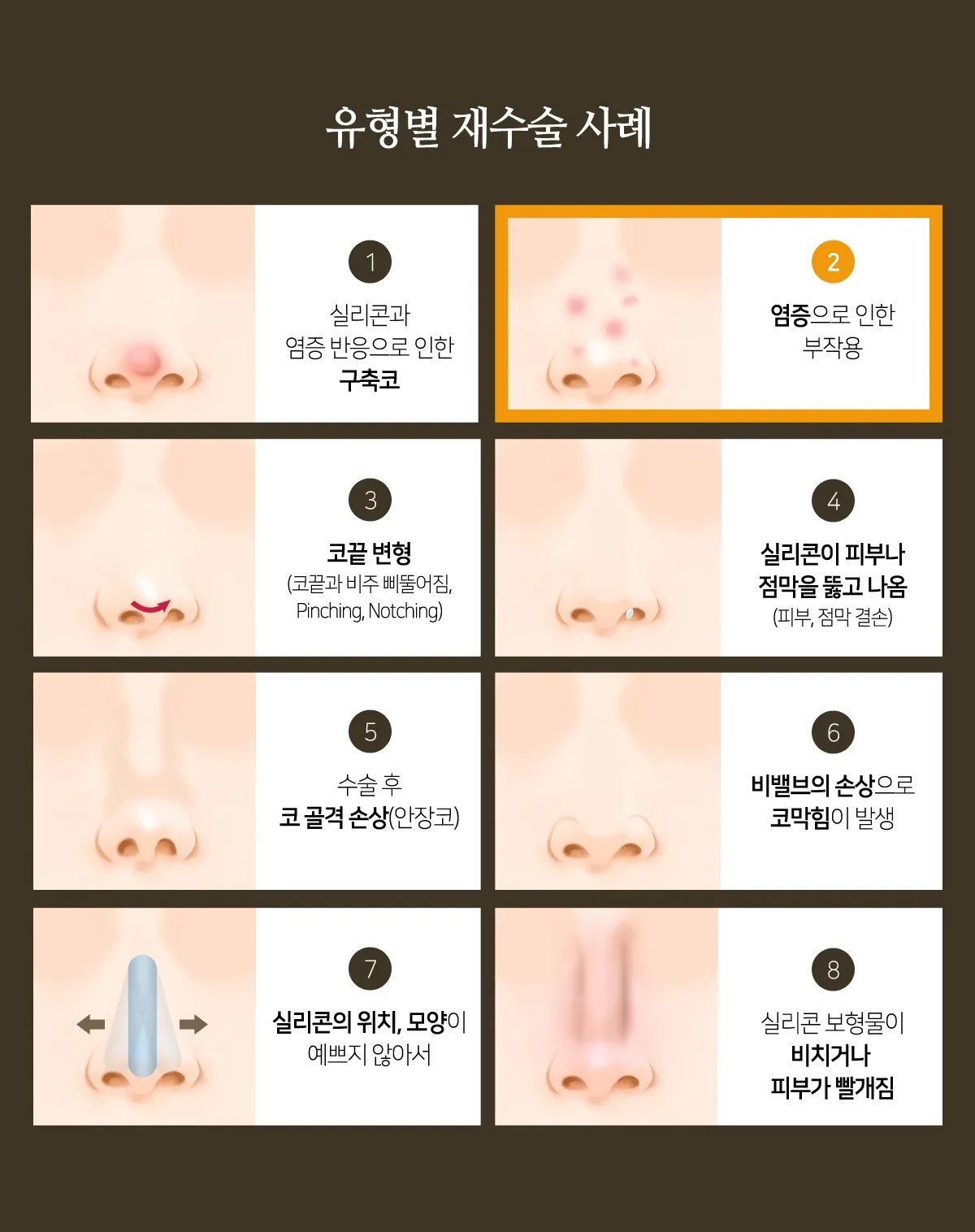
Revision rhinoplasty refers to corrective surgery performed when, after one or more nasal surgeries,
aesthetic or functional side effects have developed.
The deformities that result from problems after rhinoplasty are so varied
that it is difficult to show every case one by one.
The reason is that the nose is a three-dimensional structure and a complex organ in which various tissues are organically connected.
We will therefore focus on representative cases and explain how, after revision surgery, side effects can be kept from recurring
and a good result can be achieved.
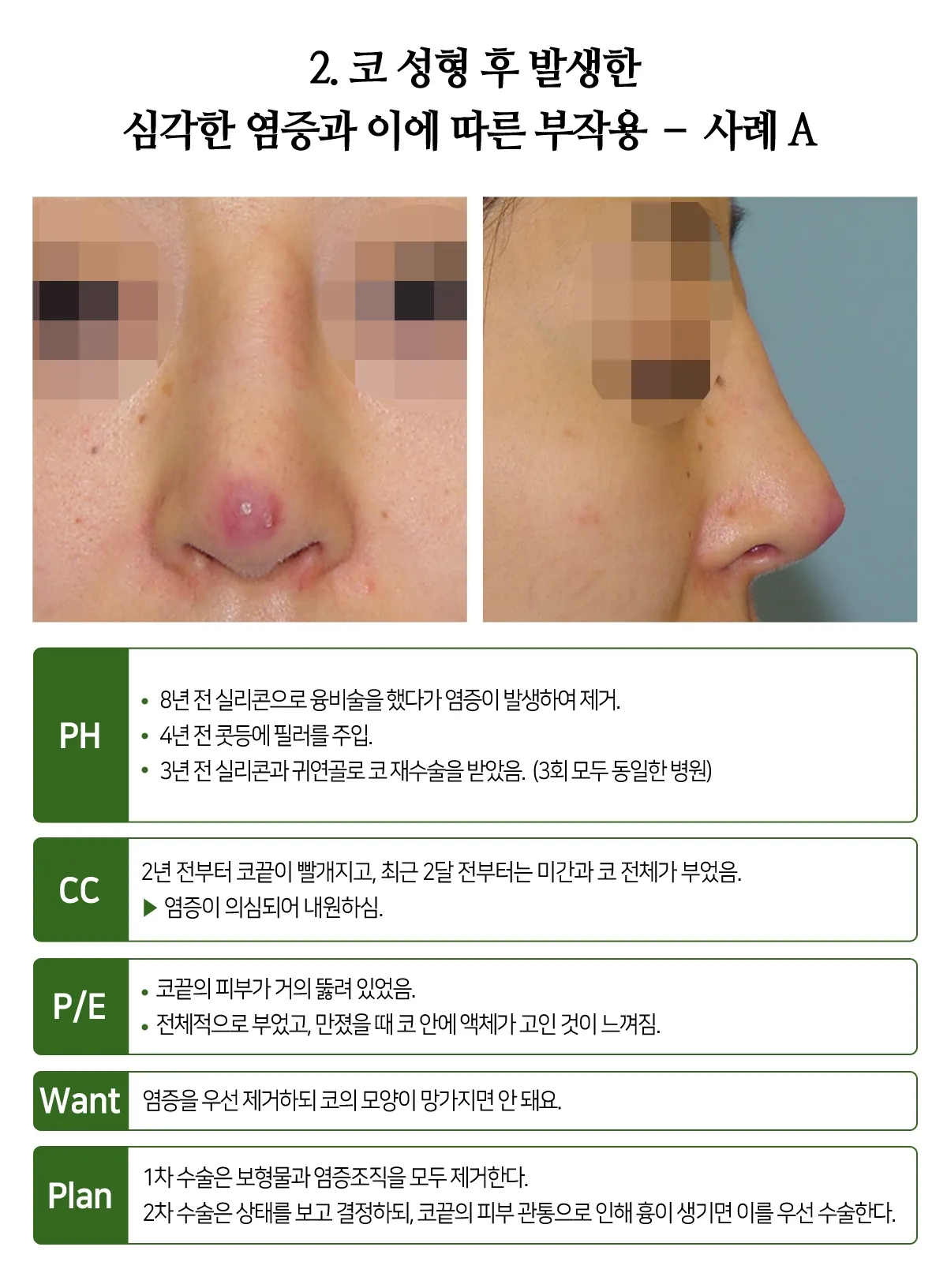
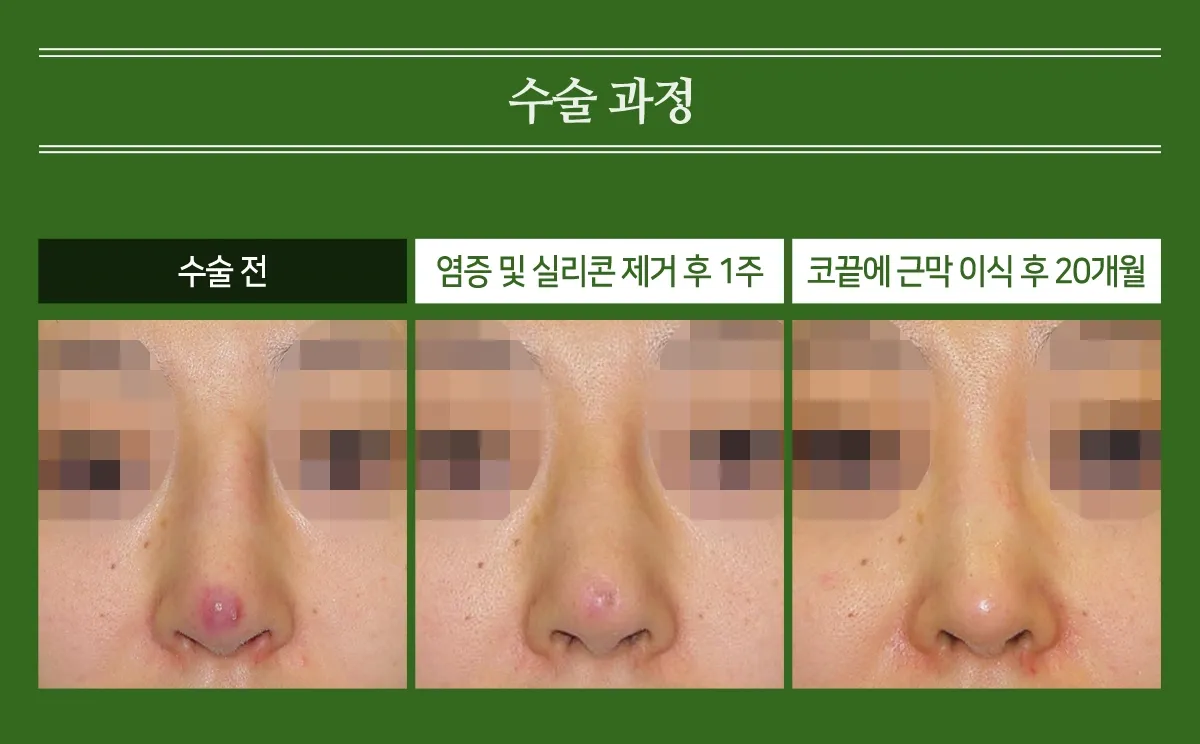
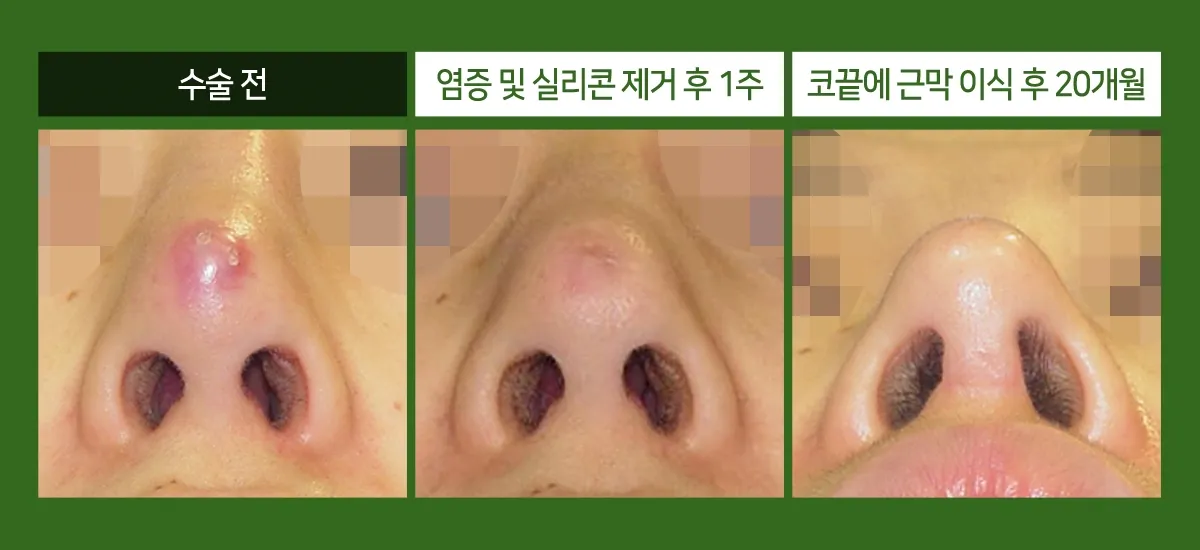
At the time of surgery, infection was present throughout the nose. The skin of the tip already had a small hole
and was covered with granulation tissue. Because the infection was acute, no reconstructive surgery was performed;
instead, the silicone, granulation tissue, pus, and other material were all removed and the tip was repositioned.
In the photo taken 1 week after surgery, a depressed scar resembling a dimple remains on the tip.
1 month after the removal, once the infection was confirmed to have fully resolved, a fascia graft was placed in the tip.
As the photo taken 1 year later shows, no trace of any kind remains on the tip.
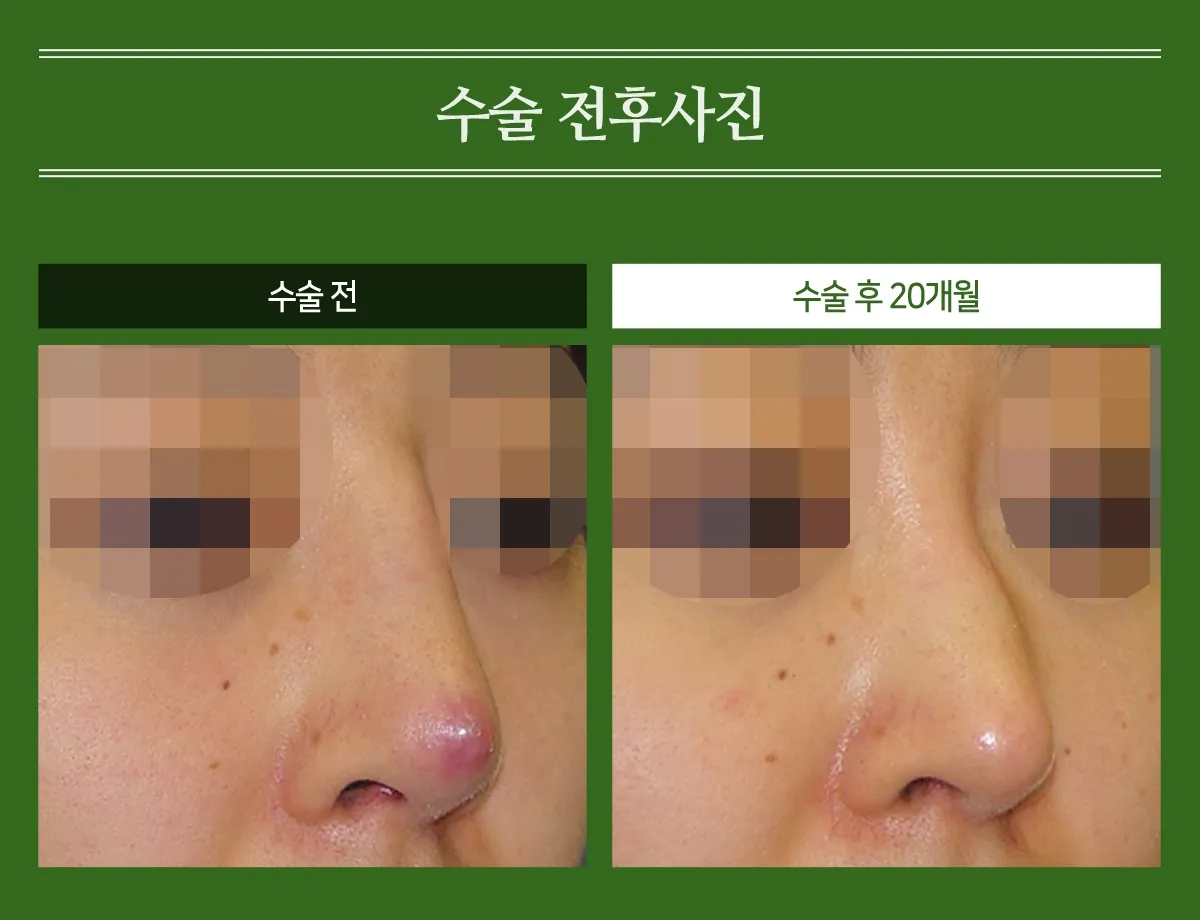
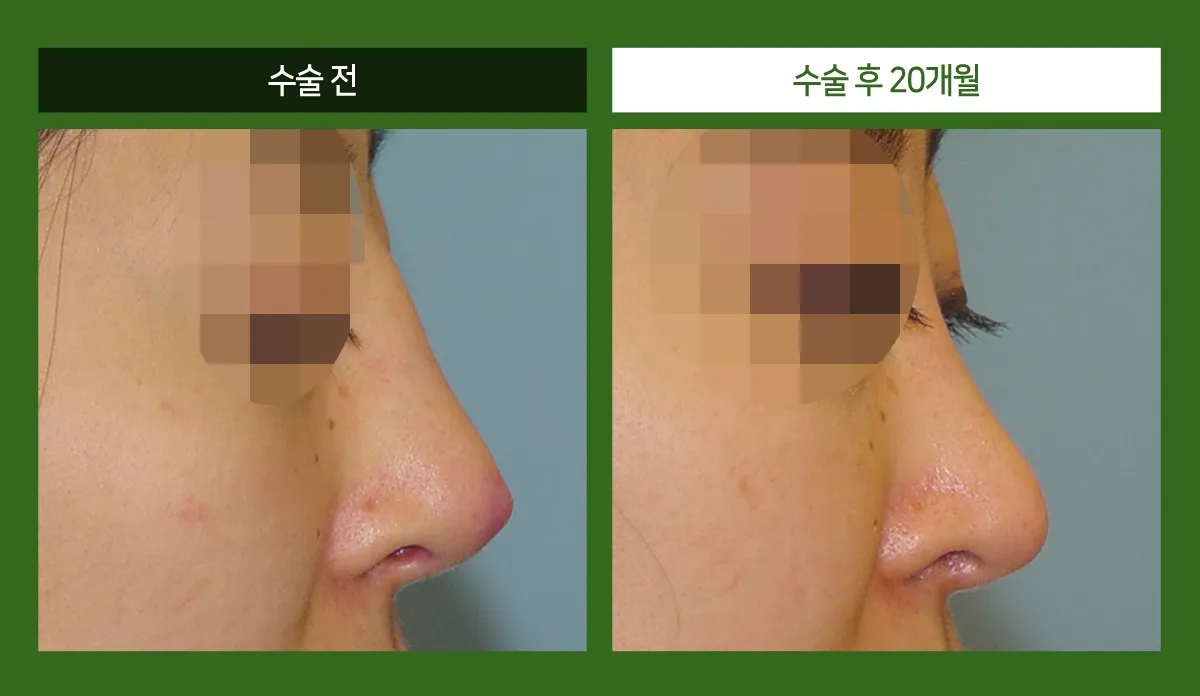
Before surgery, the patient was very worried that contracture might cause the nose to turn up,
but 20 months after surgery the tip has not turned up, collapsed, or twisted.
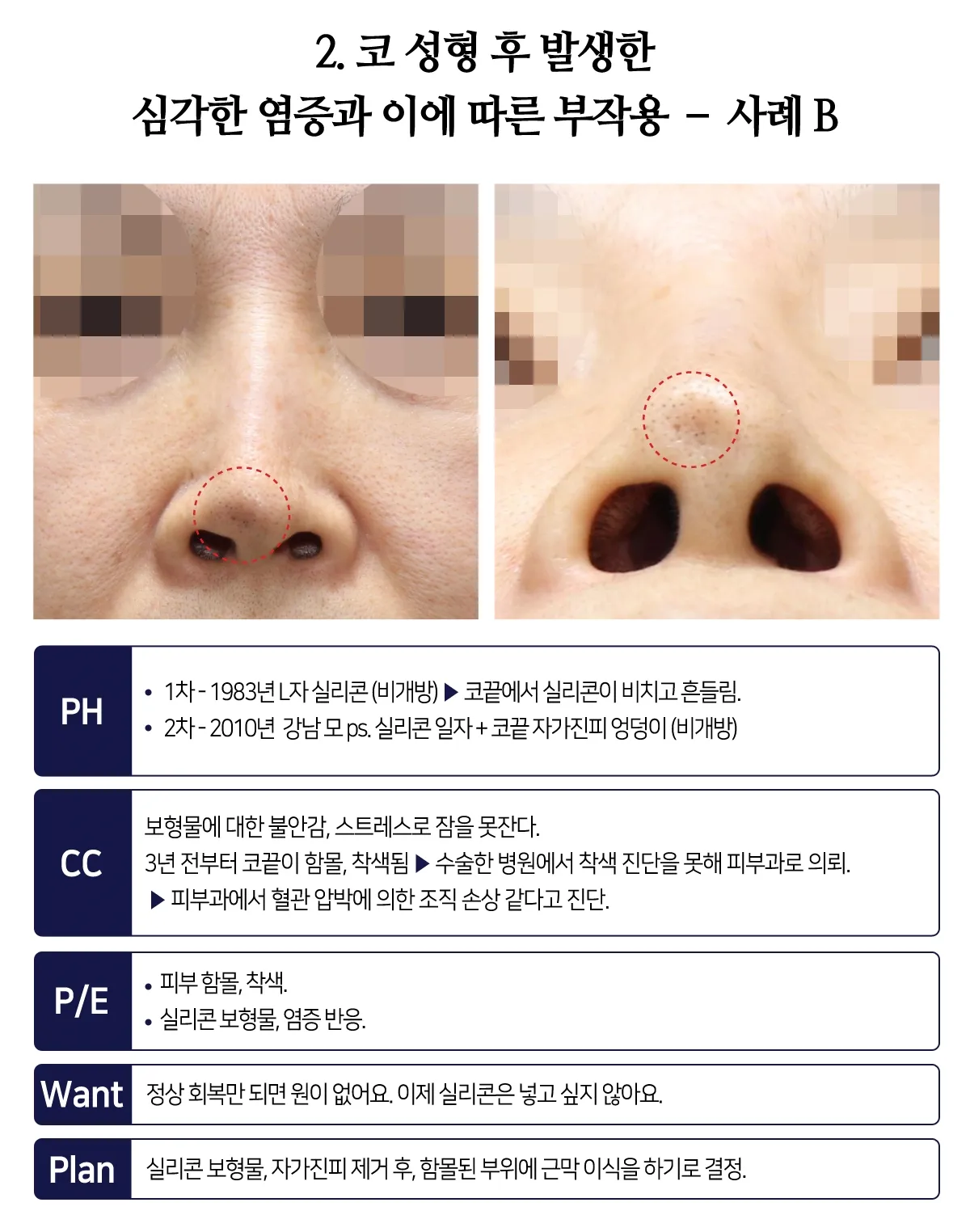
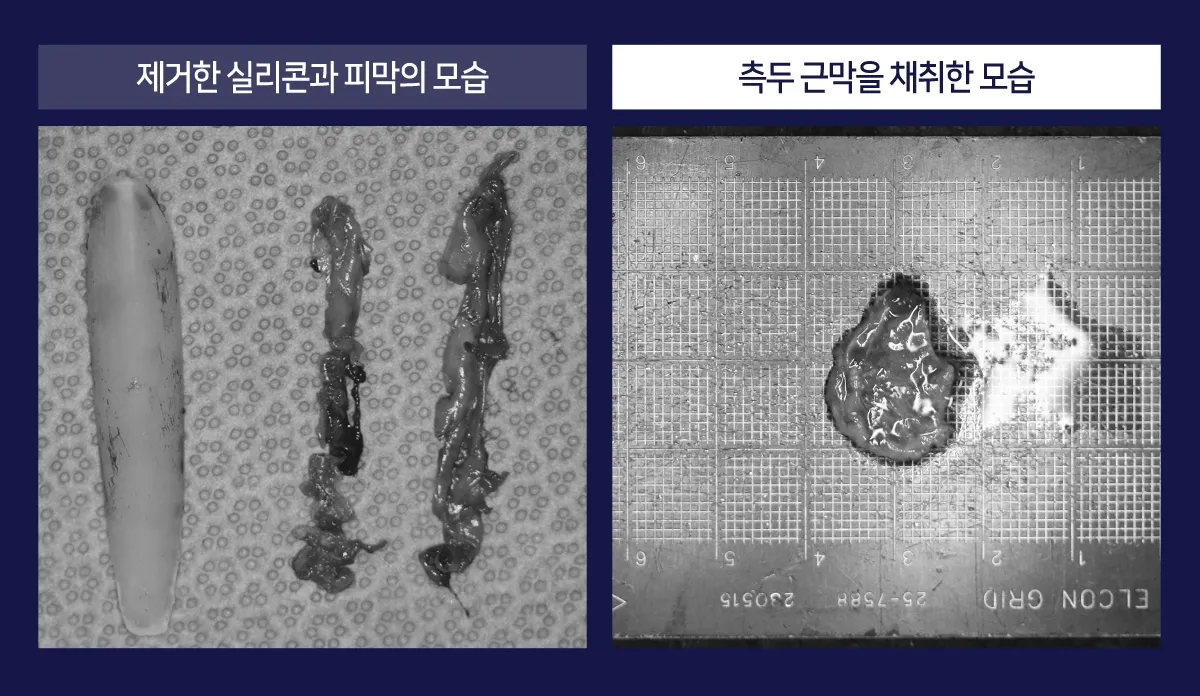
The capsule was very thick and tough, which indicates
that an inflammatory response had been going on around the tip and the silicone for a long time.
The discoloration and depression of the tip were diagnosed as resulting from the inflammatory response and adhesions.
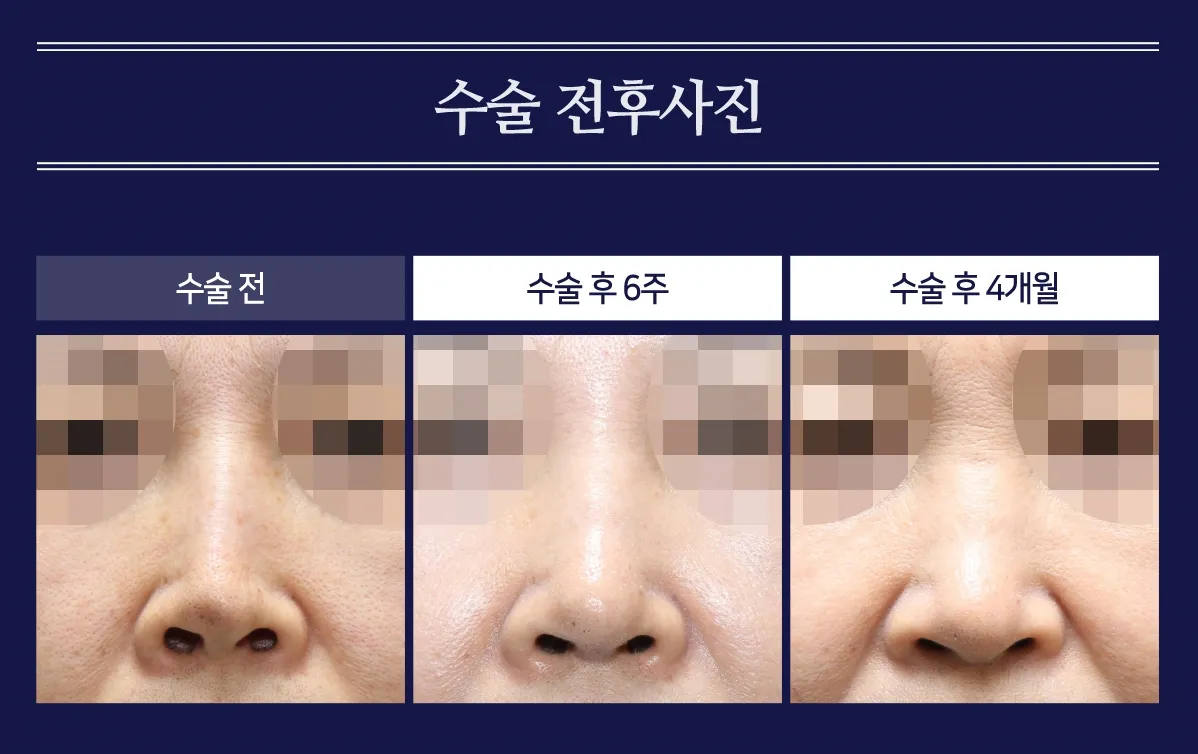
The silicone and capsule were removed, and temporalis fascia was placed in the tip.
Over time, the depression and discoloration of the tip have completely disappeared.
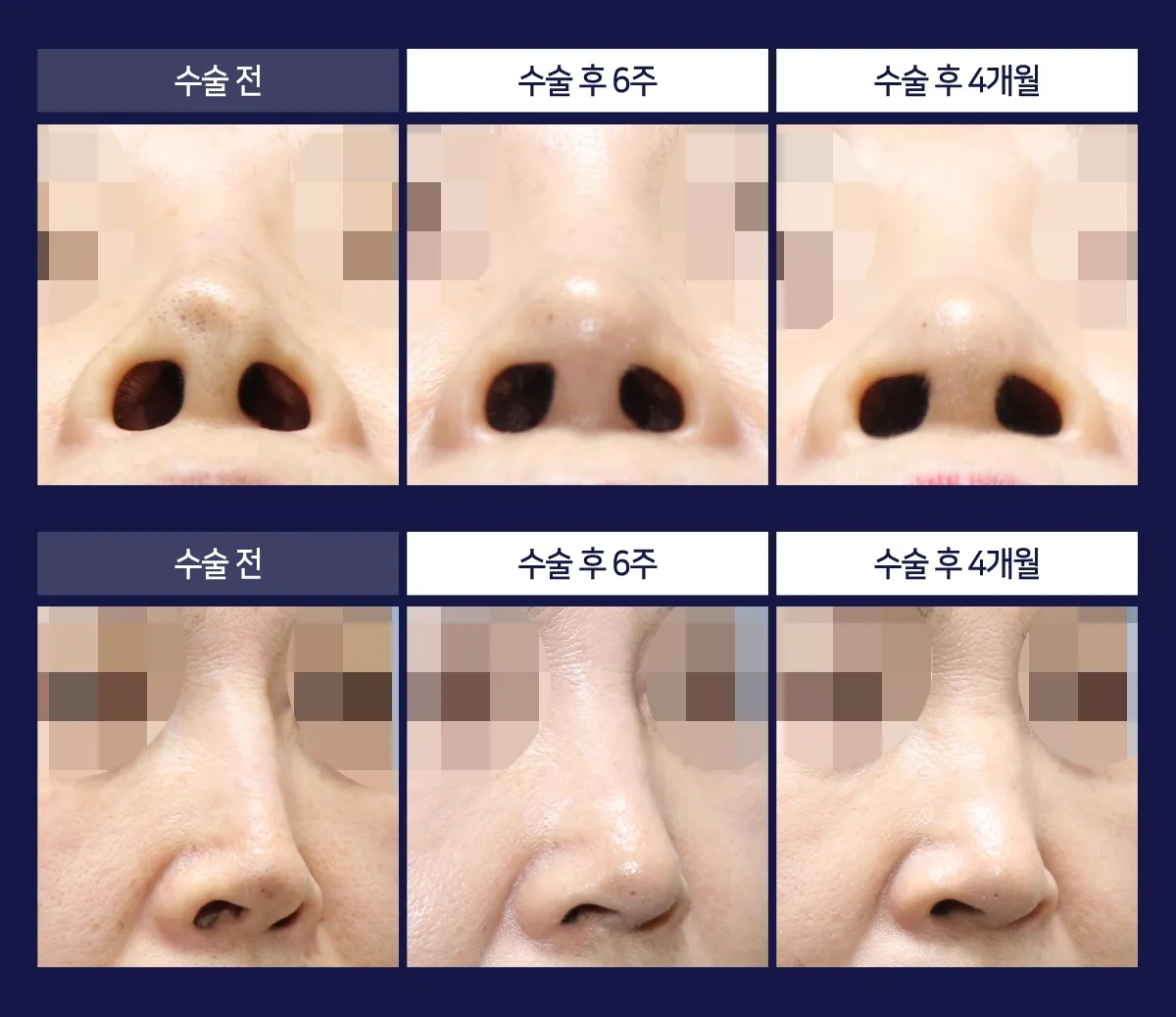
As time passes, the shape of the nose is becoming more natural and the skin tissue of the nose is recovering.
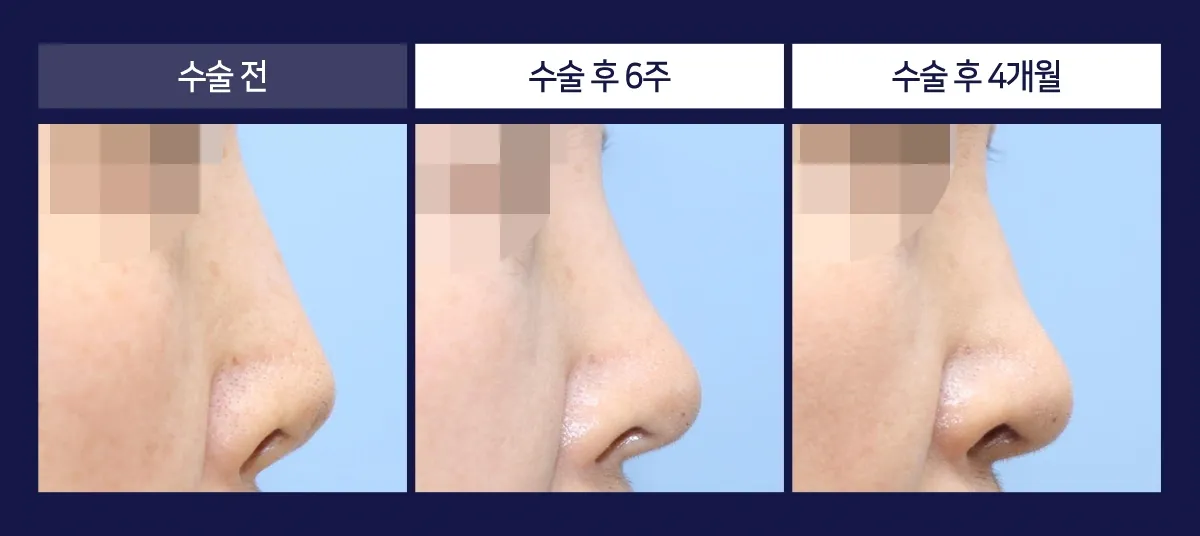
The upturned tip has also come down naturally.