

Breast Augmentation Case Study

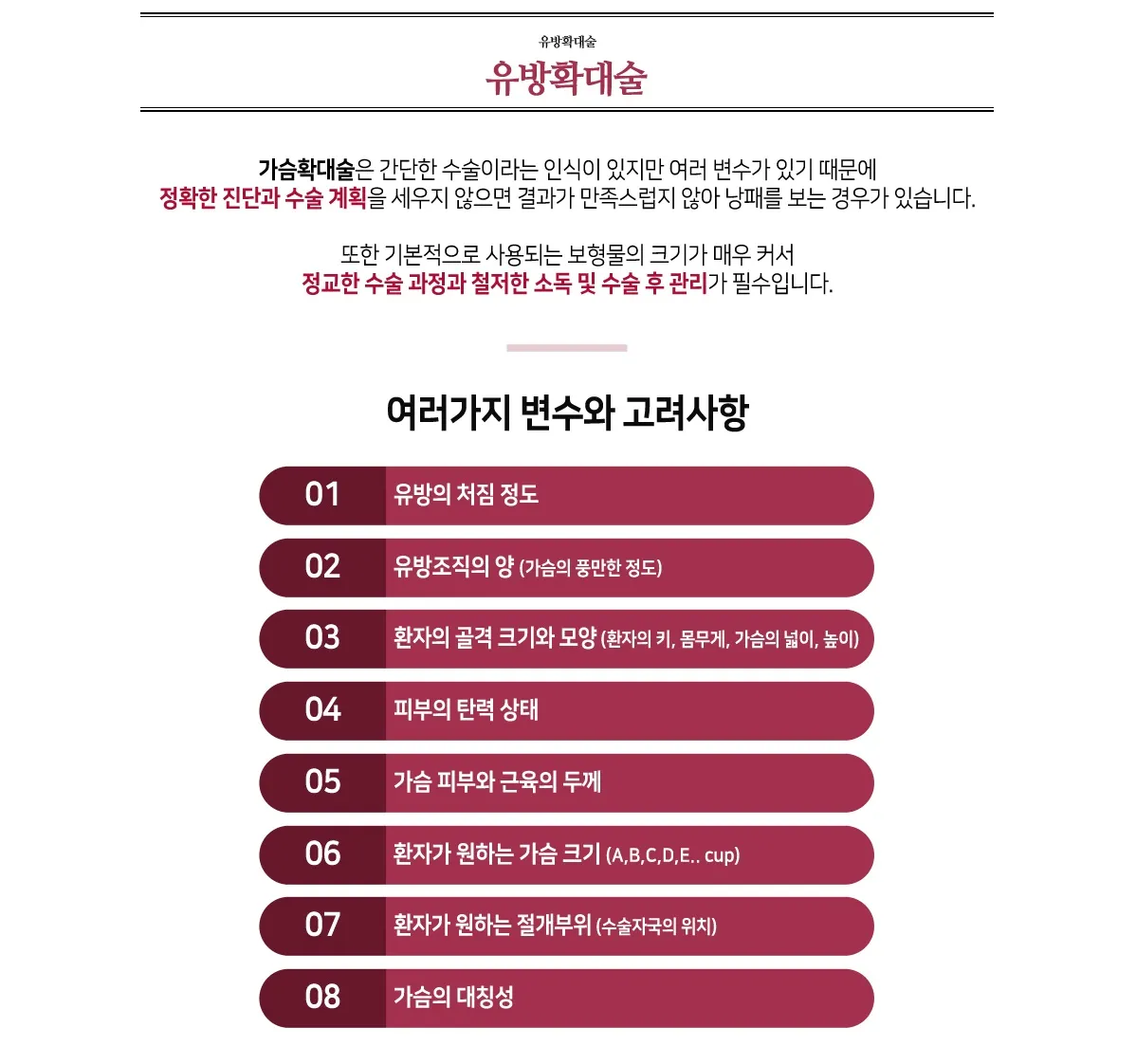
Taking the many variables and the patient's concerns into account as a whole,
the shape, size, and material of the breast implant, the incision site, the placement plane, and so onmust be decided and the surgery then performed with precision, so the surgeon's experience and skill matter greatly, more than in any other surgery.
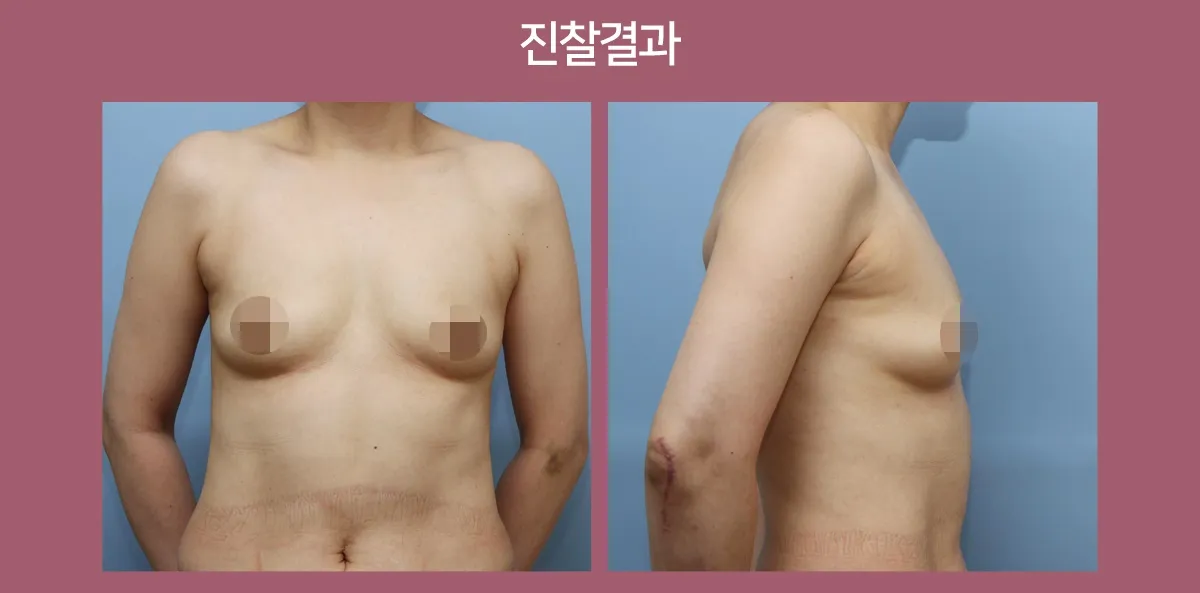
This patient is a 54-year-old woman whose breasts were small and sagging.
She reported that after breastfeeding the breast tissue shrank and the sagging became worse.
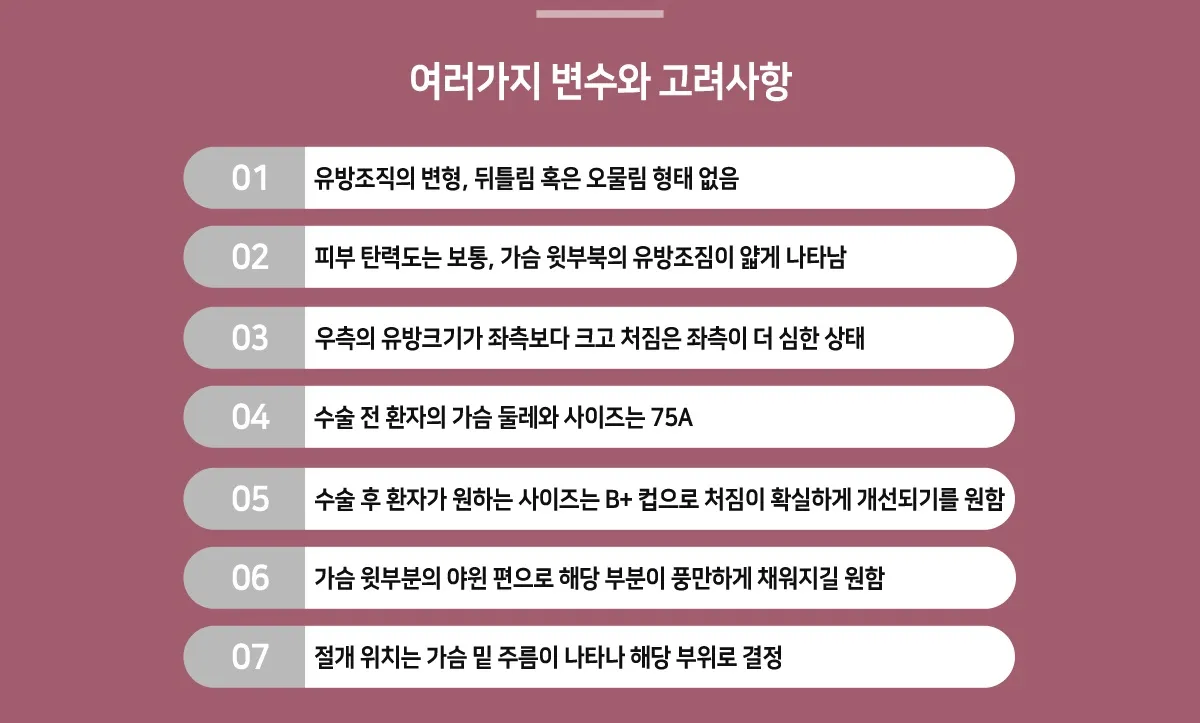
After thorough examination and consultation,
the surgical plan was an inframammary fold incision, 250 cc, Round type, Siltex (textured surface), and submuscular placement.
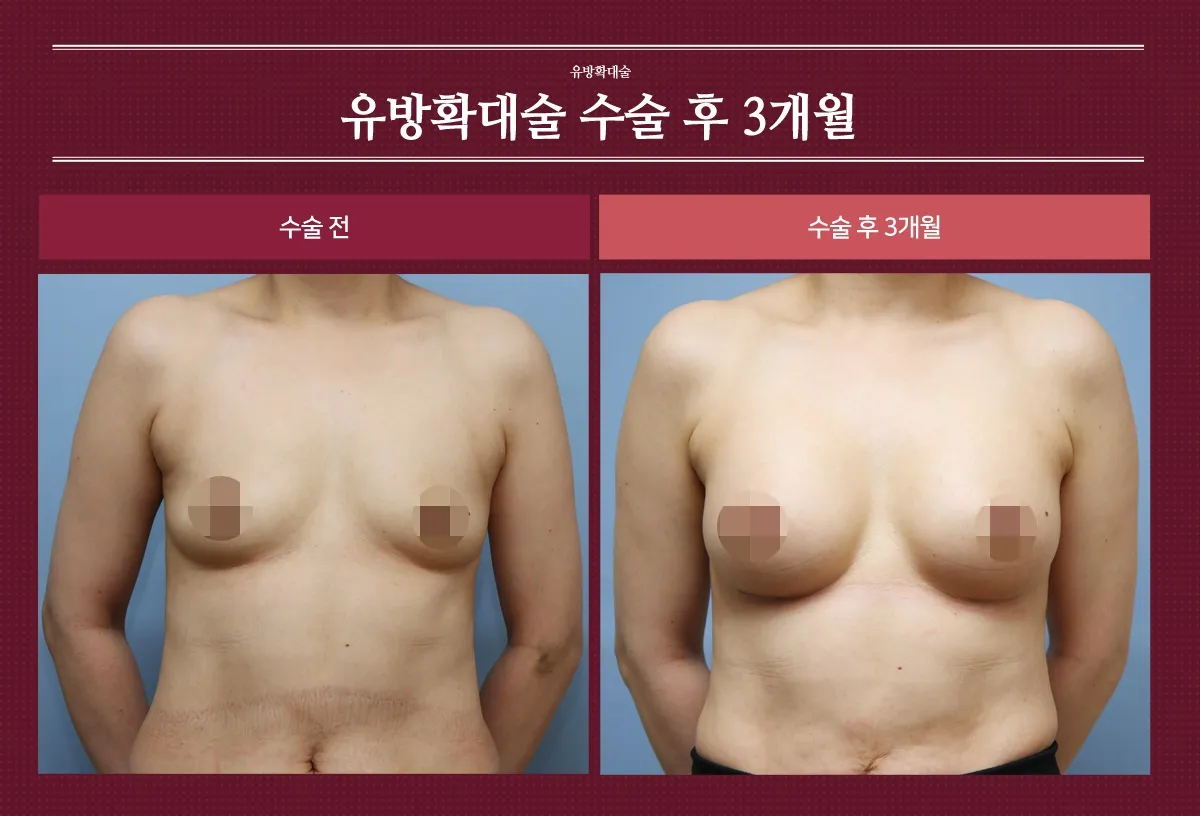
After surgery, the breasts are a B+ or C cup, and the sagging breasts appear naturally lifted.
The upper part of the breasts, which had lacked volume, has filled out fully,
and the cleavage is naturally brought together rather than spread apart.
The incision scar along the inframammary fold is not visible from the front,
and the position of the folds is completely symmetrical.
The peak points of the nipples are also symmetrical, and the sagging has improved.
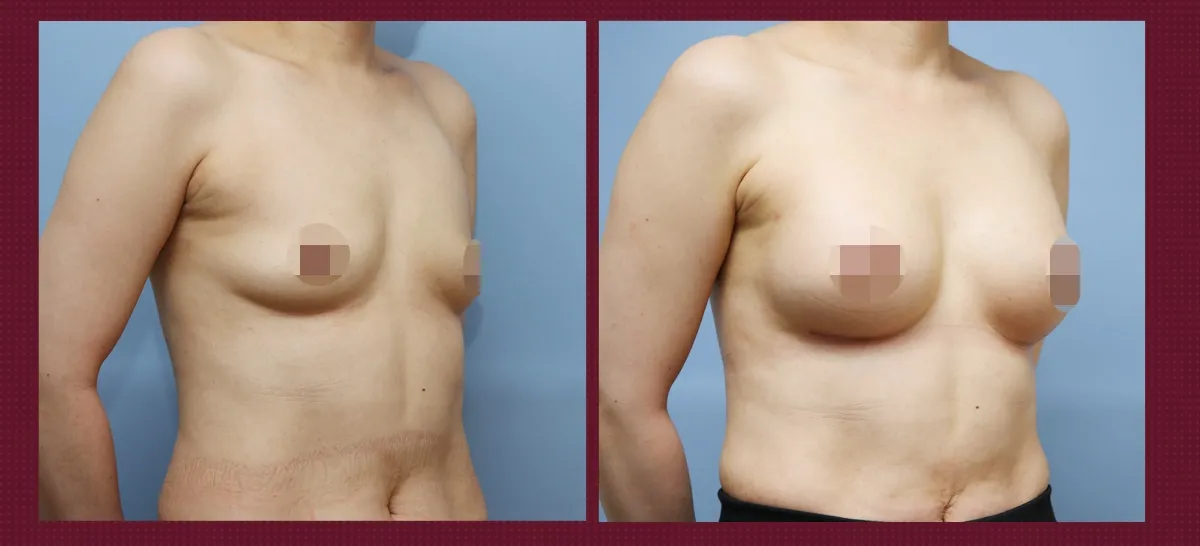
Occasionally after breast augmentation the implant rides up toward the upper part, so that the nipples point downward
and only the upper part of the breast bulges; here, however, the oblique and side views look very natural.
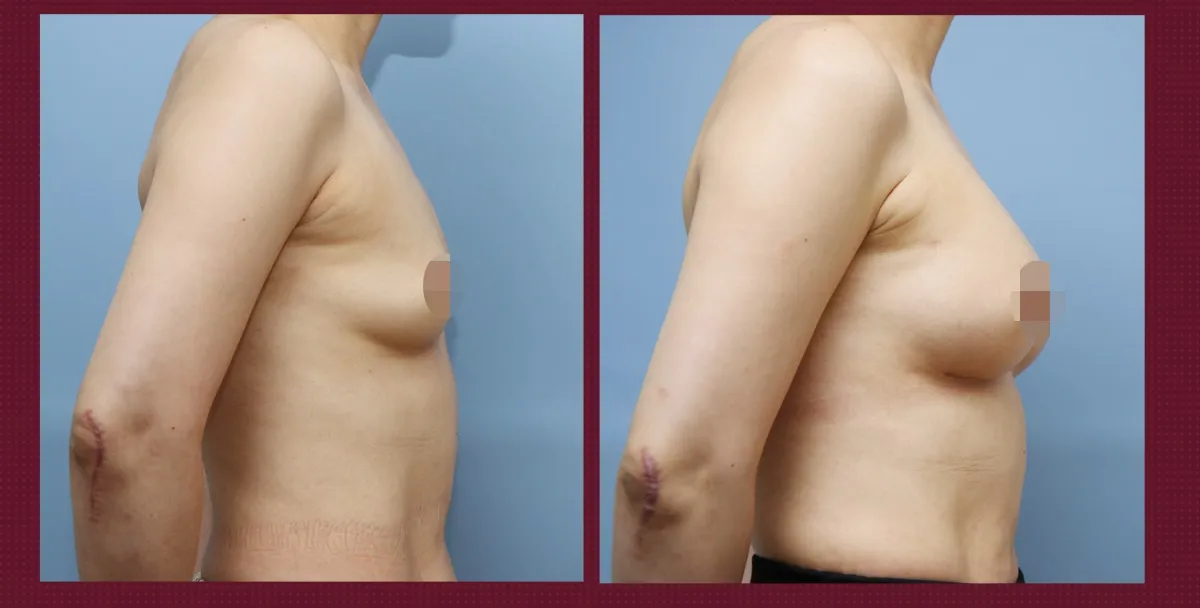
From the side, the nipples can be seen to sit at exactly the same level.
The lower pole of the breast is rounded and full, while the upper pole
has a flatter contour, so the breast is full and yet natural in appearance.

In care after breast augmentation,
preventing contracture, in which the implant becomes hard, and
helping the implant settle in the correct position are the two important points.
To prevent contracture, it is very important to do stretching from immediately after surgery.
With the arms stretched straight up, open the chest as far as possible and slowly rotate the arms.
Rotate once backward and once forward, doing 5 sets each in the morning and the afternoon.
For the implant to settle in the correct position, during surgery
the extent and location of the dissection must be precise.
Any slight asymmetry that develops afterward can be corrected with adjunctive measures such as taping.