

Removing the Notorious Medpor & Silicone with Tip Cartilage Repositioning (Open Approach)
Removal of nasal implant and Grafted materials
Secondary Rhinoplasty
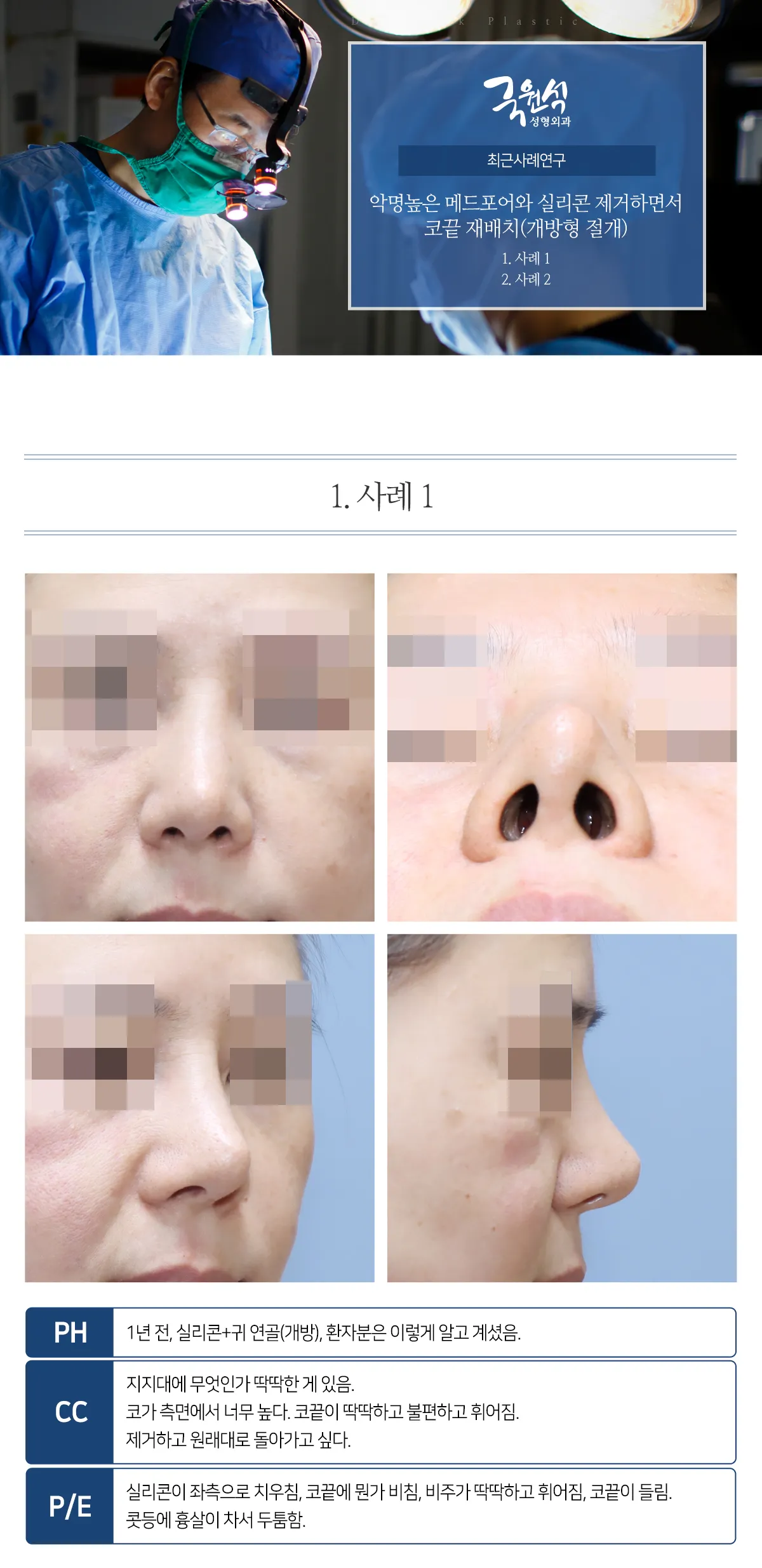
PH
1 year ago: silicone + ear cartilage (open); this is what the patient understood.
CC
There is something hard at the strut.
The nose is too high in profile. The nasal tip is hard, uncomfortable, and deviated.
Wants it removed and to return to the original state.
P/E
Silicone shifted to the left, something showing through at the nasal tip, columella hard and deviated, tip upturned.
The dorsum is thick with scar tissue.
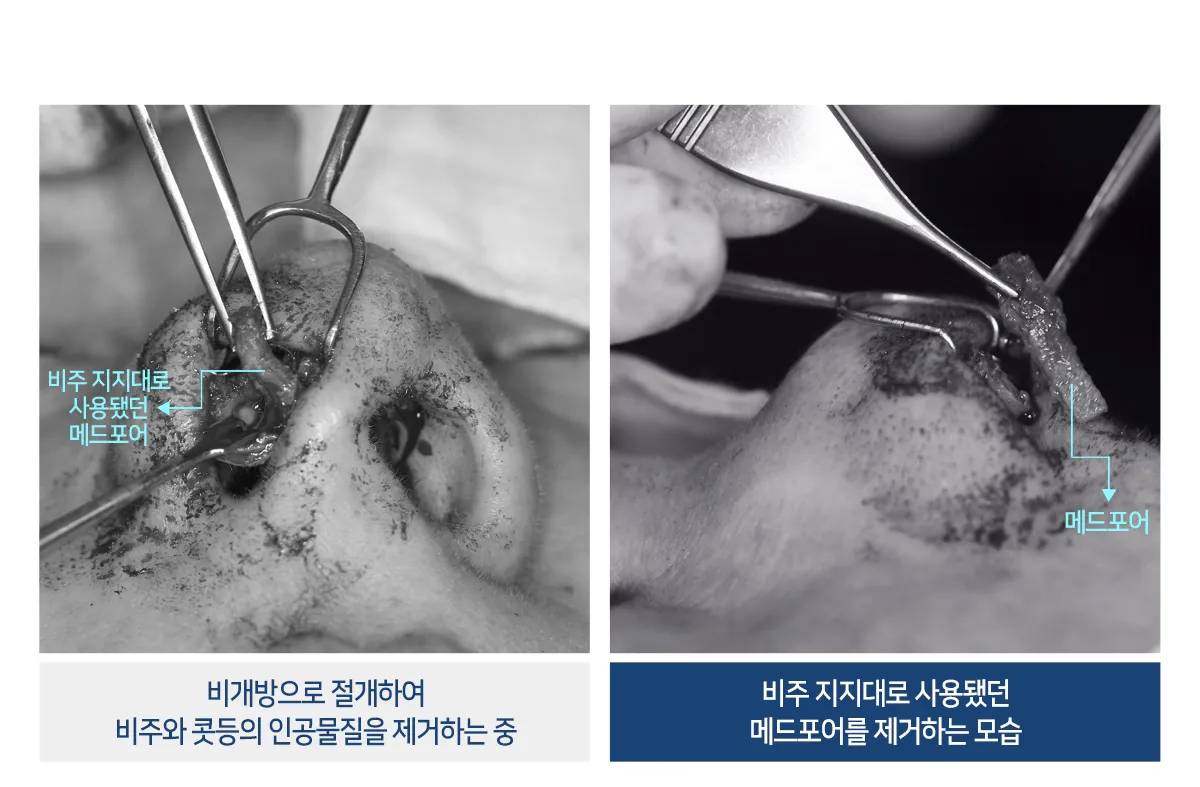
Removing the artificial materials from the columella and dorsum through a closed approach / Removing the Medpor that had been used as a columellar strut
The patient believed that only ear cartilage had been used and did not know Medpor was inside;
before the removal surgery, the patient's symptoms and the condition of the nasal tip led us to suspect another foreign material,
so we recommended an open approach, but the patient wanted a closed approach, and the surgery was performed closed;
a sizable piece of Medpor was found at the columellar strut.
Medpor is an artificial material that provokes a very strong inflammatory response,
so adhesions are severe at removal and extensive dissection is required.
For this reason an open approach is usually used, but with experience it can also be removed through a closed approach like this.
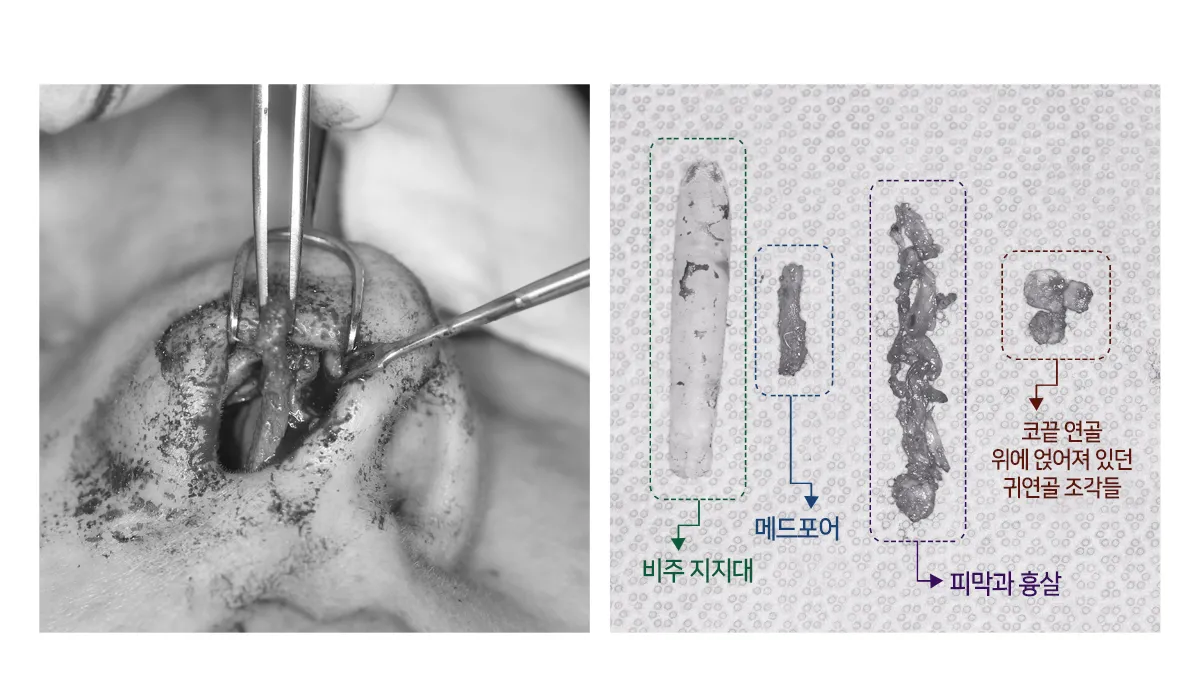
This shows the removed silicone implant, capsule, and the Medpor that had been used as a columellar strut.
Besides the Medpor, two layers of ear cartilage had been placed over the tip cartilages,
and 3 mm of silicone had been inserted in the dorsum.
Medpor provokes a severe inflammatory response in a short time, so Medpor in the columellar strut
can cause inflammation and damage to the skin of the nasal tip and, in severe cases, even a hole.
Fortunately, this patient did not develop severe skin inflammation or a hole.
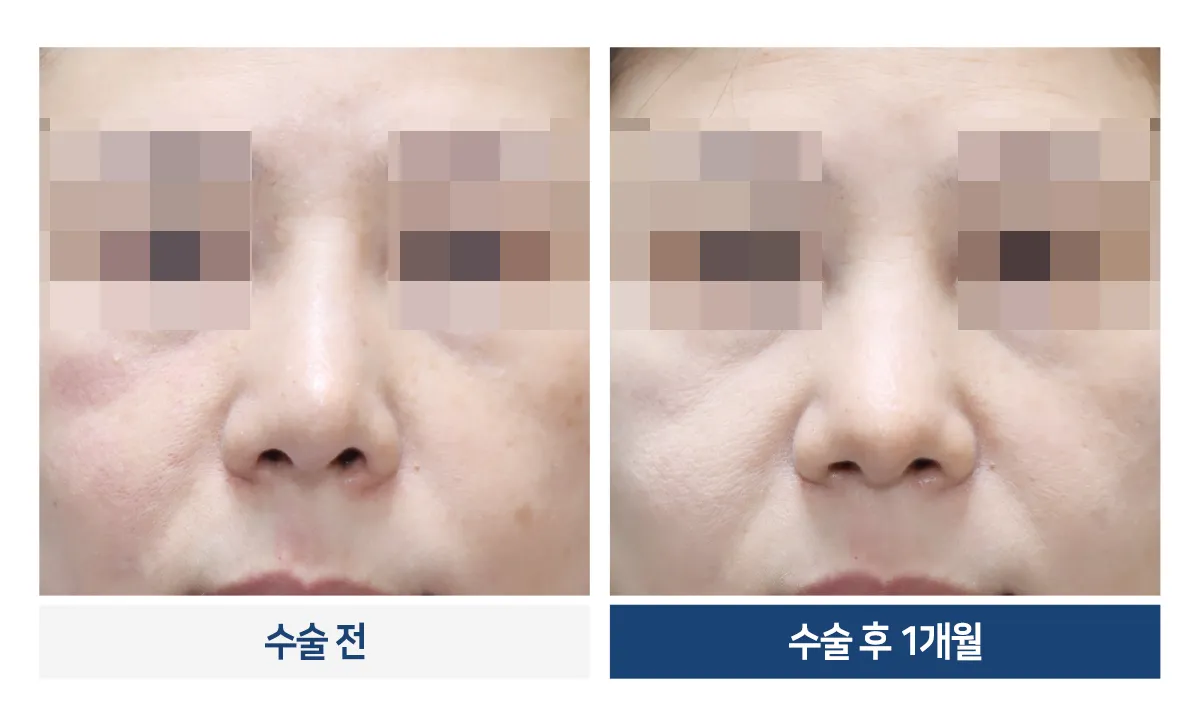
1 month after removal.
The bridge is straight and the nasal tip extends smoothly, giving a balanced look.
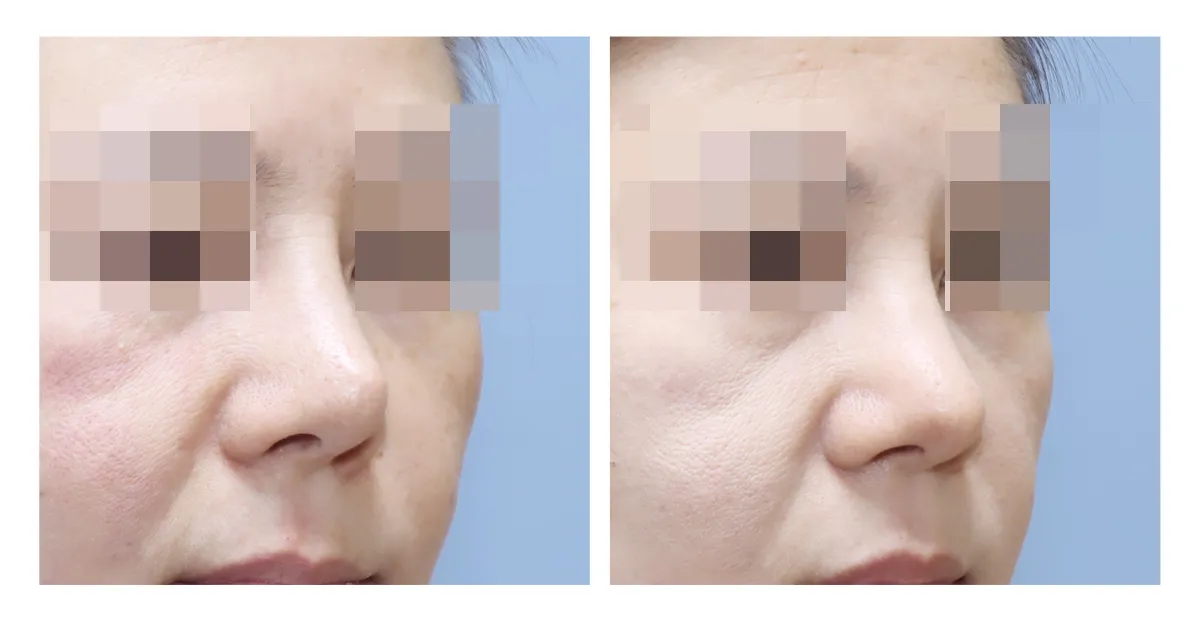
Before removal, the cartilage in the nasal tip showed through, the skin had thinned, and the tip was upturned because of contracture.
After removal, the cartilage graft in the nasal tip is gone, the inflammatory response has resolved, and with the capsule and scar tissue removed,
the shrunken skin has loosened and the nose can be seen to have lengthened.
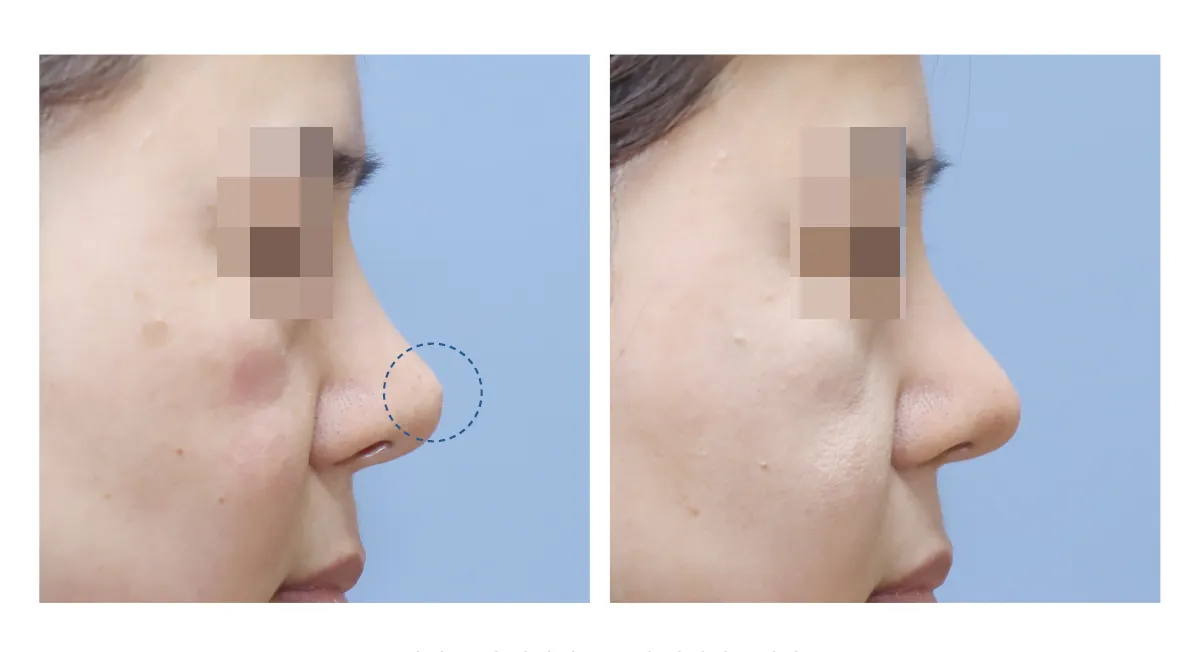
The slightly upturned nasal tip has come down.
The area that was so pointed it seemed about to protrude can be seen to have become smooth after removal.
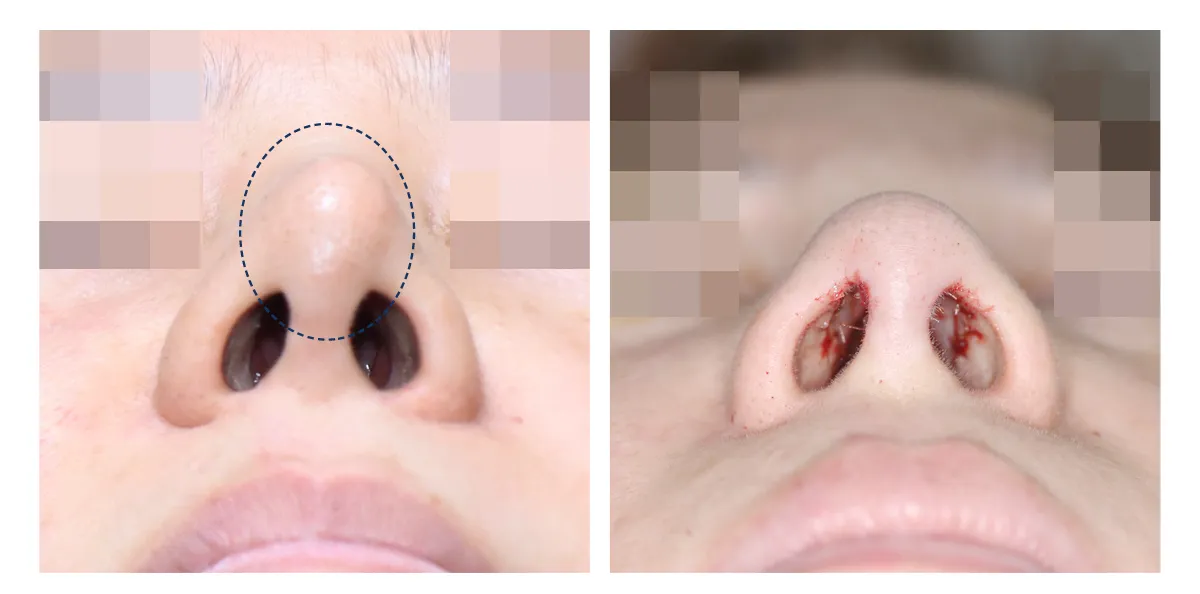
The cartilage that bulged and showed through at the nasal tip before surgery, as if about to protrude, is gone after removal,
and the nasal tip is now smooth and natural.
PH
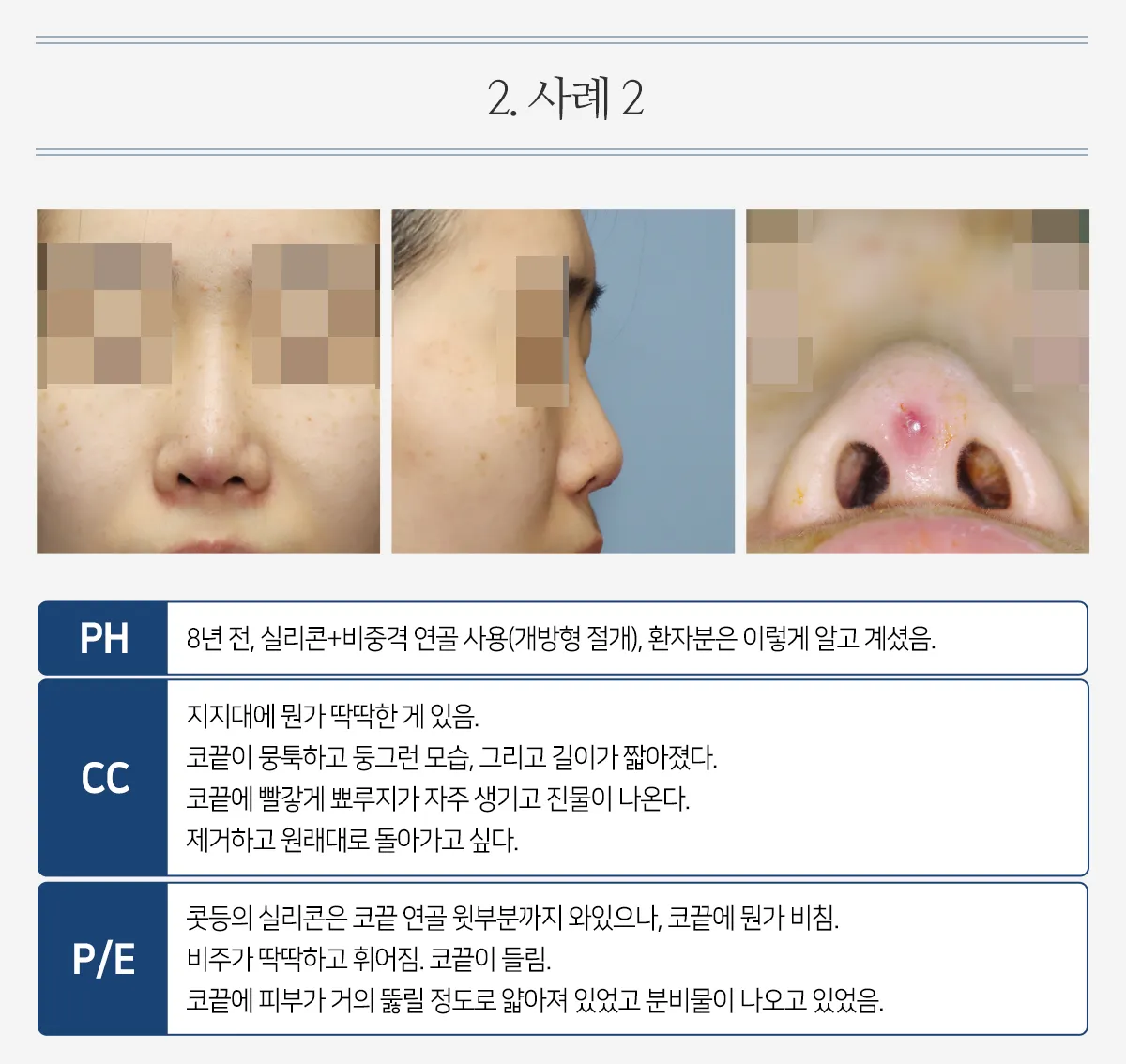
8 years ago: silicone + septal cartilage (open approach); this is what the patient understood.
CC
There is something hard at the strut.
The nasal tip looks blunt and round, and the nose has become shorter.
Red pimple-like bumps often form on the nasal tip and ooze fluid.
Wants it removed and to return to the original state.
P/E
The dorsal silicone reaches the upper part of the tip cartilages, yet something shows through at the nasal tip.
The columella is hard and deviated. The nasal tip is upturned.
The skin of the nasal tip had thinned almost to the point of perforation, and discharge was coming out.
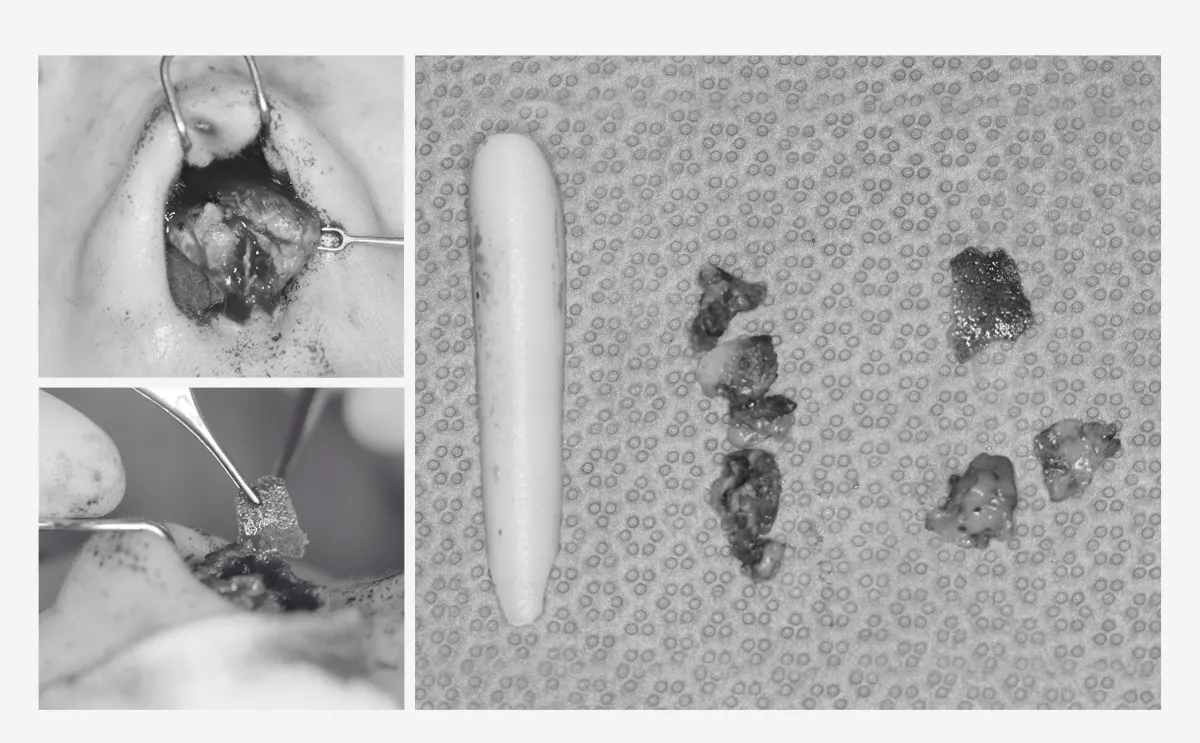
Medpor was again suspected, so an open approach was used,
and as expected, a 10x15 mm piece of Medpor had been used as a septal extension graft at the columellar strut.
Around the Medpor, the soft tissue had broken down into a mushy state from the severe inflammatory response,
and once the inflamed tissue was removed, there turned out to be a hole where the red bump on the nasal tip had been.
We confirmed that septal cartilage had been placed on top of the nasal tip.
As this shows, when there are bumps or inflammation on the nasal tip, one should suspect that Medpor was used as a columellar strut or septal extension graft
and remove it cleanly as soon as possible.
Postoperative results will be added soon.