

Contracture Deformity Caused by Silicone Implant Infection #ContractedNose #NasalImplantRemoval #NasalSilicone #NasalImplantInfection
Contracture Deformity Caused by Silicone Implant Infection
Silicone implants have long been used in rhinoplasty.
However, infection around the silicone implant, the resulting contracture, and the implant's physical pressure, which can lead to
perforation of the skin and mucosa, bring quite a few patients in for consultation.
When infection develops and skin perforation appears after augmentation rhinoplasty with silicone,
injections or medication will not resolve it, so the implant and infected tissue must be removed.
In addition, surgery to restore the deformed nasal structure to normal must be performed together with the removal,
so a nasal deformity caused by infection and contracture calls for extensive experience and careful planning.
PH
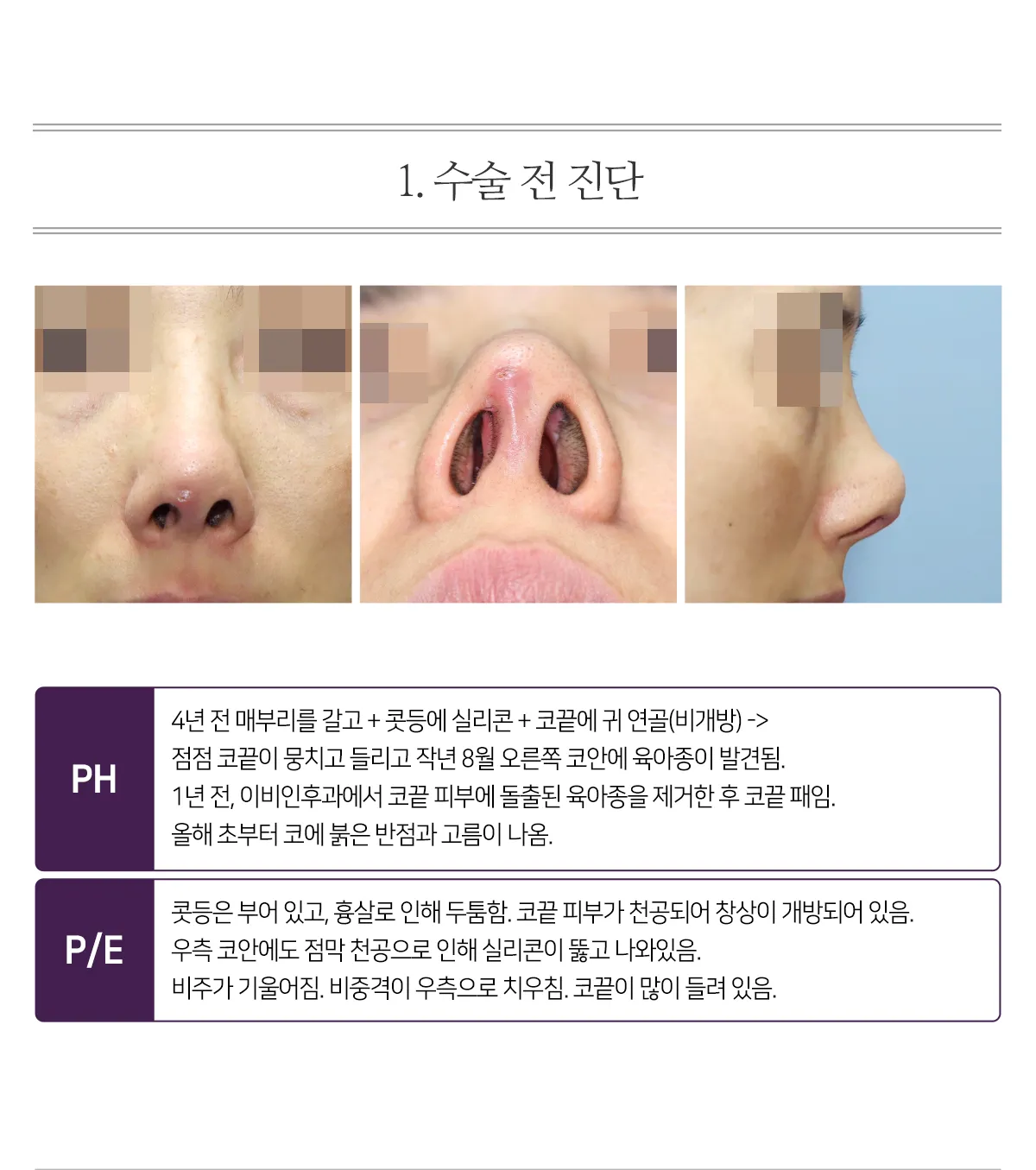
4 years ago: hump rasped down + silicone implant on the dorsum + ear cartilage to the tip (closed approach) ->
The tip gradually became bunched and upturned, and a granuloma was found inside the right nasal cavity in August of last year.
1 year ago: after an ENT clinic removed a granuloma protruding from the tip skin, the tip was left with a depression.
Since early this year, red spots and pus have appeared on the nose.
P/E
The dorsum is swollen and thick with scar tissue. The tip skin is perforated, leaving an open wound.
Inside the right nasal cavity as well, the silicone implant has extruded through a mucosal perforation.
Tilted columella. Septum shifted to the right. Markedly upturned tip.
Left
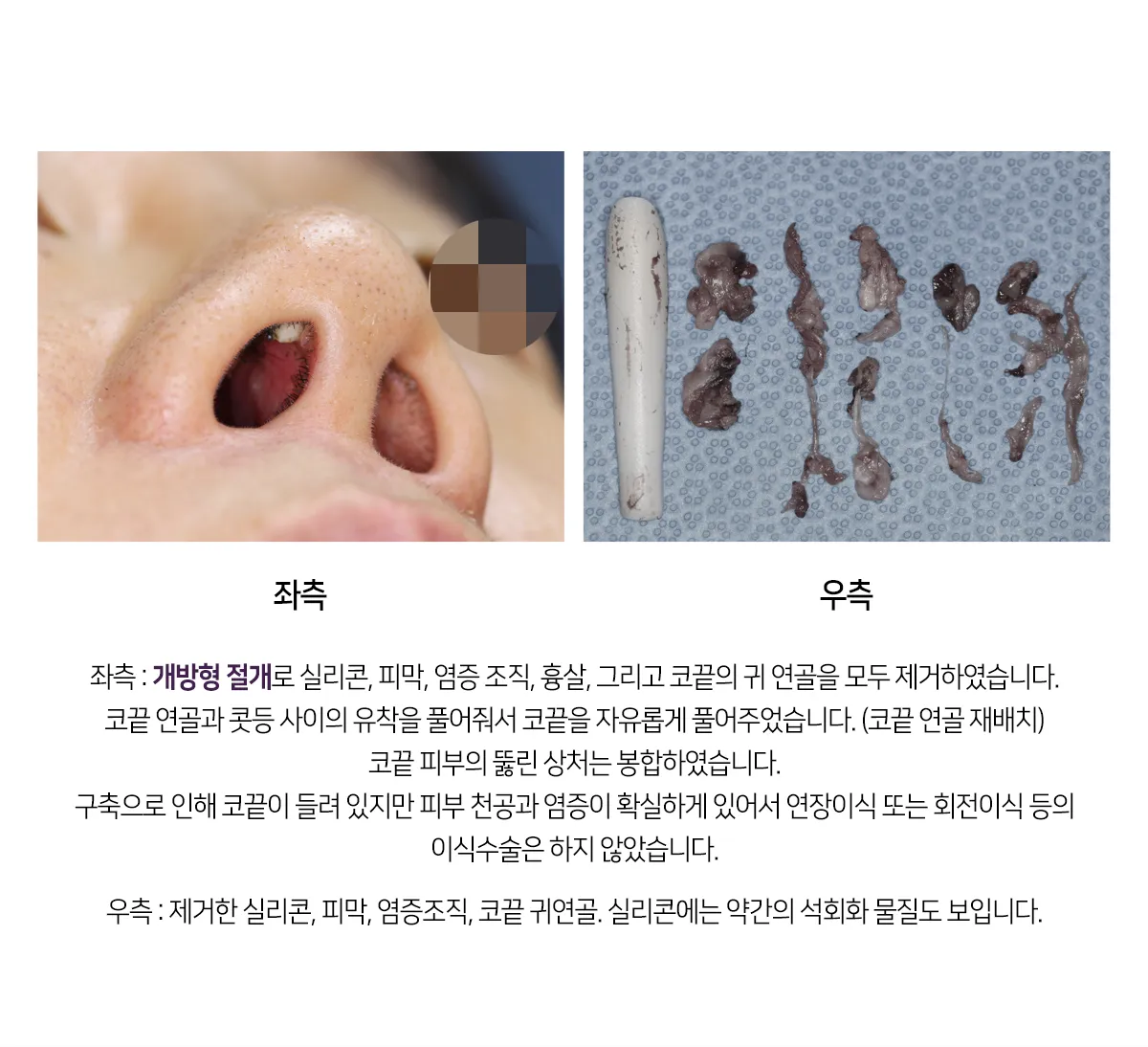
Through an open approach, the silicone implant, capsule, infected tissue, scar tissue, and the ear cartilage at the tip were all removed.
The adhesions between the tip cartilages and the dorsum were released to free the tip. (Tip cartilage repositioning)
The perforated wound in the tip skin was sutured.
Although the tip was upturned from contracture, skin perforation and infection were clearly present, so grafting procedures such as an extension graft or a derotation graft
were not performed.
Right
The removed silicone implant, capsule, infected tissue, and ear cartilage from the tip. Some calcified material can also be seen on the silicone.
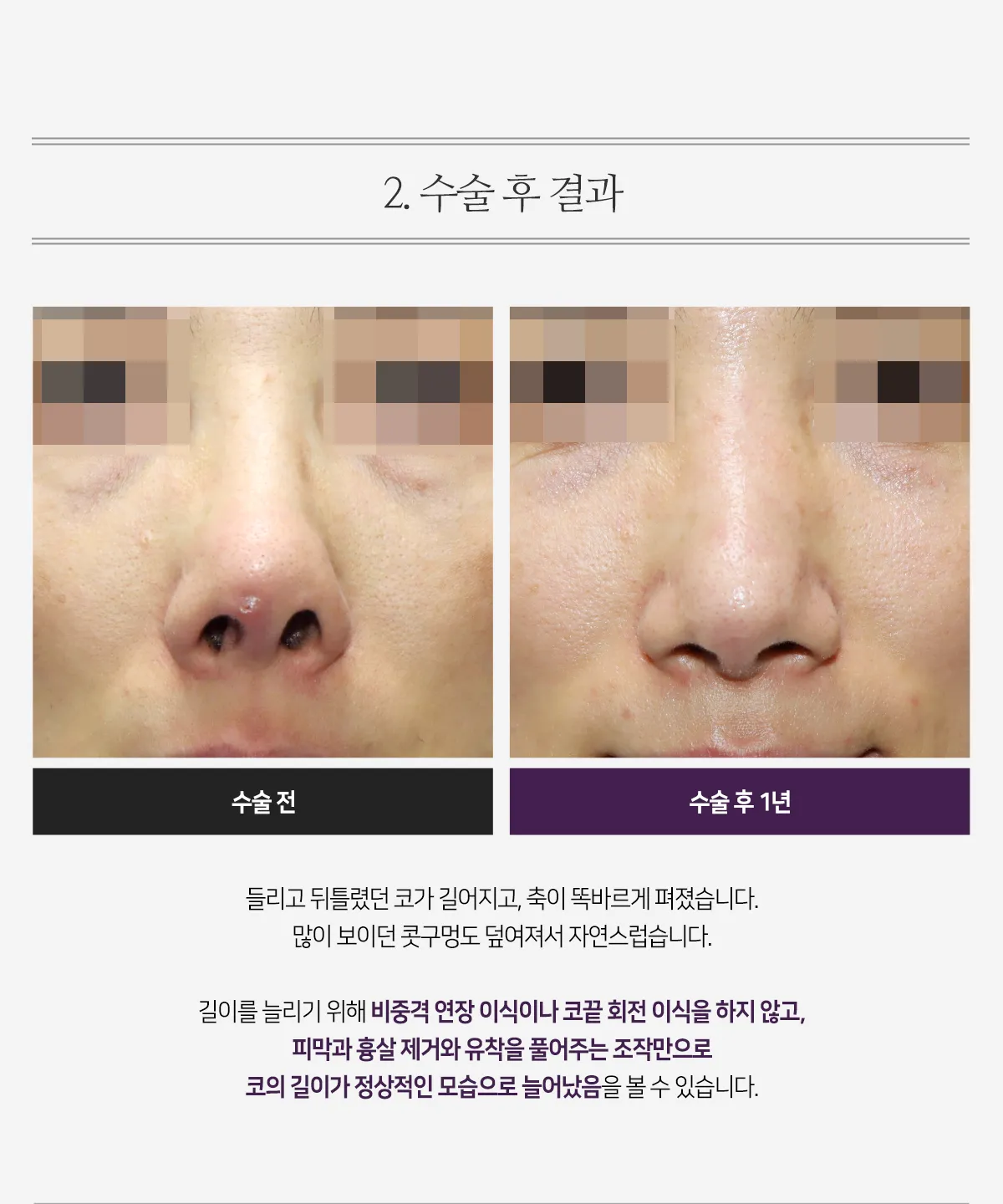
The nose, which had been upturned and twisted, became longer and its axis straightened.
The nostrils, which used to show considerably, are now covered and look natural.
To gain length, no septal extension graft or tip derotation graft was used;
simply by removing the capsule and scar tissue and releasing the adhesions,
the nose lengthened to a normal appearance, as can be seen.
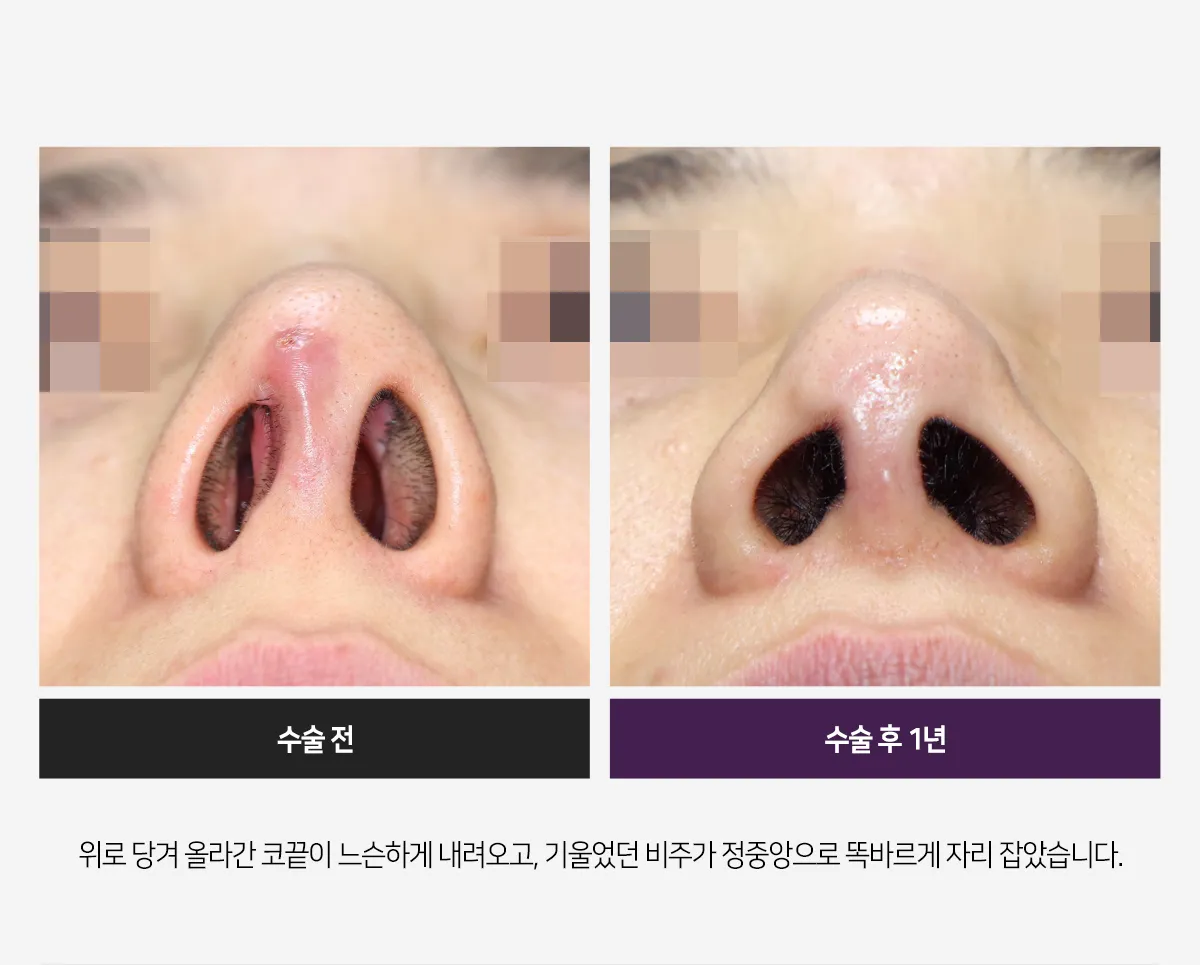
The tip, which had been pulled upward, relaxed and came down, and the tilted columella settled straight in the midline.
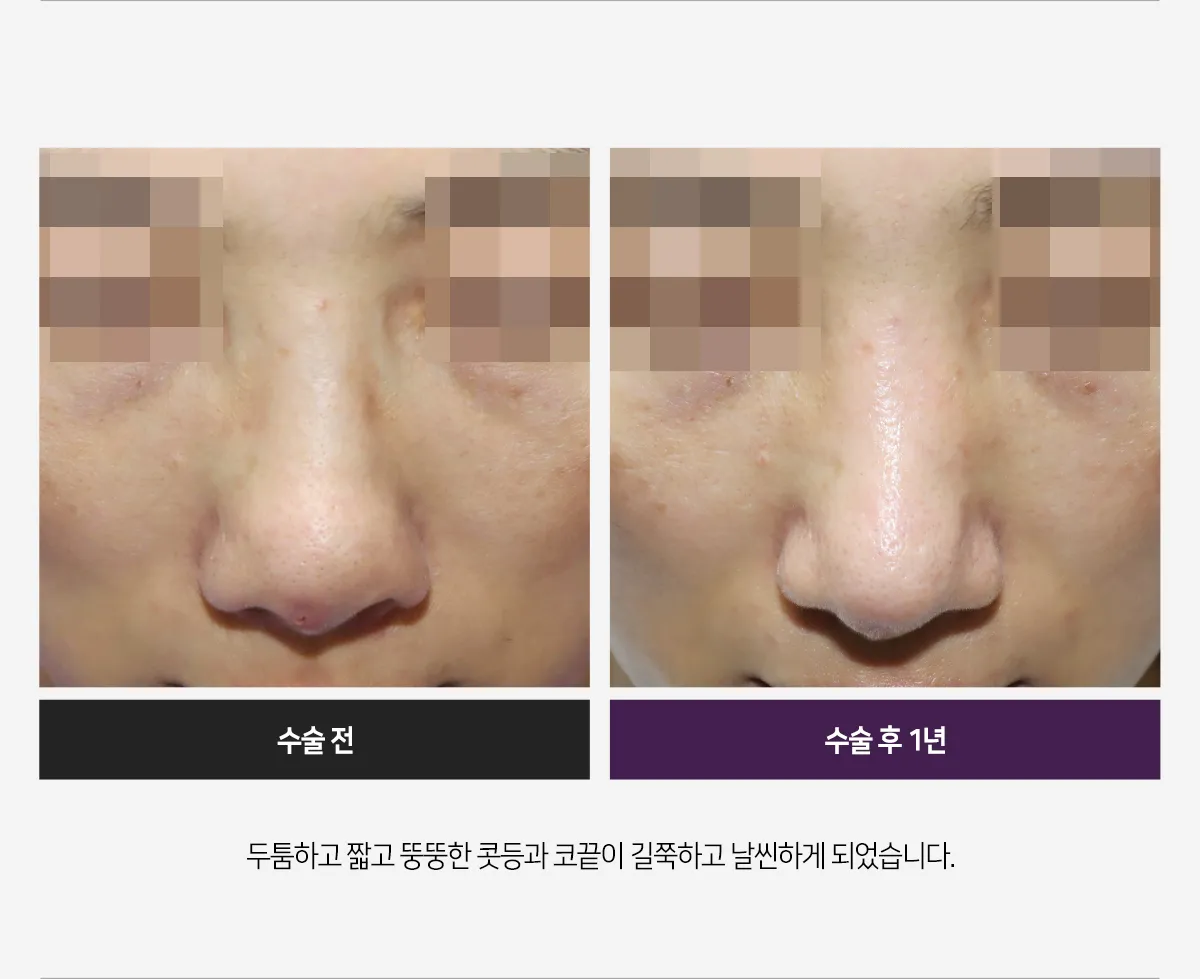
The dorsum and tip, which had been thick, short, and bulky, became long and slim.
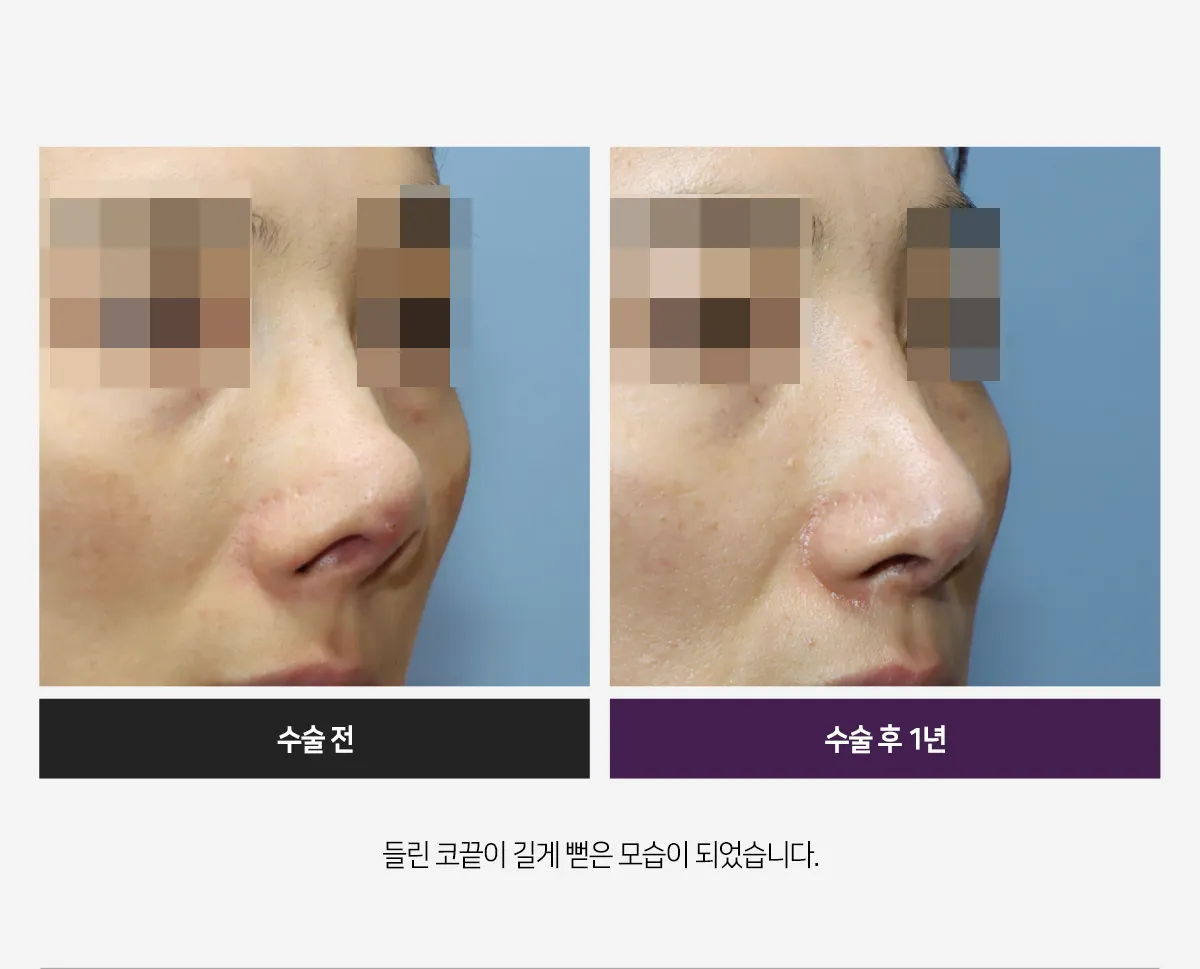
The upturned tip is now elongated.
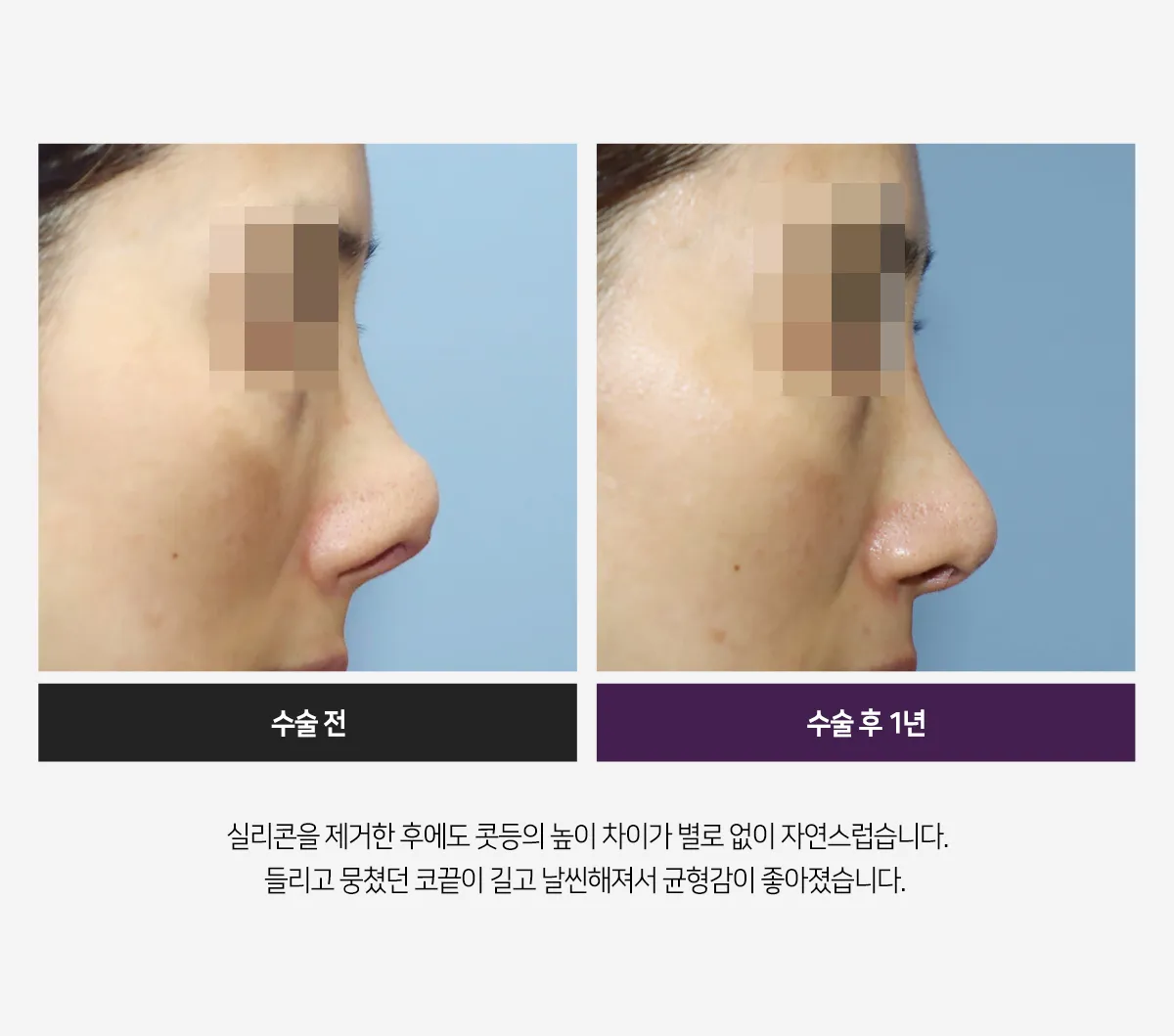
Even after the silicone implant was removed, the height of the dorsum changed little and looks natural.
The tip, which had been upturned and bunched, became long and slim, improving the overall balance.