When a silicone implant shifts to one side, the face takes on an unnatural look,
and when the implant extends all the way to the tip, not only does the nasal bridge look crooked,
but the tip cartilages are also pushed to one side.
As a result, even the tip looks tilted, and nostril asymmetry appears as well.
For problems like these, most clinics generally use an open approach to remove the silicone
and perform tip plasty with an autologous cartilage graft.
Even in such cases, however, by removing the implant through a closed approach and repositioning the tip cartilages,
the crooked tip and asymmetric nostrils can be corrected.
With a closed approach, the recovery period can be markedly shortened,
and it leaves no surgical marks, offering many advantages.
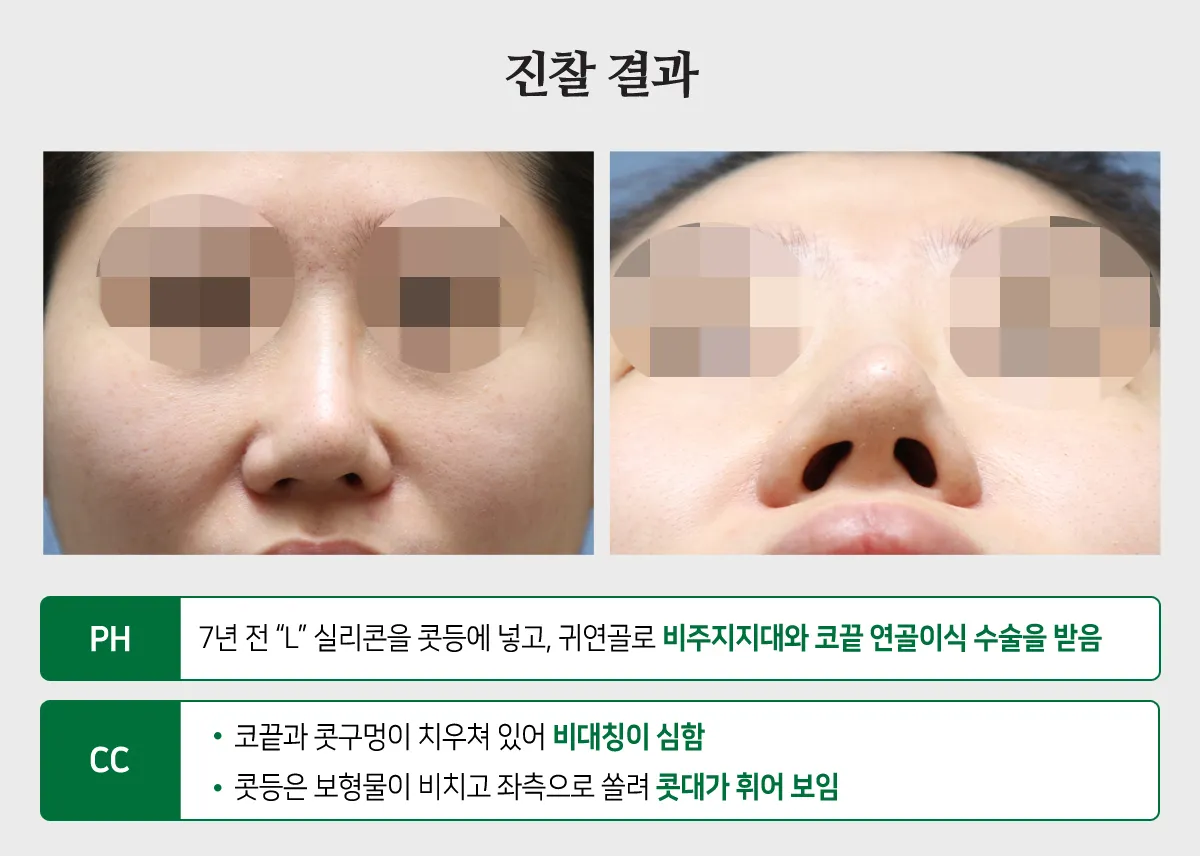
PH
7 years ago, an L-shaped silicone implant was placed in the dorsum, and with ear cartilage the patient received a columellar strut and a tip cartilage graft
CC
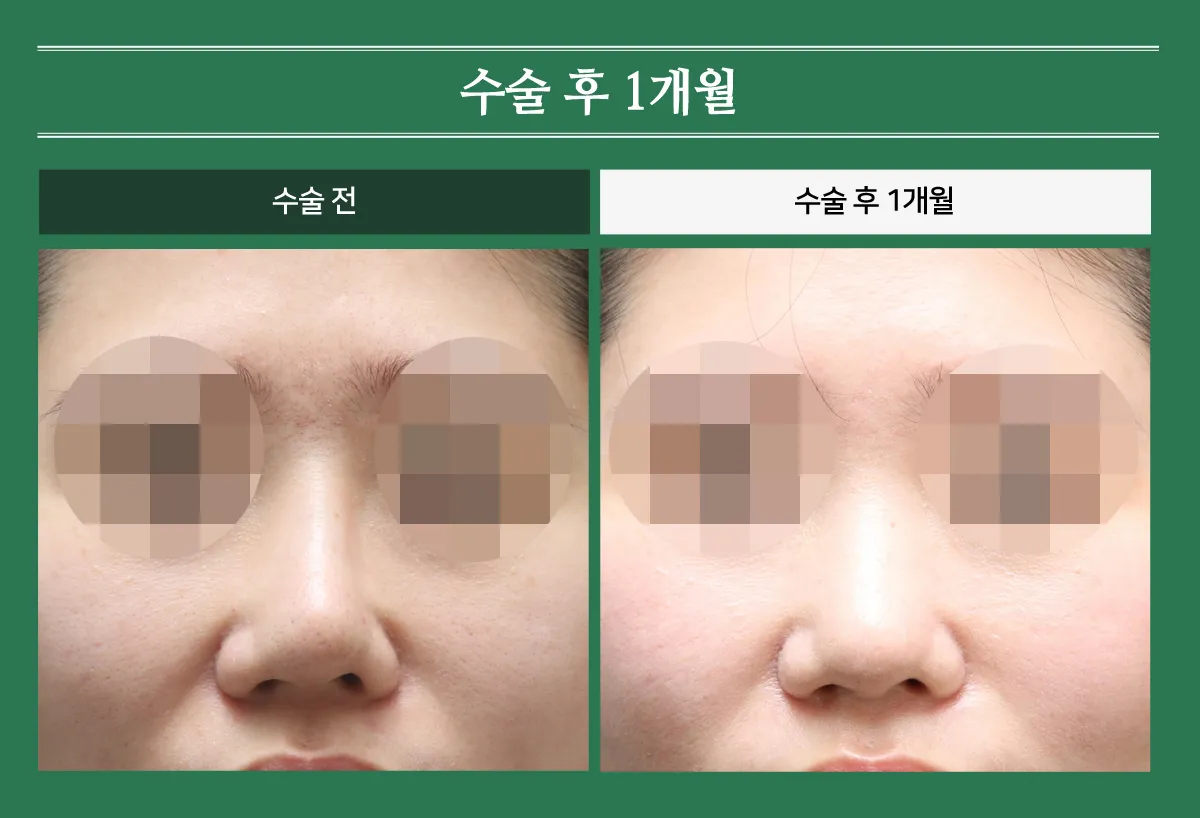
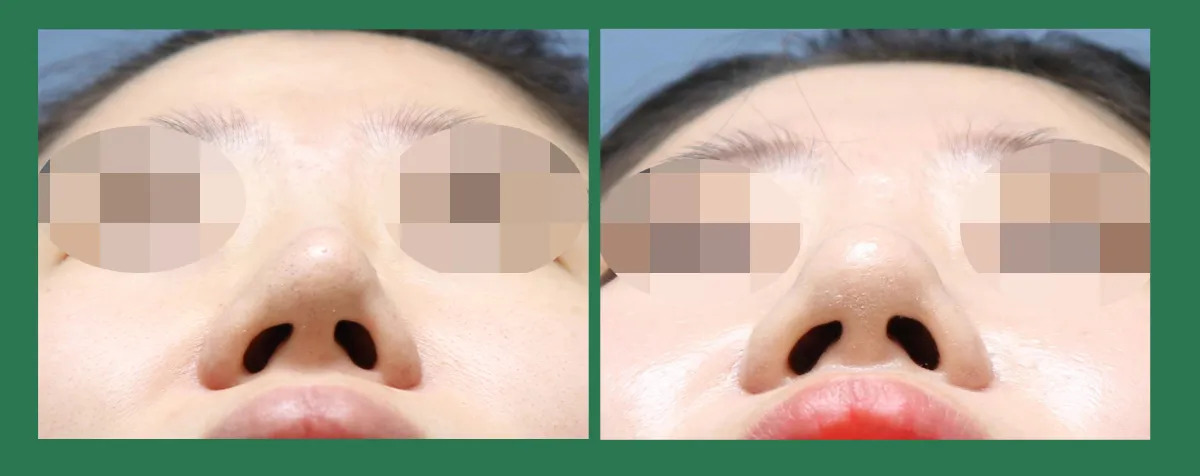
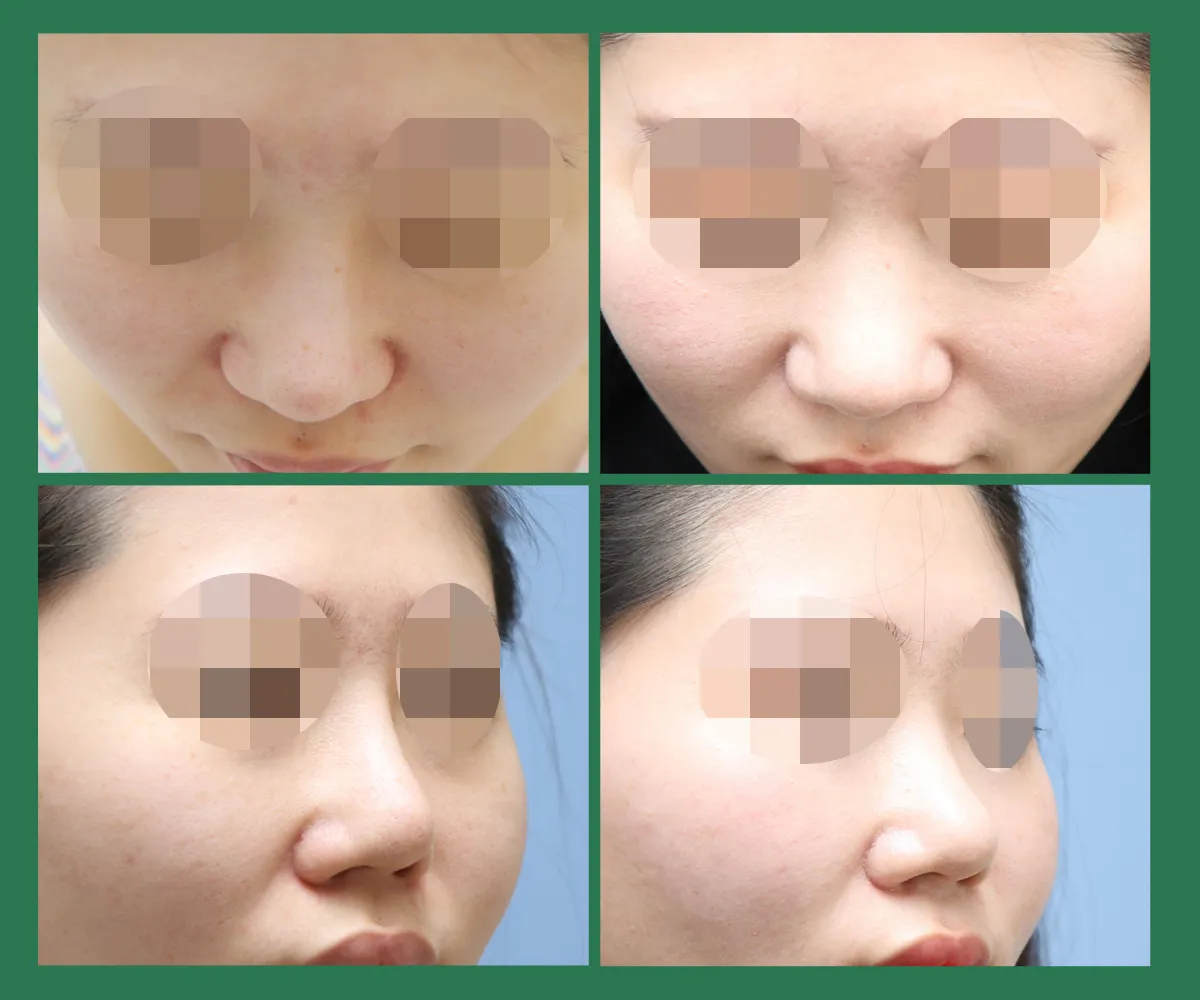
· The tip and nostrils are shifted to one side, with marked asymmetry
· On the dorsum, the implant shows through and is shifted to the left, so that the nasal bridge looks crooked
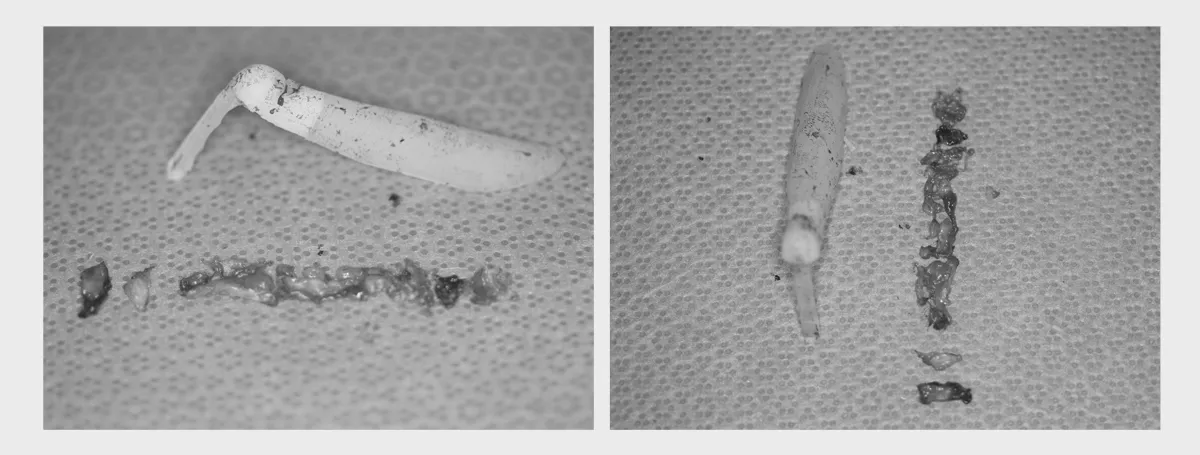
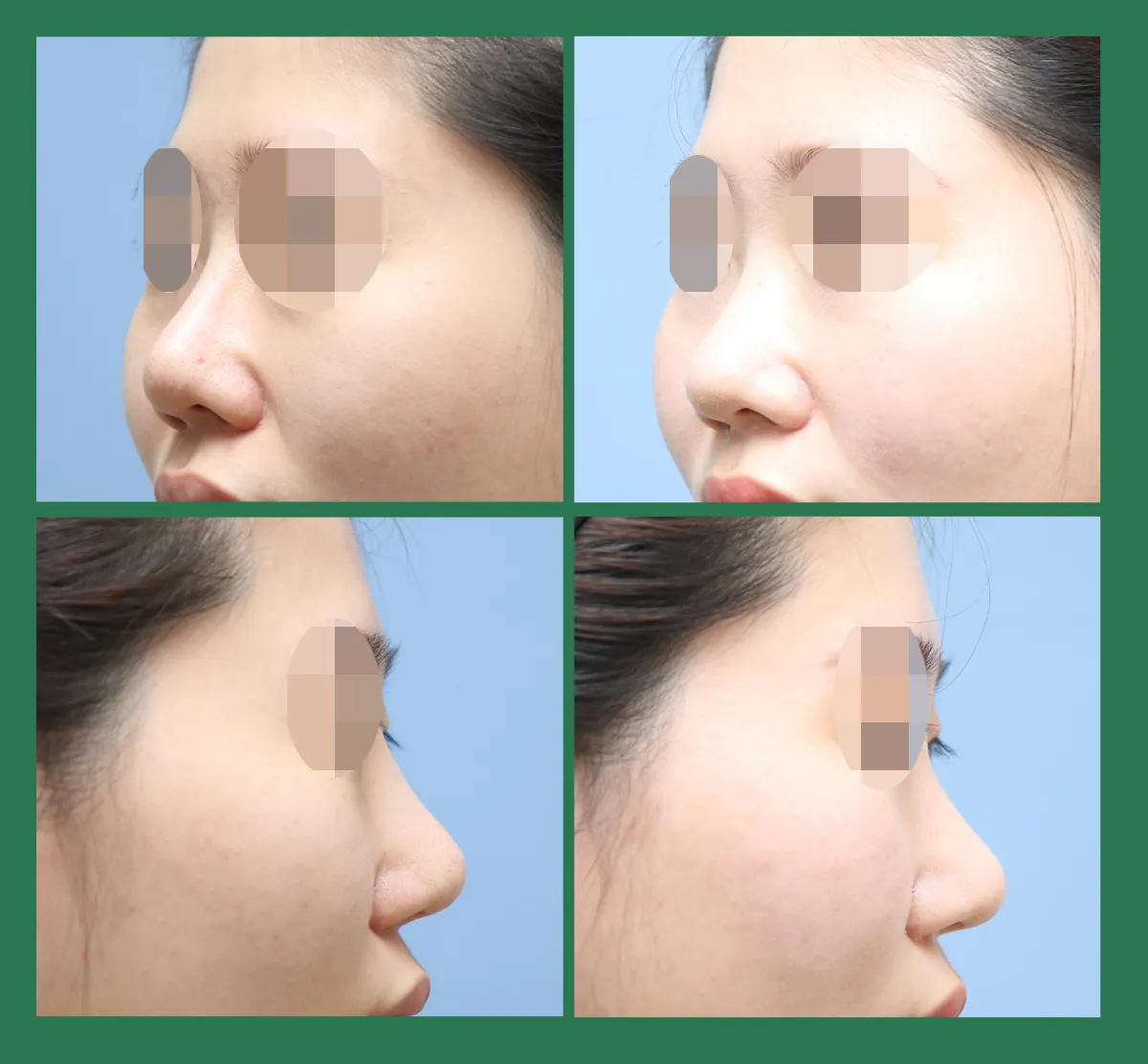
Along with the long L-shaped silicone implant, the ear cartilage placed on the tip and the capsule that causes contracture were removed.
The crooked nasal bridge and nostrils have returned to the midline, and nostril symmetry is markedly improved.
The overall twisted shape of the nose is now naturally balanced.
The columella has been straightened to the midline, and nostril symmetry is much improved.
The slight remaining asymmetry is due to facial asymmetry; structurally, the symmetry of the nose has been restored.
Before the silicone implant was removed, this patient worried that removing it might make the nose lower,
that the tip might turn up, or that irregularities might remain on the nasal bridge;
however, the balance and function of the nose have been normalized, and the result looks natural.