

Dorsal Hump Correction Case

Dorsal hump surgery is not simply a matter of shaving down the bump on the dorsum.
The structure of the nose resembles the roof of a tiled house, so if the hump is simply ground away, a hole opens in the roof and a variety of complicated problems can arise.
Because dorsal hump surgery reduces the nasal framework, it should be understood as similar to remodeling a house.
The size of the hump, any deviation of the nasal framework, the width of the dorsum, the length of the nose, the shape of the tip, and
other aspects of the nose must be carefully analyzed before it is remodeled.
The common explanation that, after the hump is ground down, it will grow back and therefore must be covered with silicone is fundamentally mistaken.
A hump does not grow back; when it seems to have grown back, it was not removed accurately in the first place.
Moreover, using silicone in dorsal hump surgery is not the right method and can become a cause of side effects.
The principle is to operate entirely with autologous tissue alone, and this is the safest method.
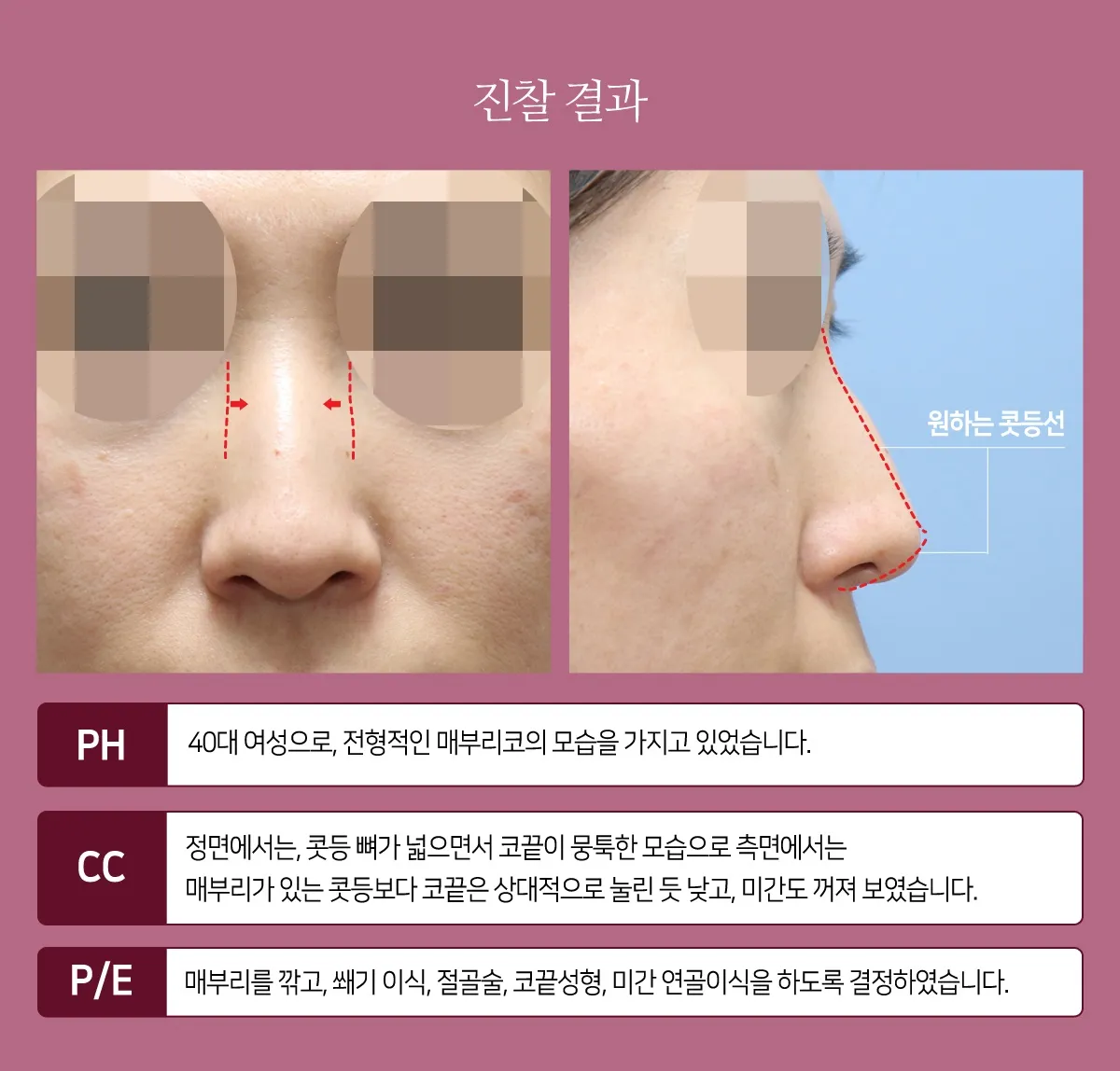
Past History; A woman in her 40s with a typical dorsal hump.
Physical Examination; From the front, the dorsal bones were wide and the tip was bulbous. In profile, the tip appeared pressed down and low relative to the humped dorsum, and the glabella also looked sunken.
Plan; Hump reduction, wedge grafting, osteotomy, tip plasty, and cartilage graft to the glabella.

This is the septal cartilage harvested for use in the wedge grafting, tip plasty, and glabellar graft.

No silicone or any other artificial material was used; the surgery was performed with autologous cartilage (septal cartilage) alone.
Because of the nature of a dorsal hump, the before and after views differ little in the frontal photos.
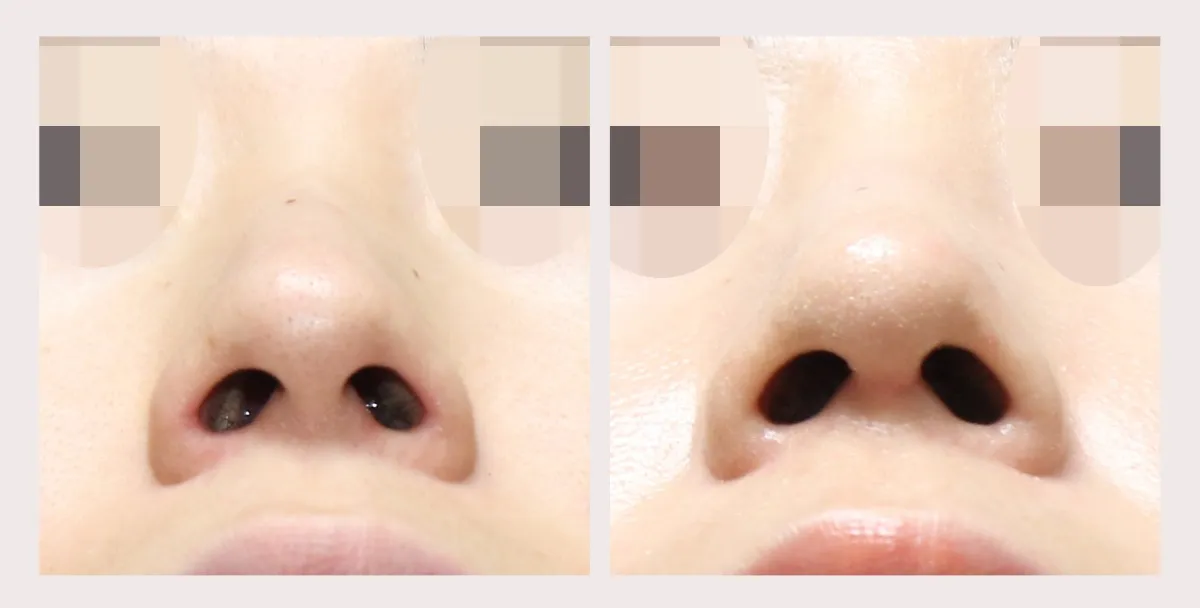


In profile, changes can be seen in the nasolabial angle, the dorsal line, tip projection, and other features.
The hump has also disappeared naturally, as if it had never been there.