Side Effects of a Nasal Silicone Implant: Contracted Nose Correction with Ear Cartilage
< What Is a "Contracted Nose"? >
A contracted nose is a condition in which, after rhinoplasty with silicone,
a chronic inflammatory reaction persists in the nose for a long time,
the soft tissue around the silicone shrinks,
and the nose shortens and the tip becomes deformed.
It is corrected by using autologous cartilage such as costal cartilage, septal cartilage, or ear cartilage
to lengthen the framework of the nose.
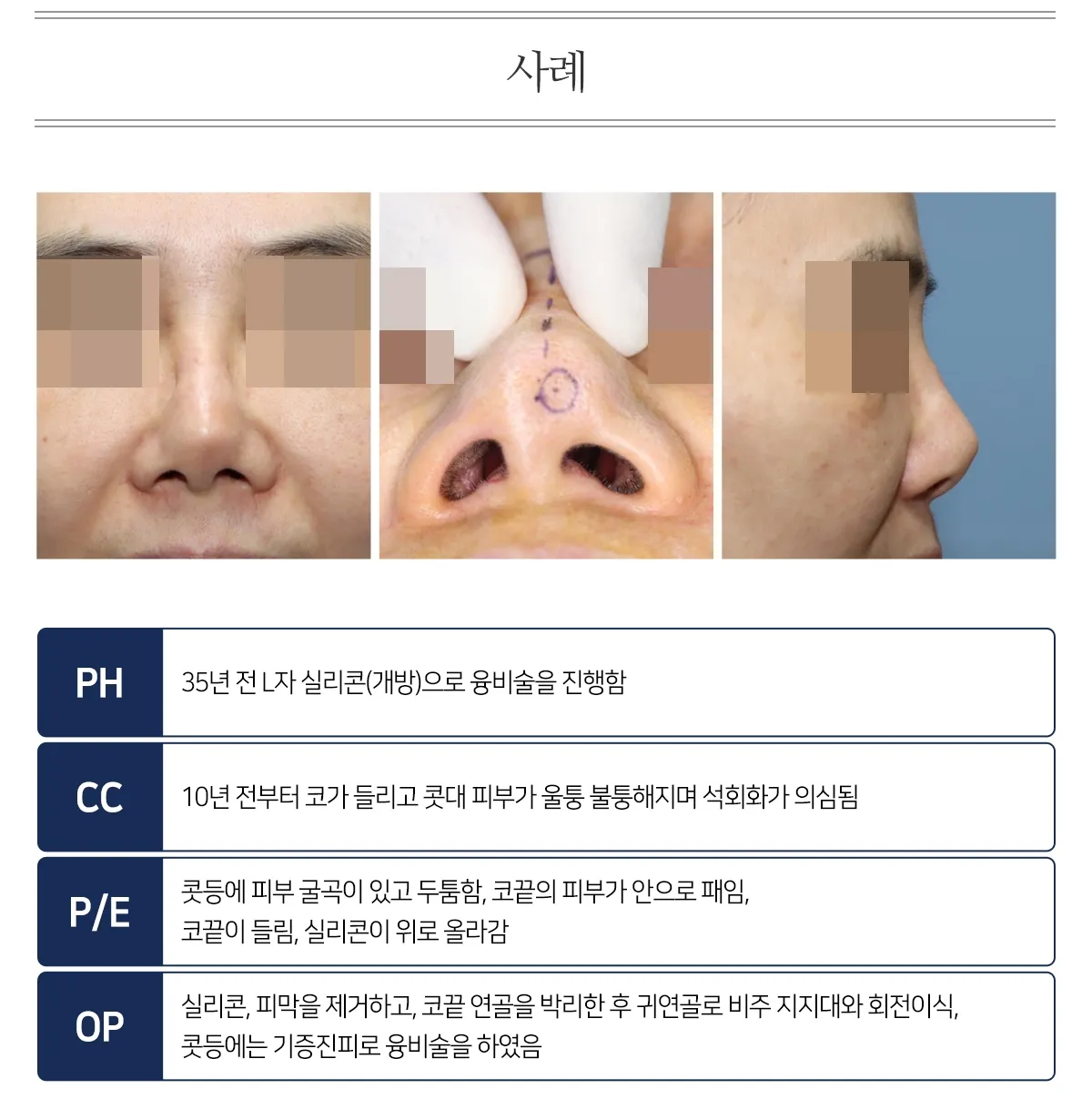
PH:
35 years ago, the patient had augmentation rhinoplasty with an L-shaped silicone implant,
and for the past 10 years, because of calcification,
the silicone had been protruding unevenly on the dorsum and the tip had shortened.
CC:
Calcified silicone, contracture, damage to the tip skin,
and tip deformity were among the problems.
OP:
The thickly calcified silicone was removed,
and columellar support and a derotation graft were made with ear cartilage, with augmentation rhinoplasty using MegaDerm.
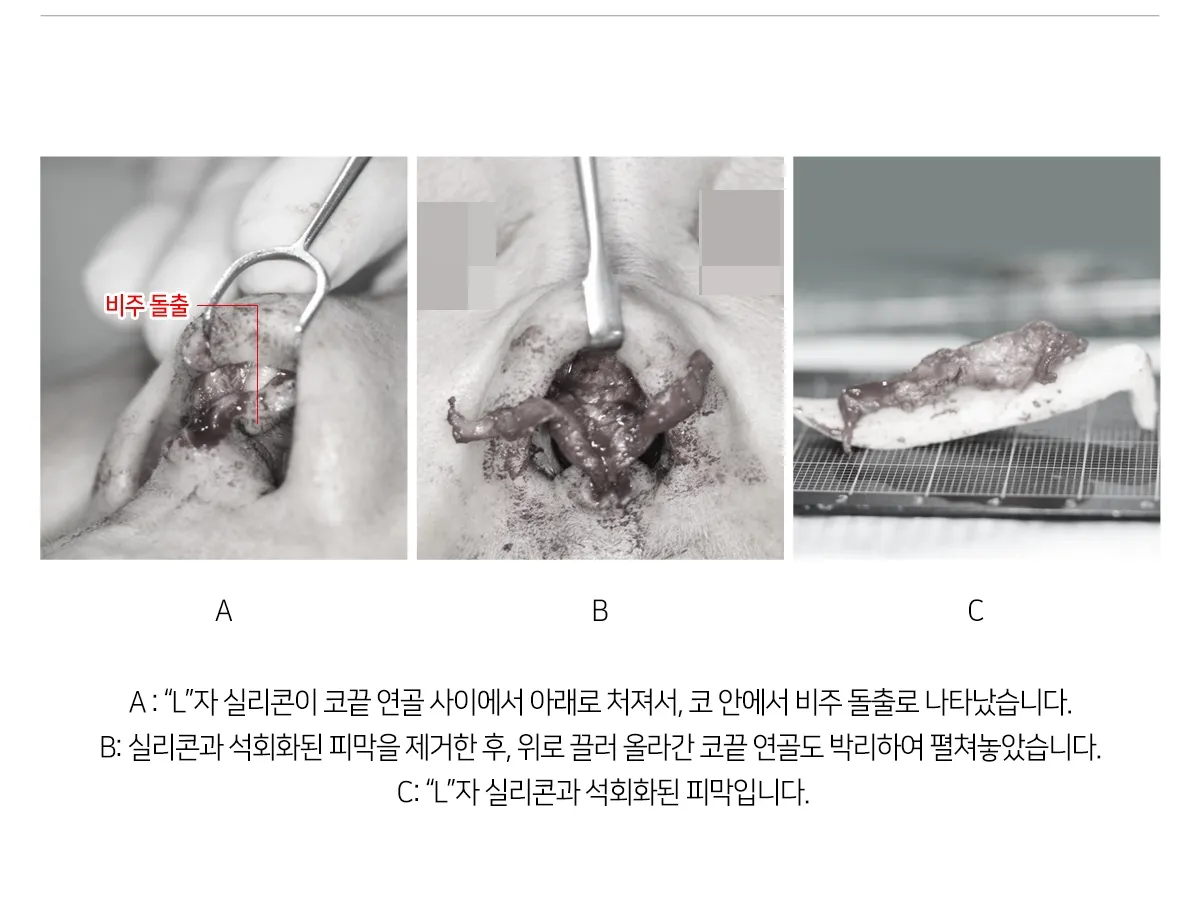
As shown in A,
the "L"-shaped silicone implant had shifted to the left side of the patient's nose,
and the situation called for resection of the tip cartilage and septum.
In C,
hard deposits like stone powder can be seen built up on the silicone.
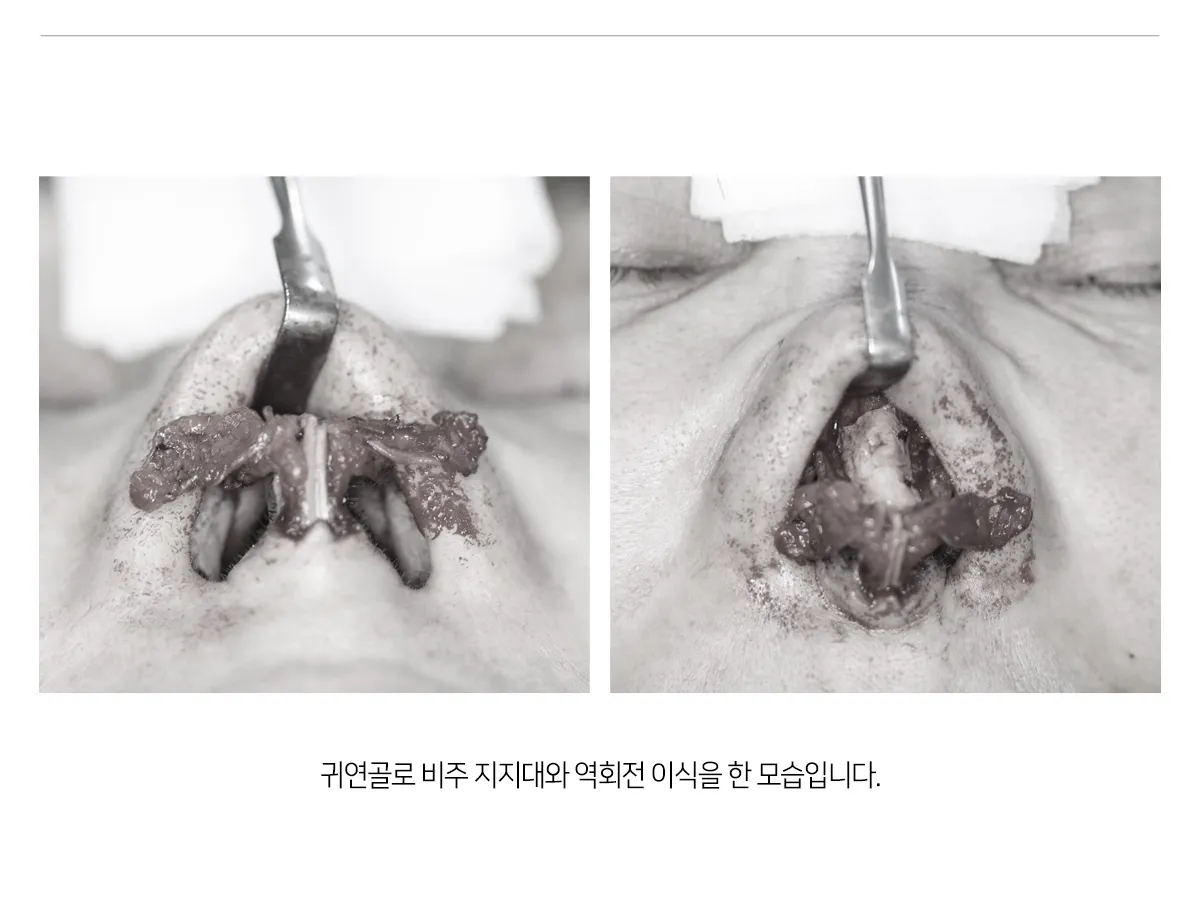
Left: A columellar strut made of ear cartilage in place.
Right: A derotation graft placed to lengthen the nose.
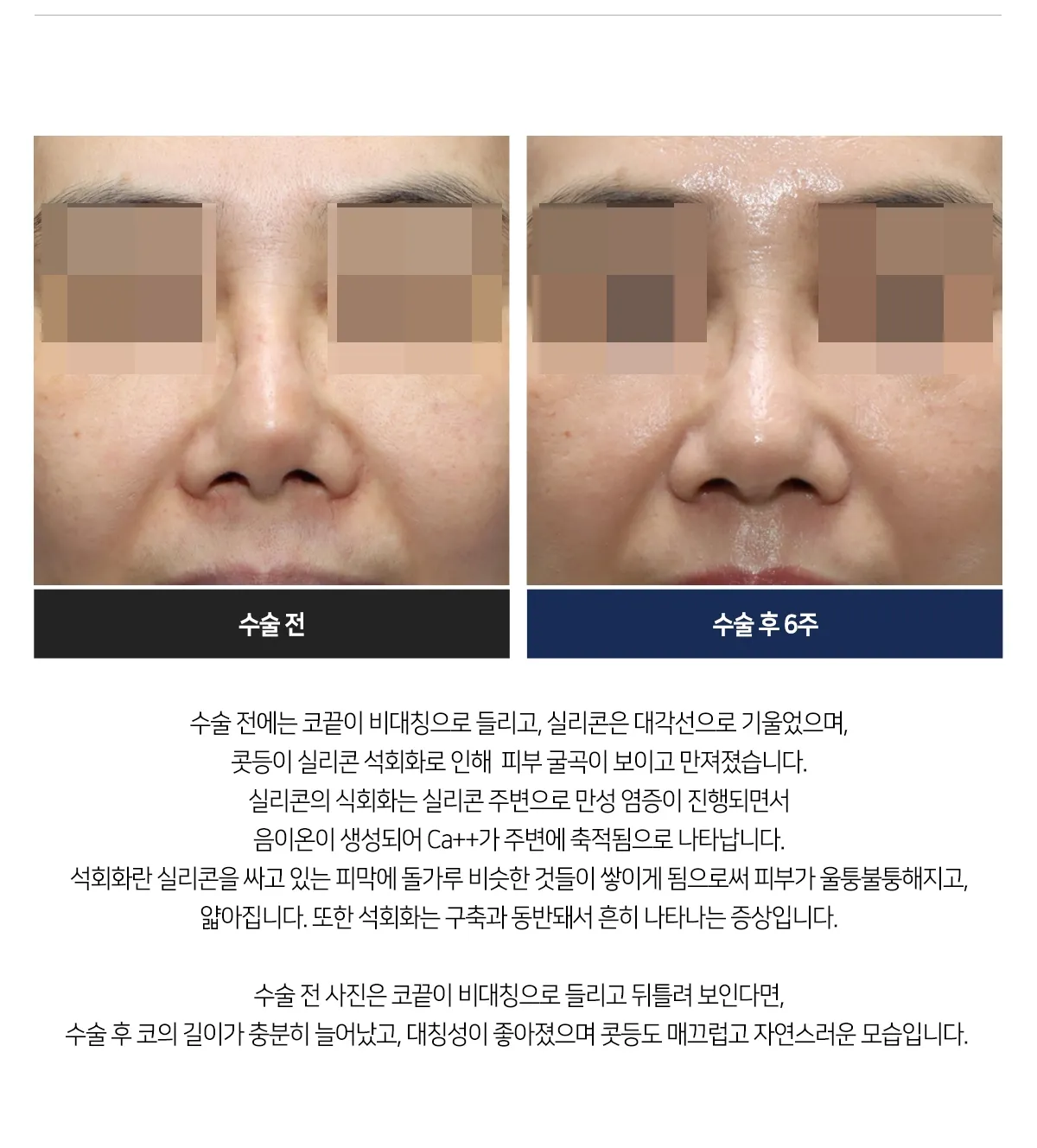
(Left) Before surgery
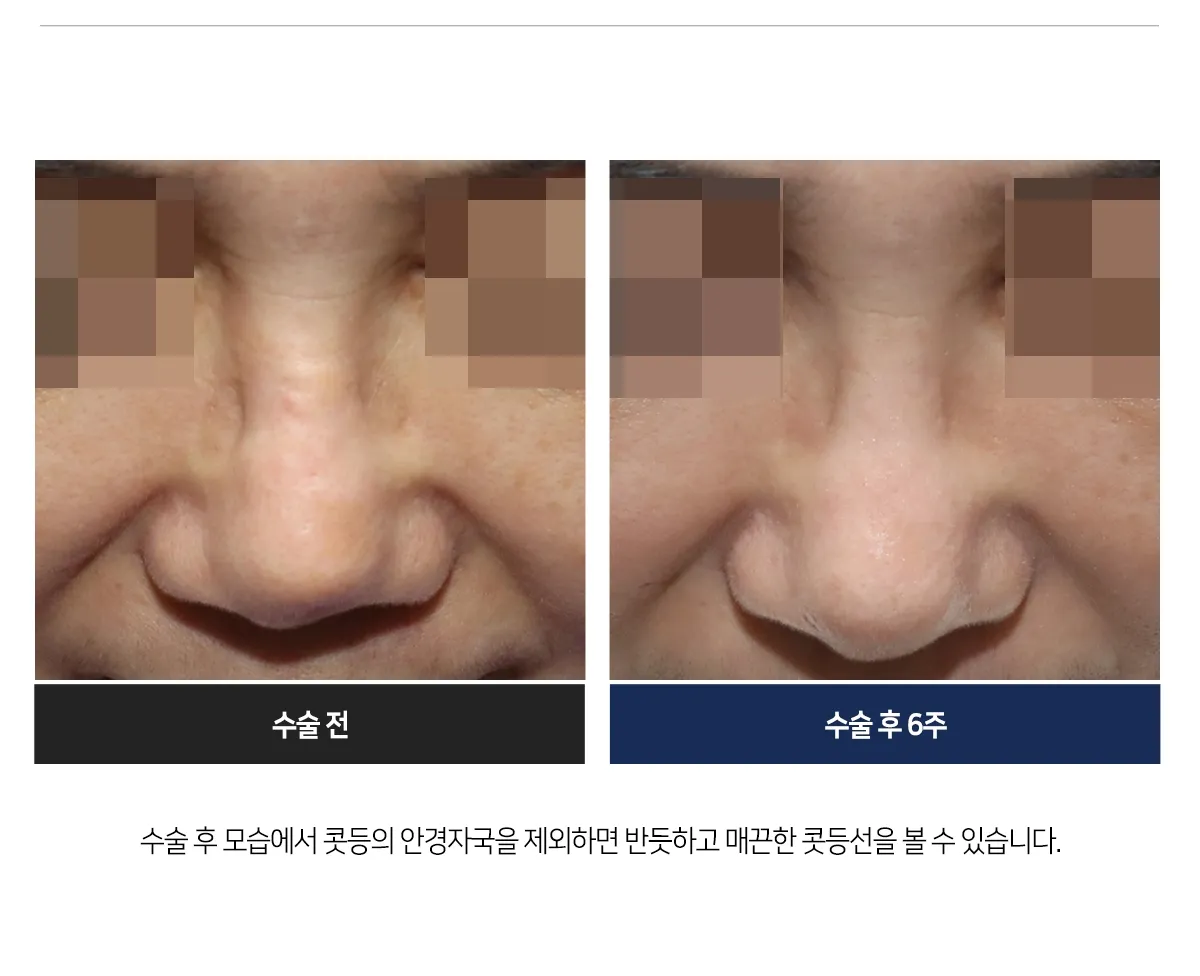
◈ The dorsum is uneven and the outline of the silicone shows,
◈ the skin of the tip has become very thin,
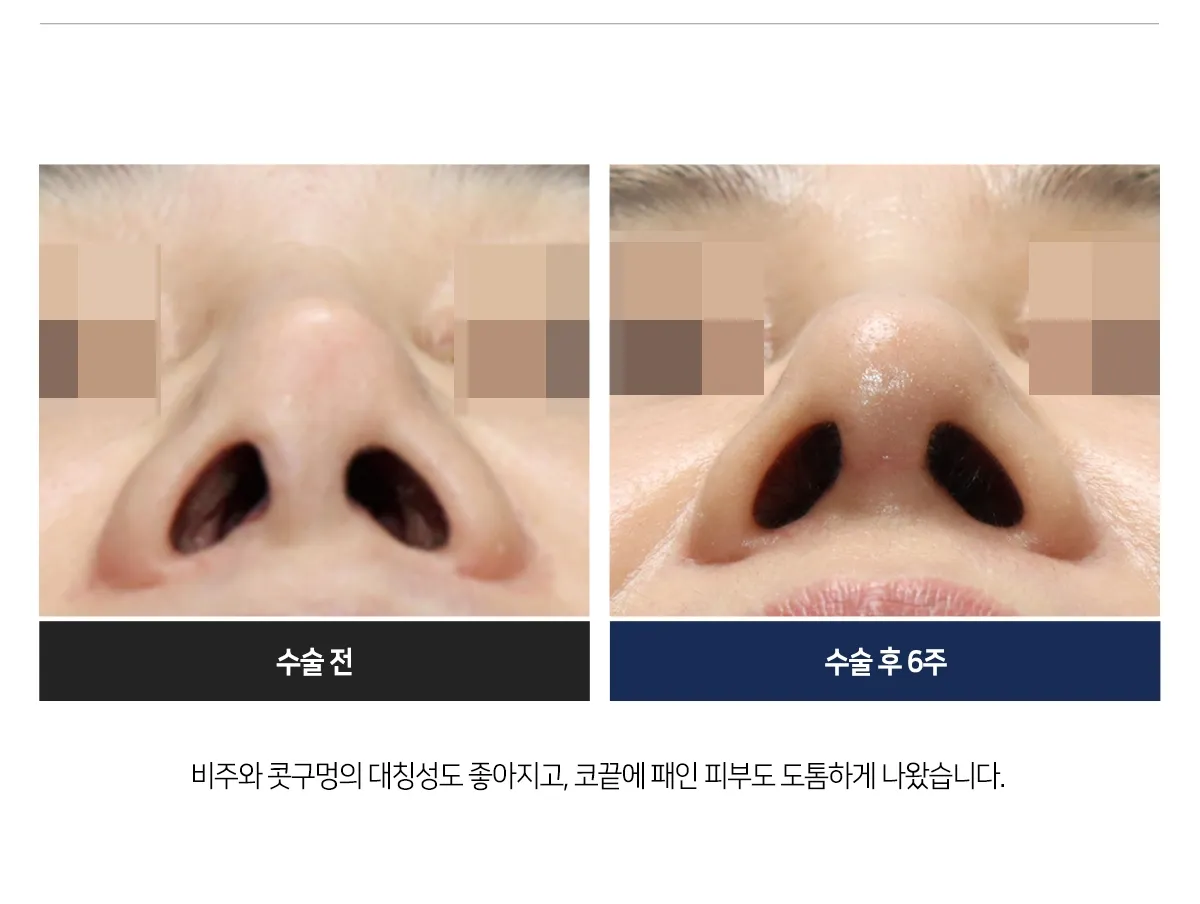
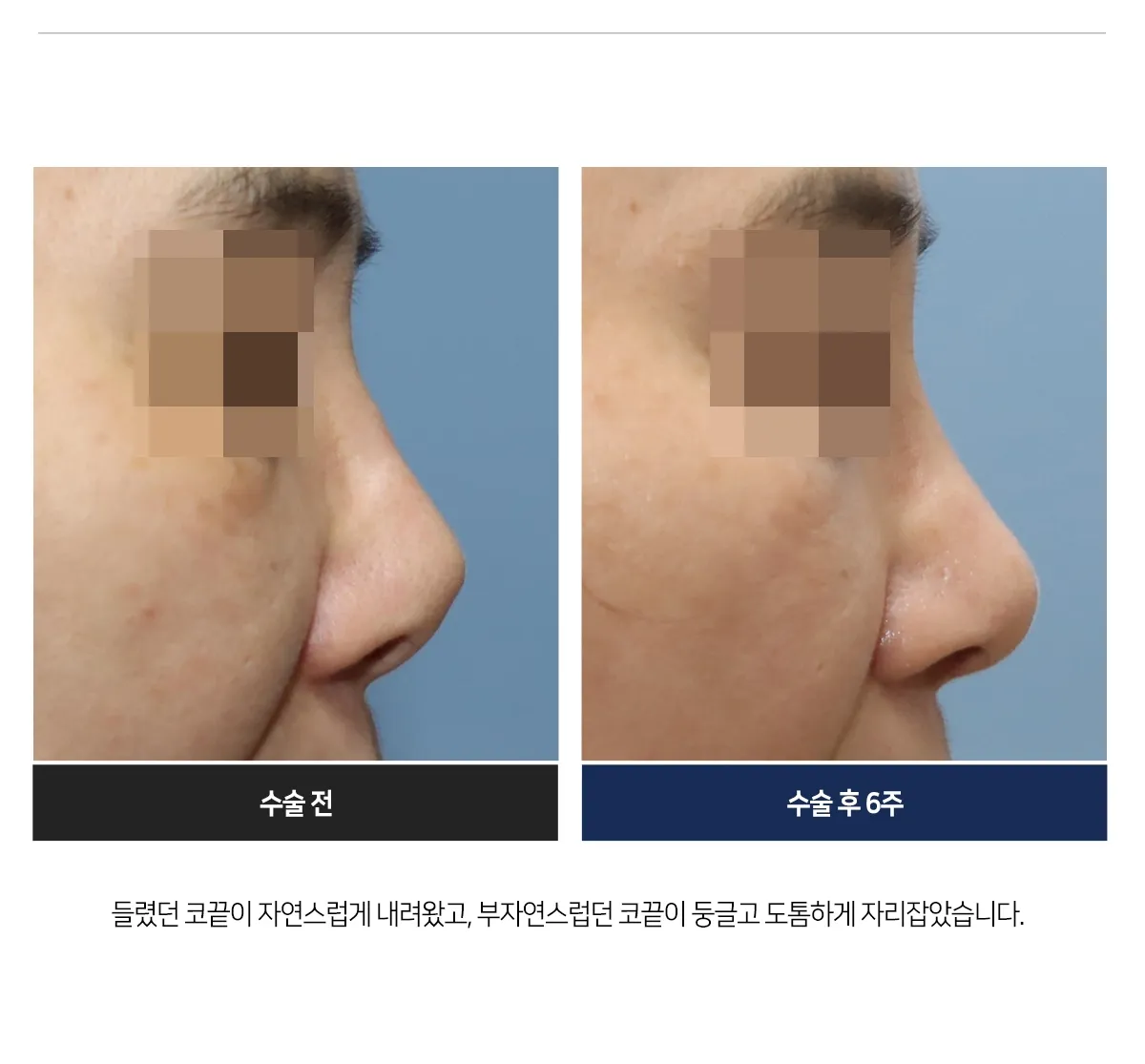
◈ and the tip is upturned, leaving the nostrils highly exposed.
(Right) After surgery
◈ The dorsum has become smooth and natural,
◈ the thinned skin of the tip has become fuller and natural,
◈ and the nose has lengthened so that the nostrils are covered and less exposed.