

Nose Filler by a Rhinoplasty Specialist: "What" Makes It Different?

In consultations about rhinoplasty,
some people say surgery frightens them or that they cannot spare the time,
and for these and various other reasons,
they ask about options that are simple and easy:
thread rhinoplasty,
that is, Hiko and Barbie Nose procedures,
or nose filler. Such inquiries are not uncommon.
Having performed revision rhinoplasty for more than 30 years,
and having seen from thread rhinoplasty (Barbie Nose, Hiko)
countless side effects,
my view is this:
thread rhinoplasty
offers limited, short-lived results, while
its side effects are many,
so I do not recommend it.
As with Hiko and Barbie Nose,
the threads used in nose procedures to define the tip, lengthen the nose,
and raise the bridge
are thick and stiff.
The foreign body sensation is therefore pronounced,
and there is considerable concern that they will break through the skin,
and caution is needed.
So even when patients ask about Hiko or Barbie Nose,
I do not recommend the procedure.


On the other hand,
nose filler
is very simple and its side effects are rare,
so when used appropriately,
it is a treatment offering very good value for the cost,
in my view.
So today,
the advantages and disadvantages of nose filler,
and where and how it should be used
to obtain optimal results
are what we will look at.

Compared with the tip,
the glabella and the middle of the dorsum are low in quite a few people,
so the dorsal line does not run straight
but curves inward like a scooped nose.
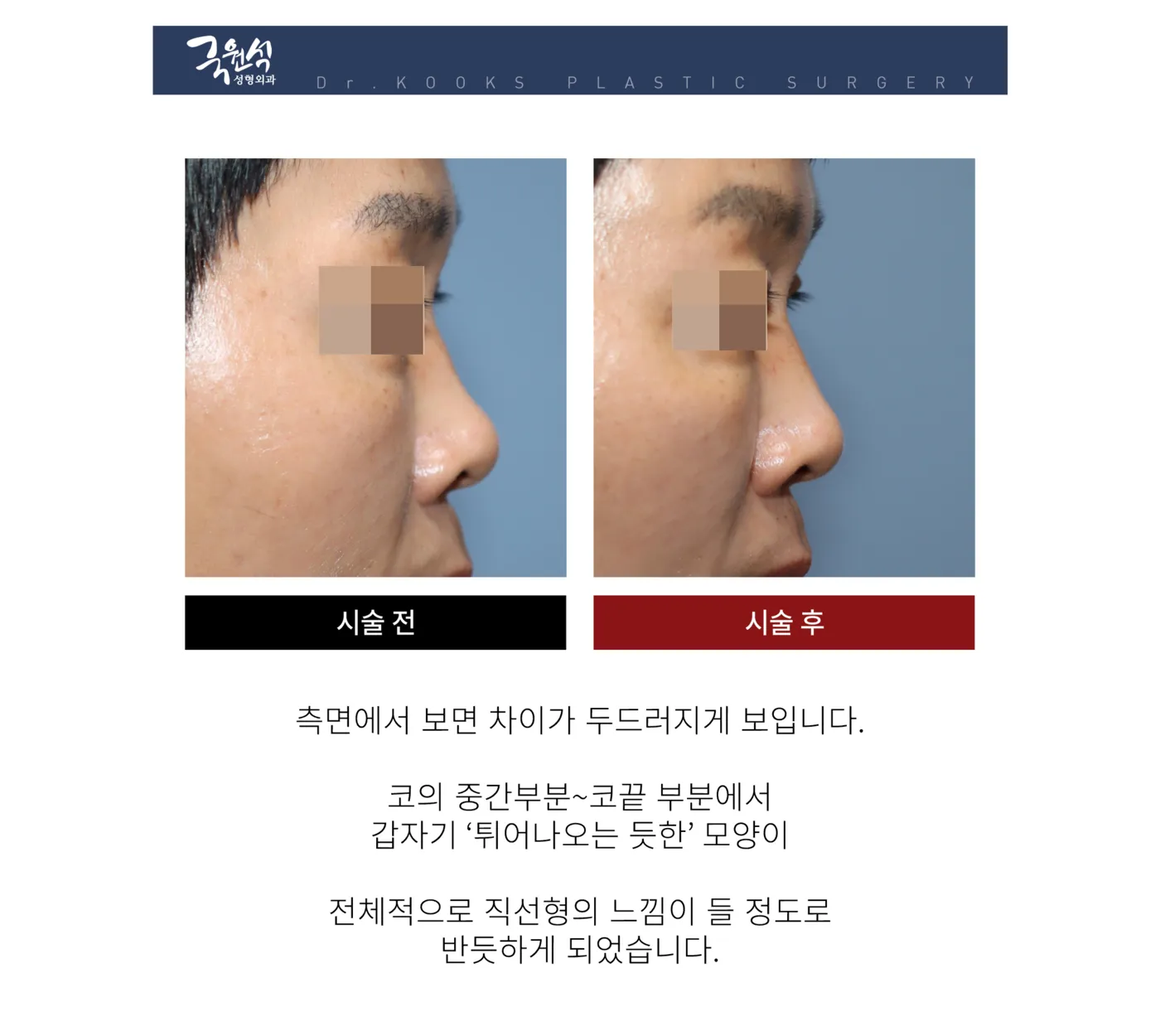
In the patient shown above as well,
compared with the height of the tip,
the middle of the dorsum can be seen to be low.
For such patients, nose filler is very useful,
and good aesthetic results can be obtained.
The effect of nose filler
generally lasts about 12-24 months on the dorsum.
It does not disappear suddenly all at once;
from around 6 months,
it breaks down and fades little by little,
so the effect can be maintained for quite a long time.


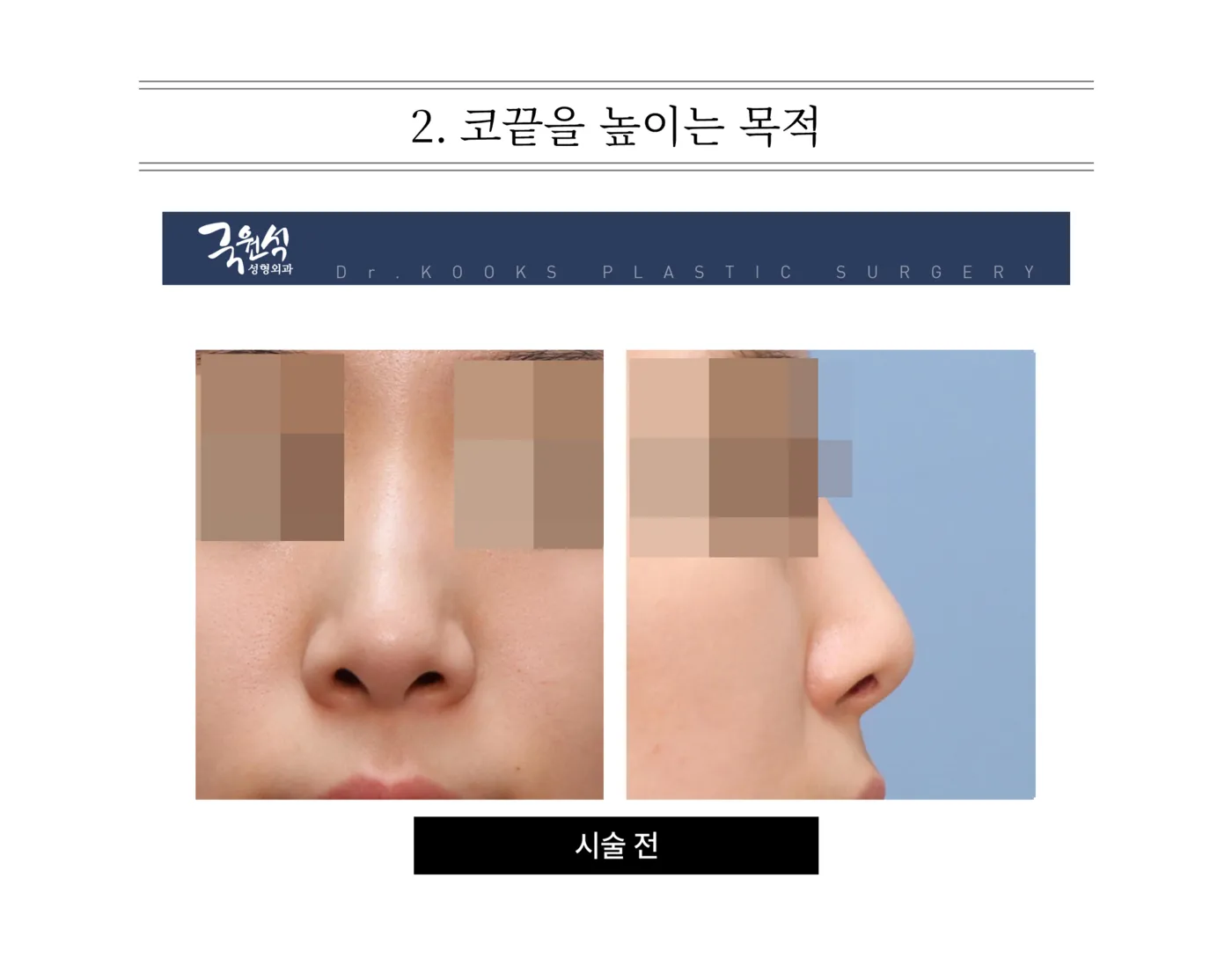
This time, unlike the previous case,
the tip is low and slightly upturned compared with the dorsum.
In this case as well, nose filler was used
in an attempt to increase the height and length
of the tip.
Here, if the skin of the tip is stiff and tight,
the filler may have little effect.
For tip filler to be effective, therefore,
whether the skin is soft and
stretches well needs to be checked.
In this patient,
the skin of the tip was soft and elastic,
so nose filler could be attempted.
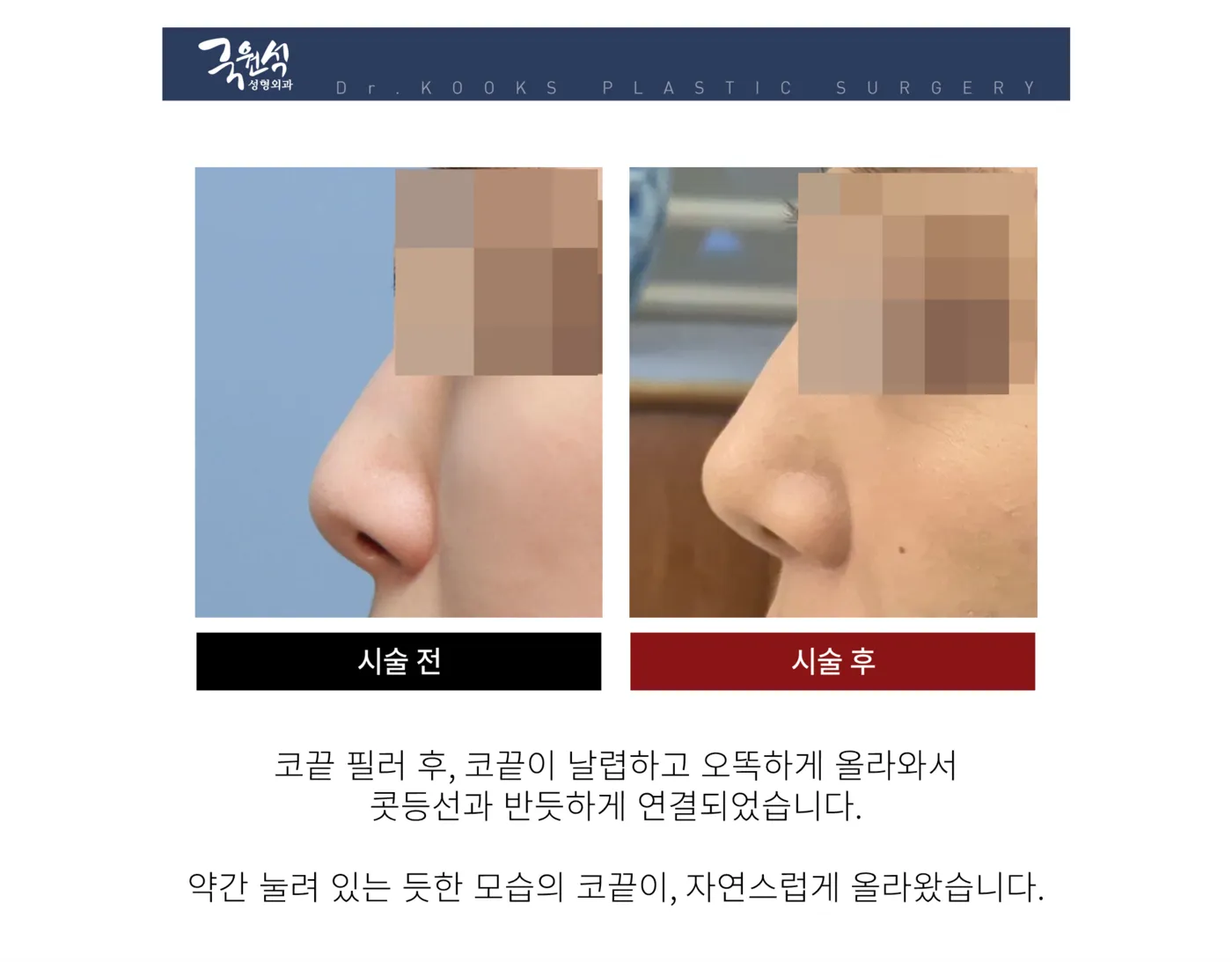
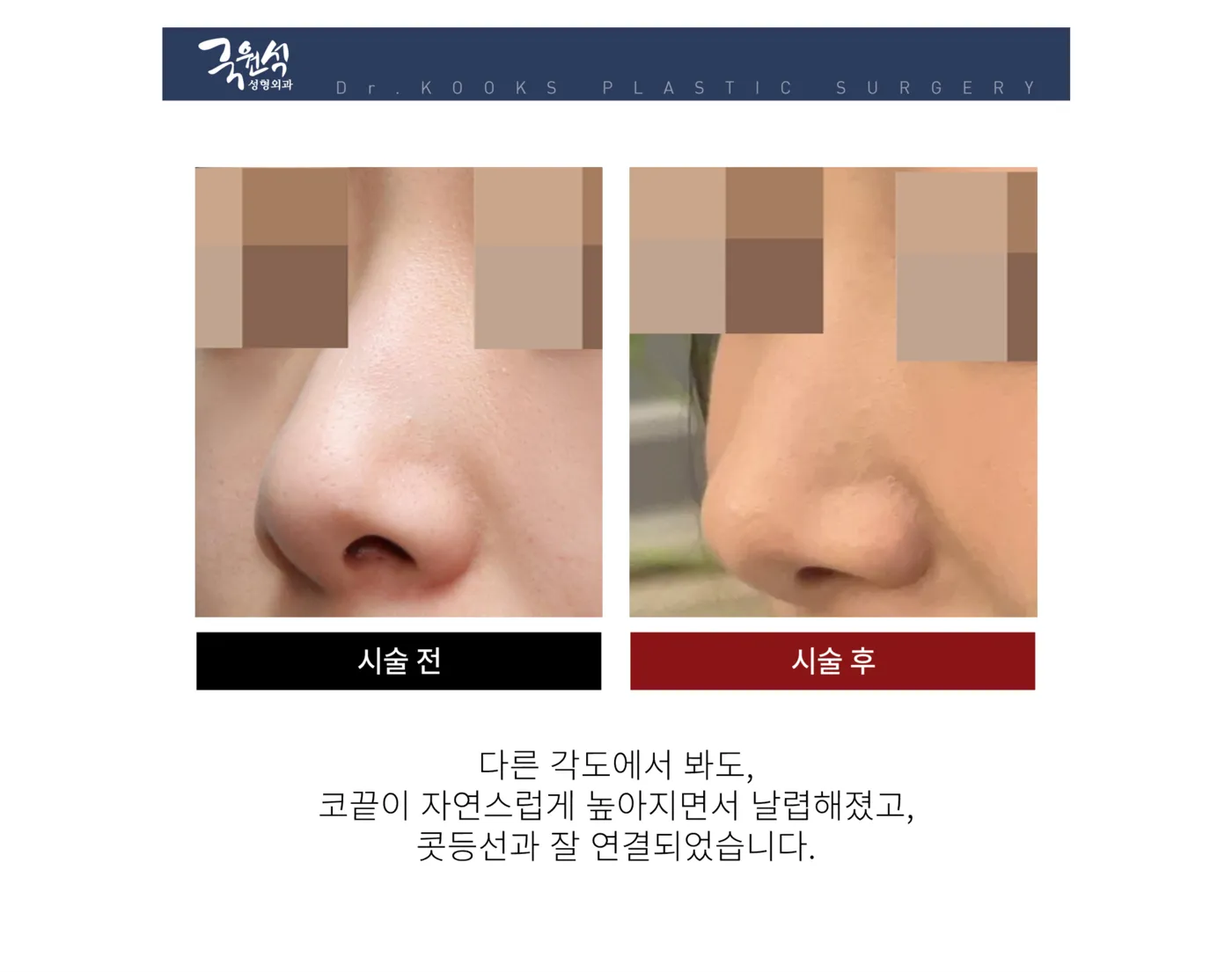
In this way, when nose filler is used well,
even without surgery using an implant or cartilage,
it raises the bridge and tip naturally,
and for a nose that seems low and short,
or one in which the dorsum and tip are out of balance,
a natural yet ideal
dorsal line can be created.