

Nasal Tip Deviation After Septal Extension Grafting #SeptalExtensionGraft #SeptalExtensionGraftSideEffects
 YouTube
A septal extension graft is one of the methods used to narrow the nasal tip or give it more height.
However, among those who have had a septal extension graft, we often see the nasal tip become deviated.
Here we look at why this happens, how it can be prevented,
and how a nasal tip that has deviated as a result can be corrected.

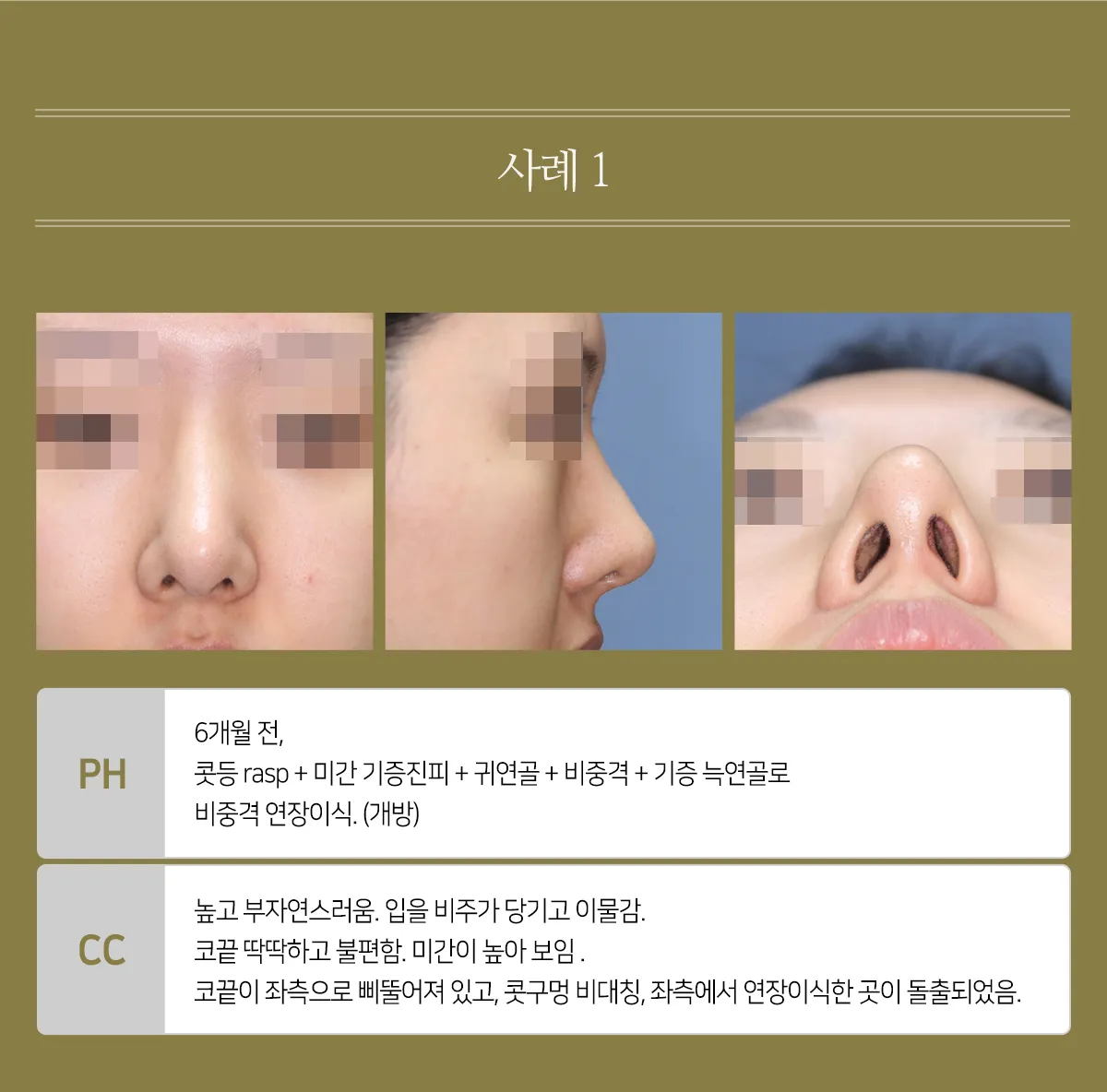
PH
6 months ago,
dorsal rasping + acellular dermal matrix at the glabella + ear cartilage + septal cartilage + donor costal cartilage used for
a septal extension graft. (Open approach)
CC
Too high and unnatural. The columella pulls on the lip, with a foreign body sensation.
The nasal tip is hard and uncomfortable. The glabella looks high.
The nasal tip is deviated to the left, the nostrils are asymmetric, and the extension graft protrudes on the left side.
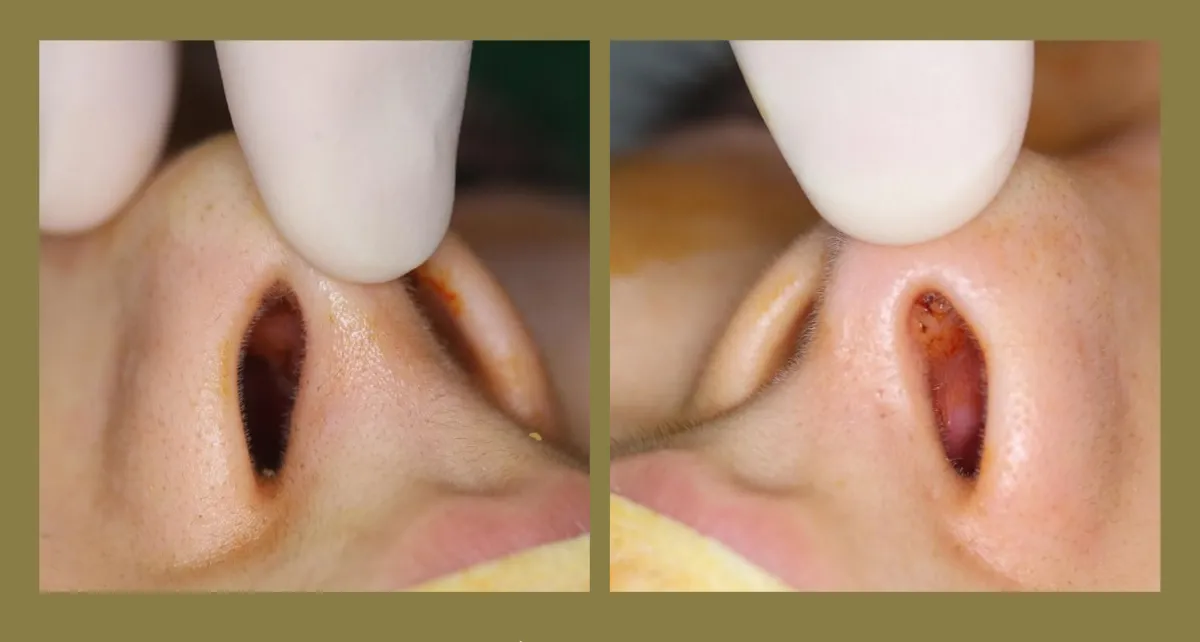
Looking inside the left nostril,
we can see that the cartilage grafted as an extension onto the end of the septum protrudes.
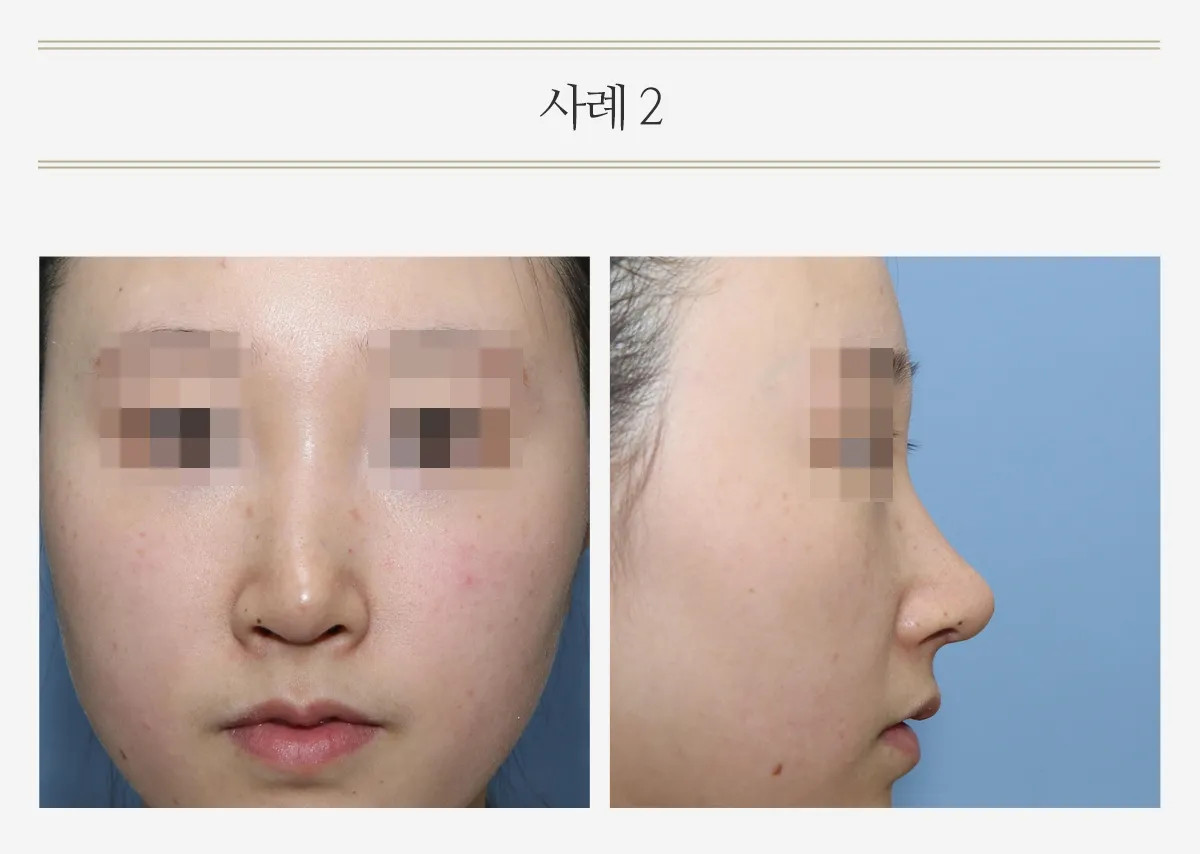
This patient had tip plasty using ear cartilage at another clinic 3 years ago,
and then 1 month ago, also at another clinic, had septal cartilage used for
a septal extension graft before visiting our clinic.
From the front, the nasal bridge is deviated and the nasal tip is shifted to the patient's left. (caudal septal deviation)
From the side, the nasal tip is too high relative to the dorsum, giving a typical Pinocchio nose.
The cause of the deviated bridge and tip appears to be that the septal extension graft was made too high and too long,
creating high tension in the skin of the nasal tip that bent the extended septal cartilage.
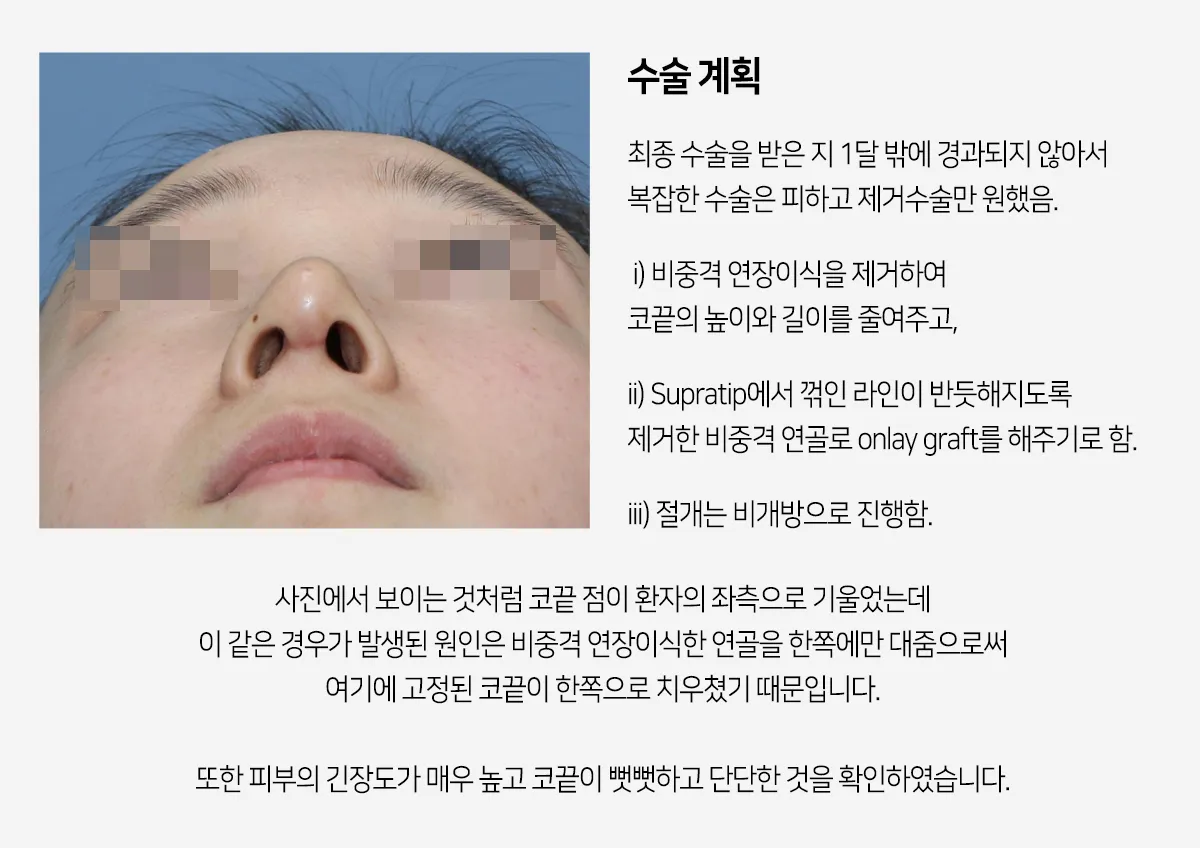
Surgical Plan
Because only 1 month had passed since the most recent surgery,
the patient wanted to avoid complex surgery and have removal only.
i) Remove the septal extension graft to
reduce the height and length of the nasal tip,
ii) To straighten the line that breaks at the supratip,
place an onlay graft using the removed septal cartilage.
iii) Use a closed approach for the incision.
As the photo shows, the tip point is tilted to the patient's left;
this happened because the cartilage of the septal extension graft was placed on one side only,
so the nasal tip fixed to it shifted to one side.
We also confirmed that skin tension was very high and the nasal tip was stiff and firm.
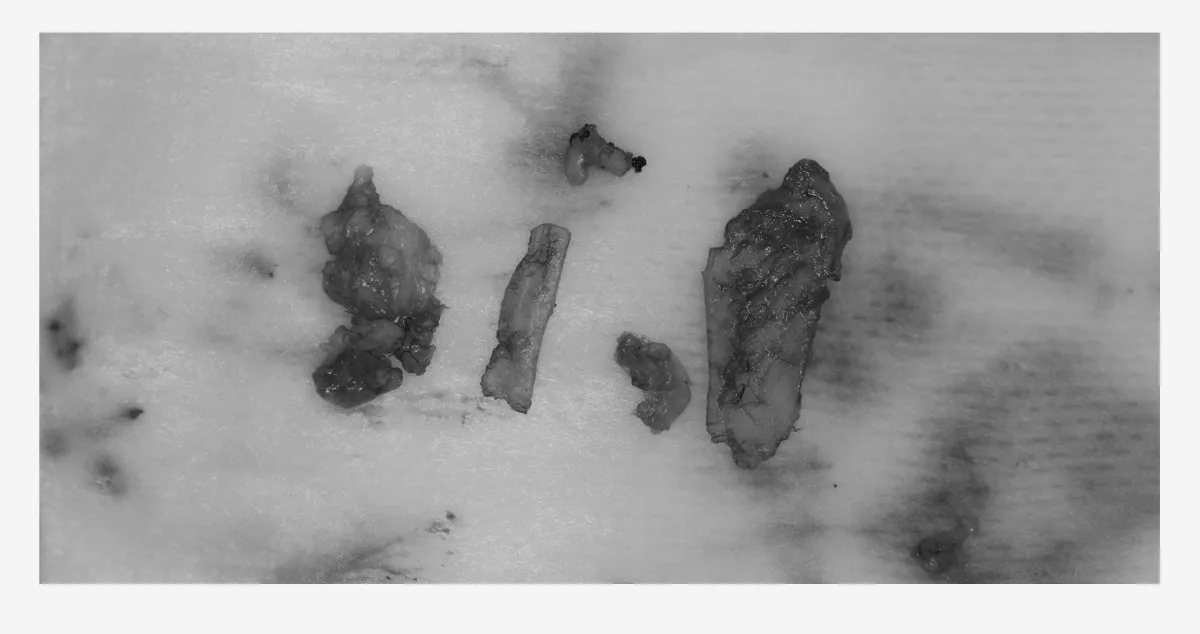
The septal extension graft removed from the nasal tip through a closed approach.
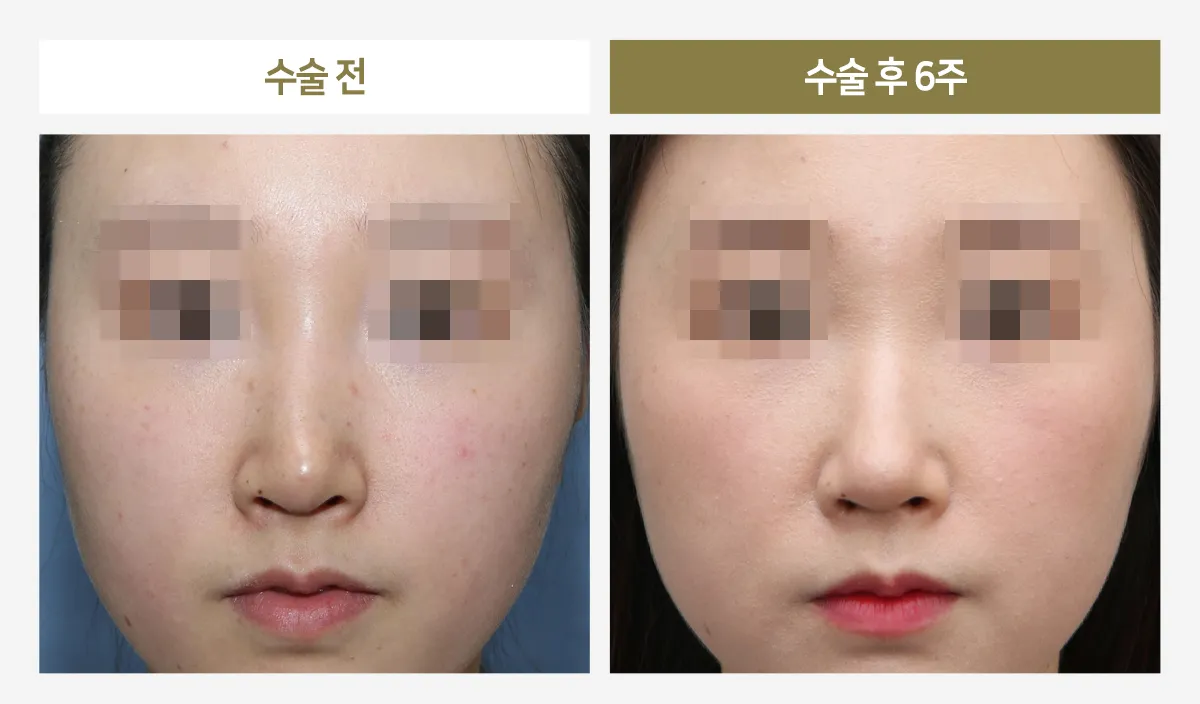
The nasal tip and dorsal line, which had been deviated, can be seen to be straight.
Simply by removing the septal extension graft,
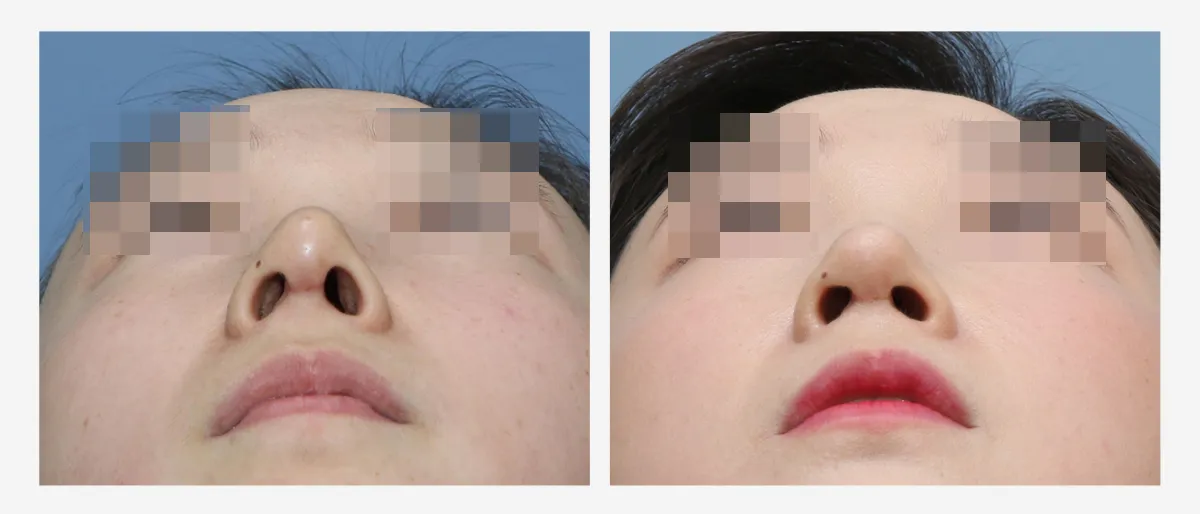
the asymmetric nostrils and the shifted columella
were all corrected, becoming straight and symmetric.
The exaggerated nasal tip has also become natural.
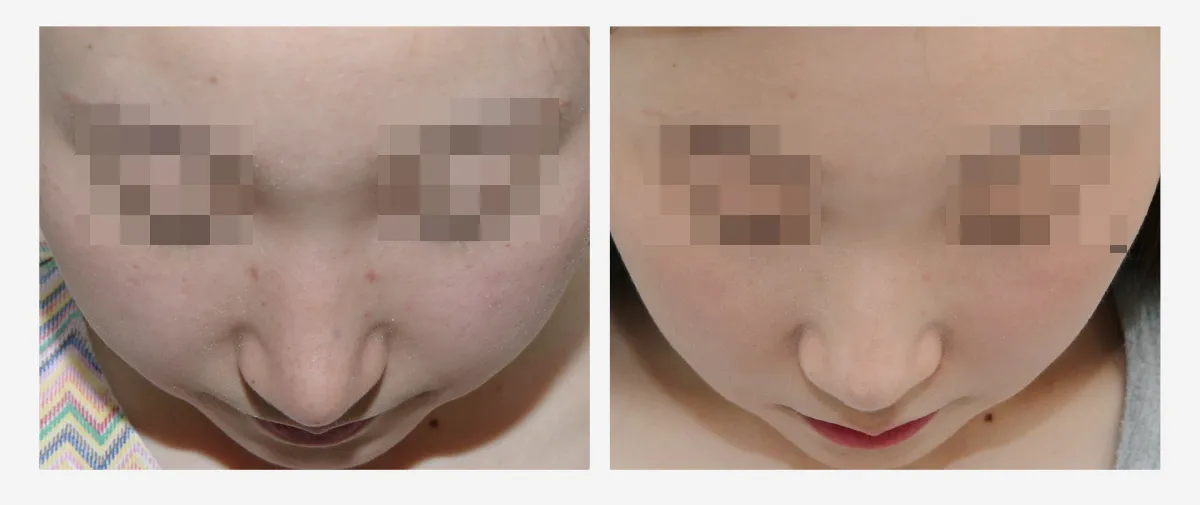
The deviated nasal tip can be seen to be straight.
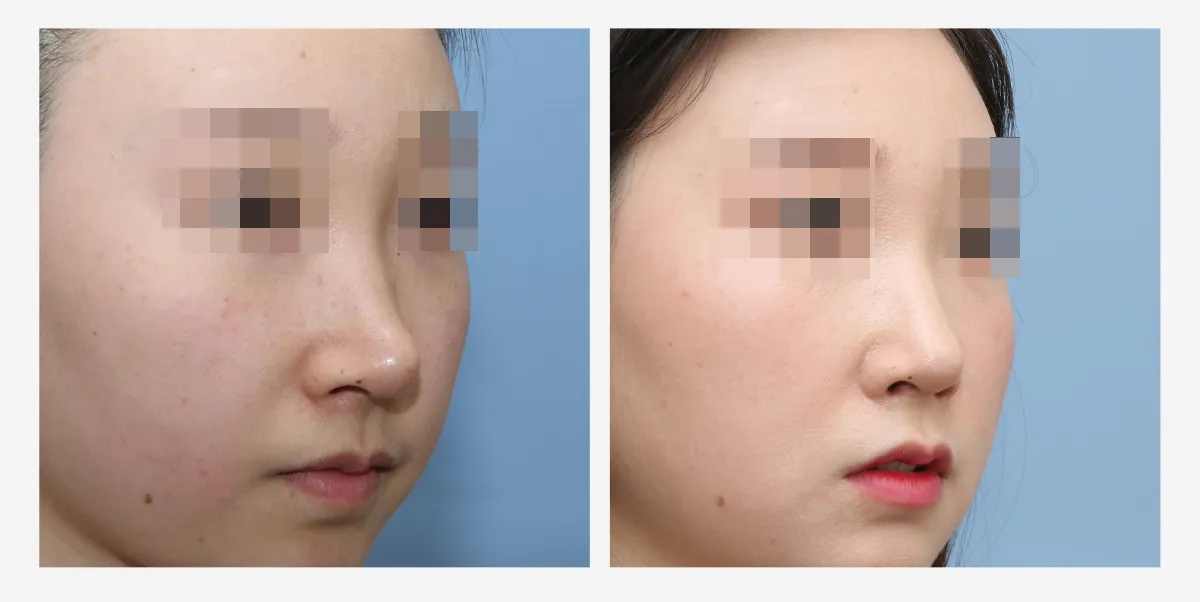
The three-quarter view can also be seen to have improved greatly.
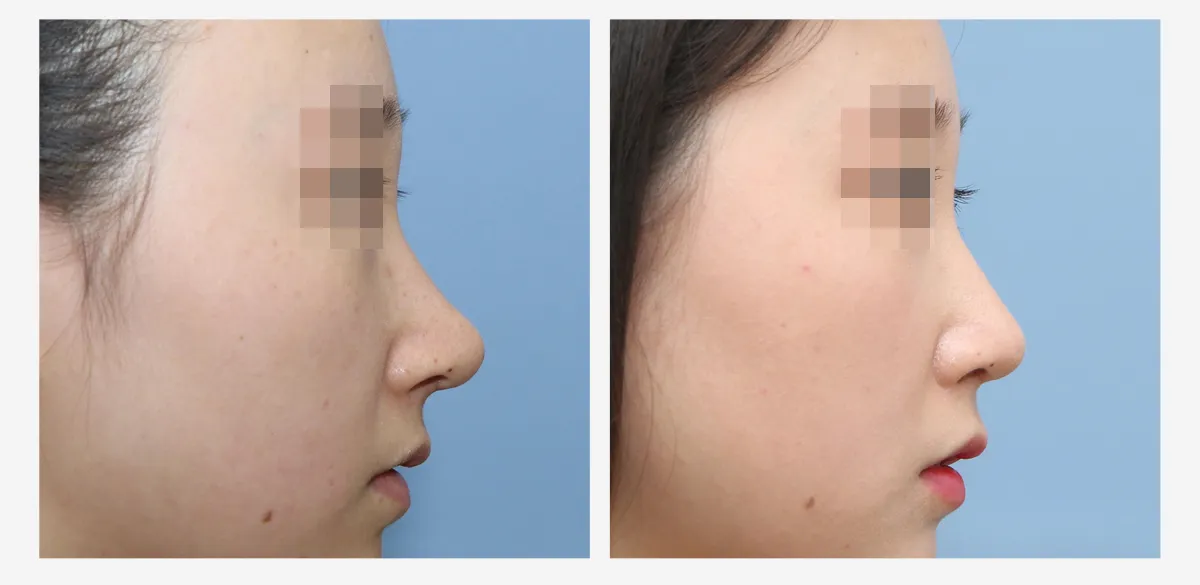
The nasal tip, which had been exaggerated like a cartoon character's big nose, has become straight and natural,
and the broken dorsal line has also straightened.

PH
1st surgery: 9 years ago, implant + ear cartilage + strut (open) => unnaturally high.
2nd surgery: 2 months later, only the silicone was removed.
3rd surgery: one month ago at another clinic, silicone + strut left in place + ear cartilage harvested again. (Open)
CC
The nostrils show more than before.
The nostril asymmetry has worsened.
The glabella is high. The nasal tip is also high and looks upturned.
This patient visited us because the shape of the nose had become increasingly odd after 3 surgeries at several clinics.
From the front, the nasal bridge is deviated and the nasal tip is shifted to the patient's right. (caudal septal deviation)
In the lateral photo, the nasolabial angle is widened and tension in the nasal tip is high.
From below, the columella is shifted to the patient's right and slanted, so the nostril asymmetry is marked.
The septal extension graft was placed as a batten type on the right side only,
and as it bent, the nasal tip shifted to the left and the columella to the right.
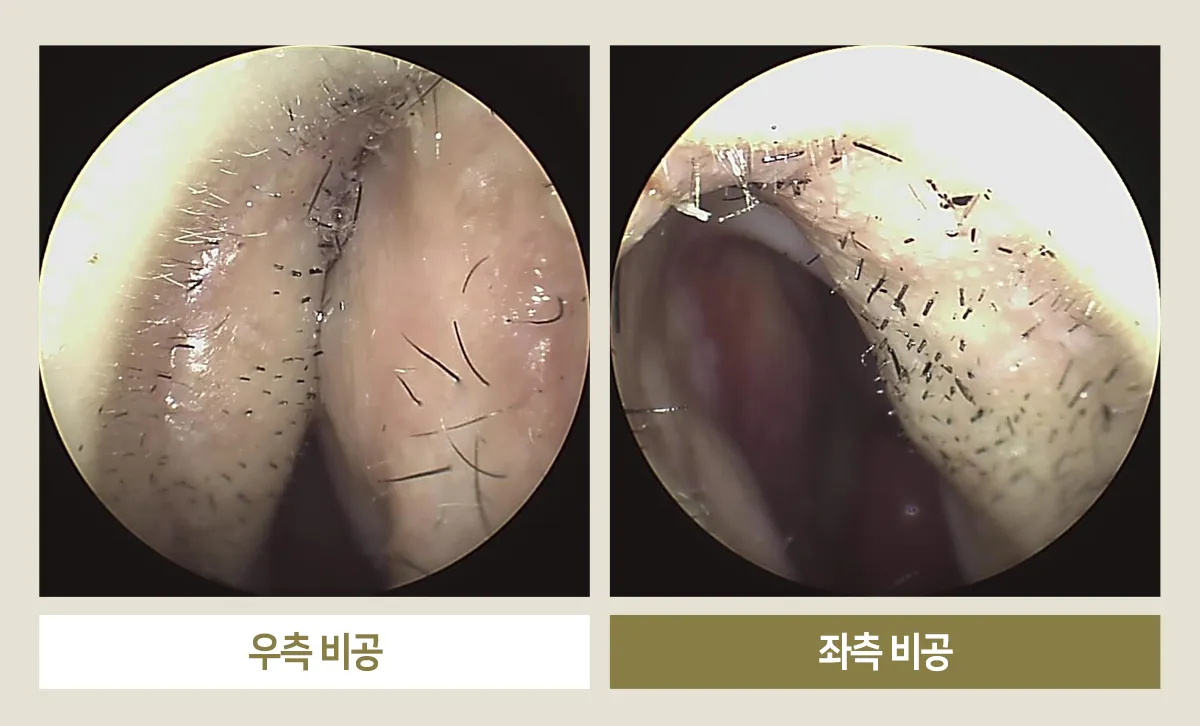
Viewed through the right nostril, the extension graft is attached to the septum,
and it has buckled and protrudes,
while the mucosa of the nostril roof (vestibule) has come down and touches the septum.
In the left nostril, they can be seen to be completely separated.
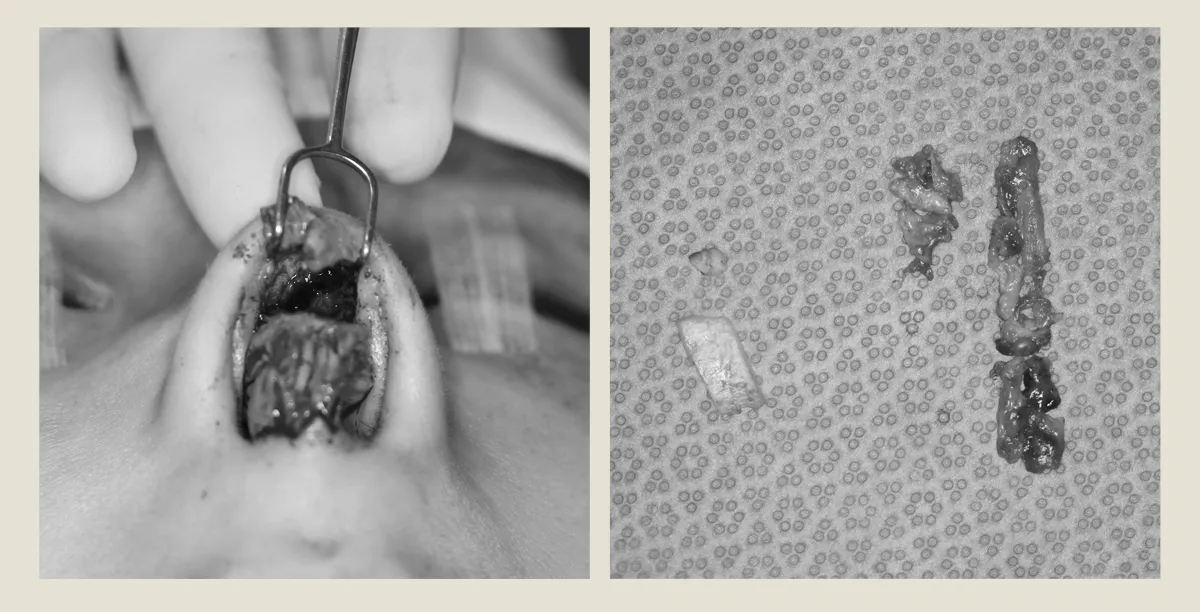
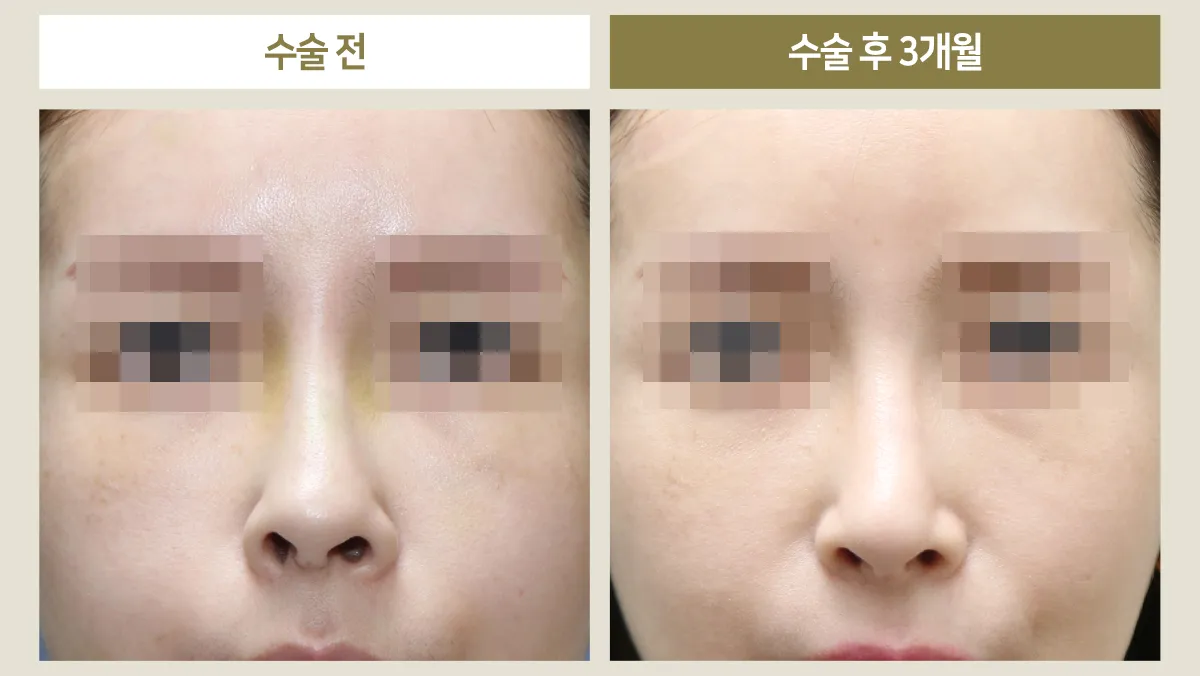
The extension graft can be seen attached at the columella.
The right photo shows the removed extension graft cartilage, capsule, and scar tissue.
Procedures
The septal extension graft was removed entirely, and a small columellar strut made from it was placed.
The deviation of the lower part of the septal cartilage (caudal septum) was corrected. (Septoplasty)
Nothing was placed in the dorsum. (Open approach)
After Surgery
The columella and nasal tip have settled well in the midline, and nostril symmetry has improved markedly.

The columella now sits straight in the midline,
and the nostrils are fully symmetric.
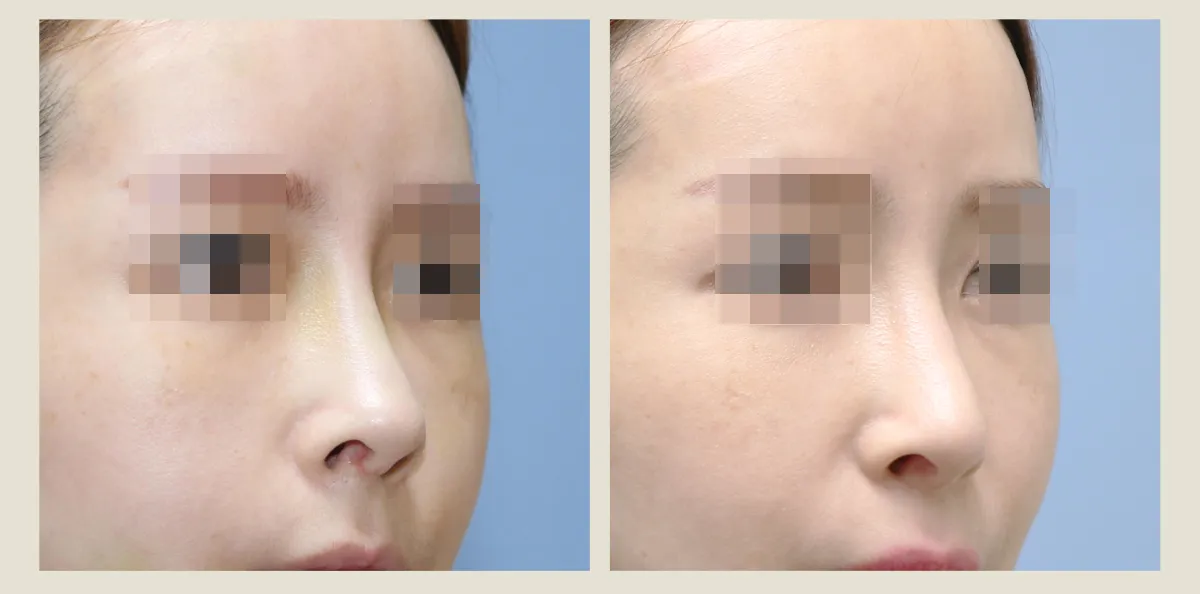
The tension in the nasal tip is gone, and it looks natural.
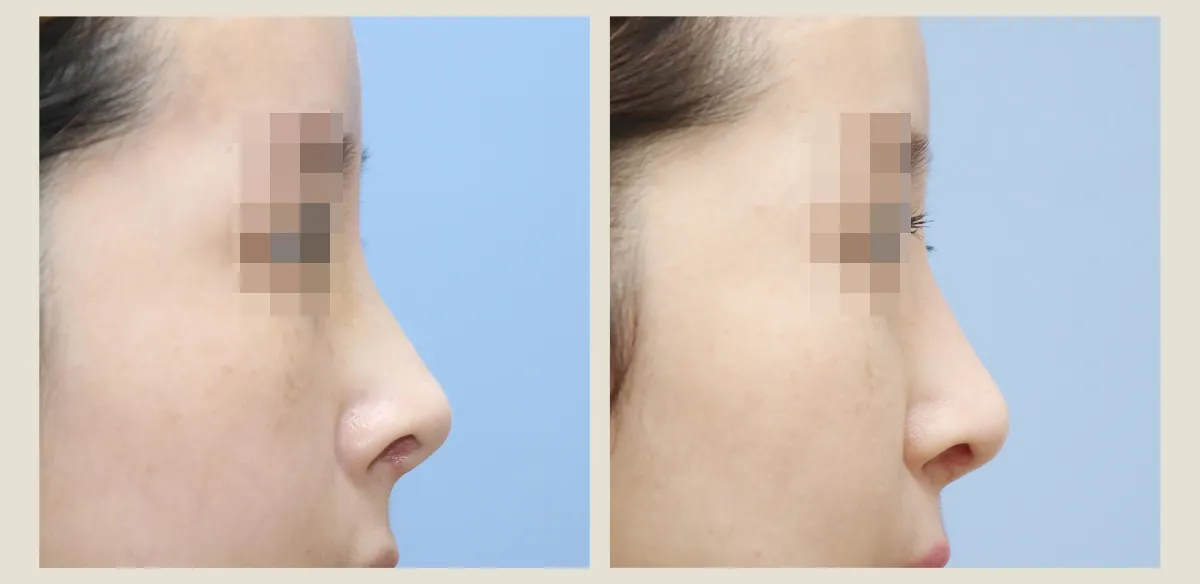
The nasal tip is lower, but the tension is gone and the wide nasolabial angle has also decreased.
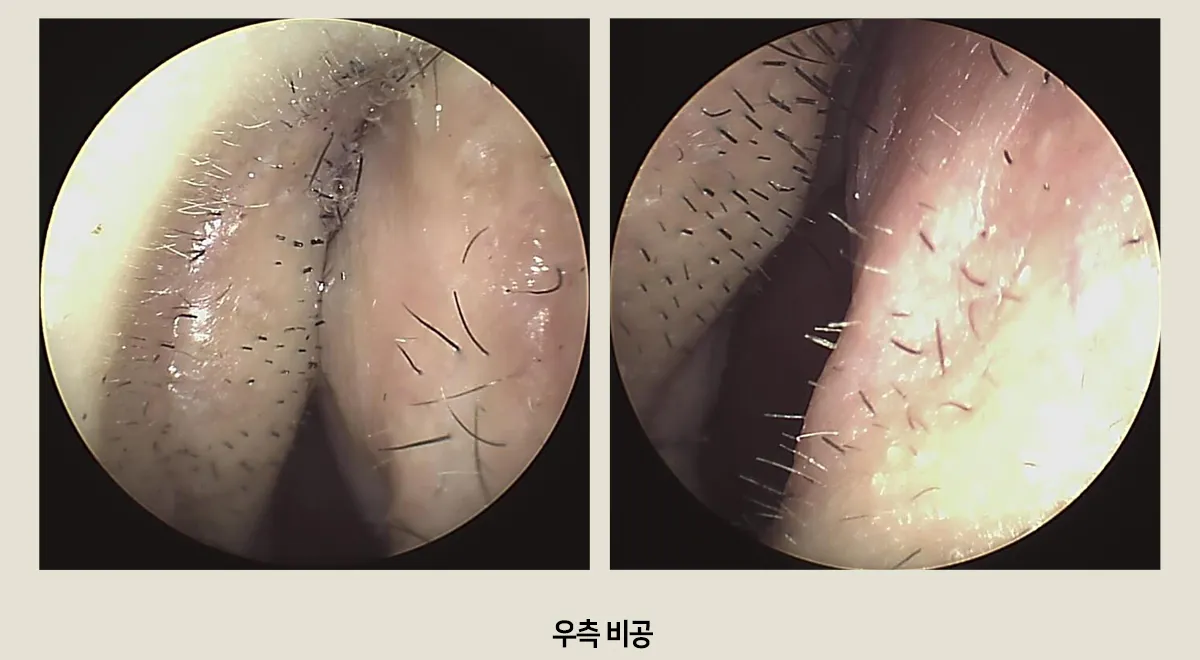
The septal protrusion caused by the septal extension graft is gone,
and the roof mucosa that had come down has risen again, so the nostril is much wider.
As a result, nasal breathing improved markedly and sleep quality improved.
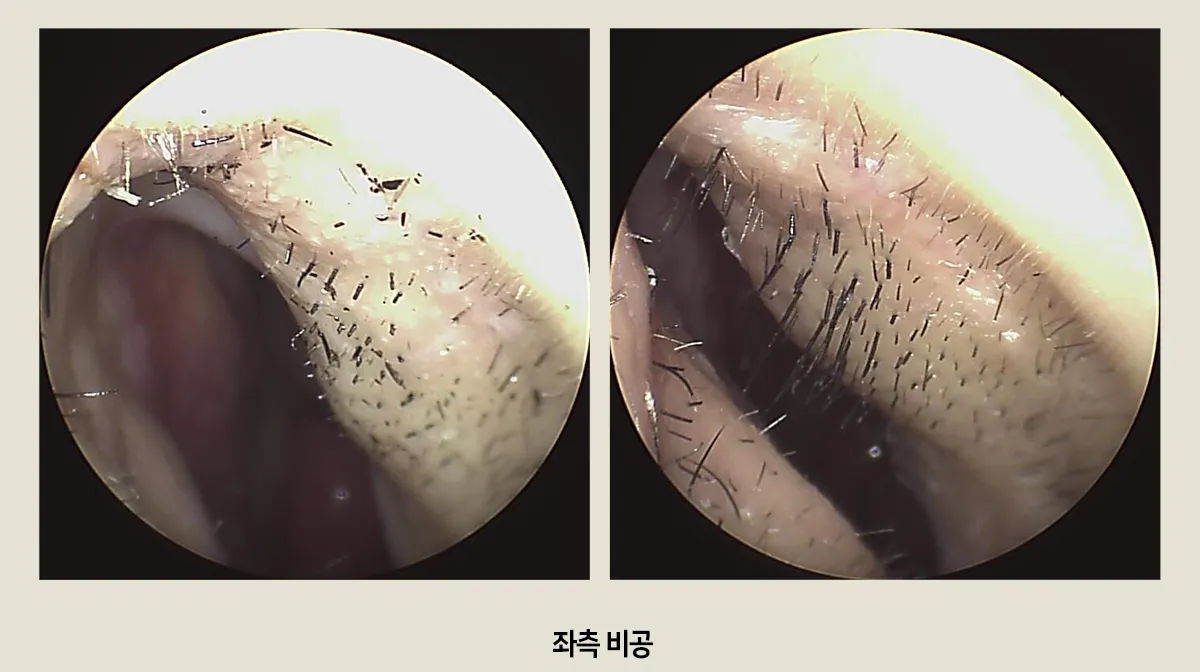
As the septum, which had been shifted to the right, settled in the midline, the entrance of the left nostril, which had been too wide, became symmetric.