Thread Lift
Thread Lift
A visit-planning guide to the thread lift at RESUM Plastic Surgery Clinic in Gangnam: how long the session takes, how the first two weeks go and which thread type fits your goals.
View details
Thread Lift
A planning guide for visitors considering the Eye-Widening Thread Lift at RESUM Plastic Surgery Clinic in Gangnam: the time needed, the first two weeks, and the cases where threads are not the answer.

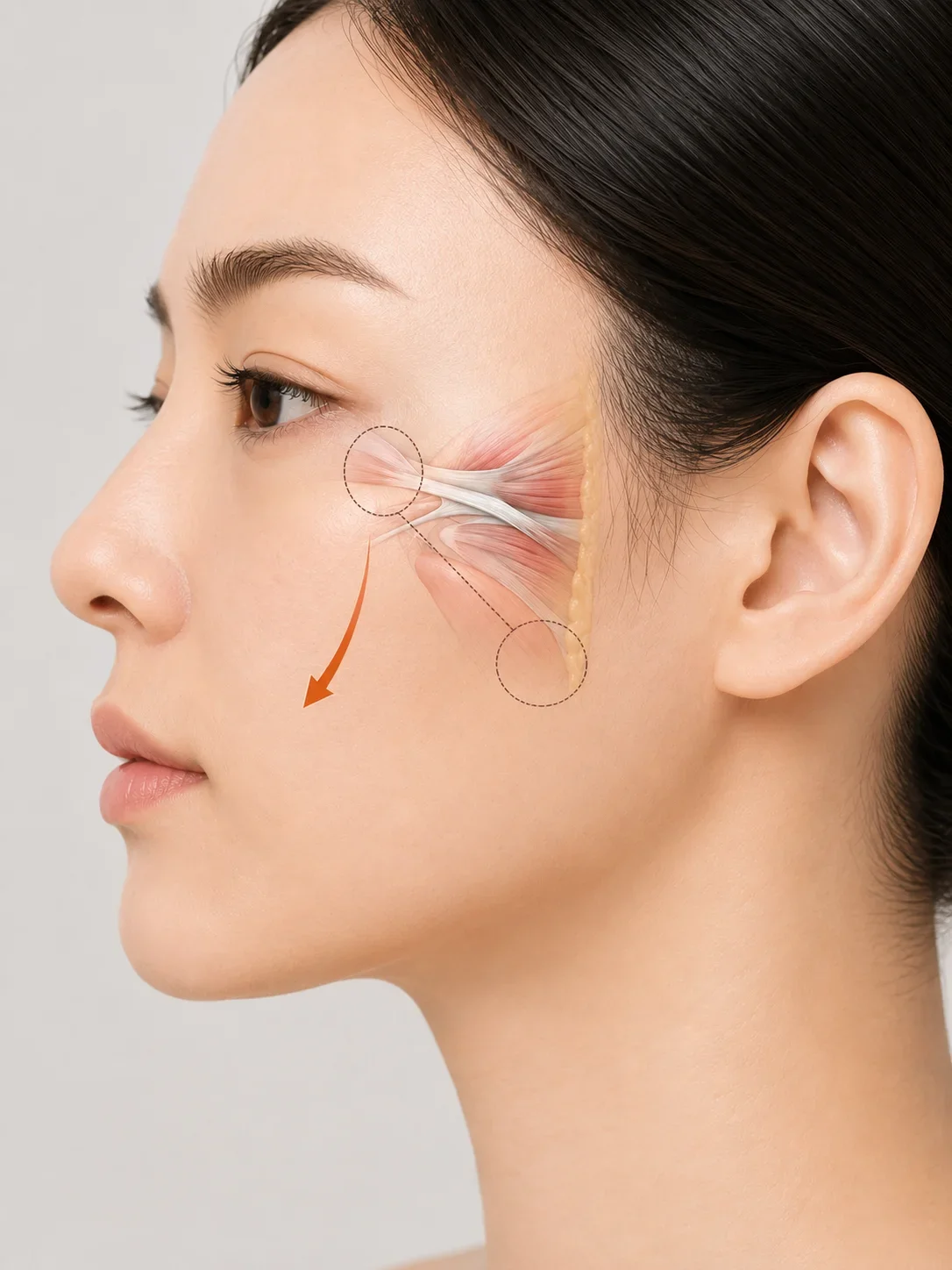
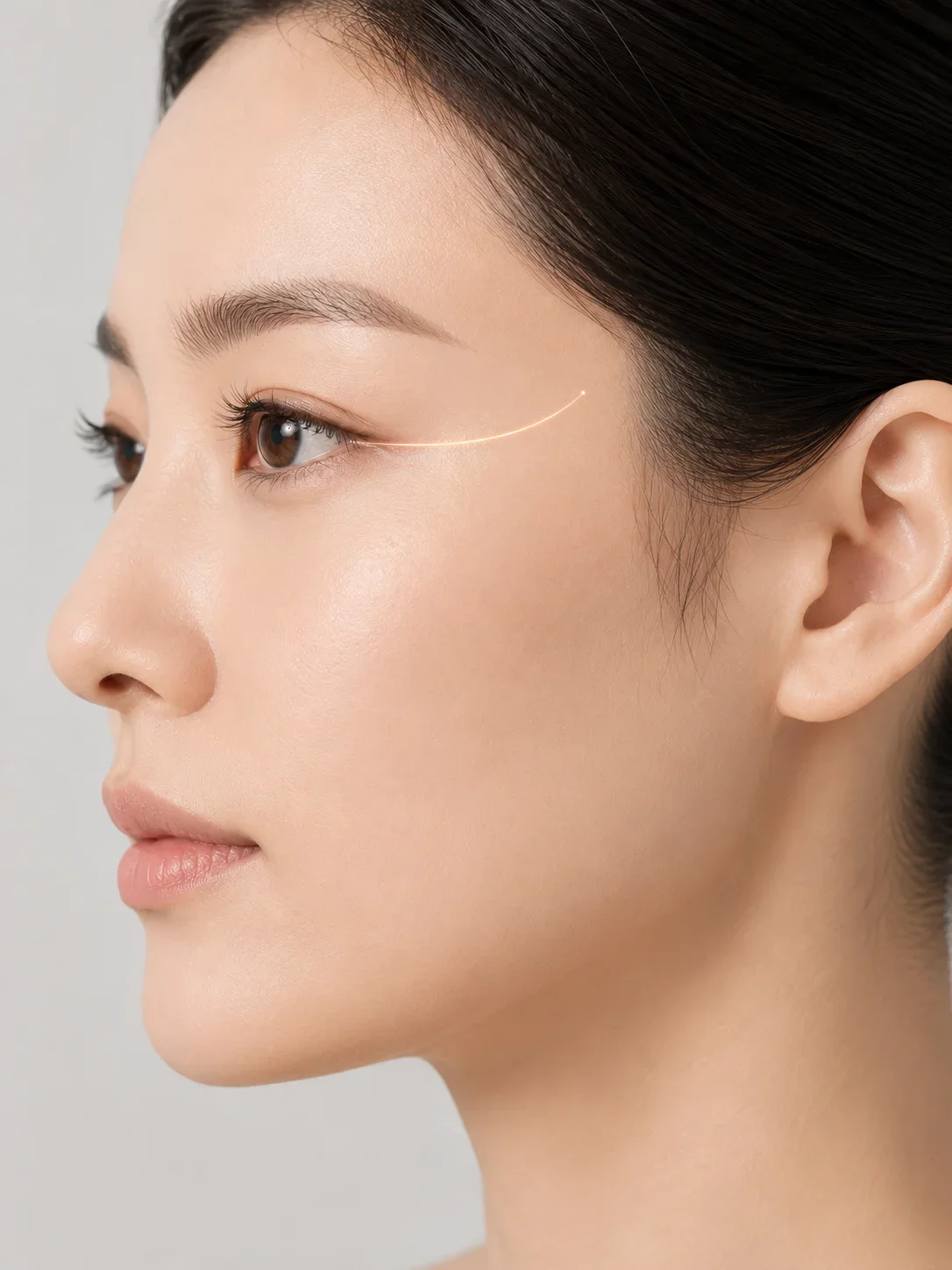
The Eye-Widening Thread Lift tidies a slightly drooping outer eye corner with absorbable threads instead of surgery. PDO or PCL threads are laid horizontally from beside the outer corner (the lateral canthus) toward the temple, at a fixed depth between the deep dermis and the upper SMAS.
The shift it produces is counted in mm. It adjusts the slant of the outer eye line so the eyes look less heavy or tired, and it is not meant to change the eye shape dramatically.
Allow 20-30 minutes for the treatment, in addition to the consultation and local anaesthesia. Most swelling goes down within 2-3 days and light outings are often possible from the next day, while the remaining swelling takes 1-2 weeks to settle. Because a touch-up is only decided after 1-2 months, tell us your travel dates so that follow-up can be discussed before you leave Seoul.
| Treatment time | 20-30 minutes |
|---|---|
| Anaesthesia | Local anaesthesia |
| Daily activities | Main swelling settles in 2-3 days; residual swelling over 1-2 weeks |
| How long it lasts | About 12 months |
Threads cannot correct blepharoptosis. When the eyelid-opening muscles are the real cause of a heavy look, Dr. Jin-Young Kim will tell you that ptosis correction is the more suitable procedure. The same applies when the skin is very thin, the sagging is pronounced or a large change is wanted: another approach, including surgery, is discussed instead of adding threads.
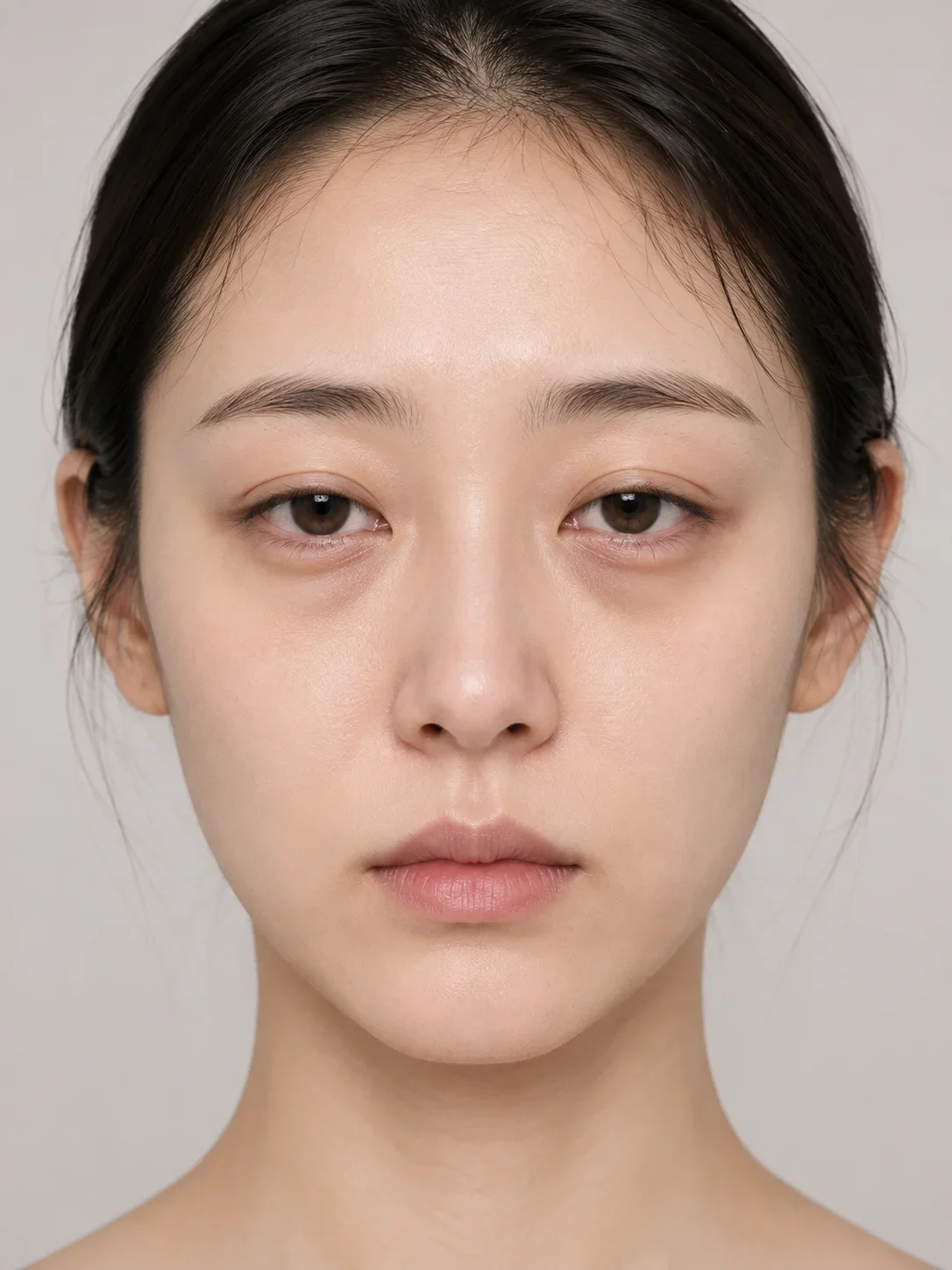
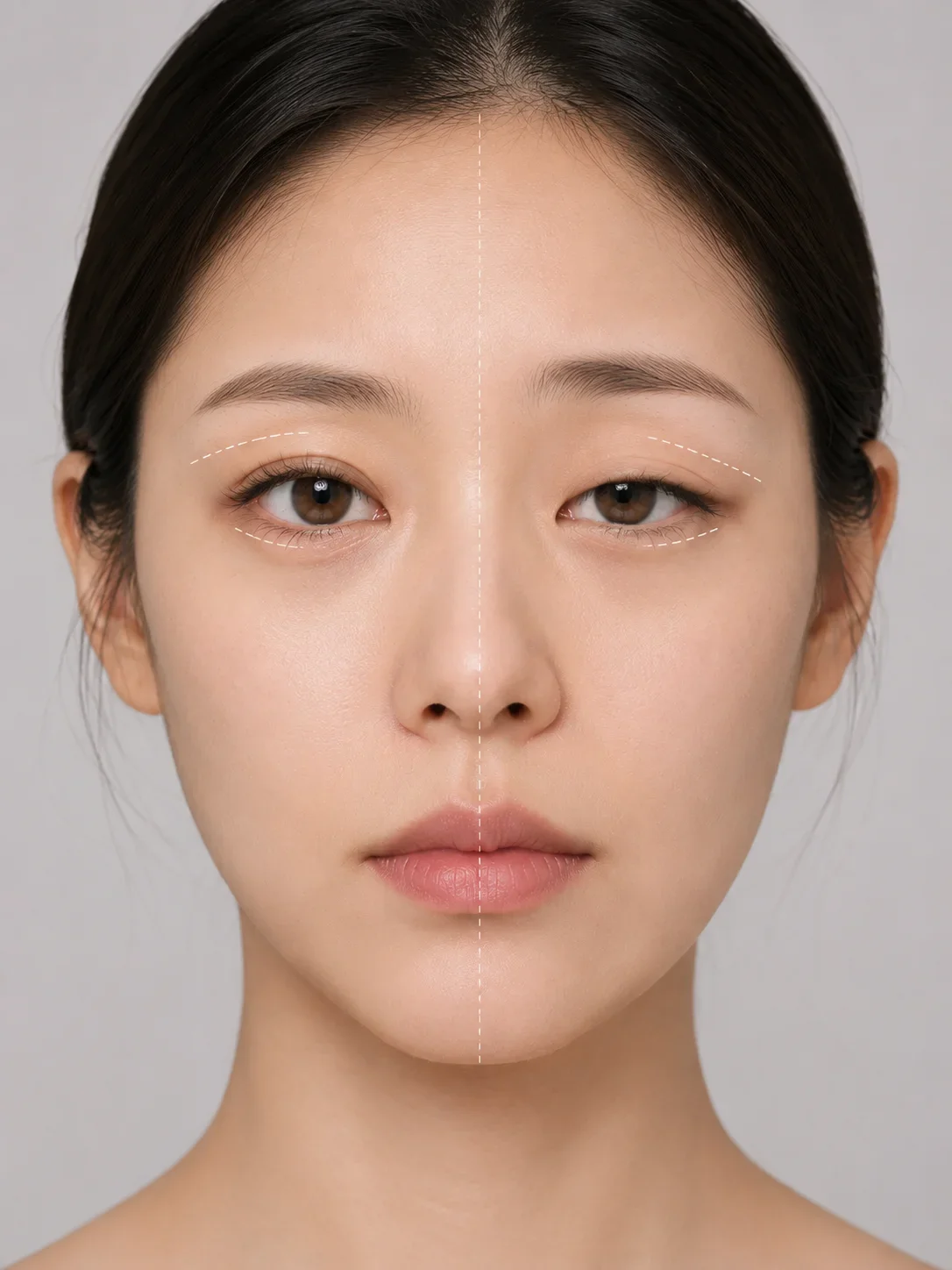
The outer corners of your eyes have dropped slightly and make you look tired or heavy-eyed.
You like your double eyelid crease, but the outer end has blurred and the eyes look narrower.
Some time after ptosis correction or double eyelid surgery, only the outer side has come down and you would rather avoid a revision.
You want a small adjustment and cannot take a long recovery period.
Swelling, slight bruising where the needle entered and tenderness are the common reactions, and they ease within a few days. The main swelling is gone in 2-3 days and what remains settles over 1-2 weeks.
For 1 week, avoid strong facial expressions and firm massage around the eyes.
The outer eye line looks tidier straight after the treatment. A second, slower change follows over 1-2 months as collagen fibres line up around the threads, so part of the result arrives after you are home.
The treatment is not carried out during pregnancy or when there is an active skin infection.
A thread that can be felt or seen through the skin and left-right asymmetry are uncommon. Temporary irritation of the temporal branch of the facial nerve has been reported very rarely.
Branches of the facial nerve and of the superficial temporal artery run beside the outer eye corner. For that reason depth and thread count are kept deliberately low, and more threads are not offered as a way to get more change.
Results differ from person to person, and a specialist consultation is required first.
The Eye-Widening Thread Lift takes 20-30 minutes and light outings are often possible the next day, so it fits a short trip. Main swelling settles in 2-3 days and the rest over 1-2 weeks, and a touch-up, if one is wanted, is not decided until 1-2 months later.
The Eye-Widening Thread Lift is done under local anaesthesia. Afterwards, tenderness, temporary swelling and slight bruising at the entry point are the most common reactions and they ease within a few days.
No, the Eye-Widening Thread Lift does not replace ptosis correction. Ptosis correction adjusts the levator and Müller's muscle by surgery, whereas threads only give light support to the lax surface structures beside the outer eye corner.
Expect a change measured in mm at the outer eye corner, not a new eye shape. RESUM plans this treatment conservatively because a single thread near the lateral canthus can alter the whole look, and too many threads make the result heavy.
Dr. Jin-Young Kim sets the thread count, direction and entry point after assessing where the sagging sits, your expression lines and your skin thickness. If the first result is too subtle, reinforcement is decided in stages after 1-2 months instead of placing more threads at once.
Thread Lift
A visit-planning guide to the thread lift at RESUM Plastic Surgery Clinic in Gangnam: how long the session takes, how the first two weeks go and which thread type fits your goals.
View details
Thread Lift
A planning guide to the nasolabial fold thread lift at RESUM Plastic Surgery Clinic in Gangnam: time on the day, the first two weeks, and when filler is added to the plan.
View details
Thread Lift
A visit-planning guide to the jawline thread lift at RESUM Plastic Surgery Clinic in Gangnam: how long to set aside, what the first two weeks look like and when threads are not the right tool.
View details
Thread Lift
A visit-planning guide to the deep cheek thread lift at RESUM Plastic Surgery Clinic in Gangnam: who it is meant for, how long to allow for the session and the swelling, and why it is not offered to everyone.
View details
Thread Lift
A visit-planning guide to the cheekbone thread lift at RESUM Plastic Surgery Clinic in Gangnam: what it changes in the side profile, how long to set aside and why it is not a way to reduce the cheekbones.
View details
RESUM Plastic Surgery Clinic
Weekdays 10:00 - 20:00
Saturday 10:00 - 17:00
Lunch break 13:00 - 14:00 (no lunch break on weekends and public holidays)